ReproEco: Tomorrow Is Now
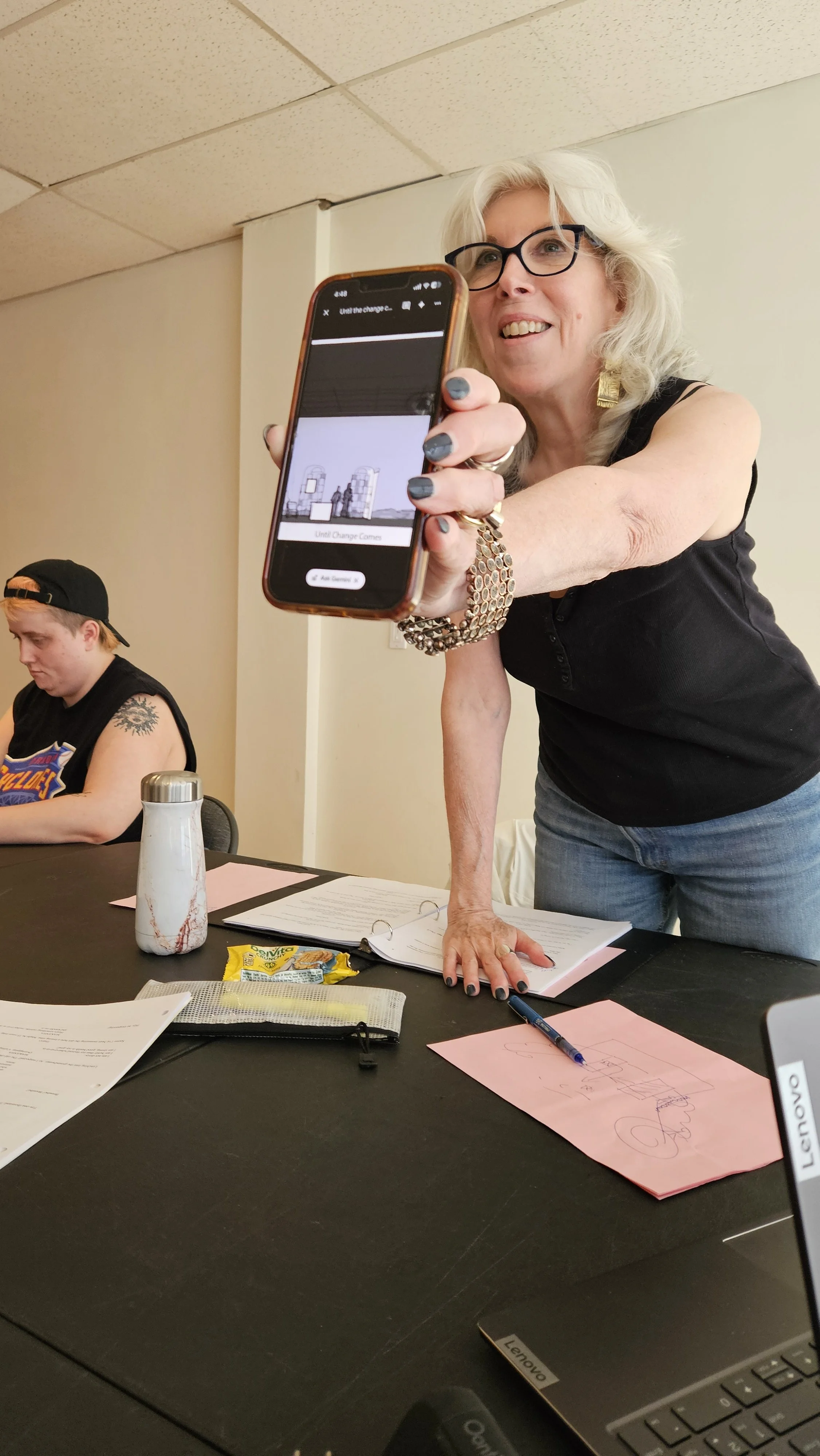
Photo Credit: Cindy Cooper
ReproEco: Tomorrow is Now, produced by MultiStages and ReproFreedomArts for Femme Collection, presents multicultural and multigenerational women bringing fresh perspectives to the hot topic issues of reproductive health and environmental justice in a program of exciting theatre and dance.
The show features six short plays by women exploring the intersection of reproductive health and environmental justice, using humor, mythology, Afro-futurism, drama, and dance, these multicultural narratives examine the impact of toxins, plastics, and ecological hurdles on our physiology, communities, and collective future. The production will play a four-week limited engagement at the Theatre at The 14th St Y for a four-week limited engagement from September 9th - October 4th.
Lorca Peress is at the helm of this production connecting these pieces with this important central theme.
The Interview
1) Repro Eco brings together six plays that approach reproductive health and environmental justice through very different theatrical languages, from mythology and Afro-futurism to comedy, drama, and dance. As a director, how did you find the connective tissue between these distinct pieces and shape them into one theatrical experience?
“ReproEco: Tomorrow Is Now”: Finding the connective tissue to shape the work into one theatrical experience was the challenge. I was presented with six plays by six women with different writing styles, stories, and requirements. The plays each lived in a different world and I had to find the through line. Some commonality was there, as they were thematically connected, but we had to revise them because there was a lot of repetition among the six. I told the writers, as a standalone piece you can include all the PFAs and microplastics you want, but we cannot have the same health dangers in every play. So editing the scripts to fit into one evening of activist theatre without repetition was the first order of business. After those changes were made with dramaturgical script assistance from Lisa Lindstrom, Cindy Cooper(my coproducer and the originator of this project), and myself, I had to find the dramatic narrative to create the play order.
One thing I noted was that the play settings were scattered across the US: Texas, Ohio, West Virginia, Colorado, Wisconsin, and f/k/a North America. Two are centered in the unknown future. Two are realism, two have magic, and two are dystopian. I decided to move chronologically and honoring our subtitle, build from “now” into “tomorrow.” Not just that “tomorrow is now” but now is on its way to becoming tomorrow.
Along with the dramatic narrative, we had four dances created by Jennifer Chin to weave through that bring Natural elements to the story: Water, Air, Earth and Fire. We decided to open with “Water,” a duet with a gorgeous projection of water that turns to rain. Our first play takes us to Sandbranch Texas to a trailer with a mother and daughter suffering the hardships of living without running water. We continue our journey from play to play and play to dance and eventually arrive in the apocalyptic future, a warning to us all. It’s a fascinating trip to take that includes reminders of our love for life, the earth, and hope that we can make the changes needed for the good of us all.
In addition to the storylines, we focused our attentions on the visual and aural to create a world where these pieces live in harmony. I have a team of creative collaborators with whom I have a history. “ReproEco: Tomorrow Is Now” is sound designer/composer Sun Hee Kil's (Sunny) fourth MultiStages production, projection designer Jan Hartley's 7th MultiStages production, scenic designer Jen Varbalow’s fourth MultiStages production, Choreographer Jennifer Chin’s second decade w/ MultiStages, costume designer Lisa Renee Jordan’s sixth MultiStages production, and lighting designer Kia Rogers’ third MultiStages production. We have an aesthetic that ties these pieces together. Each artistic discipline brings its storytelling to the piece. Nature and recycling is a large part of the stage design. The set is created by found objects and includes three upcycled artistic panels on wheels that transform each space and piles of discarded objects strewn with amazon bags, housewares, water bottles, old toys, etc. The projections across the immense cyc support the plays with background imagery, pop up videos, transformational scapes and information. The music and sound design includes sounds from nature, original music, computer and AI-generated effects and human sounds. The costume design includes a base wardrobe for actors made from used and new clothing that transforms from role to role. Everything onstage will be donated after we close.
2) The production places the female body at the center of a larger environmental story. What interested you most about exploring the relationship between our bodies, our environment, and the choices we make about the future through theatre?
The female body is at the center of this larger environmental story. I was interested in exploring the relationship between body and environment within and outside the plays and brought Jennifer Chin on board to create a symbiosis through dance. She created four dances that we positioned into a visual and aural world dedicated to a particular natural element. For Water, we have ocean sounds that transform into music; the projections surround the dancers in an enormous ocean. In the Breath dance dedicated to Air, we bring an abstract visual display of an undulating atmosphere, part sky, part cloud. The sound scape with music opens with slow breathing that builds to panting breaths with musical accents and punching sounds. The lack of breath and the inability to breathe, the sounds of breath while birthing, panic panting, etc. For the Earth dance, we focused the imagery on the physical earth we stand on, circles of sand, deserts, wind— the dance is very circular and moves with the projections. The music is playful and one could envision playing in the sand. The colors are earth tones of sepia and umber. Our final dance is Fire, also titled Rage. Rage against the government. Rage against the machines, the ignorance, the laws and lack of interest in human welfare. From the environment to the laws that restrict bodily autonomy and reproductive health. This is a solo dance filled with aggression: the projections travel across the sky and erupt with abstract fires that build into a full wall of undulating fire across the cyc. The music has a rock beat, it is loud, aggressive, and frightening. The music tapers off into the dancer holding out her hands to the audience in a silent plea. We are reminded of our bodies. We are reminded of our relationship with the world we live in. We are reminded of the dangers of this world and how angry it can be against us.
3) With eight actors playing 18 roles, four elements represented through dance, film, projections, and multiple theatrical styles, there is a lot happening onstage which is exciting. What were some of the biggest creative challenges in creating this production?
Casting actors to inhabit multiple roles requires a very talented ensemble. We have that with our 8 actors. Half were in the developmental readings and half are new to us. One creative challenge was defining each role and creating an actor track. We had several possibilities of who could play what, but eventually cast everyone in two to three plays. We only have a few quick changes who appear back to back. The actors are a wonderful multicultural and multiracial ensemble that range in age from young to mature. Other challenges were the transitions as we moved from piece to piece, we needed to create a transition breakdown with soundscape, projections and set transitions. The wall panels move ten times in the show, and doing that in a stylistic manner was key. Jennifer Chin helped with these moves, some were balletic, sometimes aggressive as panels move across the stage and become walls or doors or windows, or whatever we need them to be. I decided we would have a minimal set of two chairs, one bench, three wall panels and the birthing tub which becomes a garden a toxic dump etc. Jennifer Varbalow, our scenic designer found a birdbath which an actor places in the center of the tub to create a garden. We utilize every piece of furniture in every play. We recycle props. The challenge was how to do this, and we believe we have solved the puzzle.
4) The title, Repro Eco: Tomorrow Is Now, suggests both urgency and possibility. How does this contribute to the indie theatre ecosystem, and what do you hope audiences and artists take away from the experience?
Repro Eco: Tomorrow Is Now suggests urgency and possibility. We are obviously living in challenging times artistically, politically, medically, and economically. The realized threats from climate change, and governmental and religious attacks on women’s reproductive health, are constant across the globe. We hope that productions like ours lead audiences to action. There are lessons in these stories that audiences can take way regarding our health and safety. We have a lobby display of ways to get involved and to learn organizations that are making change happen. We are presenting talkbacks with experts in the fields of reproductive health and environmental justice.
NYC Indie theatre still remains a safe place for artistic expression and exploration. We received funding from local and state government grants for this production but we decided against applying for federal support. It is obvious that the arts can and should lead to activism and the government is fearful of this as witnessed in its censorship tactics regarding content and DEIA references and support. We know of indie theatre companies who were awarded NEAs in 2024, that were never received in 2025. Much censorship is looming including Florida’s banning of reading or performing “Romeo and Juliet” in public high schools. The word “Multicultural” is on the government’s banned word list along with “marginalized communities,” “diversity,” “women,” and “BIPOC” (Black, Indigenous, People of Color). Despite this, we artists must never lose faith in our missions, and must use our platforms to tell the stories we believe must be told. I come from a long line of activism, and my father’s dying wish to all of us children was to “make a better world.” I aim to keep striving for that goal. I truly believe we are stronger together, and when we collaborate, stand up, speak out, and represent, we win.
The project originated when ReproFreedomArts, a 24-year old theatre company dedicated to addressing reproductive health, rights, freedom, and justice, commissioned six playwrights, Diane Breeser, Cindy Cooper, Alinca Hamilton, Mildred Inez Lewis, Cassandra Medley, and Laura Shamas, to participate in several months of online discussions with specialists in environmental justice and reproductive rights throughout 2024. Drawing from these exchanges, the six writers developed the collection of new works titled Repro Eco. MultiStages subsequently partnered with ReproFreedomArts to co-produce a developmental reading series in 2024 and 2025. Lorca Peress, Artistic Director of MultiStages, a 29-year-old theatre company dedicated to multicultural and multidisciplinary new works that are socially challenging and provocative, is collaborating with her team of designers and a choreographer to craft a multidisciplinary stage interpretation of the pieces.
THE DANCES:
Four modern dances created and choreographed by Jennifer Chin bring the elements of Water, Earth, Fire, and Air to life.
THE PLAYS:
"Always Never Really Here" by Alinca Hamilton
A mother and daughter face the harsh realities of living without clean running water in the verifiably real town of Sand Branch, Texas.
"Through Water Into Blood" by Mildred Inez Lewis
After a devastating miscarriage, a West Virginia woman confronts her birth doula, and they both realize the role toxic chemicals may have played.
"Until the Change Comes" by Cindy Cooper
A branding team begins to question their work after a visit from Theo Colborn, a woman scientist from years gone by who first identified toxic harms to health.
"Figments" by Diane Breeser
A woman, discovering she is pregnant, has a comical nightmare about microplastics and small steps she can take to protect against environmental harm.
"We Are Our Ancestors' Reasons for Living" by Cassandra Medley
In an Afro-futurism style, intergenerational women experience an altered world in which nature is so degraded that the outdoors must be delivered and enjoyed virtually.
"Priorities" by Laura Shamas
In a dystopian future, two gynecologists and a midwife meet in secret to prioritize the needs of their pregnant patients, so they can escape to a better environment.
Click HERE for tickets.
Editorial by Malini Singh McDonald.
Published by Theatre Beyond Broadway on September 14th, 2026. All rights reserved.