
saudade: Beatriz Silva’s Theatre of Longing Between Portugal and New York
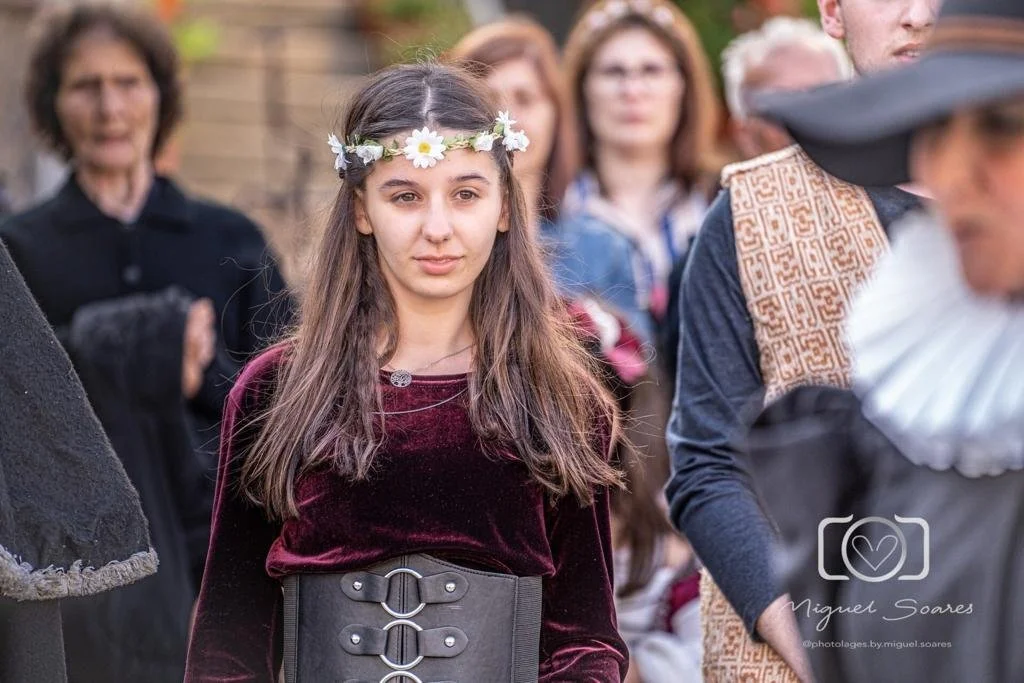

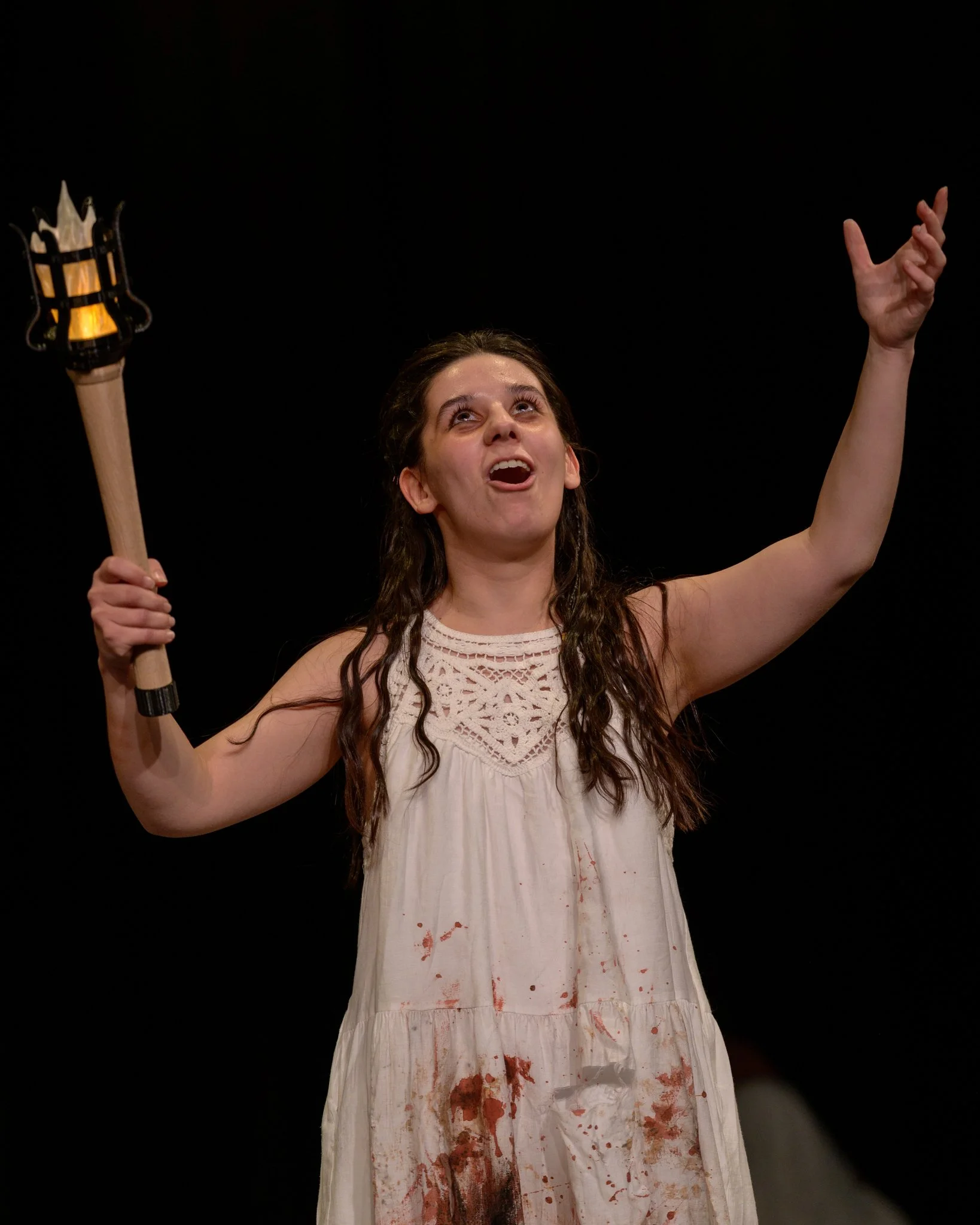
For Portuguese actress Beatriz Silva, storytelling has always begun with feeling.
Before conservatory training, before devised theatre, before experimental performance spaces in New York, there were Disney films and a child growing up in a small Portuguese town imagining bigger worlds.
“I was always into moving, thinking, being creative,” Silva says. “At the core of every story, it’s always love.”
That emotional truth now sits at the center of Silva’s evolving artistic voice, one shaped equally by classical training, cultural displacement, and an unwavering connection to her Portuguese identity.
Originally from Fornos de Algodres, Portugal, Silva describes an artistic landscape where theatre opportunities remain limited and emerging voices often struggle to break through.
“Portugal doesn’t have a lot of theatre,” she explains. “It’s growing, but it’s still not very valued.” Valued meaning that the history of theatre in Portugal differs from countries that have a significant amount of works over centuries. Many works are written in Spanish and not Portuguese.
Still, performance kept calling to her. After the isolation of the pandemic, Silva began pursuing projects that genuinely excited her, eventually entering the world of devised theatre through a youth performance project at Teatro Viriato. The experience introduced her to collaborative creation, metaphorical storytelling, and emotionally driven work.
“That was when I realized I really loved the creative process,” she says.
Her artistic path soon expanded internationally. After an initial period studying in London, Silva realized the environment did not fully align with her personality or creative instincts.
“My culture is very warm and open,” she says. “London felt restrained to me. New York felt different because it’s made of international people.”
That realization eventually led her to the American Academy of Dramatic Arts, where she immersed herself in rigorous actor training that ranged from Meisner and Uta Hagen to Shakespeare, clowning, Alexander Technique, movement work, breathwork, and Greek theatrical practices.
At first, Silva believed actor training would offer a singular formula. “I thought it would be one problem, one solution,” she says with a laugh. “Like, ‘I learned this method, now I use it for everything.’ But it’s not like that.” Instead, the training became about building a creative toolbox rather than a single system. “Every play needs something different,” she says. “Now I have all these tools that I can use depending on the work.”
That flexibility became especially important as Silva moved between vastly different theatrical worlds, from classical productions like The Trojan Women to experimental devised work rooted in improvisation and emotional instinct.
“I learned how important listening is,” she says. “Not just performing, but actually listening.”
Yet no matter how varied the training became, Silva kept discovering the same thing beneath it all: her Portuguese identity remained central to the work she created.
“There’s this fire inside Portuguese people,” she says. “I used to be frustrated living there [in the fire], but now I realize how much of me comes from [my] culture.”
That fire became the emotional foundation for The Guests, Silva’s newest theatrical project, and perhaps her most personal work to date.
The play emerged after the death of her grandfather, whom she was unable to say goodbye to in person while studying in New York. The loss deeply affected her, particularly because of how close they had been throughout her childhood.
“I needed to put my energy into something creative,” Silva says. “The feelings were stuck inside me.”
Rather than writing the play herself, Silva sought collaboration. She connected with emerging Portuguese playwright David Calão, searching for someone willing to create a work through discovery rather than certainty.
“If the writer already knows where the story is going,” Silva recalls him saying, “then the audience will know too.”
Together, they built The Guests, a dreamlike theatrical work exploring grief, guilt, memory, and longing. The play follows Anna, a woman searching for someone named Jim during an increasingly surreal gathering that slowly transforms into an emotional and spiritual reckoning. Ghosts appear, reality bends, and conversations unfold between the living and the dead. At its center is the unresolved ache of distance: distance from home, from family, from closure.
“It’s not just about death,” Silva explains. “It’s about longing. About what you wish you could say before someone leaves.”
The structure of the play was also inspired by real experiences within Silva’s own family. After her grandfather passed away, her mother dreamed vividly of him returning, dressed elegantly beside Silva’s grandmother, as though visiting from another world.
“We never really know what’s true,” Silva says softly. “But there’s power in belief.”
That emotional ambiguity pulses throughout The Guests. The play embraces metaphor and surrealism while remaining deeply intimate and human. It also reflects Silva’s desire to bring distinctly Portuguese emotional traditions into international theatre spaces without diluting them for accessibility.
“I didn’t want to lose the Portuguese identity,” she says. “I wanted people to connect to it but still feel where it came from.”
Now developing the production alongside a collaborative ensemble of artists, Silva is also learning the realities of producing, casting, and shaping a rehearsal process from the ground up. She speaks passionately about discovering that casting is often less about technical perfection and more about emotional truth.
“Sometimes someone simply is the character,” she says.
The rehearsal room itself has become an extension of her artistic philosophy. Rather than focusing immediately on blocking or polished staging, the actors begin with impulse, activity, and connection.
“We just want to find the truth first,” Silva explains. “Then we add everything else.”
For Silva, theatre is ultimately about emotional excavation: uncovering what lives underneath language, underneath performance, underneath memory itself.
And perhaps no word captures that pursuit more fully than saudade.
A uniquely Portuguese expression, saudade describes a profound emotional longing for something absent: a person, a place, a moment, or even a version of oneself that can never fully return. It is grief braided together with love, memory, tenderness, and desire. That feeling lingers throughout Silva’s work, not as sadness alone, but as devotion; not simply mourning what is gone, but honoring what remains.
And somewhere between Portugal and New York, between dreams and rehearsal rooms, between memory and performance, Beatriz Silva is learning how to transform saudade into theatre.
Editorial by Malini Singh McDonald.
Published by Theatre Beyond Broadway on June 1, 2026. All rights reserved.