Who Gets In? Arianna Muñoz Takes on Ivy League Culture in Ivy Day
Circle Theatre Festival 2026, a festival by RJTheatre Company and TAL Media NYC
AMT Theatre | 354 W 45th St, New York, NY 10036
Oct 29th - Nov 13th, 2026
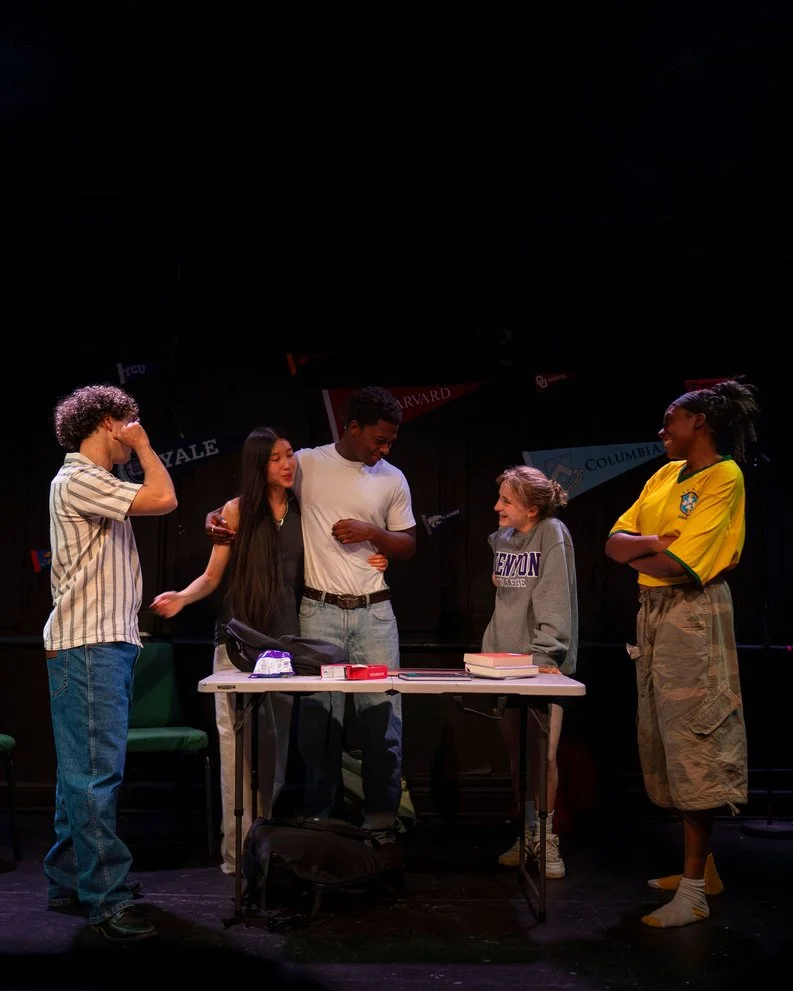
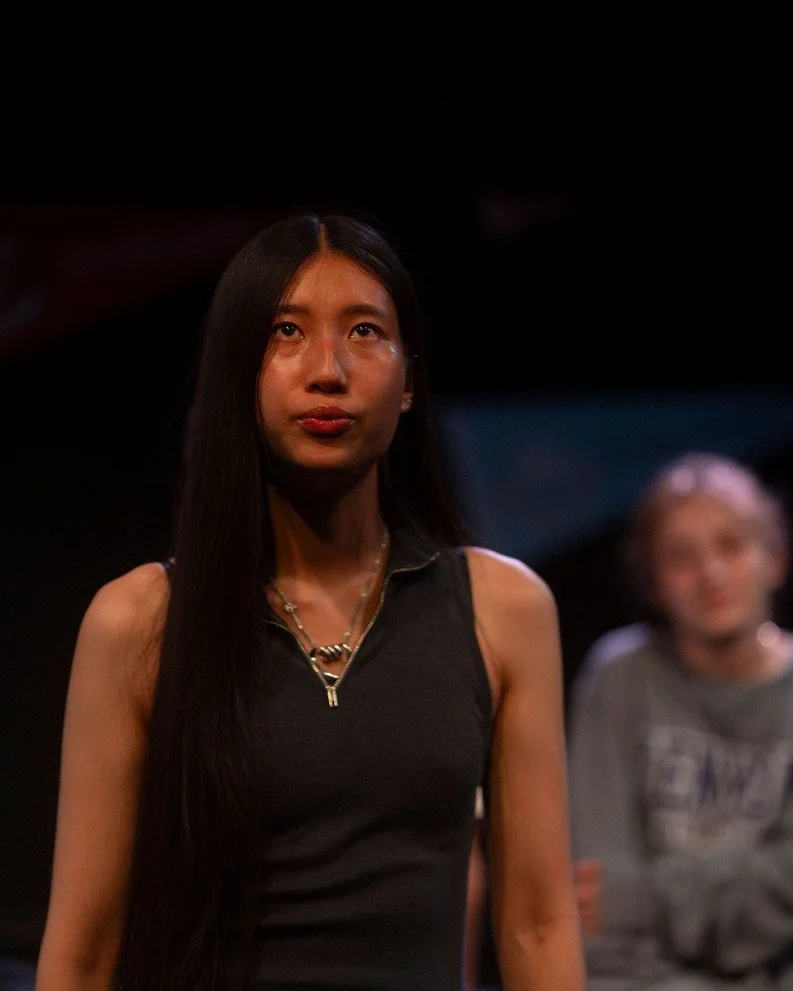
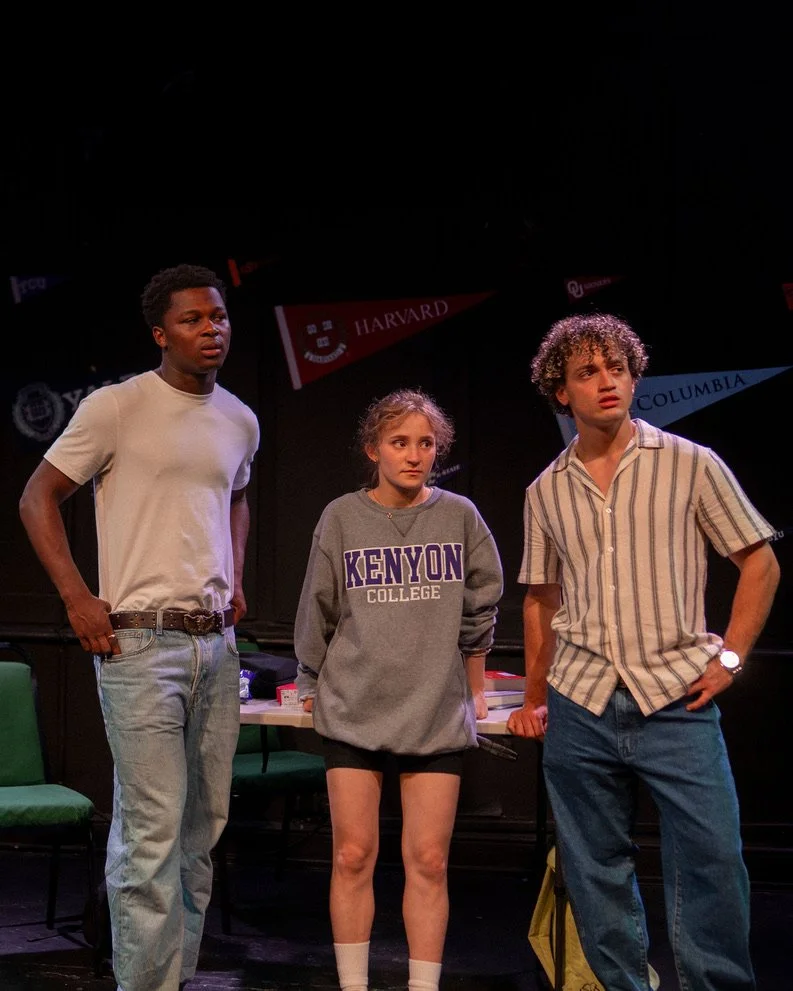
The conversation surrounding Cornell University and the culture of America’s elite institutions raises questions that extend far beyond campus: Who holds power, who gets protected, and who must fight to belong? But the struggle to navigate these institutions begins long before students ever set foot on campus. Who gets to belong in America’s most prestigious universities, and what are we willing to sacrifice to get there?
In Ivy Day, Mexican-American playwright and director Arianna Muñoz turns the high-stakes ritual of college admissions into a sharp, dark comedy about ambition, identity, privilege, and prejudice. As six high school seniors anxiously await their Ivy League admissions decisions, their conversations expose the biases and rivalries that can pit marginalized students against one another while leaving entrenched privilege largely unchallenged. Following an award-nominated run at London’s Hope Theatre, Ivy Day makes its Off-Broadway debut as part of RJ Theatre Company and TAL Media NYC’s Circle Theatre Festival 2026 at AMT Theater. We spoke with Muñoz about the personal experiences that inspired the play, the politics of belonging, and why the promise of an Ivy League education continues to hold such power over the American imagination.
We spoke with Muñoz about the experiences that inspired the play, the cultural pressures surrounding elite education, and bringing this distinctly American story to audiences in New York.
1. You describe Ivy Day as a dark comedy about the pressures and prejudices embedded in the college admissions process. What first compelled you to explore this particular moment in a young person’s life, and what did you want the play to reveal beneath the competition for an Ivy League acceptance letter?
I wrote the original draft of Ivy Day way back in 2023 - at the time, a major news story was the Supreme Court’s decision to end affirmative action (Students for Fair Admissions v. Harvard), which sparked conversations in the US about privilege and identity, much of it centred on the argument that people from marginalised identities actually had an advantage over others (namely, white men) in the college admissions process, an idea I was extremely frustrated by.
This debate prompted me to reflect on my own experiences navigating the college admissions process. Culturally we put a ton of weight on college - we’re told our alma mater defines the rest of our lives, so it’s no surprise that the pressure placed on teens can make them want to explode, revealing their most competitive, nasty sides.
Increasing socio-political tensions, uncertain futures and the societal/familial pressure to succeed, all coupled with the petty everyday dramas of high school life? It’s a story ripe for telling!
But beneath the competition for an Ivy League acceptance, I also want Ivy Day to also speak to the tensions people from marginalised identities (women, people in the global majority, working-class, queer, etc.) navigate when trying to exist in historically exclusionary spaces. It’s a theme that appears in all my work, and in Ivy Day I really wanted to illustrate the way exclusionary systems can turn people from marginalised backgrounds against one another, dividing them in the pursuit of limited opportunities while the ultra-privileged few breeze by without a thought.
And of course, I wanted Ivy Day to be a play that I, as an early-career writer/director, could feasibly stage on a shoestring budget! And so the play unfolds in real time, in only one location, with lots of fast-paced dialogue to keep the audience engaged - the perfect show for Circle Theater Festival.
2. The play draws from your own experience as a Mexican-American teenager navigating the college admissions process. How did your personal experience shape Andrea and the other students, and what surprised you as you revisited that period of your life through the lens of a playwright?
Though Ivy Day is not a one-to-one replication of my college admissions process, my experiences were undeniably what drew me to writing Ivy Day in the first place. I definitely have a special place in my heart for Andrea, who, like me at that age, is a Mexican-American girl desperate to get out of her hometown and be the change she wants to see in the world!
Some of that personal experience manifests in the time/place of the play. Much like a favourite play of mine, John Proctor is the Villain, Ivy Day isn’t just a generic American story, it’s rooted in a specific southern experience - in this case, my hometown, San Antonio, Texas. There’s more than a few nods to local hangouts and sports teams (Go Spurs!), but also an understanding of the tension Andrea and some of the other characters feel as people from marginalised backgrounds having politically charged conversations in a conservative environment.
Writing Ivy Day also resurfaced memories of the everyday joys and dramas of high school life, and I think in revisiting those memories I was able to realise just how young and uncertain we all really were. When you’re a high school senior, you think you are finally an adult - now, at twenty-six, I realise that eighteen-year-old me was still a baby! With that realisation I was able to treat all the characters with even greater empathy and complexity - they are a group of kids facing the terrifying uncertainty of adulthood and a fraught political landscape, alongside romantic relationships and friend group drama. It lends itself not only to compelling drama, but to some admittedly hilarious moments where the characters’ priorities might not entirely be in order….
Nevertheless, something else I’ve reckoned with while developing Ivy Day is that my high school was a place of immense privilege that enabled biases to go unchecked. Many of the remarks made in the play - that a black student is there on an athletic scholarship, that girls have an advantage over boys, that people with money or legacy status are entitled to a college acceptance, etc. - were unfortunately real stereotypes/prejudices that were thrown around throughout my college application experience. Ivy Day is an attempt to grapple with that truth, demonstrating how young people replicate the wider political discourse at a smaller scale, and how the higher education admissions system discourages intersectionality between people who have historically been excluded from those institutions.
3. Ivy Day premiered in London and was developed and staged in the UK before coming to the United States for the first time. What has it been like to bring a play rooted in the American high school and college admissions experience to audiences in London?
So rewarding! I certainly had a great deal of trepidation developing this play in the UK, as so much of the play deals with the cultural nuances of American college admissions, and on an even more specific scale, the dynamics of a Texas college prep high school.
It surprised me, then, that when London audiences saw the show during its run at The Hope Theatre, they really resonated with the subject matter. The UK has its own version of the Ivy League - Oxbridge - as well as incredibly competitive drama schools (some of which have smaller acceptance rates than some Ivy League colleges!). London audiences were therefore extremely receptive to and enthusiastic about the play’s frank conversations about competition, prejudice, and the pressure to succeed.
However, I was always determined that Ivy Day should eventually find an American audience. Alongside the American college admissions subject, the play also addresses the nuances of the Mexican-American experience, and the issues of classism and xenophobia that still impact the community. This Off-Broadway run is the first time I’ve been able to cast Mexican-American actors in the roles of Andrea (Alexa Yamila Ocana) and Berni (Guy Tano), which is incredibly meaningful to me. I’m grateful that they, along with RJ Theatre Company and TAL Media, understand the importance of bringing Ivy Day to an American audience who will resonate even deeper with the show’s content.
4. With so much attention recently on Cornell and the secretive, protective culture surrounding elite universities, what is still so attractive about applying to these schools? What does an Ivy League acceptance represent to these students beyond the prestige of the name?
This really is a fascinating question, as it is something that has come up extensively in our rehearsal process. As mentioned, Ivy Day was originally written in 2023, with rewrites happening through 2025 - during the London run I made the decision to set in stone that the play takes place in March 2024.
And boy, has a lot happened since March 2024! Rereading Ivy Day in advance of this Off-Broadway run, I realised that the play has become a period piece. What were once passing, even comedic references to Charlie Kirk, Elon Musk, and Cornell have become unexpectedly loaded moments in which the audience knows more than the teenagers in the play. In rehearsals the cast and I discussed how much we should acknowledge these tensions, and determined that part of what makes Ivy Day so impactful is that these kids don’t know how much more fraught their world is going to become, how the Ivies will become even more of a cultural touchpoint for society’s darkest issues.
So why do these institutions still have an appeal? As the characters in Ivy Day demonstrate, the answer is very individualised. For some characters, like Lee and Berni, it’s to do one’s family proud, to fulfill a version of the American Dream; Andrea wants to “destroy it from the inside out”, changing the system for the better; Jack is a Harvard legacy, and sees Ivy League acceptance as maintaining the status quo. Essentially, the Ivy League remains a system of power on which we project our dreams, ambitions, and ideologies, for better or worse.
But, as one character remarks at the end of the play, “Ivy or no Ivy, you’ll still be you. And not even the top university in the world can fix that.”
Click HERE for tickets.
Editorial by Malini Singh McDonald.
Published by Theatre Beyond Broadway on October 14, 2026. All rights reserved.