Camelton
Written and Performed by Stephen Cole
Songs with lyrics by Stephen Cole and music by David Krane, Claibe Richardson, David Evans
Directed by and Projection Design by Rick Pulos
Polaris North | 245 West 29th Street, 10001
January 9, 2026 - January 10, 2026
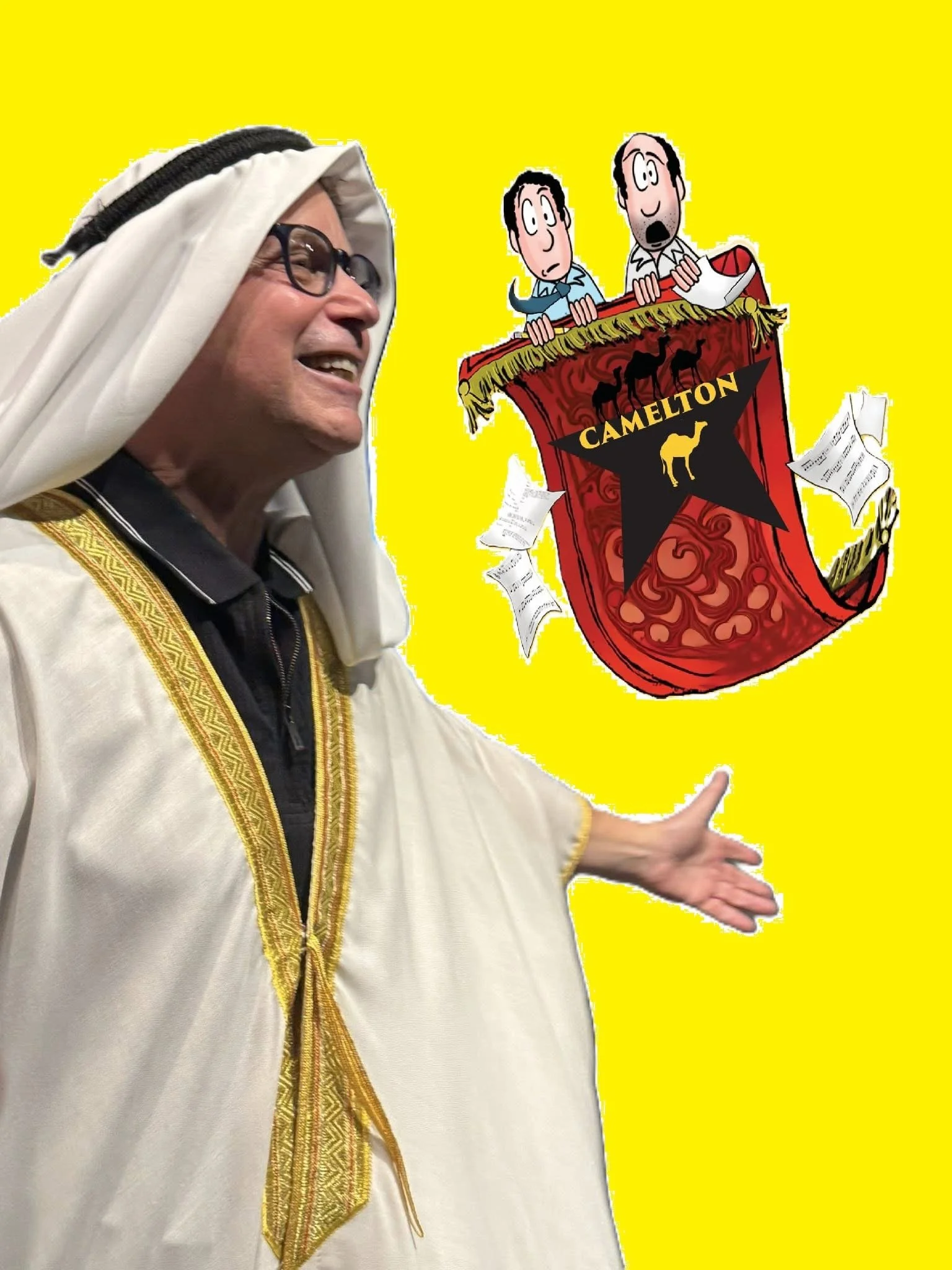
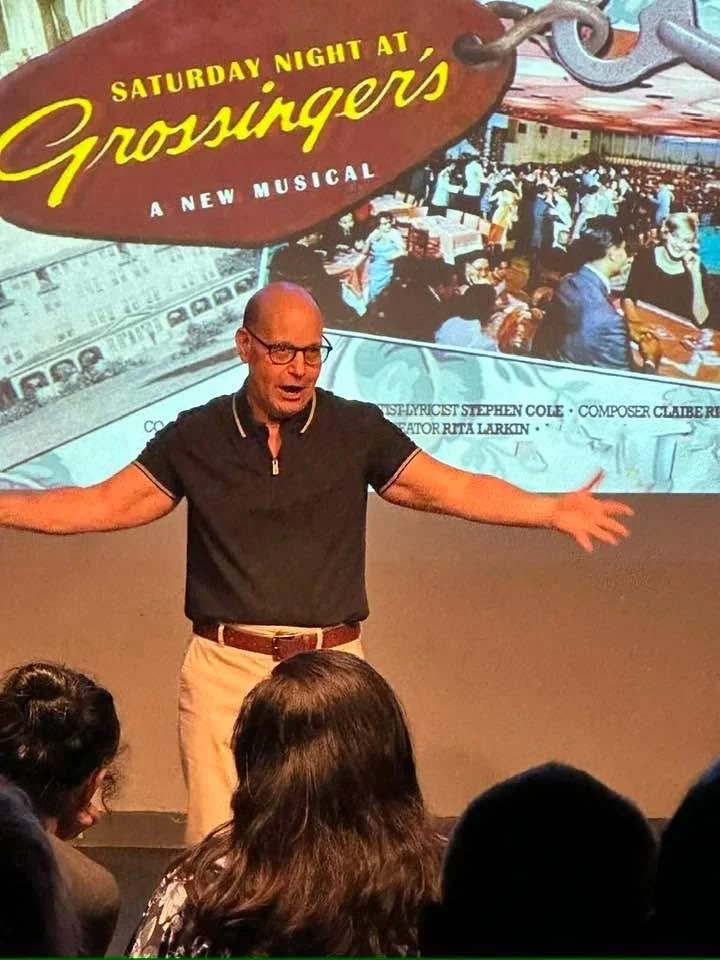

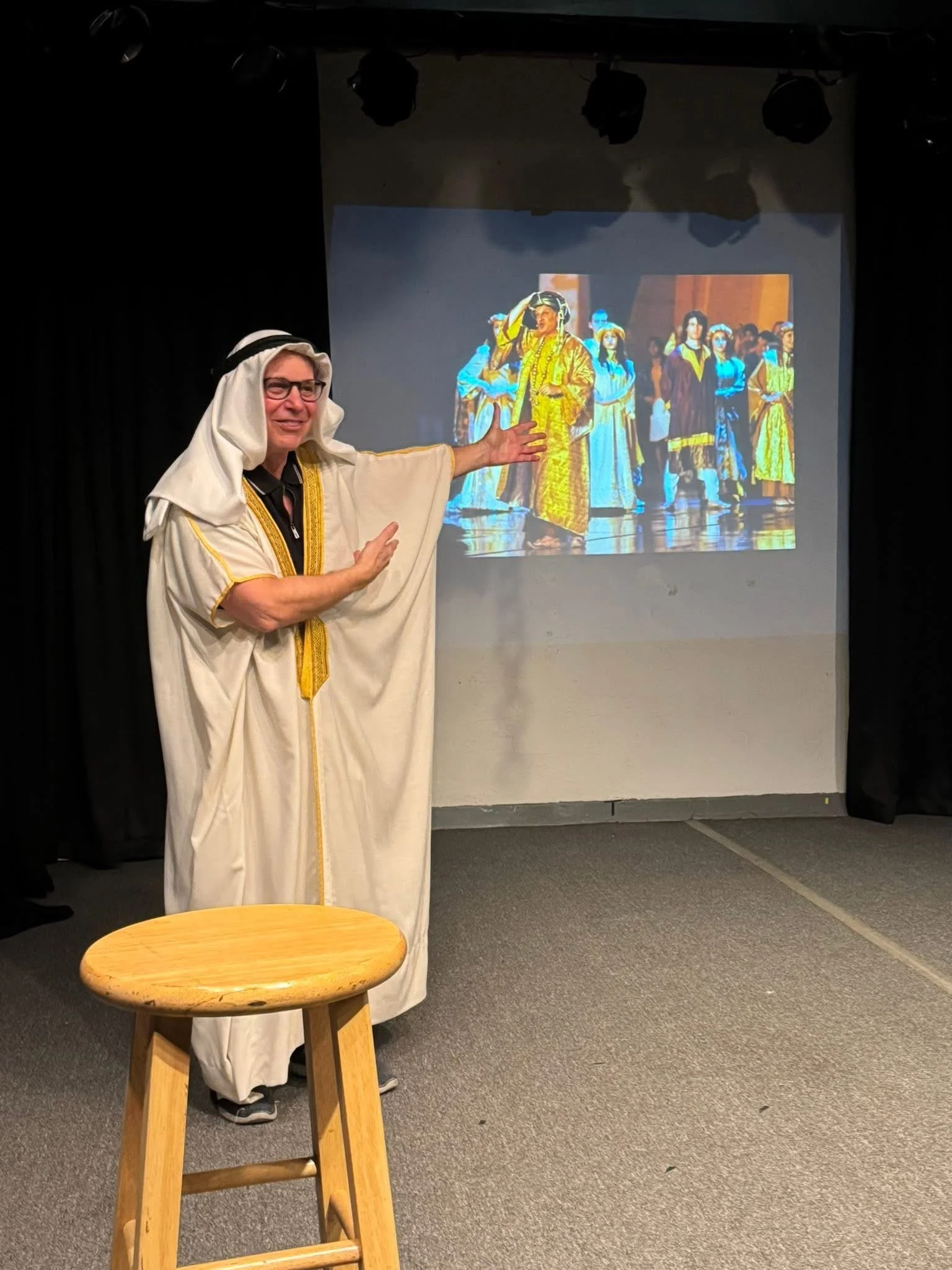
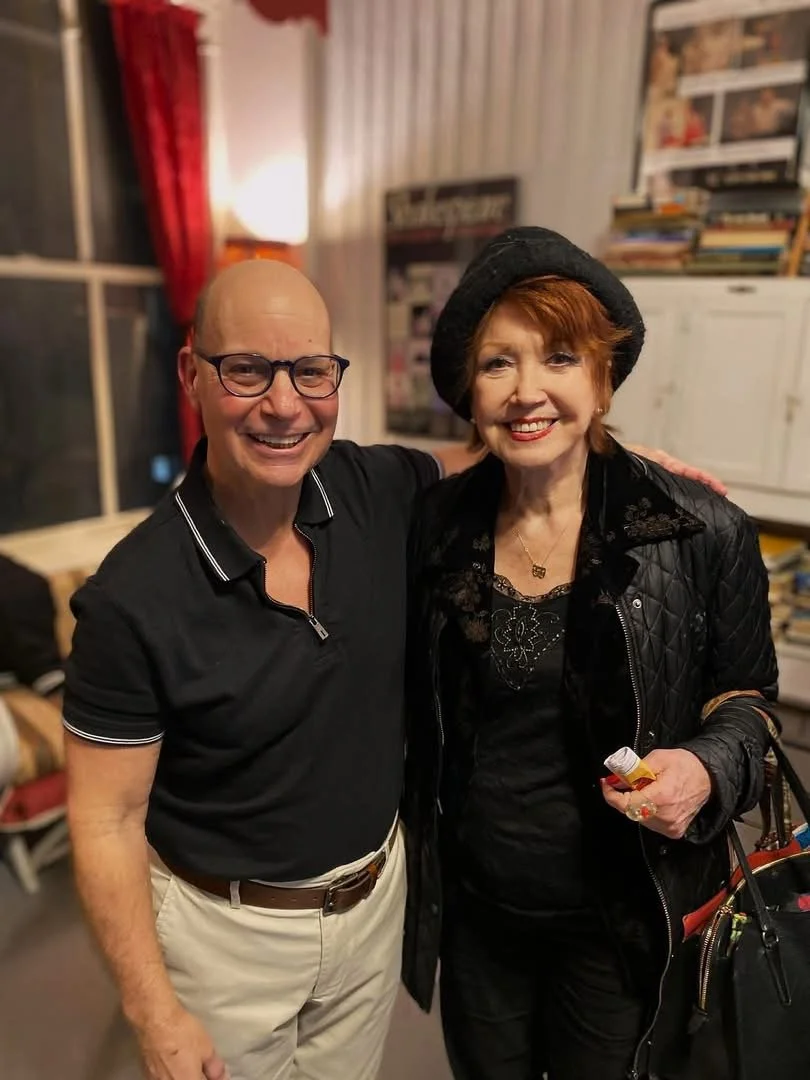
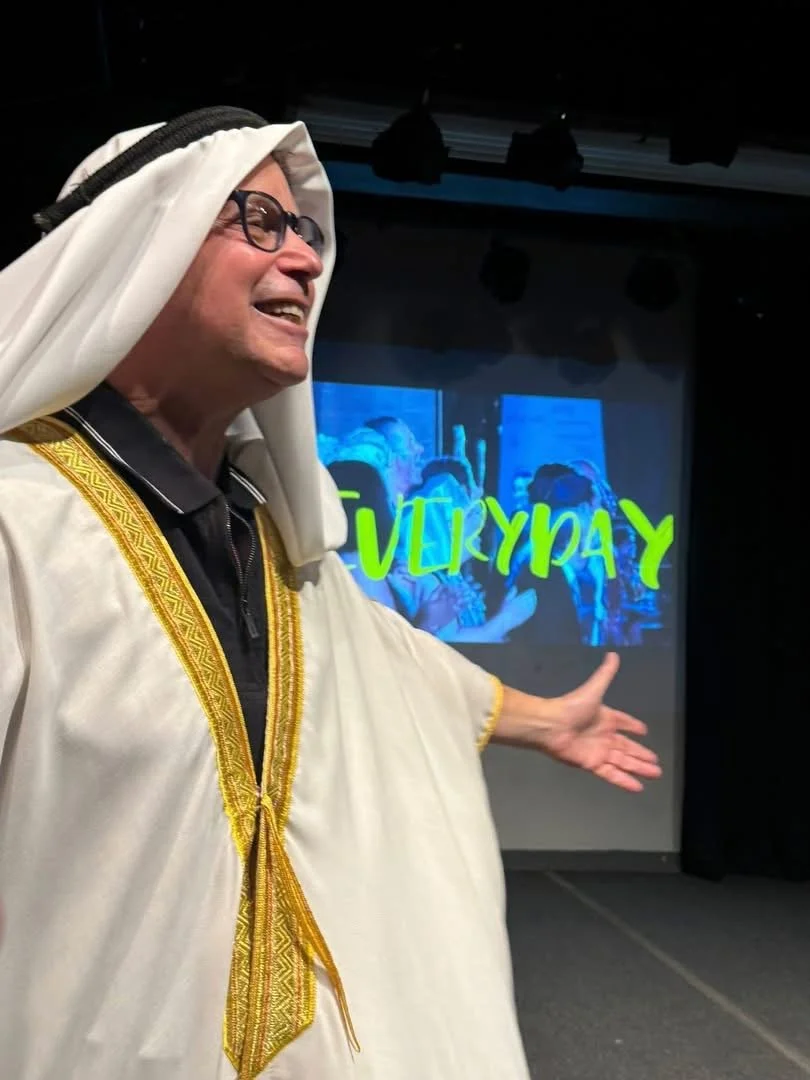
Is Camelton a one-man show or a book? The question is posed with a wink, and the answer—both—signals the tone of Stephen Cole’s latest act of theatrical self-mythologizing. The title itself is a provocation, a pun daring the reader or theatergoer to summon associations with a certain once-crowned musical comedy, only to discover that this iteration replaces medieval Britain with the Middle East, and knights with Arabs, Jews, camels, and a delirious parade of musical-theater ghosts: Marni Nixon, Hal Linden, Ethel Merman, Gavin MacLeod, Ruta Lee and a supporting cast of what Cole affectionately brands “musical-comedy terrorists.” Curiosity is not merely invited; it is all but conscripted. The answers—why this title, why this story, why now—reside both between the covers of Cole’s newly published book and onstage at Polaris North Studio, where Camelton, Cole’s one-man mini-musical, unfurled over two sold-out performances in January.
Cole’s Camelton felt less like a limited engagement than a prologue. The evening functioned as a kind of overture to the work’s next chapter—a longer run later this year at the Edinburgh International Fringe Festival—while also standing comfortably on its own as a compact act of theatrical memoir. Written and performed by Cole, Camelton revisits an origin story that began some twenty years ago. The origin story, as Cole tells it, begins now decades ago with an email and a camel. This is not metaphorical. The camel, encountered during a commission that took Cole far from the familiar corridors of American musical theater, marks the start of a journey that would permanently recalibrate his artistic compass, a story so rife with logistical absurdities and cultural collisions that it scarcely requires exaggeration. Hired by the Emir of Qatar, Cole, one half of what he cheerfully frames as “two Brooklyn Jews abroad” with the other half being composer David Krane, created what would become the first American musical to premiere in the Middle East. That show, Aspire, was produced in Qatar in 2005 in a stadium larger than any American football field, and the commission deposited its creators into a cultural maelstrom that Cole now recounts with the practiced timing of a seasoned entertainer and the bemused distance of hindsight.
Onstage, Cole reconstructs the experience as a cascade of encounters that border on the surreal. His tale assembles its characters with the exuberance of farce: the vast, disorienting desert; Middle Eastern producers with grand ambitions and shifting expectations; flying carpets whose symbolism is as important as their mechanics, or lack thereof; Croatian acrobats and Russian ballet dancers drafted into the same enterprise; an Italian director, a wannabe Zeffirelli with an Aida set at the ready; and, omnipresent and unignorable, camels—so many camels that they seem to loom as both logistical problem and comic chorus, a running gag and an emblem of the project’s otherness. Cole’s parade of characters—producers, intermediaries, and assorted emissaries—are sharply drawn and vividly embodied. Music, inevitably, binds the chaos. Cole threads these episodes together with sharp humor and songs that function less as set pieces than as narrative punctuation, advancing the story while undercutting it with wit.
Anecdotes involving theatre luminaries arrive with an easy charm, as do media that offer that evidence and embellishment as the visual receipts of a journey that really did unfold as implausibly as he claims. The evening as a whole is generously supported by an astute projection design courtesy of director Rick Pulos that incorporates photographs and videos providing a constantly moving scrap book that makes us feel we were there.
Cole’s gift is his ability to render this improbable convergence legible, and uproarious, without sanding down its strangeness. He recounts the experience as an outrageous, once-in-a-lifetime adventure—unbelievable in outline, persuasive in detail. The laughter he elicits is generous and sustained, and when he promises that you will cry, he is quick to clarify that it will be from laughing. Pulos’ directorial hand is a gentle one that guides the fine storytelling propelled less by irony than by amazement, an insistence that the world, particularly the theatrical one, remains capable of astonishment.
The show also traces the afterlife of those events. That cross-cultural improbable collision, rich in misunderstandings, excesses, and moments of genuine exchange gave rise to The Road to Qatar!, a full-length musical about the creation of the original show. That meta-theatrical offspring enjoyed a life of its own, with productions in Texas, Off-Broadway, and at the Edinburgh International Festival, where it garnered a Best Musical nomination. In Camelton, Cole charts this evolution with a mixture of pride and disbelief, as though still surprised that one unlikely commission could generate an entire secondary body of work, confirming that the backstage story could rival, if not eclipse, the onstage one.
Cole’s most striking asset remains his sheer delight in performance. He radiates enthusiasm, the sort that feels less manufactured than inherited, as though he were channeling an older entertainment tradition rather than reviving it. He is, unabashedly, a tummler in the Catskills sense of the word: a master of conviviality, adept at warming a room, nudging an audience into laughter, and making everyone feel briefly included in the same sprawling in-joke. Danny Kaye hovers as a clear influence—not in imitation, but in spirit—and Cole’s ability to resuscitate ancient Borscht Belt material and make it feel improbably fresh is no small feat.
Now, decades later, the material has been distilled once more, transformed into a solo performance and a book that function as companion pieces. In this latest incarnation, Cole stands alone, both ringmaster and witness, guiding the audience through a personal history that doubles as a case study in globalization as musical comedy. Camelton may not aspire to grandeur, but it thrives on accumulation—of anecdotes, personalities, and cultural collisions—until the sheer fact of its having happened becomes its own punch line. In an era of carefully branded theatrical narratives, Cole offers something messier and more human: a reminder that sometimes the strangest e-mail you ever receive really can change your life, and that, with enough humor and stamina, it might even become a show. In a theatrical landscape often preoccupied with urgency and import, Cole offers instead the pleasures of reminiscence, craftsmanship, and a well-timed punch line—and that, in its way, is no small thing.
Click HERE for tickets.
Review by Tony Marinelli.
Published by Theatre Beyond Broadway on January 27th, 2026. All rights reserved.
