
Ectoplasm
Written and Directed by Sara Fellini
spit&vigor's tiny baby black box theater | 115 MacDougal St, New York, NY 10012
September 24 -October 31, 2026
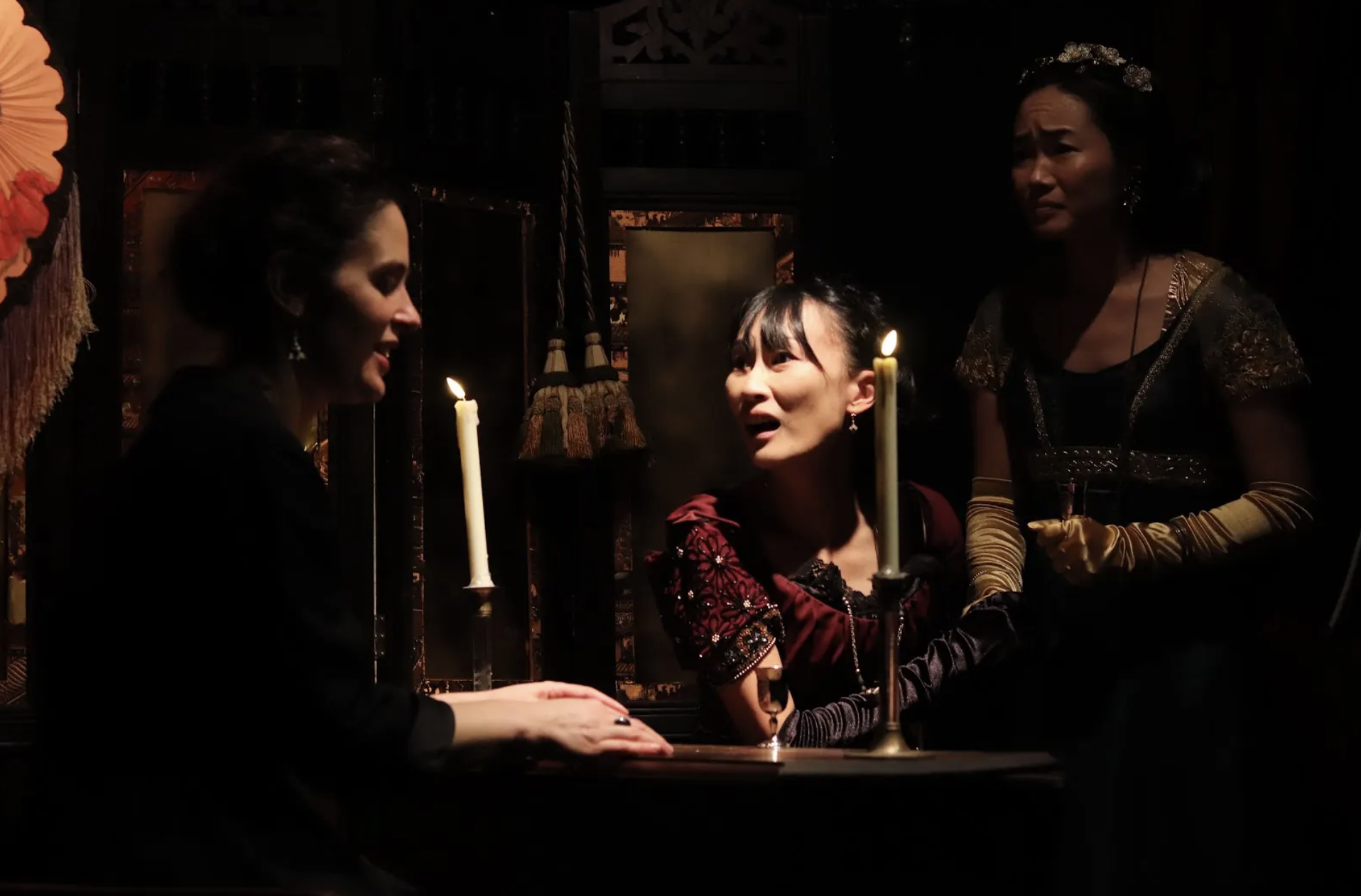
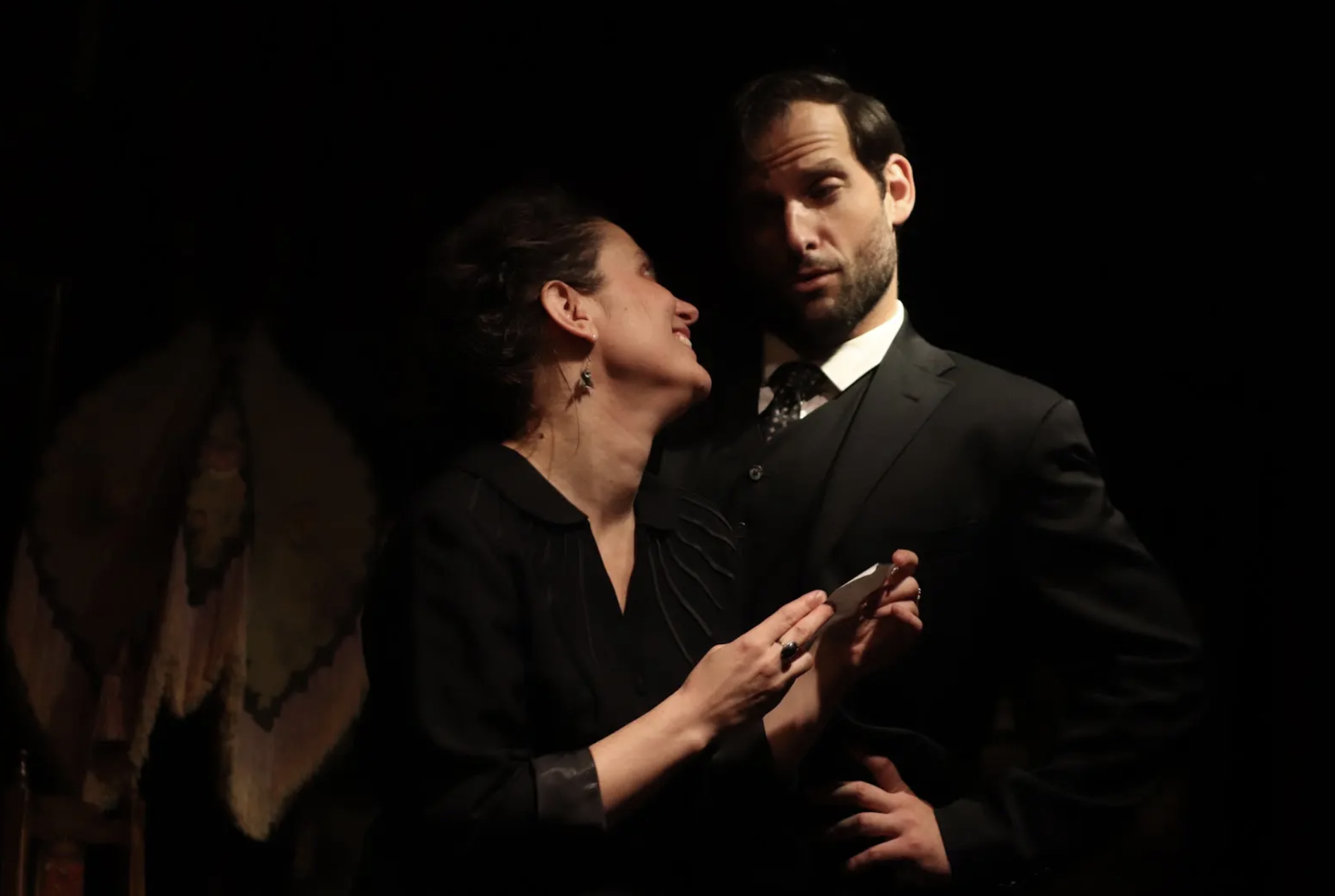
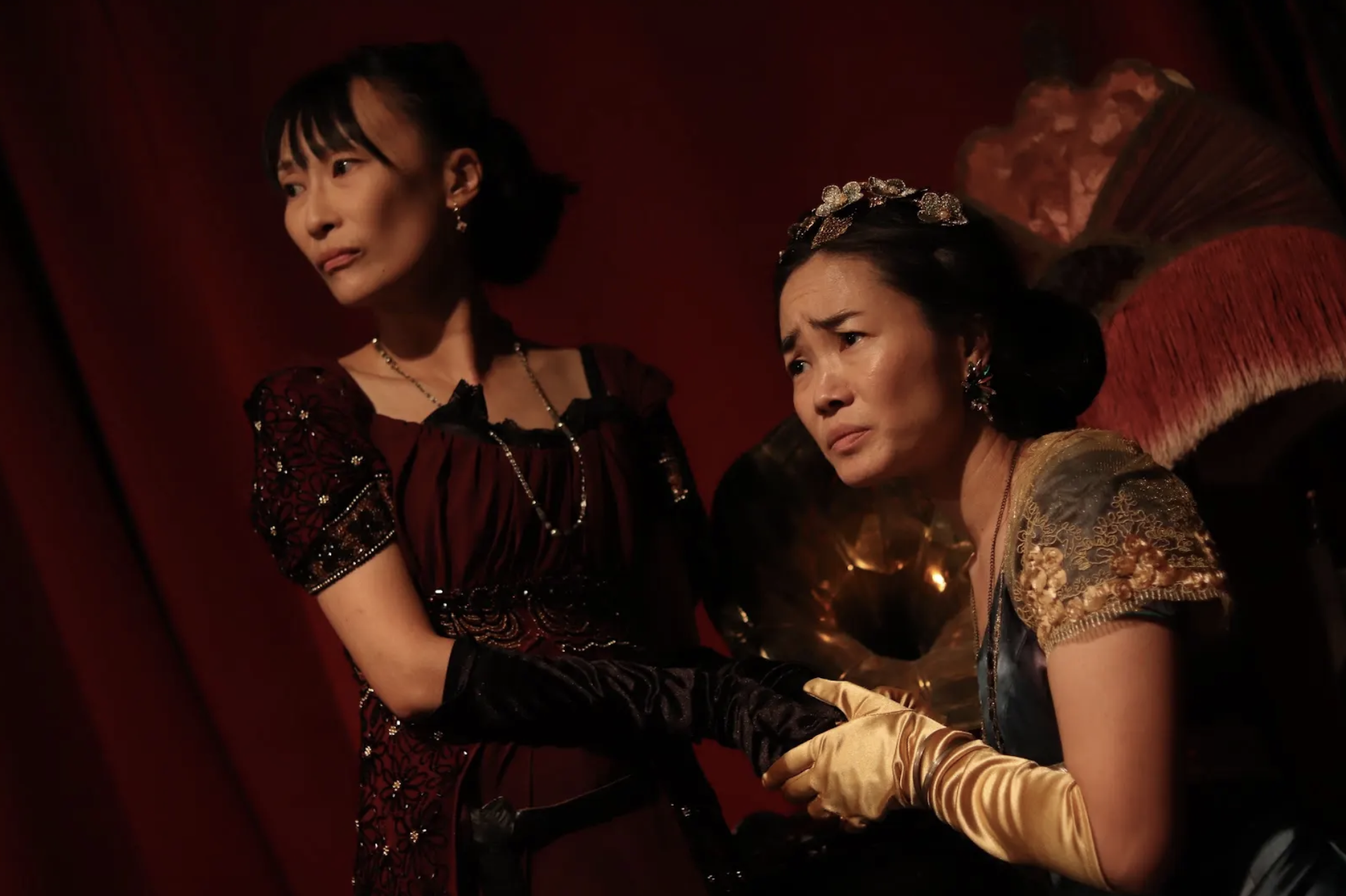
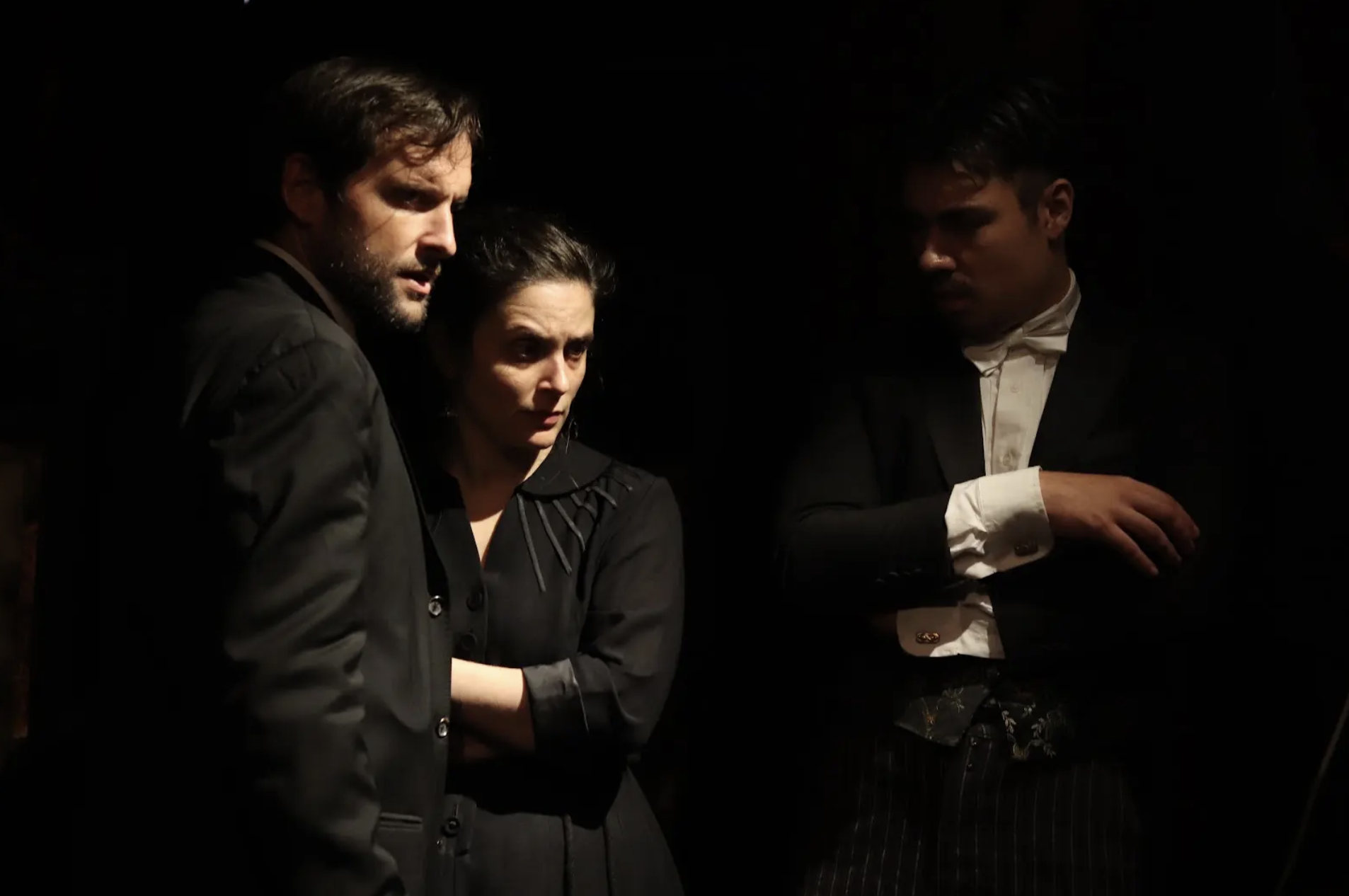
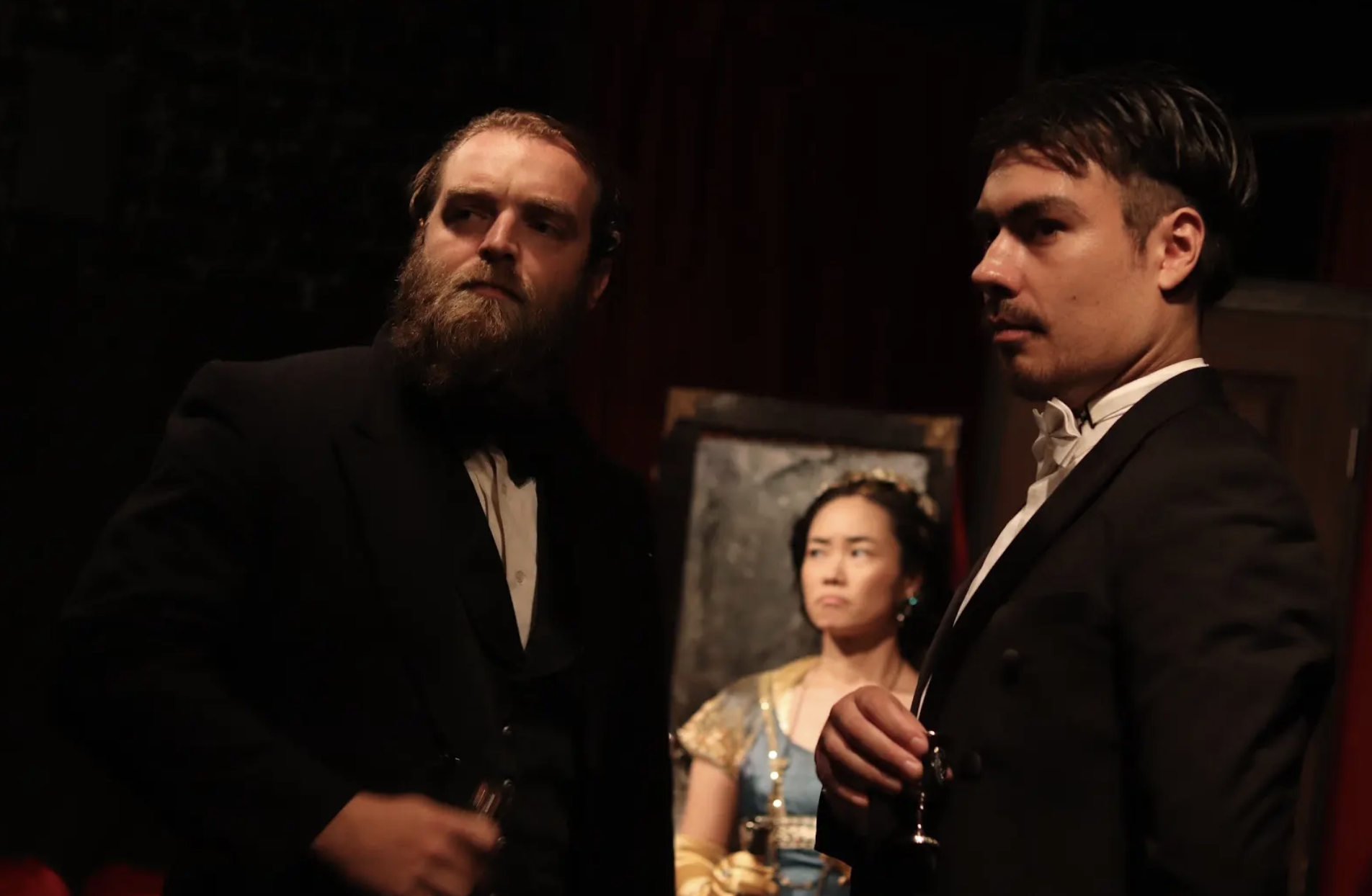
Photo credit by Giancarlo Osaben
You know how much I enjoy an experience that begins the moment I walk into a theatre space. What I truly love about spit&vigor is the company’s ability to maximize its intimate black box, transforming it into a distinctive theatrical experience. The creative use of space reflects a confidence born from experience, a willingness to explore how a room, its furnishings, and the proximity between performers and audience can become essential elements of the storytelling.
With Sara Fellini’s Ectoplasm, the audience becomes part of the immersive performance. We are not merely invisible guests in the parlor, but spirits at the gathering and witnesses to a world where the boundaries between belief and skepticism, love and desire, and life and death begin to blur. Staged in the round, or rather, in a square, the production uses the entire room as its playing space. Mirrors, carefully considered furnishings, wooden doors, and the overall design establish the atmosphere of an early twentieth-century parlor. A marked-off area serves as the heart of the action and evokes the ritualistic use of salt in spiritual practices. These details demonstrate how thoughtful design can accomplish so much within a small footprint. Lighting and the relationship between audience and performers work together to establish the world of the play before its mysteries fully reveal themselves.
But there is more to Ectoplasm than an atmospheric setting.
Set at a private séance in 1912, the play brings Sara Béraud Conlan, a spiritualist (Sara Fellini), and her husband, Kal (Steven Gamble), into the home of the enigmatic Madame Montfort (Laurel Creighton), who has invited an eclectic group of guests. Among them are Ira Orinthall (Federico Mosttert), a charismatic magician bent on debunking spiritual mediums; suffragist Annette Itō (Azumi Tsutsui), alongside her sister Mizka Crookes (Yurika Ohno), a peculiar woman trapped in an unhappy marriage to George Crookes (Jesse Metz), a paranormal scientist with a rather lecherous streak; and Elisha Kane (Adam Belvo), a robust, full-hearted, and decidedly strange former Arctic explorer haunted by a tortured past. Rounding out this gathering is Callum Holes (George Walsh), the deadpan butler, because every mystery set in an upper-class home must have one!
Sara is a particularly interesting figure through whom to explore these questions. Her feminism emerges in seemingly small but telling details: the disregard for the spelling of her name, the ways women are described in print, whether in informative articles or lewd accounts, and her own experience of judgment from Montfort, who declares, “Modern women seem to feel they need to imitate men.”
Sara’s outward confidence masks a deeper uncertainty, and her profession requires her to navigate the delicate relationship between performance and belief. Her work as a medium may involve theatrics and manipulation, but that does not diminish the questions the play raises about her experience and authority. Instead, it invites us to consider the complicated circumstances of a woman whose livelihood depends on persuading others to believe in her. What constitutes authority, and who gets to decide whether a woman’s knowledge or experience is legitimate?
Fellini wears three hats as playwright, director, and actress, and she pulls off all three with remarkable ease. The deeply personal nature of the piece is evident, lending the work an intimacy and authenticity that resonate throughout. Equally effective is the way she engages her ensemble, weaving individual storylines into the larger narrative and creating a cohesive world in which each character has a place.
Each actor brings authenticity to their role, creating a lively ensemble whose interactions make the world of the play feel immediate and tangible. Their performances even elicit responses from the “spirits,” as the audience is playfully designated. At one point, Holes instructs us to remain close to our chairs so we don’t trip the actors as they move through the space. This request introduces an unexpected physical constraint, limiting our movements while bringing us closer to the action. We become acutely aware of our bodies in the room, carefully navigating our own space as the actors navigate theirs. Rather than diminishing the experience, this restriction heightens it, making us more conscious of our presence within the performance. It is a wonderfully effective example of how immersive theatre can turn even a practical consideration into an essential part of the experience.
The audience is positioned to observe the characters at close range, catching subtle shifts in energy as the gathering moves between conviviality, skepticism, and unease. We are encouraged to pay attention not only to what is said, but also to the atmosphere surrounding each exchange. The proximity makes us feel like participants in the occasion, even as we remain observers of its unfolding secrets.
With Ectoplasm, spit&vigor continues to demonstrate the creative possibilities of intimate theatre. The company understands that a small space need not mean a small theatrical vision. By transforming its black box into a world with its own rituals, rules, and mysteries, the production invites us to lean closer, question what we see, and consider what might be waiting just beyond the edge of our understanding.
After all, at a séance, the question is never simply whether something is there. It is whether we are prepared to believe.
Click HERE for tickets.
Review by Malini Singh McDonald
Published by Theatre Beyond Broadway on October 19, 2026. All rights reserved.
