
Girl, Interrupted
Book by Martyna Majok
Based on the book by Susanna Kaysen, Original Music by Aimee Mann
Choreography by Sonya Tayeh, Directed by Jo Bonney
Martinson Hall, at The Public Theater, 425 Lafayette Street, in Manhattan
May 13- July 12, 2026
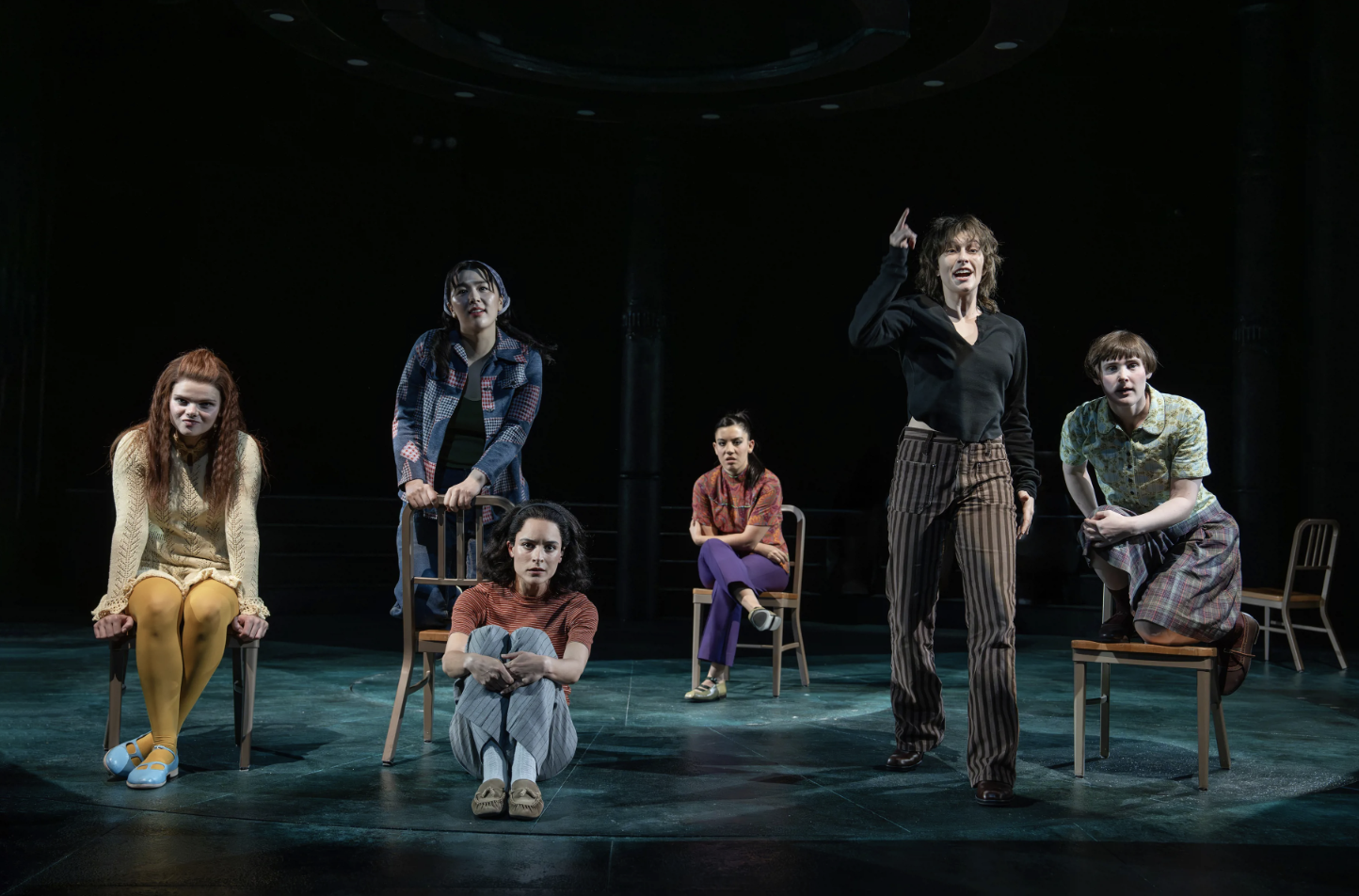

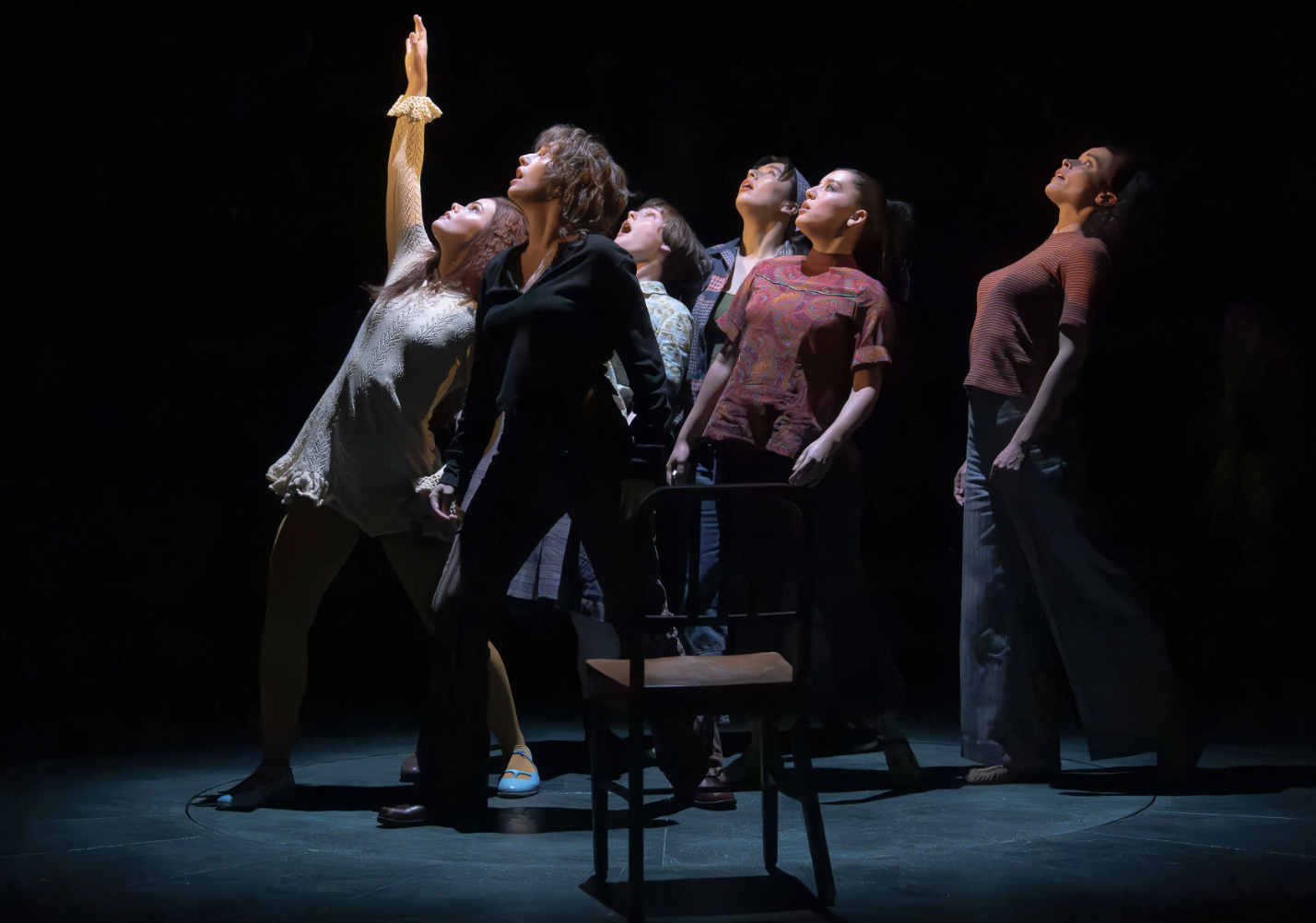
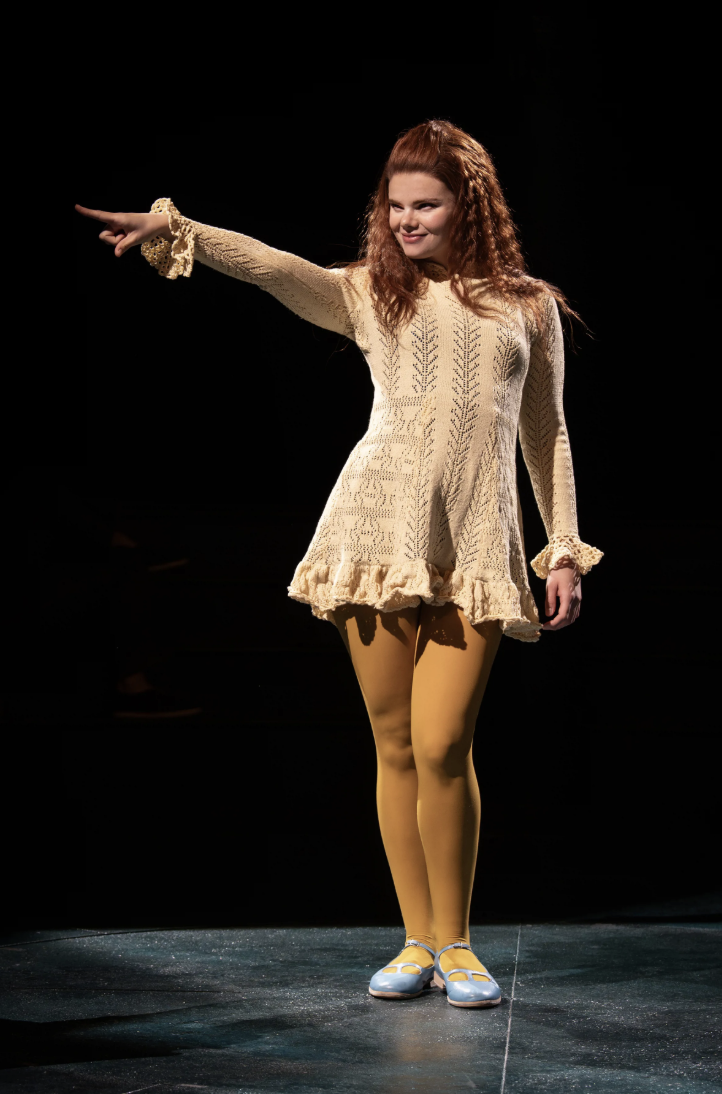
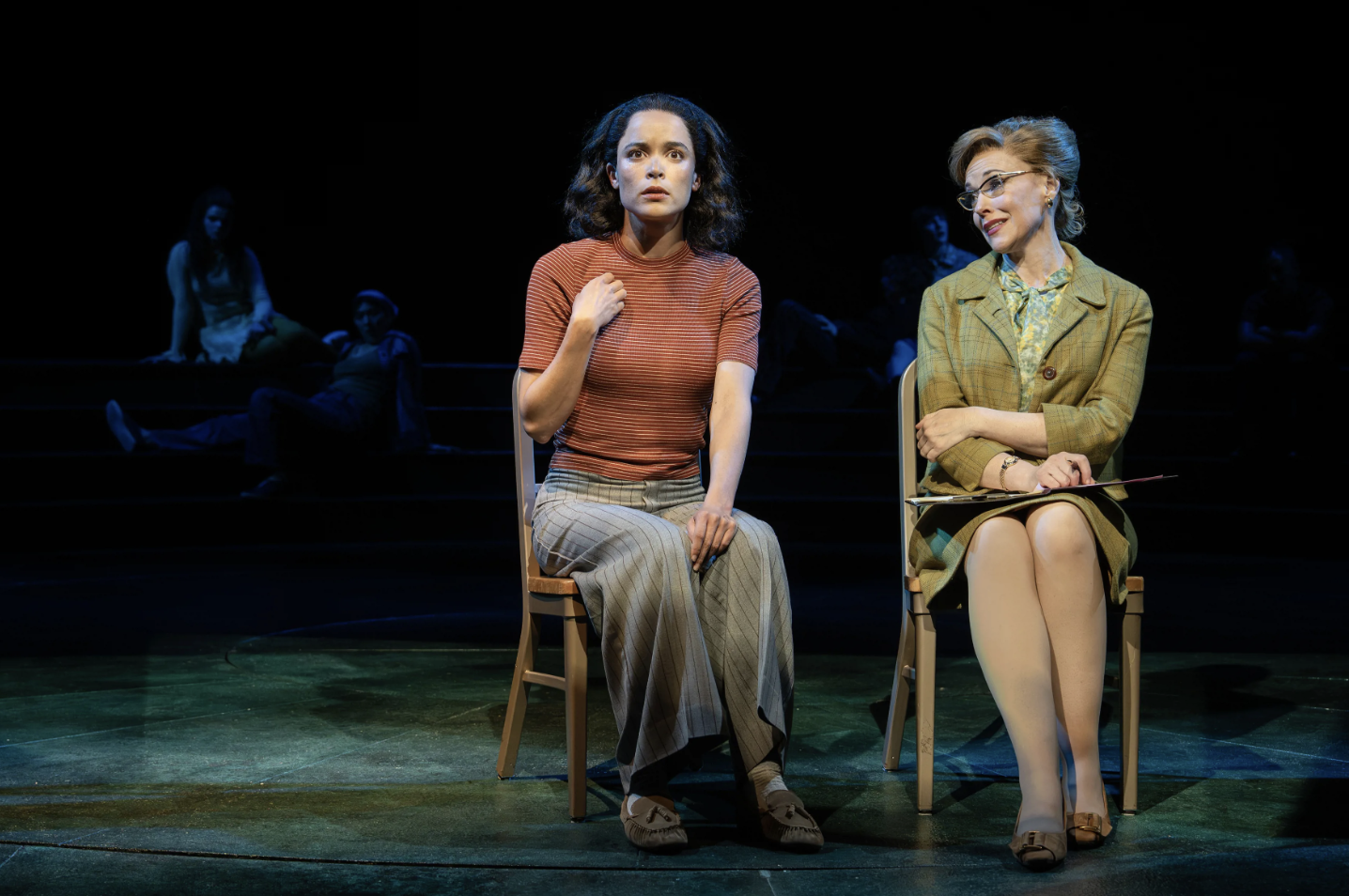
Photo credit by Joan Marcus
There are memoirs that invite adaptation and memoirs that resist it, stubbornly insisting that the very qualities making them unforgettable are those least susceptible to theatrical translation. Susanna Kaysen's Girl, Interrupted has long belonged to the latter category. Her account of eighteen months spent inside McLean Hospital beginning in 1967 is neither conventional narrative nor melodrama, but an accumulation of observations so coolly forensic that they become emotionally devastating. James Mangold's 1999 film famously exchanged much of that reserve for Hollywood propulsion, creating an Oscar-winning showcase for Angelina Jolie's flamboyant Lisa while smoothing the memoir's jagged, unresolved edges. The Public Theater's extraordinary new adaptation, with a book by Pulitzer Prize winner Martyna Majok and an exquisitely haunting score by Aimee Mann, wisely travels in the opposite direction. Rather than forcing Kaysen's memories into a dramatic arc they were never meant to inhabit, it embraces fragmentation itself as dramatic language. The result is one of the year's most quietly astonishing evenings—a chamber musical that understands memory not as chronology but as atmosphere, and trauma not as spectacle but as lingering weather.
From its opening moments, director Jo Bonney establishes that we are entering less a psychiatric institution than the architecture of remembrance itself. Adult Susanna, embodied with remarkable restraint by Juliana Canfield, peers backward across decades toward the frightened eighteen-year-old she once was, uncertain whether her confinement began with a suicide attempt, a signature on an admission form, or simply a society eager to classify intelligent young women who refused easy compliance. That uncertainty becomes the production's governing principle. This is not a story about arriving at answers. It is about discovering how inadequate the questions always were.
Majok's adaptation proves itself a work of uncommon intelligence precisely because it refuses to solve Kaysen's ambiguities. The memoir's episodic structure remains intact, its accumulation of portraits unfolding like pages from a notebook whose entries have been shuffled by time. The daily rituals of institutional life—group therapy, medication lines, endless evaluations, cigarettes, television reports from Vietnam, casual humiliations administered with bureaucratic efficiency—gradually become their own form of dramatic rhythm. What emerges is not the story of one patient's recovery but the anatomy of an entire generation of young women caught between the dying certainties of the Eisenhower years and the unfinished promises of the Summer of Love flickering just beyond the hospital walls.
Majok also sharpens one of Kaysen's most enduring insights: how readily psychiatric diagnosis became entangled with the policing of female autonomy. Again and again Susanna encounters authority figures who seem less interested in understanding her despair than in correcting her ambition. She wishes to become a writer; they recommend vocational training. She insists upon directing her own life; they interpret self-possession as pathology. One of the musical's most mordantly brilliant moments arrives in the satirical number "Give Me Fifteen," in which a swaggering physician boasts that he can diagnose a woman before she has finished walking around the block. The song lands not merely as period satire but as a reminder that institutional certainty has often mistaken obedience for wellness.
Canfield's performance is a master class in understatement. Many actors might search for visible symptoms or theatrical breakdowns; Canfield instead offers the mesmerizing stillness of someone observing herself even while living through catastrophe. Her mesmerizing alto carries Aimee Mann's melodies with unaffected intimacy, while her watchful silence often speaks louder than the score itself. She becomes the embodiment of Kaysen's prose—precise, skeptical, unwilling to sentimentalize either her suffering or her survival. In lesser hands such reserve might seem passive. Here it becomes its own kind of courage.
Around her gathers an ensemble of astonishing richness. King Princess delivers a revelatory Lisa, refusing every temptation toward Angelina Jolie's iconic volatility. This Lisa possesses something more unsettling than flamboyance: absolute certainty. Her charisma arises not from theatrical excess but from the dangerous calm of someone who has stopped believing in consequences altogether. Mia Pak's Grace, whose literary conversations with Susanna about Sylvia Plath and Robert Lowell become meditations on the porous boundary separating genius from illness, gives the production some of its most heartbreaking moments. Katherine Reis imbues Daisy with an elegance that slowly reveals itself as profound loneliness, while Gabi Campo lends Tori both brittle wit and desperate vulnerability. Sally Shaw's Polly, meanwhile, emerges as one of the evening's unforgettable achievements, transforming what might have become tragedy reduced to symbolism into something painfully, luminously human.
The constellation of supporting performances gives Susan Kaysen's institutional world its shifting emotional topography. As the omnipresent Male Presence, Manoel Felciano becomes less a single character than an embodiment of the masculine authority that quietly governs every stage of Kaysen's young life. He moves fluidly from the teacher who introduces her to art before exploiting her vulnerability, to the impatient husband incapable of understanding that genuine engagement with a painting cannot be hurried. Felciano's understated transformations suggest that these men are not isolated figures but recurring expressions of the same cultural impatience with female interiority. Throughout, he also serves as the production's indispensable musician, moving effortlessly among guitar, bass, and violin, his playing weaving an intimate musical thread through Kaysen's fractured recollections.
Emily Skinner lends Dr. Wick a welcome gravity, resisting the temptation to make the psychiatrist either saintly or severe. Instead, she locates the fragile space where clinical detachment yields to genuine empathy, allowing diagnosis to become not an act of judgment but one of recognition. Ta'Rea Campbell's Valerie, the ward's head nurse, offers another variety of care: practical, unsentimental, and deeply humane. Her administration of medication and hard-earned reality checks never feels punitive; rather, Campbell understands that compassion within an institution often arrives wearing the face of discipline. Lauren Jeanne Thomas, as the earnest nurse-in-training Judy, supplies a gentle counterpoint, embodying the tentative optimism of someone whose belief in healing has not yet been eroded by routine. Like Felciano, Thomas extends her contribution beyond performance, accompanying the score on bass, flute, and violin, reinforcing the production's seamless fusion of drama and music.
It is Aimee Mann's score, however, that performs the adaptation's quiet miracle. Her songs do not interrupt the narrative so much as expose emotional chambers that prose alone cannot fully illuminate. Long celebrated for her gift for melancholy observation, Mann composes here with astonishing dramatic instinct. These are not conventional Broadway numbers engineered toward applause. They unfold like private confessions overheard through hospital walls, full of slant rhymes, suspended harmonies, and melodies that seem perpetually to hesitate before resolving. Todd Almond's delicate orchestrations, anchored by Andrea Grody's musical direction and enriched by cast members performing onstage instruments, create a sonic landscape of extraordinary intimacy.
Nearly every principal receives a musical portrait worthy of lingering admiration. Polly's devastating "Burn It Out" transforms unspeakable pain into poetry without ever diminishing its horror. Daisy's "Home by Now" aches with impossible longing, while Lisa's reflections on life beyond institutional walls shimmer with false promises and genuine yearning. Susanna and Grace's exquisite duet invoking Robert Lowell and Sylvia Plath becomes less an inventory of famous patients than a lament for artists forever navigating the unstable territory where imagination and suffering intersect. Mann understands that music cannot explain mental illness, but it can give shape to its emotional weather, structuring sorrow into sound with uncommon grace.
Bonney's staging displays equal confidence in theatrical economy. The collective dots has designed an environment that exists somewhere between memory palace and institutional ruin: mottled green architecture, revolving platforms, skeletal ironwork, and an immense hovering circular structure that recalls both the glass bell jar of Plath's imagination and the relentless machinery of diagnosis itself. Heather Gilbert's shadow-rich lighting renders every corner of the stage suspended between recollection and dream, while Sarah Laux's period costumes evoke the late nineteen-sixties without allowing nostalgia to soften their severity. Sonya Tayeh's choreography rejects decorative dance in favor of expressive ritual, bodies moving with the constrained precision of patients whose every gesture has long been observed.
One particularly haunting image returns throughout the evening: Vermeer's Girl Interrupted at Her Music, glimpsed during Susanna's visit to the Frick Museum. The young woman in the painting looks directly outward, her interrupted lesson frozen forever, her expression carrying across centuries what feels unmistakably like a warning. Majok and Bonney elevate this encounter into the production's central metaphor. Interrupted education. Interrupted ambition. Interrupted adolescence. Interrupted identity. Every woman onstage has become, in one way or another, another girl interrupted before discovering who she might otherwise have become.
What distinguishes the production most profoundly is its refusal to divide its characters into the cured and the incurable, the sane and the insane. Instead it asks whether those categories ever possessed the certainty institutions claimed for them. Some of these young women recover. Some do not. Some leave the hospital only to find the world outside no less bewildering than the one they have left behind. Others remain suspended in memory long after death. Bonney keeps many departed figures lingering silently upstage, reminding us that memory refuses discharge papers. These women continue inhabiting Susanna's consciousness, and by evening's end they have quietly taken up residence within ours as well.
The cumulative effect is deeply moving without ever becoming manipulative. Girl, Interrupted succeeds because it declines to convert suffering into inspiration or madness into theatrical ornament. Instead it offers something rarer: compassionate witness. Majok, Mann, Bonney, and an impeccable company have fashioned an elegy for those young women whom history too easily dismissed as hysterics, difficult daughters, or hopeless cases. Their voices emerge not in triumphant liberation but in harmonies of extraordinary tenderness, insisting upon complexity where institutions preferred diagnosis.
The final return to Vermeer's interrupted girl lands with devastating inevitability. She has been watching all along, her lifted gaze spanning three centuries to meet Susanna's own. By then, one understands that she is no longer warning only Susanna but all of us against the seductive certainty of easy explanations—for madness, for womanhood, for memory, for survival. Few productions this season achieve such quiet emotional authority. Fewer still linger with such inexhaustible resonance after the lights have faded. Like Kaysen's memoir itself, this remarkable adaptation interrupts our lives only briefly. It is enough to leave them permanently altered.
Click HERE for tickets.
Review by Tony Marinelli.
Published by Theatre Beyond Broadway on July 5, 2026. All rights reserved.
