I Wanttt a Unicorn Frappé!!!
Written by Catherine Weingarten; Directed by Alex Tobey
The Tank | 312 W 36th St., New York, NY 10018
May 28, 2026 - June 21, 2026
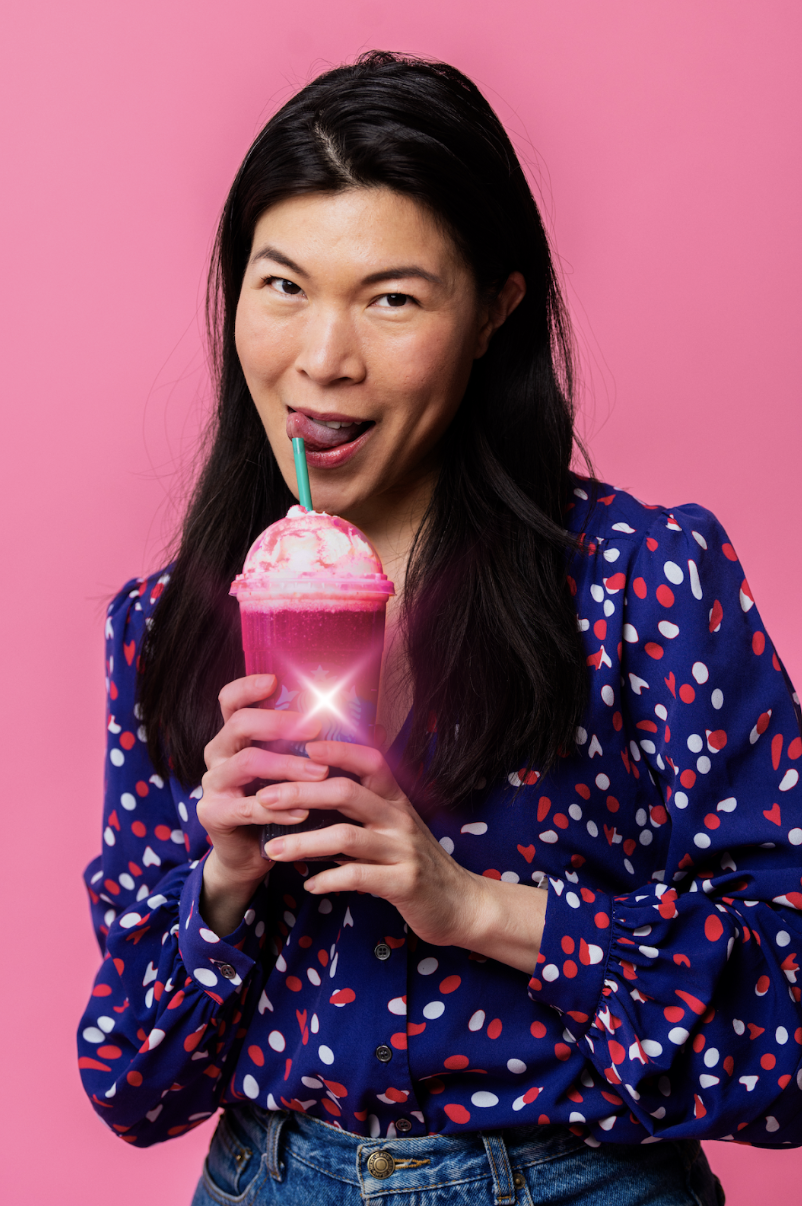
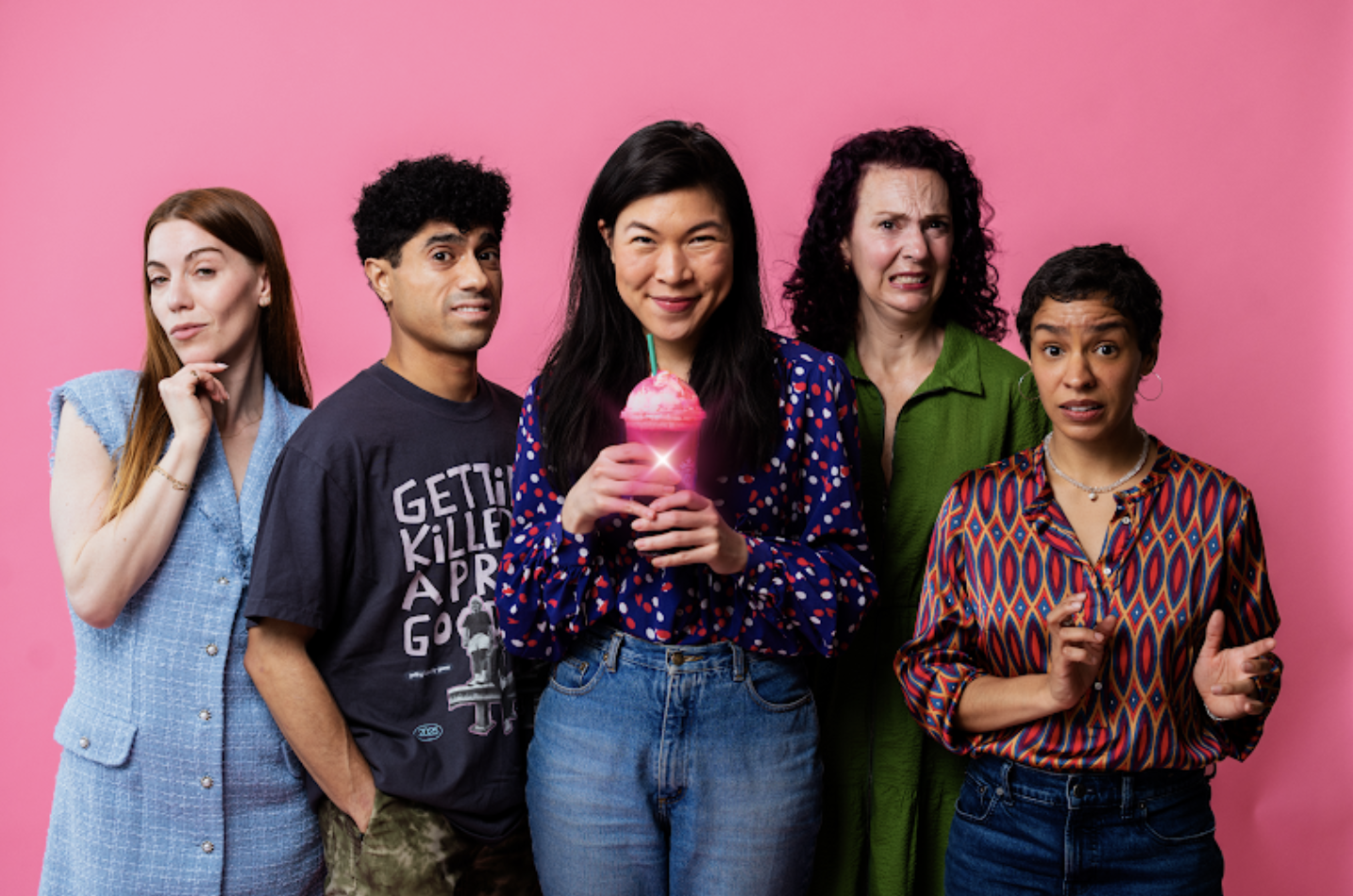
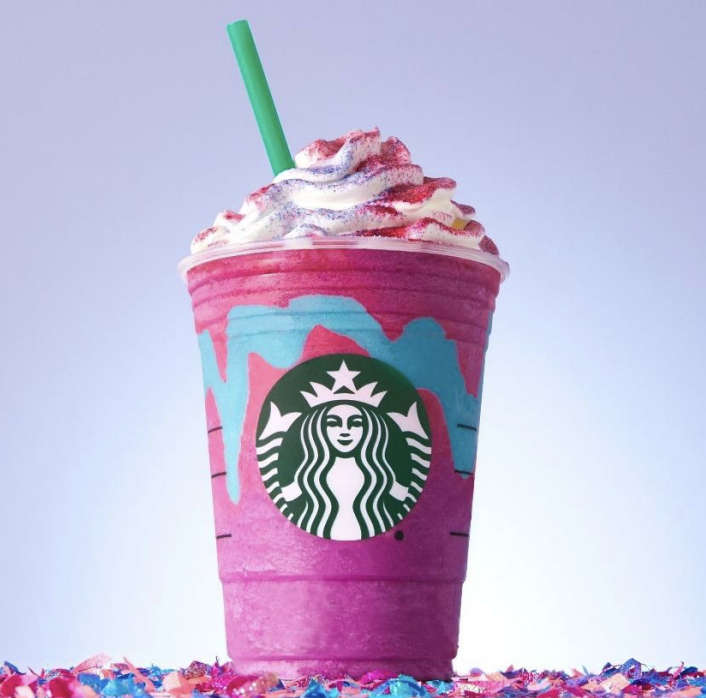
Photo credit by HanJie Chow
Walking into the intimate black box space at The Tank, audience members are greeted by chairs draped in pink and blue covers. The effect immediately evokes a wedding reception, and appropriately so. The play's protagonist, Jenny, is engaged to Sebastian and is planning her wedding. Yet I Wanttt a Unicorn Frappé!!! is less interested in marriage itself than in the fantasies we construct around happiness, love, and the lives we believe we should be living.
We live in a culture increasingly shaped by curated realities. Social media presents the highlight reels of our lives, encouraging us to compare ourselves to carefully curated versions of other people's happiness. The result is a society chasing ideals that often do not exist. I Wanttt a Unicorn Frappé!!!
explores this phenomenon through Jenny, a young woman whose wedding planning becomes intertwined with obsession, delusion, and the pursuit of an impossible dream.
Jenny's fiancé, Sebastian, is emotionally detached and largely absent from her reality. Her best friend and maid of honor gently suggests he may not be the right partner, while still standing loyally by her side. Her mother, trapped in an unhappy marriage, embodies the pressure of traditional expectations and the promise that marriage alone will lead to fulfillment. Meanwhile, wedding planner Darla exists to manufacture perfection, regardless of whether the fantasy being sold bears any resemblance to reality.
What begins as a craving for a colorful Starbucks-inspired beverage evolves into something much larger – metaphorically and literally. The Unicorn Frappé becomes Jenny's comfort, then her sustenance, and eventually her addiction. A deluge of brightly colored drinks floods the stage throughout the production, serving as a visual manifestation of her growing dependence on fantasy. As wedding planning progresses through meetings about the dream wedding, the perfect cake, food, and gift bags, Jenny slips further into a sugary, caffeine-fueled fever dream.
Within that dream, she encounters the Unicorn Frappé Prince, a bedazzled fantasy figure who embodies everything she longs for. Played by the same actor portraying Sebastian, the Prince blurs the line between fantasy and reality, forcing audiences to consider whether Jenny is pursuing genuine love or simply chasing an idealized version of it. The doubling proves one of the play's most effective devices, reinforcing its central question: are we in love with people, or with the stories we tell ourselves about them?
The script also examines the pressures placed upon women navigating wedding culture. As Jenny consumes increasingly excessive amounts of the signature beverage, comments about her appearance and potential weight gain emerge, highlighting the body scrutiny that often accompanies wedding planning. These moments contribute to the play's broader critique of societal expectations surrounding femininity, beauty, and performative happiness.
Perhaps most interestingly, the characters function as archetypes whose defining qualities are often revealed through their shadows or opposites. The devoted friend harbors doubt. The mother represents marriage while embodying its disappointments. The fiancé exists as both absent reality and idealized fantasy. The wedding planner sells perfection while facilitating illusion. Through these contradictions, the play explores the widening gap between what we present to the world and what lies beneath the surface.
The production's strongest achievement is its design. Scenic designer Benny Pitt makes inventive use of The Tank's intimate space, transforming a simple backdrop into a Starbucks and utilizing movable signage to indicate changes in location and time. The flipping of wall and table signs becomes an especially effective storytelling tool, clearly marking the progression of days and weeks as Jenny spirals deeper into wedding preparation. A single center-stage table serves multiple purposes throughout the production, functioning as a café table, a bed, and other locations with remarkable efficiency. Given the challenges of staging a production with audience members seated on three sides, the design demonstrates both creativity and practicality.
Olivia Her's costume design effectively distinguishes the play's grounded and fantastical worlds, particularly in the vibrant design of the Unicorn Frappé Prince, who appears bedazzled in pinks, purples, and blues. Hayley Garcia Parnell's lighting helps navigate the shifts between reality and Jenny's increasingly surreal imaginings, while Amelia Way's sound design supports the dreamlike atmosphere that overtakes the narrative.
The cast fully commits to the heightened style of the piece. Rachel Lin carries the production as Jenny, charting her descent from wedding-focused optimism into obsession and fantasy. Meg MacCary brings a recognizable weariness to Jenny's mother, portraying a woman whose own disappointments quietly inform her daughter's choices. Sabina Friedman-Seitz is effective as Darla, serving as both facilitator and enabler of Jenny's increasingly unrealistic vision. Lindsley Howard provides a grounded presence as Jenny's best friend and maid of honor, balancing concern with steadfast support.
Fernando Gonzalez is particularly compelling in his dual roles as the emotionally detached Sebastian and the fantastical Unicorn Frappé Prince. The contrast between the two characters underscores the play's central exploration of fantasy versus reality. As Sebastian, he is disengaged and distant; as the Prince, he becomes the embodiment of Jenny's imagined ideal.
The play's social commentary is clear and often incisive, but its execution proves uneven. The heightened vocal choices and intentionally unrealistic conversations emphasize the absurdity of the world being portrayed, yet they can also become exhausting. While each scene contributes to Jenny's unraveling, many linger beyond their natural endpoint.
This issue is particularly noticeable near the conclusion. What appears to be the ending is followed by another journey into Jenny's fantasy world, where the Unicorn Frappé Prince carries her away before the story returns for additional scenes.
At its best, I Wanttt a Unicorn Frappé!!!
offers an inventive satire of modern culture's addiction to curated realities, manufactured happiness, and impossible standards.
Click HERE for tickets.
Review by Malini Singh McDonald.
Published by Theatre Beyond Broadway on June 6, 2026. All rights reserved.
