Late Blooming
Written and directed by Dennis Yueh-Yeh Li
Presented by Voyage Theater Company as part of the Fresh Fruit Festival, presented by All Out Arts.
wild project | 195 E. 3rd Street, New York, NY 10009
April 27 to May 2, 2026
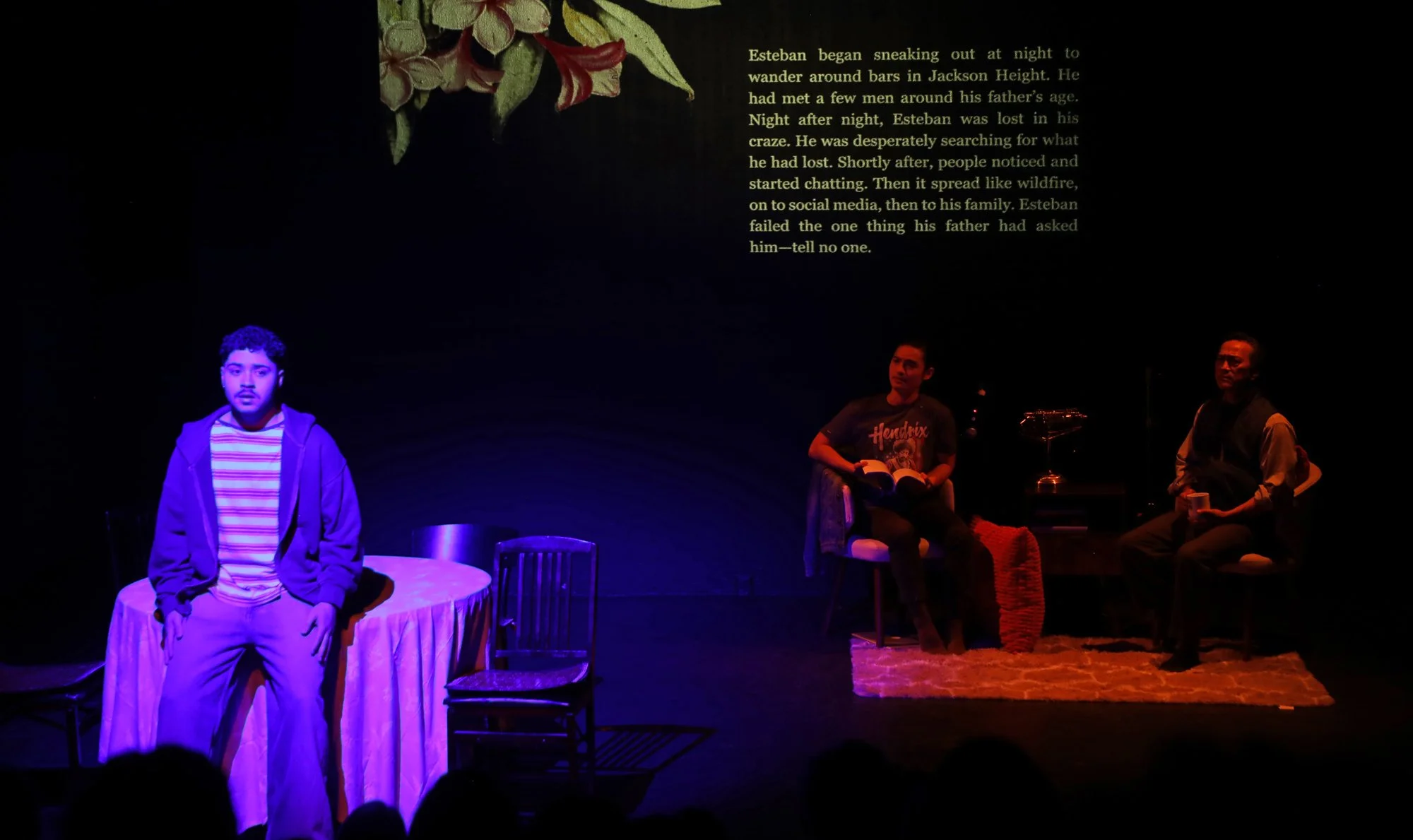
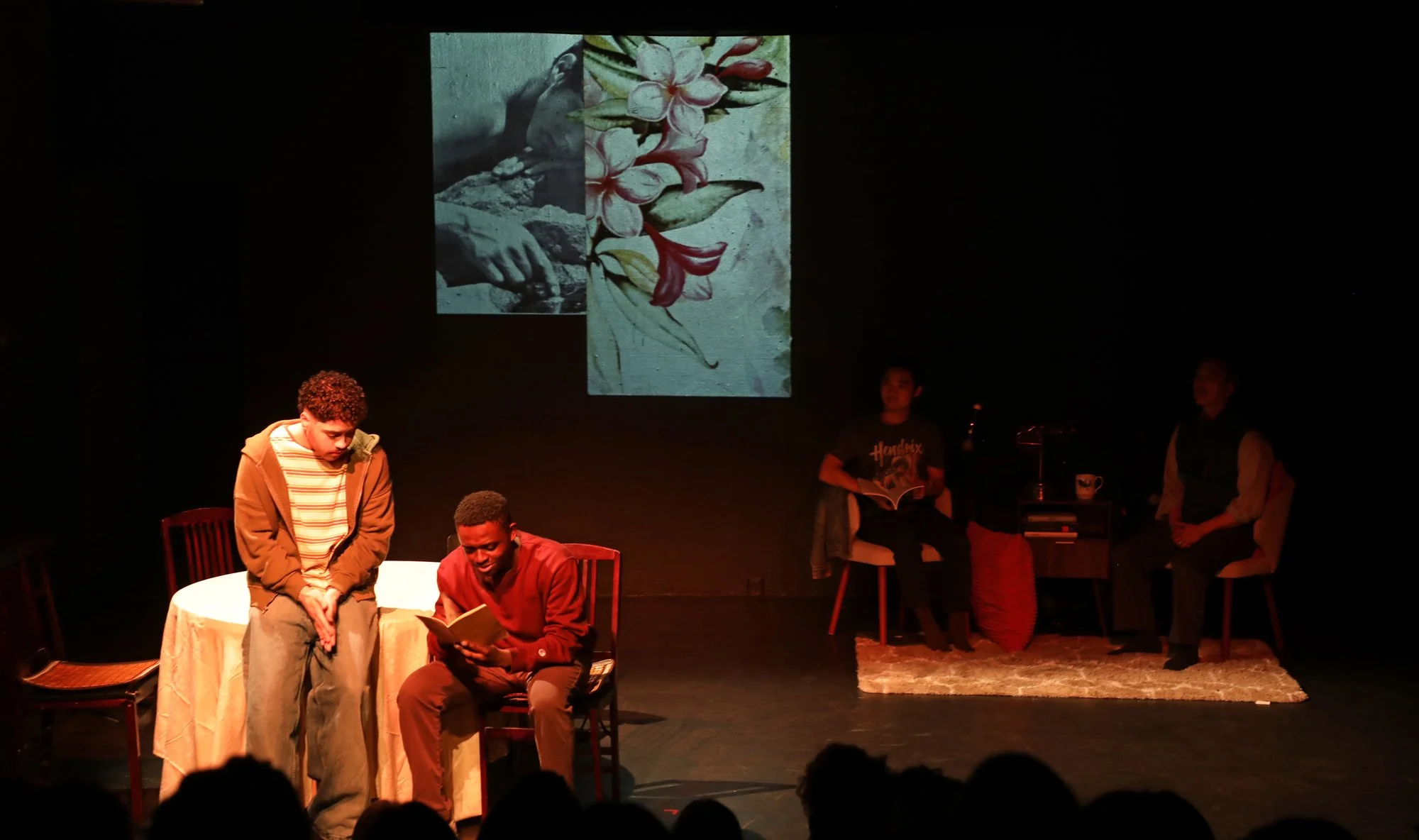
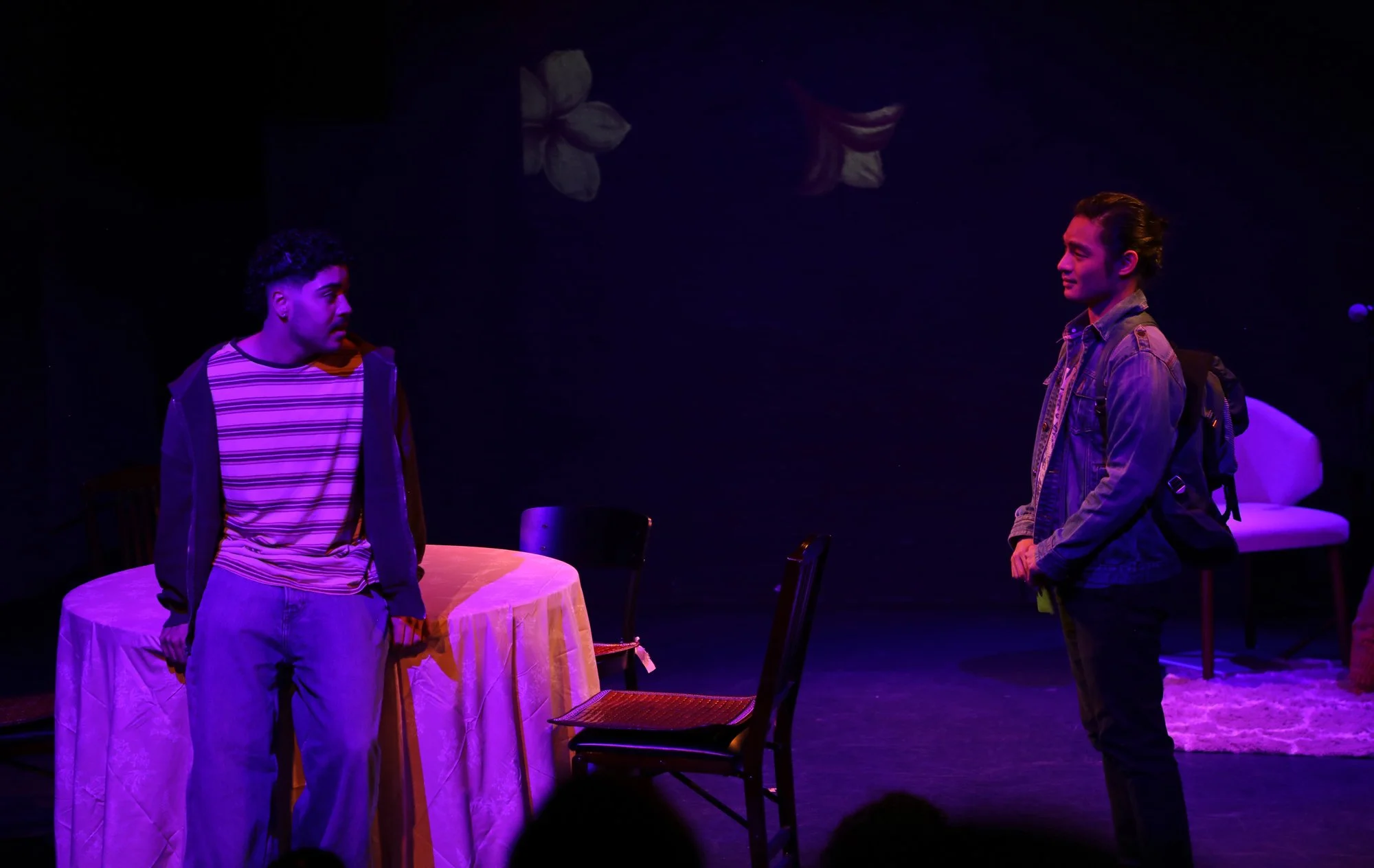
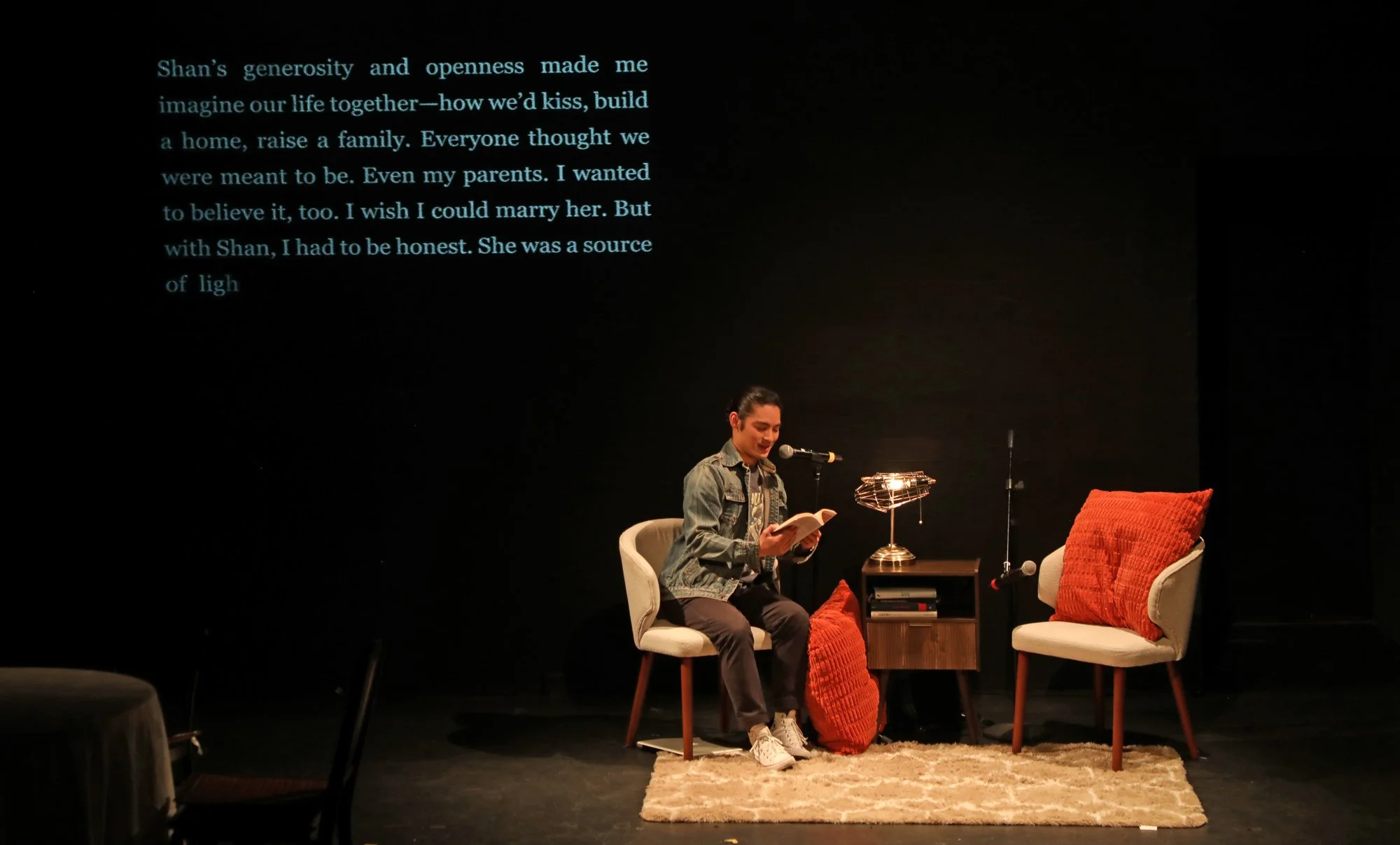
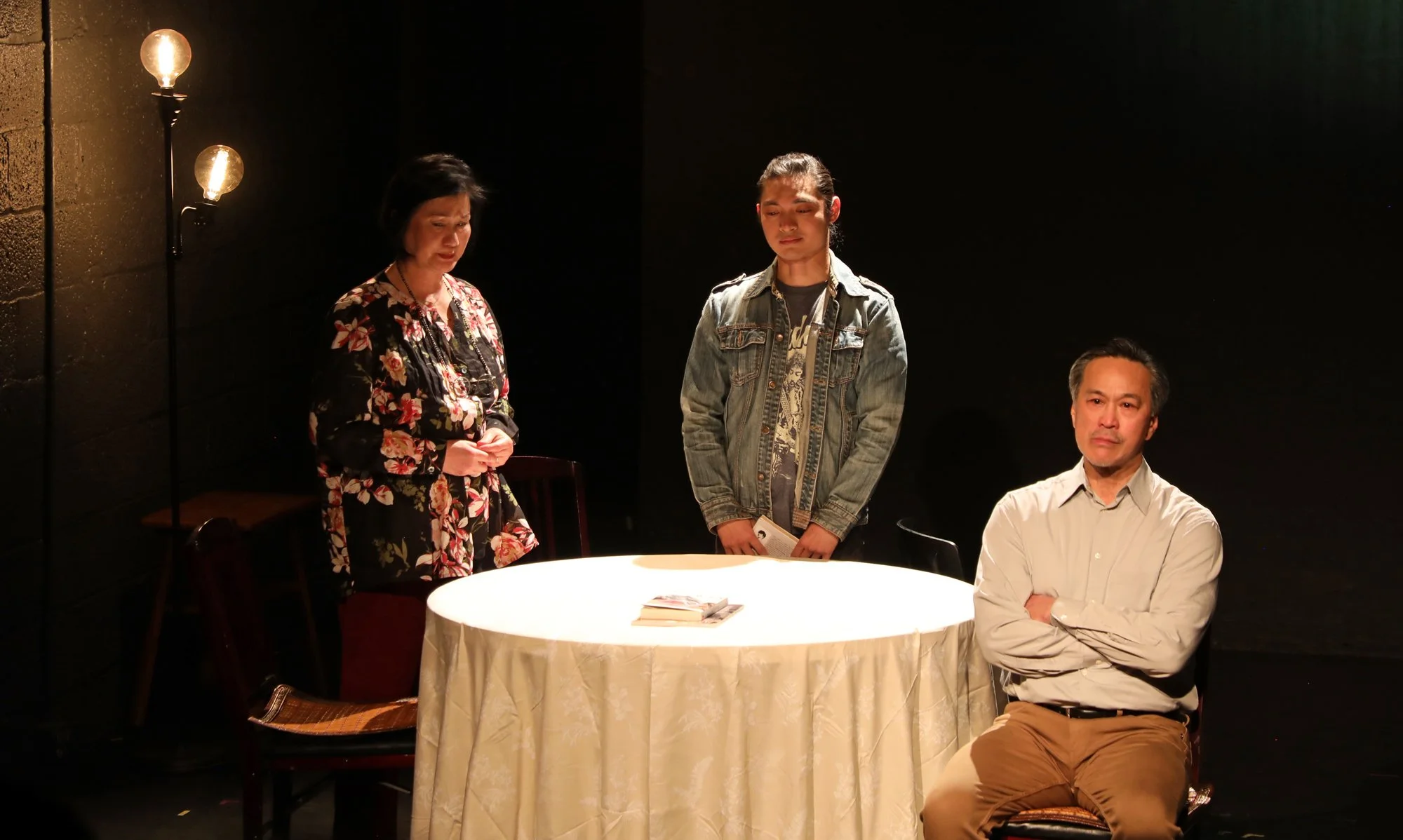
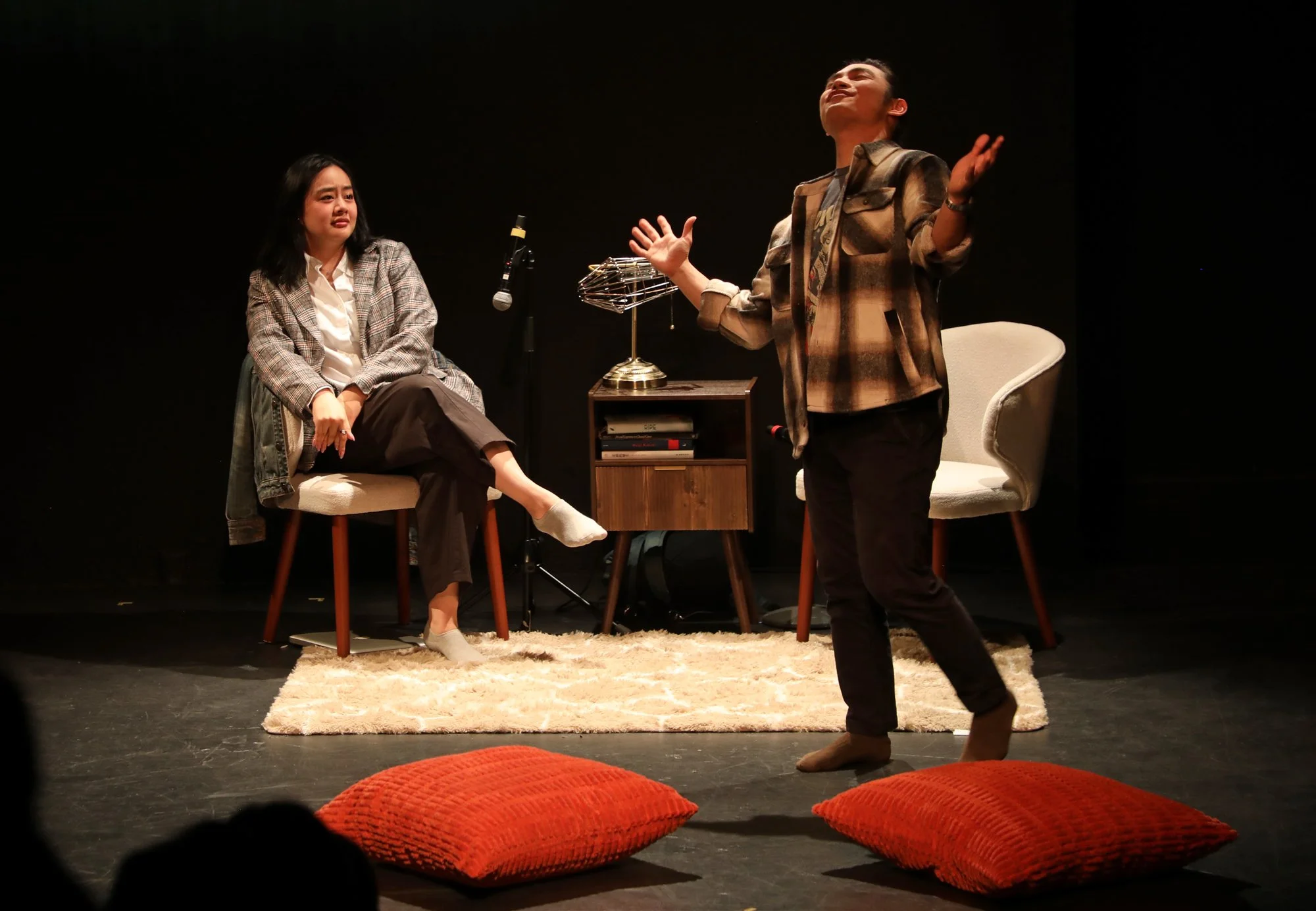
Photo credit: Charlotte Shi
Late in Dennis Yueh-Yeh Li's Late Blooming, world-premiering from Voyage Theater Company at the wild project as part of the Fresh Fruit Festival, the Chinese immigrant parents at the play's center sit alone in their Elmhurst townhouse and watch news coverage of Taiwan's marriage equality ruling. Their son has come out, moved out, and stopped speaking with them. The father at first refuses to sell the house. The mother tells him they should. They turn over the questions of love and home and what they came to America for between them in two languages, and arrive at the kind of acceptance the rest of the script has been building toward. Most coming-out plays flatten their parents into obstacles, instruments, or absolution. Late Blooming wants Father and Mother as full subjects working through the same questions from the other side, and the patience of this scene is the play's clearest virtue.
It is also refreshing to see a coming-out play that is not about white people. Late Blooming is rooted inside the worldview of a working-class Chinese immigrant family, and it does not treat that specificity as decoration. The Father's framing of homosexuality as "hooliganism" is learned from his memory of Mao-era China, not improvised under stress. Libao's observation on the radio that the Chinese American community's queer conservatism is rooted in working-class survival rather than ideology names something most coming-out plays will not name. Shan's bitter recollection of hating her own Asian femininity in a white-dominant world lands in one short speech the play does not over-explain. That cultural worldview is the show's argument, and it earns its place on this festival's stage.
Beneath the coming-out story, Late Blooming runs a sharper second argument about gentrification. Shan returns to Elmhurst not for a homecoming but on assignment for a developer who wants to revamp the neighborhood. Libao backs the sale of his parents' house. On one level, the play makes the two of them the villains of their own story: the children of immigrant labor who become the agents of immigrant displacement. The cruel irony the play earns is that this is the future the parents built. They worked for thirty years to raise children who would succeed on white America's terms, and now those children come back as developers and writers and Americans who can no longer afford, economically, culturally, and spiritually to hold the houses built for them.
The puzzle is where the parents' scene sits. Li places it as Epilogue, an out-of-sequence flashback dropped in after the play's emotional climax has already passed. The two characters Li writes most carefully arrive at their hardest reckoning at the moment the audience is preparing to leave. Returning the scene to its chronological place, or cutting the flashback frame and letting the parents' reckoning happen in real time, would put the script's strongest material at the center of the evening rather than at its margin. The play already has the scene it needs. It just needs to trust it.
That same instinct toward subtraction would help the rest of the script. Late Blooming currently tries to hold three frames at once: a podcast interview in which the adult Libao reads aloud from his autobiographical book, the memory scenes of his coming out to his parents in their Elmhurst townhouse, and a separate subplot about Esteban, a closeted DACA kid, and his best friend Jay. The Esteban and Jay material reads as parallel evidence, another queer brown teenager whose father cannot meet him. In a longer play, two parallel arcs can compound. Across eighty minutes without intermission, the parallel pulls focus from the family and the gentrification reckoning the show told us it was about. Folding that thread back into Libao's narration, and trusting the central story to carry the resonance the parallel was meant to provide, would let both arguments breathe. The play does not need to give the audience every answer. It can trust them to draw their own.
At its strongest, the direction lets the actors hold the room. Voyage has cast performers I have admired elsewhere, and at its best the production gives them the air to do what they do well. The parents are the evening's anchors, holding stillness when the staging lets them. Shan finds an easy comic rhythm in the moments where the direction steps back, and the affection between her and Libao reads cleanly when the scene allows quiet. The wild project is intimate, the audience is close, and the production is occasionally pitched at a scale better suited to a larger house. Where the volume comes down, the play comes forward. That is a calibration the production can find with another pass.
Cinthia Chen's projections are the production's clearest artistic statement, atmospheric and attentive to the play's shifts in time and consciousness, and doing real dramaturgical work in marking when memory is happening, when the radio frame is happening, and when the past is bleeding through.
What Late Blooming has going for it is more than this opening currently displays: a writer willing to make the parents into people, a cultural worldview specific enough to anchor the play, and a gentrification thread sharp enough to make its protagonists complicit. The post-show panel on coming out within Global Majority queer communities, scheduled after the April 28 performance, points exactly to the conversation this play could host if the script trusts what it already does best. With another pass, less material, and the parents' scene returned to its place in the chronology, Late Blooming is within reach of the play it is reaching for. It has the soul of one. The next draft is where it finds the body.
Click HERE for tickets.
Review by Ariel Estrada.
Published by Theatre Beyond Broadway on May 4, 2026. All rights reserve