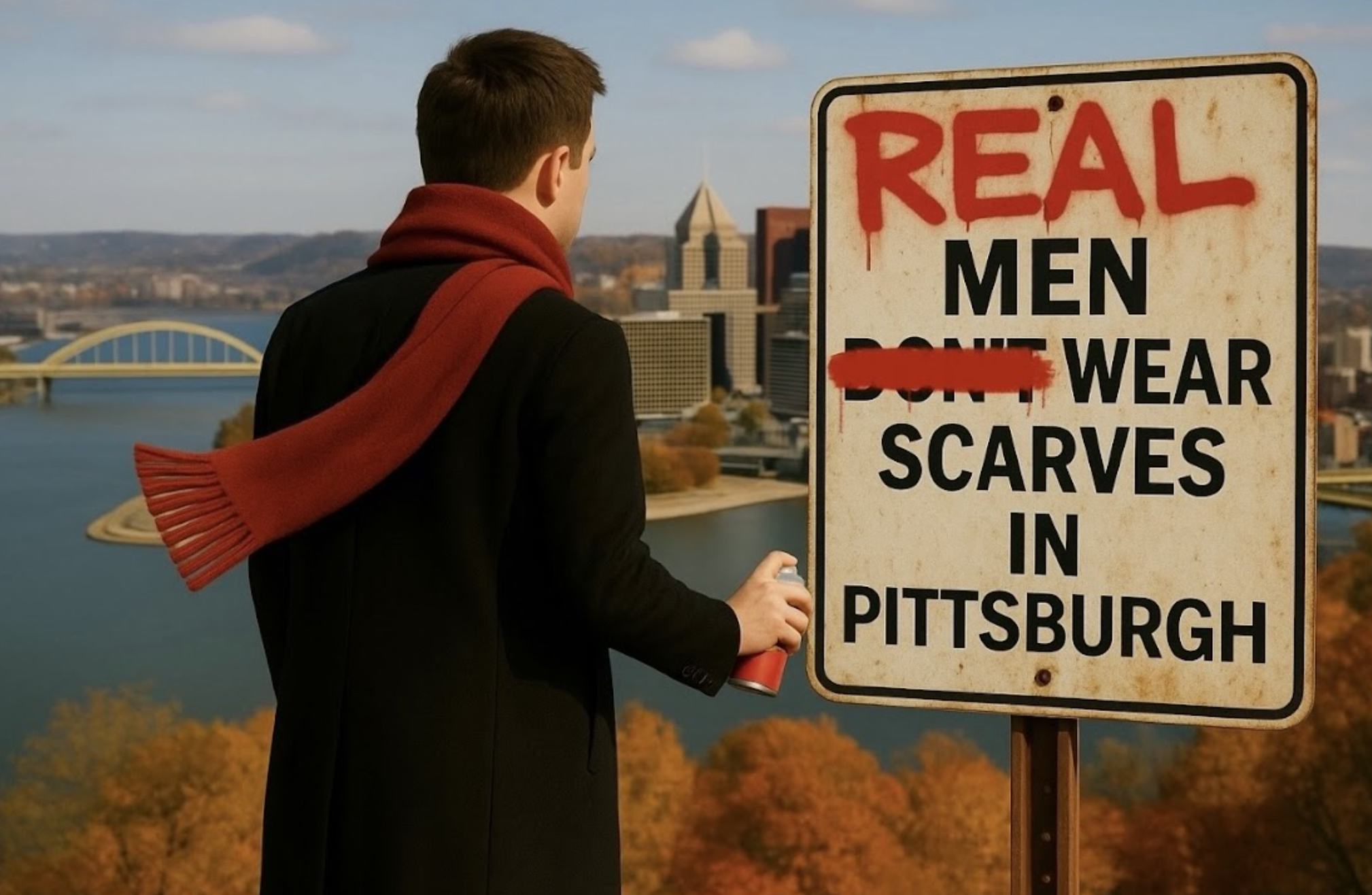
REAL MEN WEAR SCARVES IN PITTSBURGH
Written and Performed by Andy Paluselli
Directed by Herman Sebek
Presented by the New York City Fringe Festival
Chain Theatre Studio, 312 West 36th Street, New York, NY 10018
Sun April 5 at 7:15pm, Thu April 9 at 7:55pm, Sat April 11 at 3:55pm & Fri April 17 at 7:55pm
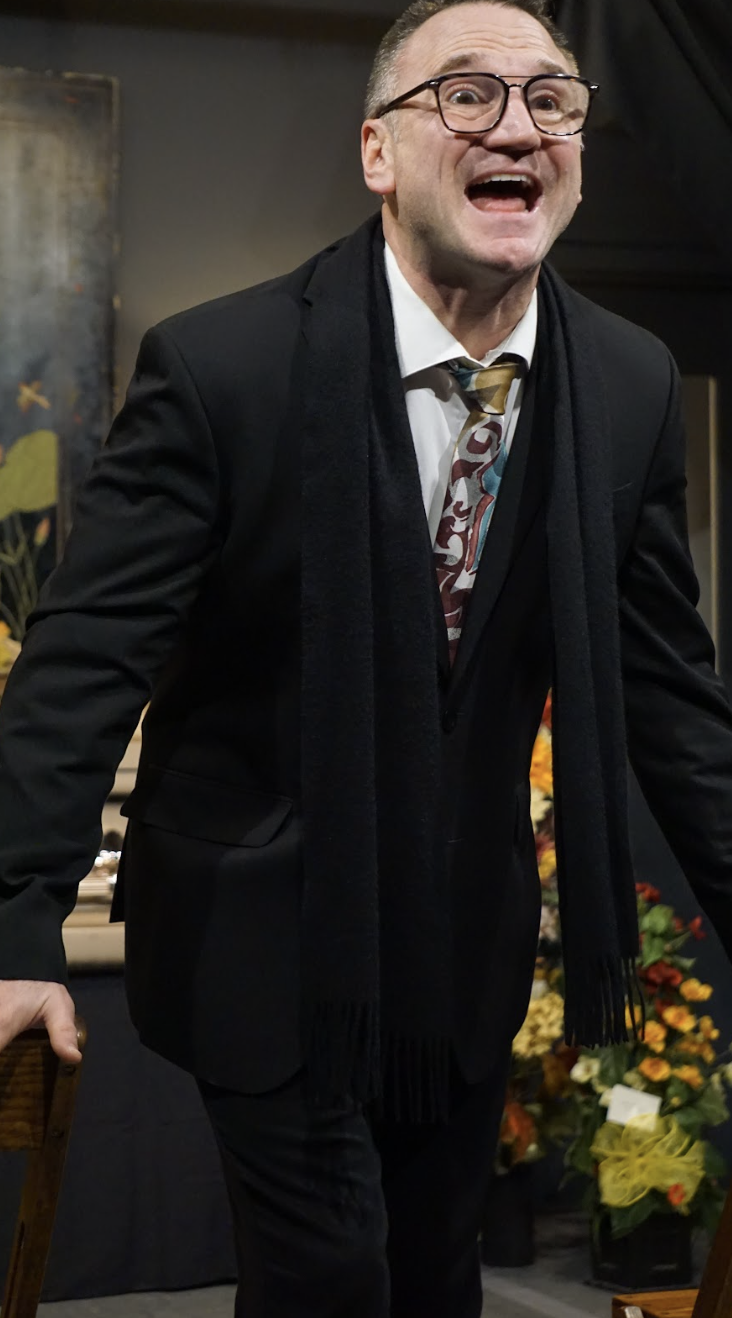
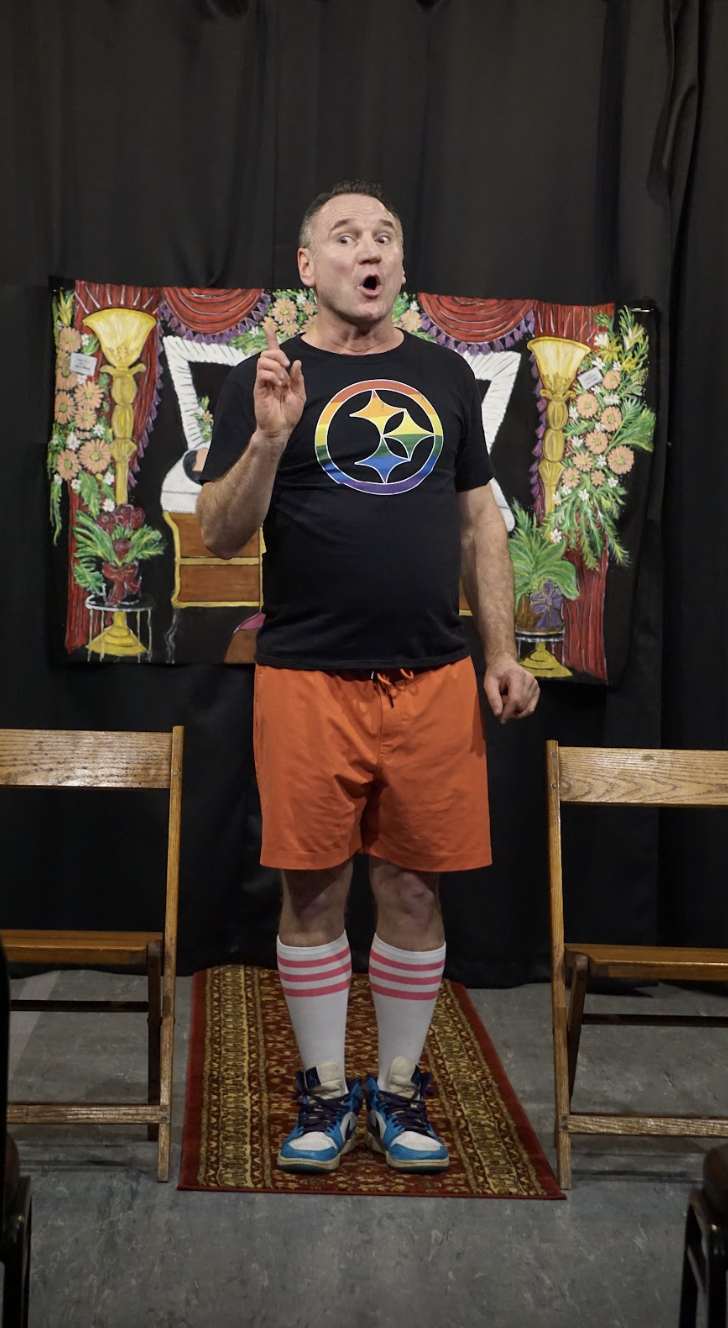
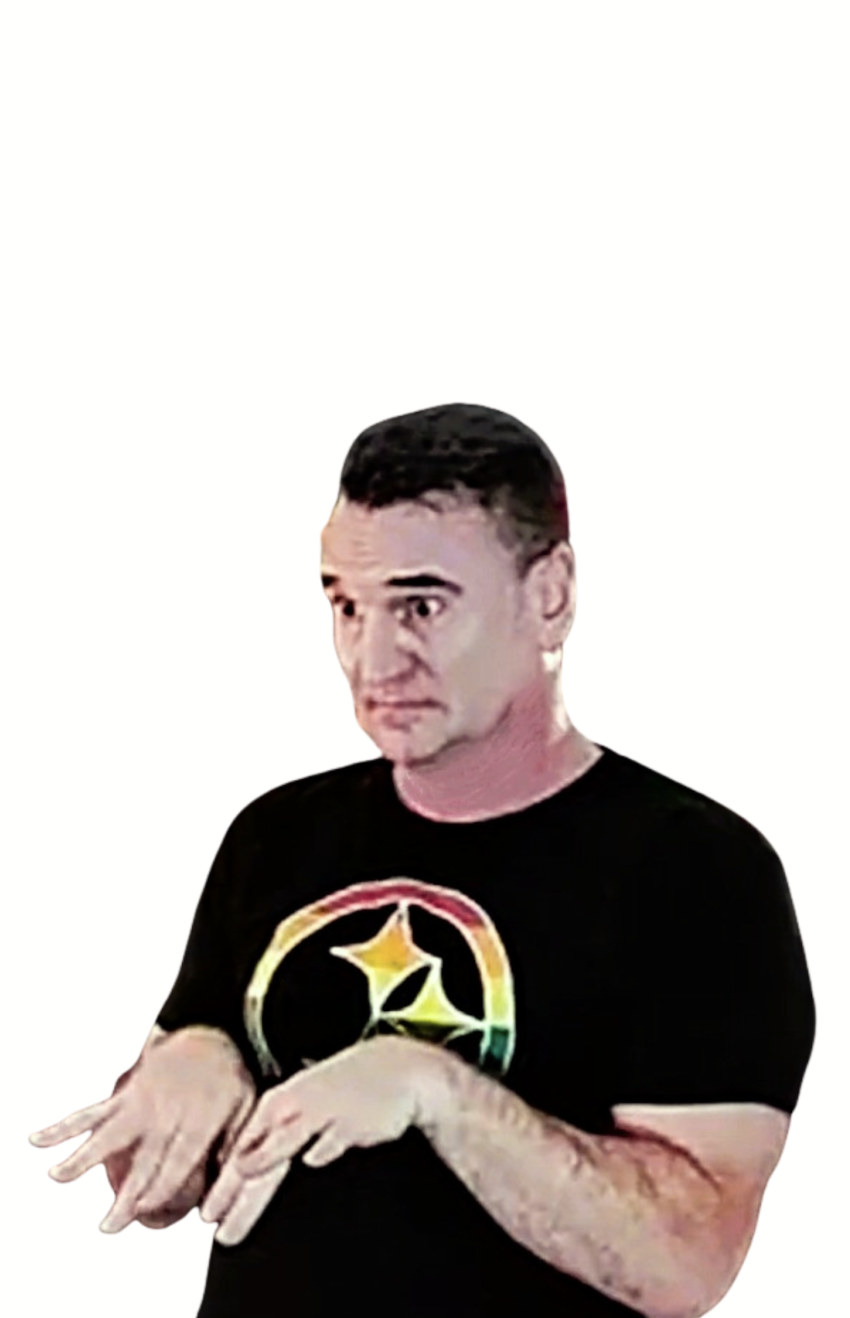

Andy Paluselli’s Real Men Wear Scarves in Pittsburgh opens, disarmingly, on a man in full widow’s drag at his father’s funeral. But that funeral has not yet occurred—we are witnessing a rite rehearsed in the private theater of the son’s mind long before the body is laid to rest. Anticipatory grief here is not merely emotional but dramaturgical: the staging is precise, even fussy. Is this really what he will wear? What will he say? Will the eulogy be a dam breaking at last, or will the performance of composure hold? The drag is not out of confusion of role, but out of a sharpened, almost desperate desire to be visible. It is an image at once comic, defiant, and quietly devastating, and it serves as a kind of thesis for the evening.
From this speculative prologue, Paluselli traces the long shadow cast by a father whose prescriptions for masculinity were as rigid as they were unforgiving. The dictates are familiar—football & locker room banter over theater & rehearsals, stoicism over expression, heterosexuality over anything that might be construed, in the blunt vernacular of shame, as “embarrassing.” Yet what distinguishes the piece is not the catalogue of these expectations, but the texture of their enforcement: the slow accretion of small humiliations punctuated by sharper, more wounding acts of control. A seemingly minor incident—a scarf removed because it “looked gay,” though it is nothing more than a plain black winter garment—lands with the force of allegory. One begins to understand that the policing of identity here operates not only through grand prohibitions, but through a thousand quiet corrections.
Paluselli resists the temptation to rush through this material. Instead, he lingers—on the arguments, on the silences that follow, on the subtle recalibrations required to survive in such an atmosphere. The dramaturgy is patient, almost insistently so, allowing the audience to inhabit the uneasy rhythms of a household governed by conditional love. And then, with a perceptible shift in temperature, the world expands. Los Angeles emerges not merely as a geographic relocation but as a psychic aperture: theater, community, a chosen family that demands no diminishment of the self. These passages carry a lightness, even a buoyancy, that feels hard-won, and the relief is palpable.
But the gravitational pull of the past proves inescapable. The return to Pittsburgh—rendered without melodrama—becomes the crucible in which the piece finds its deepest resonance. There is no climactic confrontation, no cathartic explosion. Instead, there is waiting. There is the peculiar stillness of a house anticipating death. There is the mordant detail of reading a book titled Death Benefits while awaiting the father’s final breath. There is the painstaking assembly of a funeral remembrance, during which the son encounters, with something like astonishment, archival evidence of tenderness—moments of love obscured, but not entirely erased, by years of estrangement.
Late in life, the father offers a line that reverberates with uncomfortable familiarity: “Please don’t be pissed at me.” It is not, one senses, an apology; it is a request, another attempt to secure absolution without the labor of accountability. Paluselli allows the moment to hang, unresolved, resisting any interpretive imposition.
What is most surprising—and, perhaps, most mature—about the piece is its refusal of rage as a final note. When the funeral at last arrives, it does so without spectacle. The imagined scene, so meticulously rehearsed, dissolves in the face of reality’s quieter demands. The anticipated catharsis fails to materialize—and, crucially, is no longer required. In its place is something more elusive: a recognition that the love once sought was never truly on offer, and that this recognition, painful as it is, may constitute a form of liberation.
Paluselli proves himself a deft raconteur, attuned to the delicate calibrations of tone that such material demands. His humor—wry, self-aware—never undercuts the gravity of his subject, but rather provides the necessary counterpoint, a release valve that keeps the evening from collapsing under its own emotional weight. The production is at its most effective when it embraces its own spareness: a performer, a story, and the unadorned truth of lived experience.
What lingers, finally, is not the specificity of Paluselli’s biography, but its permeability. The piece gestures outward, toward a broader constellation of filial disappointments and deferred recognitions. It inhabits that fraught terrain where anger, grief, and a stubborn, irrational hope coexist—and where one must ultimately contend with the hardest realization of all: that the imagined version of the past, the one in which things might have been otherwise, will remain forever unrealized. The coda arrives with a gesture so modest it nearly escapes notice, and yet it reverberates backward through the entire piece: Andy wears the scarf to the funeral.
Click HERE for tickets.
Review by Tony Marinelli.
Published by Theatre Beyond Broadway on April 13, 2026. All rights reserved.
