
STUPID FUCKING BIRD
Written by Aaron Posner; Directed by Jorden Charley-Whatley
The Secret Theatre | 10-10 44th Avenue, Long Island City, NY 11101
May 1 – 10, 2026
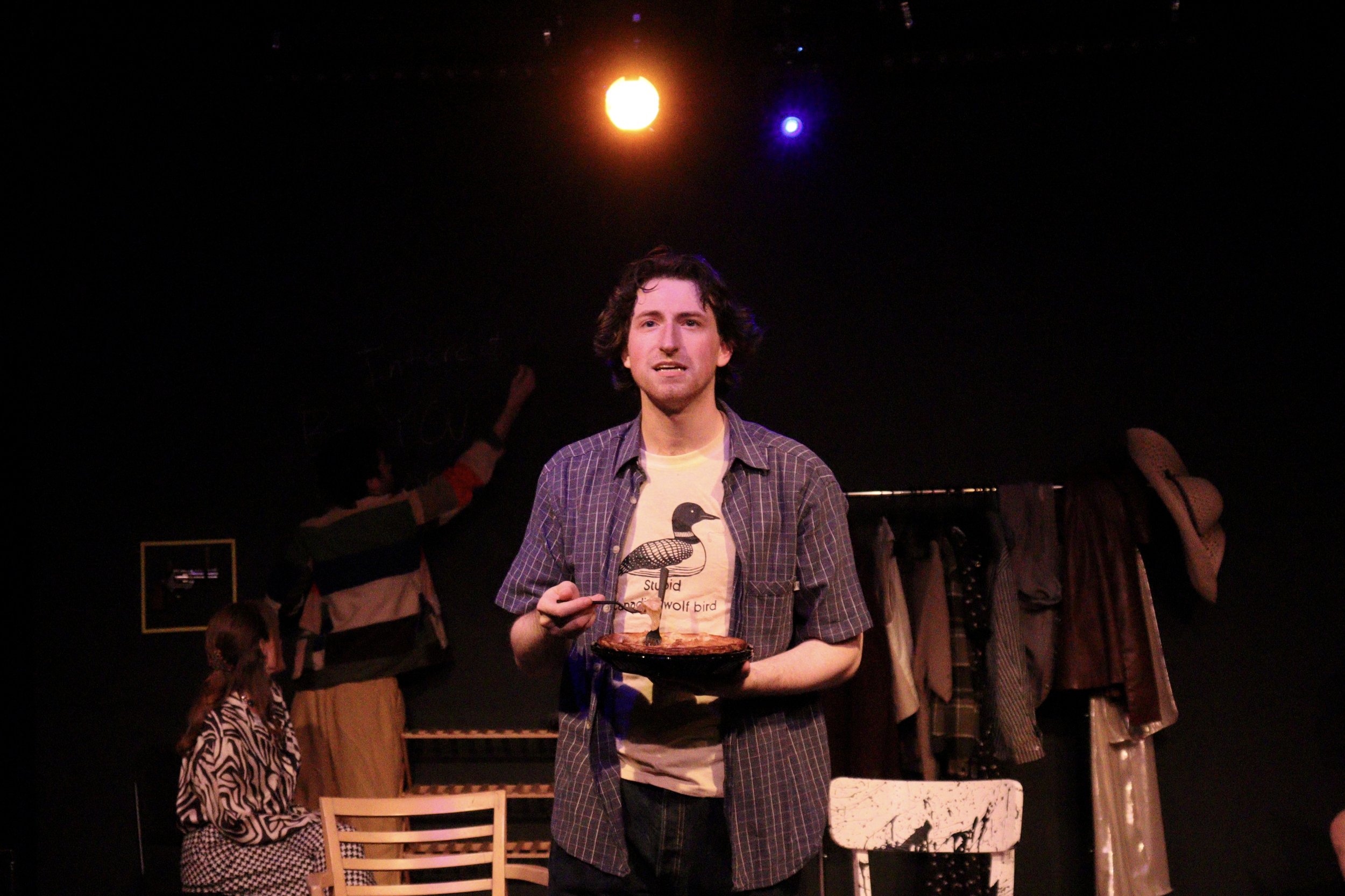
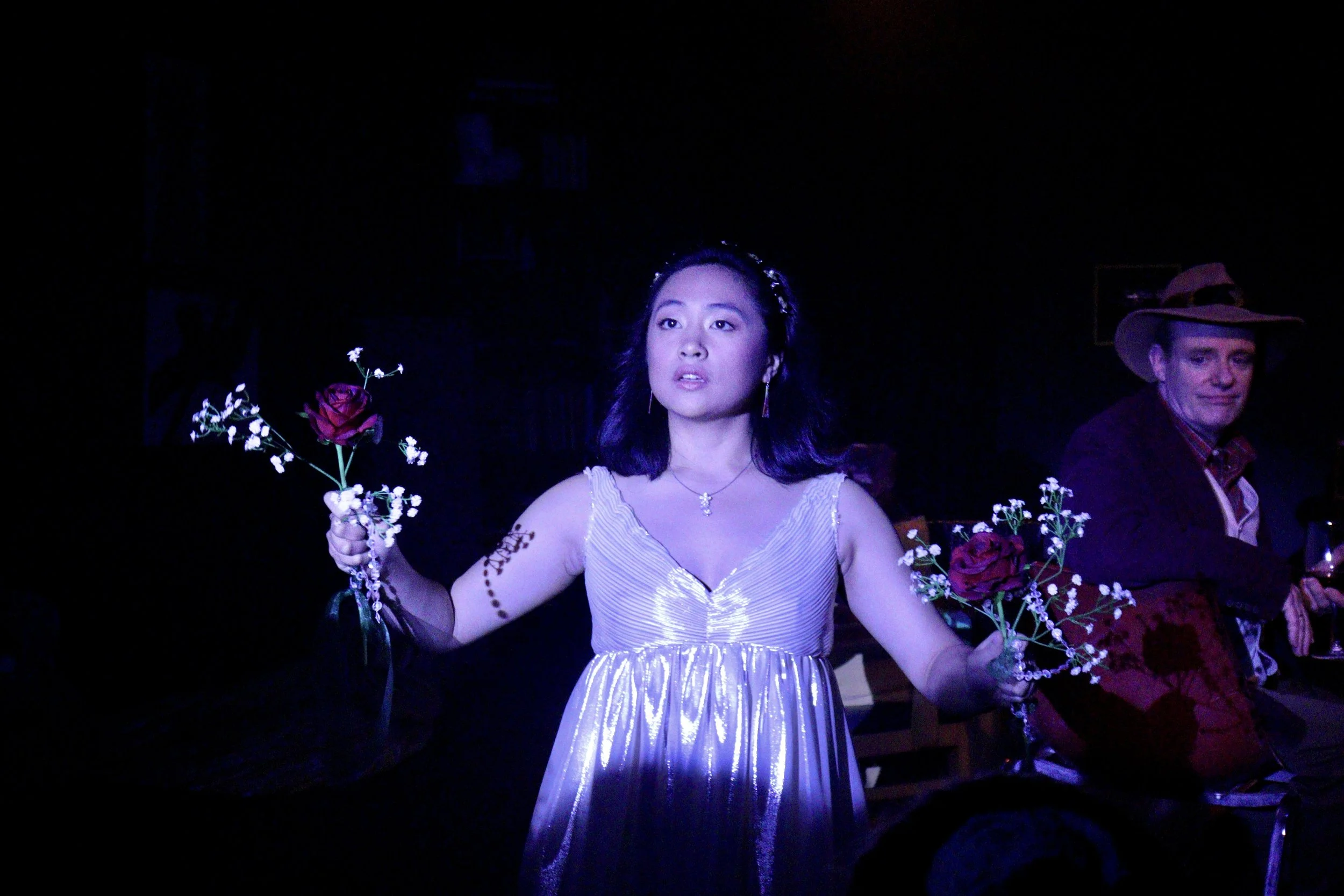
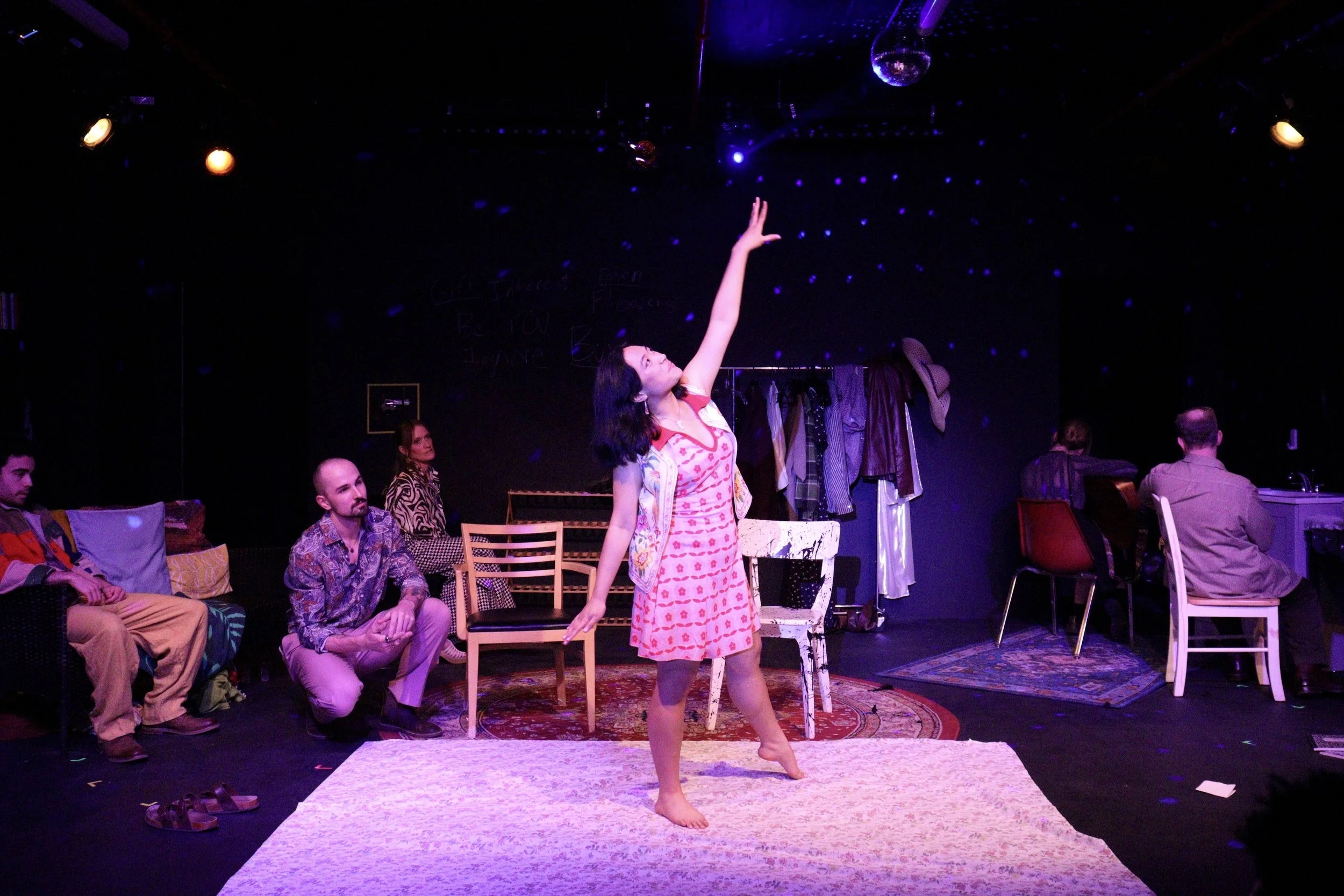
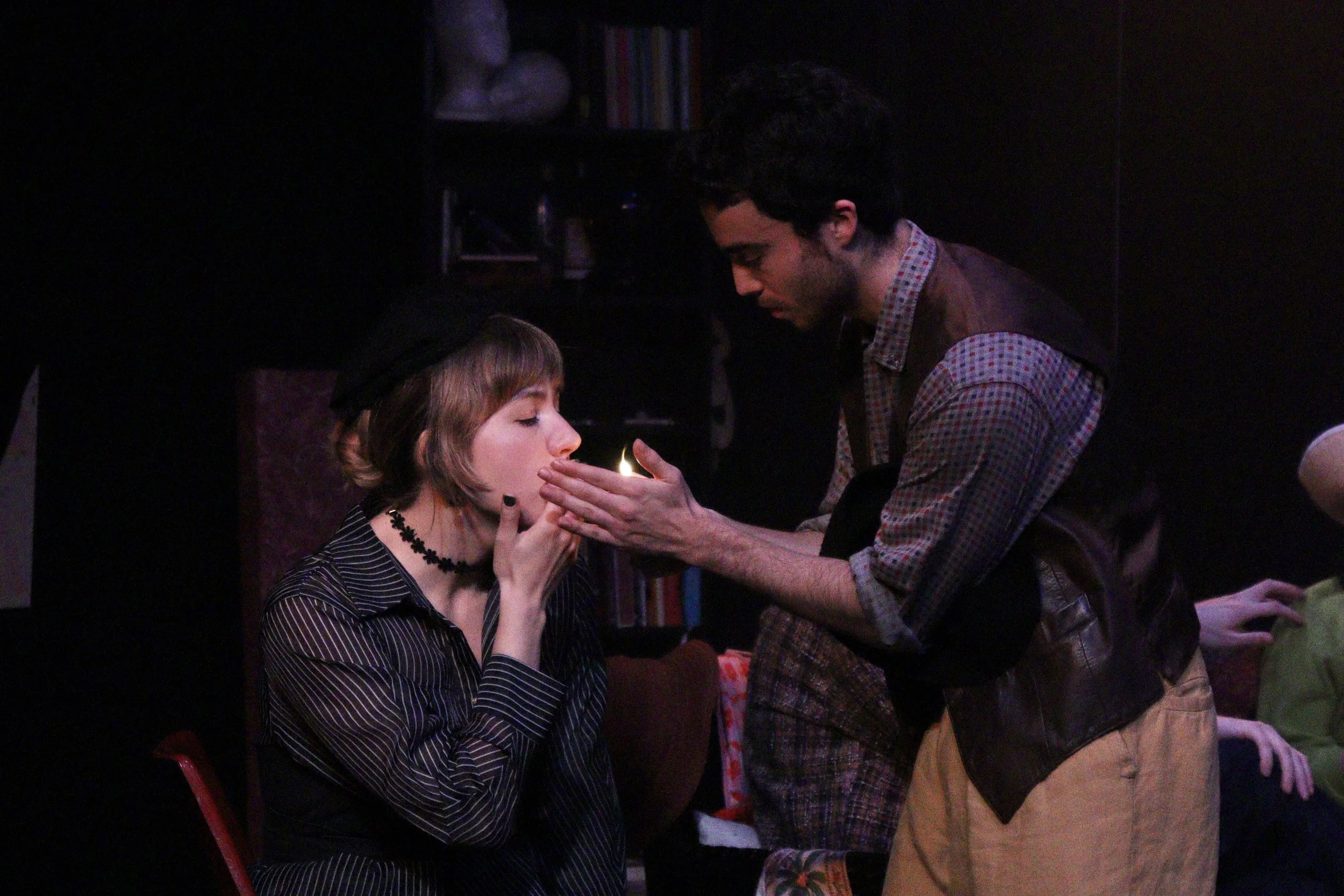
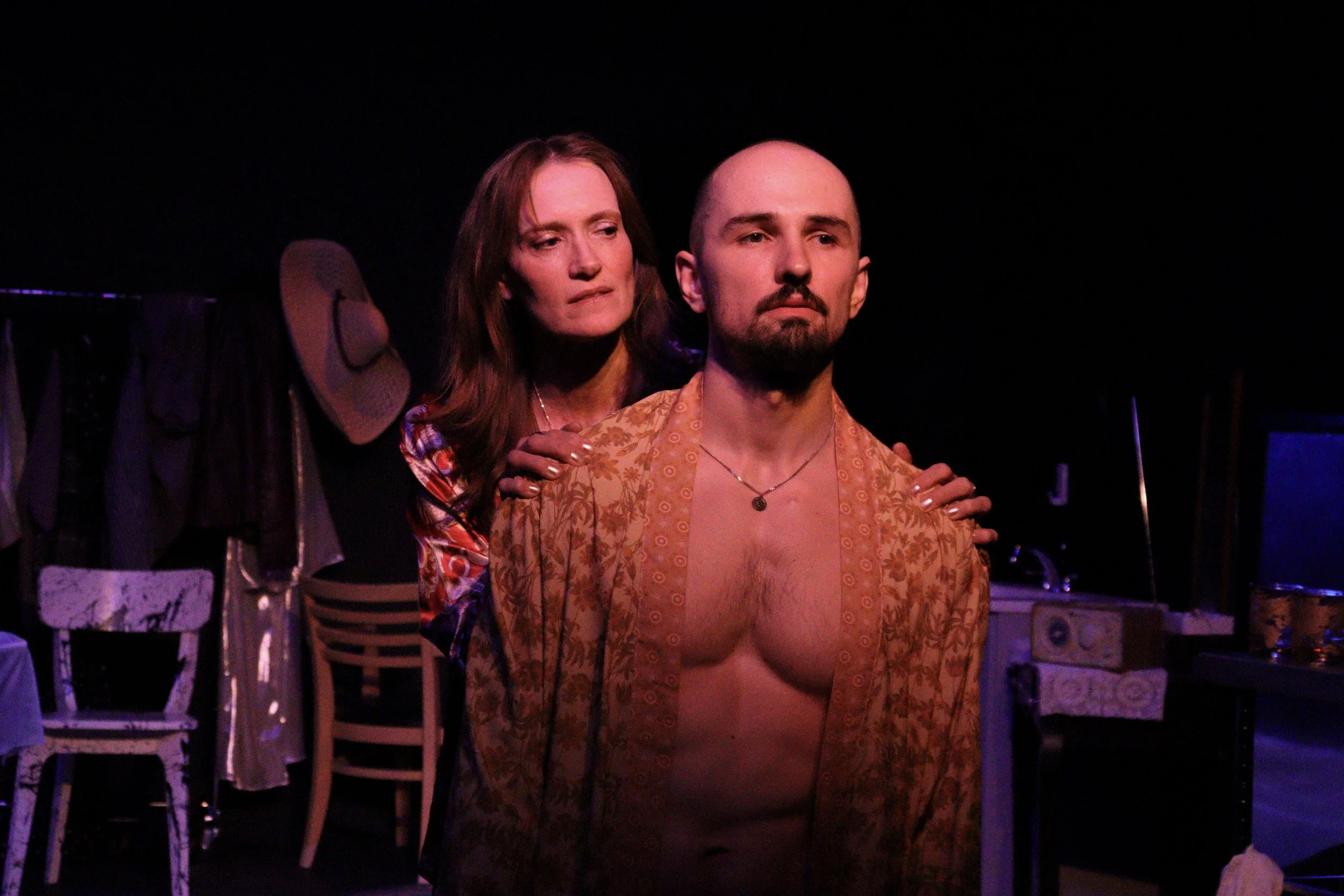
Photo Credit: Rose Gonzales
We enter a hazy space bathed in red light, punctuated by a roaming spotlight. Am I in a theatre or at a club? Don’t play with me. They’re both my favorite places to escape. Music blasts from Maruv, TVORCHI, Cream Soda, and All Things Break while the seven actors linger onstage before the show begins, already inhabiting the world. They hang out, prepare, interact with one another, flirt with the audience. The room buzzes with anticipation before a single line is spoken. Immediately, you know this is not going to be passive viewing. This is an experience.
In Stupid Fucking Bird, playwright Aaron Posner remixes The Seagull into a fever dream of artistic longing, romantic chaos, and existential exhaustion. Directed with remarkable cohesion by Jorden Charley-Whatley, this production understands exactly how to weaponize intimacy, discomfort, and spectacle.
The play opens with Con presenting a devised performance piece, somewhere between poetry slam, performance art, and emotional exorcism. Performed by his muse Nina, the work is his desperate attempt to create something new in a world that feels artistically stagnant. But the piece crashes under the judgmental gaze of his mother Emma, an acclaimed actress whose shadow looms over him. From there, the production spirals beautifully through unrequited love, artistic insecurity, vanity, loneliness, and the painful human desire to matter.
The first act thrives on tension and momentum. The pulsing club music drives the emotional chaos toward its climax, underscoring how love, especially unreturned love, can become physically agonizing. The play asks impossible questions: What is love? What is fame? What is art worth in a collapsing world?
As an ensemble, Bart Black as Trig, Regina Famatigan as Nina, Laura Frenzer as Emma, Juliet Wolfe as Mash, Aaron Lam as Dev, Kyle Watkins as Con, and Tom Staggs as Sorn operate with a level of trust that becomes palpable from the audience. Their commitment to one another is fearless. You can feel the emotional risk-taking in the work, the willingness to expose uncomfortable layers within each character rather than settling for archetype or performance shorthand.
That depth speaks not only to the strength of the actors themselves, but to the clear vision of Charley-Whatley. The production feels deeply collaborative in the best sense. There is a strong conceptual framework holding the piece together, yet within that world, the creative team appears to have been given the freedom to fully explore, build, and contribute. The result is a production that feels alive rather than controlled, where every design and performance element is in conversation with one another instead of competing for attention.
The entire cast is phenomenal, with each actor mesmerizing. There is a raw volatility to the performance that keeps you locked onto them even in stillness, even in Juliet Wolfe’s sad songs. The ensemble work overall is exceptional, with actors remaining onstage for much of the production, functioning almost as living set dressing within this deeply inhabited performance space. The set itself feels worn in, intimate, and real, while Grace Wylie’s costumes effortlessly capture the emotional texture of each character.
What fascinated me most was the production’s visual and emotional evolution. The haze that clouds the stage early on slowly dissipates throughout the evening, as though reality itself is crystallizing before our eyes. By Act II, the staging shifts dramatically. The actors no longer remain constantly visible, and the lighting design by Ben Hartzell sharpens its focus inward, isolating characters within their own emotional truths. The effect is stunning. The production moves from communal chaos into deeply personal excavation.
What makes this adaptation so compelling is its understanding of The Seagull itself. Though often treated as tragedy, Chekhov’s work lives in the uncomfortable collision between comedy and suffering. These characters ache to be complete while simultaneously performing versions of themselves for others. The comfort and discomfort of that contradiction becomes palpable here.
I especially appreciated the thoughtful use of fourth wall breaks. Too often direct audience address can feel gimmicky, but here it deepens the super-objectives of the characters. These people cannot get what they need from one another, so they turn outward toward us, searching for validation, understanding, connection, anything. The audience becomes implicated in their yearning. We can’t solve it for them.
And that’s where this production truly lands. As someone who has directed The Seagull, I found myself continually impressed by how this production honors Chekhov’s emotional architecture while fearlessly reshaping it into something contemporary, chaotic, and immediate. When a play experiments with multiple styles, tonal shifts, direct address, heightened theatricality, and emotional realism, cohesion becomes everything. If even one element slips, the entire machine rattles apart. But this production holds together beautifully. Every choice feels intentional. Every layer feeds the next. And by the end, the audience is sitting squarely in the palm of the production’s hand.
Click HERE for tickets.
Review by Malini Singh McDonald.
Published by Theatre Beyond Broadway on May 8, 2026. All rights reserved.