Suddenly Last Summer
Fisher Center Lab Civis Hope Commission/World Premiere
Co-Produced by Opera Philadelphia, Music by Courtney Bryan
Libretto by Gideon Lester and Daniel Fish based on the play by Tennessee Williams
Directed by Daniel Fish, Music Direction and Supervision by Nathan Koci
LUMA Theater at the Fisher Center at Bard as part of Bard Summerscape 2026
June 25, 2026 - July 19, 2026
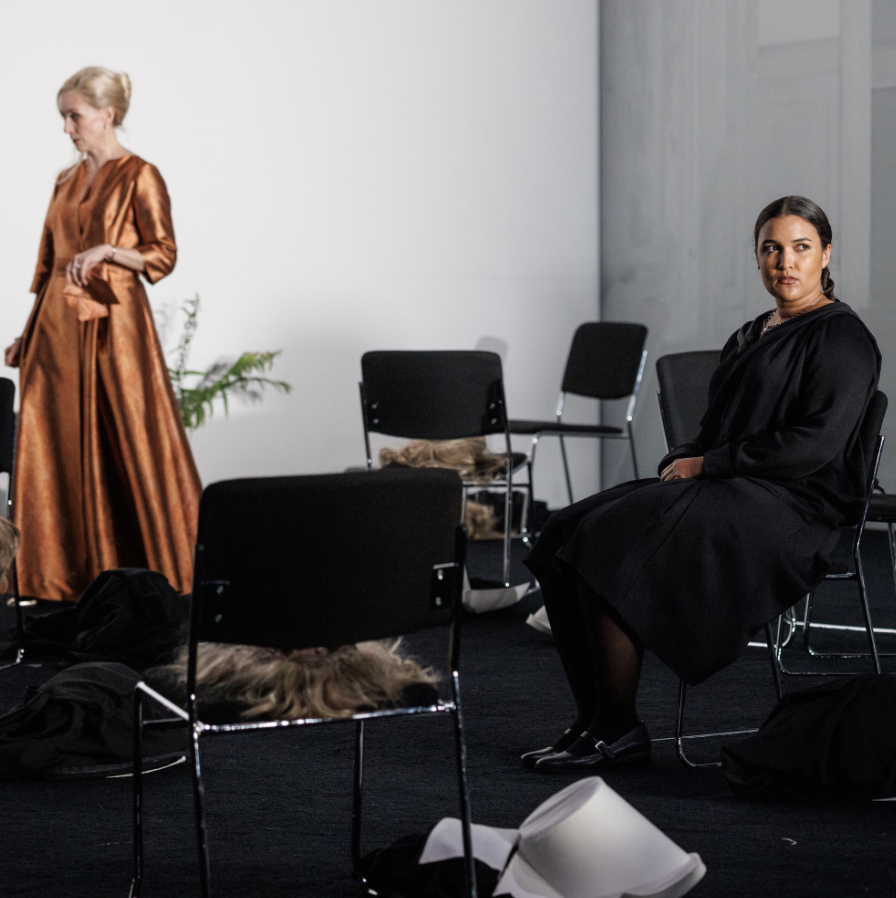
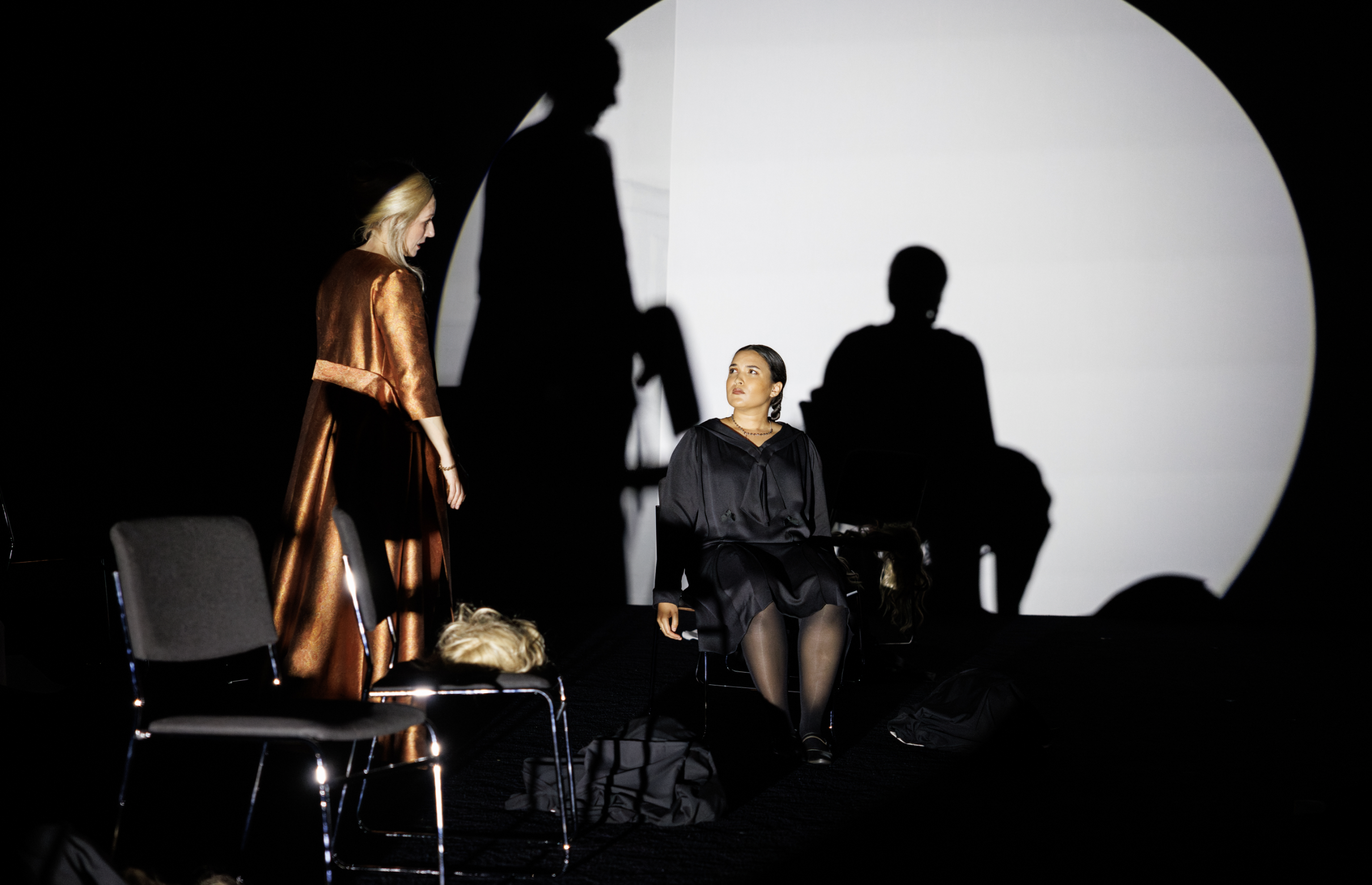
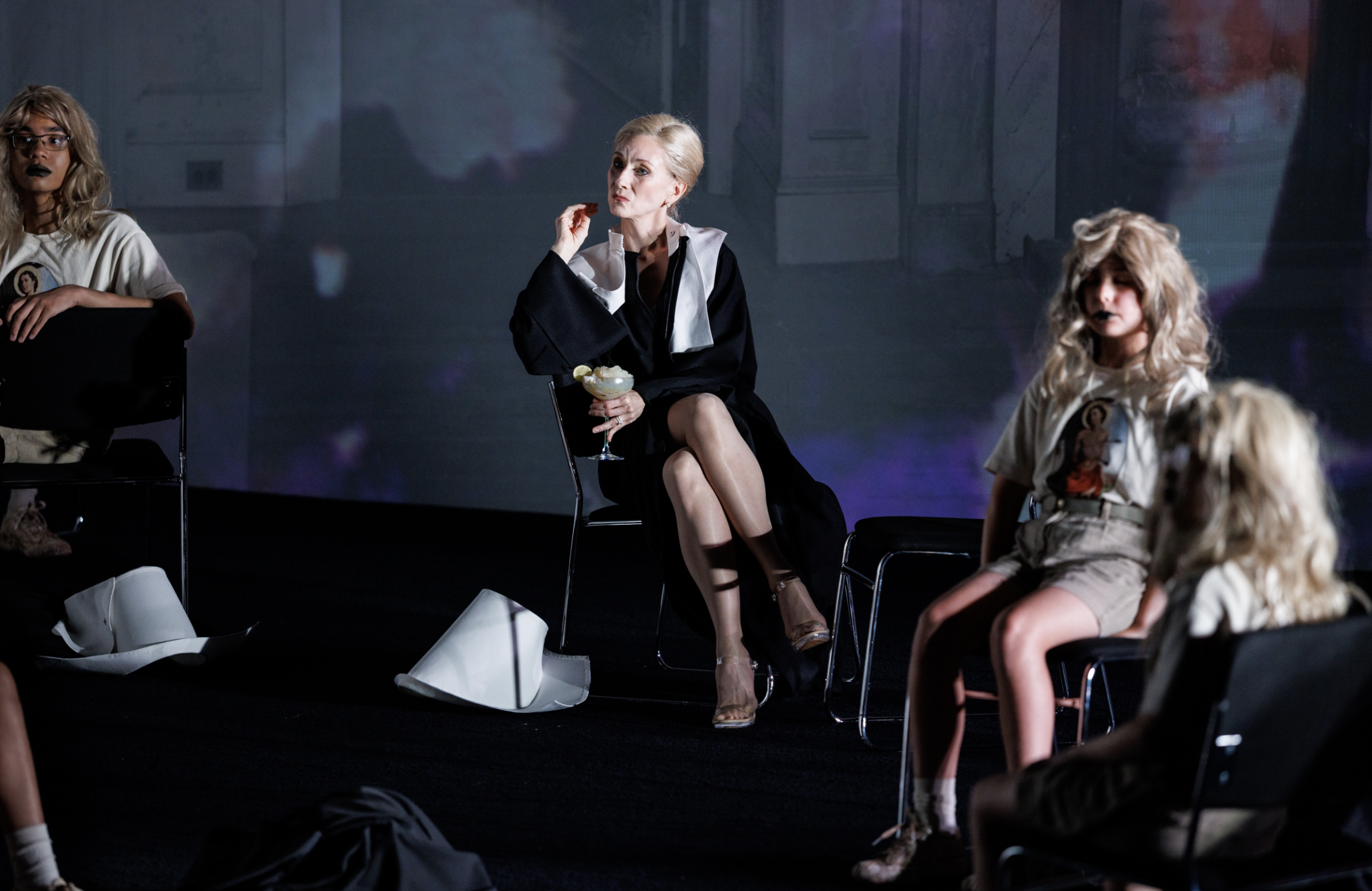
Tennessee Williams’ Suddenly Last Summer has long occupied a singular place in the American dramatic canon: a compact, feverish one-act that unfolds less as a mystery than as a contest over who possesses the authority to narrate the past. Sebastian Venable, the absent center of the drama, is already dead when the play begins. What survives are competing versions of his life, his desires, and his horrifying death, advanced by two women whose testimonies are equally shaped by trauma, self-preservation, and longing. Courtney Bryan's remarkable first opera, with a libretto by Gideon Lester and Daniel Fish and directed by Fish at Bard Fisher Center’s SummerScape Festival, understands that Williams' play was always about performance. Rather than merely adapting the text, it transforms that battle over memory into a meditation on the very act of storytelling itself.
Fish, whose Oklahoma! famously dismantled familiar theatrical conventions in order to rediscover emotional truth, applies a similarly inquisitive spirit here. The result is not simply an opera, nor merely spoken theater with music, but an expansive hybrid in which speech, song, choreography, painting, film, lighting, and movement continuously interrogate one another. Only Catherine Holly sings; everyone else speaks. The distinction is profound. Mrs. Violet Venable attempts to impose order through carefully sculpted language, while Catherine's memories refuse containment, arriving instead through Bryan's luminous score as emotional experience before they become narrative. The opera asks whether music itself might succeed where ordinary speech inevitably fails.
Bryan's composition is the evening's great revelation. Rather than adopting the architecture of traditional opera, she creates an organically unfolding musical landscape that breathes with astonishing freedom. Birdsong drifts through the orchestration like forgotten memories. Harmonies gather one note at a time before blooming into radiant sonorities that evoke both the oppressive humidity of New Orleans and the shimmering uncertainty of recollection itself. Her writing comfortably inhabits the space between contemporary classical music, spiritual traditions, improvisation, and lyric theater without ever feeling self-conscious about its eclecticism. Every musical gesture feels psychologically motivated rather than merely decorative.
Mikaela Bennett delivers an extraordinary performance as Catherine Holly, carrying nearly all of the opera's vocal burden with fearless command. For much of the work, Catherine exists only in fragments—isolated syllables, suspended phrases, elusive vocal gestures that seem unable to organize themselves into coherent speech. Then, almost imperceptibly, Bryan allows those fragments to accumulate until Catherine's devastating account of Sebastian's final afternoon emerges with overwhelming dramatic force. Bennett navigates this remarkable trajectory with breathtaking assurance, her gleaming soprano expanding effortlessly from whispered uncertainty into soaring declarations of painful truth. Her climactic narration becomes one of those rare operatic moments in which music seems to discover emotional territories language alone could never reach.
If Bennett supplies the opera's emotional center, Tina Benko provides its magnificent gravitational force. Her Mrs. Venable is no simple villain but an astonishing theatrical creation: aristocratic, seductive, terrifying, funny, and utterly incapable of surrendering control over the narrative she has constructed around her sainted son. Benko's vocal delivery, pitched somewhere between heightened Southern declamation and ritual incantation, possesses its own musicality despite remaining spoken throughout. Every carefully articulated phrase, every imperious gesture, every calculated breath reinforces the portrait of a woman who believes language itself can erase reality. Even when she stands perfectly still, she dominates the stage with an operatic physical presence that rivals any sung performance.
Branden Lindsay wisely resists matching the emotional extravagance surrounding him. His Dr. Cukrowicz functions as the audience's increasingly unsettled observer, absorbing the irreconcilable versions of events with quiet restraint. By refusing overt dramatics, Lindsay allows the mounting hysteria of those around him to register all the more sharply. When he finally acknowledges the possibility that Catherine's account may be true, the understated simplicity of the moment lands with extraordinary force precisely because the production has earned its stillness after so much accumulated theatrical intensity.
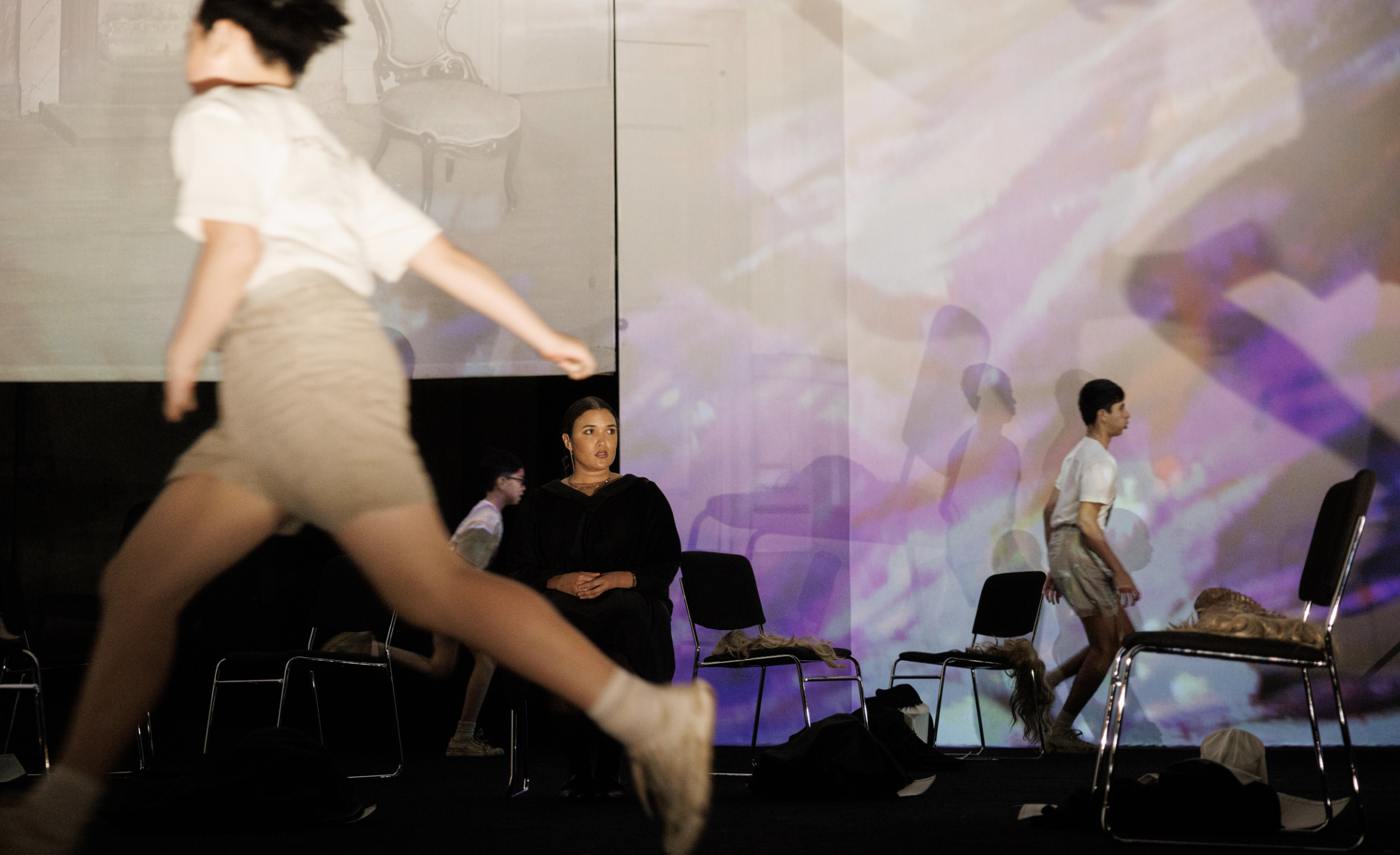
Fish surrounds these central performances with an extraordinary constellation of visual invention. Marsha Ginsberg's seemingly austere raked stage becomes an enormous canvas upon which multiple artistic languages coexist. Lucy Tarquinio paints throughout the performance, her expressive brushstrokes projected in monumental scale by Joshua Thorson until the walls themselves appear to pulse with foliage, blood, memory, and violence. Black-and-white filmed appearances by Miriam Silverman and Nick Westrate, as Mrs. Holly and George, Catherine’s mother and brother, evoke the spectral glamour of the famous 1959 film adaptation while simultaneously suggesting that every version of this story—including Hollywood's—remains another act of interpretation. Beth Gill's movement direction, Stacey Derosier's psychologically acute lighting, and Teresa Wadden's quietly expressive costumes further enrich a visual vocabulary that never ceases evolving.
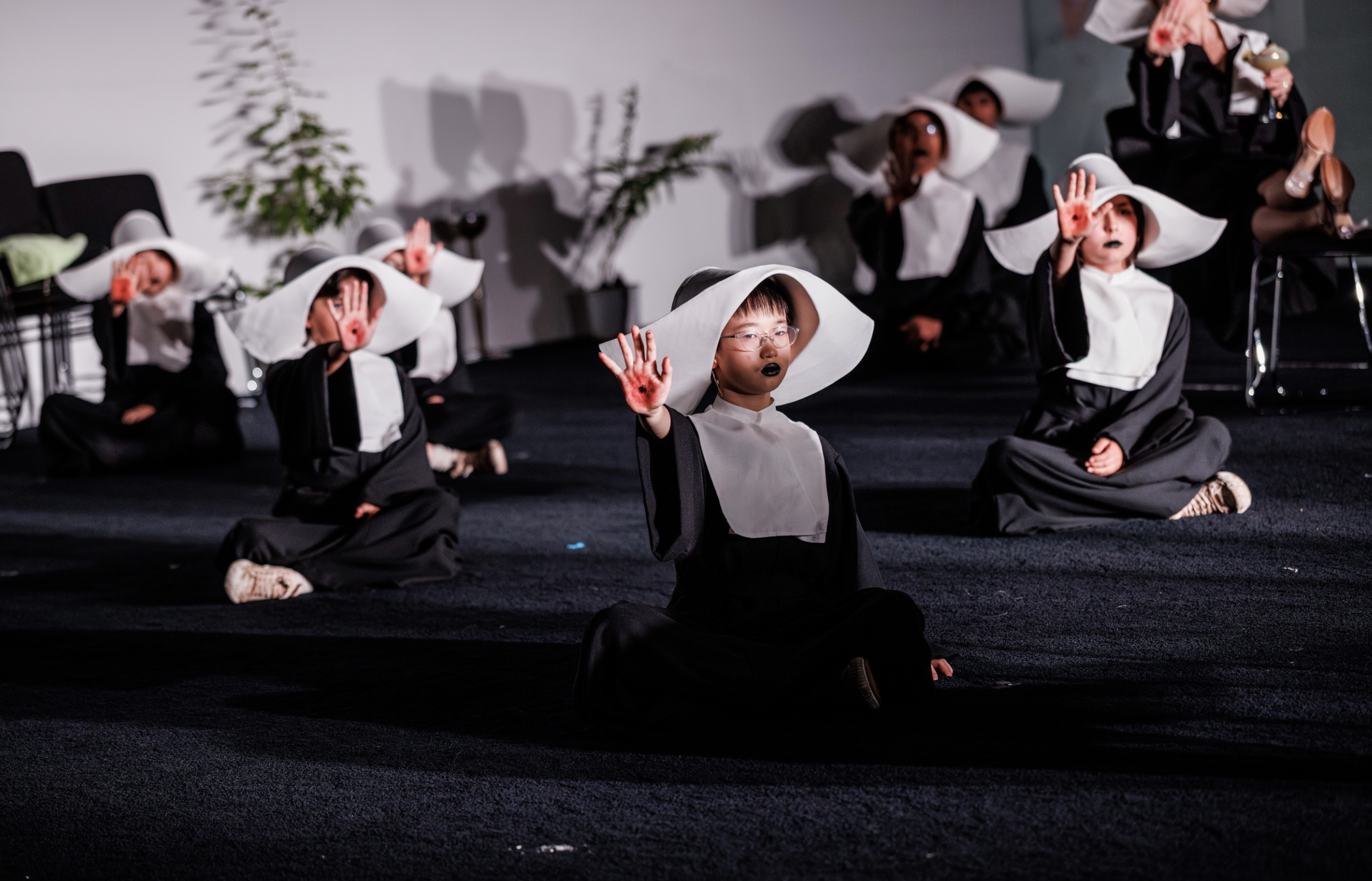
The Young People's Chorus of New York City emerges as perhaps the production's most surprising dramatic instrument. At various moments the children become institutional nuns, the ghostly voice of Sebastian, Saint Sebastian iconography, predators, victims, witnesses, and finally the starving boys whose terrifying appearance transforms Williams' climactic revelation into something approaching Greek tragedy. Their vocal writing ranges from ethereal wordless harmonies to animalistic growls, while their restless physical movement continually reshapes the theatrical landscape. Rather than functioning as a conventional chorus, they become the collective unconscious of the opera itself, embodying memory before memory solidifies into history.
One of the production's most admirable achievements is its willingness to embrace ambiguity without sacrificing emotional clarity. Fish does not simplify Williams' notoriously difficult treatment of sexuality, repression, class, exploitation, and maternal obsession. On the contrary, the opera restores much of the unsettling complexity that earlier adaptations often softened or obscured. Sebastian never appears as either martyr or monster but as a haunting absence whose desires ripple outward through everyone left behind. The result feels startlingly contemporary, not because the creators impose modern relevance upon Williams, but because they trust that his exploration of censorship, self-invention, and the politics of truth remains painfully current.
There are productions that seek to illustrate a great play and others that attempt to reinterpret it. Fish and Bryan have accomplished something considerably rarer. They have uncovered a new artistic form latent within Williams' masterpiece, revealing Suddenly Last Summer as an opera that perhaps always existed beneath the surface of the original text. Bryan's ravishing score, Bennett's incandescent performance, Benko's monumental theatrical presence, and Fish's exhilarating synthesis of visual and musical storytelling combine into a work that expands rather than merely adapts its source. This world premiere announces Courtney Bryan as a major operatic voice and offers a thrilling demonstration of opera's continuing capacity to absorb every other art form while remaining unmistakably, gloriously itself.
Click HERE for tickets.
Review by Tony Marinelli.
Published by Theatre Beyond Broadway on July 18, 2026. All rights reserved.
