Music by Marvin Hamlisch; Lyrics by Craig Carnelia; Book by John Guare; Based on the novella by Ernest Lehman, and the MGM/United Artists Motion Picture with a screenplay by Clifford Odets and Ernest Lehman; Directed and Conducted by Ted Sperling; Choreography by Andrew Palermo
Rose Theatre/Jazz At Lincoln Center | Broadway at West 60th Street, 5th floor, New York, NY 10019
November 21 - November 22, 2025
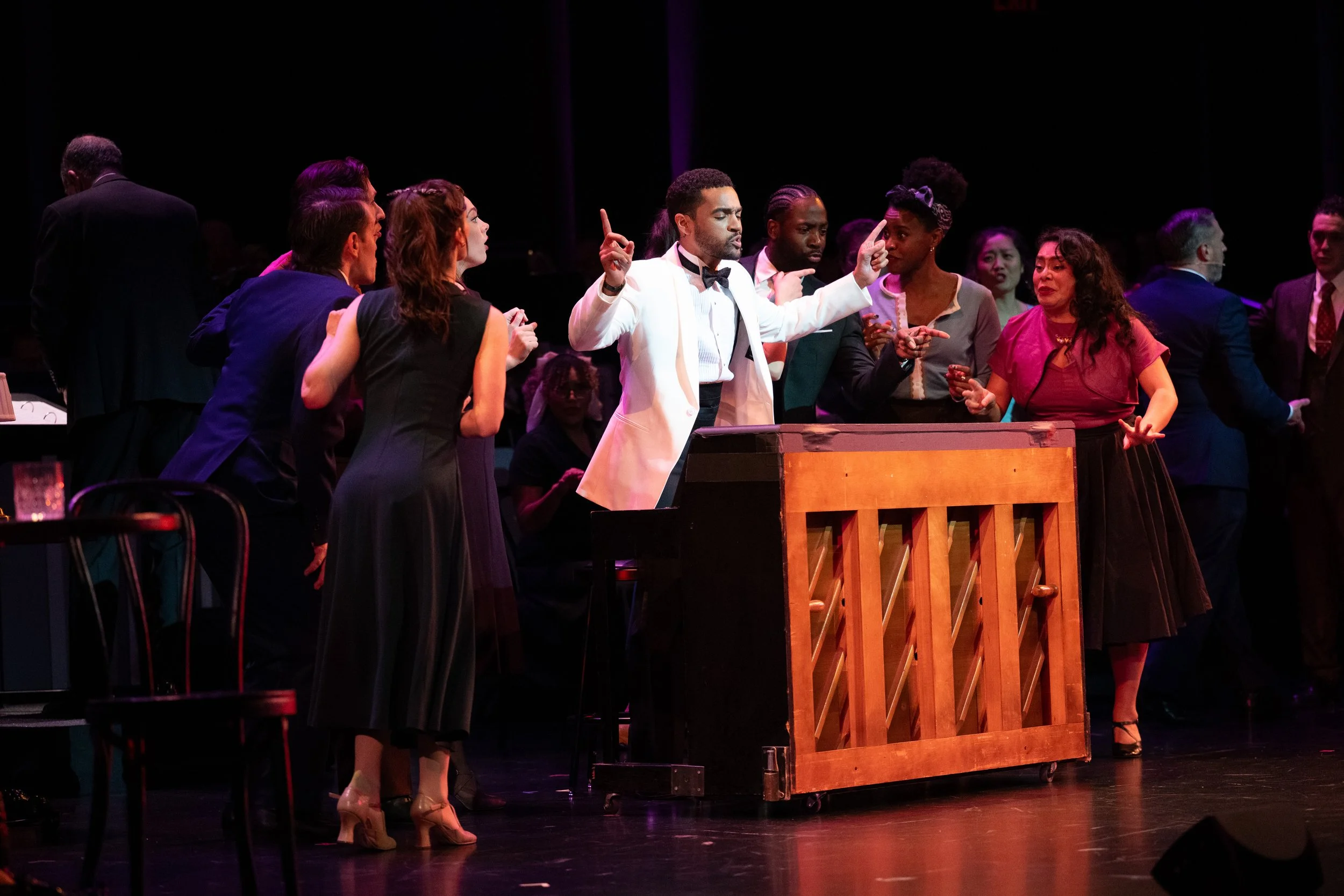
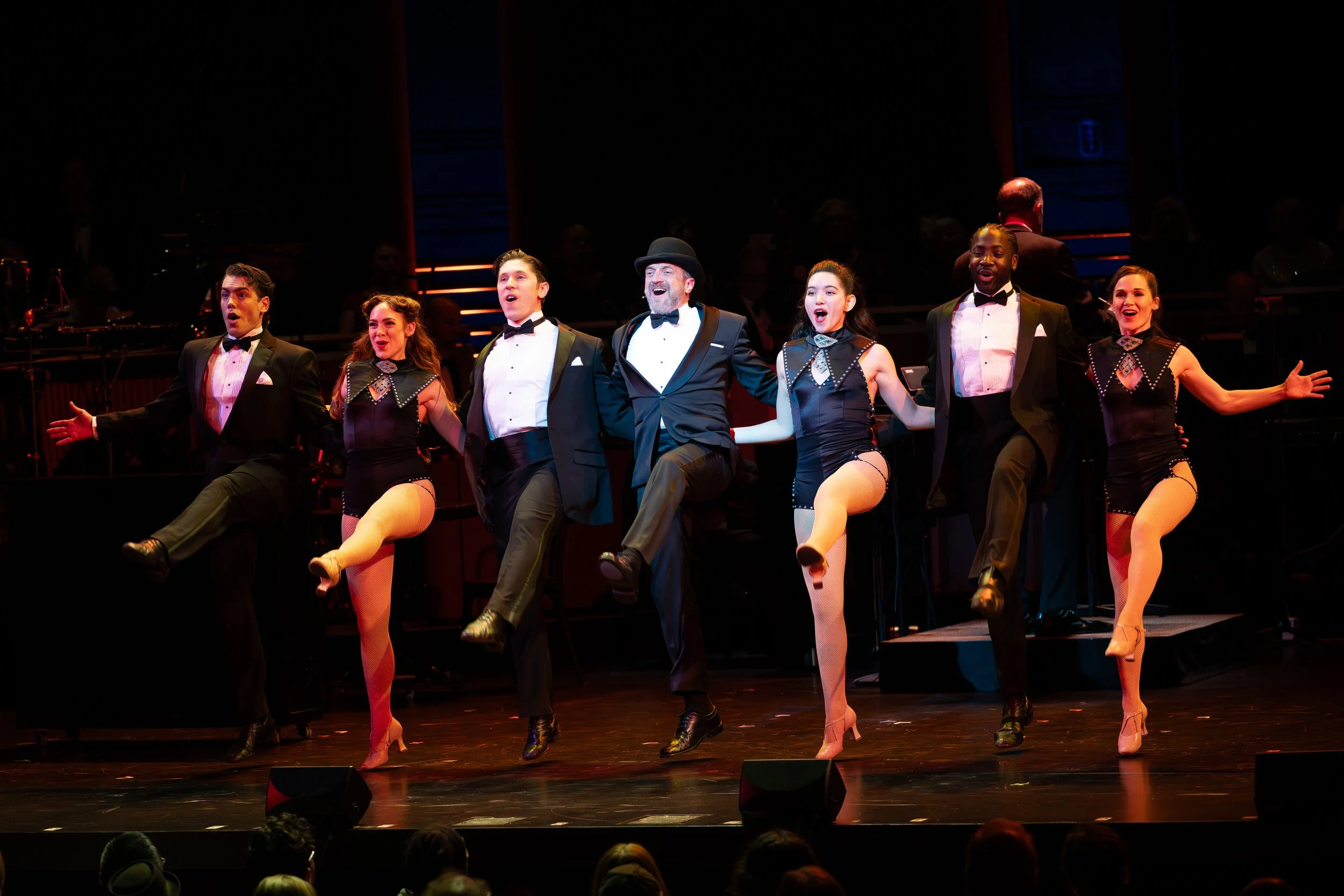
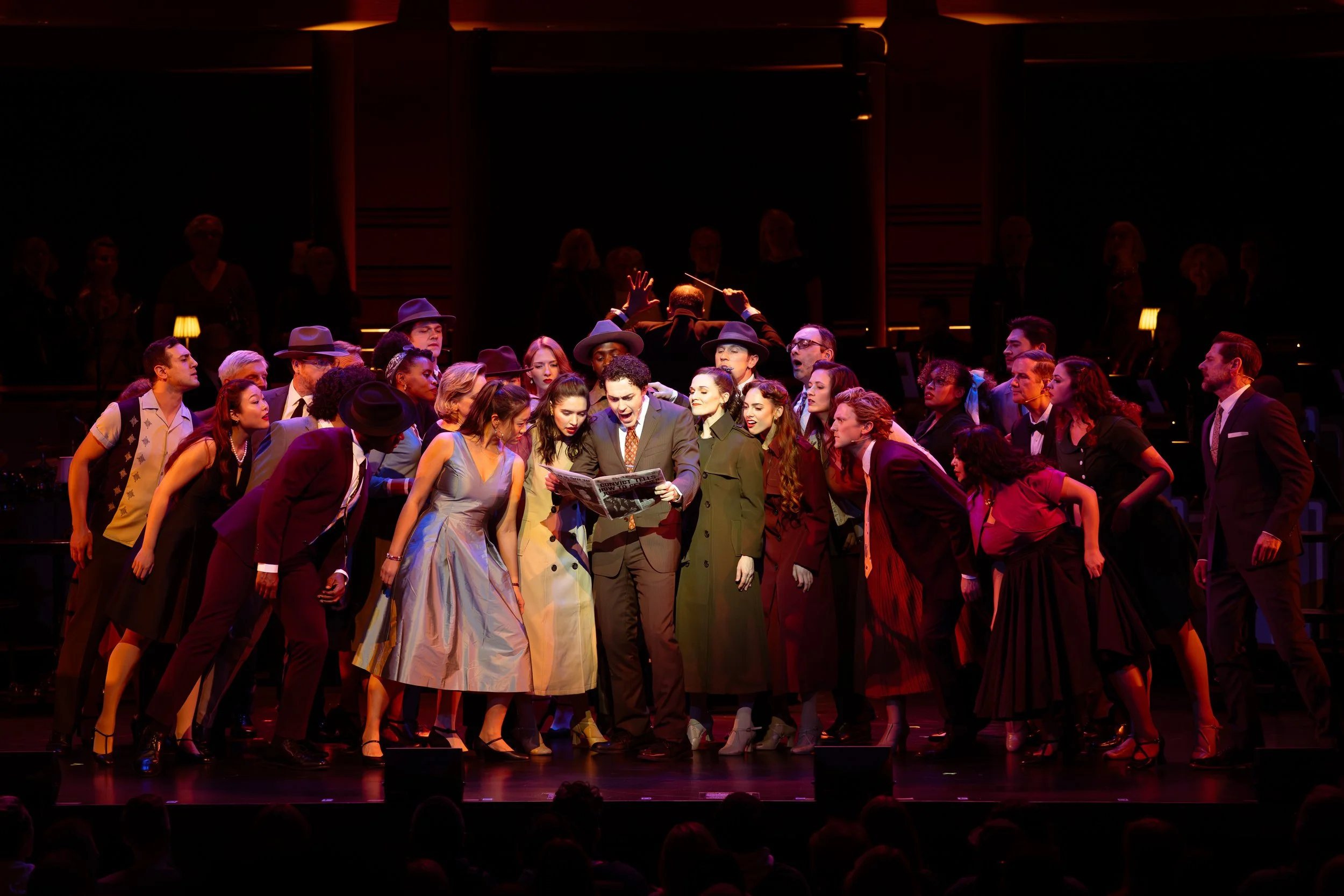
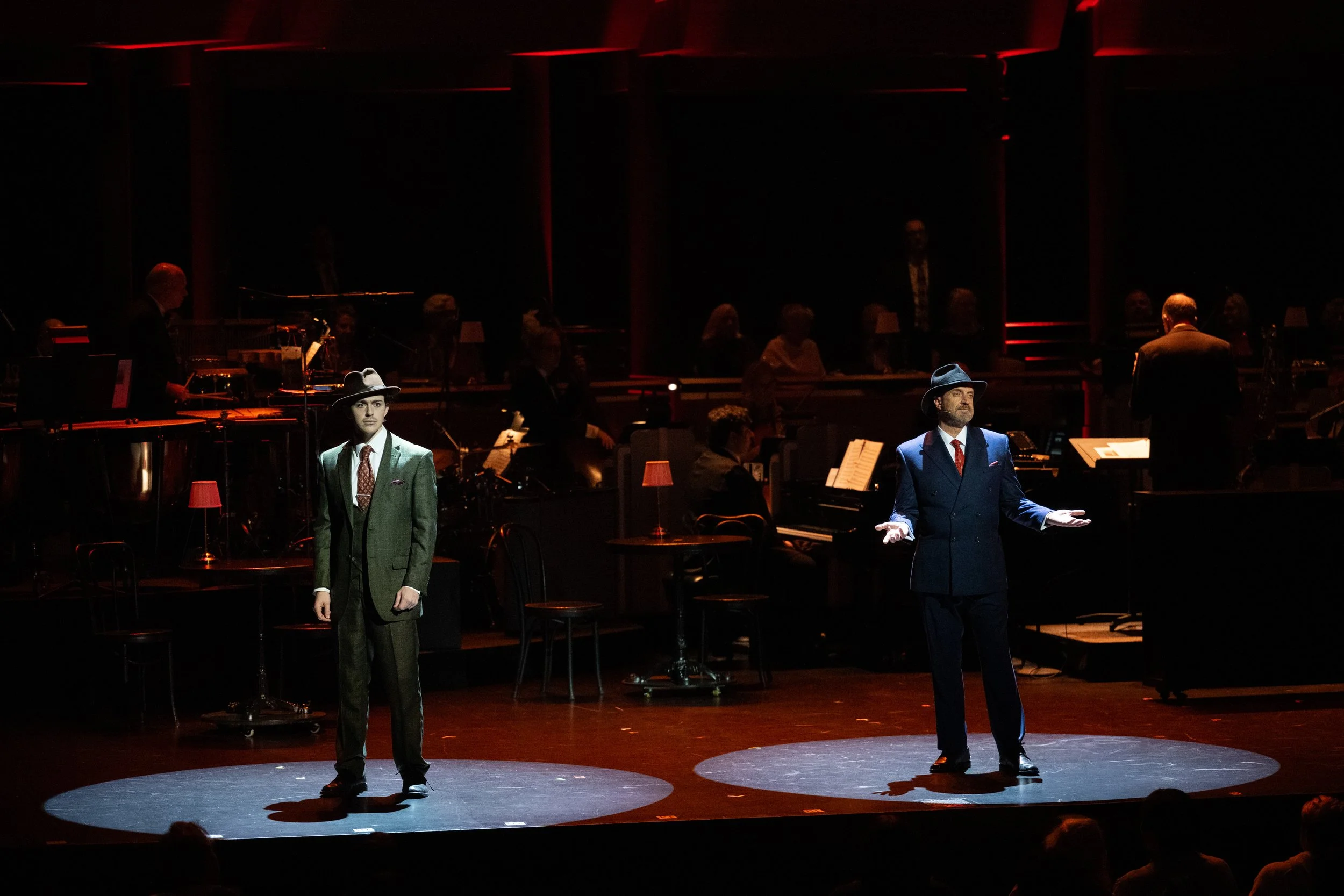
In the vast necropolis of ill-fated musicalizations of classic films, Sweet Smell of Success has long lain among those intriguing but lopsided efforts whose dramatic potency was diluted by misguided Broadway alchemy. Yet Ted Sperling and MasterVoices, with their recent semi-staged resurrection at Jazz at Lincoln Center’s Frederick P. Rose Hall, have exhumed the 2002 musical with such vigor that one almost forgets how compromised it appeared upon arrival two decades ago. What emerged over three performances was not a museum specimen but a newly oxygenated work, propelled by a galvanic 17-piece orchestra that restored the piece’s original pulse.
The foundational flaw, alas, remains: the softening of J.J. Hunsecker, that legendary villain-columnist whose venom powered the 1957 film, here rendered strangely sympathetic through sentimental songs and an incongruous vaudeville turn. One recalls how Burt Lancaster’s cinematic J.J.—all coiled menace and fascistic charm—stood worlds apart from the musical’s attempt to make him sing tenderly of his sister or execute a jaunty 11-o’clock tap. Whatever liberties the creators took to accommodate their original star John Lithgow, the dissonance between character and musical treatment has always been the show’s fatal miscalculation.
Raúl Esparza, now inhabiting the role that won Lithgow a Tony, smartly refuses any such softening. His Hunsecker is chilling, elegant, and irredeemable, a creature carved from ice and newsprint. Even though he must deliver the same problematic numbers, Esparza imbues them with such predatory intelligence that they become less emotional confession than the weaponized performance of a tyrant. His appearance alone lifted this incarnation closer to the hard-edged world the musical nominally inhabits.
Opposite him, Ali Louis Bourzgui as Sidney Falco delivers a surprisingly intricate rendering of the gutter-dwelling press agent whose longing for ascension fuels the plot’s moral collapse. His “At the Fountain”—one of the score’s indisputably great songs—becomes an aching invocation of American striving, a ballad of aspiration whose purity collapses under the weight of Sidney’s own compromises. Lizzy McAlpine, luminous as Susan Hunsecker, charts her character’s progression from ingénue to fledgling rebel with crystalline vocal clarity and emotional intelligence.
Among the supporting cast, Noah J. Ricketts’ Dallas provides a credible moral counterweight—a musician whose tender authenticity shocks the show into stillness, as he does in the sumptuous "I Cannot Hear The City”—while Aline Mayagoitia’s Rita brings unexpected gravity to a role often treated as narrative currency. Her rendition of “Rita’s Tune” in the second act is superb. Their presence reminds us that Sweet Smell thrives most fully when it foregrounds the human wreckage left in the wake of male egotism.
But the true star of this revival is William David Brohn’s orchestration, restored here in all its brassy, noir-tinctured splendor. From the first chromatic triplets that burst forth like a Fourth Estate fanfare, the music locates us squarely in late-1950s Manhattan, its smoky harmonies channeling not only Elmer Bernstein’s iconic film score but Hamlisch’s fascination with the jazz idiom. Under Sperling’s authoritative baton, the MasterVoices orchestra played with a ferocity too seldom heard in contemporary musical theater, where shrinking pit sizes often erase the music’s architectural complexity.
The choral forces, the sonorousMasterVoices Chorus—some 140 singers positioned in opera-house–style boxes—might have been excessive in theory, yet in practice they lent the piece a Greek-chorus gravitas, amplifying the city’s omnivorous appetite for gossip, ambition, and ruin. Andrew Palermo’s choreography, crafted under the duress of minimal rehearsal, conjured smoky nightclubs and pressrooms with swift, efficient strokes, while Alejandro Fajardo’s chiaroscuro lighting sculpted the hall into a glittering urban abyss.
Tracy Christensen’s costumes, sumptuous yet surgically precise in their dramaturgical intent, merited an ovation all their own. Chief among them was Susan’s mink coat, that luxuriant pelt rendered here not as a token of privilege but as a suffocating mantle of paternal possession—a mobile prison whose plushness only heightened its menace. As the evening unfolded, the garment seemed to accrue symbolic weight, its very opulence tightening like a noose around the young woman’s shrinking autonomy. In parallel, Ryan Howell’s scenic design operated in the austere vocabulary of a conjurer, accomplishing near-miracles with the barest of means. Eschewing literalism, Howell deployed suggestive gestures—an architectural silhouette here, a fragment of neon there—to summon entire worlds with a delicacy that never betrayed the concert’s semi-staged constraints. His environments materialized not as static backdrops but as atmospheric provocations, allowing the audience’s imagination to supply the rest.
Not content merely to restage the original text, Sperling encouraged surviving authors John Guare and Craig Carnelia to revisit abandoned drafts. Their restored opening number, “Gossip,” offers a slyer and more thematically cohesive entrée into the world of rumors and reputational carnage. The newly reinstated “That’s How I Say Goodbye” for Dallas and Susan is pensive and heartbreaking, but the revised ending—granting Susan a late triumph over both Sidney and her monstrous brother—provides an invigorating shift in the work’s moral geometry, pushing the show subtly toward tragedy tinged with democratic reclamation.
What this concert underscored most vividly is the unnerving prescience of Sweet Smell’s themes. J.J. Hunsecker’s ability to destroy lives with a column once seemed melodramatic; in an era of viral outrage and algorithmic character assassination, it feels practically documentary. The musical’s anatomy of power—its acquisition, deployment, and backlash—places it squarely in the lineage of Shaw, Miller, and the Greeks, dramatists who recognized that ambition and cruelty are twin engines of American mythology.
In the end, this MasterVoices revival does not so much redeem Sweet Smell of Success as refocus it, revealing the muscular score and corrosive intelligence embedded beneath its structural missteps. Whether it sparks new productions remains uncertain—such resurrections are rare—but what happened at Rose Hall was unmistakable: a flawed but formidable musical was not only revived but re-interrogated, its sharpest edges burnished, its structural fractures more legible. And for two November nights, the fetid glamour of mid-century Manhattan once again breathed and schemed under the bright, damning lights of the stage.
Review by Tony Marinelli.
Published by Theatre Beyond Broadway on November 26, 2025 All rights reserved.