
The Isle of Slaves, Revisited
Written by Pierre de Marivaux. Directed, adapted, and translated by Marisa Stefatos.
Presented by Evicted Victorius Productions.
Presented by the New York City Fringe Festival
April 8 at 8:10 PM, April 11 at 3:40 PM, April 14 at 6:30 PM, April 16 at 8:10 PM, 2026.
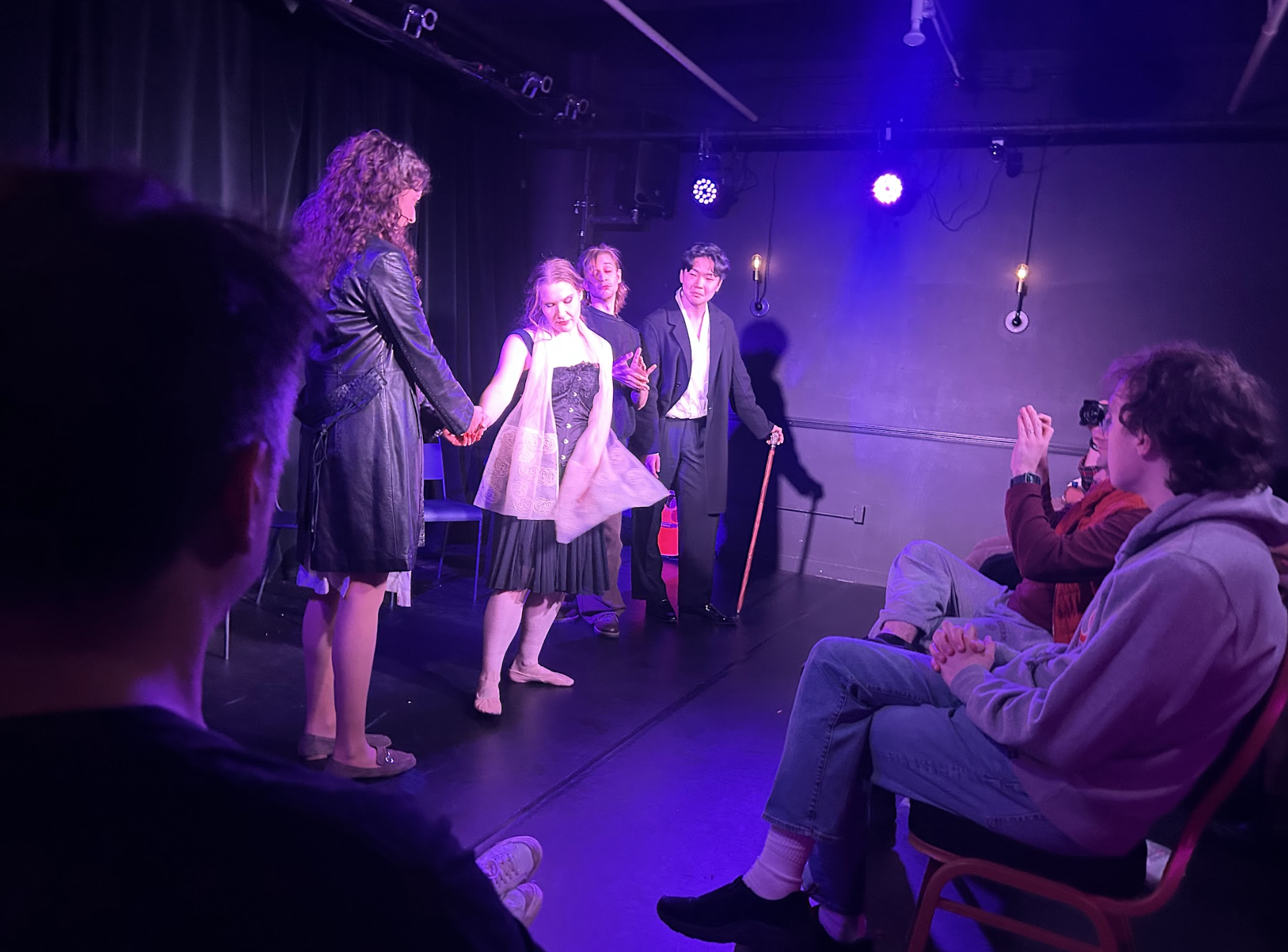
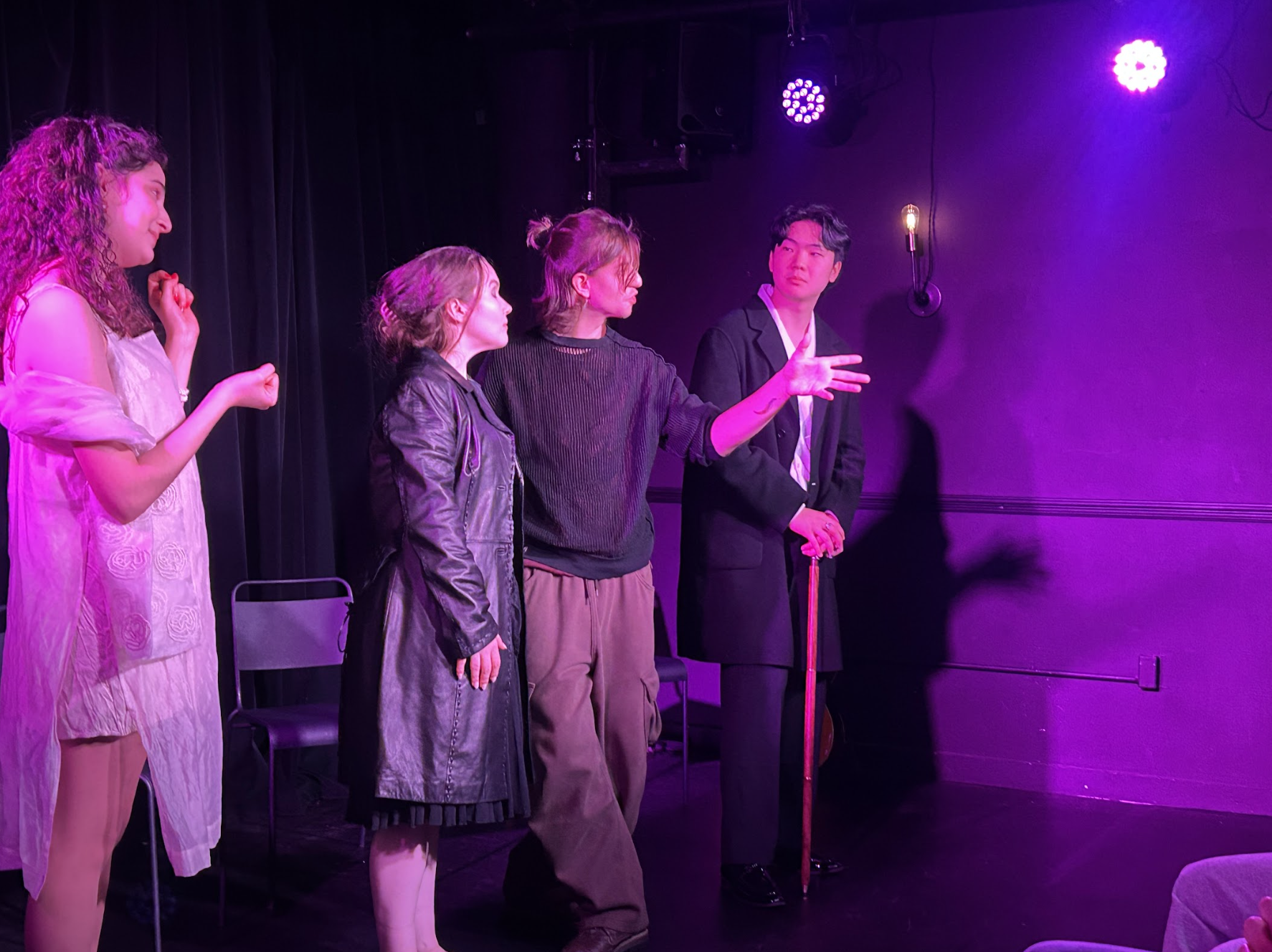

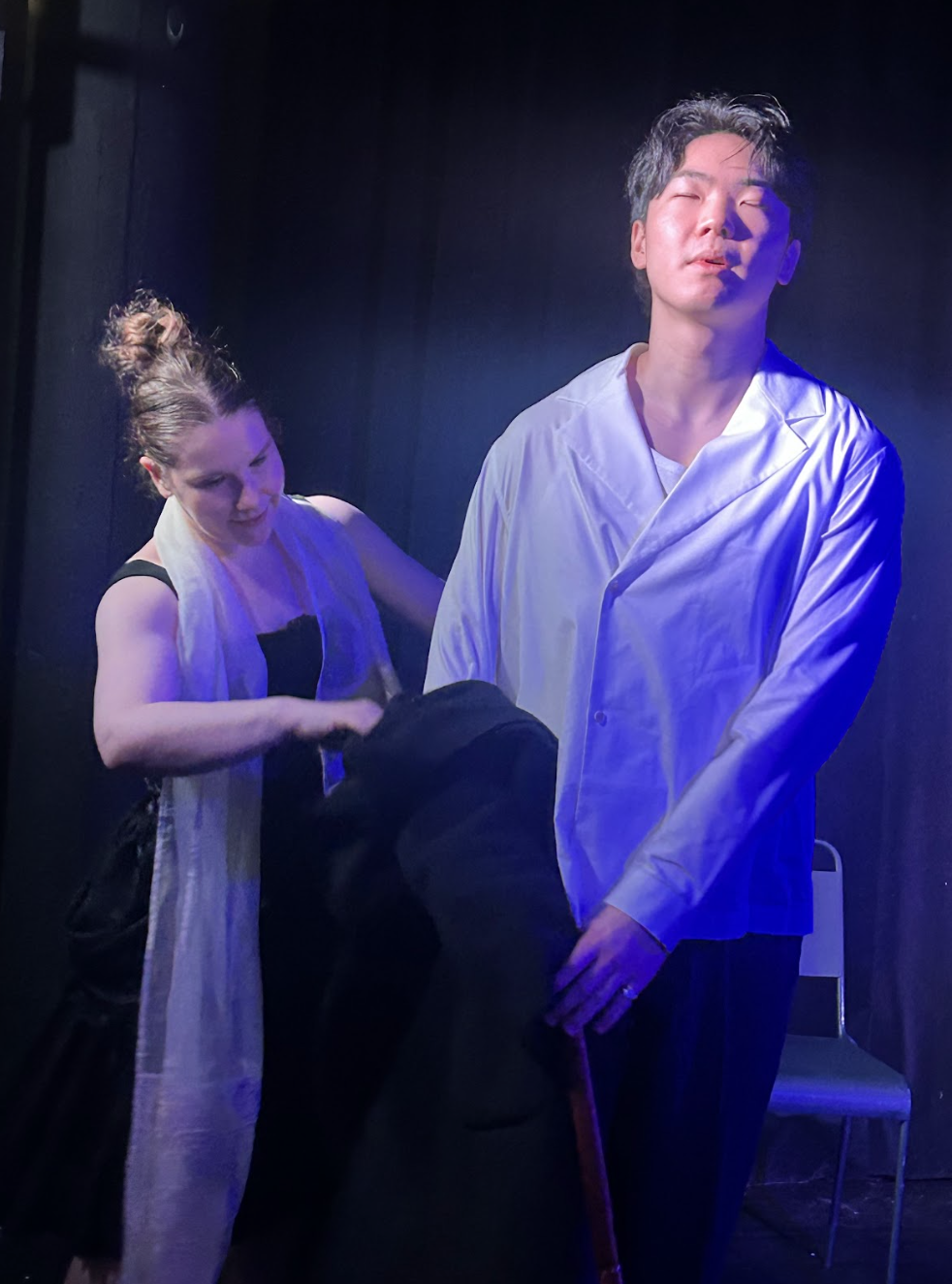
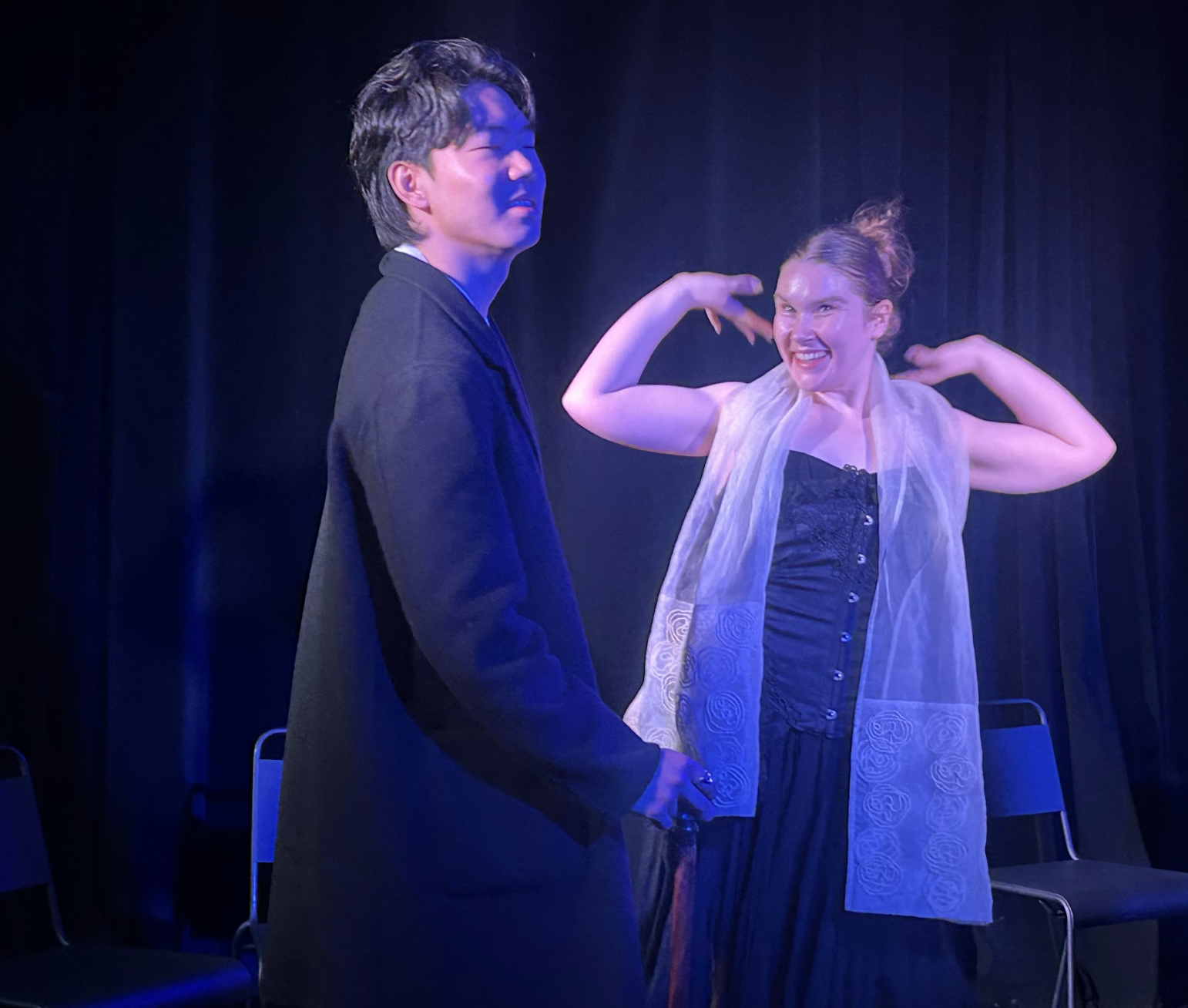
Commedia dell’arte runs on the body: the anarchic tumble of Arlequin’s lazzi, the stock gestures of Il Magnifico’s bombast, the physical comedy of servants upending the rules their masters wrote. Pierre de Marivaux, working in its shadow in 18th-century France, took those archetypes and filtered them through a French verbal intelligence. The result is what critics call Marivaudage: a comedy of emotional indirection, where characters say the opposite of what they feel and the real drama lives in the gap between the stated and the meant. As a theatrical form, it is nearly lost. Most contemporary audiences know neither Commedia’s stock characters nor Marivaux’s register, though they encounter his sensibility every time a rom-com puts its leads through the gauntlet of saying the opposite of what they feel. The screwball comedy, from Hawks and Lubitsch forward, is Marivaudage migrated to film. A production like THE ISLE OF SLAVES, REVISITED has to decide, moment by moment, which register it’s in, and can reasonably assume the audience already lives in one version of it.
Marisa Stefatos, directing and translating for Evicted Victorius Productions, brings passionate devotion to this material. The 1725 play, in which shipwrecked masters and servants exchange roles on a fictional island as a formal process of re-education, carries its own contemporary urgency without being modernized, and Stefatos knows it. Her snappy, faithful translation lets the text do its work. The crisp harpsichord quality of the French is audible in the English. The company’s mission, to reimagine classical theater for contemporary audiences, is exactly the right ambition for this material, with a nod to avant-garde experimentation. The calibration, however, isn’t there yet.
The production attempts to serve Commedia’s physicality and Marivaudage’s verbal delicacy simultaneously, and the tension between them has no resolution. Stefatos’ direction is heavy-handed in its Commedia dressing without being specific about what that dressing is doing. All four actors remain mostly onstage throughout, an ensemble impulse drawn from Commedia tradition, but in The Rat’s intimate space, constant physical activity from non-speaking performers fractures focus precisely when the language needs room. The bigger problem is scale. The shouting and declaiming that the production requires makes the story harder to follow rather than easier. The Marivaux text doesn’t need amplification. It already has an engine.
The cast offers a useful spectrum of what the right calibration could look like. Ella Sander’s Euphrosine, the La Padrona archetype recast as a young woman who lunches, a Karen with a silver spoon, gets the balance right from her first entrance: broad physical comedy and contemporary restraint in the same gesture, instantly recognizable without overreaching. She is the proof-of-concept the production is searching for. Michael Bentea, as Arlequin, is most alive in the show’s quieter passages, when the direction allows him simply to speak rather than declaim. He is most precise in those moments, working against the production’s heavier impulses with an intelligence and ease that puts the Marivaudage register entirely within his reach. Vincent Wong brings appealing vigor to Iphicrates, reading the character less as Pantalone the miserly old man and more as Il Magnifico, all booming bass voice and aggressively masculine bombast. It’s a smart, defensible interpretation. Again, it plays too large in a room that rewards precision. Nina Deacon has formidable ballet training, and her physicality as Cleanthis is always watchable. It functions as decoration rather than character, and the story doesn’t move forward in the moments it takes over.
No musical underscore moves between scenes, the production’s most conspicuous missed opportunity. Deacon’s skills are precisely the instrument a director uses to punctuate, comment, or reset, and the silence is neutral where it could be pointed. Stefatos has several clear choices in front of her. She could commit to contemporary Marivaux and trust the text’s own comic engine, stepping back from the Commedia overlay that competes with it. She could go all the way into Commedia, with mask work, full lazzi, and the formal admission that this is the classical form with a new translation. Or she could do what the production is already reaching toward: a Commedia overlay executed with specific, clear intention in every physical choice and disciplined enough to serve the Marivaudage rather than drown it. That is the hardest road. It is also potentially the most artistically satisfying. Chekhov drew from Commedia too, and contemporary experimental work has demonstrated what that inheritance can yield. SEAGULL: A TRUE STORY at The Public Theater, the recent UNCLE VANYA by Krymov Lab NYC, and IVANOV by New American Ensemble make the case: the tradition is alive and still generating. Halfway between commitments is where the production currently lives, and halfway doesn’t serve any of it.
Stefatos has produced something worth developing. The Isle of Slaves, Revisited is a short, breezy adaptation of a text that doesn’t age, performed by a company with genuine range, aimed at a question every audience will recognize. As an outdoor piece, a park or festival stage where the physical choices have room to breathe and the music has room to swell, this could be genuinely joyful. The Rat is the wrong room for it. But Stefatos is clearly drawn toward the harder road, and the harder road is worth taking. As a fan, I’ll be there.
Click HERE for tickets.
Review by Ariel Estrada.
Published by Theatre Beyond Broadway on April 13, 2026. All rights reserved.
