
Written by William Shakespeare; Directed by William Frenzel
St. Luke’s Church | 85 Greenway South, Forest Hills, NY 11101
November 7 - 15, 2026
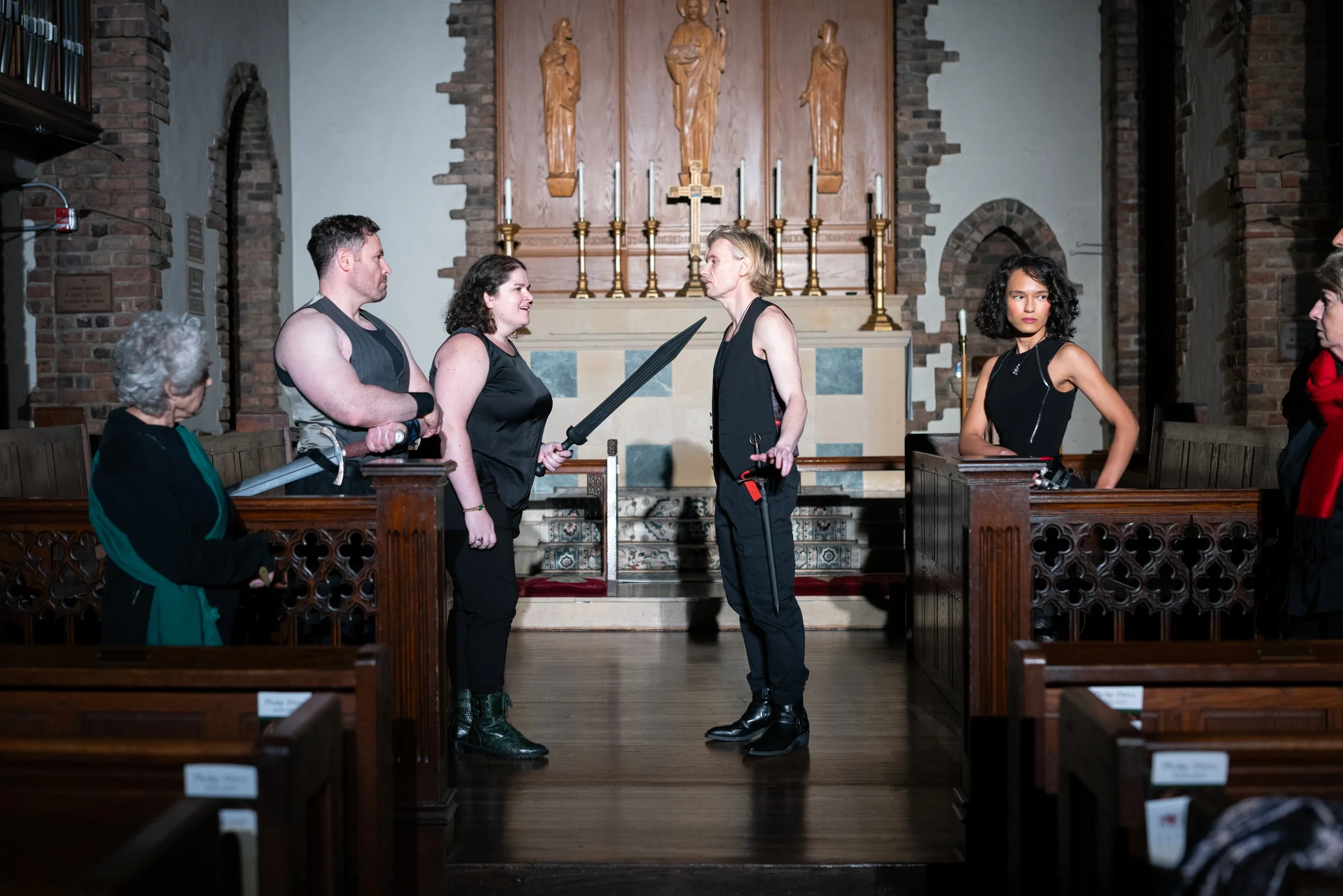
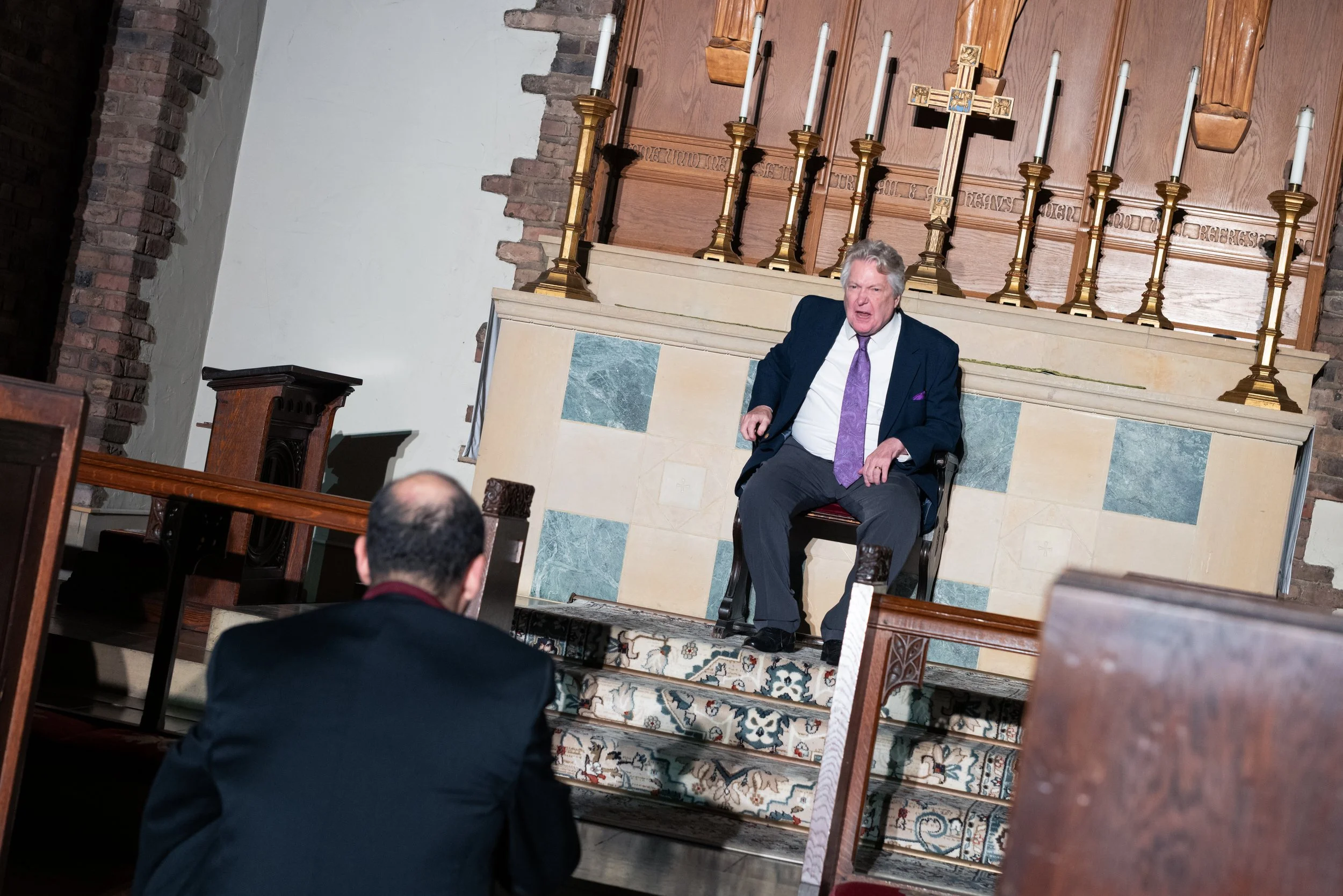
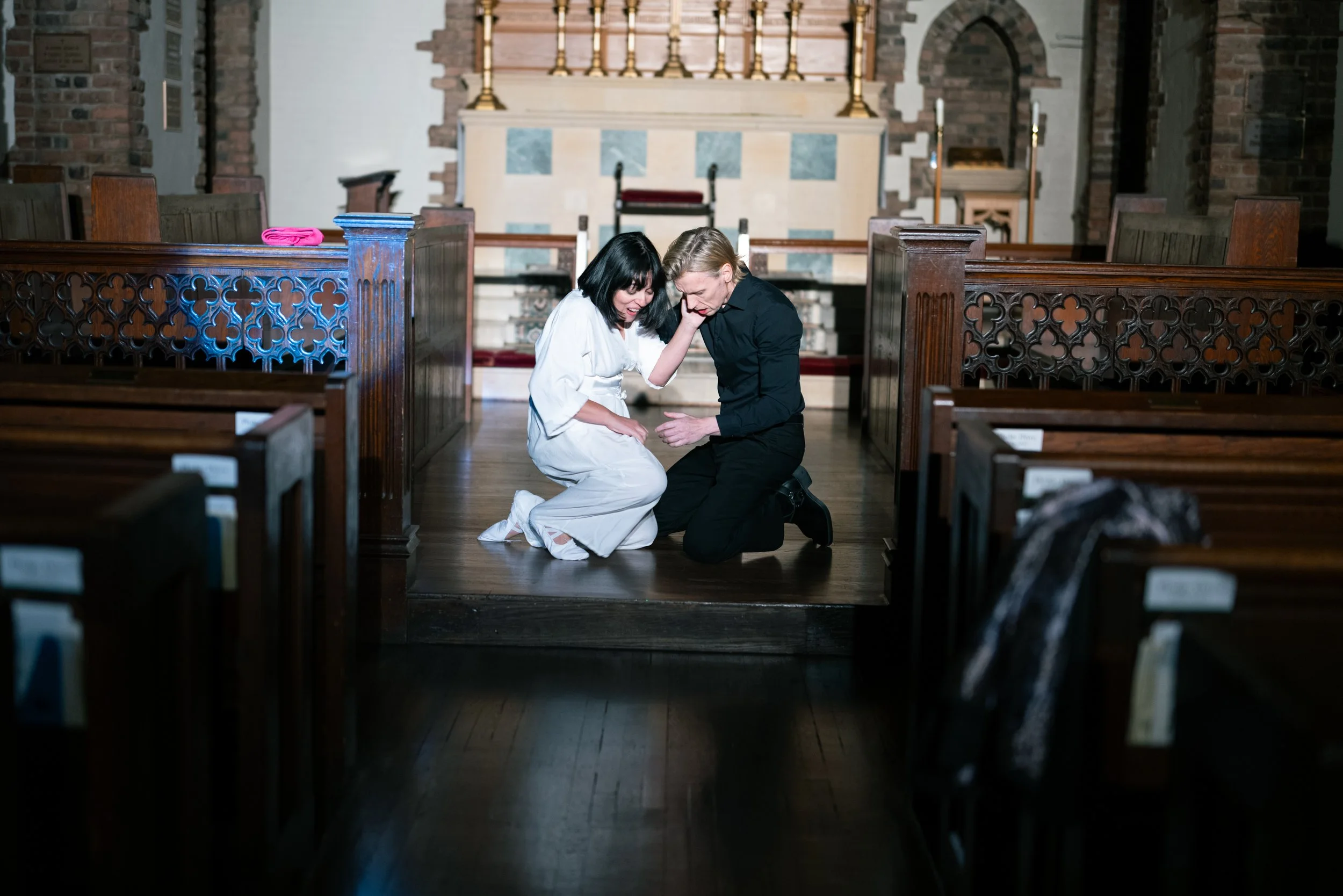

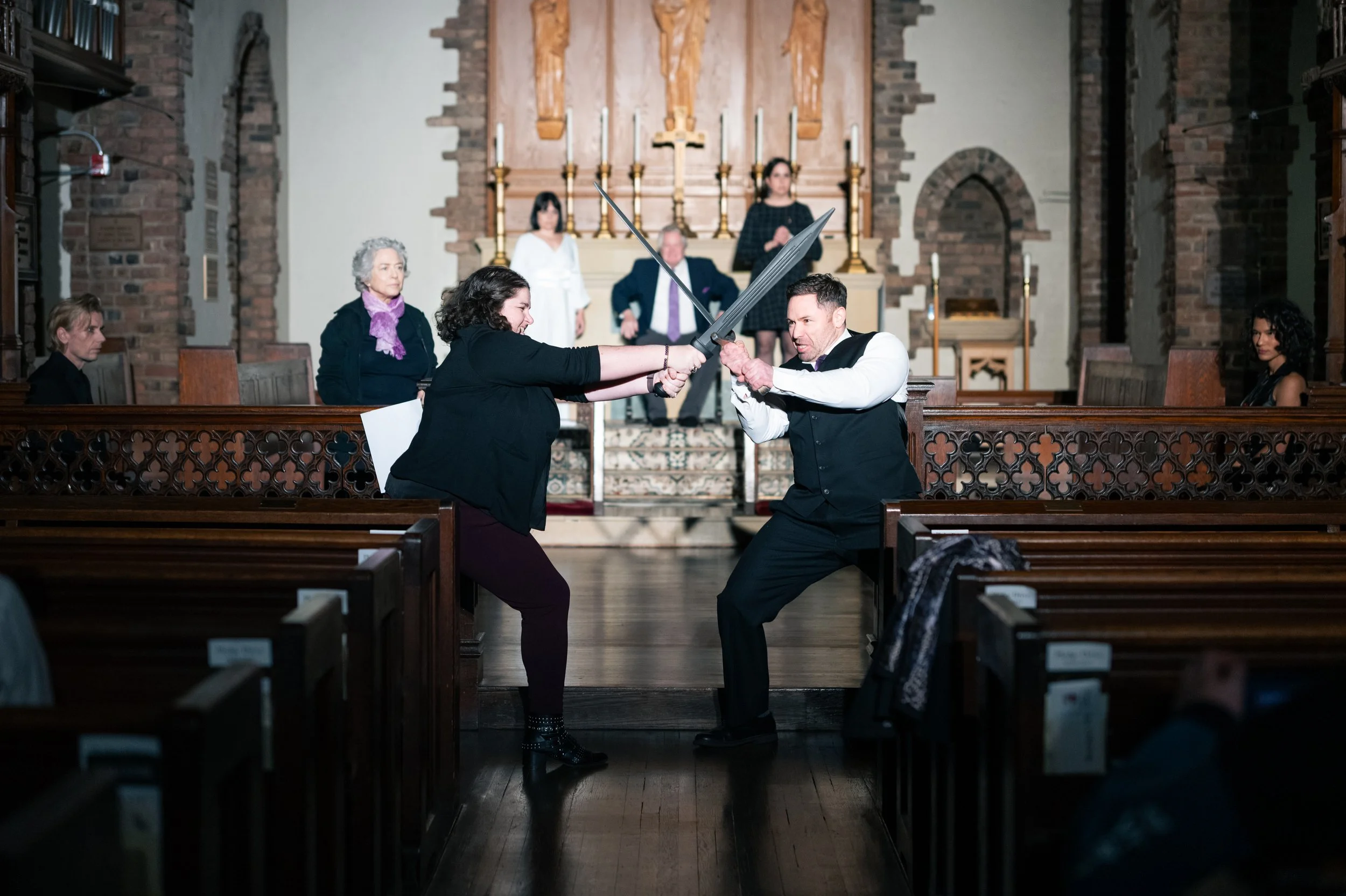
Photo Credit: Debbie Yoo
More than four centuries after William Shakespeare penned The Tragedy of Julius Caesar, the play remains a recurring fixture on stages around the world. The play has been produced countless times and at least eight times in the last 10 years, a testament to the enduring fascination with a story steeped in ambition, political allegiance, betrayal and the consequences of unchecked power.
Its continued relevance is perhaps best understood through the date that has become synonymous with political treachery: the Ides of March. On March 15, 44 BCE, Julius Caesar was assassinated by a group of Roman senators who believed they were protecting the Republic from tyranny. Yet their actions would plunge Rome into further political upheaval and civil war. The conspirators succeeded in killing Caesar, but failed to preserve the Republic they claimed to defend.
This fall, the Gingerbread Players of Forest Hills offered another interpretation, bringing Shakespeare's political tragedy into the intimate setting of St. Luke's Episcopal Church, a small church tucked into Forest Hills Gardens in Queens.
A community theatre institution since 1971, the Gingerbread Players have been a stalwart of the Queens theatre community, producing two productions annually, along with additional programming, with Shakespeare among their favorites. Under the direction of William Frenzel, this production raises the bar on the company's approach to the Bard, using the church's architecture and the space surrounding its audience in an innovative and daring staging.
Rather than confining the action to a conventional stage, Frenzel incorporates the church's apse and surrounding spaces, allowing the audience to occupy the world of Rome as both spectators and citizens. The modern costumes, inspired by funeral attire, further blur the boundaries between ancient history and contemporary political life.
The lighting design not only enhanced the atmosphere of each scene, but also made the transitions purposeful and fluid. These shifts heightened the tension within individual scenes and sustained the dramatic momentum of the play.
What is particularly outstanding about this production is the unified ensemble work. Shakespeare's language is well embodied, connected and engaging. There is often a missing link in productions of classical work, where the language can feel fragmented or the exchanges lack fluidity. That is not the case here. The dialogue flows, the relationships feel connected, and the ensemble works collectively to tell the story.
The principal characters are especially powerful. Tiffany McCue's Cassius is a standout, bringing a commanding presence and intensity to the character. Martin Challinor's Brutus is equally compelling, giving the role a strong sense of conviction and weight. The dynamic between these two performers is particularly engaging. Andrew Dinan gives Caesar an imposing presence, while John Galligan's Mark Antony brings the persuasive power of rhetoric and political theater to the forefront. Gabby Fidis rounds out the central group as Octavius, contributing to the shifting balance of power that follows Caesar's death.
The strength of this production extends throughout the ensemble. Lauren Snyder as Calpurnia, Farah Diaz-Tello in the roles of Soothsayer, Portia and Strato, Ted Birke as Casca, Bart DeFinna as Decius Brutus, Mike Miller as Metellus Cimber, Melody Chan as Cinna, Sheila Spencer-Cholewa as Trebonius, Suzanne Schick as Lepidus, Beverly Daros as Messala and Heather Violanti each contribute to the collective energy and cohesion of the production. Every performer has a part in creating the world of the play, and the ensemble's shared commitment makes Shakespeare's language accessible, engaging and alive. This is a group effort in the truest sense, with each actor helping to carry the story forward.
The intimacy of St. Luke's is central to the experience. With approximately ten pews on both sides of the aisle, accommodating no more than five people each, the audience is quite literally in the action. Actors move around and among the audience, drawing spectators into the unfolding drama. You are not simply watching the Roman citizens; you become them. You are part of the factions, the public and the political climate that ultimately determines Rome's future. This inclusive staging keeps the play moving while creating a connection between the audience and the story that is both immediate and engaging.
And it was here that I found myself considering the play in a different way.
The story of Julius Caesar is, of course, one of ambition, power and the overthrow of a perceived tyrant. But as I watched Brutus and Cassius move against Caesar, I found myself asking a different question: What are we replacing him with?
As someone who believes that everyone should have a voice and that we have the right to stand up, protest and speak out against those in power, I found myself considering the other side of that equation. Dismantling a regime is one thing. Establishing what comes next is another. What are Brutus's goals? What does his vision of leadership look like? What are Cassius's motivations? And what of Mark Antony, whose powerful funeral oration demonstrates just how effectively public sentiment can be redirected?
The question became less about whether Caesar should be removed and more about what happens when the people who seek to remove him must assume responsibility for what follows. The pursuit of a better system does not necessarily guarantee one. Nor does the removal of a tyrant mean that the conditions for tyranny have disappeared.
I found myself doing what theatre is supposed to do: questioning, reconsidering and looking at a familiar story through a new lens. Had I seen this play ten years ago, I suspect my response would have been quite different. Seeing it in the current political climate, particularly in the aftermath of another election cycle, left me in a space of pondering rather than reaching for my flag or stepping onto my soapbox.
That is the gift of this production. It is thoughtfully conceived, beautifully staged and carried by an ensemble whose command of the language and commitment to the storytelling make Shakespeare's work feel immediate. The Gingerbread Players have created an engaging and inclusive theatrical experience that reminds us why these stories continue to be told.
More than 400 years later, the Ides of March still invites us to consider the price of ambition, the fragility of political institutions and the consequences of factionalism. Caesar's assassination may have been intended to save Rome, but Shakespeare leaves us with a more complicated question: When the dust settles, who gets to decide what comes next?
Review by Malini Singh McDonald.
Published by Theater Beyond Broadway on November 18, 2026. All rights reserved.