THOUGHTS & PRAYERS
Written by Ibsen Santos & Aaron Zook; Directed by Ibsen Santos
Presented by The Antigone Project
Presented by the New York City Fringe Festival
Chain Mainstage I 312 West 36th Street, New York, NY 10018
Thu April 2 at 6:00pm, Mon April 6 at 6:00pm, Mon April 13 at 6:00pm, Sat April 18 at 7:00pm
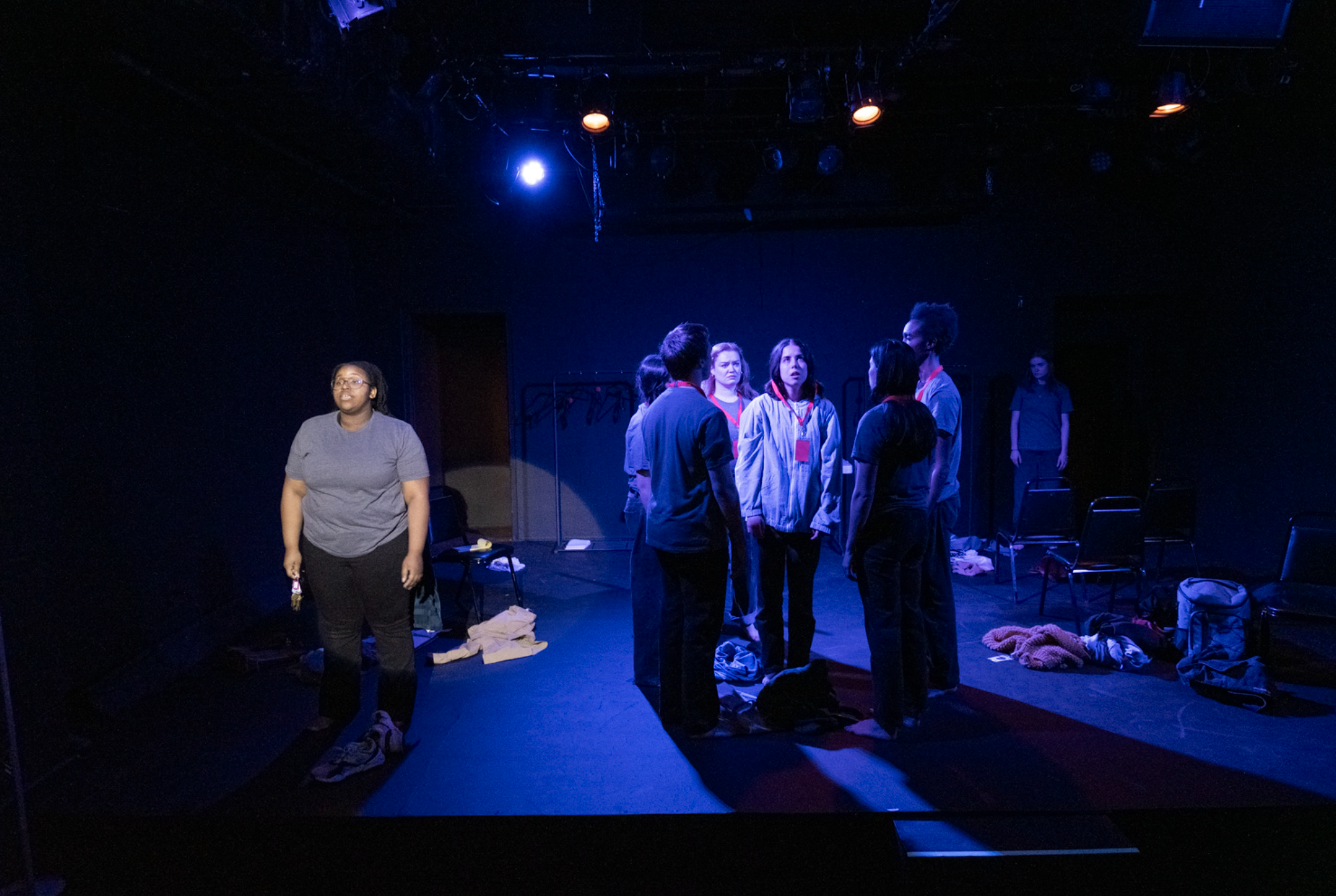
At the teeming carnival of invention that is the New York City Fringe Festival, one occasionally encounters a work that strains against the limits of its own urgency. Thoughts & Prayers, a new devised piece by The Antigone Project, is such an effort—earnest, searching, and at times harrowingly direct in its confrontation with the psychic toll of American gun violence.
Drawing its distant, echoing lineage from Antigone, the production refracts that ancient familial triangle—Antigone, Ismene, and their doomed brother—through a contemporary lens, transposing classical grief into the all-too-familiar register of modern catastrophe. Here, the audience is guided by Amanda, an Argentinian exchange student, whose outsider’s gaze lends the proceedings a quietly destabilizing clarity. It is through her that we witness a host family, and by extension a community, attempting to metabolize the incomprehensible aftermath of a mass shooting.
What distinguishes the piece is not merely its thematic ambition, though that is considerable, but its insistence on asking what ritual remains available to us in a culture where tragedy has become both spectacle and routine. The ensemble, working collectively, toggles between the intimate and the allegorical, sometimes landing in moments of piercing stillness, at other times succumbing to the diffuse sprawl that often accompanies devised work of this kind.
Yet even in its less disciplined passages, Thoughts & Prayers retains a moral gravity. It is less a polished artifact than a live wire—volatile, imperfect, and charged with the uneasy recognition that the language we have inherited may no longer suffice to articulate the scale of our loss.
Thoughts & Prayers wastes no time on preamble. It deposits the audience directly into the stunned, airless aftermath of a school shooting and, with a kind of moral stubbornness, refuses to look away. Loosely indebted to Antigone—that inexhaustible drama of familial loyalty and rupture—the piece abandons the architecture of classical tragedy in favor of something far more disquieting: the long, unstructured echo that follows catastrophe.
What emerges is not a narrative of the event itself but an anatomy of its residue. Silence becomes a principal actor; ritual, a fragile scaffolding. The question is no longer what happened, but how does one continue when continuation feels like a betrayal of the dead?
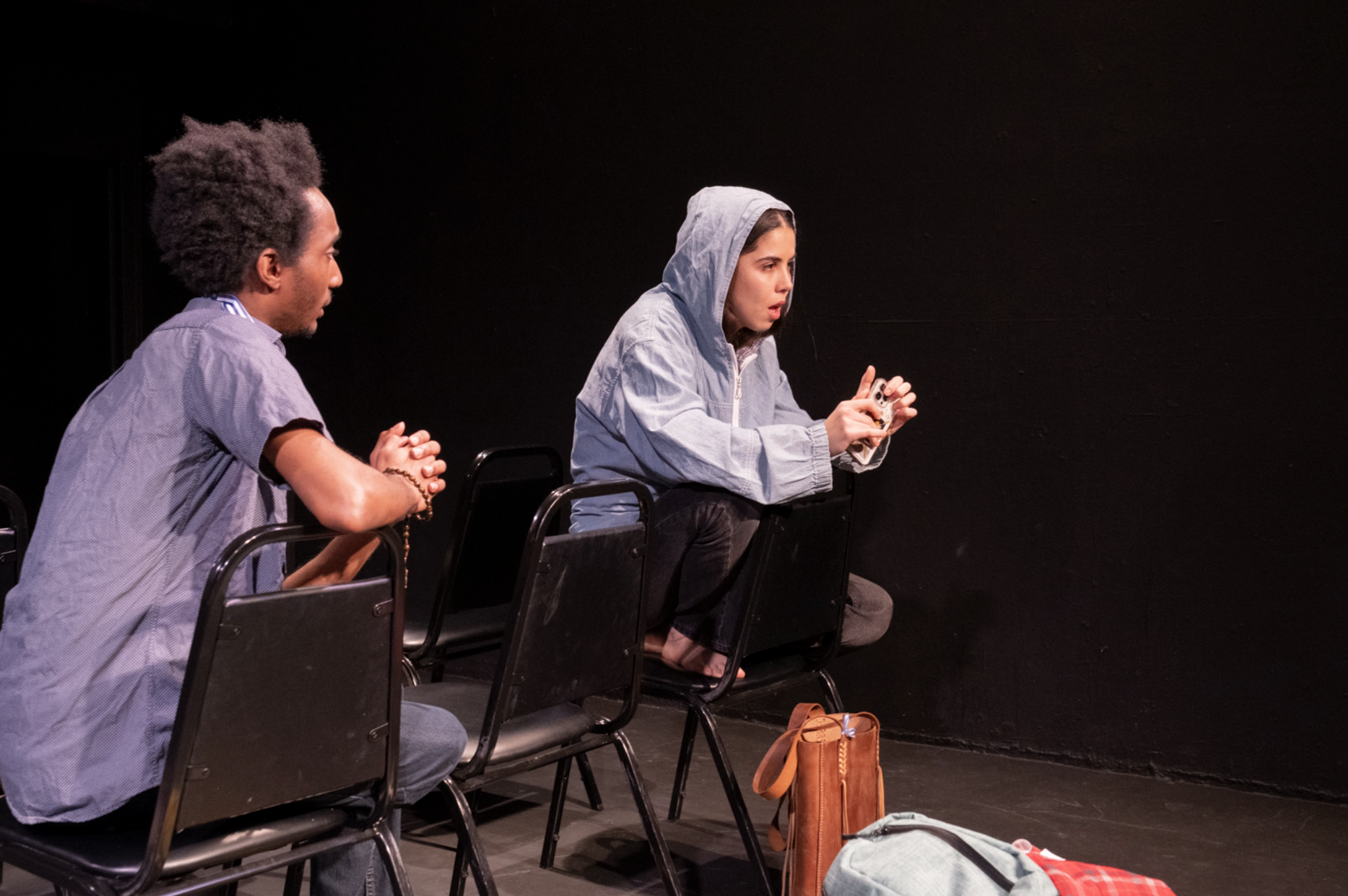
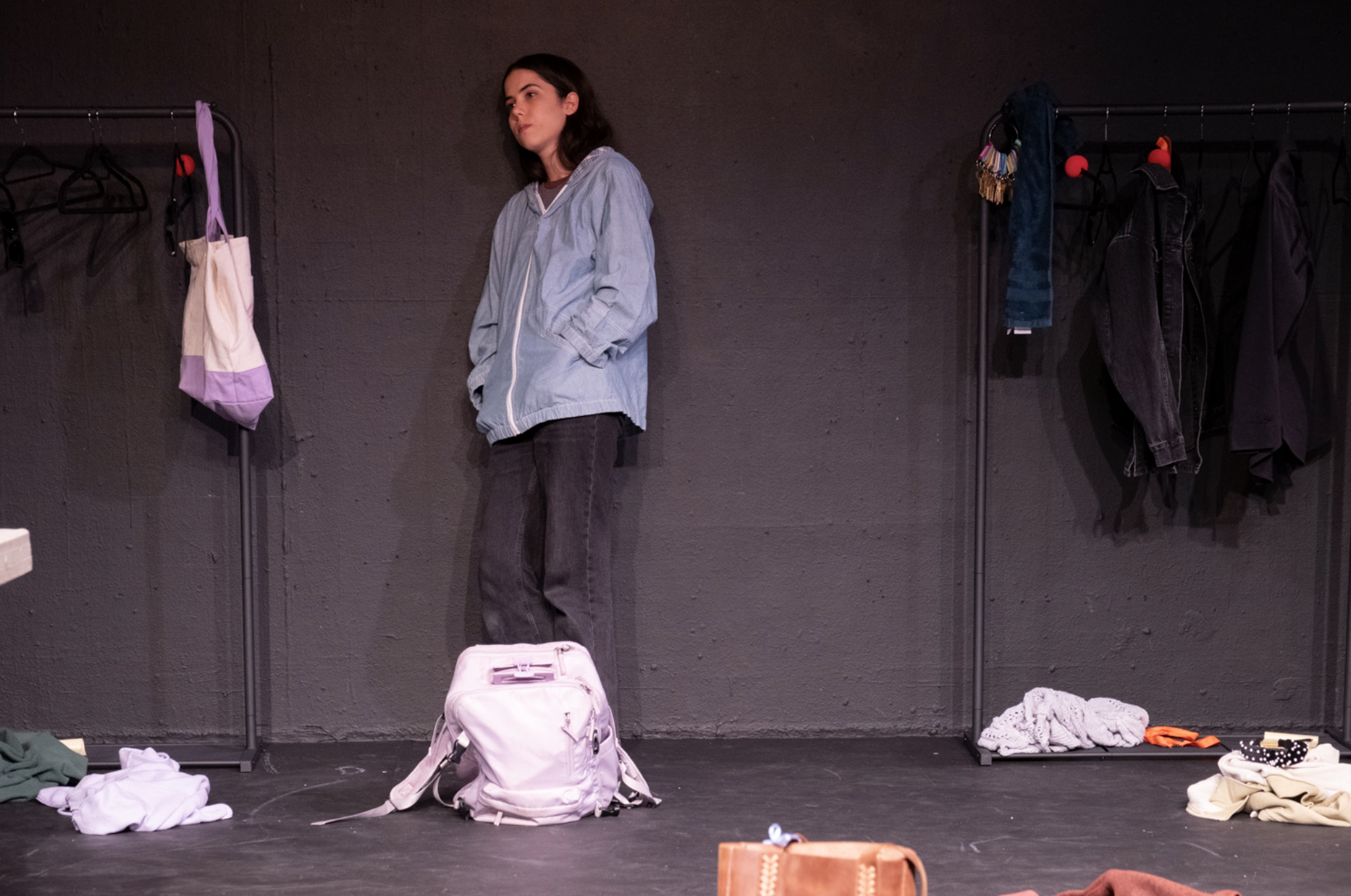
At the center stands Amanda, an Argentinian exchange student, embodied with a notable stillness by Clarita De Gennaro. As an outsider lodged within the home of Ralph—the unseen perpetrator—Amanda functions as both witness and reluctant participant. It is a canny framing device, one that collapses the comforting distance through which such tragedies are often consumed. We are not permitted the luxury of observation; instead, we inhabit a domestic space where grief coexists uneasily with evasion, where mourning is punctured by moments of quiet, almost involuntary deflection.
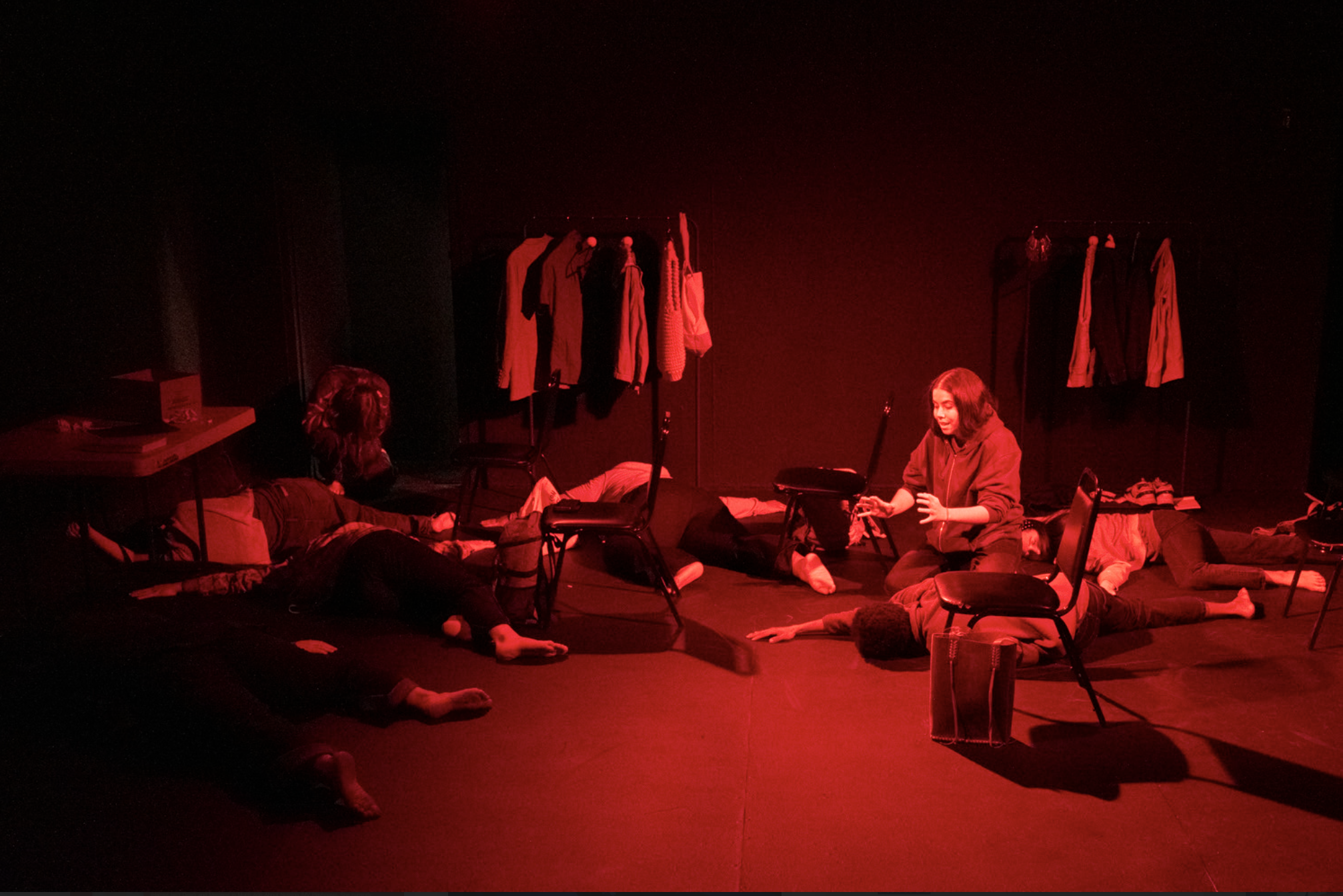
The production’s most persuasive gesture is its resistance to coherence. Perspectives proliferate—survivors, parents, classmates, figures of institutional authority—each offering not resolution but friction. Grief shades into blame, blame into denial, memory into something more unstable and selective. Rather than corralling these contradictions into a digestible thesis, the ensemble allows them to accumulate, to chafe against one another. The effect is, at times, exasperating, but recognizably so; it mirrors the psychic disarray such violence produces.
Visually, the staging embraces a spare vocabulary. Objects and costume elements gather incrementally across the playing space, until the stage itself seems to bear the sediment of what has transpired. By the final moments, it is not clutter that one perceives, but weight—a palpable density, as though every spoken word, and every withheld one, has settled into the room. It is a modest device, executed with unnerving precision.
Certain images refuse to dissipate: the ritualized calling of names; the quiet insistence that “they remain with us”; a chilling recollection of learning to handle a gun at the age of ten, delivered without flourish and therefore all the more indelible. Amanda’s gradual recalibration—her dawning recognition of the family’s fractures—provides the piece with a necessary emotional throughline, a slender but steady current amid the surrounding turbulence.
Though the work is resolutely ensemble-driven, Jon-Mykul Bowen distinguishes himself as Father Jackson, his grounded presence cutting cleanly through the production’s more diffuse passages, offering, if not clarity, then at least a momentary sense of ballast. Dustin Bussman, Cato Crumbley, Paige Hapeman, Barbara Moreno, Maddy Kelly and Niarra Bell complete the company who are each cast in a number of roles in this absolutely haunting work.
Thoughts & Prayers is not interested in consolation. It withholds resolution with a rigor that can feel almost punitive, declining to impose shape on what is, by its nature, shapeless. What it offers instead is endurance: the sustained, uneasy act of sitting with what cannot be reconciled. One leaves the theater not with answers, but with a residue—a heaviness that lingers, obstinate and unresolved.
Click HERE for tickets.
Review by Tony Marinelli.
Published by Theatre Beyond Broadway on April 8, 2026. All rights reserved.
