YOUR LOVE ISN’T LOVE
Written by Anthony P. Pennino
Directed by Jason Brubaker
Presented by the New York City Fringe Festival
Chain Theatre Studio, 312 West 36th Street, New York, NY 10018
Thu April 2 at 9:25pm, Mon April 6 at 9:25pm, Sat April 11 at 10:35pm & Sat April 18 at 8:55pm
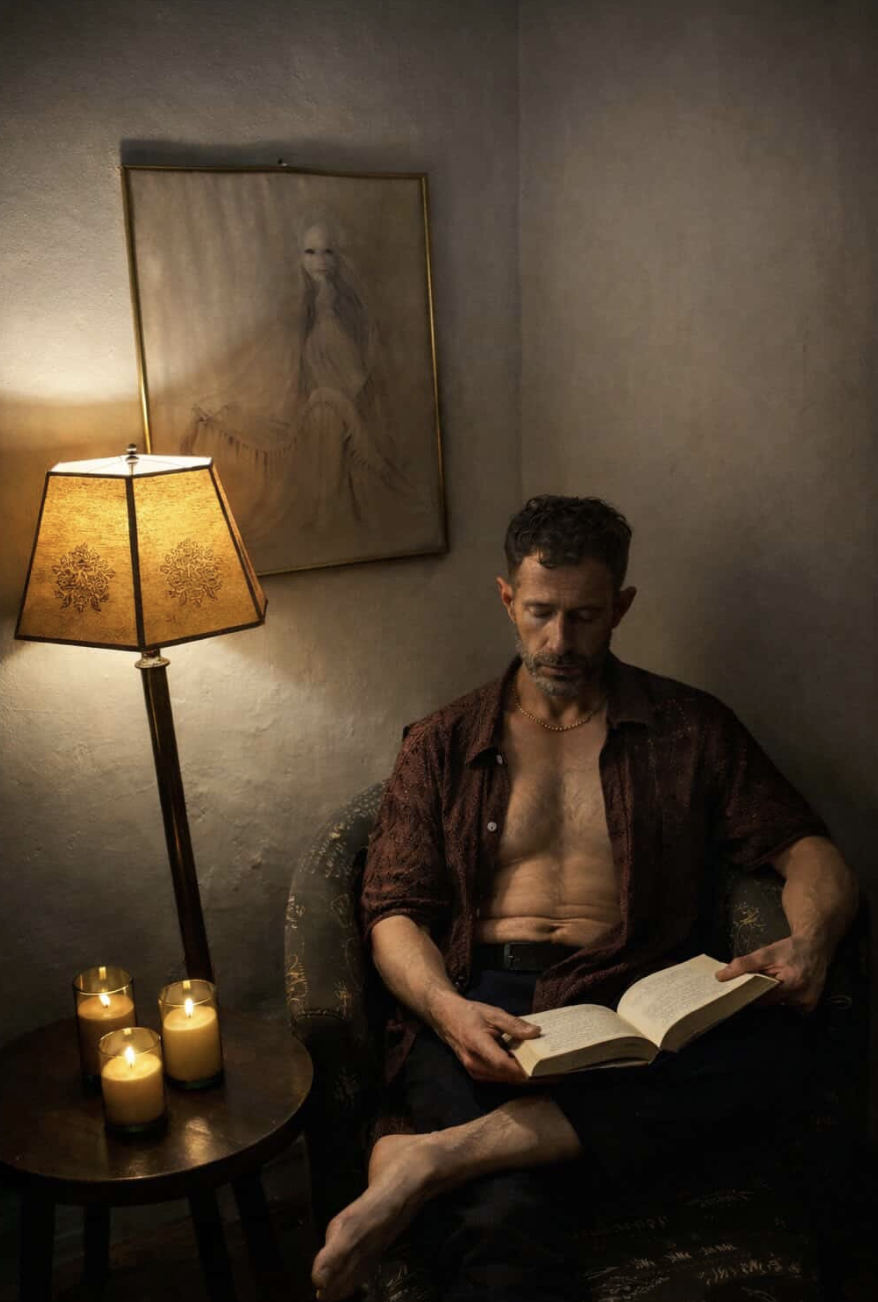

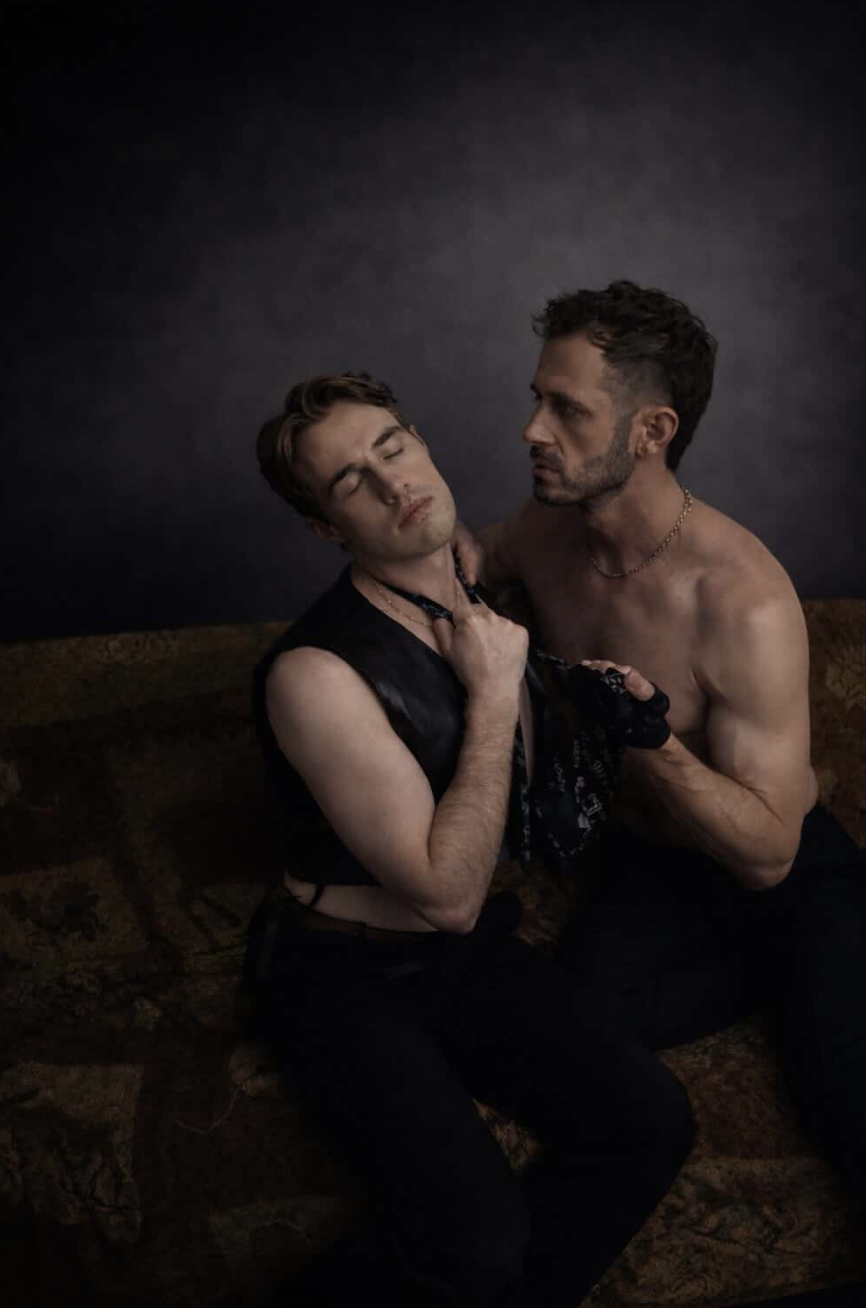


In Anthony P. Pennino’s blistering Your Love Isn’t Love, what begins as a private language of erotic play flowers into something far more volatile and searching, as James and Cole confront the uneasy question of whether devotion can shade, imperceptibly, into complicity. It is at times a frightening love story bold enough to defy its own design.
Set against the grainy, pre-digital intimacy of 1990s New York, the piece unfolds with a disarming immediacy, probing the contours of queer desire with both tenderness and a bracing lack of sentimentality. What might have settled for provocation instead achieves something rarer: an atmosphere of lingering unease that feels earned rather than imposed. The play navigates shame, longing, and emotional risk with a keen intelligence, tracing the delicate boundary between connection and self-erasure. It is less a cautionary tale than a deeply felt excavation of love in its most destabilizing forms.
James once took comfort in the easy assurance that love, in its purest form, might suffice. What he comes to learn—slowly, and at some cost—is that love does not banish despair so much as contend with it, hand to hand, in the dark. Pain intrudes. Fear lingers. And yet, within that fraught terrain, love persists, not as cure but as companion—tested, reshaped, and, in its way, made more profound.
Jonathan Berg’s James emerges as the play’s aching center of gravity, a man whose emotional transparency feels, in this context, almost radical. Berg wears the character’s devotion plainly, never armoring it with irony, and in doing so reveals the quiet heroism—and occasional futility—of loving someone who cannot quite receive love in its simplest form. His James yearns, unmistakably, for a romance unencumbered by ritual or pretense, yet he meets Cole where he is with a patience that is neither naïve nor inexhaustible. There is a lived-in quality to Berg’s performance—perhaps not incidental, given his offstage work as a therapist specializing in queer trauma—that lends each moment an air of careful listening, as though James is perpetually calibrating how much of himself to offer, and at what cost.
Opposite him, Steven Hooley gives a performance of striking intricacy, capturing the fault lines within a young man divided against himself. His Cole is at once tender and evasive, hungry for connection yet drawn, almost compulsively, toward forms of expression that complicate or even undermine that desire. Hooley resists caricature, instead locating the fragile logic beneath Cole’s contradictions: the aspiring actor wary of being defined, the lover who can only approach intimacy through layers of performance, the exhibitionist who nonetheless recoils when confronted with its emptier iterations.
Under the direction of Jason Brubaker, the production moves with a deliberate, almost diagnostic clarity, as though each scene were being examined for stress fractures. Brubaker proves especially attuned to the perilous oscillations of the relationship—its sudden ascents into tenderness and its equally swift descents into volatility—never allowing the play’s more extreme gestures to tip into sensationalism. Instead, he charts a careful emotional topography, where hazard signs are neither ignored nor overstated, but quietly accumulate, scene by scene, until the audience feels their weight. It is a staging that understands the danger not as spectacle but as atmosphere, something lived in rather than merely observed.
One of the play’s more unsettling passages—Cole’s encounter with a man who pays him for a violent, transactional “date”—is handled with a notable restraint. Hooley plays the aftermath not as titillation but as genuine disillusionment, a moment in which the carefully constructed boundaries between desire and meaning collapse. What he seems to discover, with a kind of dawning sorrow, is that the act itself is insufficient; what he had sought, however inarticulately, was not merely sensation but a recognition imbued with care. The absence of that care renders the experience hollow, even alienating. The sadness lies in the fact that the essence of care is always embodied and at the ready in the man with whom he already shares a life.
Together, Berg and Hooley chart a relationship defined as much by its asymmetries as by its shared longing. The tension between them—between James’s insistence on emotional clarity and Cole’s retreat into obliqueness—becomes the play’s animating force. It is a dynamic that neither resolves nor calcifies, but instead deepens, scene by scene, into something at once intimate and elusive, leaving the audience to reckon with the uneasy possibility that love, however sincerely felt, may not always arrive in a form the other can bear.
Review by Tony Marinelli.
Published by Theatre Beyond Broadway on April 18, 2026. All rights reserved.
