1 Small Lie
Created, directed, designed, mixed, & performed by Martin Dockery
Presented by the New York City Fringe Festival
wild project, 195 E 3rd St, New York, NY 10009
Thu April 9 at 9:20pm, Fri April 10 at 6pm, Sun April 12 at 7pm & Sat April 18 at 5:20pm
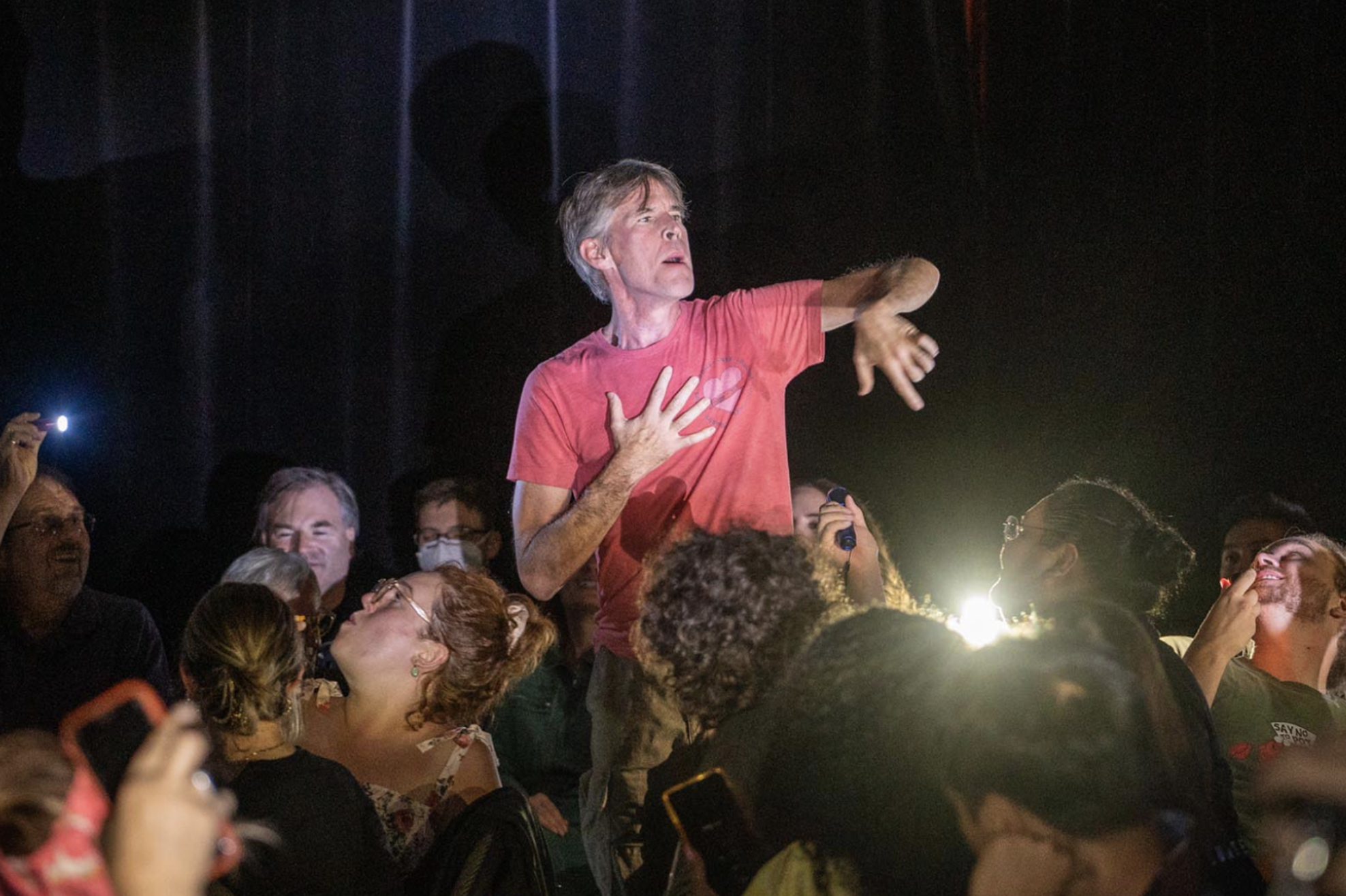
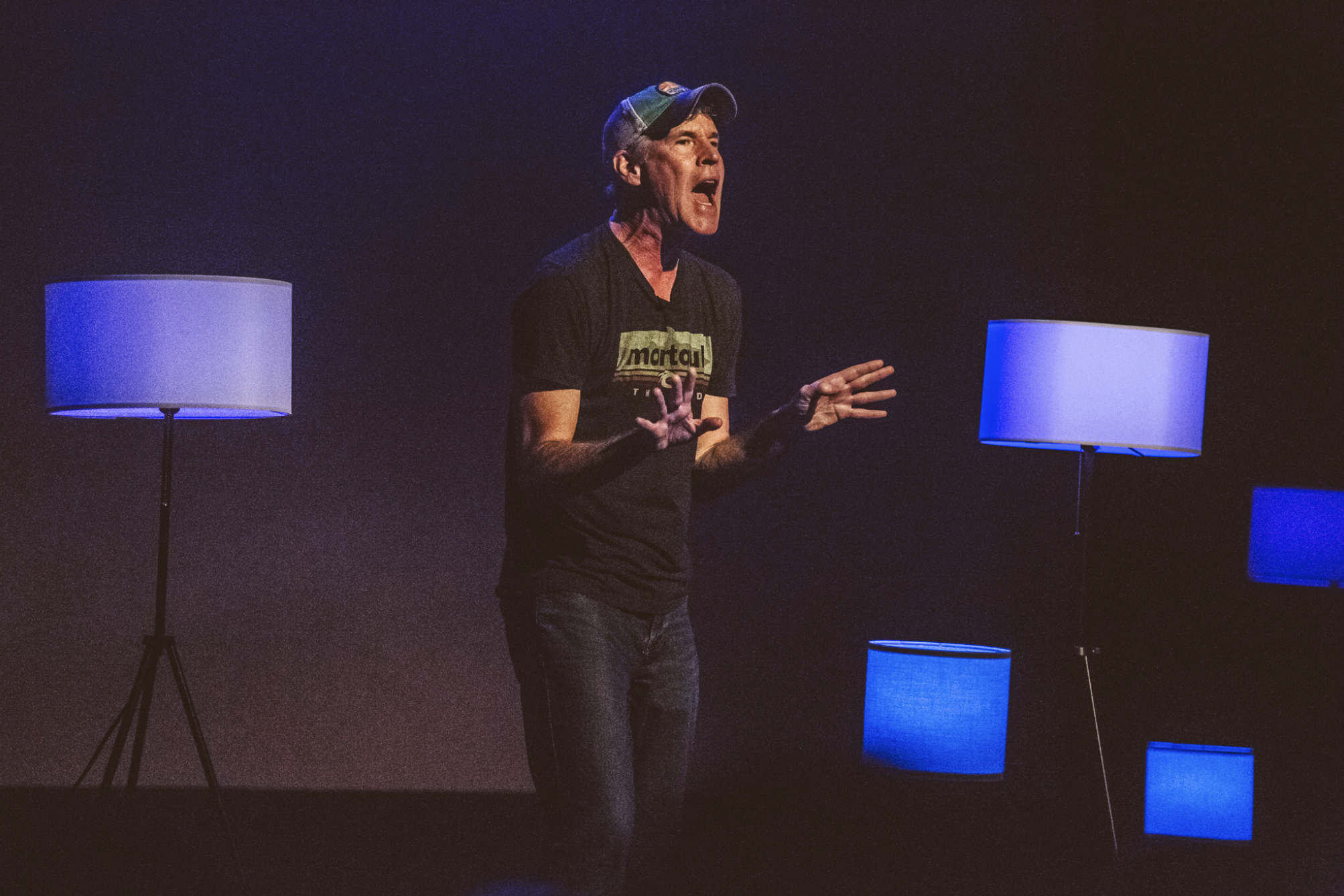
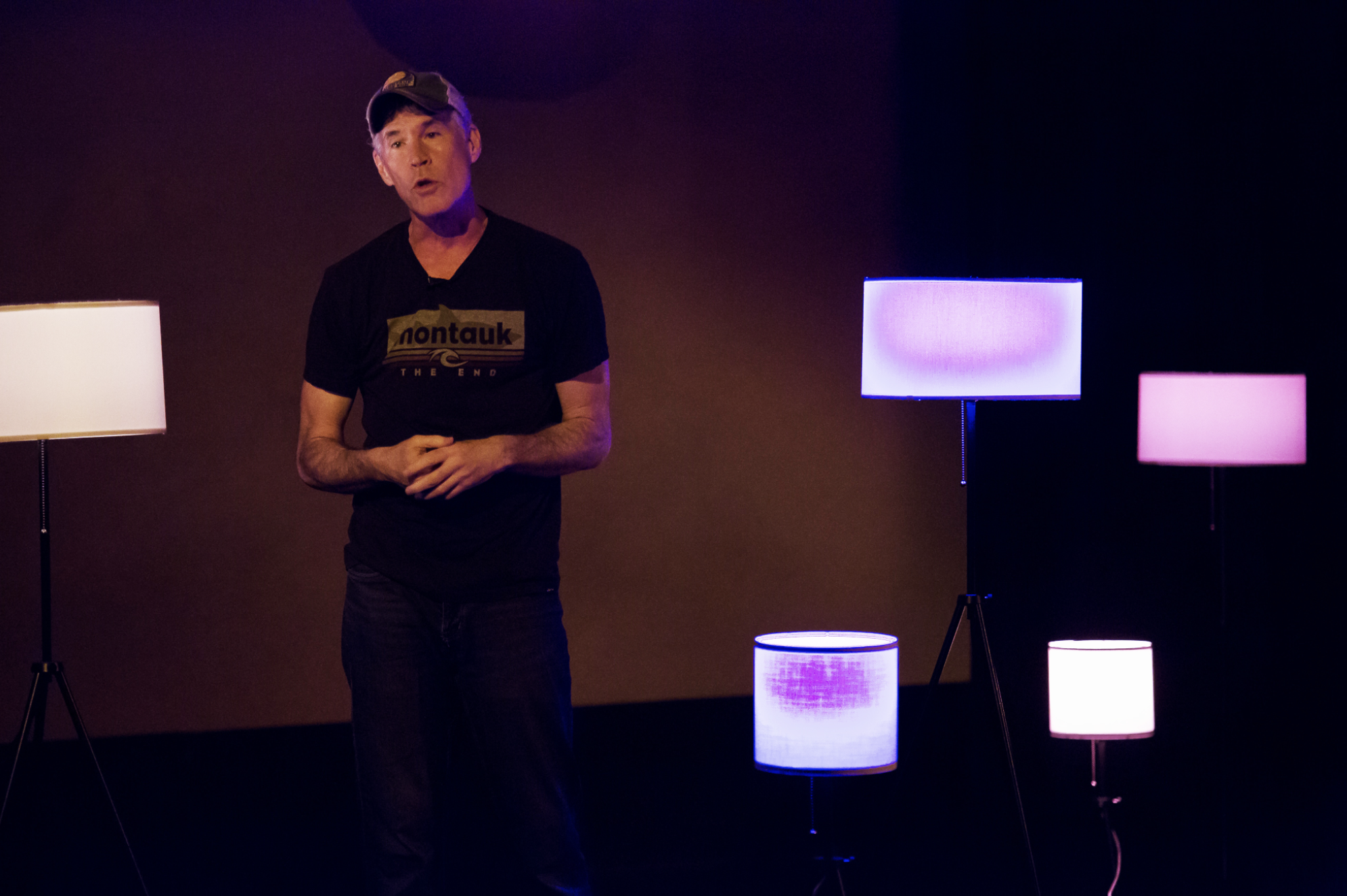
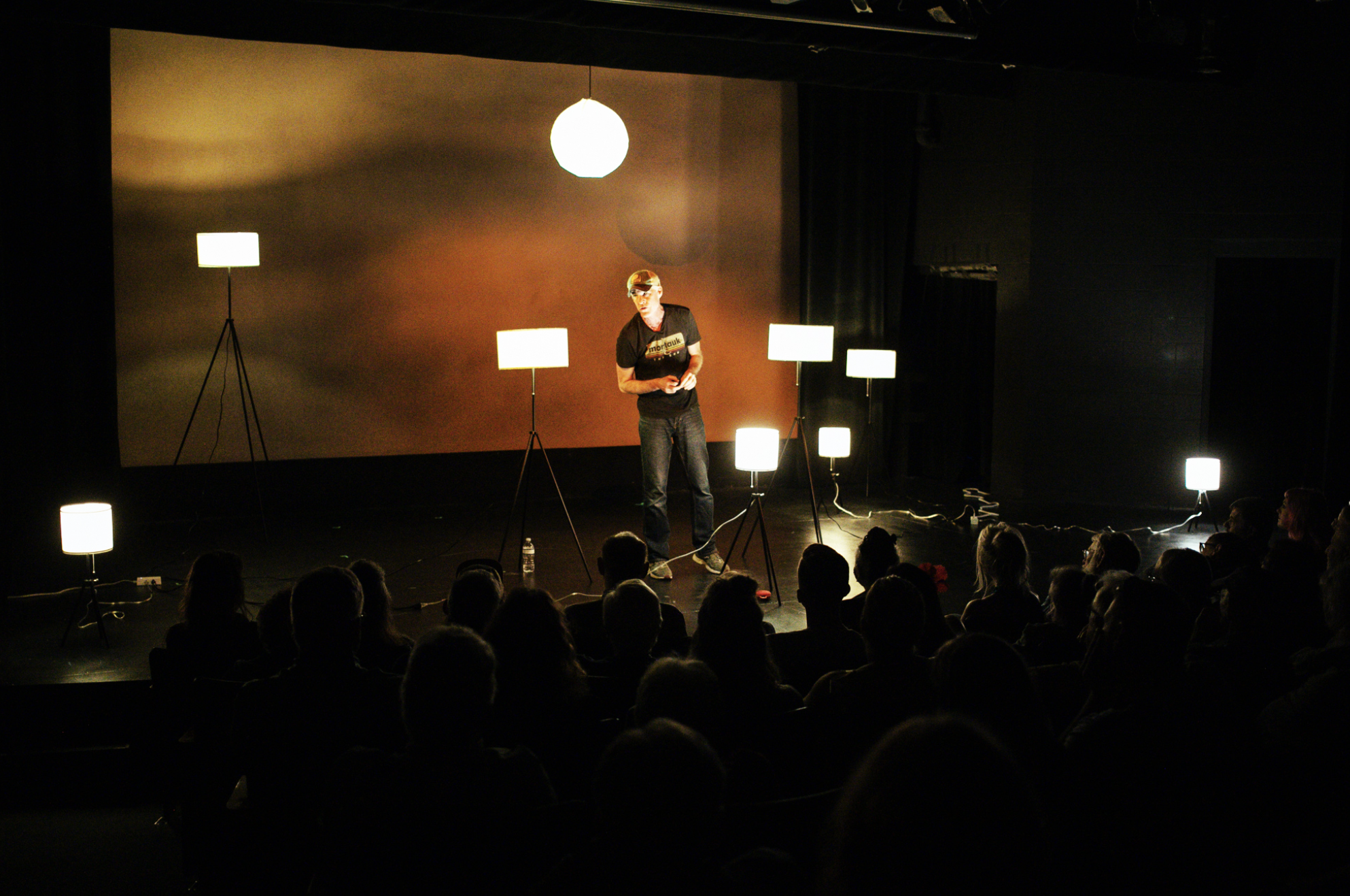
What ultimately distinguishes Martin Dockery’s 1 Small Lie from even the most accomplished works of contemporary solo storytelling is not merely its narrative ingenuity, but the rigorously self-imposed formal system within which that narrative must survive. The piece presents itself with deceptive lightness—an anecdote, a confession, a story half-told in confidence—yet it is, in fact, an exquisitely engineered apparatus, one in which form and content exist in a state of productive tension.
The mechanics alone would be noteworthy. The lighting is controlled in real time by Dockery himself via his phone, lending the work an unsettling autonomy. More exacting still is the sound design: a single, unbroken 58.5-minute musical composition against which the entire performance must be calibrated. There are no cues in the conventional sense, no punctuating edits or external interventions. Instead, the score functions as an immovable temporal spine, a structure against which the elasticity of live storytelling must continually contend. Dockery stands not outside the machinery of the theater, but inside it, conducting it from within.
Within this frame, he performs a feat that borders on the acrobatic. There is no written script; the piece was constructed orally, through repetition and refinement rather than inscription. As a result, it retains a certain living instability: never quite the same twice, yet always required to remain in alignment with the unyielding demands of its soundtrack. Dockery becomes both narrator and timekeeper, shaping language to duration even as duration resists alteration.
This tension gives 1 Small Lie its distinctive charge. Dockery’s “Martin,” a version of himself suspended in pandemic solitude in Montauk, begins with familiar gestures: a walk, a chance encounter, the discovery of vulnerability in the form of an injured fawn. But as the narrative darkens, the audience becomes increasingly aware not only of what is being told, but of how precisely it must be told in order to remain in sync with the score’s inexorable forward motion.
The effect is quietly disorienting. The story does not simply unfold; it feels continuously negotiated—between memory and invention, spontaneity and structure. Dockery’s control becomes all the more impressive for its invisibility: his conversational ease remains intact even as the demands of synchronization press upon every transition, every pause, every acceleration of thought.
What prevents the work from becoming merely formalist display is Dockery’s refusal to allow structure to eclipse character. The ethical spiral at its center—money, death, and the seductive logic of self-justification—remains vivid and emotionally legible. Each decision arrives cloaked in reason, even virtue, until the cumulative effect is unmistakably damning. The constraints do not diminish the drama; they sharpen it, imbuing each moment with heightened consequence.
The conceit itself is elegantly spare. Martin, living in isolation in a borrowed Montauk house, moves from pastoral calm into something far darker after attempting to rescue an injured fawn and instead encountering the victim of a fatal car crash—and a sum of money that seems to exert its own gravitational pull. From this point forward, the drama is less about what happens than about how easily it happens. A chain reaction unfolds with unnerving plausibility, drawing both Martin and the audience into an escalating web of implication.
Dockery’s performance style is deceptively relaxed. He speaks as if discovering the story alongside us, yet his pacing is finely tuned, his tonal shifts—from wry humor to creeping dread—executed with precision. The character that emerges is disarmingly familiar: an ordinary man whose incremental concessions to greed and ego render him both sympathetic and suspect.
The production’s technical elements, designed and executed by Dockery himself, are models of restraint. A subtle interplay of sound and light deepens the atmosphere without asserting dominance; the world seems to close in almost imperceptibly, until the sense of menace becomes unavoidable. The audience, gathered in lamplit intimacy, is made to feel less like spectators than like confidants—silent witnesses to a confession that may or may not be entirely sincere.
From here, the narrative accelerates with breathless inevitability. What begins as an ethical dilemma expands into a labyrinth of escalating stakes: a missing child, the tightening pressure of police scrutiny, the unnerving presence of a neighbor whose menace feels both exaggerated and entirely plausible. Dockery maintains a delicate tonal balance, allowing the events—however improbable in aggregate—to remain grounded in psychological truth.
In the end, 1 Small Lie lingers not because it shocks, but because it recognizes how little is required to tip a life off balance. Dockery offers no moral absolution, no comforting demarcations. Instead, he presents a continuum of choices, each one small enough to justify, yet collectively transformative. What emerges is a rare alignment of method and meaning: a work that understands form not as container, but as pressure system—and under that pressure, Dockery’s storytelling becomes not only compelling, but quietly astonishing.
In Dockery’s telling, Montauk becomes less a location than a crucible, a place where chance encounters harden into destiny and where moral lines blur with alarming speed. The cumulative effect is one of mounting unease, tempered by moments of wry humor that only deepen the disquiet. It is a performance that moves with the deceptive fluidity of anecdote while carrying the structural weight of a finely wrought thriller—a delicate, disarming balance that Dockery sustains with remarkable assurance.
Review by Tony Marinelli.
Published by Theatre Beyond Broadway on April 19, 2026. All rights reserved.
