SEAGULL: TRUE STORY
Presented by The Public Theater and Mart Foundation
Written by Eli Rarey, Directed by Alexander Molochnikov
The Public Theater, LuEsther Hall, 425 Lafayette Street, in Manhattan
March 22 - May 3, 2026
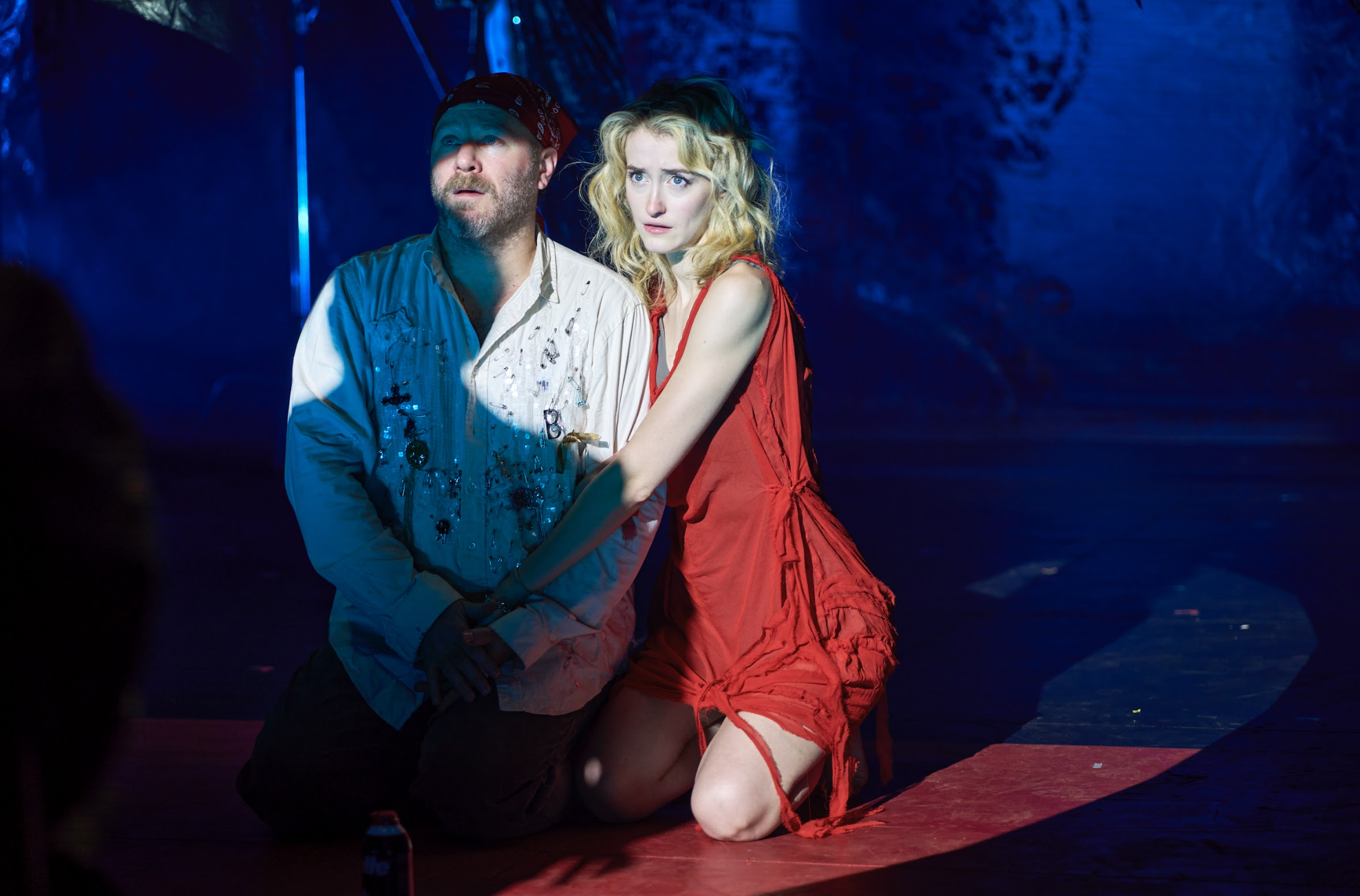
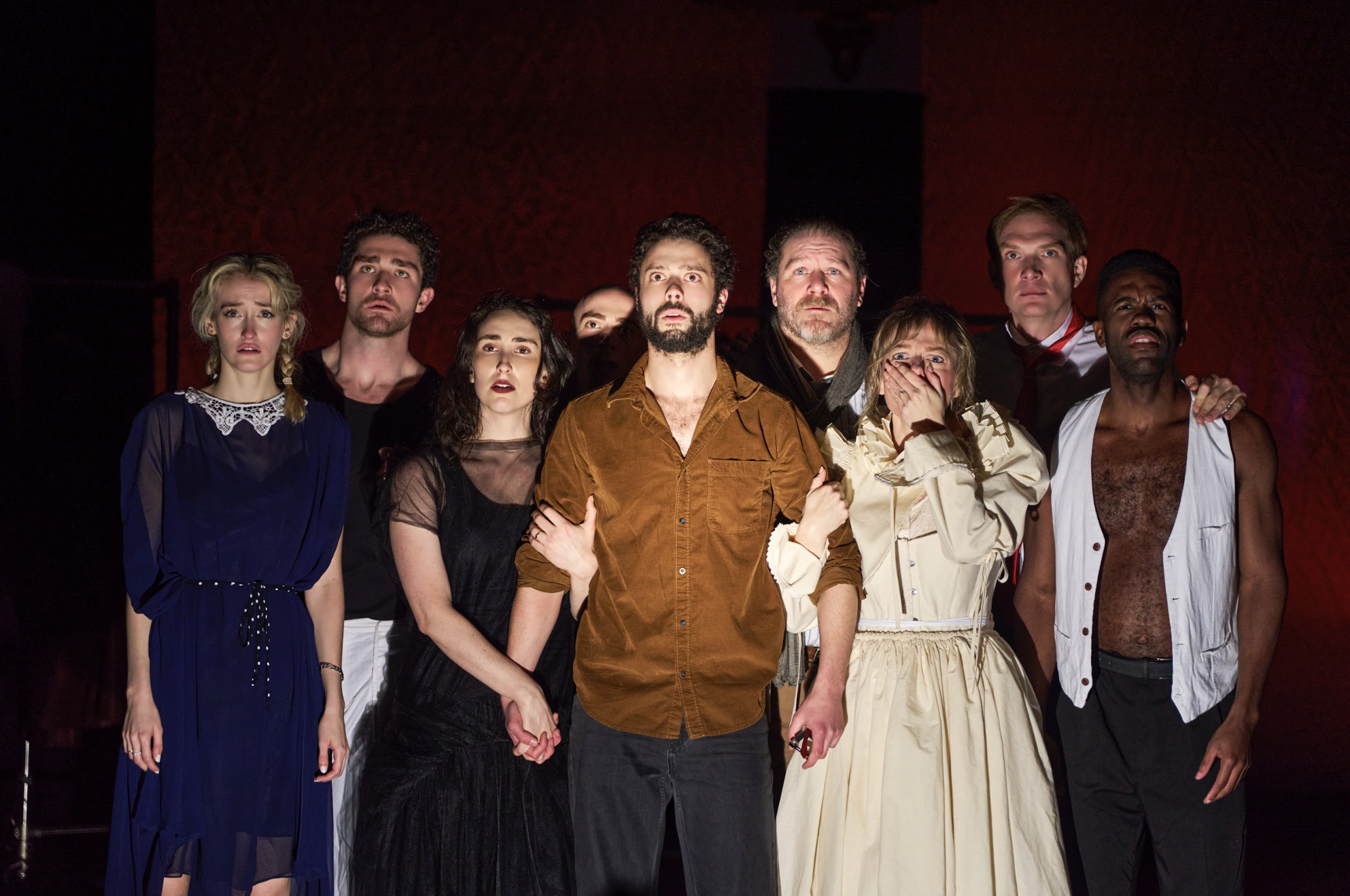
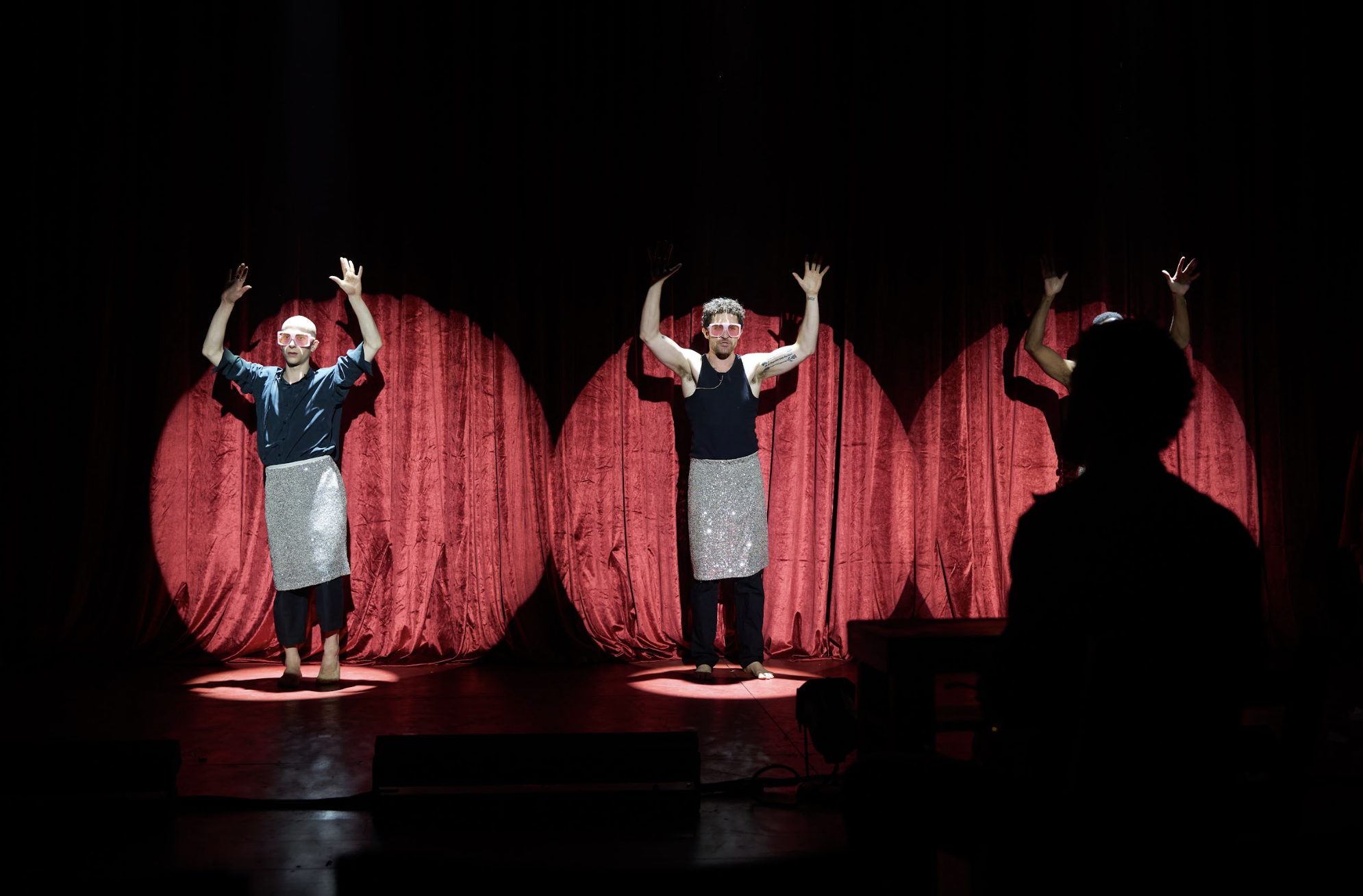
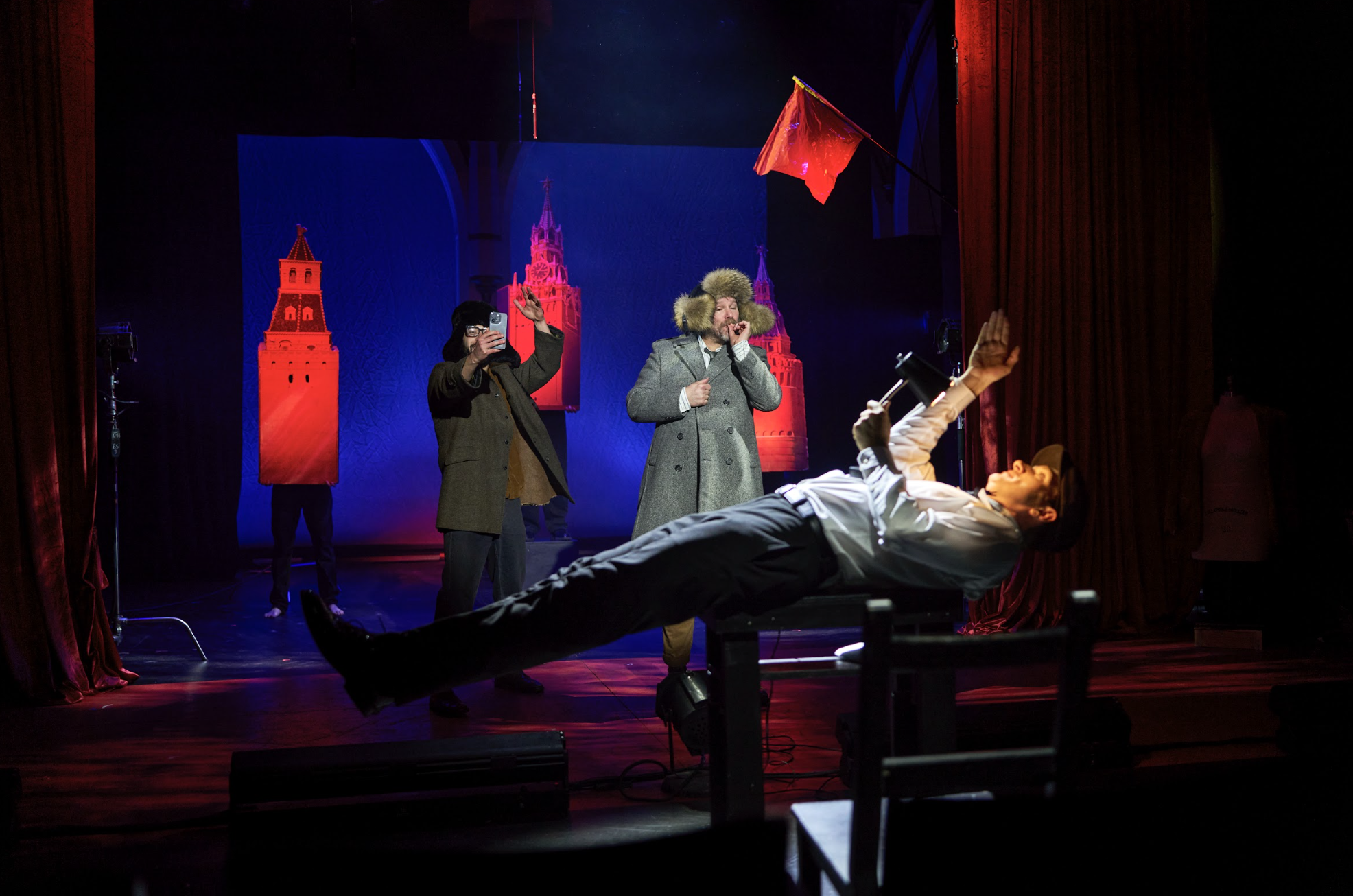
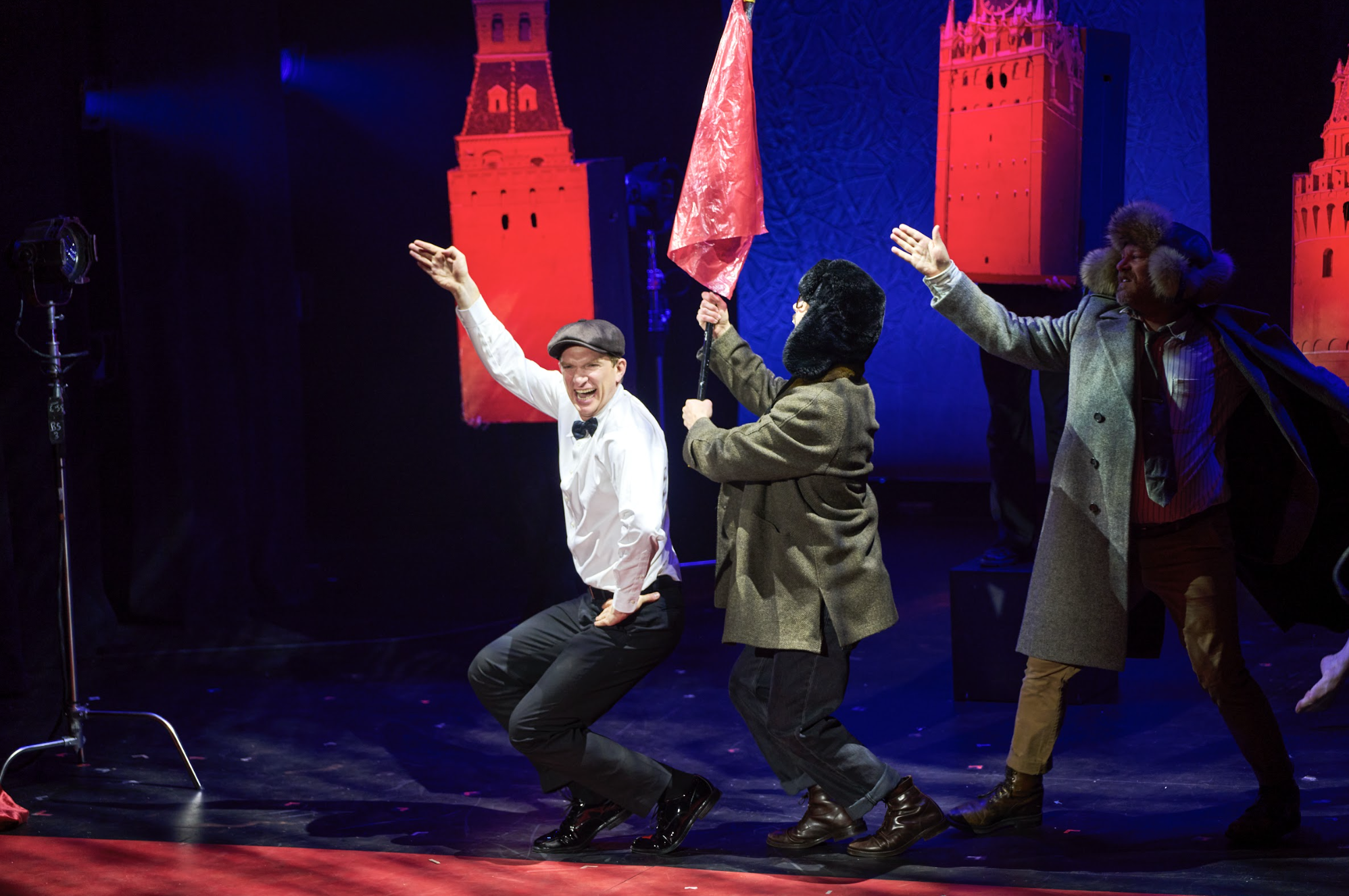
There is, in The Seagull, that most delicately self-aware of theatrical texts, an almost prophetic elasticity—a capacity to refract the anxieties of each successive generation of artists who dare to approach it. In Seagull: True Story, Alexander Molochnikov not only engages with Anton Chekhov’s play but subjects it to a kind of autobiographical combustion, fusing lived experience with canonical narrative until the boundary between the two dissolves into something at once volatile and exhilarating. The result is less an adaptation than a theatrical palimpsest: Chekhov rewritten through exile, ambition, and a mordant awareness of art’s precarious place in a fractured world.
Molochnikov’s own trajectory—once poised to stage Chekhov at the august Moscow Art Theatre, now an émigré artist reconstructing that ambition in downtown New York—hovers over the production like a ghost that refuses to remain silent. The script, by Eli Rarey, embraces this duality with an almost gleeful intelligence, interweaving the familiar emotional architecture of Chekhov’s play with a sharply comic meta-narrative about its attempted staging. If the observations it offers about censorship, artistic compromise, and cultural dislocation occasionally announce themselves with a certain bluntness, the production’s sheer inventiveness renders such directness not only forgivable but, in moments, bracingly effective.
From the outset, the evening announces its tonal hybridity through the figure of the MC, embodied with rakish charisma by Andrey Burkovskiy, who seems to have wandered in from Marx Brothers vaudeville with both eyebrows arched and conscience lightly intact. His running commentary—arch, irreverent, faintly dangerous—frames the action as both spectacle and critique, ushering us into a theatrical space where nothing is sacred and everything, paradoxically, matters. Opposite him, Eric Tabach’s Kon emerges as a figure of trembling ambition, his anxieties about artistic legitimacy rendered with a precision that is as comic as it is quietly devastating.
At the center of the production lies the volatile, darkly hilarious relationship between Kon and his mother, Olga, played with formidable command by Zuzanna Szadkowski. Their exchanges crackle with a particular kind of familial brutality—wounding, unsentimental, yet unmistakably rooted in intimacy. Szadkowski, in particular, locates the exact tonal register where ridicule becomes a form of love, and where encouragement arrives disguised as insult. The dynamic recalls Chekhov’s own genius for emotional contradiction while feeling unmistakably contemporary in its cadence.
There is, in the supporting performances of Seagull: True Story, a quietly persuasive emotional undercurrent that complicates—and ultimately enriches—the production’s more overt satirical architecture. Elan Zafir’s Anton, conceived as a kind of loyal satellite to Kon’s volatile artistic ego, emerges not merely as confidant but as a figure of genuine pathos. Zafir locates, with delicate precision, the ache of fidelity in a world that rewards opportunism; his Anton is perpetually a half-step behind the action, absorbing its shocks with a tenderness that feels almost antiquated. If the text affords him little opportunity to demonstrate the dramaturgical acuity the role nominally requires, Zafir compensates with a performance of such emotional transparency that the absence becomes, in a sense, beside the point. One comes to understand Anton less as a practitioner of the craft than as one of its casualties—a man devoted to the idea of art, even as he is repeatedly sidelined by its practitioners.
Gus Birney brings a luminous, if necessarily restrained, vitality to the role of Nico, a character sketched with an economy that might, in lesser hands, verge on the perfunctory. Birney, however, resists the temptation to overcompensate, instead allowing Nico’s dual nature—her guileless charm and her quiet ambition—to coexist without undue emphasis. There is something fleetingly poignant in her presence, as though she exists in a slightly different register from the more overtly caricatured figures around her. If Nico at times seems less a fully elaborated character than a suggestion of one, Birney invests that suggestion with enough texture to make her feel not insubstantial, but elusive—a figure glimpsed rather than grasped, whose very thinness becomes, paradoxically, a kind of theatrical intrigue.
What distinguishes the production, however, is its visual and choreographic imagination. A “freedom dance,” staged with thrilling physicality (choreography by Ohad Mazor), erupts as a moment of genuine theatrical transcendence—a fleeting articulation of artistic possibility before the encroachment of political reality. When that reality arrives, it does so not as abstraction but as intrusion: laws, prohibitions, the slow suffocation of expression. Yet even here, Molochnikov resists solemnity, allowing satire and absurdity to coexist with dread in a manner that feels, disconcertingly, true.
The second half, which transplants the action to New York, unfolds as a kind of funhouse reflection of the first. If Moscow represents the overt machinery of repression, downtown NYC emerges as a landscape of diffuse, often self-imposed constraints—commercial, ideological, and cultural. Burkovskiy’s gleefully unctuous turn as a Broadway producer offers a miniature masterclass in comic doubling, while the ensemble of Bushwick aspirants—earnest, hypersensitive, and endearingly adrift—embodies a milieu in which artistic identity is both universally claimed and perpetually deferred. The line readings, the negotiations over language (“unalive” supplanting “kill”), the gentle skewering of performative consciousness—all land with a precision that feels observational rather than merely satirical.
And yet, for all its humor, the production never relinquishes its emotional stakes. What lingers is not simply the cleverness of its conceit but the urgency of its underlying question: what does it mean to make art when the conditions for making it—political, economic, psychological—are themselves unstable? Molochnikov does not offer a tidy answer. Instead, he stages the question repeatedly, refracting it through different systems of constraint, until it acquires a kind of cumulative resonance.
Many of the production’s sharpest insights arrive not through dialogue but through stage pictures—bold, absurd, and instantly legible. Among the most indelible is the re-creation of Vladimir Putin shirtless atop a horse, an image so culturally overdetermined that the production scarcely needs to comment on it. In a single visual stroke, the scene skewers the mythology of cultivated masculine power while exposing the ridiculous fragility beneath it. Such moments reveal the production at its best: less interested in hammering home its ideas than in embodying them through images that are simultaneously comic, grotesque, and theatrically alive.
What proves most quietly astonishing about Seagull: True Story is the degree to which its design elements do not merely support the production’s bifurcated narrative but actively articulate it, rendering geography and ideology as sensorial experience. Alexander Shishkin, with a conceptual elegance that borders on the aphoristic, constructs two distinct worlds out of a single governing image: the curtain. In Moscow, it hangs in a lush, saturated red, suggestive not only of theatrical tradition but of power, opacity, and the weight of history itself; in Brooklyn, it reappears as something degraded and provisional—graffitied plastic, translucent and unruly, as though the very notion of a boundary had been hastily improvised. The transition is not merely visual but philosophical, a shift from the codified to the chaotic, from inherited grandeur to self-conscious reinvention. A similar dialectic animates the costumes by Kristina K, which sketch character and culture with an acuity that feels at once heightened and uncannily precise. The Russians, swathed in heavy furs, seem almost embalmed by their own gravitas, their bodies bearing the literal and symbolic weight of a tradition that refuses to loosen its grip. The Americans, by contrast, arrive in what might be described—affectionately, if not without bite—as thrift-store bricolage: garments that flaunt their own disposability, their studied casualness masking an equally performative kind of self-fashioning. It is a visual joke, certainly, but also an astute observation about the ways in which identity, in different contexts, is either inherited or assembled.
Lighting designers Brian H. Scott and Sam Saliba lean unapologetically into theatricality, deploying hard-edged spots and conspicuously practical sources to create a world that is always aware of its own artifice. Faces are isolated, interrogated, exalted; a humble desk lamp—deployed with almost comic insistence—acquires an unlikely gravitas, becoming, in its modest way, one of the production’s most indispensable players. The effect is not to obscure the machinery of performance but to foreground it, inviting the audience into a complicity that feels both playful and faintly disquieting. And then there is the sound design, by Diego Las Heras, which performs perhaps the production’s most decisive tonal pivot. At carefully calibrated moments, it ruptures the theatrical membrane altogether, flooding the space with the distant yet unmistakable reverberations of war. The intrusion is neither subtle nor meant to be; it arrives as a corrective, a reminder that the aesthetic gamesmanship unfolding onstage is shadowed by realities that resist stylization. In doing so, Las Heras accomplishes something rare: he startles the audience out of passive appreciation and into a more alert, unsettled mode of attention, where the stakes of the performance can no longer be contained within the proscenium.
If, at moments, it can seem a category error for Alexander Molochnikov to place the systemic silencing of art—and, indeed, of civic life—in Russia alongside the more diffuse, culturally mediated constraints of the United States, the comparison proves more illuminating than it first appears. What the production ultimately gestures toward is not equivalence but rhyme: a shared linguistic instinct, across vastly different political terrains, to soften the brutalities of power through euphemism. That the Russian state has insisted on describing its actions in Ukraine not as a war but as a “military operation” finds an uneasy echo in the American habit of recasting its own conflicts in terms that feel deliberately antiseptic—“operations,” “engagements,” even the curiously anodyne “excursions.” The effect, in both cases, is to render violence abstract, to make devastation administratively legible and therefore, perhaps, more palatable. Molochnikov’s point is less accusatory than diagnostic: that the language of power, wherever it resides, has a persistent tendency to disguise the very realities it produces, and that artists, however situated, are left to navigate—and, when possible, puncture—that veil.
By the evening’s end, Seagull: True Story has achieved something rather rare: it has honored Chekhov not by preserving him in amber, but by placing him in active, often unruly conversation with the present moment. That conversation is messy, occasionally uneven, but undeniably alive. And in a theatrical landscape that can sometimes feel overly curated, overly cautious, that aliveness—restless, searching, defiantly uncontained—feels not just refreshing, but essential.
Click HERE for tickets.
Review by Tony Marinelli.
Published by Theatre Beyond Broadway on April 25, 2026. All rights reserved.
