A Walk On The Moon
Book & Additional Lyrics by Pamela Gray
Music and Lyrics by Annmarie Milazzo
Based on the Miramax and Village Roadshow Pictures/Punch Productions and Jay Cohen motion picture written by Pamela Gray, Directed by Sheryl Kaller
Music Supervision & Arrangements by Andy Einhorn, Choreographed by Josh Prince
Laura Pels Theatre at the Harold and Miriam Steinberg Center for Theatre, 111 West 46th Street, in Manhattan
June 15, 2026 - August 22, 2026
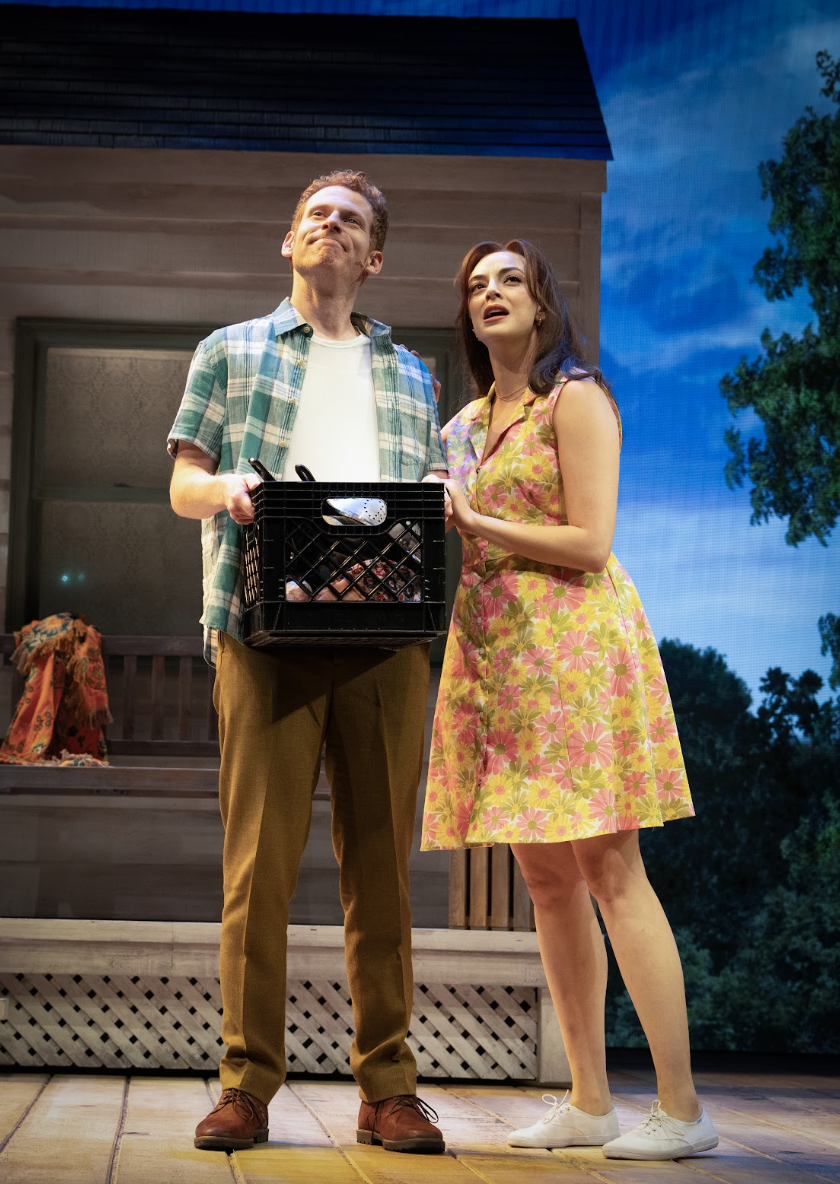
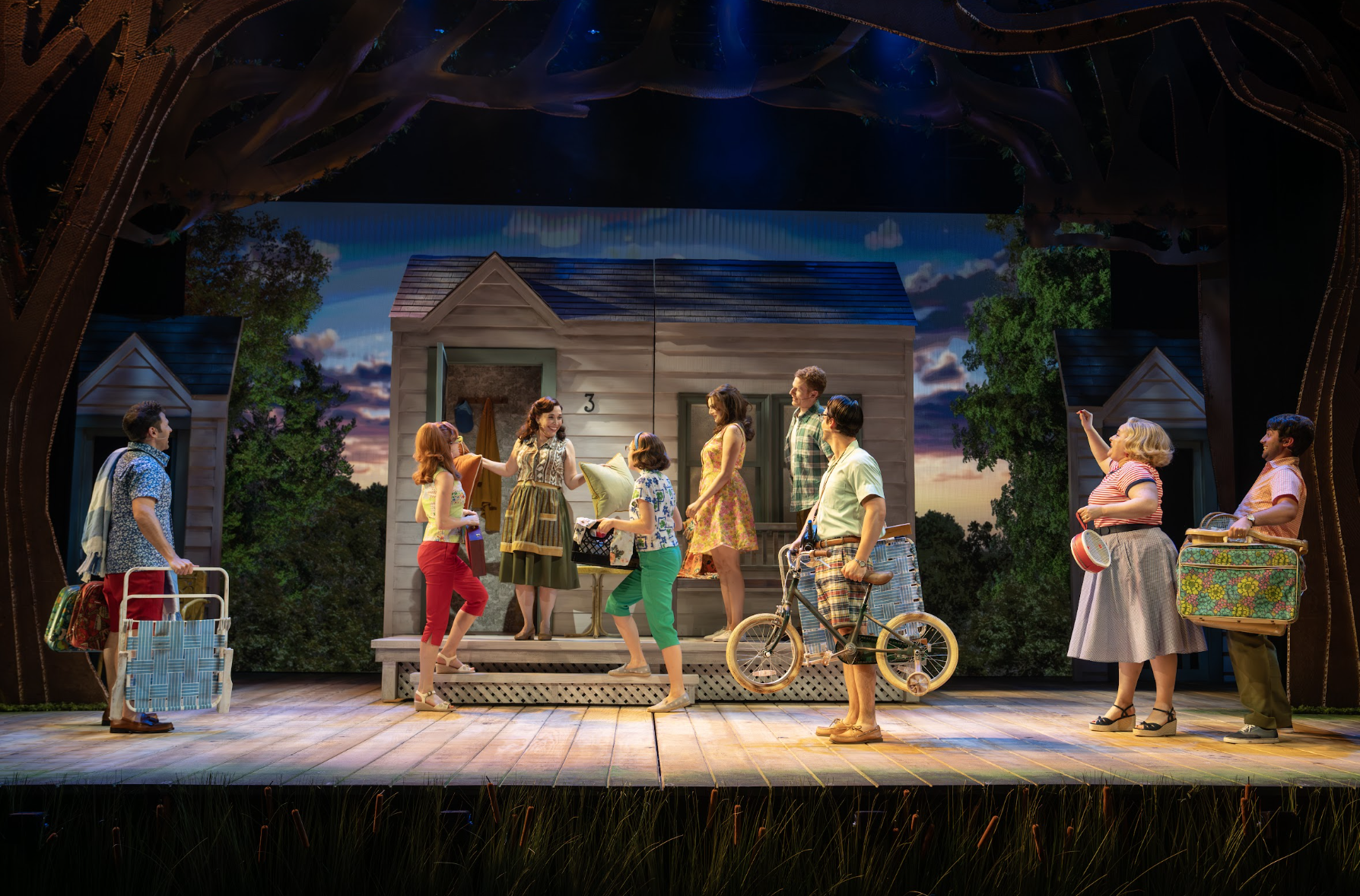
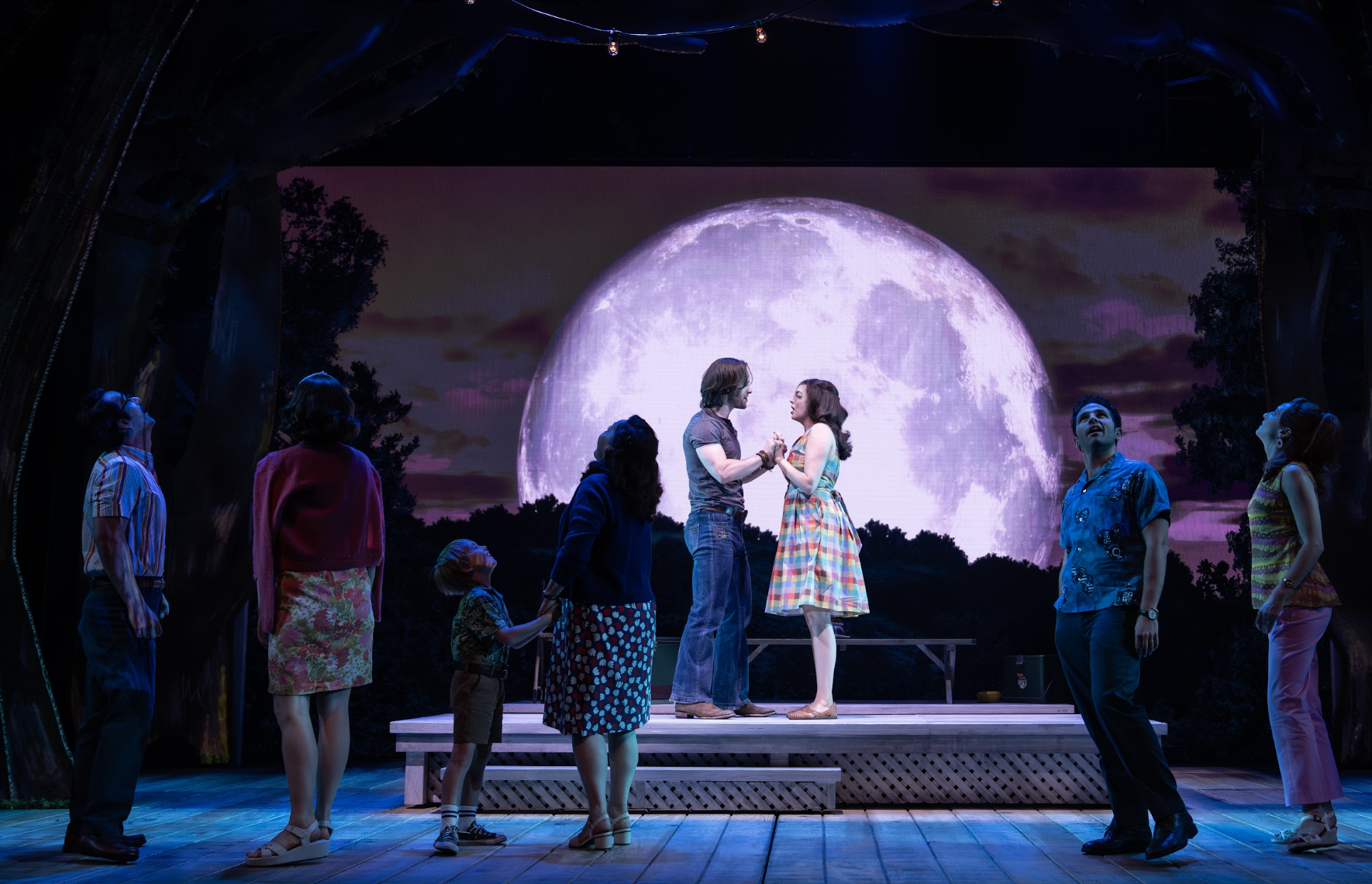
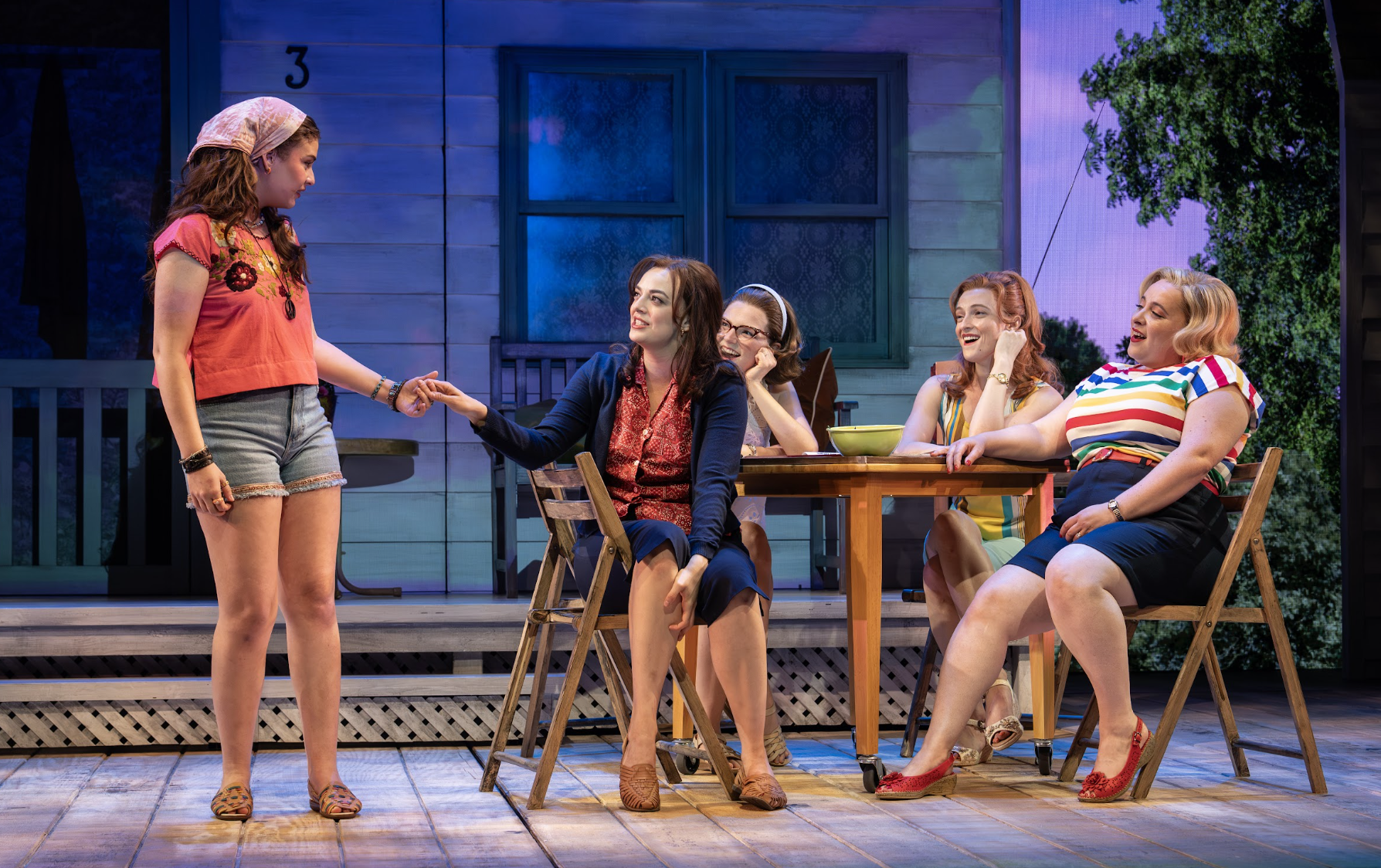
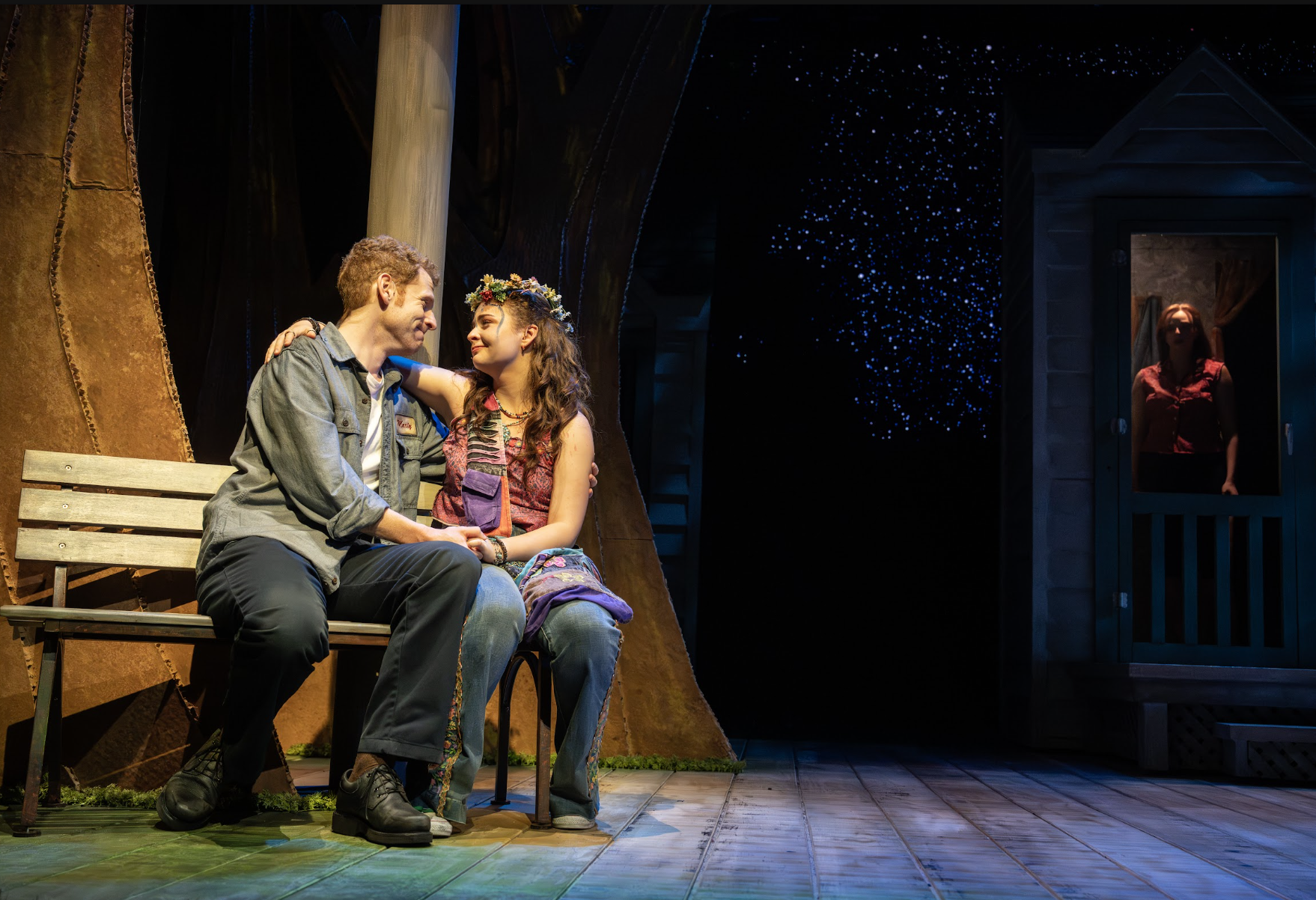
Photo credit by Joan Marcus
Before the moon landing became a cliché of American memory—before Neil Armstrong’s bootprint hardened into textbook iconography—the event represented something far stranger: a moment when an entire nation briefly believed that history itself could be bent toward possibility. That intoxicating atmosphere of transformation hangs over A Walk on the Moon, the luminous new musical at the Laura Pels Theatre, adapted by Pamela Gray from her affecting 1999 screenplay, with a score by AnnMarie Milazzo. Set during the epochal summer of 1969, as Woodstock gathers just beyond the Catskills and social conventions begin to loosen alongside hemlines and hairstyles, the musical understands that the most revolutionary journeys are often measured not in miles or lunar modules, but in the quiet distance between the person we have become and the person we once imagined we might be.
Gray wisely resists the temptation to reinvent her screenplay wholesale. Instead, she preserves much of what made the film memorable: its affectionate portrait of a vanished Jewish world, its richly observed Catskills bungalow colony, and its understanding that these seasonal communities constituted entire civilizations unto themselves. Every annual migration from Flatbush to Dr. Fogler's bungalows becomes a ritual of working-class aspiration, where mah jongg tiles click like metronomes of tradition, children roam with near-feral freedom, and husbands commute back to Brooklyn every Sunday night, leaving wives to occupy the long weekdays between casseroles, gossip, canasta, and dreams deferred. The production evokes this milieu with enormous warmth, reminding us how quickly entire cultures can disappear while remaining vividly alive in memory.
Into this carefully ordered universe wanders disorder in the appealing shape of Walker Jerome, the itinerant "Blouse Man," whose tie-dye shirts, Kerouac paperbacks, easy smile, and unhurried confidence seem to have drifted directly from Woodstock before the festival has even begun. Pearl Kantrowitz, magnificently embodied by Talia Suskauer, recognizes in him less a lover than an alternate future she never allowed herself to imagine. Married at sixteen after an unexpected pregnancy, Pearl has spent half her life dutifully inhabiting roles assigned before she had fully discovered herself. Her affair with Walker becomes less an act of rebellion than a belated attempt to determine whether the person she might have become still exists somewhere beneath years of domestic routine.
Suskauer gives one of the season's most emotionally intelligent performances, creating a woman of profound contradictions without ever reducing her to them. She never asks us to excuse Pearl's choices, nor does she sentimentalize her dissatisfaction. Instead, she quietly constructs an interior life that Gray leaves deliberately understated, allowing every hesitant glance, every unfinished sentence, every momentary surrender to suggest decades of compressed longing. It is a performance remarkable for its restraint as much as its vocal power, one that continually reveals fresh emotional dimensions beneath Pearl's outward composure. Like Diane Lane before her, Suskauer makes Pearl's awakening feel less like a midlife crisis than the painful recognition that one can lose oneself gradually, almost imperceptibly, while doing everything expected of a good wife and mother.
The production is blessed with a cast whose collective generosity continually elevates the material. Max Chernin's Marty could easily have become the familiar theatrical obstacle standing between heroine and liberation. Instead, Chernin makes him one of the evening's deepest emotional wells: decent without sanctimony, loving without possessiveness, quietly wounded without ever descending into self-pity. His heartbreaking second-act ballad, "We Made You," sung to teenage daughter Alison after she fears her birth ruined her parents' lives, emerges as the musical's emotional summit. Rarely has paternal love been rendered with such unaffected tenderness. Chernin transforms what could have been merely a touching scene into something quietly transcendent, reminding us that genuine devotion often expresses itself not through grand gestures but through the daily accumulation of sacrifice.
Around these central performances revolves an equally distinguished ensemble. Andréa Burns is simply magnificent as Lillian, the sharp-eyed bubbe whose wit, wisdom, tarot cards, tea leaves, and unwavering love become the family's moral compass. Burns captures generations of Jewish resilience with seemingly effortless grace, finding humor and melancholy in equal measure. Sophie Pollono gives Alison a thrilling combination of adolescent uncertainty and political awakening, while her wonderfully awkward courtship with Oscar Williams' earnest, guitar-strumming Ross becomes a tender mirror image of her mother's more dangerous romance. Sam Gravitte, meanwhile, possesses precisely the charismatic magnetism Walker requires. His relaxed confidence and open-hearted warmth make Pearl's attraction feel not merely plausible but inevitable.
One of the adaptation's greatest pleasures lies in its loving recreation of a distinctly Jewish American experience that has largely slipped into history. The dialogue sparkles with affectionate Brooklyn cadences, Yiddish expressions emerge naturally rather than performatively, and the rhythms of bungalow life feel lovingly remembered rather than nostalgically embalmed. Even Tovah Feldshuh's delightful voiceover appearances as the unseen Mrs. Fogler serve as an inspired bridge between film and stage, gently acknowledging the property's cinematic origins while allowing this new incarnation to establish its own identity. The production never mistakes nostalgia for sentimentality; instead, it recognizes memory itself as a dramatic force.
Visually, Sheryl Kaller's production captures both the comforting rhythms of bungalow life and the psychedelic currents reshaping America beyond its boundaries. Tal Yarden's scenic and video design elegantly juxtaposes intimate domestic spaces with the vast historical canvas unfolding around them, weaving archival imagery, dreamlike projections, and increasingly abstract visual landscapes into Pearl's emotional journey. Ricky Lurie's costumes vividly chart the decade's shifting aesthetics, while Robert Wierzel's lighting effortlessly transitions between nostalgic naturalism and bursts of hallucinatory color. The cumulative effect suggests a nation—and a family—caught between inherited certainties and exhilarating uncertainty.
AnnMarie Milazzo's score wisely avoids becoming a museum exhibit of late-sixties pastiche. Instead, it filters the period's folk, rock, and pop influences through the language of contemporary musical theatre while allowing emotional truth to remain paramount. The soaring vocal harmonies prove particularly striking, and numbers such as "We Made You," Alison's quietly searching songs of adolescence, and Pearl's introspective reflections linger well beyond the curtain call. Andy Einhorn's music supervision and arrangements provide warmth without overwhelming intimacy, while Josh Prince's choreography wisely privileges character over spectacle, allowing movement to arise organically from emotional necessity.
Yet what ultimately distinguishes A Walk on the Moon is not its romance, however affecting, nor even its affectionate reconstruction of Catskills Jewish life. It is the production's understanding that history is experienced simultaneously on two scales: the monumental and the microscopic. While astronauts prepare to leave Earth, while Woodstock prepares to redefine popular culture, while political movements reshape the nation, one family struggles to understand love, disappointment, forgiveness, and possibility. Gray reminds us that history's grandest revolutions acquire meaning only as they filter into ordinary kitchens, modest bungalows, and imperfect marriages.
By evening's end, the moon landing has become something richer than metaphor. Armstrong's giant leap ceases to signify merely technological triumph and instead becomes an emblem of every terrifying first step into the unknown—whether toward self-discovery, forgiveness, reconciliation, or simply a fuller understanding of another human being. A Walk on the Moon may be rooted in one unforgettable summer, but its emotional orbit extends far beyond 1969. Tender, deeply humane, and beautifully performed, it invites us to remember that the greatest voyages are rarely measured by how far we travel, but by how profoundly we return transformed.
Click HERE for tickets.
Review by Tony Marinelli.
Published by Theatre Beyond Broadway on July , 2026. All rights reserved.
