
Picasso: Le Monstre Sacré
Presented by The Playground Theatre and Theatre Tours International
Adapted for Solo Performance (from Terri D’Alfonso’s The Loves of Picasso)
by Peter Tate and Guy Masterson, Directed by Guy Masterson
La MaMa Experimental Theatre Club, Downstairs Theatre, 66 East 4th Street, in Manhattan
June 24 - June 28, 2026
The material surrounding Picasso: Le Monstre Sacré is, in many ways, as compelling as the production itself. It began as The Loves of Picasso, a chamber play by Terri D'Alfonso, the American-born television producer and artist who had worked with the legendary Giorgio Strehler before becoming consumed by the contradiction that defined Pablo Picasso: how one man could shower the world with inexhaustible beauty while inflicting extraordinary suffering upon those who loved him. She transformed that fascination into a play centered on the women caught in Picasso's gravitational pull, later adapting it into an acclaimed short film starring British actor Peter Tate. Then tragedy intervened. Scheduled to introduce the film at a London screening, D'Alfonso instead died after collapsing weeks earlier, leaving Tate to inform the audience of her passing. Her final work has since undergone another transformation, adapted by Tate and director Guy Masterson into the solo vehicle recently brought to La MaMa’s Downstairs Theatre—a production that serves not only as an examination of Picasso but also as a posthumous tribute to the artist who first sought to interrogate him.
The resulting evening is both engrossing and frustrating, an undeniably theatrical meditation that narrows its gaze so severely that one cannot help wishing for a broader portrait. Tate and Masterson have fashioned an intimate confessional in which Picasso, approaching the end of his life, attempts neither acquittal nor genuine reckoning so much as relentless self-exposure. The title—Le Monstre Sacré, "The Sacred Monster"—announces the production's central paradox: can artistic transcendence coexist with profound moral failure? The play poses the question insistently without ever arriving at an especially illuminating answer. Instead, it circles the dilemma with hypnotic persistence, trusting the audience to wrestle with the contradictions long after the curtain falls.
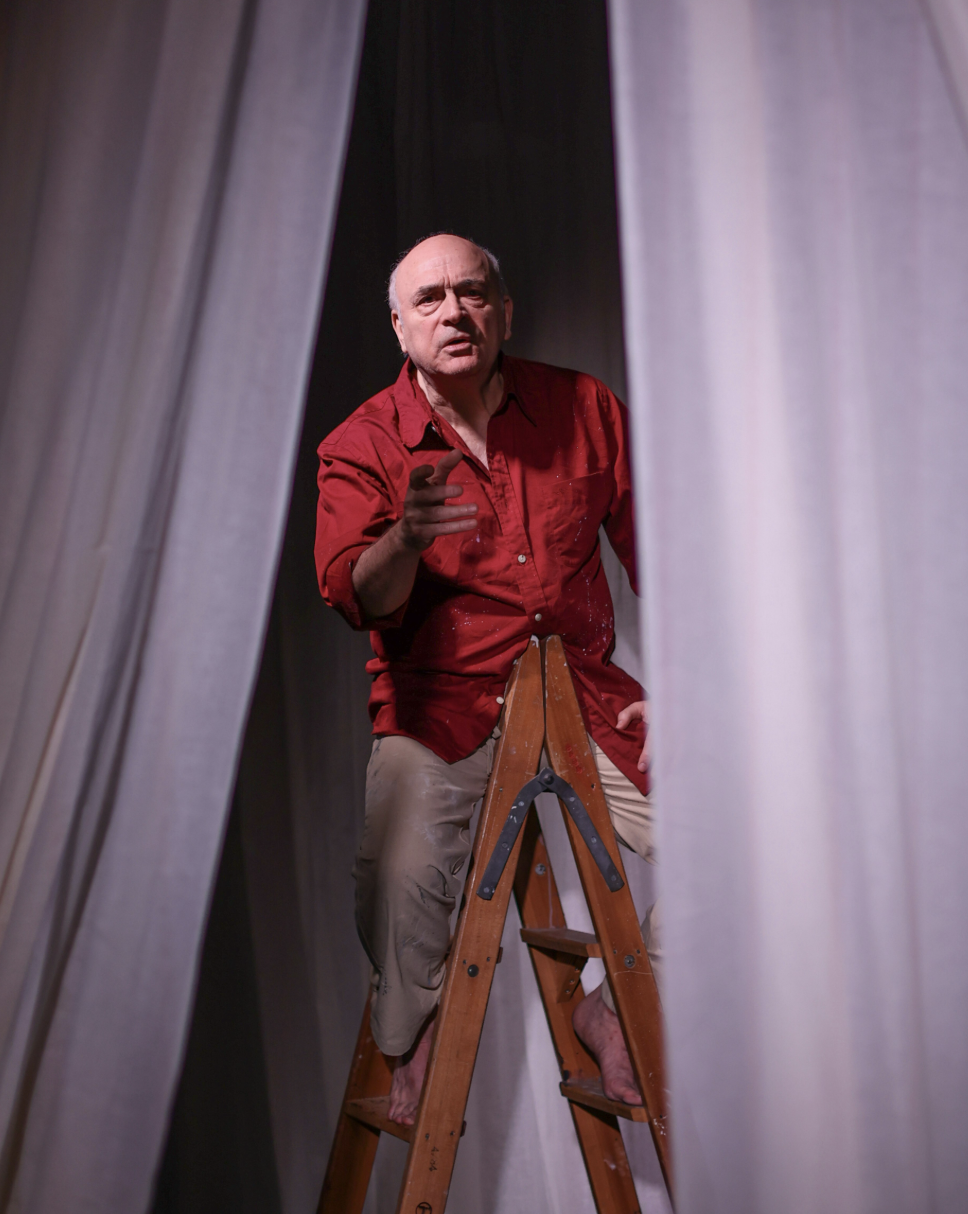
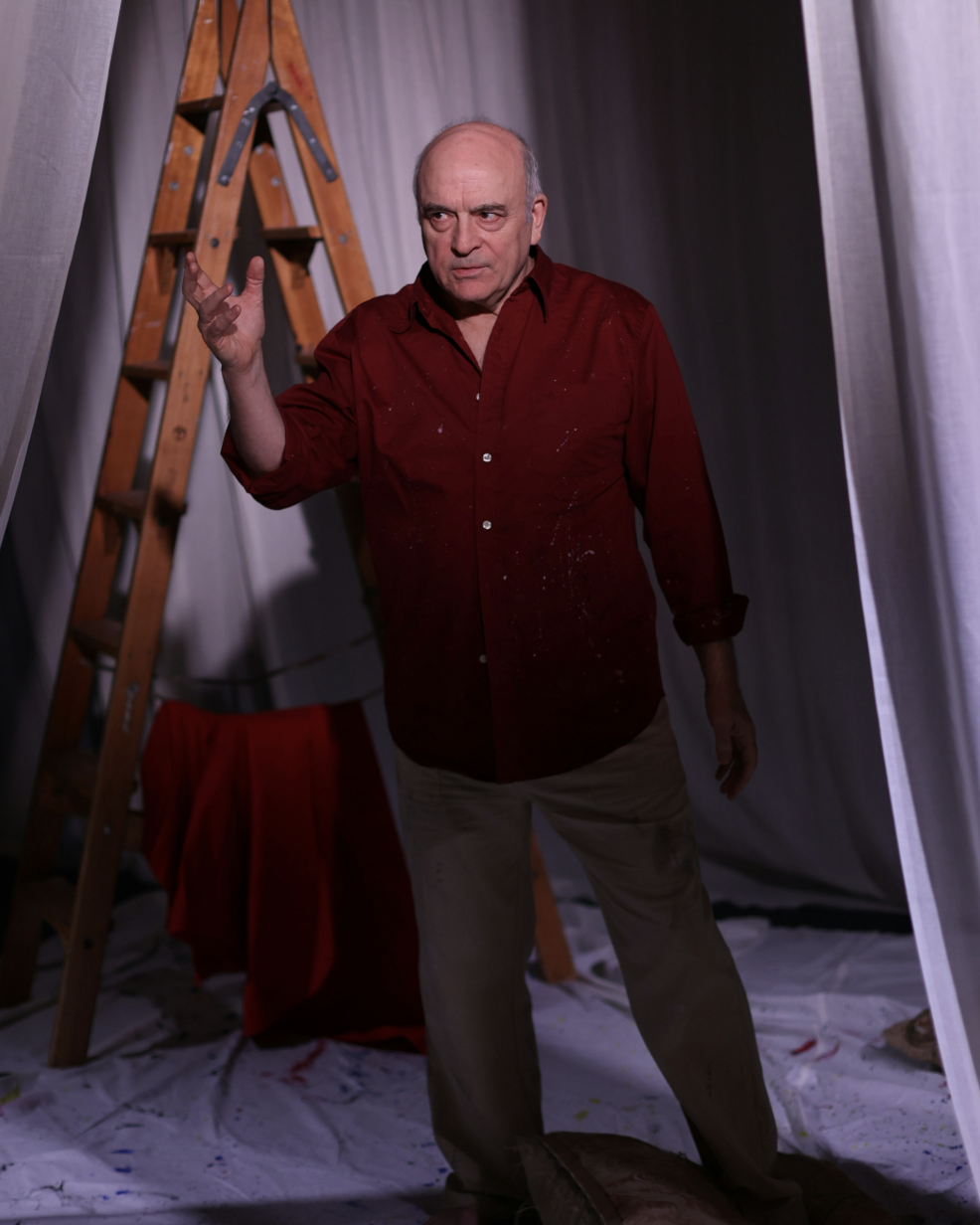
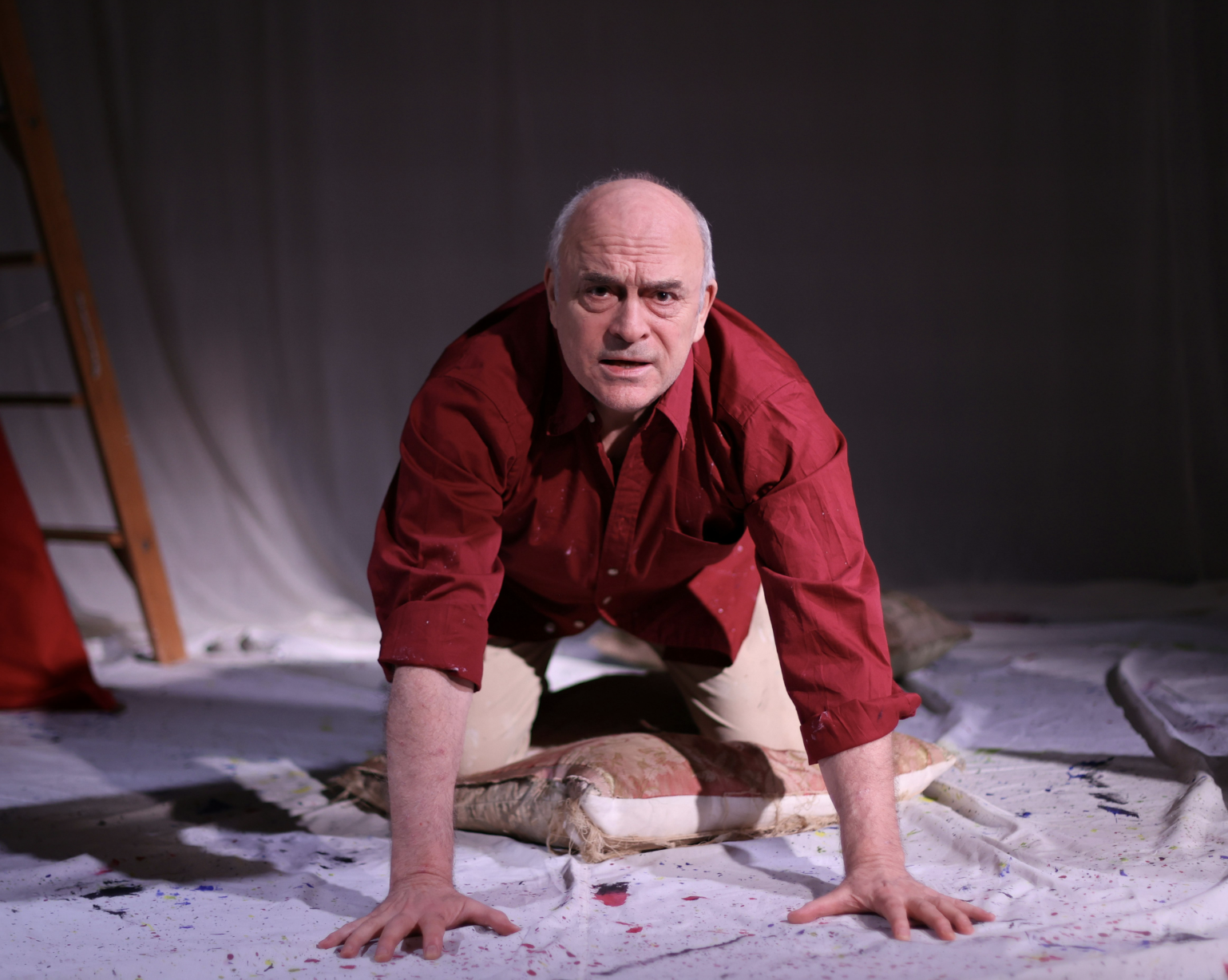
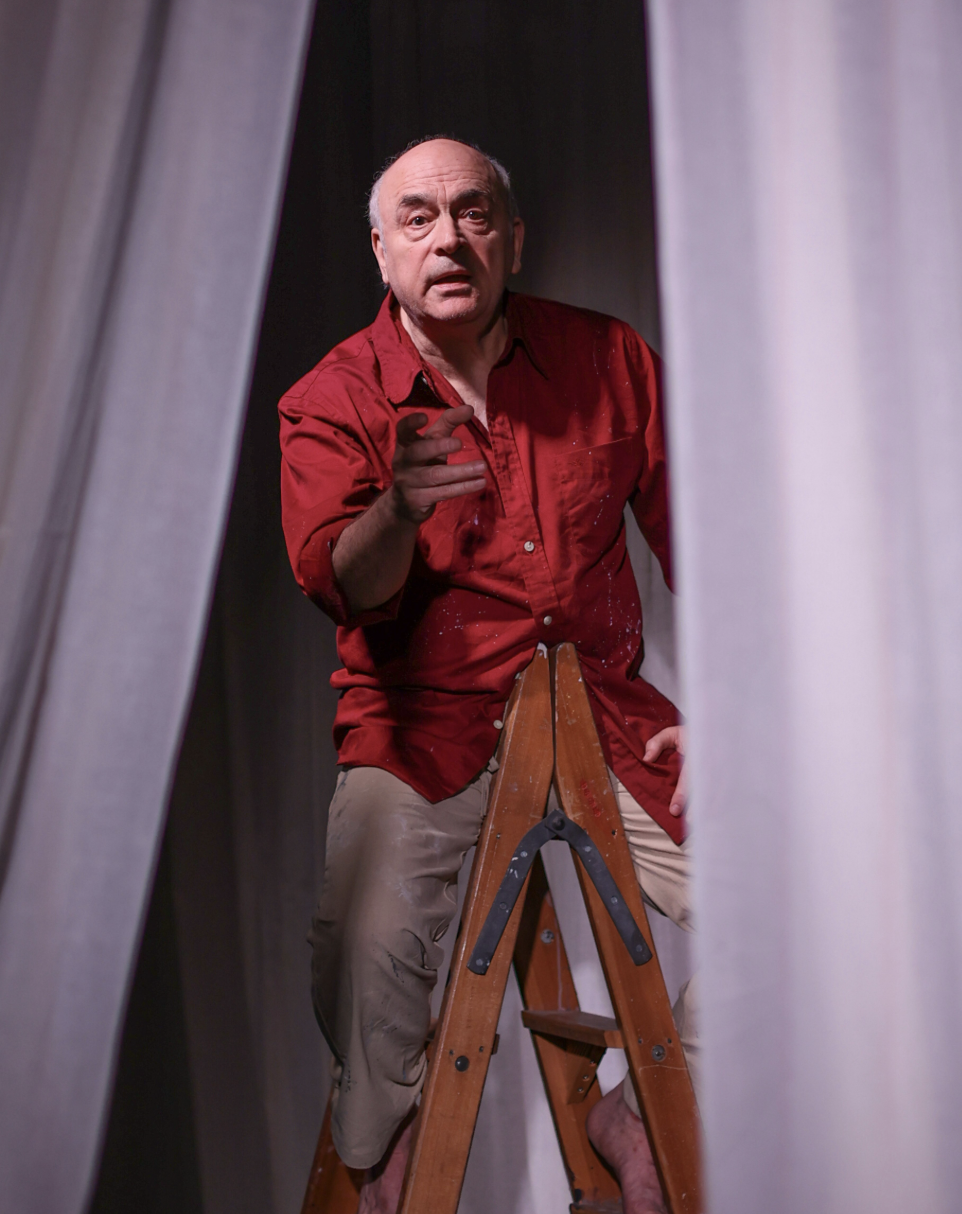
That trust rests almost entirely upon Peter Tate, whose commanding performance supplies the emotional and theatrical force that the script itself occasionally lacks. From the opening recollection of his mother's warning to young "Pablito" not to stare into the sun lest he go blind, Tate burns with volcanic intensity. His Picasso is seductive, imperious, childish, terrifying, vulnerable only in flashes before quickly retreating into narcissistic certainty. He possesses the mercurial charisma that must have enabled the painter to enthrall lovers, patrons, and fellow artists alike, while simultaneously revealing the cruelty that made those relationships catastrophic. Tate's magnificent voice glides effortlessly between tenderness and menace, while his physicality—equal parts flamenco dancer, aging bullfighter, and prowling predator—transforms even the smallest gesture into psychological revelation. Watching him is rather like watching one of Picasso's own jagged portraits spring unnervingly into motion.
Masterson's direction understands that a solo performance succeeds not through spectacle but through concentration. Working with scenic designer Eirini Kariori, he creates an environment of remarkable visual economy: a sweeping white canvas unfurls across the stage like both painter's cloth and confession booth, enclosing Picasso inside a work that seems simultaneously unfinished and inescapable. A ladder, a pillow, paint-spattered flooring, and carefully modulated projections become an entire emotional landscape. The projected fragments from D'Alfonso's original film—featuring Sandra Collodel, Claudia Godi, Margot Sikabonyi, and Milena Vukotic as the women who drifted through Picasso's life—hover across the muslin backdrop like ghosts whose presence cannot quite penetrate the fortress of the artist's ego. Sound, lighting, and movement combine into a production of uncommon visual elegance, demonstrating once again Masterson's gift for extracting grandeur from theatrical minimalism.
Yet it is precisely here that the production's greatest limitation emerges. D'Alfonso's original conception reportedly sought to foreground the women whose lives Picasso devastated; Tate and Masterson's adaptation reverses that emphasis almost entirely. Olga Khokhlova, Marie-Thérèse Walter, Dora Maar, Françoise Gilot, Jacqueline Roque, Geneviève Laporte—the extraordinary women who inspired so much of Picasso's art—appear largely as fleeting projections or remembered names, their own voices muffled beneath the relentless torrent of Picasso's self-justification. They are muses more than fully realized human beings, orbiting the central star without ever escaping its gravitational pull. The result is not victim-blaming but something subtler and perhaps equally unfortunate: their reduction to spectral presences within a story that was once partly theirs.
This narrowing also diminishes Picasso himself. The script devotes overwhelming attention to his sexual compulsions and emotional brutality while offering comparatively little exploration of the revolutionary artistic imagination that permanently altered the visual language of the twentieth century. Cubism, collage, the astonishing stylistic reinventions, Guernica, his political commitments, his relentless experimentation across painting, sculpture, ceramics, and printmaking—all receive only passing acknowledgment. One leaves with an exhaustive catalogue of Picasso's romantic wreckage but only the faintest sense of the creative engine that made him one of history's most transformative artists. The play repeatedly asks whether genius can excuse monstrous behavior, yet it spends surprisingly little time investigating the nature of that genius itself.
Still, there are moments when the production approaches genuine complexity. Picasso's recurring identification with the Minotaur—half man, half beast—becomes a potent theatrical metaphor, even if it never entirely withstands scrutiny. "If a woman gets close to me, I destroy them," he declares with chilling matter-of-factness, offering not remorse but simple recognition of his own nature. Tate refuses to sentimentalize these admissions. His Picasso never begs forgiveness, never pleads for understanding, and never disguises his monstrous appetites beneath romantic mythmaking. If anything, the performance exposes narcissism in its purest form: an ego so vast that other human beings become merely pigments to be mixed, applied, and discarded in pursuit of artistic immortality. Françoise Gilot's eventual rejection of him arrives as one of the evening's rare moments of moral equilibrium.
Picasso: Le Monstre Sacré ultimately succeeds less as a definitive portrait of Pablo Picasso than as a tour de force for Peter Tate and a testament to Guy Masterson's theatrical craftsmanship. The script remains frustratingly thin, content to rehearse familiar biographical scandals while sidestepping the richer contradictions that made Picasso both revolutionary artist and deeply damaged human being. Yet Tate's astonishing embodiment of the painter repeatedly transcends those limitations, finding emotional textures that the writing merely hints at, while Masterson surrounds him with imagery of haunting simplicity and considerable beauty. One may leave wishing for a fuller reckoning with the artist's creative brilliance and historical significance, but there can be little doubt that the production offers something undeniably compelling: the spectacle of a gifted actor fearlessly inhabiting one of modern culture's most impossible figures, refusing either to canonize him or entirely to condemn him, and allowing the unresolved tension to linger long after the final blackout.
Click HERE for tickets.
Review by Tony Marinelli.
Published by Theatre Beyond Broadway on July 5, 2026. All rights reserved.
