All That Fall
Produced and Presented by Mabou Mines in partnership with Under The Radar
Written by Samuel Beckett, Directed by Joanne Akalaitis
Mabou Mines, 150 1st Avenue, second floor, in Manhattan
January 8, 2026 - January 24, 2026
It is hardly shocking that Samuel Beckett’s 1957 radio play All That Fall—a work the playwright’s estate has steadfastly insisted remain, in essence, an aural encounter—surfaces only sporadically in production histories. The piece resists theatrical embodiment by design; it lives in the ear, not the eye. And yet, the perennial audacity of theater artists is such that, every few years, someone attempts the paradoxical feat of “staging” it, layering imagery atop a text that seems to whisper a polite but firm injunction: look if you must, but listen if you dare. Mabou Mines, long steeped in Beckett’s particular frequency of despair and mischief, took up that gauntlet at this year’s Under the Radar Festival. The outcome is neither failure nor triumph but a curious in-between—an honorable experiment that only intermittently transcends its own conceptual bind.
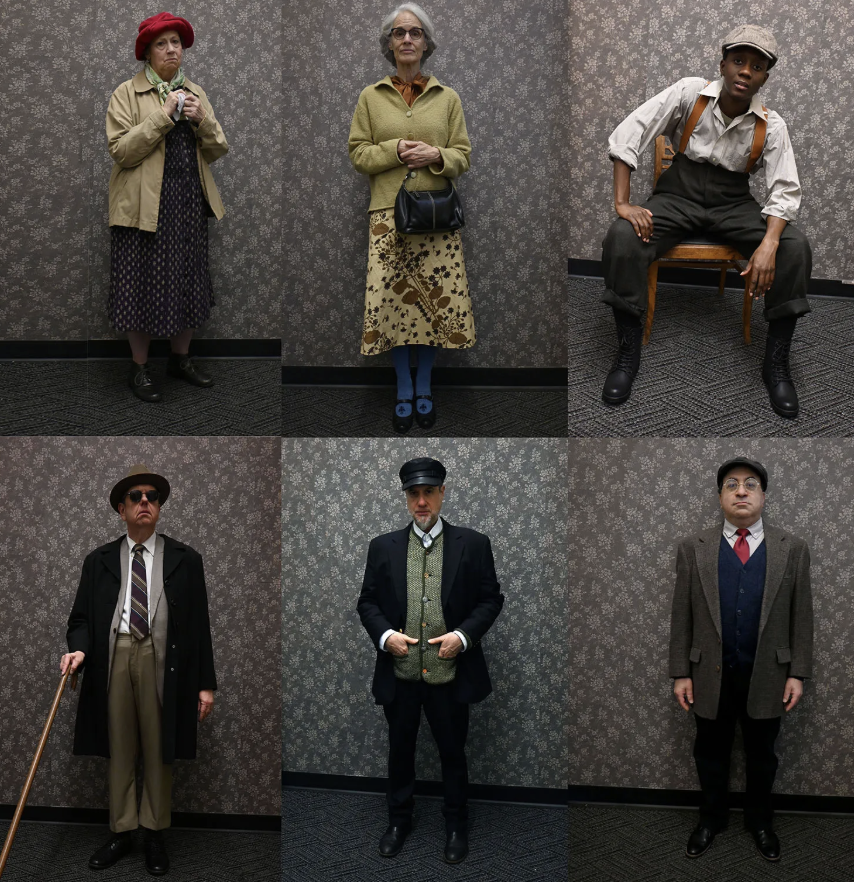
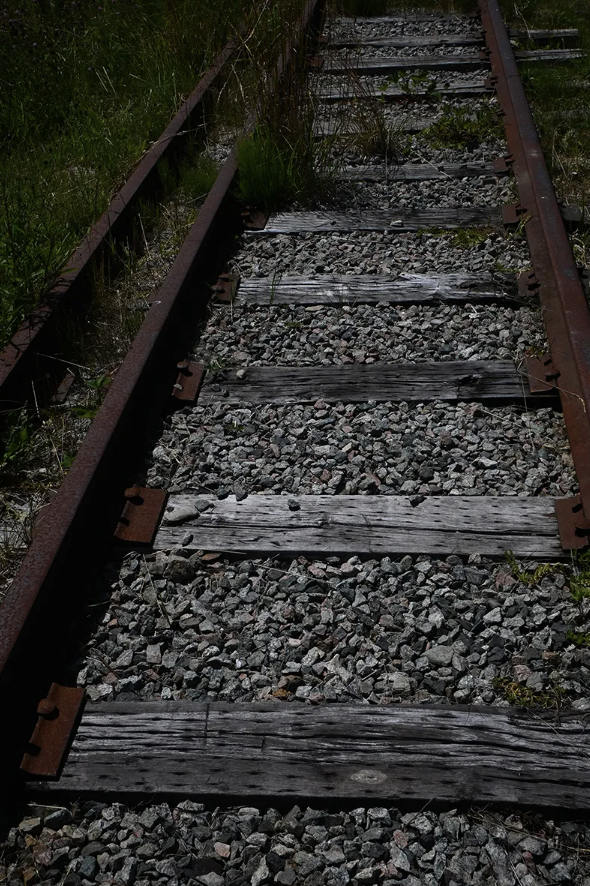
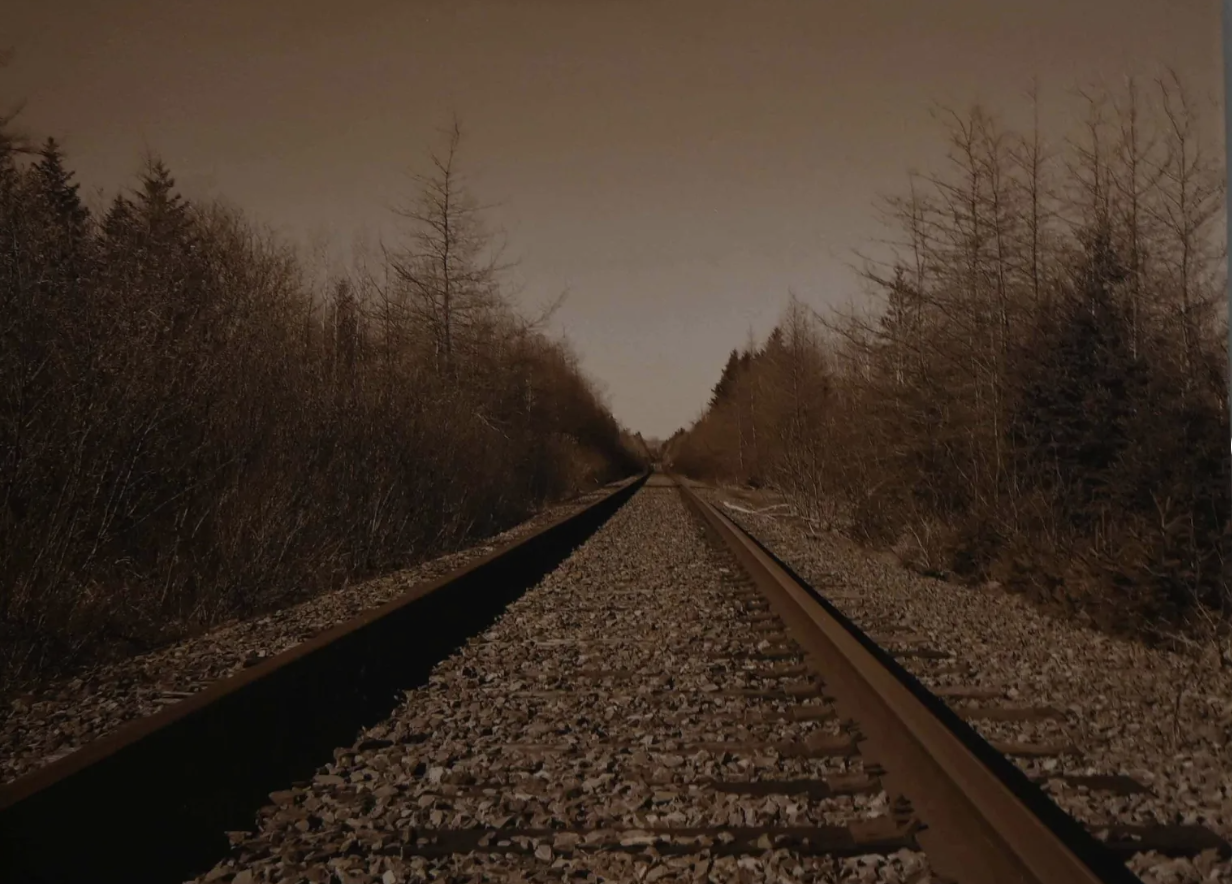
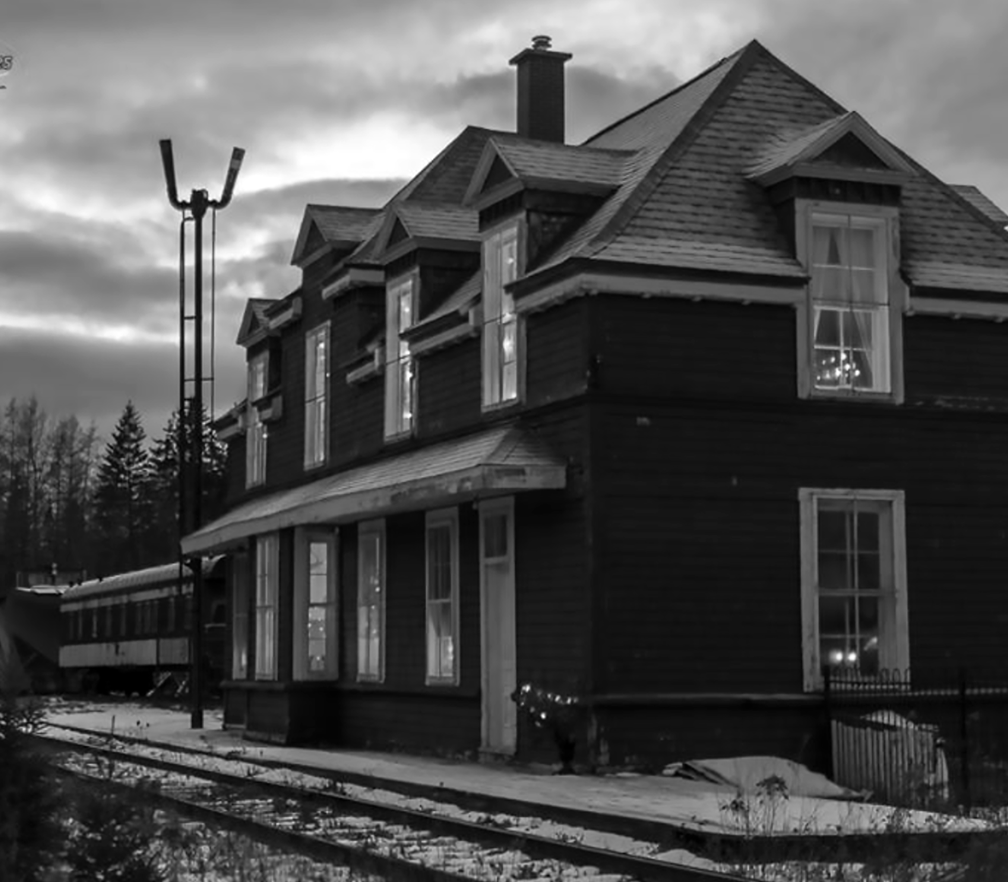
Director JoAnne Akalaitis frames the evening less as a play than as a meditation on listening. The sonic environment—meticulously sculpted by Bruce Odland—eddies and collides around a sprawling, king-size diorama by scenic designer Thomas Dunn. From our elevated vantage, we peer down upon a miniature Irish hamlet (in Nova Scotia) that teeters between storybook charm and scrapyard melancholy. Dollhouse windows glow invitingly; a ribbon of blue water cleaves the town like a child’s painted dream. But the idyll is undercut by detritus: a tire choked with dirt, a crumpled bicycle, rails that look as though trains have long since given up on them. Jennifer Tipton’s lighting gently herds our attention across this terrain, sketching emotional weather where narrative motion is scarce, lit windows placing us at the landmarks that the characters pass through. Still, the unvarying tableau—held for the full seventy-five minutes, devoid of live performers—invites the gaze to drift and, with it, the mind. During the pre-show we are privy to a screen where photos of the actors in character, though mostly deadpan, provide a Nova Scotia take on Grant Wood’s famous American Gothic. If we knew the characters in the play prior to the performance, the visuals would constitute “cheating” but clearly it is more a nod to Andreea Mincic’s delightful costumes that help the actors get into character for a play that we ironically don’t get to “see.”
The Beckett estate’s mandate to continue to present this as a radio play (or not at all) has inspired its share of directors to create “outside the box.” Dublin’s Pan Pan Theatre brought their 2011 production to BAM’s Next Wave Festival in December 2012. The evening dispensed with the usual tyranny of the visible. Spectators were ushered not into rows but into a constellation of rocking chairs, each a small island of perception, where they remained keenly aware of their fellow listeners—of shared coughs, creaking wood, and the communal hush—yet fundamentally alone with the work. This, in fact, was the entirety of the staging: an intentional abdication of the actor’s body in favor of presence by other means. Again, no performers materialized under the lights. Instead, a meticulously sculpted recording unfurled through a lattice of twelve speakers, while a choreography of 475 lights pulsed, glimmered and receded with near-musical precision. The technology did not overwhelm so much as conspire with the text, creating an environment that felt less like a set than a sensorial score. Interactivity was redefined with quiet rigor. Each audience member became, in miniature, a co-author of the rhythm—choosing where to sit, when to rock, how vigorously to set their chair in motion. These modest decisions tuned one’s receptivity, like adjusting the dial on a radio of the imagination. Deprived of literal images, the mind compensated lavishly: the words bloomed into private tableaux, proving once again that the most extravagant stage may be the one behind the eyes.
A year later, UK’s Jermyn Street Theatre sent a gift over to 59 East 59th Street Theaters - its Trevor Nunn-directed production starring EIleen Atkins and Michael Gambon that was set in a radio studio. The actors read from scripts into tall standard microphones as if they were live on the air (as opposed to live on a stage). It daringly skirted the issue of eliminating the visuals to focus on the audio experience, but chances are no one was complaining with the top tier casting on display.
In 2016 at Wilton’s Music Hall in the UK, Max Stafford-Clark, directing for Out of Joint in a staging first unveiled at the Enniskillen festival, discovered an inspired theatrical middle path between radio play and stage picture. Rather than futilely illustrating what resists visualization, he invited the audience into a state of chosen darkness: blindfolded, they surrendered the primacy of sight and submitted wholly to the aural landscape. In that sensory hush, the luminous Brid Brennan setting out on Maddy Rooney’s weary pilgrimage to a lonely rural railway station—undertaken to meet her blind husband alighting from the train—unfurled with extraordinary vividness. Deprived of images, the mind supplies its own, and the result is not deprivation but expansion. The production proved, with quiet confidence, that when listening becomes the principal act, the theater can feel at once more intimate and more immense. The experiment did not merely succeed; it felt revelatory. The simple act of donning a blindfold becomes, in this context, a kind of theatrical covenant: stripped of sight, we find our ears sharpening in self-defense, leaning into every footfall, every tremor of breath, every textured note of the soundscape. What might have been passive hearing was transformed into active, almost ravenous listening, as the audience—newly aware of its own perceptual habits—discovered how much attentiveness vision had been quietly stealing.
Beckett’s “plot,” if one can call this ritual of delay and disappointment a plot, traces Maddy Rooney’s arduous pilgrimage to the train station and back again. Akalaitis’ cast is sublime. Randy Danson lends Maddy a weary, wry physicality of voice: elderly, irritable, self-aware, and clinging to dignity by a thread. Her husband Dan, voiced by Tony Torn with a gravelly opacity, awaits as the ostensible birthday honoree—though even he cannot say what birthday it might be. Along Maddy’s route parade a sequence of failing conveyances and their hapless handlers: the reluctant hinny, the defective bicycle, the complaining car. Each encounter feels less like incident than omen, a comic litany of things that barely function, bodies and machines alike.
When Dan’s train arrives late for reasons he pointedly withholds, the couple’s homeward trudge acquires a faint aura of dread. The eventual revelation, surfacing amid a gathering storm rendered with thrilling sonic force, lands with characteristic Beckettian darkness. Yet the emotional temperature rarely spikes; it simmers in fatigue. Even the Rooneys’ most delightful moment—their shared hysterics over the notion of a kindly, interventionist God—emerges as laughter on the brink of the abyss. Maddy’s recitation, “The Lord upholdeth all that fall,” curdles into cackles that feel both blasphemous and bruisingly human.
The supporting ensemble, marshaled under Ms. Akalaitis’ discerning eye, proves a gallery of finely etched character studies. Jesse Lenat displays admirable versatility, first as the genial carter Christy and later as the officious station master Mr. Barrell, sketching two distinct social worlds with nimble economy. Steven Rattazzi lends Mr. Tyler, the retired bill collector, a gently worn dignity, as though the years of ledger-keeping had settled into his very posture.
Temidayo Amay brings a quiet, workaday authenticity to Tommy the railway porter, while Wendy vanden Heuvel colors Ms. Fitt with the precise fussiness and moral certitude of a devout churchgoer. Lila Blue makes Dolly a brief but bright impression, and Sylvan Shneiderman turns Jerry, Dan’s helper, into a small portrait of loyalty and local texture.
Presiding over these turns is the incomparable Tony Torn, who doubles as Mr. Slocum, the race course manager, and does so with a relish that suggests a man fully aware of the comic and social currents swirling about him. All together, they complete the superlative company assembled by Ms. Akalaitis—a cast less concerned with flourish than with the patient accumulation of human detail, which, in a work like this, is the surest path to enchantment.
This is Beckett at its most domestic: cosmic terror refracted through sore feet and petty grievances. But the production’s central gamble—burying the drama within an enveloping wall of sound while offering visuals that neither narrate nor fully counterpoint it—proves double-edged. The ear works hard, the eye wanders, and the spirit occasionally lags behind both. Beckett’s humor, so often ribald and piercing, struggles to perforate the dense acoustic fabric. What remains most palpable is the Rooneys’ exhaustion, their slow shuffle toward meaninglessness.
And yet, there is something undeniably poignant in the attempt. To wrestle with All That Fall is to wrestle with the limits of theater itself: how much can be shown, how much must be heard, and how often we mistake one for the other. This production does not solve that riddle, but it poses it with sincerity. One leaves wishing, perhaps paradoxically, for fewer things to see and more chances to hear.
Click HERE for tickets.
Review by Tony Marinelli.
Published by Theatre Beyond Broadway on February 19th, 2026. All rights reserved.
