ANTIGONE (THIS PLAY I READ IN HIGH SCHOOL)
Presented by The Public Theater, Written by Anna Ziegler, Directed by Tyne Rafaeli
The Barbaralee Theater at The Public Theater, 425 Lafayette Street, in Manhattan
February 26, 2026 - April 5, 2026

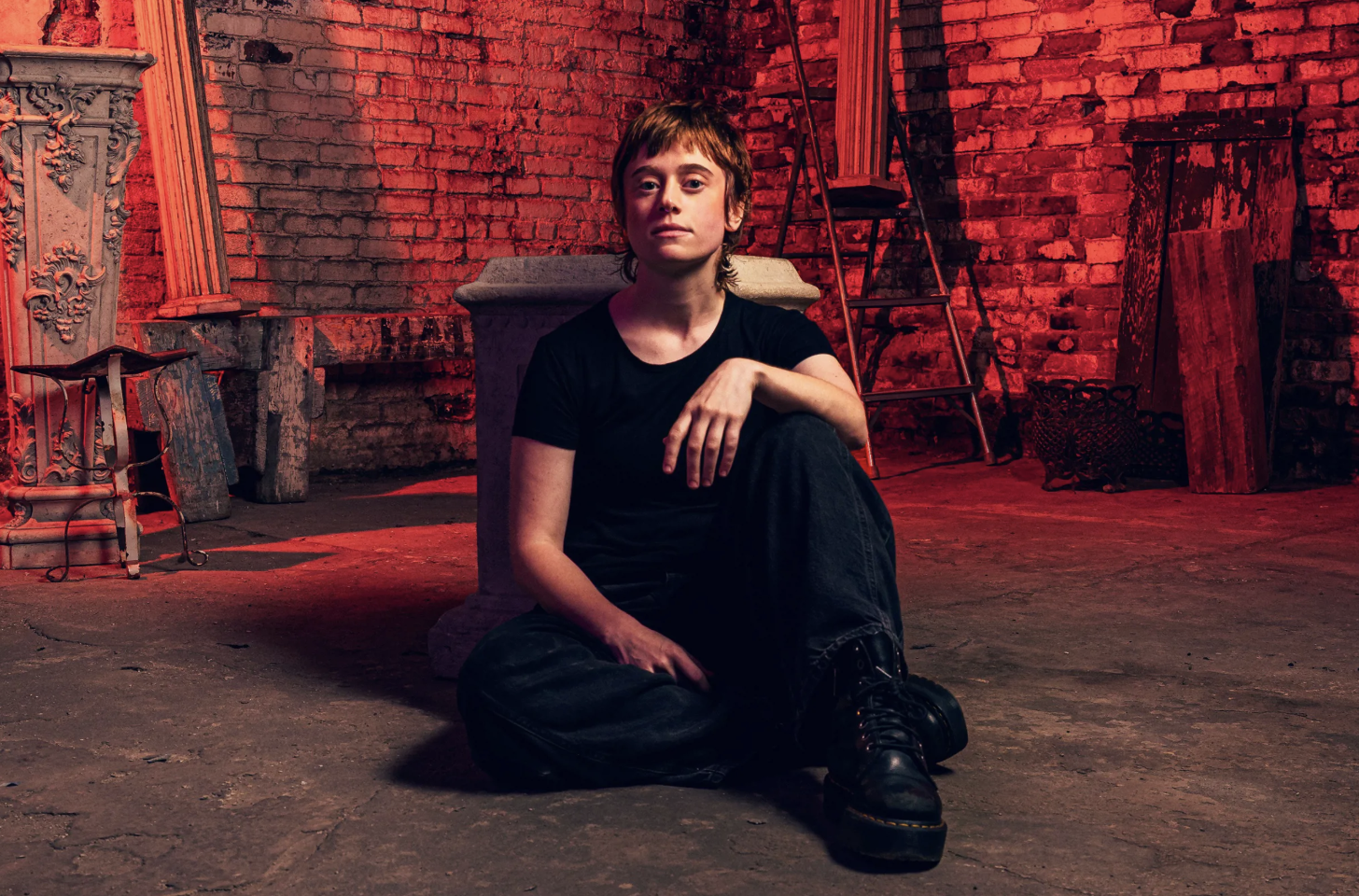

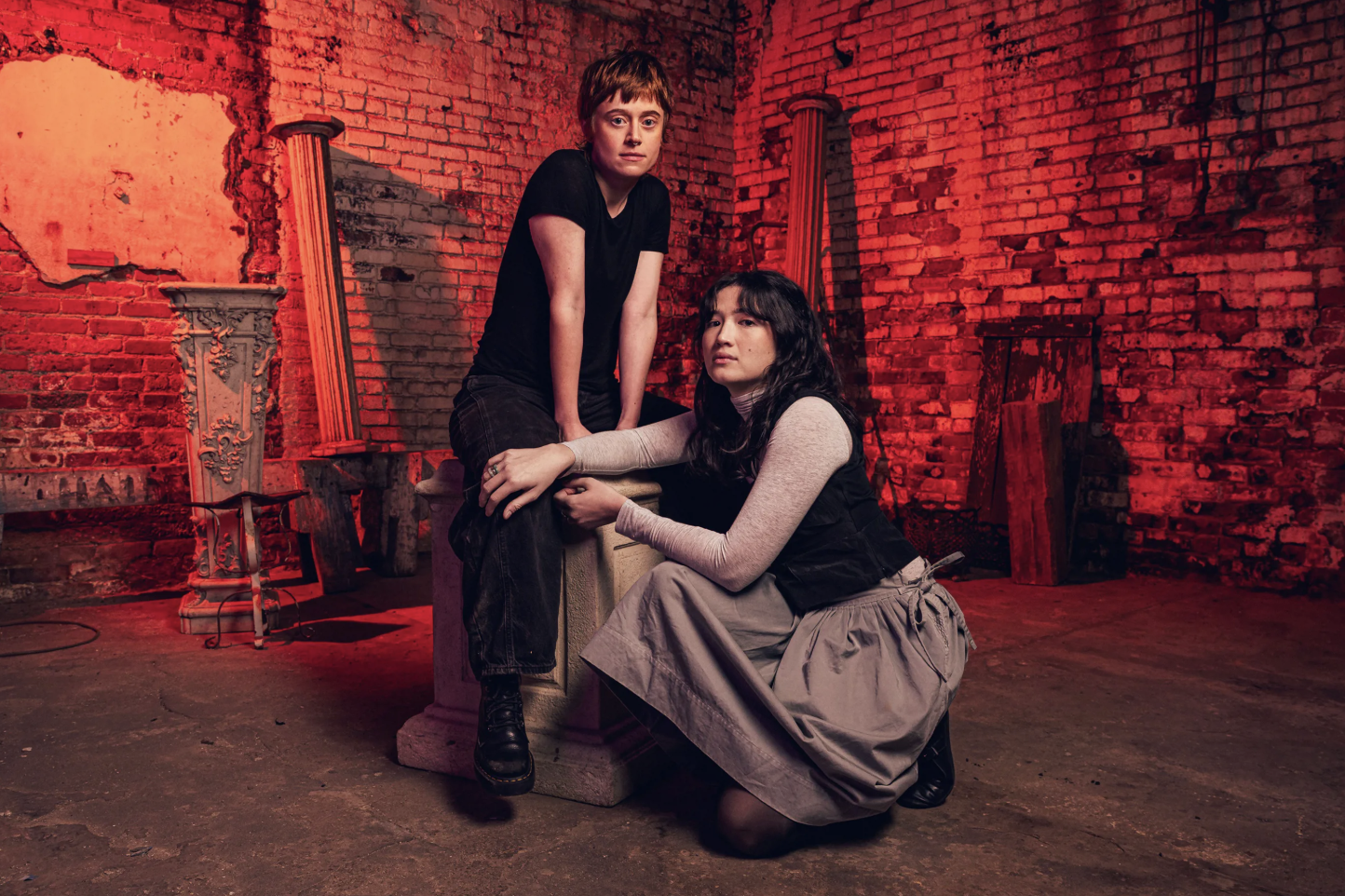
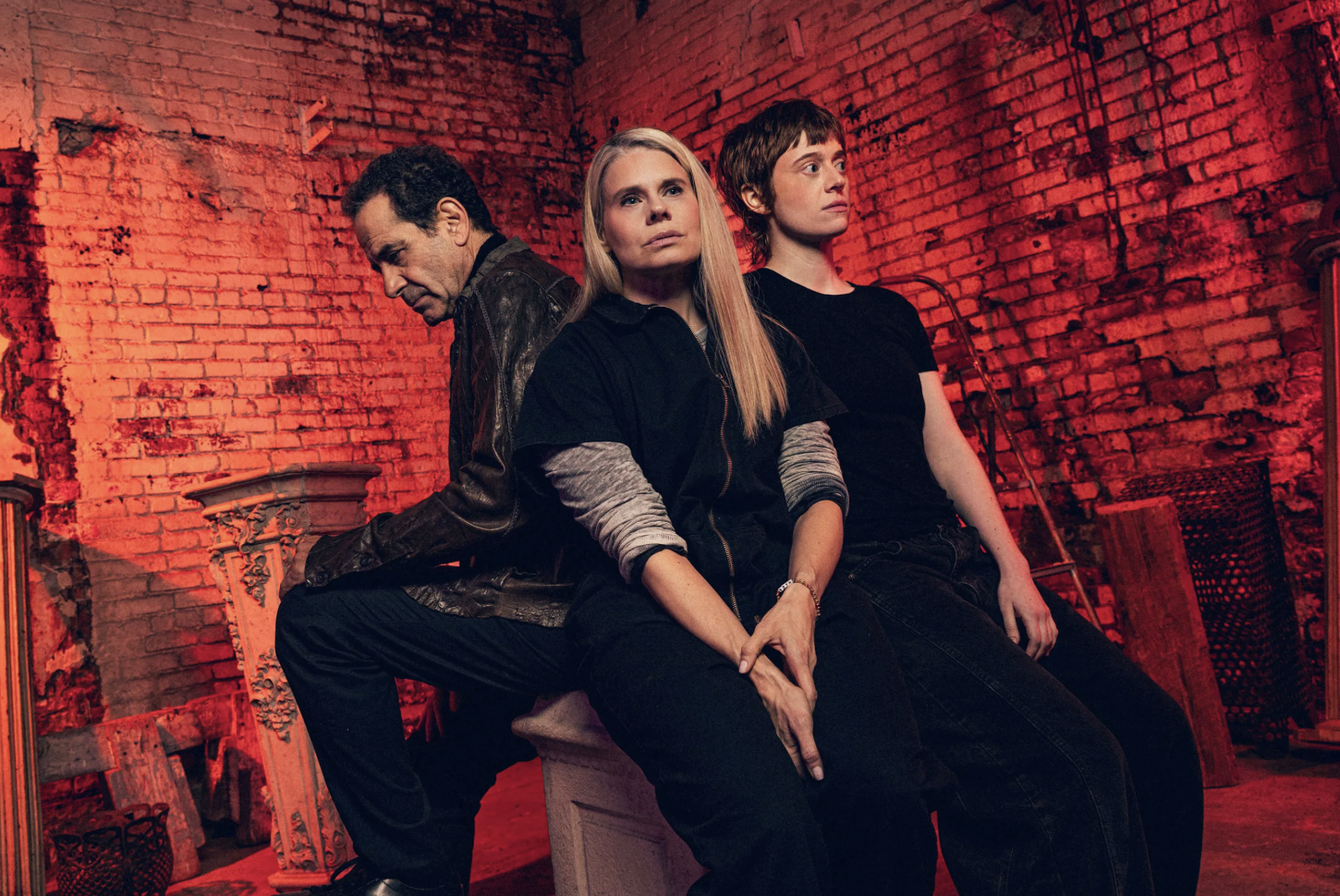
Photo credit by Joan Marcus
In the freshly rechristened Barbaralee Theater at The Public Theater, Anna Ziegler has staged not so much an adaptation as a detonation. Antigone (This Play I Read in High School) arrives trailing the dust of antiquity only to scatter it into the charged air of the present, where it glows with a disquieting, almost prophetic heat. One suspects that Sophocles—that stern anatomist of fate—might regard this iteration with astonishment, if not a flicker of recognition.
The play is, of course, not the first to exhume Antigone for modern purposes; Jean Anouilh famously pressed her into service in 1944, under the long shadow of occupation. Yet where Anouilh’s heroine moves with a glacial, almost ceremonial clarity, Ziegler’s pulses with blood—urgent, messy, unmistakably alive. The familiar architecture remains—resistance, conscience, the implacable state—but here it has been rewired for a world in which such questions no longer feel philosophical but perilously immediate.
Ziegler writes with an ear finely tuned to the cadences of the present, her language landing with a clarity that renders both the dialogue and its emotional terrain unmistakably contemporary—yet without the brittle, self-conscious cleverness that so often afflicts plays straddling multiple eras. There is nothing lacquered here, no wink of archness to distance us from the stakes; instead, the words feel lived-in, immediate, and quietly insistent. Under the direction of Tyne Rafaeli, that immediacy is given an additional dimension: a vein of sharp, unsentimental humor that glints from within the tragedy rather than sitting uneasily atop it. Rafaeli understands that the play’s gravest moments are not diminished by wit but deepened by it, allowing laughter to emerge as a kind of reflex—human, fleeting, and all the more piercing for the darkness that surrounds it. Rafaeli’s production moves with a restless, almost tidal energy. Scenes bleed into one another; images accumulate with a dreamlike logic; and moments of piercing, sometimes unbearable truth are allowed to land without mitigation.
Ziegler’s boldest stroke is structural. With a certain mischievous fidelity, Zeigler insists upon a “Greek Chorus,” only to collapse the multitude into a single, contemporary figure. The result is Dicey, a self-effacing forty-year-old, rendered with aching precision by the extraordinary Celia Keenan-Bolger, no longer a distant commentator but the animating force of the play itself—a woman who once encountered Antigone as homework and now, decades later, finds herself haunted by its echo. Pregnant, middle-aged, and living in a moment when the autonomy of her own body feels newly precarious, she becomes both witness and instigator, memory and conscience entwined. The device might, in lesser hands, feel precious; here it is the play’s beating heart. She is, by her own account, meek; yet Keenan-Bolger locates within that modesty a tremor of gathering force, as though the character were quietly resisting her own inclination to recede. Dicey functions as a kind of narrative engine—ushering us through the story even as she circles her own, only partially revealed. And it is here that the production discovers an unexpected, and rather moving, asymmetry: for all the inexorable pull of Antigone’s fate, it is Dicey’s life—tentative, contemporary, unresolved—that begins to exert the stronger gravitational force. We “know,” after all, how the ancient heroine’s defiance will end; the tragedy is prewritten, its contours familiar. But Dicey’s future, shadowed by uncertainty and choice, remains unwritten, and therefore newly urgent. Keenan-Bolger, with exquisite restraint, makes that uncertainty feel not like a narrative gap but like the play’s most vital question mark.
A chance encounter—on an airplane, no less—with a teenage girl (a thrillingly present Susannah Perkins) reading the text becomes the spark. The Chorus projects onto her the figure of Antigone, refracted through a contemporary crisis: an unwanted pregnancy. From there, the stage dissolves into a liminal zone where epochs overlap with eerie ease. A metal detector guards the palace gates and, just beyond the seat of power, a quietly defiant Proprietor (the superbly dry Katie Kreisler) performs abortions in violation of newly minted law. The ancient edict—to leave a brother unburied—has been transfigured into something at once more intimate and more incendiary: the governance of a woman’s body.
In this schema, Antigone’s rebellion acquires a terrible clarity. She does not merely defy; she insists. And in the play’s searing second act, when Tony Shalhoub’s exquisitely fretful Creon demands contrition, she counters with a demand of her own—that the law itself yield. Shalhoub, all anxious authority and crumbling resolve, makes Creon a man grotesquely miscast in the role of sovereign, clinging to order even as it corrodes in his hands. The resulting impasse is not simply tragic; it is annihilating, culminating in an ending that seems to push beyond even the imaginative bleakness of Sophocles or Anouilh.
Perkins’ Antigone is, quite simply, masterful—ferocious, lucid, incandescent with conviction. Hers is an authenticity that seems to scorch the very notion of unjust law. She does not so much argue as incarnate defiance. In her, one glimpses the uncorroded clarity that eluded the younger self of Keenan-Bolger’s Chorus—and that the older woman, haunted and halting, is still striving, with palpable urgency, to reclaim. Opposite Perkins, Calvin Leon Smith lends Haemon a grave, affecting tenderness, while Haley Wong’s Ismene registers as a study in wary accommodation, forever negotiating the terms of survival.
It is rich, volatile material, and Ziegler and the director Rafaeli are blessed—there is no less pious word for it—with not only Shalhoub but the incandescent Perkins at its core. Perkins is a dynamo in the truest sense: not merely energetic, but conductive, alive to every flicker of impulse. As Antigone evolves—from a young woman transmuting trauma into recklessness into a figure of flinty moral resolve, advancing with terrible lucidity toward her own annihilation—we are permitted the rare privilege of seeing thought itself made visible. Each hesitation, each hardening of will, crosses Perkins’ face with a precision that feels almost indecent to witness.
What is most startling, perhaps, is the production’s insistence on the vitality within defiance. For all its tragic architecture, the play allows Antigone a measure of joy—found in the tensile, teasing bonds with her sister, her fiancé, even in the fleeting intimacy of a late-night entanglement. In these moments, Perkins reveals not only the heroine’s ferocity but her wit, her appetite for life, her irrepressible playfulness. The effect is cumulative and devastating: when the defenses fall, they do so completely. In a climactic gesture that is at once confrontational and profoundly vulnerable, Antigone strips away both garment and bluster, demanding that her uncle confront the fact of her body—and declare, plainly, whether his authority supersedes her own. It is a moment of such raw, unmediated confrontation that the play seems, briefly, to hold its breath around it.
Visually, the production is a marvel. David Zinn repurposes the theater’s architectural bones with sly ingenuity, while Jen Schriever bathes the stage in shifting atmospheres that collapse centuries into a single glance. Costumes by Enver Chakartash anchor the action in the present without severing it from myth, and the startling profusion of stage blood (courtesy of Lillis Meeh) stains the proceedings with an almost ritualistic dread.
For many of us, Antigone first appeared in the antiseptic confines of a classroom, her defiance safely embalmed in the past. Ziegler refuses that comfort. Her play insists that the questions posed by Antigone—about power, law, the body, the stubborn authority of conscience—remain not only unresolved but newly volatile. In this production, they are not merely revived; they are weaponized. And Antigone herself, that most unyielding of heroines, emerges not as a relic but as a voice—clear, furious, and irrepressibly human—that refuses, still, to be buried.
Click HERE for tickets.
Review by Tony Marinelli.
Published by Theatre Beyond Broadway on March 17th, 2026. All rights reserved.
