
Camping
Written by Victoria Lynne Barclay, directed by Adrienne Campbell-Holt
HERE Arts Center | 145 6th Ave, New York, NY 10013
June 13, 2026 -July 11, 2026
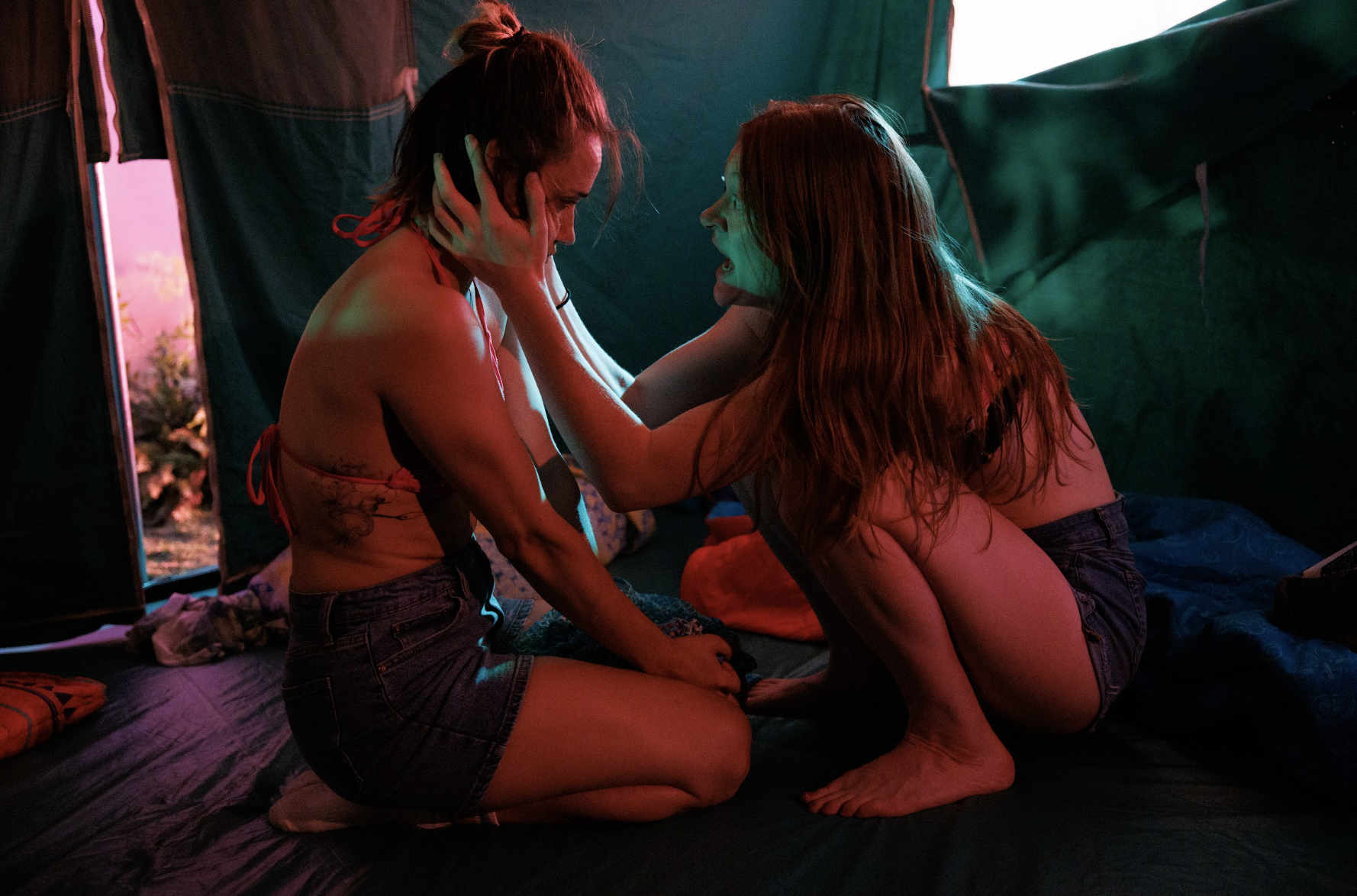
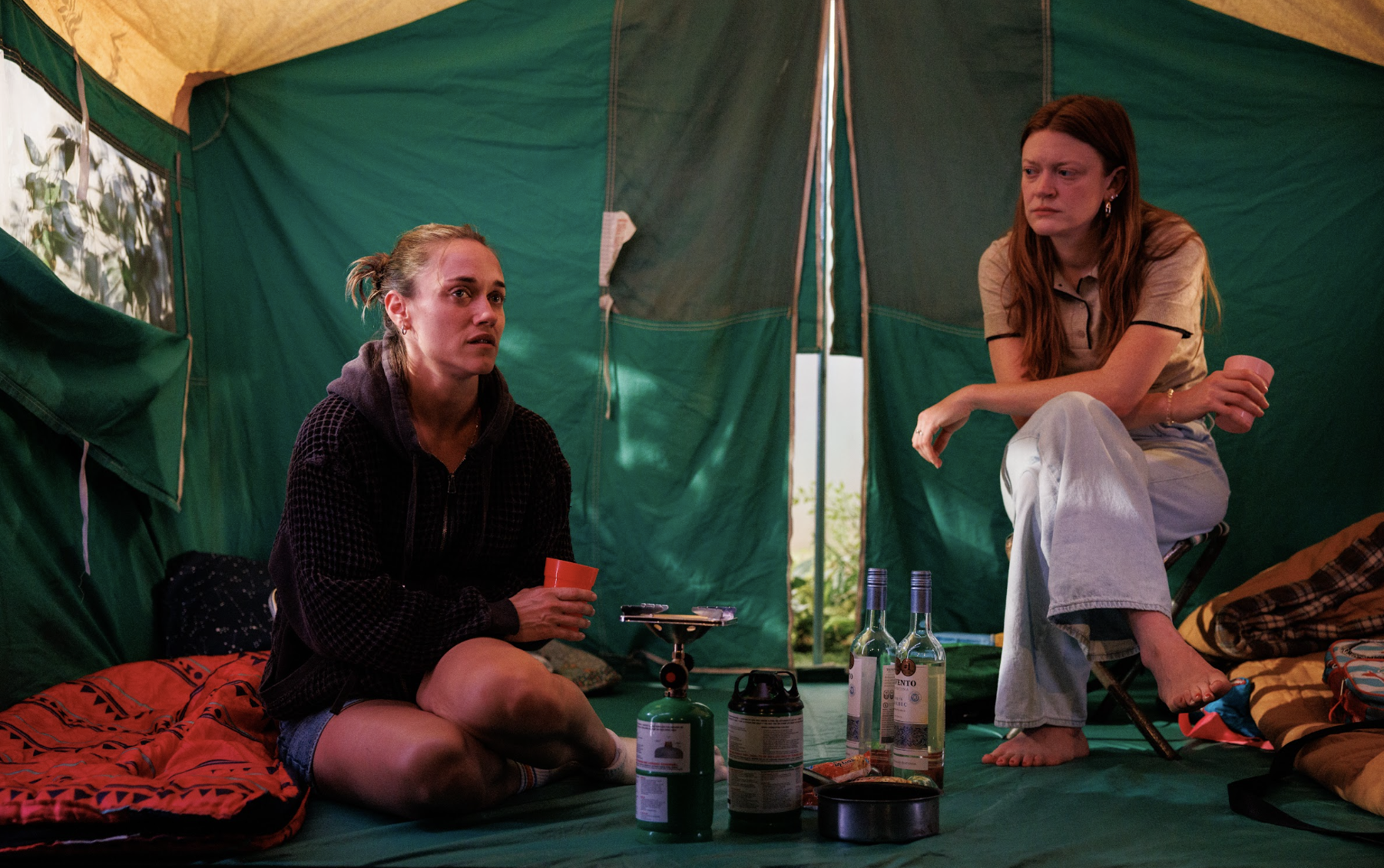
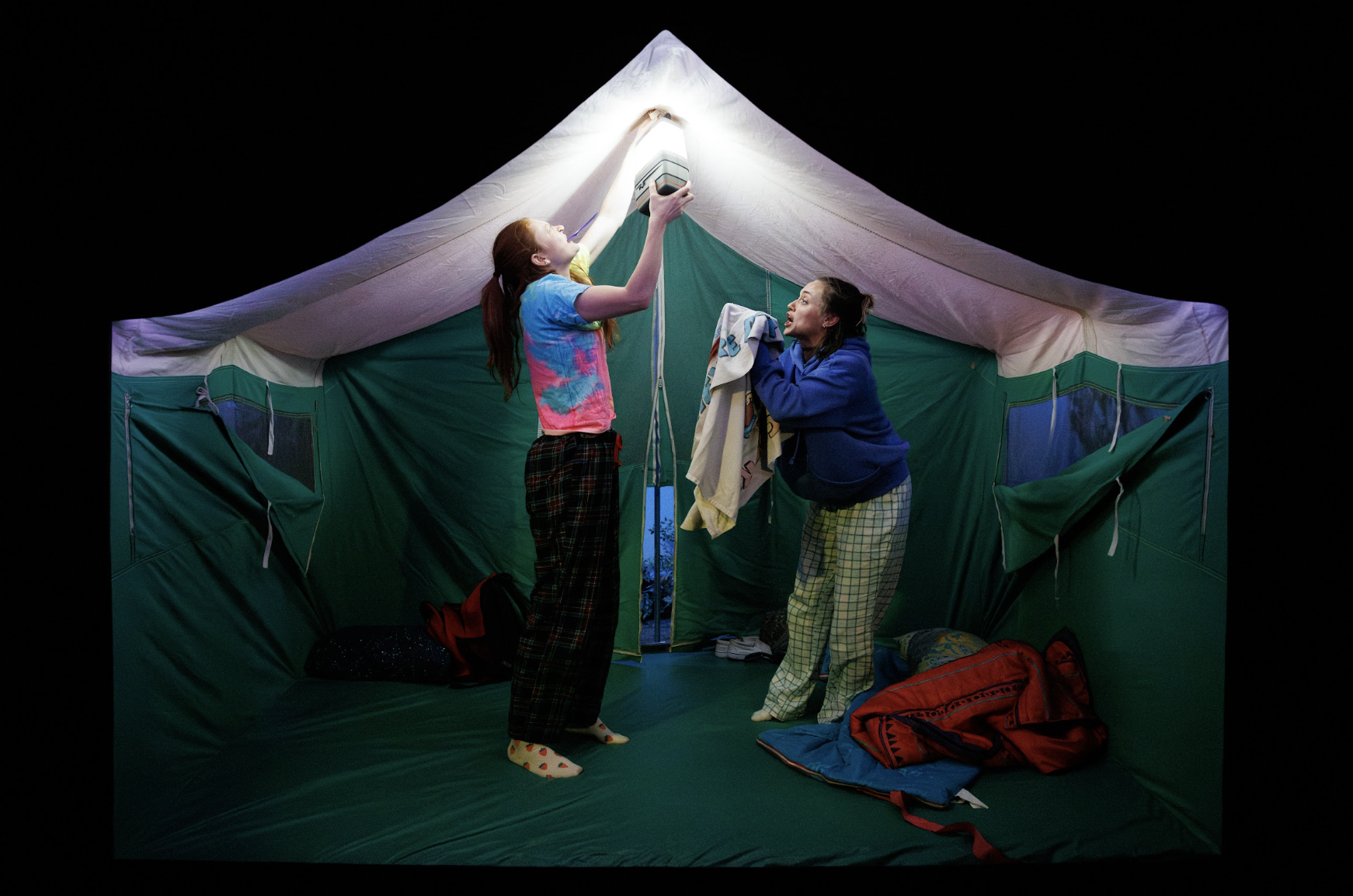
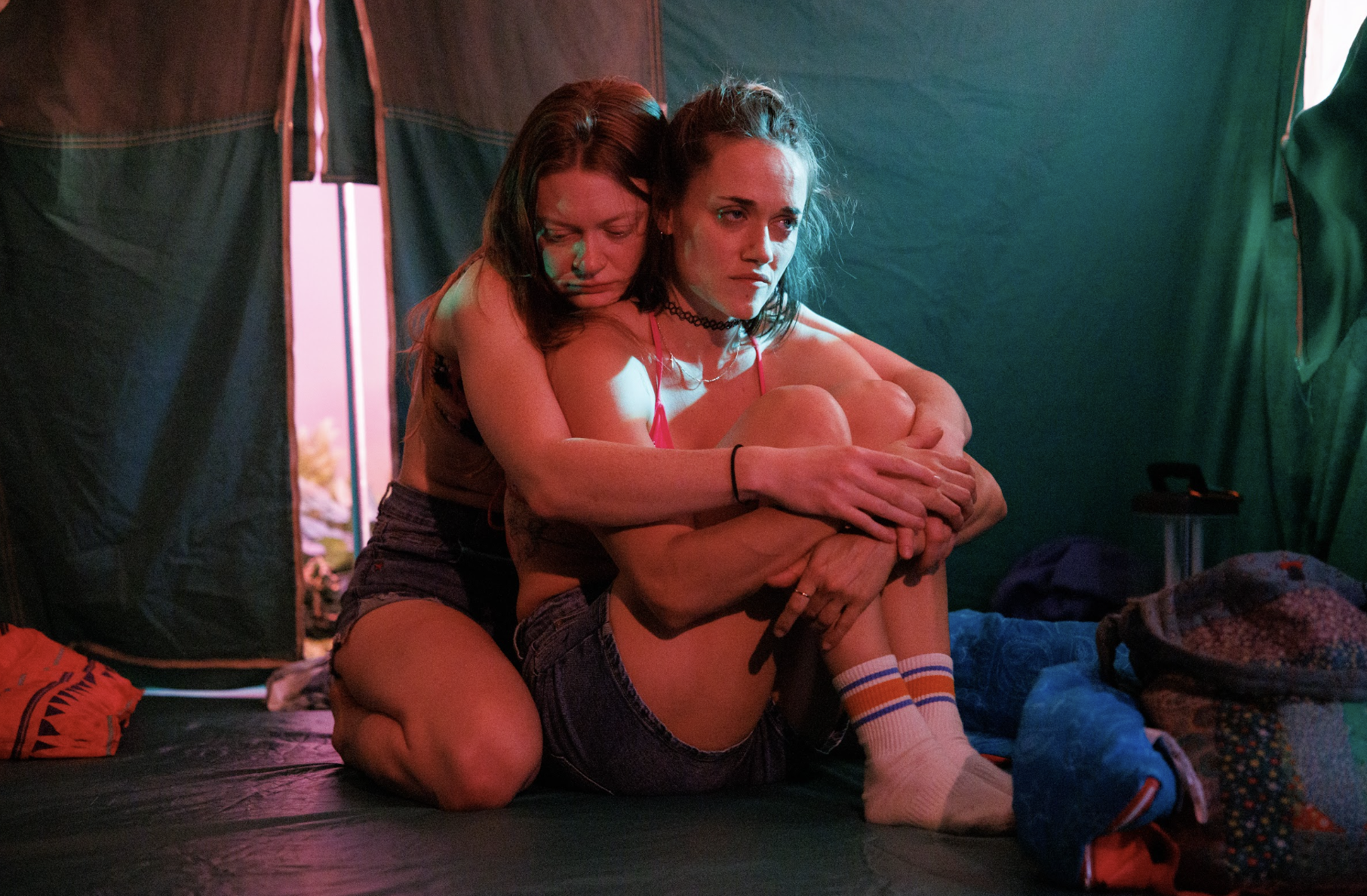
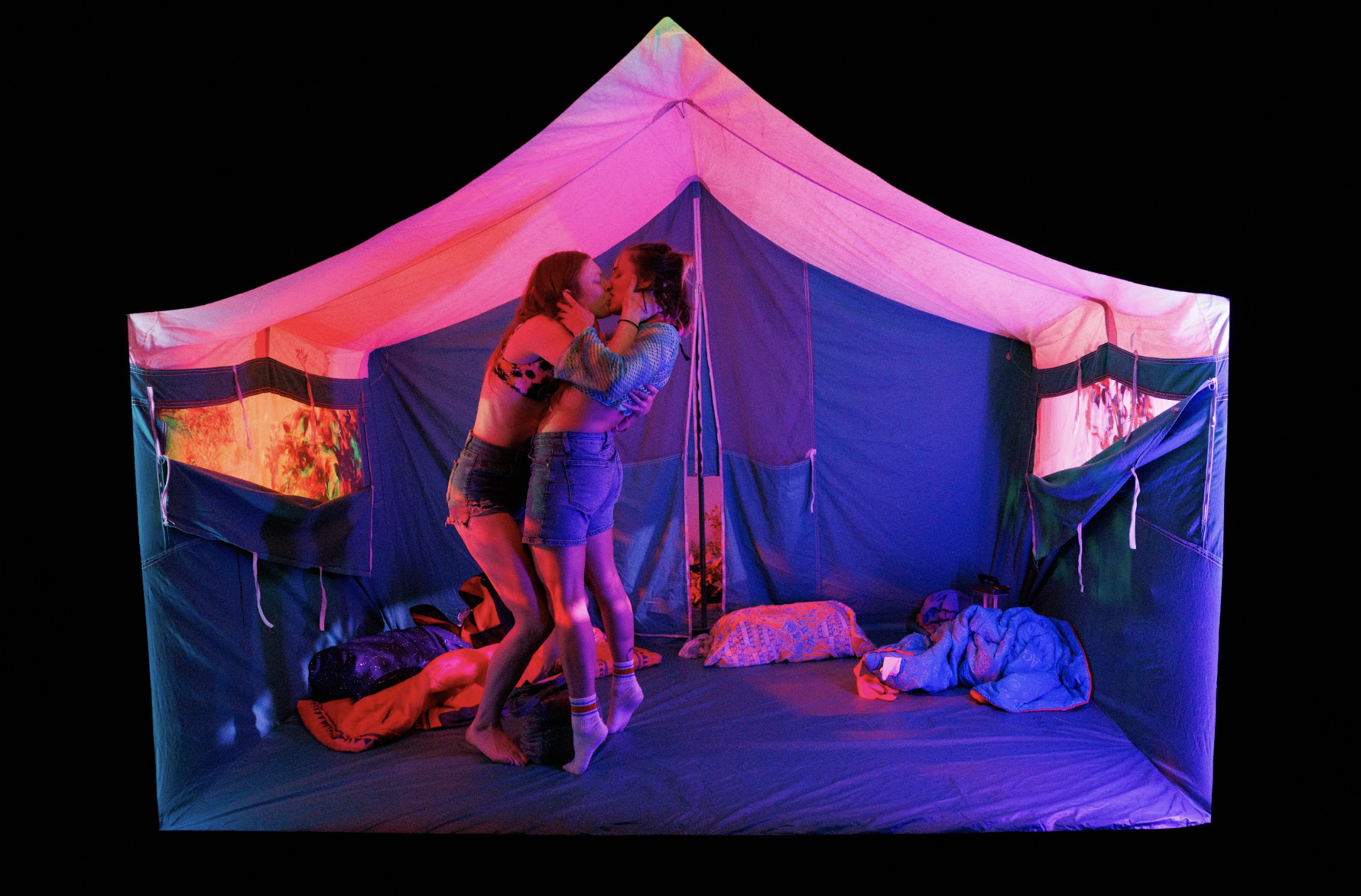
Photo credit by Maria Baranova
Love between girlfriends can be a particular kind of amour.
It is a love that often defies language: romantic and intimate, tender and volatile, unsparing and protective. It can live inside friendship without becoming any less charged, any less transformative, or any less real. It can weather years of silence only to resume mid-sentence. It is a relationship in which laughter gives way to tears without warning, old wounds reopen with a single sentence, and desire and devotion exist without easy explanation. It is also a relationship theatre rarely examines with the nuance it deserves.
Victoria Lynne Barclay’s Camping is a finely observed meditation on that love.
In her playwright’s note, Barclay writes, “Tents were places of extreme intimacy inside of which we got hot and sticky, while curious parts of me started to wake up.” That single sentence subtly unlocks the entire play. The tent is more than a tent. It is a sanctuary, a confessional, a memory, a time capsule, and eventually a measuring stick against which two very different lives are continually compared.
Directed with notable clarity by Adrienne Campbell-Holt, Camping follows Brit and Ari across nearly three decades, revisiting them at pivotal moments between adolescence and middle age. We first meet them at fifteen, preparing to lose their virginity to two boys they know from school; soon after, they are Girl Scouts of America camp counselors in western Ohio, a setting that serves as a crucial bridge between the charged closeness of adolescence and the college years that begin to pull them apart. It is an audacious place to begin. Virginity, especially at fifteen, carries enormous personal weight. Barclay starts at the edge of a cliff, and from that moment forward, the audience understands that whatever follows will ripple through the rest of these women’s lives.
The play unfolds in eight beautifully economical scenes, visiting Brit and Ari at ages 15, 18, 22, 30, 35, and 40. What emerges is less a traditional narrative than a collection of intimate snapshots, each revealing how friendship stretches, contracts, bruises, and survives when it is also carrying the weight of romantic feeling.
The first fracture arrives when Ari secretly applies to Ohio University, setting herself on a path Brit never imagined. It is not only a betrayal; it is the universal moment when early attachments encounter adulthood’s widening horizons. College introduces new identities, new ambitions, new social circles, and new language. During one particularly revealing visit, Brit finds herself surrounded by Ari’s collegiate friends, people from vastly different socioeconomic backgrounds. Suddenly, she feels painfully out of place, reduced in her own mind to “the trailer trash redneck.” It is an experience many audience members will recognize, not because anyone intended harm, but because growing up sometimes means growing apart.
Yet Camping refuses to paint either woman as right or wrong.
One of Barclay’s greatest achievements is writing both women with rare complexity. Alice Kremelberg’s Brit and Colby Minifie’s Ari are so richly realized that either character could step off this stage and carry an entirely separate play. Neither exists merely to support the other’s story. Each possesses an interior life so complete that we instinctively understand the choices, disappointments, compromises, and triumphs that shape her.
Kremelberg and Minifie navigate these shifting decades with quiet precision. Their physicality evolves almost imperceptibly from awkward teenagers to women carrying the accumulated weight of marriages, careers, children, regrets, and memory. The performances never feel performative. They feel lived in.
What struck me most was Barclay’s keen ear for conversation between lifelong girlfriends whose intimacy has never been only platonic. These exchanges are messy, nonlinear, occasionally cruel, often hilarious, and full of affection. Outsiders may mistake their bluntness for hostility, but Barclay understands that this particular kind of honesty can only exist within profound trust. Watching Brit and Ari speak feels less like eavesdropping on dialogue than overhearing memory, desire, and devotion all braided together.
The production surrounds these performances with finely calibrated design work. Krit Robinson’s scenic design embraces the tent’s simplicity without limiting its expressive possibilities. Sarita P. Fellows’ costumes carefully chart the passage of time while remaining rooted in character, moving from flannel pajama bottoms to grown-up sophistication. The costume changes happen mostly in front of us, yet they are handled with such finesse that they become nearly invisible. Salvador Zamora’s sound design extends beyond transitions, creating a resonant sonic world. Vittoria Orlando’s lighting design deserves special recognition. Scene transitions can often become theatrical dead space, but here they function as punctuation marks. Each lighting shift gently prepares us for another chapter while maintaining the production’s graceful rhythm.
Even before the official beginning, the production wordlessly tells us everything we need to know. Ari enters before the house lights fade, carefully arranging the tent for what she imagines will be a perfect afternoon. That silent preparation grows unexpectedly moving in retrospect. Someone has been waiting before the story even begins.
Perhaps that is what moved me most about Camping. Beneath conversations about sex, sexuality, marriage, identity, and growing older lies a simple truth: this is a romantic love story housed inside a profound friendship.
A story about the singular, transformative bond between two girls who become women, whose lives diverge dramatically, and who remain permanently connected by one shared experience inside a tent.
By the end of its eighty minutes, I was not simply watching Brit and Ari. I remembered the friendships, almost-loves, and loves that helped shape the person I became.
Every aspect of this production feels considered. Every transition lands with purpose. Every silence carries meaning. Most importantly, every line earns its place.
Nothing is wasted.
Camping is a moving reminder that some of the most profound stories of intimacy are not about finding the right partner in the expected form. They are about recognizing the person whose friendship deepens into romance, whose presence comes to feel like home, and who forever changes the landscape of your life.
Click HERE for tickets.
Review by Malini Singh McDonald.
Published by Theatre Beyond Broadway on June 19, 2026. All rights reserved.
