
Uncle Vanya
Presented by Shakespeare Downtown
Written by Anton Chekhov, Directed by Geoffrey Horne
Castle Clinton National Monument, Battery Park, in Manhattan
June 11, 2026 - June 21, 2026
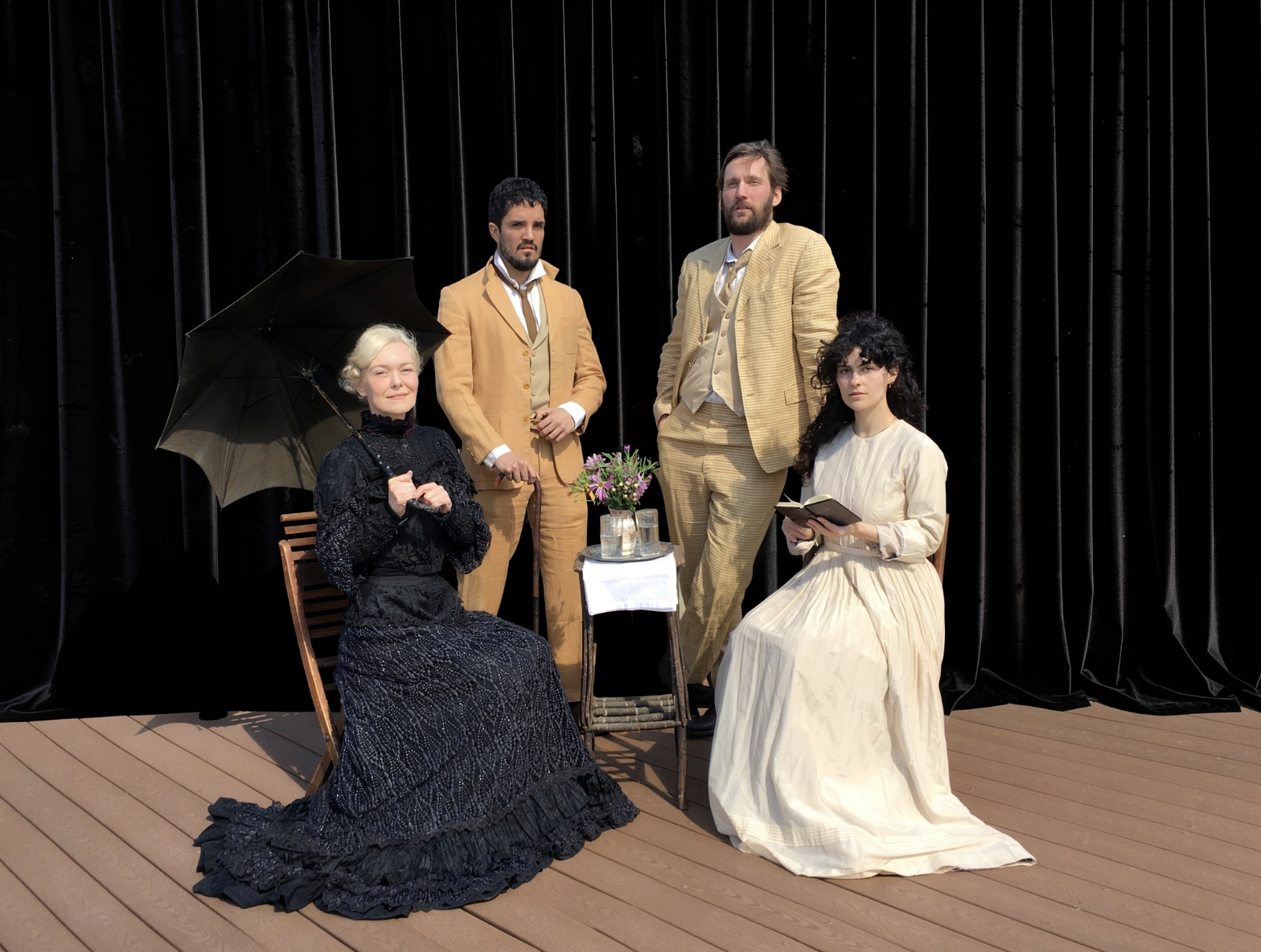
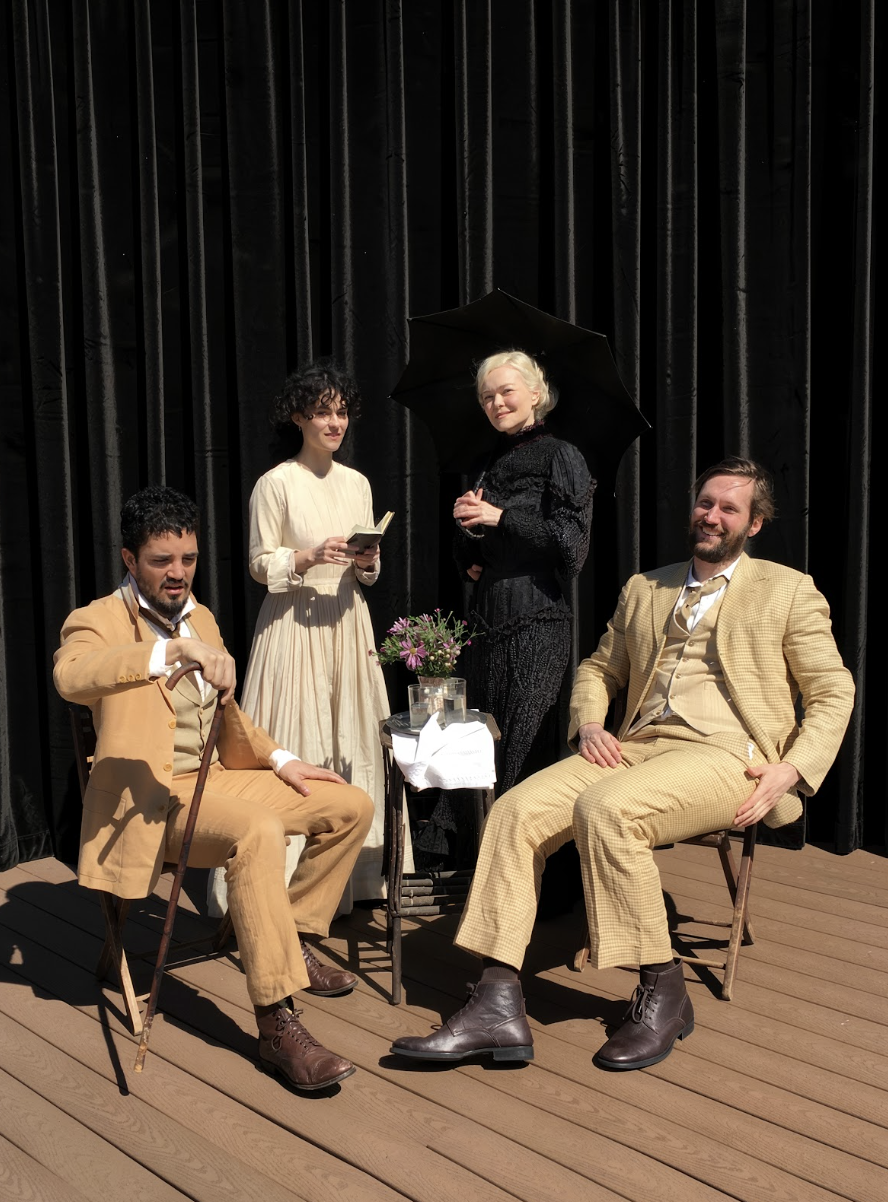
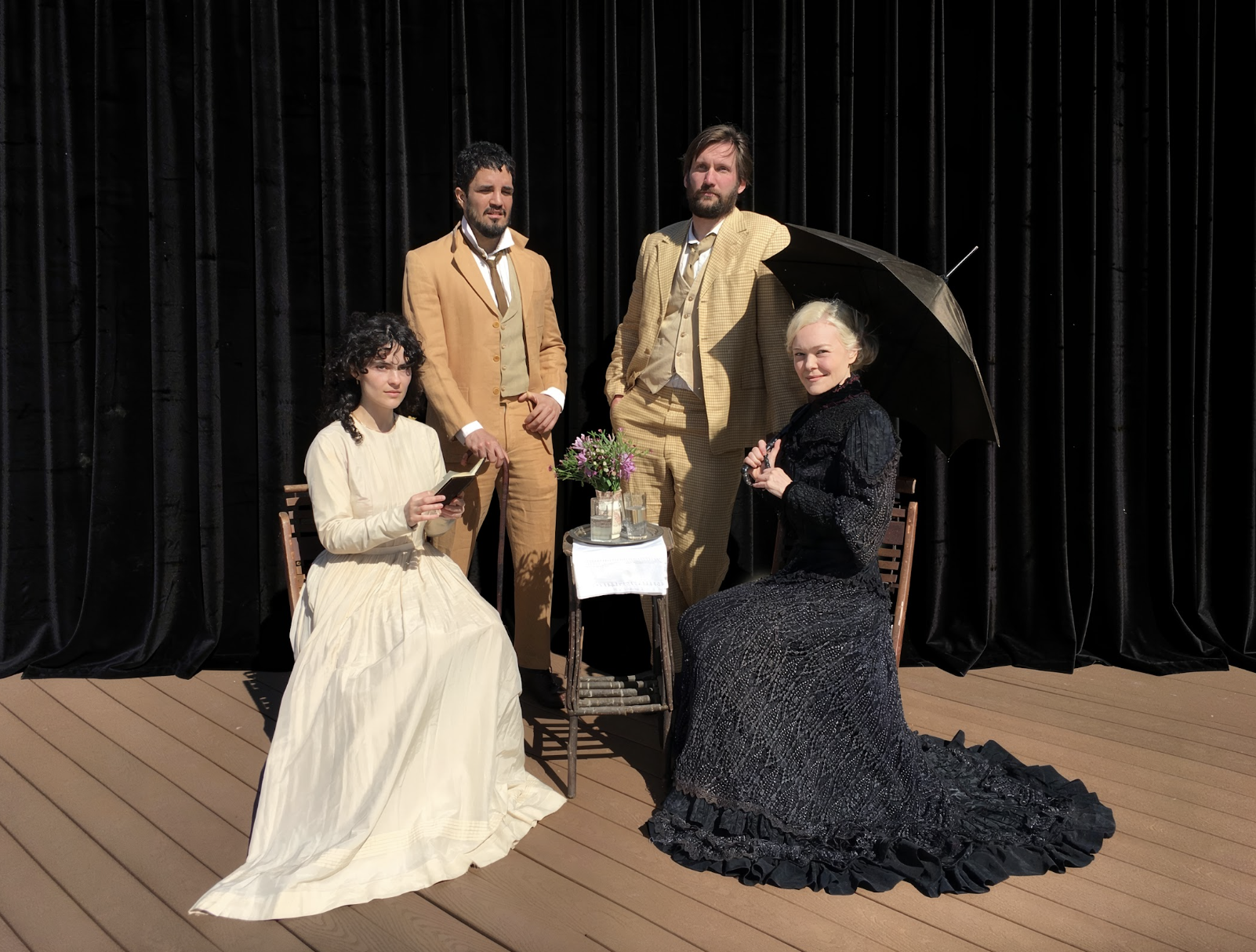
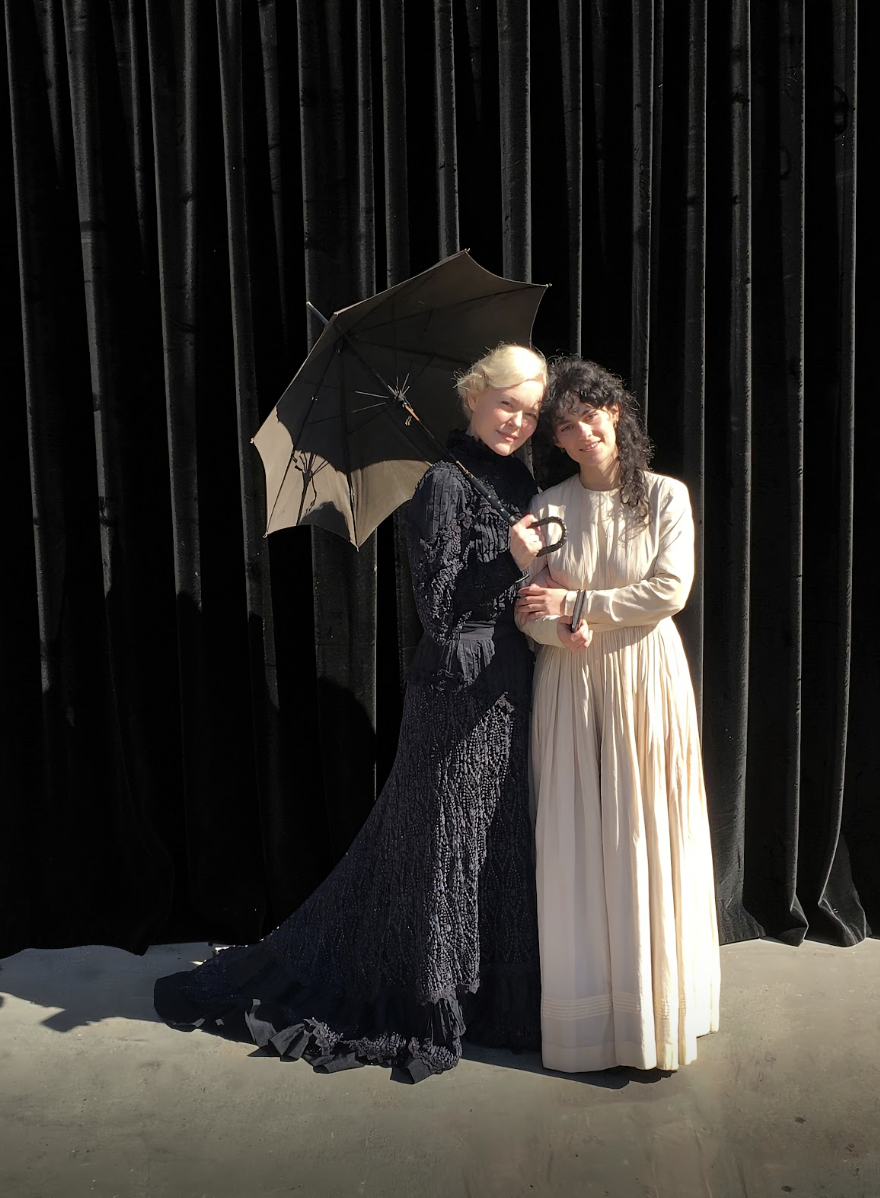
Photo credit by Amy Goossens
There is a peculiar pleasure in encountering Uncle Vanya outdoors. Chekhov’s masterpiece, so often confined to drawing rooms and black-box theaters, emerges differently beneath the open sky, where the passage of time, the changing light, and the indifference of the natural world seem to collaborate with the playwright’s melancholy vision. For its tenth-anniversary season of free summer performances, Shakespeare Downtown has chosen wisely, presenting Geoffrey Horne’s lucid new translation of the play at Battery Park’s Castle Clinton National Monument. Surrounded by weathered stone walls and the restless sounds of the harbor, this production discovers fresh resonance in a work that remains one of the great examinations of squandered lives, deferred hopes, and the painful distance between desire and action.
Chekhov’s tragicomedy unfolds on a declining nineteenth-century Russian estate overseen by the weary Vanya and his devoted niece Sonya. Their routines are disrupted by the arrival of Sonya’s father, the retired Professor Aleksandr Serebryakov, and his strikingly beautiful young wife, Yelena. What follows is less a plot than a slow-burning emotional weather system: longings emerge, resentments ferment, illusions crumble, and nearly everyone discovers that the life they imagined for themselves has somehow failed to materialize. Yet Chekhov’s genius lies in making disappointment endlessly compelling. These characters complain with such eloquence, self-awareness, and comic despair that one cannot help but be moved by them even as they wallow in their own unhappiness.
Horne’s direction embraces the unusual setting rather than fighting against it. The action radiates outward from a simple central platform, while actors emerge from behind Castle Clinton’s arched porticoes, and transform the historic fort into a living extension of the estate. The staging creates an intimacy that might seem impossible in such a public venue. The production feels porous to the world around it; passing boats, distant city sounds, and the shifting atmosphere of a summer evening become accidental accomplices to Chekhov’s vision of lives unfolding amid forces beyond anyone’s control.
The physical production achieves elegance through restraint. Amy Goossens’ designs evoke the period without burdening it with museum-piece fussiness. Vintage furnishings, carefully chosen props, and richly detailed costumes establish both social standing and emotional character, with Yelena’s gowns conveying a beauty that has become its own form of imprisonment. Carlos Ponce’s sound design operates with admirable subtlety. A recurring guitar motif, mostly at the hands of Karl Bateman’s stirring playing in the role of Telegin, drifts through the evening like a memory one cannot quite place, while occasional atmospheric effects—most notably a sudden clap of thunder—underscore the emotional storms gathering beneath the characters’ civilized surfaces.
The ensemble is uniformly excellent, achieving that rare Chekhovian balance between comedy and heartbreak. Evan Olson gives Vanya a raw emotional volatility that never descends into caricature. His bitterness arrives not as theatrical hysteria but as the accumulated weight of decades spent serving someone he has finally realized was never worthy of such devotion. Scarlett Strasberg’s Sonya provides the production’s moral center, rendering the young woman’s quiet resilience and capacity for forgiveness genuinely moving. Timothy Nolan is splendidly self-pitying as the professor, a man haunted by the suspicion that his intellectual legacy will evaporate the moment he does. Chantal Van Zyl’s nurturing Marina, Elizabeth Ruf’s fiercely opinionated Maria, Bateman’s wistful Telegin, and Narque Cyriaque’s ever-present Yefim collectively create a household that feels fully inhabited long before the audience arrives.
Billie Andersson’s Yelena is equally remarkable. Many productions reduce the character to a beautiful object onto which others project their fantasies. Andersson reveals something richer and sadder: a woman gradually awakening to the terrifying realization that she has mistaken admiration for love and passivity for contentment. Her performance peels away Yelena’s composure layer by layer until what remains is a profound emptiness, a life suspended between possibilities never pursued. By the final scenes, Andersson makes Yelena’s self-knowledge feel less like enlightenment than a quietly devastating defeat.
Yet the production belongs, ultimately, to Juan Pablo Toro’s revelatory Astrov. Too often the doctor is played as merely cynical or charmingly disillusioned, a secondary romantic figure whose environmental concerns seem incidental to the larger drama. Toro transforms him into the evening’s most fascinating contradiction: a man of enormous intelligence and sensitivity whose passions have become untethered from any coherent moral center. His Astrov burns with restless energy. He strides through scenes as though perpetually on the verge of discovering some new purpose for living, only to collapse back into exhaustion, drink, and desire. Toro captures the character’s love of nature, his disgust with human folly, and his erotic obsession with Yelena as manifestations of the same yearning—for a world more beautiful and meaningful than the one he inhabits. There is something almost dangerous about the performance. When Astrov speaks, one feels not merely his attraction to Yelena but the larger desperation of a man trying to outrun despair itself. Toro’s physical vitality, emotional volatility, and fearless commitment make the role feel startlingly contemporary. He does not simply play Astrov; he illuminates him.
That achievement is all the more impressive given the obstacles surrounding the production. Outdoor theater is an act of faith. Performances as a rule include oppressive heat, passing helicopters, harbor traffic, wandering judgmental pigeons, audience movement, and even competing music from elsewhere in the park. Yet the production survives these interruptions because it understands a fundamental truth about Chekhov: life itself is always intruding. The characters of Uncle Vanya dream of ideal conditions that never arrive, just as they dream of happiness that remains perpetually deferred. Shakespeare Downtown’s magnificent production embraces that reality rather than resisting it. By the end, as Sonya offers her fragile vision of future peace, the play lands with extraordinary force. The result is not merely an admirable outdoor staging but a deeply affecting encounter with one of theater’s greatest works—funny, heartbreaking, and alive with the painful urgency of time slipping away.
Click HERE for tickets.
Review by Tony Marinelli.
Published by Theatre Beyond Broadway on June 20, 2026. All rights reserved.
