
CLARA: SEX, LOVE AND CLASSICAL MUSIC
Presented by LPMAM and FACE TO FACE
Written and Performed by Elena Mazzon
Direction and Lighting Design by Colin Watkeys
59E59 Theaters, Theater B, 59 East 59th Street, in Manhattan
April 22, 2026 - May 10, 2026
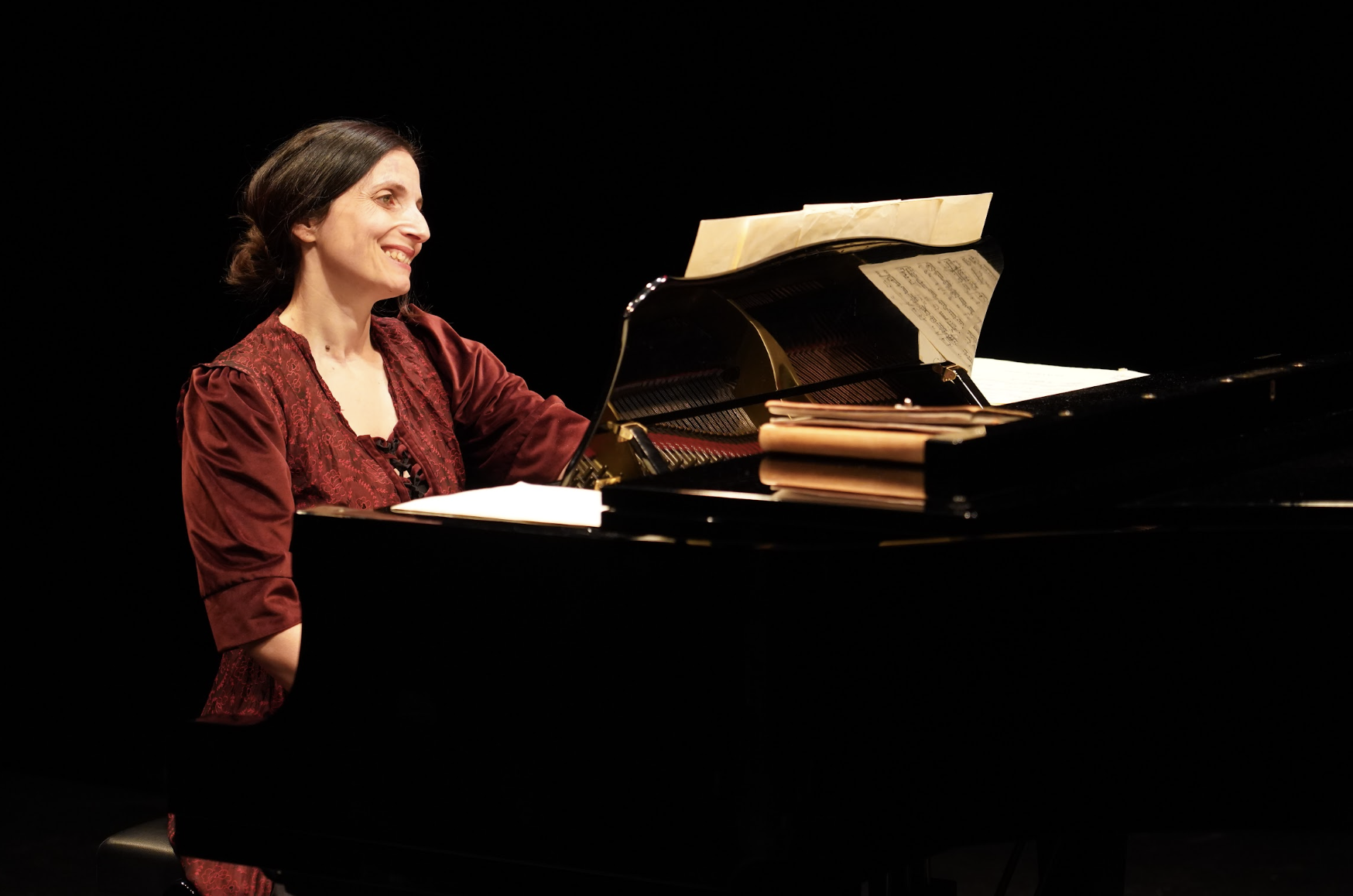
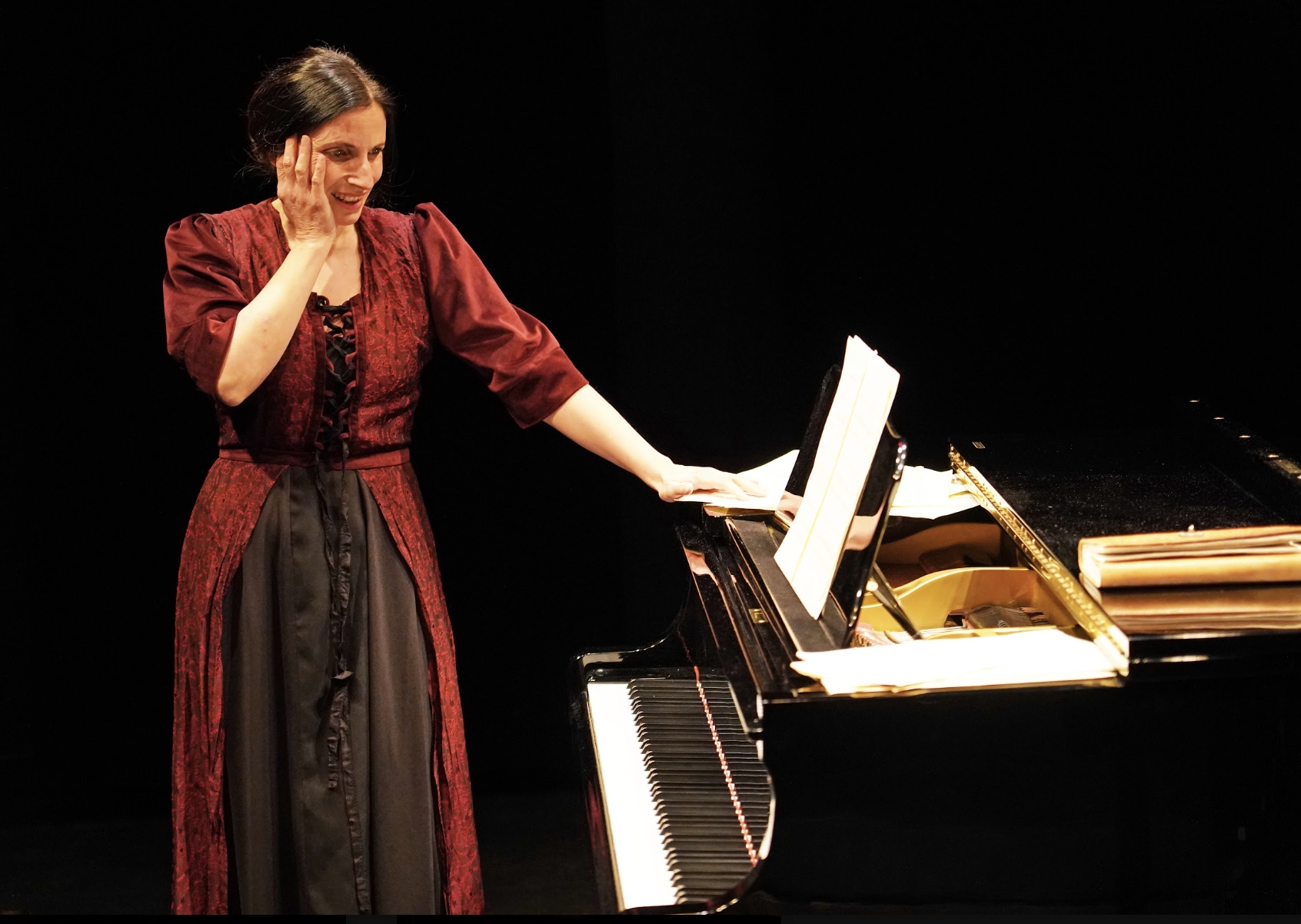
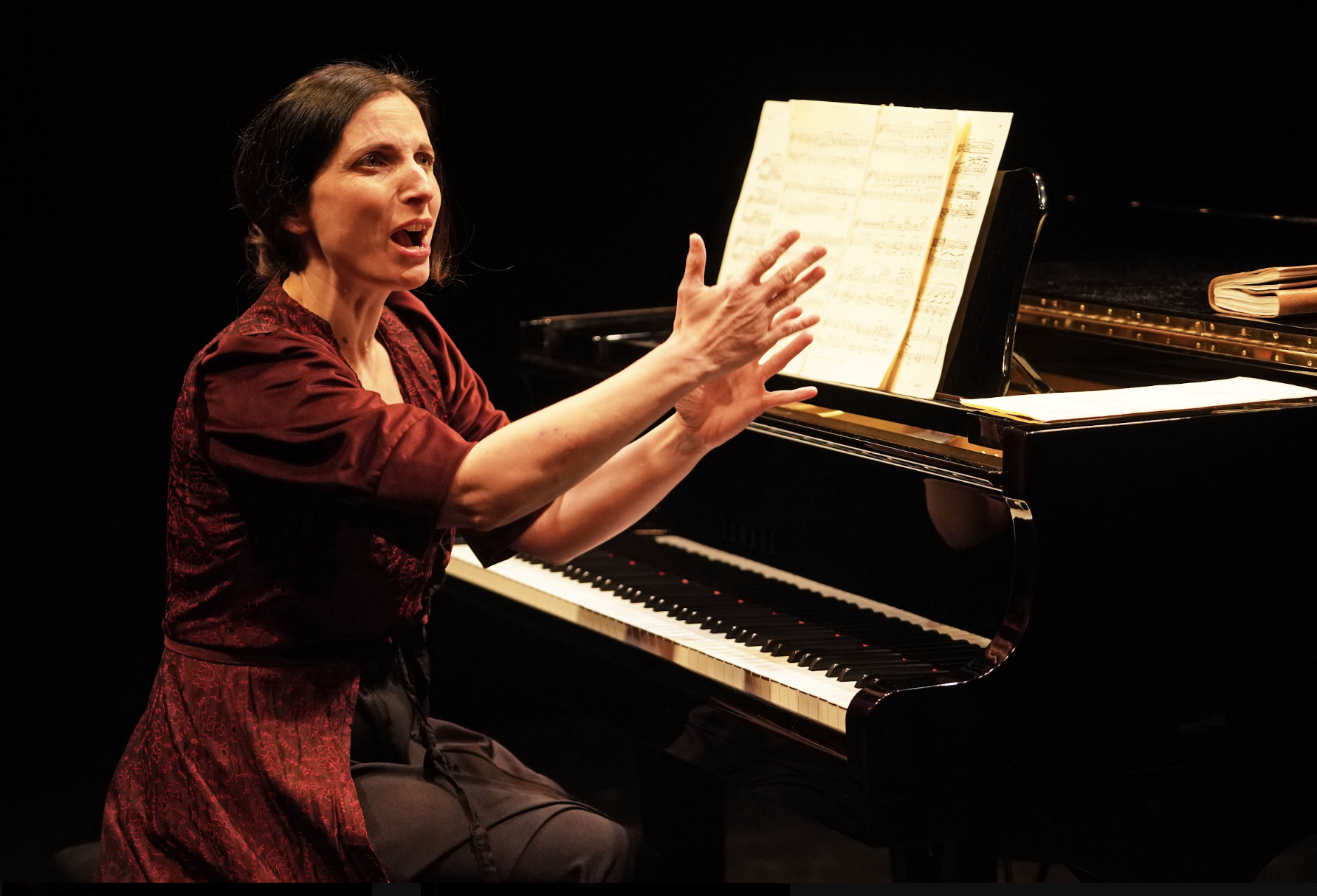

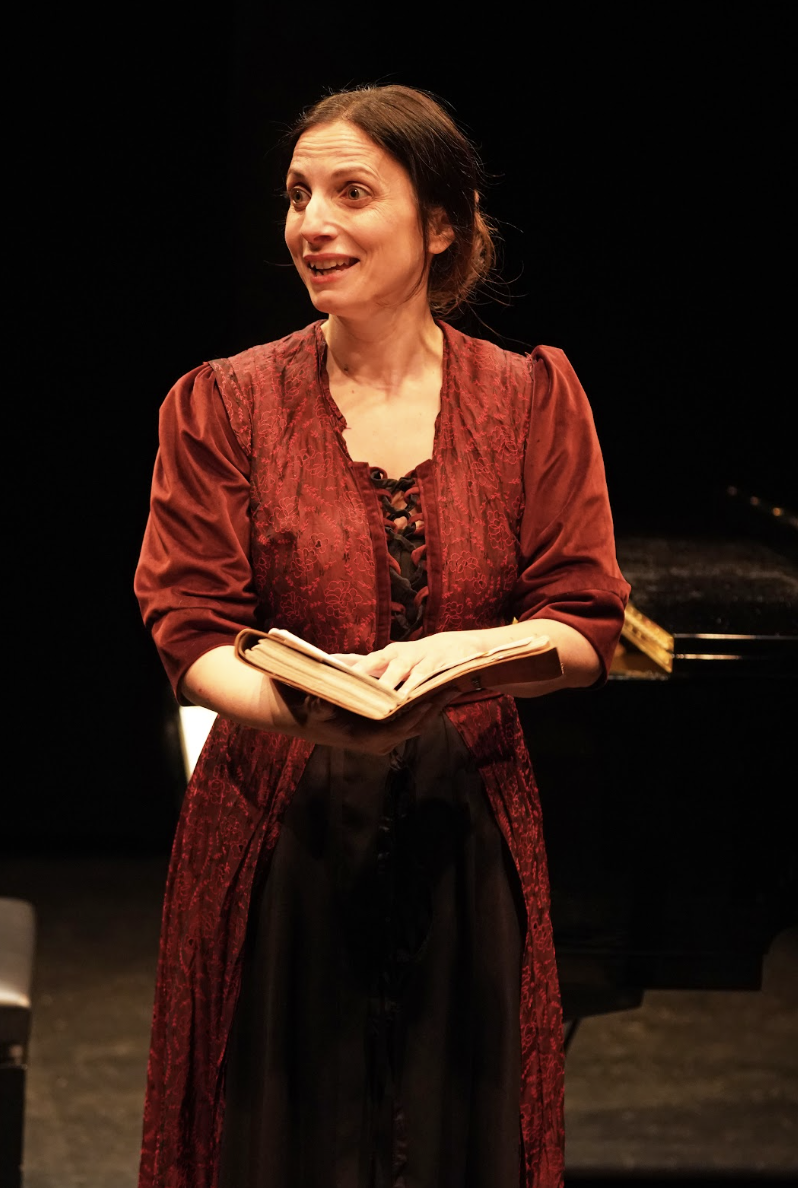
Photo credit by Carol Rosegg
In Elena Mazzon’s Clara: Sex, Love and Classical Music, history does not merely revive; it leans across the footlights and confides in us. The evening begins with a deliciously disarming question—“He wants me to go on a date?!”—uttered by the widowed Clara Schumann with the tremulous excitement of a woman startled by the reawakening of desire after nearly two decades alone. Immediately, Mazzon abolishes the fourth wall. Audience members are enlisted as confidants, co-conspirators, amateur advisors in matters of romance and memory. One gets to hold on to the letter requesting the date…for safe keeping. “Does dating stay in your muscle memory like playing piano?” Clara wonders aloud. The line lands with wit, melancholy, and an almost unbearable humanity. From the outset, the production understands that genius does not exempt one from loneliness; if anything, it deepens it.
The play frames Clara’s rekindled intimacy with Johannes Brahms as both emotional catalyst and historical excavation. Brahms, younger and ardently devoted, returns after years of proximity to the Schumann household, where he had once become indispensable following Robert Schumann’s catastrophic mental collapse and institutionalization. Yet Mazzon wisely resists reducing the relationship to romantic speculation. Instead, she uses Brahms as an aperture through which Clara revisits the astonishing architecture of her life: child prodigy, international virtuoso, mother of eight, composer, widow, breadwinner, and reluctant pioneer of female self-determination in the nineteenth century. The effect is less biographical pageant than living confession.
Mazzon’s script possesses the rare ability to compress immense historical terrain without sacrificing intimacy. Clara’s recollections move fluidly from her tyrannically ambitious father’s musical regimens to her rebellious clandestine courtship with Robert Schumann, whom she pursued with astonishing determination despite familial opposition and societal expectation. “I wasn’t scared,” she recalls with a flicker of pride that still seems to surprise her. Marriage, initially imagined as artistic partnership, gradually becomes a crucible of maternity, caretaking, and survival. Yet the play never portrays Clara as victimized by circumstance alone. Rather, she emerges as a woman perpetually negotiating with the restrictions placed upon her—sometimes circumventing them, sometimes enduring them, always refusing surrender.
Particularly revelatory are the passages concerning the Schumanns’ famous marriage diary, through which husband and wife recorded sentiments too charged or vulnerable for ordinary speech. Mazzon handles these moments with both intelligence and sly humor. Clara’s delighted references to entries concerning “sexual intercourse”—a phrase whose blunt modernity amusingly clashes against nineteenth-century decorum—become unexpectedly moving meditations on female appetite and repression. Here, as elsewhere, the production insists on Clara’s corporeality. This is not the marbleized saint of conservatory lore but a woman of formidable passions, fears, ambitions, and appetites. When Brahms writes of imagining his sonata “under your fingers,” and Clara responds not with words but by sitting at the piano, the play reaches toward something ineffable: music as emotional language beyond speech itself.
Those musical interludes are among the evening’s greatest triumphs. Mazzon, herself an accomplished pianist, integrates excerpts from Schumann, Brahms, and other Romantic composers not as ornamental recital pieces but as emotional continuations of the monologue. The transitions, guided by Colin Watkeys’s elegantly unforced direction, unfold with lyrical inevitability. Scenes seem less to conclude than to dissolve into memory and melody. The production’s pacing is unhurried without ever stagnating; it trusts silence, trusts listening, trusts the audience’s willingness to sit inside thought. One leaves with the sense not of having watched a conventional play but of having spent an evening inside Clara Schumann’s consciousness.
As a performer, Mazzon is magnetic in her restraint. She bears a striking physical resemblance to Clara, but more importantly she captures the paradoxical fusion of steel and tenderness that defined the composer’s life. Her direct address feels spontaneous rather than theatricalized; facial expressions ripple across her features with intimate transparency. She moves with graceful economy, never indulging in grand historical impersonation. Even the production’s minor imperfections—a somewhat inconsistent accent early on, occasional dimness in the lighting—fade into irrelevance beside the force of her presence. What remains is the startling immediacy with which she animates a figure too often relegated to the margins of male genius.
What Clara ultimately accomplishes is something richer than reclamation. Many contemporary works about overlooked women carry the dutiful air of corrective historiography. Mazzon’s play does indeed restore Clara Schumann to her rightful magnitude, reminding us that during her lifetime she eclipsed even Robert in fame and prestige. But the evening’s true achievement lies in making her feel startlingly contemporary—not through anachronistic revisionism, but through emotional candor. Here is a woman attempting to sustain artistry amid domestic exhaustion, longing for intimacy while fearing its consequences, translating emotional experience into music because language itself proves insufficient. By the final moments, the play seems almost to evaporate rather than end, fading like the final reverberation of a piano chord into silence. One leaves not simply informed about Clara Schumann, but haunted by her.
Click HERE for tickets.
Review by Tony Marinelli.
Published by Theatre Beyond Broadway on May 13, 2026. All rights reserved.
