THE UNSEEN CANVAS
Written by Tom Cavanaugh; Directed by Charlotte Cohn
Presented as part of Under the Umbrian Sun, La MaMa Umbria International
La MaMa Experimental Theatre Club | 66 E 4th St, New York, NY 10003
May 1, 2026
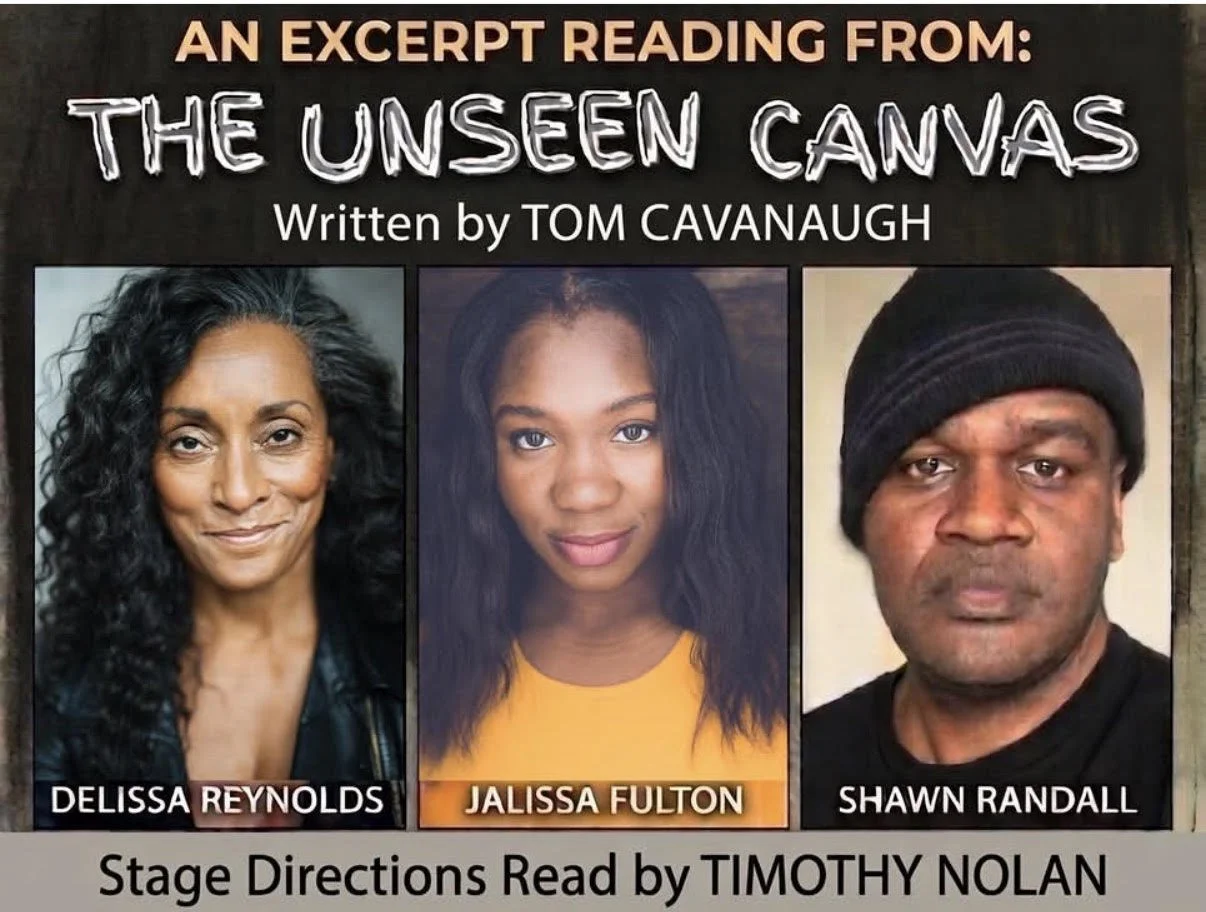
Although only the first 15 minutes of The Unseen Canvas were shared, the piece carried a remarkable sense of immediacy and scope. I left fully immersed in its world and eager to experience the work in its entirety.
Tom Cavanaugh crafts an unflinching examination of PTSD, centering a Black woman veteran whose experience feels both urgent and underrepresented onstage. To contextualize the work, Cavanaugh shared that his time as a 911 operator exposed him to stories that remained with him—and that while attending the La MaMa Umbria International Playwright Retreat in Italy, he was challenged by grandmaster Dael Orlandersmith to write the story he really wanted to tell—this is what was on his heart.
The play erupts immediately, placing us inside Maddie’s experience as she meets the audience head-on. Her reality is disorienting and relentless, existing within a space where past and present collapse into one another—where Baghdad and Perth Amboy coexist without distinction. Rather than offering detachment, the piece immerses us in her perspective, allowing us to feel the instability of a mind incapable of fully separating what was from what is.
In this way, The Unseen Canvas exemplifies what theatre does best—it invites us into someone else’s reality. By rejecting distance, the work cultivates a deeper understanding of an experience too often misunderstood or minimized. Narratives like this are essential—not only for representation, but for the empathy they compel from an audience.
Delissa Reynolds anchors the production with striking precision, navigating Maddie’s rapid shifts between hyper-vigilance and disorientation. Rifle in hand, she traverses the space as though perpetually on watch, her body never fully exiting the war. The intensity remains unrelenting—there is no genuine stillness, only a constant state of alarm.
The ensemble is formidable, sustaining stakes that feel immediate and authentic. Jalissa Fulton brings grounded nuance to the daughter Roe Roe, whose role becomes one of management rather than denial—attempting to stabilize what cannot be fully controlled. Shawn Randall contributes further complexity as Victor, the family patriarch, helping shape a household structured around endurance rather than resolution.
A single moment—a bullet discovered where it should not be—escalates the tension instantly, transforming ritualized fear into tangible danger. It is here that the material feels startlingly lifelike—not sensationalized for theatricality, but reflective of genuine lived experience. Like the family at the center of the story, the audience is forced to confront the reality that PTSD cannot simply be willed away. One line in particular lingers: “I’m not ignoring it. I’m scared to death of it!”—a devastating articulation of the fear and emotional paralysis permeating the household. It is precisely this emotional candor that makes The Unseen Canvas feel less like fiction and more like testimony.
Even in excerpt form, The Unseen Canvas is riveting. It resists facile resolution, instead leaving the audience with the disquieting weight of recognition—and the cost of truly seeing what has long been neglected. It is a work that feels primed for a full production, and one I hope to see realized onstage in the near future.
Click HERE to learn more.
Review by Penelope Deen.
Published by Theatre Beyond Broadway on May 12, 2026. All rights reserved.