
Diversion
Written by Scott Organ; Directed by Seth Barish
Studio Theater at The Barrow Group Performing Arts Center | 520 8th Ave 901 9th floor, New York, NY 10018
November 20, 2025 - January 11, 2026

Photos by Edward T. Morris
Scott Organ’s Diversion takes as its modest but inexhaustible setting the hospital intensive care unit’s break room—a fluorescent-lit antechamber of bad coffee, stolen moments of rest, and whispered confessions—and quietly reveals it to be a crucible in which ethical strain, institutional surveillance, and private despair are brought to a slow boil. In Organ’s ninety-minute drama, currently enjoying an extended run at the Barrow Group’s Theater, this supposedly neutral space becomes both sanctuary and crime scene, a place where caregivers briefly unmask themselves and where the mechanisms of punishment begin to grind. The choice is more than clever dramaturgy: it is a moral proposition. What happens to those charged with sustaining life when they themselves are deprived of refuge?
Organ introduces us to five nurses whose professional competence masks a tangle of unaddressed personal wounds. Their labor consists of standing vigil at the thresholds of life and death, yet the play pointedly withholds the spectacle of trauma itself. We do not see the code blues or the flatlining monitors; instead, we hear of the psychic residue left behind—of exhaustion, grief, and the relentless accumulation of stress. In this gap between experience and articulation, Organ locates addiction. Opioids enter the play not as sensational contraband but as an extension of care turned inward, a means of self-medication when institutional support has failed. When the nurses’ personal supply runs dry, the unthinkable temptation arises: diversion of hospital medication. Yet the play is careful to remind us that this is no simple heist. The hospital’s monitoring software is designed to be impermeable; any attempt to circumvent it automatically summons scrutiny.
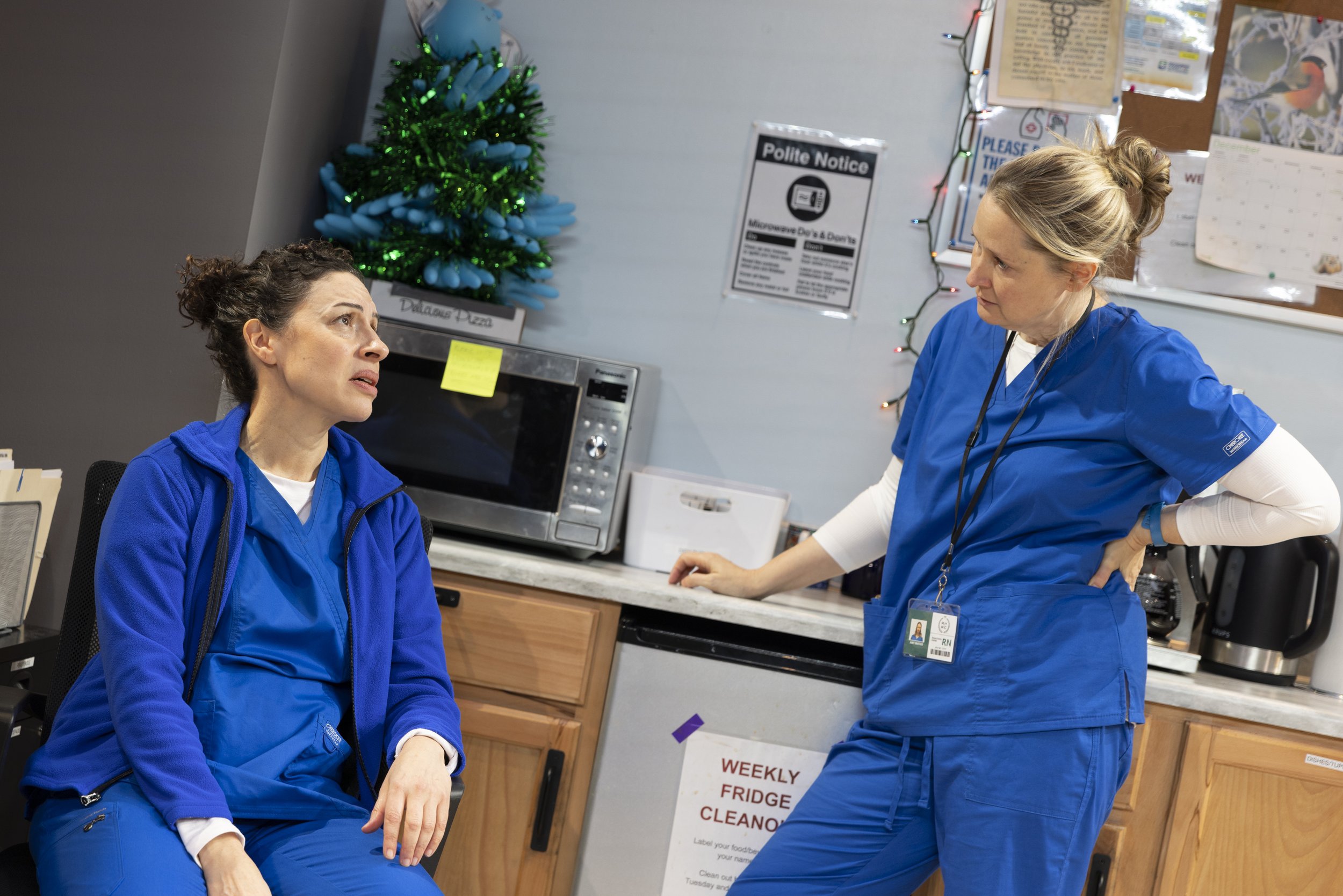
The crisis is formally announced by Bess, the head nurse, played with firm authority and palpable anxiety by Thaïs Bass-Moore. Their unit has been flagged. Someone—perhaps more than one person—has diverted drugs. Bess offers a narrow window of mercy: come to her first, quietly, and she will help secure treatment before the corporate investigator arrives and the matter is handed over to the police. It is an offer that recognizes both the human cost of addiction and the brutal efficiency of institutional response. Bass-Moore conveys Bess’s own fragility beneath her managerial resolve; eight years earlier, she presided over a similar investigation, and the memory still unsettles her. Seeking support, she turns to Emilia, a senior nurse, asking her to serve as an informal informant—her “eyes and ears”—a request that corrodes trust even as it pretends to preserve it.
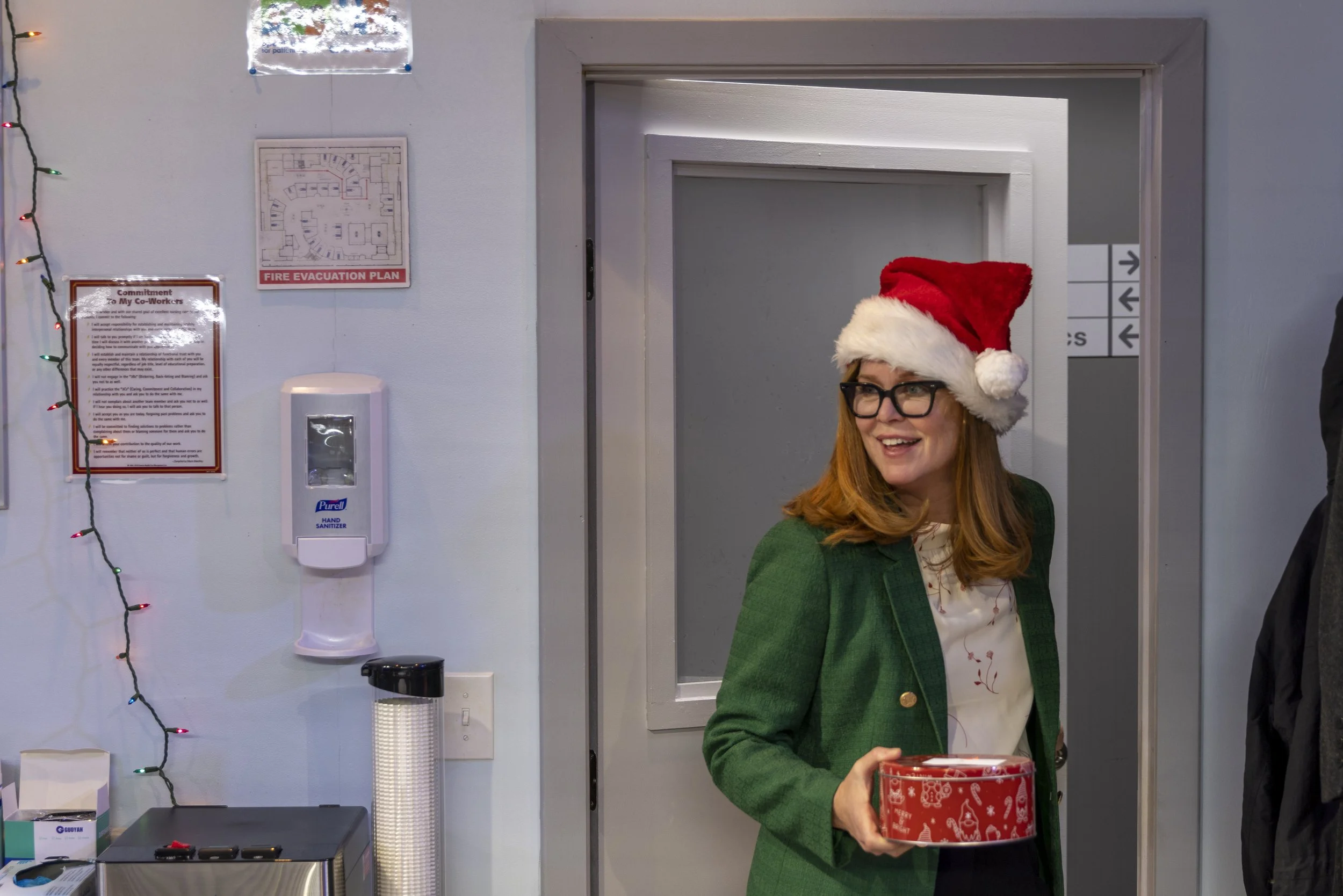
The investigator, Josephine, enters with practiced affability. Colleen Clinton plays her as a woman who knows precisely how threatening friendliness can be. A former nurse, Josephine insists she is merely gathering “data,” conducting casual conversations that nonetheless radiate menace. From her perspective, everyone is a suspect; empathy is a tool, not a salve. She will proceed until proof is obtained, regardless of collateral damage. The play shrewdly refuses to caricature her as a villain. Instead, she embodies the bureaucratic logic that converts human suffering into metrics and compliance.
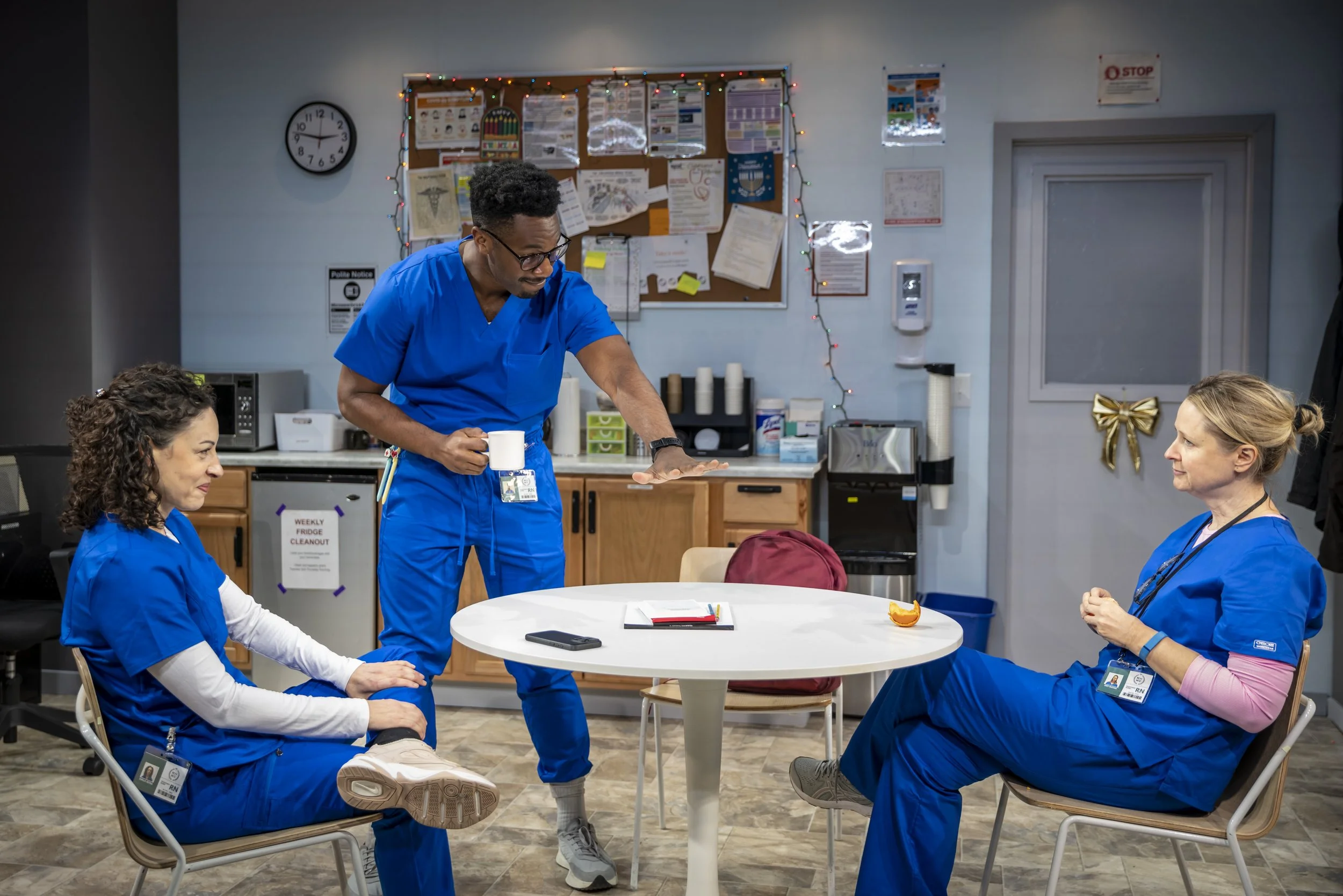
Each member of the ensemble is etched with telling specificity. Mandy, the youngest and the novice still wet behind the ears, played by West Duchovny, is perpetually exhausted, catching up on sleep in the break room during odd hours—a detail that reads as both symptom and clue. Mike, the lone male nurse, portrayed by Connor Wilson, unwittingly reveals too much when he casually discusses the street value of a fentanyl patch, exposing a knowledge that sits uneasily alongside his professional role. Amy, brought to life with abrasive volatility by Deanna Lenhart, lashes out at Josephine in public while privately betraying her colleagues’ vulnerabilities in whispered confidences—a hypocrisy that underscores the corrosive effects of fear.
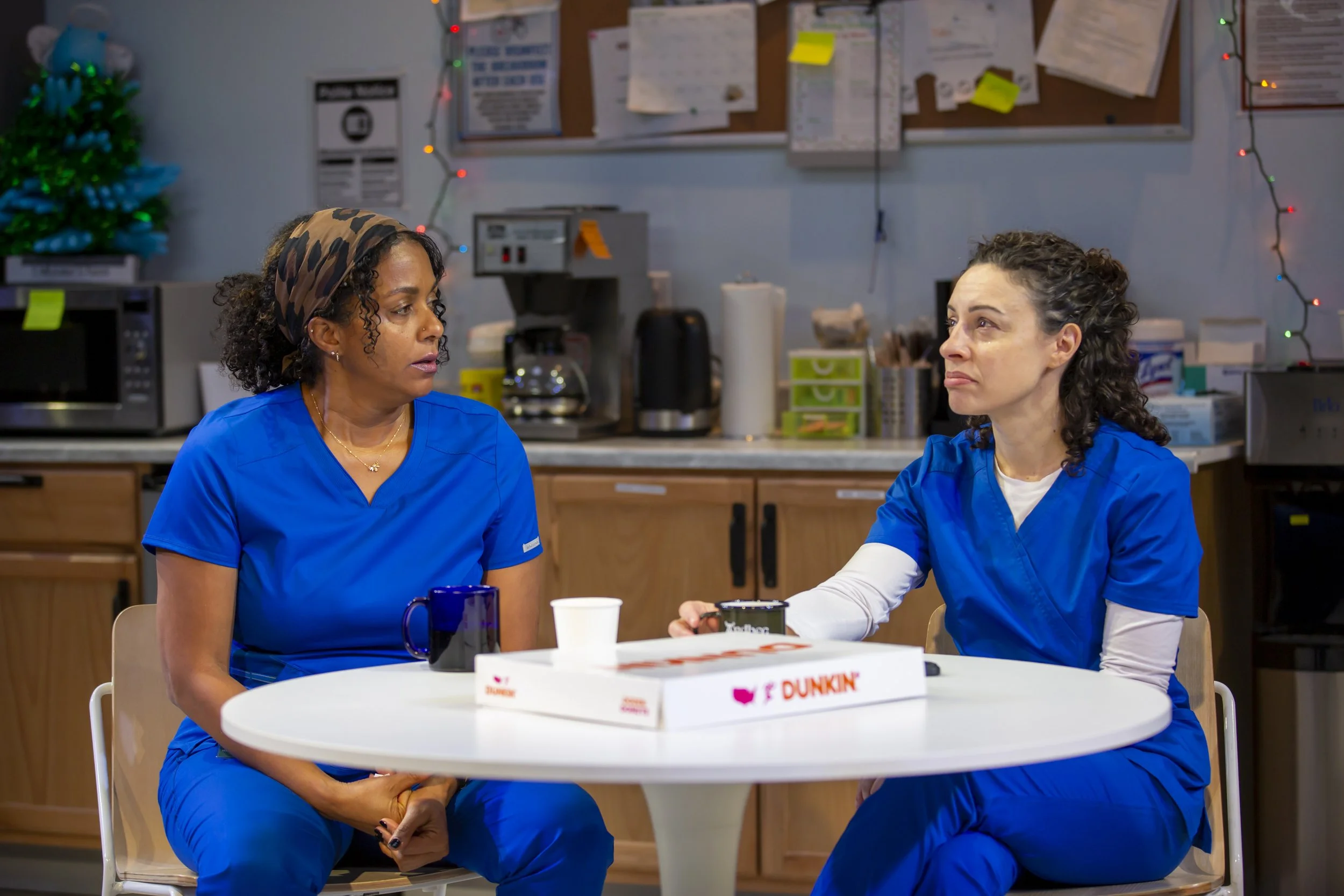
The emotional center of the play is Emilia, played with quiet generosity by Tricia Alexandro. Recently divorced and still reeling from the psychological toll of working through COVID—its brutal hours, emotional extremity, chronic understaffing, and the horrific moments where she was asked to play God: who gets the ventilator, and who doesn’t—Emilia represents the ethical ideal of nursing: compassion without pretense. Yet even she admits, in a moment of weary honesty, that Josephine’s presence compounds their stress, robbing them of the one space meant to offer respite from the ICU’s relentless intensity. The break room, like the profession itself, can no longer absorb the weight placed upon it.
Organ makes a daring structural choice by revealing the addict at the end of Act I. The disclosure does not resolve the tension; it deepens it. By removing the whodunit suspense early, the play redirects our attention from guilt to consequence. There is no rush to judgment. Instead, Organ’s sympathetic writing and the ensemble’s finely calibrated performances invite identification with the addict’s shame, regret, and futile attempts at self-regulation. In Act II, when confession still does not come, we understand why: the cost—professional, legal, existential—is unbearable. As Josephine nears her answers, the play grants us access to the claustrophobic interiority of someone who knows they are wrong yet sees no viable path toward redemption. It is the moral experience of being trapped in what Organ renders as the bottom of a well with no way to claw back up into daylight.
Despite its grave subject matter, Diversion is leavened with moments of sharp, necessary humor. The nurses’ banter, their irritations and fleeting solidarities, provide comic relief that never feels gratuitous. Instead, it reinforces the authenticity of their relationships, reminding us that laughter, too, is a survival strategy. The play’s topicality is unmistakable. It frames nurses as the unacknowledged heroes of contemporary healthcare—underestimated, undercompensated, and routinely exposed to trauma without adequate support. The opioid epidemic, here, is not an abstract social problem but an inevitable outcome of a healthcare system stretched to the breaking point.
One might imagine the play unfolding without an intermission, allowing the pressure to accumulate without release. Still, under Seth Barrish’s direction, the production is tightly controlled and emotionally lucid. Barrish guides the cast with a steady hand, ensuring that every revelation lands with maximum resonance rather than melodrama. All come together to support a cast that gives an utterly natural performance.
The production’s design elements are finely calibrated to the ensemble’s rigorously naturalistic style, working less to announce themselves than to insinuate the audience into the lived texture of the play’s world. Edward T. Morris’ photorealistic set does not merely suggest a hospital ICU break room; it reproduces its particular deadening specificity—the institutional blandness, the faint air of surveillance, the sense that this is a place meant to be passed through rather than inhabited. It is a space whose realism exerts a quiet pressure on the performers, encouraging behavior rather than display, and it is precisely this refusal of theatrical flourish that deepens the play’s emotional credibility. Solomon Weisbard’s lighting completes the illusion with equal restraint. There are no expressive washes or symbolic cues here, only the unforgiving fluorescence of a workplace that never truly sleeps. The lighting establishes a perpetual state of exposure, as though the characters are always on the verge of being observed, even in moments that are meant to offer respite. In this way, Weisbard subtly reinforces the play’s central anxiety: that privacy, like rest, has become a scarce commodity within institutional life.
Gina Ruiz’s costume design operates with similar intelligence. The nurses’ scrubs, worn and reworn, function almost as a second skin, emphasizing the erosion of individuality that accompanies both long shifts and moral exhaustion. Yet Ruiz is attentive to the expressive potential of deviation. Josephine, the investigator, is dressed with a crisp professionalism that signals authority and separation; she belongs to the hospital, but not to its intimate suffering. Most striking is the New Year’s Eve party dress Ruiz gives Mandy—a sudden eruption of color and aspiration that momentarily interrupts the visual monotony. The dress is less an adornment than a provocation, a reminder of youth, desire, and a life imagined beyond the break room’s narrow confines. Geoff Grimwald’s sound design quietly stitches the world together. The ambient hospital noises—distant alarms, muffled announcements, the low mechanical hum of an institution in constant motion—form an acoustic backdrop that is felt more than heard. These sounds underscore the inescapability of the ICU, even when the characters attempt to withdraw from it. Grimwald also provides subtle reinforcement for Seth Barrish’s incidental music, allowing it to emerge organically rather than assertively, another example of design in service to immersion rather than commentary. Together, these elements create a production environment that does not distract from the play’s moral inquiry but rather sustains it, enveloping the audience in a reality that feels uncomfortably, and tellingly, complete.
In Diversion, Organ has written a drama of uncommon moral clarity and compassion, one that refuses easy villains or redemptive endings. It is, at first glance, a workplace drama of almost disarming ordinariness, beginning in a register so quiet and unassuming that it risks being mistaken for mere scene-setting. The rhythms are familiar, even lulling: casual exchanges, small irritations, the procedural calm of people accustomed to functioning under pressure. Yet this deliberate modesty is the play’s first and most significant act of discipline. By refusing to announce its ambitions, it allows tension to accrue incrementally, almost imperceptibly, as the characters are nudged—then pressed—toward choices that grow steadily more dire.
What emerges is a drama that understands suspense not as a matter of shocks but of attrition. Each decision slightly narrows the range of moral possibility, each withheld confession deepens the sense of entrapment. The play’s power lies in its patience: it trusts the audience to register the accumulating weight of circumstance without the aid of melodramatic cues. In this sense, it is a model of theatrical restraint, rigorously controlled yet never inert. The quietness of its opening becomes, by the end, a source of unease, as we realize how thoroughly the ground has shifted beneath us. That the play remains consistently engrossing throughout—absorbing without ever resorting to excess—is less a paradox than a testament to its confidence in the slow, inexorable logic of human consequence. It asks us to consider what we owe those who spend their lives holding vigil over our most vulnerable moments.
Click here for tickets.
Review by Tony Marinelli.
Published by Theatre Beyond Broadway on January 10th, 2026. All rights reserved.
