
Dust of Egypt
Written by Karin Abarbanel Directed by Rhonda Passion Hansome
Produced by Emani Brielle Simpson, Presented by The Real Artists, LLC
The Sheen Center for Thougjht and Culture | 18 Bleecker Street, New York, NY 10012
March 6, 2026 - March 29, 2026

Publicity Photos: Rainer DeLalio
At the heart of every struggle lies truth, hope and boundless faith. Dust of Egypt by Karin Abarbanel questions the very meaning of struggle: do the lengths of our resilience in faith make it all worth the struggle? Heroine Sojourner Truth journeys to escape slavery and in doing so is left with the arduous and seemingly hopeless task of recovering her five year old son from the slave trade by way of a court of law.
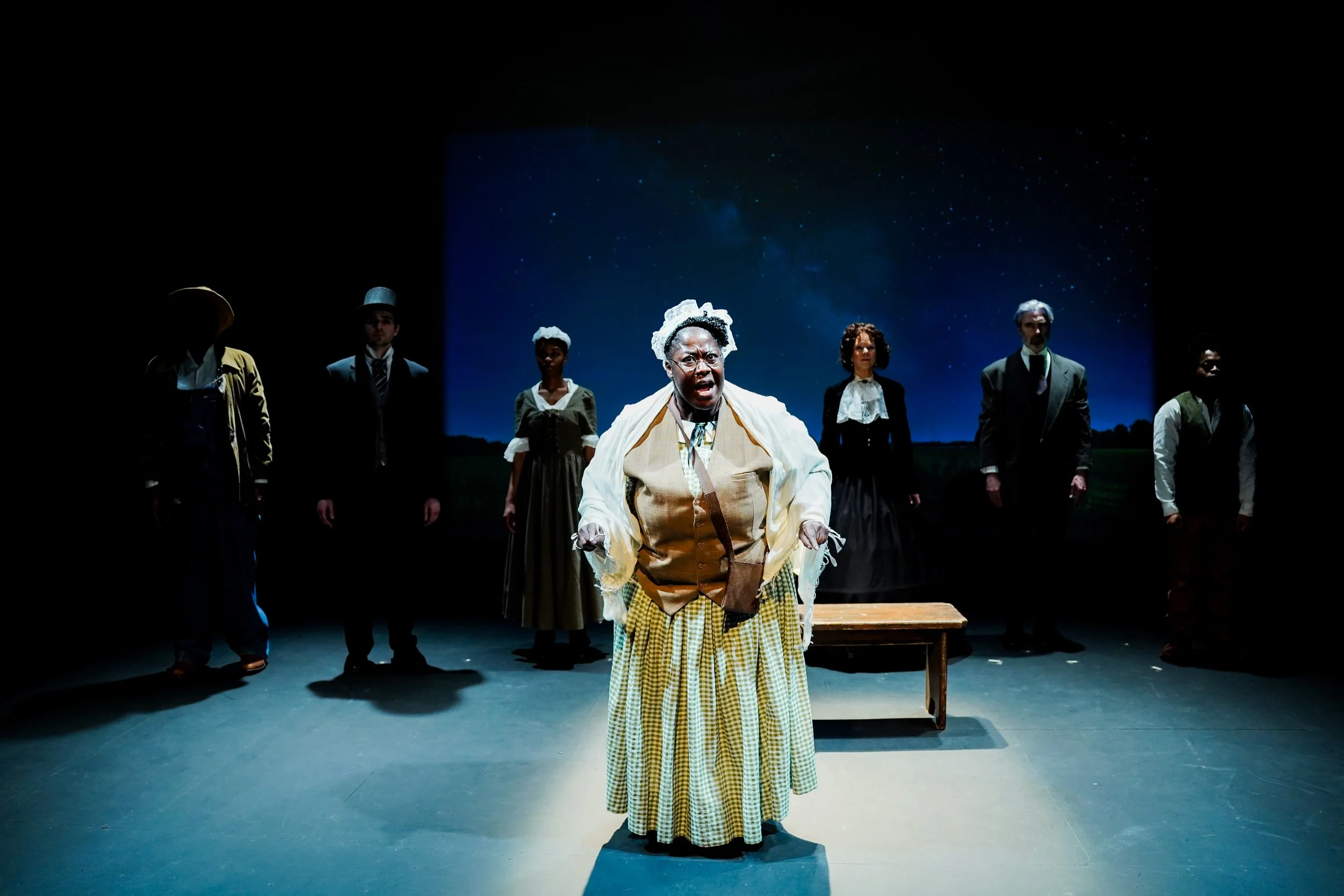
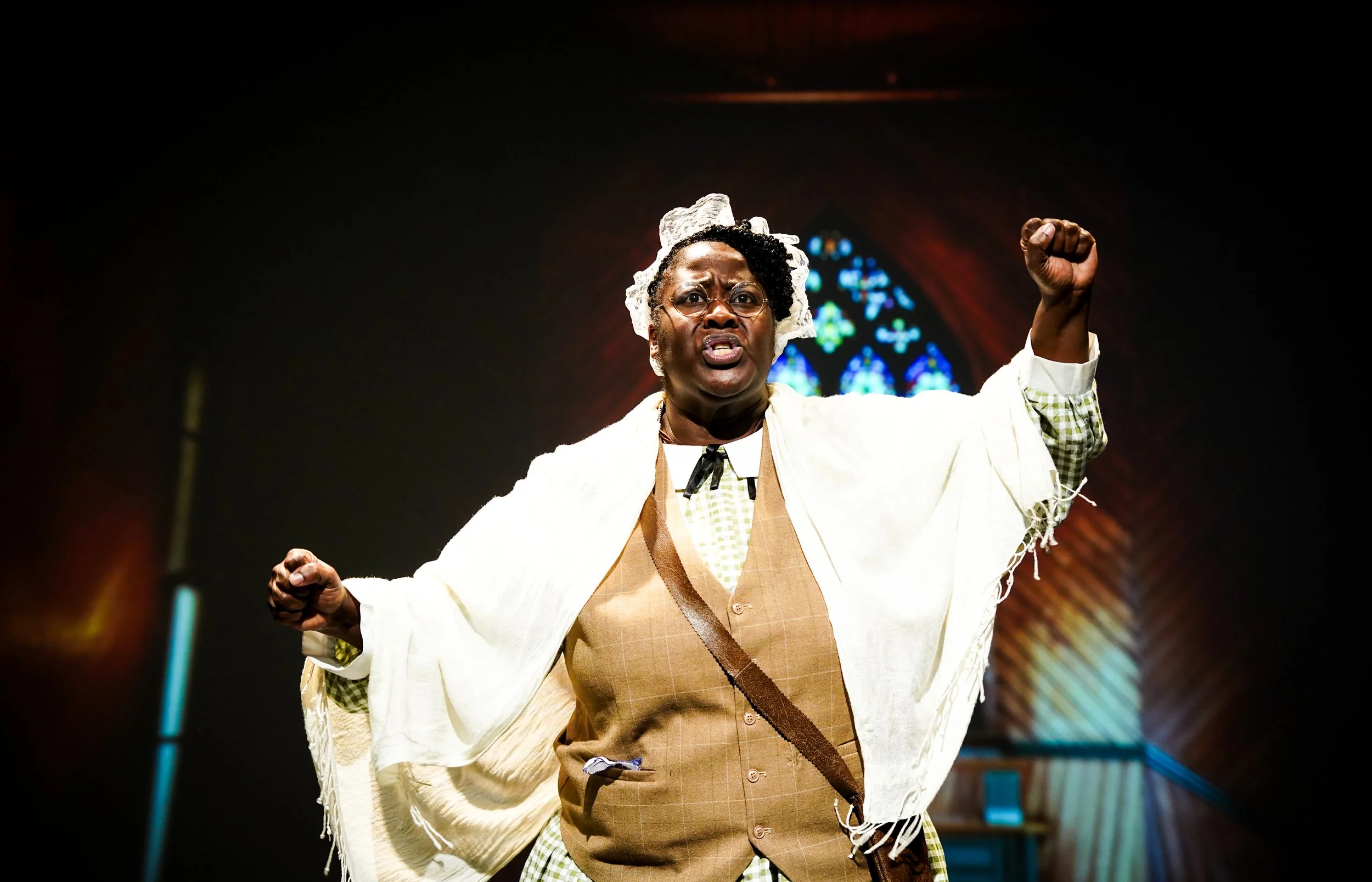
Standing gallantly at a podium, the strong powerful presence of Sojourner Truth, played by Desi Waters, penetrates the audience with her piercing eyes. Her will and fortitude command the energy of the theater before she utters her first word. She is our north star in navigating this horrific and dark time in American history that we must remember, face and admonish to those who dare exhaust hearing any trials or tribulations of the time. There are not enough movies, novels or books that could ever tire of sharing the resilient voices during the unspeakable horrors.
Director Rhonda Passion Hansome takes on the ever so noble task of directing the piece with a quiet cadence bursting with contextual subtext. Simple props, scenery and projections on a large screen behind the stage are enough to convey the magnitude of injustice. This is a play where no fancy mechanics, smoke screens, or lavish costuming would ever take place in the simple cruelty we humans are capable of. Sticks and stones break bones and words are everything. Even from a staging perspective, the characters have brief encounters with lasting impact, from a plantation owner’s wife in tears over the brutality inflicted on five year old Peter, Sojourner’s son, to watching implied lashings with the cracking of a whip.
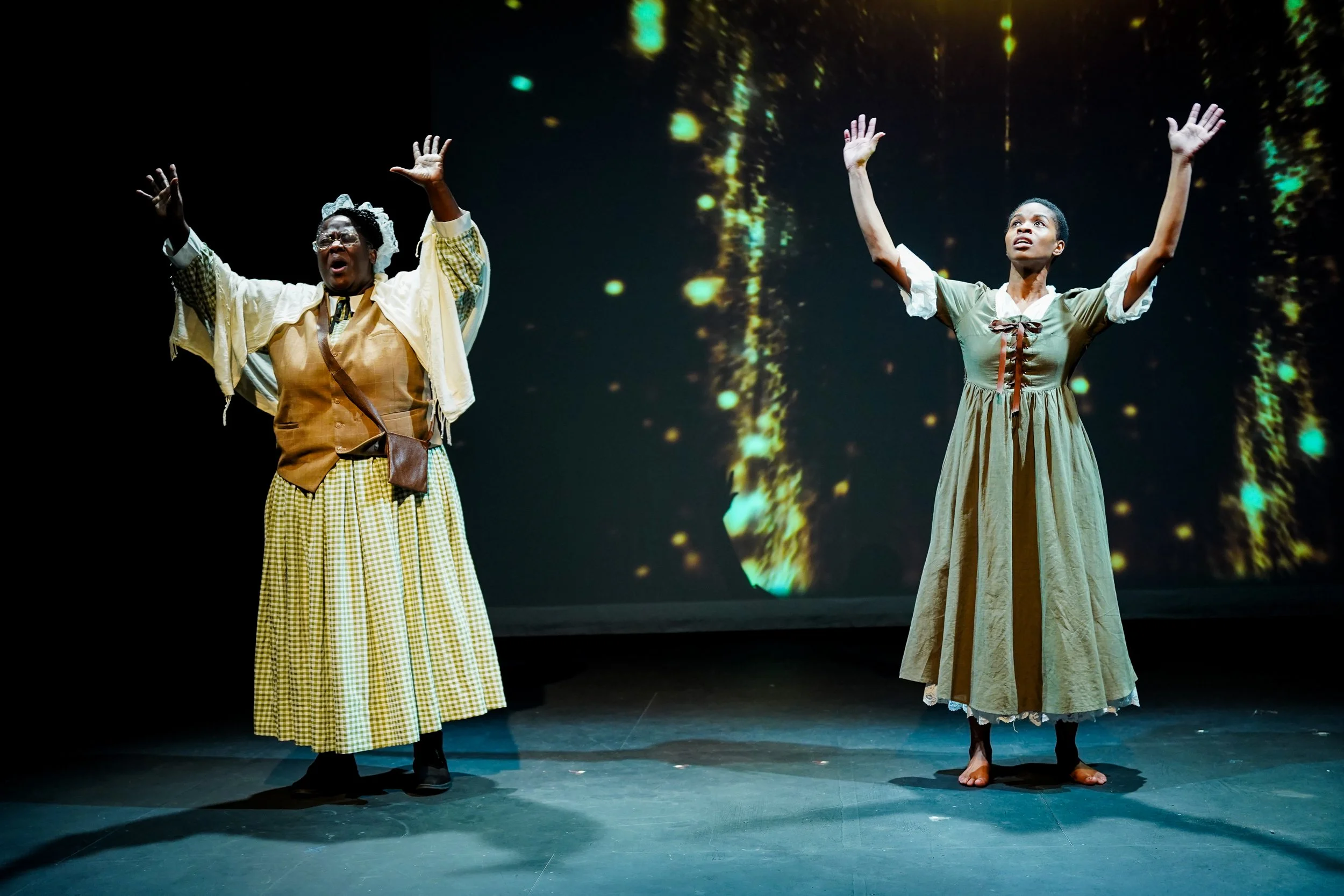
Sojourner Truth is played alongside the younger version of herself, Bell, played by Jade Cayne. Bell was Sojourner Truth’s former name. Watching Sojourner follow in the footsteps of her younger self allows for a pensiveness that probes at the core of human complexities. Seeing Sojourner off to a corner of the stage as Bell reenacts the past allows us to react and interpret along with her. There are even moments where they exchange lines simultaneously or after the other in a masterful way in which dialogue becomes their foundation. A beat is never missed. This heightens the complexities of youth versus wisdom in older age, paralleling each other. Knowing choices were made and having to relive her past as she continues into the future creates a stark contrast to how we once were, defining the very person we have become today.
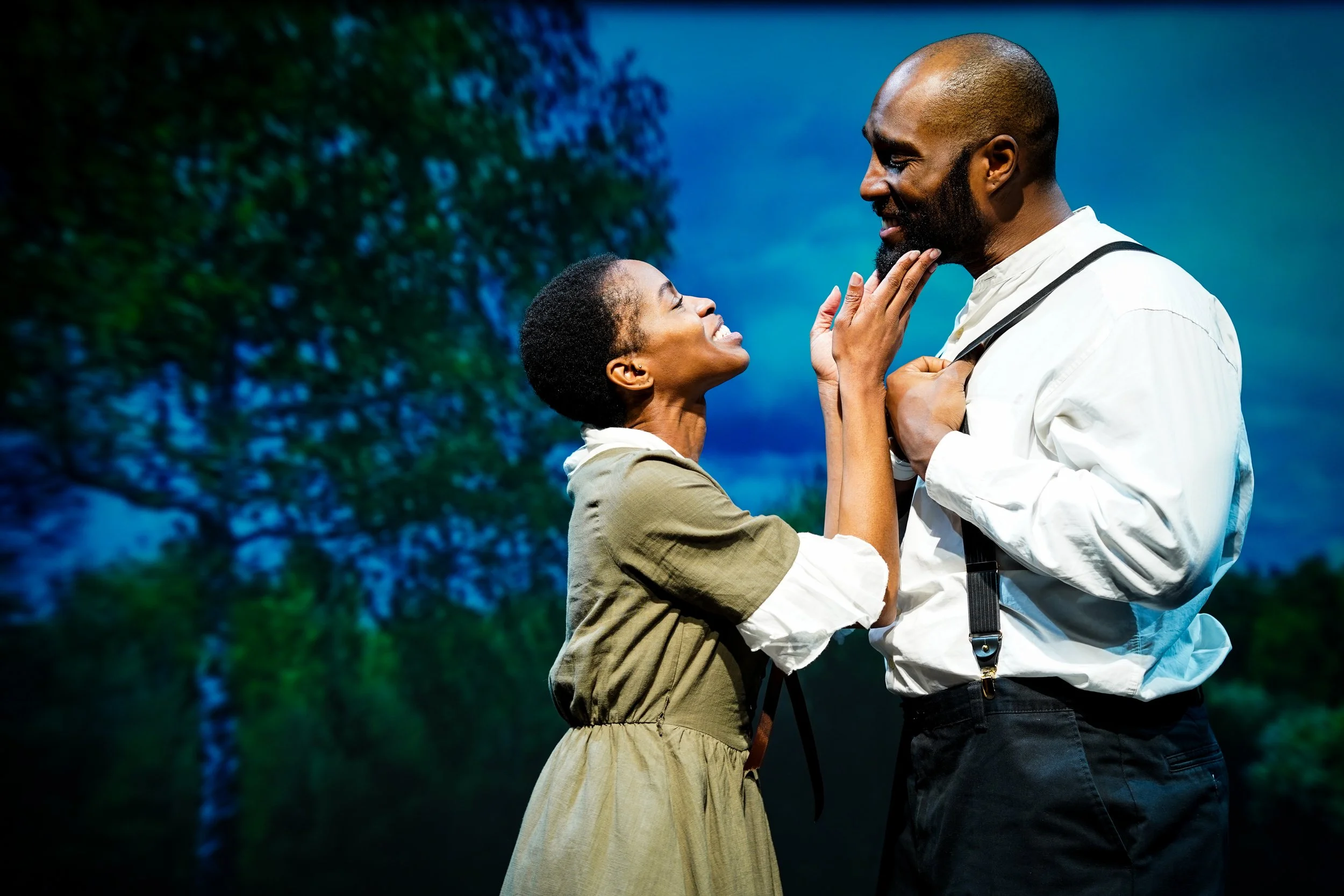
As the actors in the play switch roles seamlessly, it becomes an observation of how one particular actor uses his or her versatility to interpret a role. In some instances, such as Bell and her son Peter played by Eric Ruffin, the evolution of the characters happens before our very eyes. From portraying a child to watching the figure age and respond to the injustice of the environment. Even in gestures of physicality, particularly when a slave owner’s wife is mourning the loss of her daughter at the hands of her husband, who also whipped Peter beyond recognition, there is a tender touching of the face from Bell as the woman is delusional and imagining Bell as her daughter. Then we see her die in her arms and in that moment nothing else mattered but two mothers expressing loss and compassion.
The play circumnavigates Sojourner’s time as a young slave, her escape, and then using the law to recover her five year old son while becoming the first African American woman in history to defeat a white man in a court of law. Instead of ending the play on her victory, we are further led to how freedom sometimes masks itself as carnal oppression for those whose former trauma becomes too much to bear. “The rich rob the poor and the poor rob from each other,” hauntingly true words spoken by Sojourner in real life and in the play of the systemic injustice and inequalities that plague society then and painfully do so in modern times now.
Sojourner Truth was a woman ahead of her time. Her faith is the very fabric of principle that holds humanity together. In a very poignant ending, the characters all come out bearing dust from a pan, which is a metaphor for the play itself, Dust of Egypt. This is the moment where we visibly see how we all carry the shame of dust in our existence. No one is truly saved from the plague of vanity, fortune, fame, inferiority or injustice, as man cannot exist without these crutches.
Dust of Egypt may be the story of Sojourner Truth, but she is the very heartbeat that stands as a testament to the strength in being a woman. The play is an examination of how challenges are put on trial in corroboration of conviction of spirit. You can strip away everything but the soul, even if protected in the hollow shell of a former self.
Review by Bianca Lopez.
Published by Theatre Beyond Broadway on March 17th, 2026. All rights reserved.
