
THE AMAZING SEX LIFE OF RABBITS
Written and Directed by Michael Shaw Fisher
SoHo Playhouse | 15 Vandam Street, New York, NY 10013
March 2, 2026 - March 28, 2026
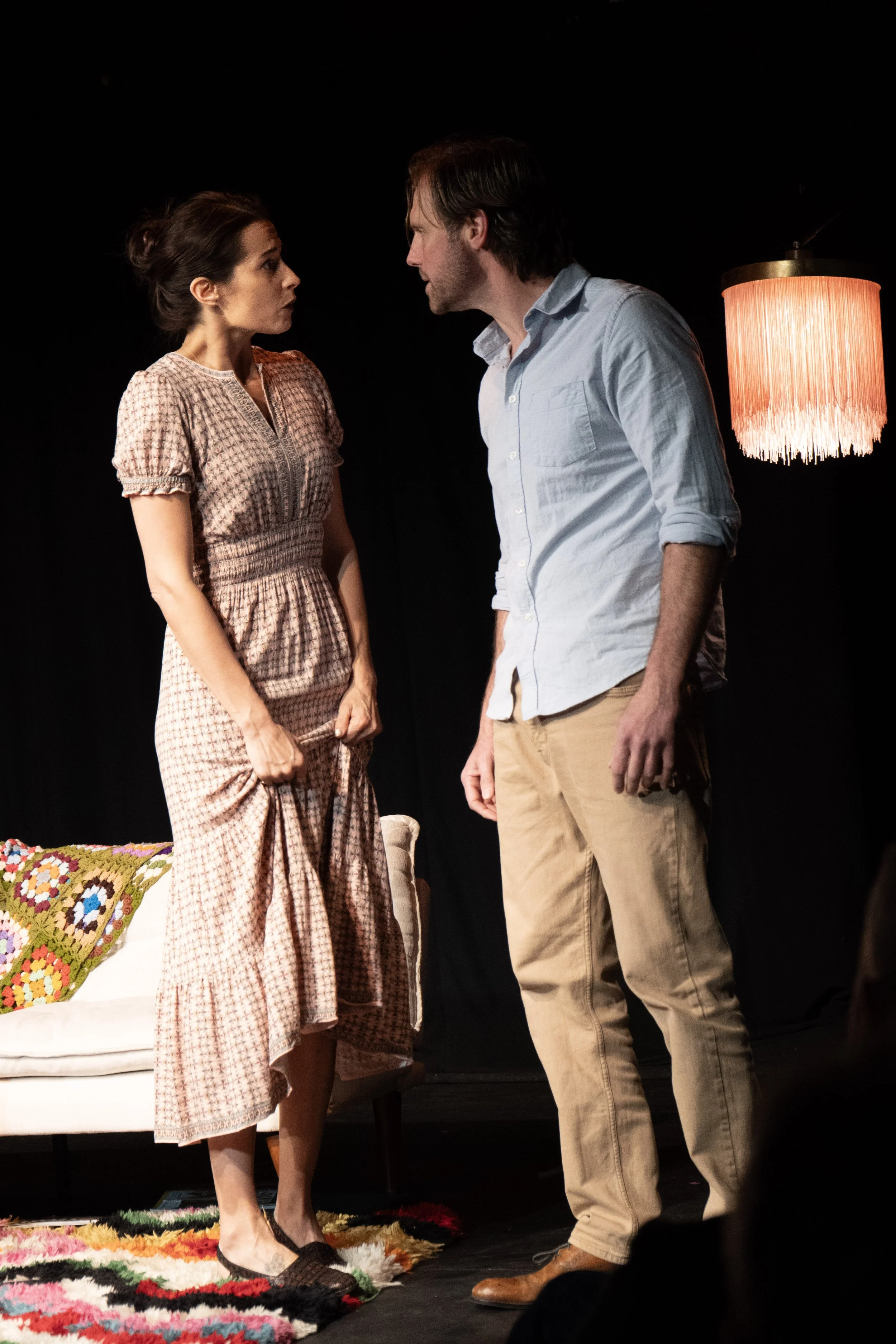
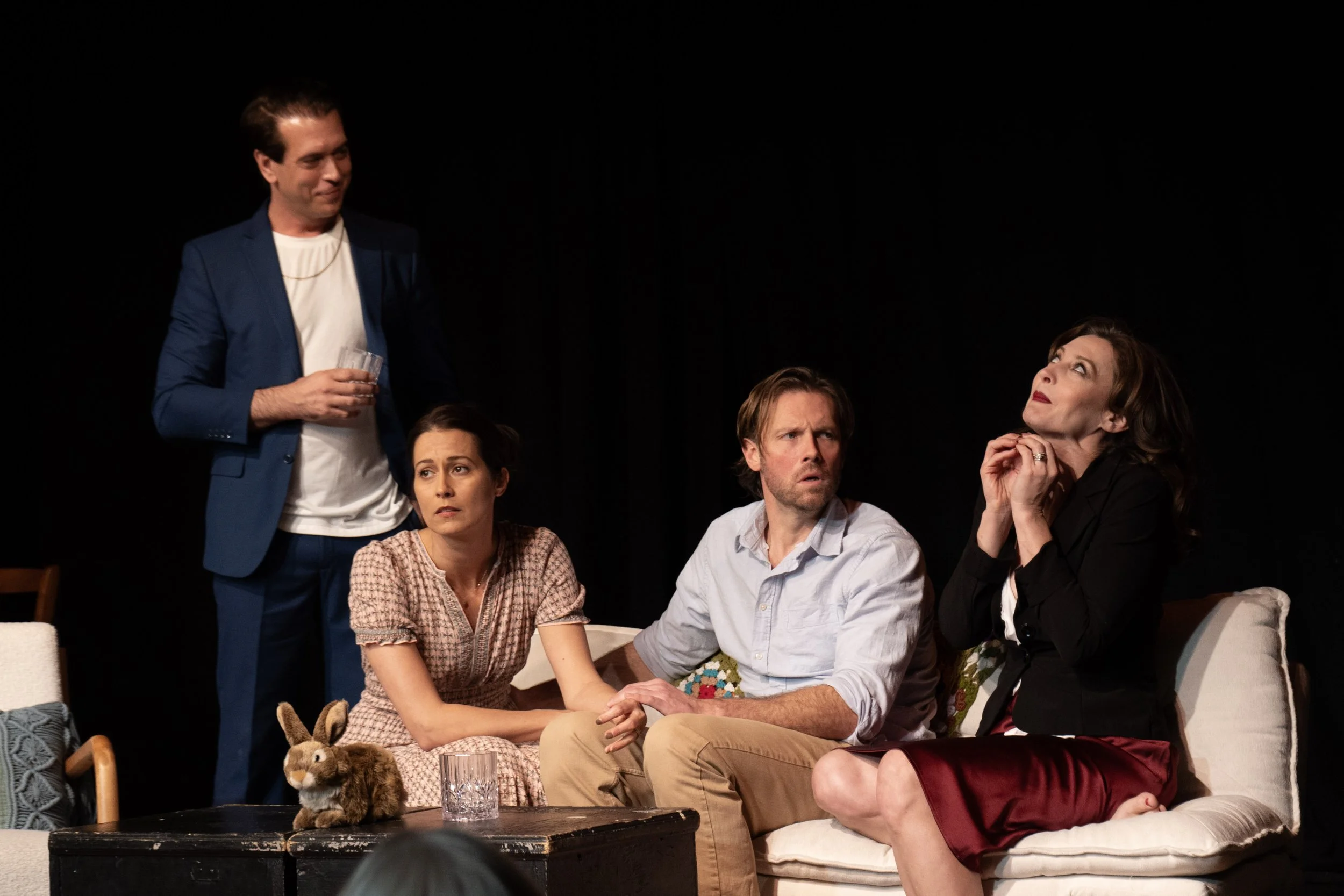
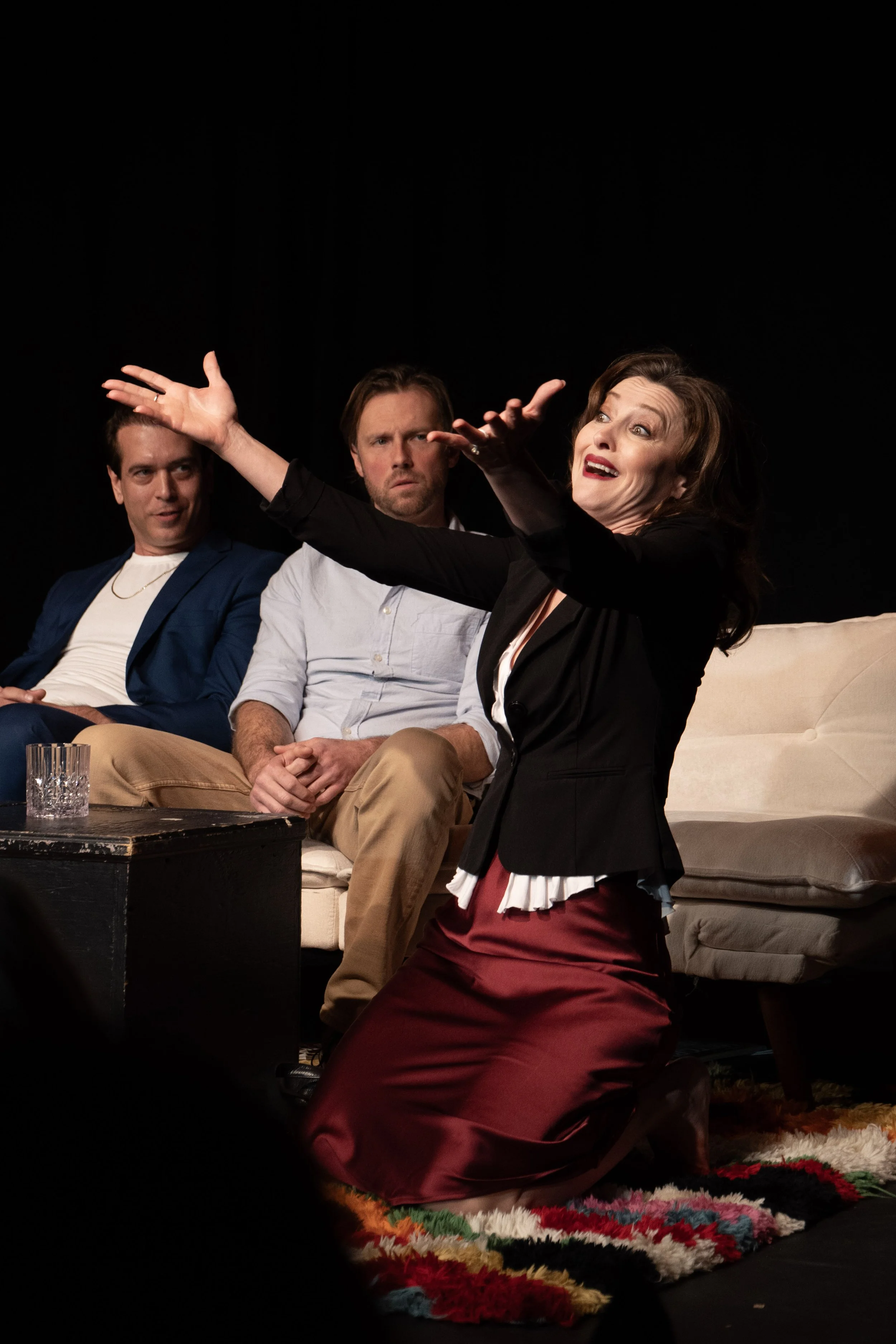
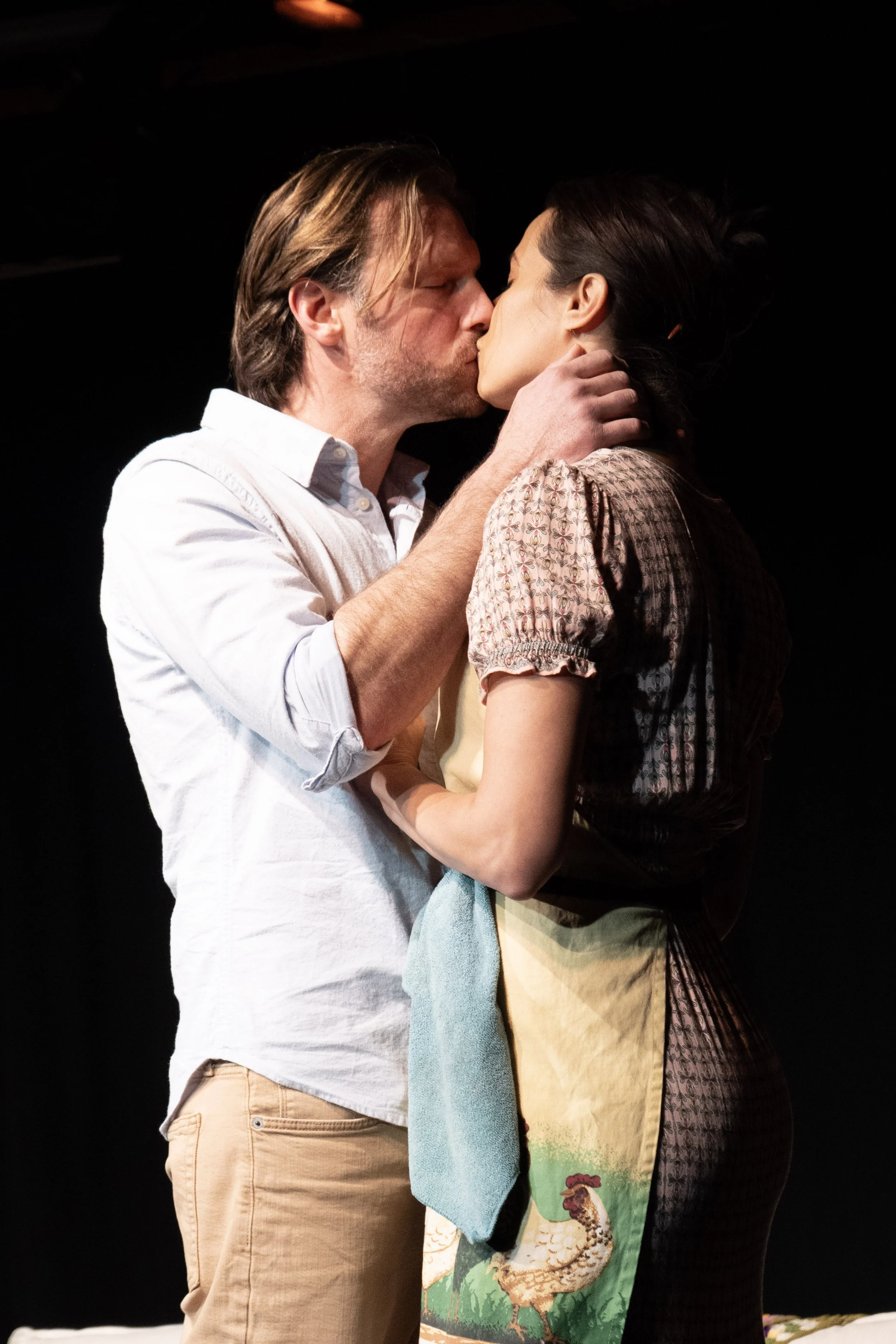
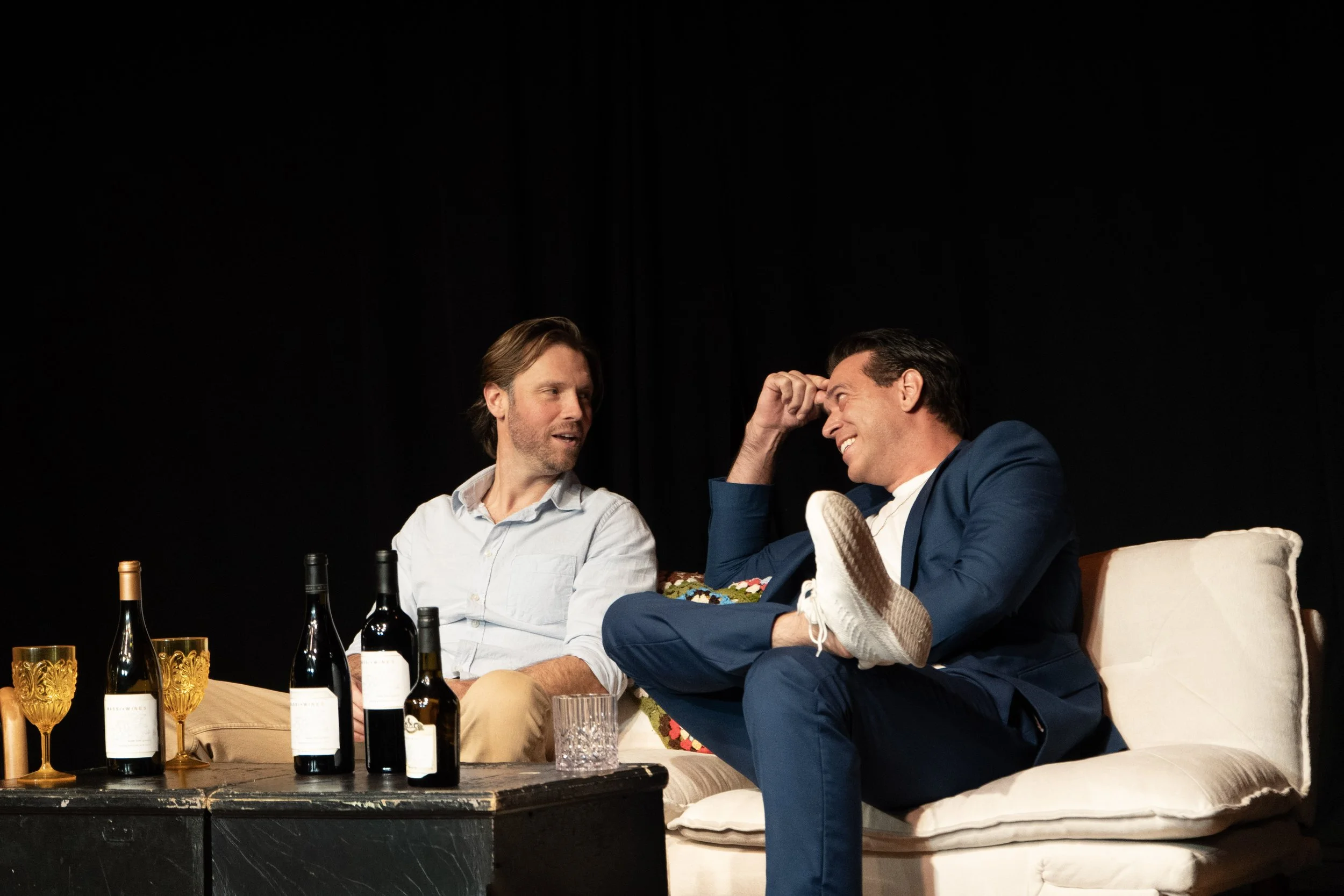
Photo credit by Molly Weinberg
Michael Shaw Fisher’s The Amazing Sex Life of Rabbits, which arrives Off-Broadway after a critically praised run at the Hollywood Fringe Festival, is the sort of gleefully impertinent theatrical contraption that seems engineered to make polite company squirm—and then laugh at itself for doing so. Presented as part of the SoHo Playhouse International Fringe Encore Series, the play wraps a bracingly adult premise in the sleek machinery of a high-velocity comedy of manners, one that delights in the way money, desire, and ego can turn even the most civilized dinner party into a gladiatorial arena.
Fisher’s setup is as simple as it is diabolically effective. When the “curtain rises”, Bobby—a perennially broke substitute English teacher played with a nervy, slightly rumpled charm by Schoen Hodges—is crouched beside a small, carefully curated stack of vinyl, flipping through it with the ceremonious deliberation of a man hoping music might accomplish what conversation cannot. He settles, with perhaps more optimism than judgment, on “Let's Get It On” by Marvin Gaye, a selection whose sultry groove drifts into the modest apartment like a mischievous suggestion. His wife Elise—played by Leigh Wulff with a quicksilver blend of anxiety and exasperation—reacts as though he has just lit a firecracker in the middle of the living room. To her, the choice is not merely questionable but catastrophically ill-judged. What, exactly, does Bobby imagine he is signaling? Romance? Nostalgia? Some ill-advised provocation? The question hangs in the air as the record spins, its velvet insistence only heightening Elise’s suspicion that her husband is, intentionally or not, setting a very particular kind of mood.
And for whom, exactly? The evening’s guests have not yet arrived, but their presence already looms over the room: Danielle, Bobby’s formidable ex-wife—played by Rebecca Larsen, a seductive woman warrior, what another era would have called a sexpot—and her current husband Carson, Richardson Cisneros-Jones, a fitness guru whose staggering wealth has elevated him into a kind of glossy, motivational demi-god. The gathering, meant to be civil if not exactly comfortable, has all the makings of a social experiment conducted under pressure. In this context, Bobby’s musical choice feels less like ambience and more like the opening move in a game whose rules no one has fully agreed upon.
Thus the play begins not with a bang but with a needle drop—a sly, faintly dangerous overture that immediately establishes the evening’s central tension: the fragile choreography of class, intimacy, and lingering romantic history, all unfolding to the unmistakable rhythms of Marvin Gaye. The true down and dirty: the two couples convene for what is meant to be an awkward but manageable reunion, courtesy of the two women being Facebook friends. Bobby and Elise are hosting with the slightly rumpled energy of people who have been making do: their lives, like their modest apartment and its collegiate futon, bear the marks of financial compromise. Across the table sit Danielle—Bobby’s ex-wife, yes, but now a confident and successful sex therapist, with a book and a TV show—and her new husband Carson, a near-billionaire who radiates the serene arrogance of someone accustomed to getting precisely what he wants.
What begins as small talk soon detonates into something far more combustible. Danielle and Carson unveil a proposal that is as shocking as it is coolly transactional: twenty million dollars, offered to Bobby and Elise, if Bobby agrees to impregnate Danielle while Carson observes. As Carson is quick to point out, it works out to a dime for every able-bodied sperm Bobby can come up with. The effect is instantaneous. The dinner table becomes a battlefield where class resentment, erotic curiosity, wounded pride, and moral calculation all compete for dominance.
Fisher stages the resulting psychological melee with a relish that borders on operatic. The dialogue crackles with weaponized wit and the evening devolves into a delirious contest of power plays, sexual brinkmanship, and philosophical brinkmanship about what intimacy is worth when it is assigned a dollar figure. The play moves with the headlong energy of farce, yet it never loses sight of the queasy questions lurking beneath its laughter.
The ensemble proves more than equal to Fisher’s tonal acrobatics. The actors display an almost musical sense of comic timing, each escalation landing with the crisp precision of a well-struck cymbal. Particularly memorable is Cisneros-Jones as Carson, whose magnificently inflated ego powers the evening like a comic engine. Cisneros-Jones plays the billionaire with an earned sexy confidence—equal parts charm and casual douchebaggery—that keeps the audience oscillating between disbelief and delight. He is the classic Uomo Vogue and GQ cover to Bobby’s close-outs pages of Land’s End and Popeye suggestions. It is a performance that understands the character’s absurdity without ever softening his dangerous magnetism.
The play knowingly situates itself in a lineage of marital combat comedies, inviting comparisons to the lacerating domestic sparring matches of Who’s Afraid of Virginia Woolf? Fisher’s version, however, is unmistakably twenty-first century: a class war fought not with empty liquor bottles but with venture-capital audacity and the monetization of the most intimate human impulses, set in an apartment way too cozy to be the witness to the orgy-debaclewe are witness to.
If the characters occasionally flirt with caricature, the exaggeration feels intentional, part of the play’s satirical design. Fisher isn’t interested in psychological realism so much as in turning human appetites—financial and sexual alike—into theatrical spectacle. The outrageous premise becomes, paradoxically, the engine of the evening’s engagement. No one escapes the room unscathed, least of all the audience, which finds itself laughing at situations that feel both preposterous and uncomfortably plausible.
The title proves more than a cheeky provocation. A literal stuffed rabbit, this after a pre-show of what can only be described as a Mutual of Omaha’s Wild Kingdom take on home movies of the cutest bunnies you will ever see in your life, clutched by Elise becomes an oddly poignant emblem amid the chaos, while the play’s climactic frenzy suggests the manic fertility of its namesake creatures. Rabbits, after all, are famously prolific—and, as Fisher mischievously reminds us, rather unabashed exhibitionists. In that sense, the play proposes a sly contrast: the uncomplicated directness of animal instinct set against the labyrinthine motives of human greed.
The production’s visual world, modest yet slyly expressive, feels as if it has been assembled out of the accumulated evidence of two very different tax brackets. The set by Mia Criss presents Bobby and Elise’s apartment as a place of earnest improvisation: a humble living space anchored by the unmistakable emblem of extended adolescence—a collegiate futon—whose presence suggests both financial limitation and a stubborn refusal to surrender entirely to adulthood’s more expensive expectations. The room feels genuinely inhabited, the sort of environment where objects linger not because they are fashionable but because replacing them would require a budget that simply does not exist.
Costume designer Alli Miller-Fisher cleverly deepens this quiet socioeconomic contrast. Bobby and Elise appear in garments that seem to have survived several seasons of optimistic browsing at Nordstrom Rack—the kind of clothing that once promised polish but now carries the faint, weary patina of hard use. Their guests, by contrast, glide into the room wrapped in fabrics that signal effortless prosperity, the difference registering instantly, even before a word is spoken.
Hovering above it all is the nimble lighting design by Charlie Kilgore, which proves unexpectedly versatile. With a few subtle shifts, Kilgore transforms the same domestic glow that illuminates the dinner table into something altogether more suggestive—an impromptu cinematic wash capable of accommodating the evening’s increasingly risqué detours. Together, these elements conspire to create a production design that feels comfortably lived-in yet theatrically alert, a space elastic enough to contain both polite social ritual and the far more chaotic blue-movie impulses that soon erupt within it.
Even the play’s ending, which resists tidy resolution, feels less like a loose thread than an open door. Fisher seems less interested in delivering moral closure than in leaving us with the tantalizing possibility that the story might spiral further into its deliciously perverse logic. What results is a theatrical ride that feels both scandalous and strangely buoyant. The Amazing Sex Life of Rabbits is unapologetically raunchy, gleefully confrontational, and frequently hilarious—a headlong plunge down a rabbit hole where money, lust, and ego collide with uproarious consequences. And like any good plunge, it leaves you slightly dizzy, faintly shocked, and very glad you went.
Click HERE for tickets.
Review by Tony Marinelli.
Published by Theatre Beyond Broadway on March 10th, 2026. All rights reserved.
