faggy faafi Cairo boy
Presented by HERE and National Queer Theater
A production in the Criminal Queerness Festival 2026
Written by Bazeed, Directed by Shadi Ghaheri
HERE Arts Center, 145 Avenue of the Americas, in Manhattan
June 17, 2026- June 20, 2026
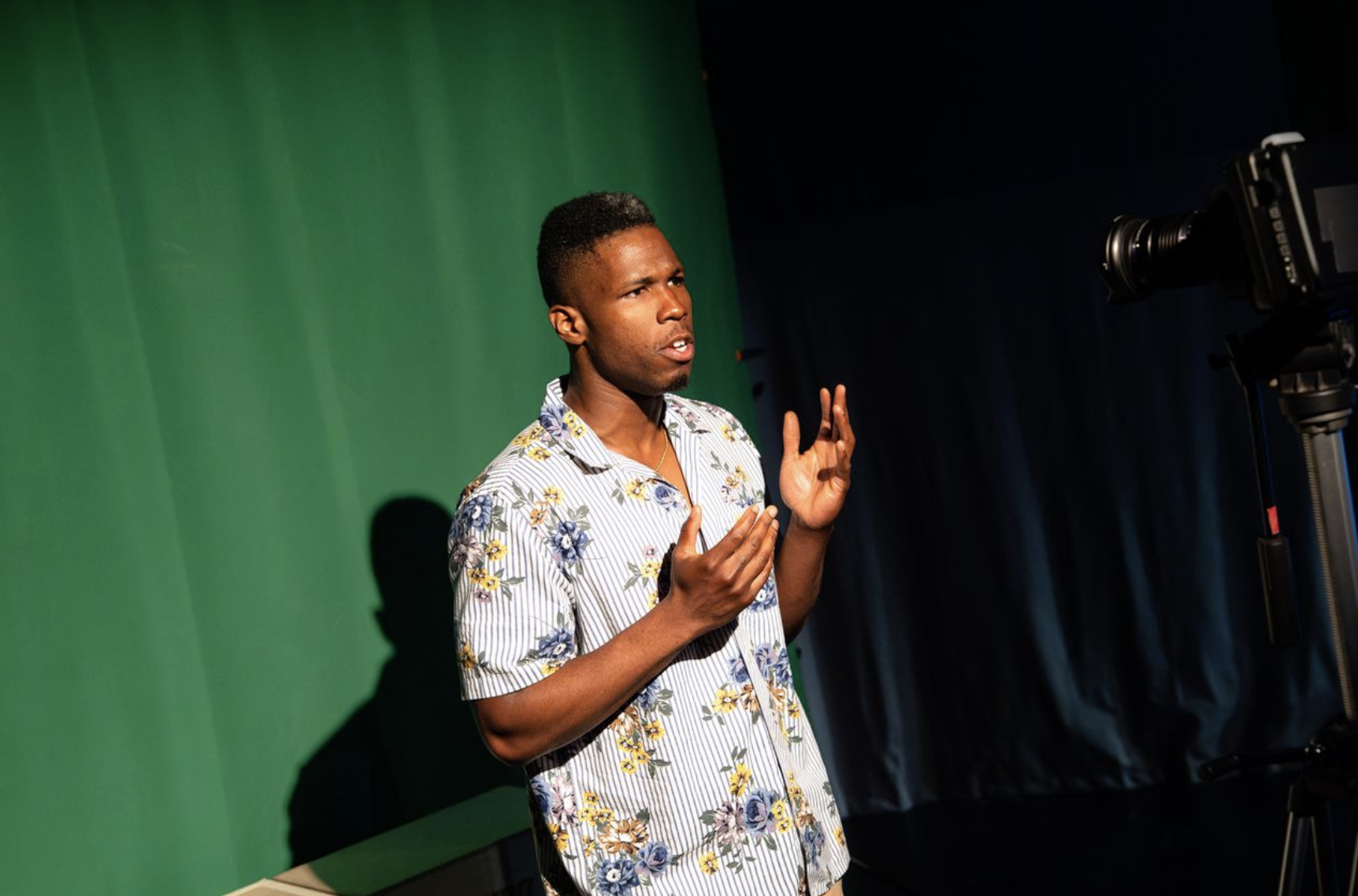
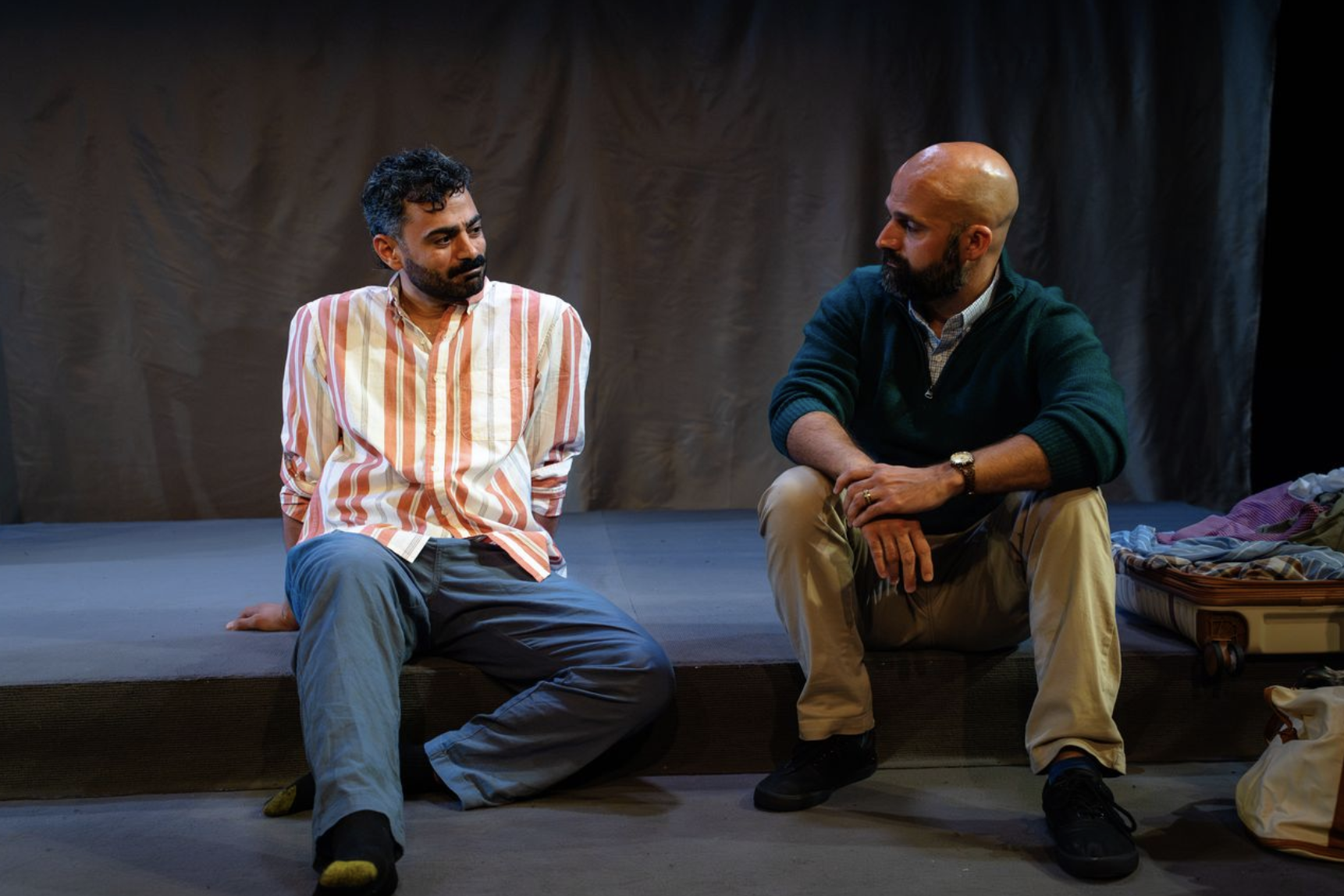
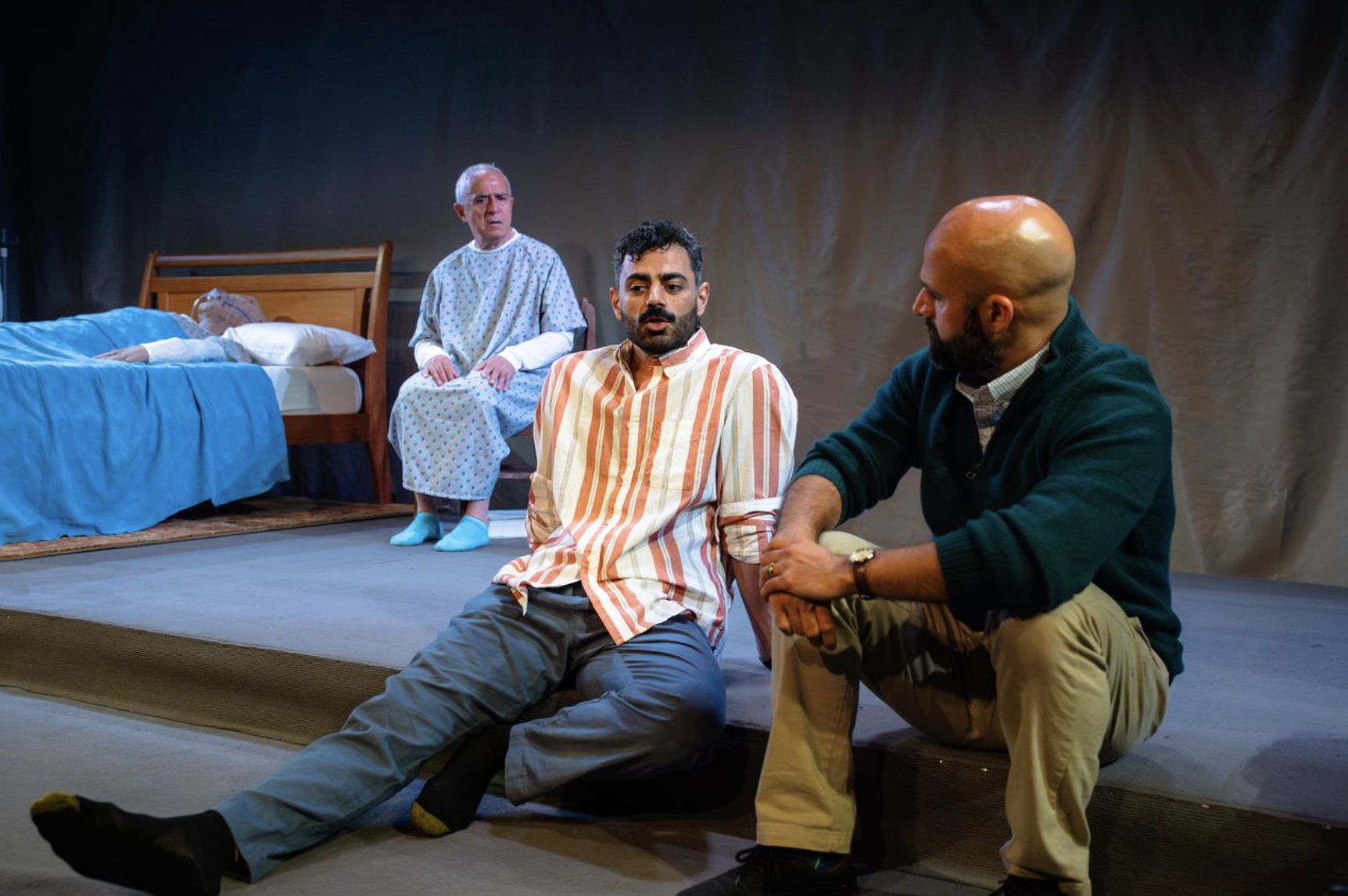
There is a moment before faggy faafi Cairo boy even begins when the theater quietly announces its intentions. Sherine, dubbed “The Voice of Egypt”, pours through the speakers with infectious confidence, bathing the room in equal parts nostalgia and swagger, before Jae W. B., already inhabiting the gloriously irreverent Angel G., delivers a pre-show welcome that dissolves the usual barrier between audience and stage. It is playful without being precious, inviting without sacrificing mystery. By the time the lights shift, playwright Bazeed and director Shadi Ghaheri have established that this will not merely be a story about grief or queerness or faith, but about the peculiar alchemy through which laughter becomes the only language capable of carrying unbearable sorrow.
At the center of that alchemy stands George Shakkour, whose performance as Mo is nothing short of heartbreaking. Rarely does an actor reveal so much while appearing to conceal everything. Shakkour's Mo has spent a lifetime translating himself between cultures, between languages, between versions of masculinity, between the son his father hoped to raise and the man he has become. When Mo returns from New York to Cairo to sit beside the hospital bed of his dying father, Baba, he is not simply traveling across continents; he is crossing decades of fear, shame, longing, and unfinished love. Shakkour never asks for sympathy. Instead, with astonishing emotional precision, he allows us to watch a man trying to remain composed while every carefully constructed defense begins to fracture. A devastating monologue set amid a remembered sugarcane field is performed with such aching restraint that the silence surrounding it becomes as eloquent as the words themselves.
Bazeed's script possesses the rare confidence to embrace contradiction rather than resolve it. Mo must simultaneously hold space for Jacob, the American fiancé who represents the life he has built, and for Yasser, the closeted childhood love who embodies the life that might have been. Around these relationships orbit larger questions of religion, exile, family obligation, chosen kinship, and survival. Yet the play never reduces these ideas to thesis statements. Instead, they emerge naturally through conversations that are funny, bruising, flirtatious, philosophical, and unexpectedly tender. One leaves with the sense that identity is not something inherited or declared but continually negotiated.
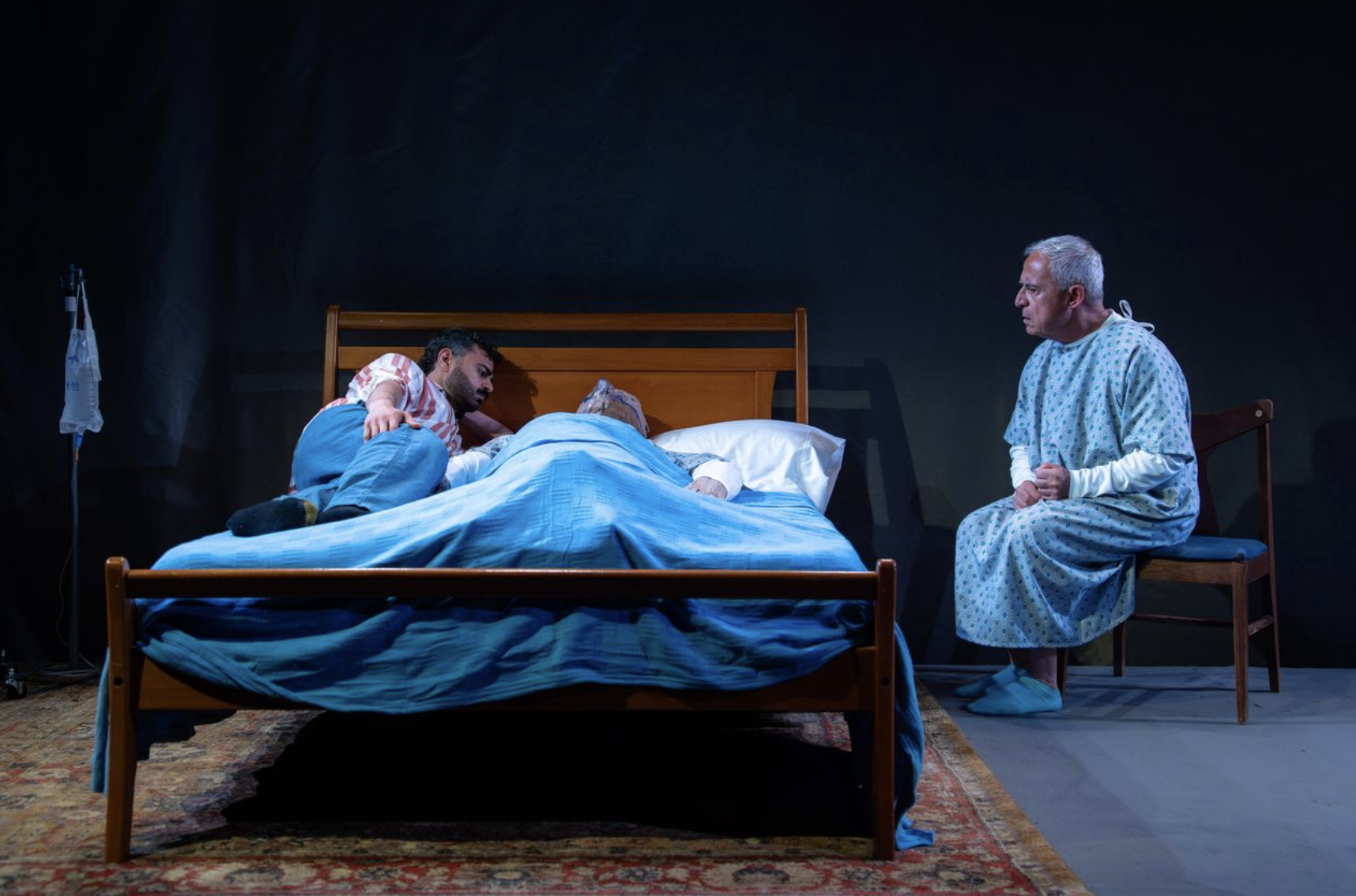
The play's most inspired theatrical invention is its vision of Baba's liminal existence. Anton Obeid portrays the dying patriarch as a consciousness separated from his inert body, capable of witnessing his family's anguish while unable to intervene. His only companion is Angel G., a glamorized celestial guide who escorts him toward death with sarcasm, compassion, and a wardrobe worthy of paradise. Jae W. B. delivers Bazeed's heightened language with dazzling musicality, finding both camp exuberance and genuine spiritual grace in verse that often approaches exquisite lyricism. The angel is wonderfully funny without ever becoming merely comic, functioning instead as the evening's moral provocateur, asking the questions everyone else is too frightened to voice.
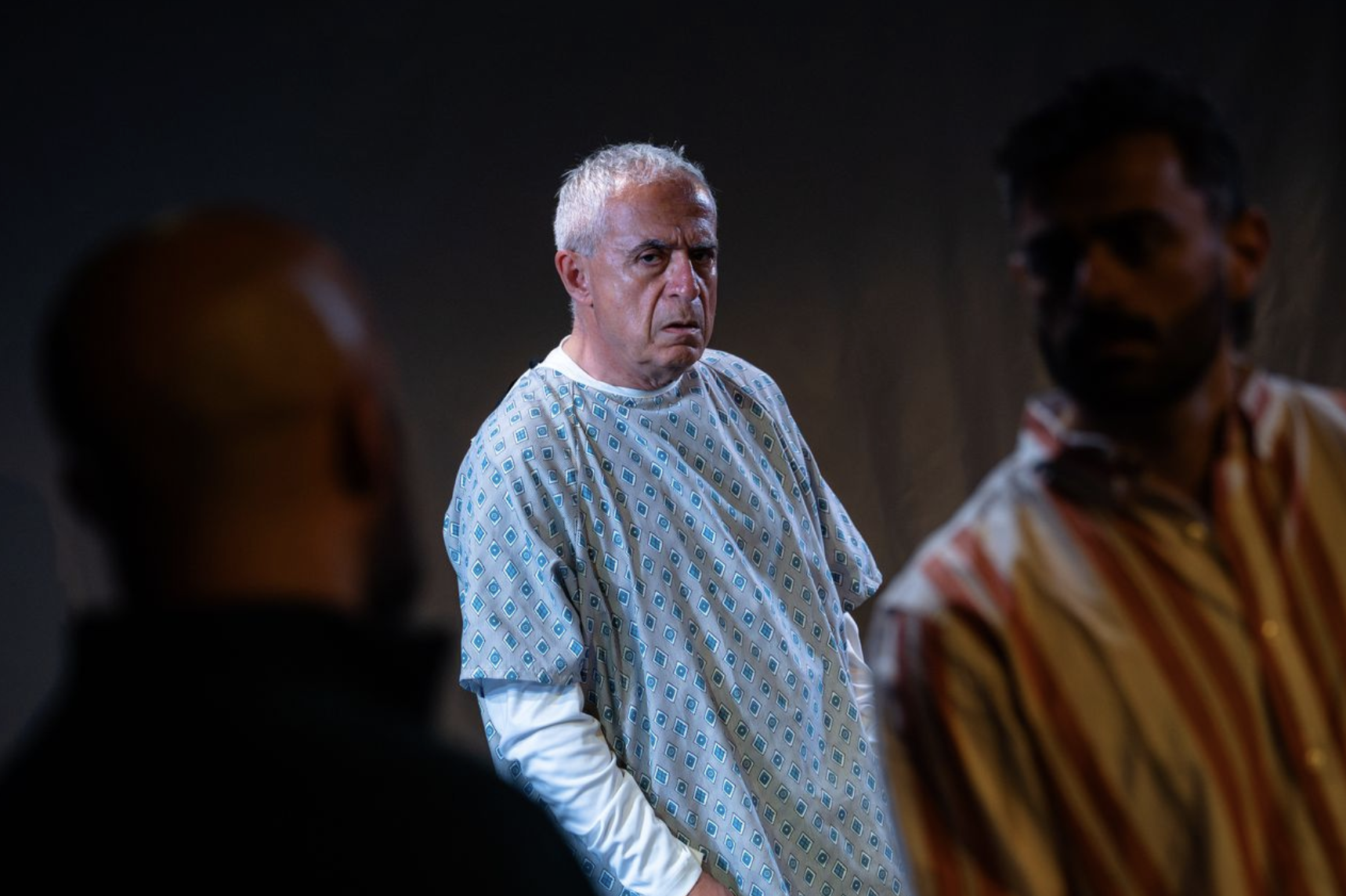
The supporting performances deepen the play's emotional architecture at every turn. Obeid refuses to soften Baba's prejudices while uncovering the frightened humanity beneath them, revealing a father whose love has been distorted by doctrine rather than extinguished by hatred. Hassan Nazari-Robati gives Yasser an almost unbearable sadness, embodying the psychic violence of internalized homophobia until the character becomes a tragic reflection of Baba himself—another man imprisoned by fear masquerading as certainty. Jakeem Powell lends Jacob extraordinary warmth, intelligence, and patience, creating a romantic partner whose steadfast devotion never slips into sentimentality. Together, these performances illuminate the different forms love assumes when forced to survive impossible circumstances.
The production's visual language is equally ambitious. Gavin Strawnato employs projections and live-feed video generated from an onstage green-screen studio, allowing text messages, memories, and imagined realities to coexist within the same theatrical frame. While the mechanics of the live-feed occasionally become more conspicuous than necessary, drawing attention away from the actors' remarkable work, the production's larger visual imagination remains deeply compelling. Particularly striking are the projections referencing the Queen Boat arrests, which quietly situate Mo's private anguish within the broader history of queer persecution and resistance in Egypt. Forest Entsminger's scenic design achieves moments of startling lyricism, while Maryam Sweirki's luminous lighting transforms recollection into something almost sacred whenever it is allowed to breathe free of technological demands.
Jeremy Kadetsky's sound design understands that place can be created through rhythm as much as scenery. Arabic pop, queer club music, and atmospheric underscoring intermingle with uncommon elegance, creating a sonic landscape that feels authentically contemporary without surrendering to cliché. Jasmine Canjura costumes Angel G. with gleeful extravagance, clothing divine judgment in fabulous irreverence. Ghaheri directs with remarkable assurance, navigating rapid tonal shifts that carry the audience from outrageous comedy to devastating confession without ever sacrificing emotional truth. Even structurally adventurous passages—in which conversations overlap across time and space—reflect a playwright determined to dramatize the chaotic simultaneity of memory itself.
What makes faggy faafi Cairo boy so affecting is its refusal to offer false consolation. No miraculous reconciliation arrives to erase decades of pain. No theological revelation untangles every contradiction. Instead, Bazeed leaves his characters suspended in the complicated gray spaces where forgiveness, if it exists at all, must be earned rather than bestowed. It is a play that argues for compassion without demanding certainty, for love without conditions of perfection, and for comedy as both resistance and survival. At its radiant center is Shakkour, whose extraordinary performance gives flesh to every paradox the play explores. His Mo carries the unbearable weight of divided identities with such profound vulnerability that, by the final moments, one has the overwhelming sensation of witnessing not merely a superb piece of acting but an act of emotional generosity. It is the kind of performance that lingers long after the applause has faded, quietly reshaping one's understanding of what the theater can ask of both its actors and its audience.
Click HERE for tickets.
Review by Tony Marinelli.
Published by Theatre Beyond Broadway on July 2, 2026. All rights reserved.
