Marilyn Exposed
Written and Produced by Cornell Christianson; Music and Lyrics by Norman Thalheimer and Beth Lawrence
Actors Temple Theatre | 339 West 47th Street New York, NY 10036
June 8th - December 28th, 2026
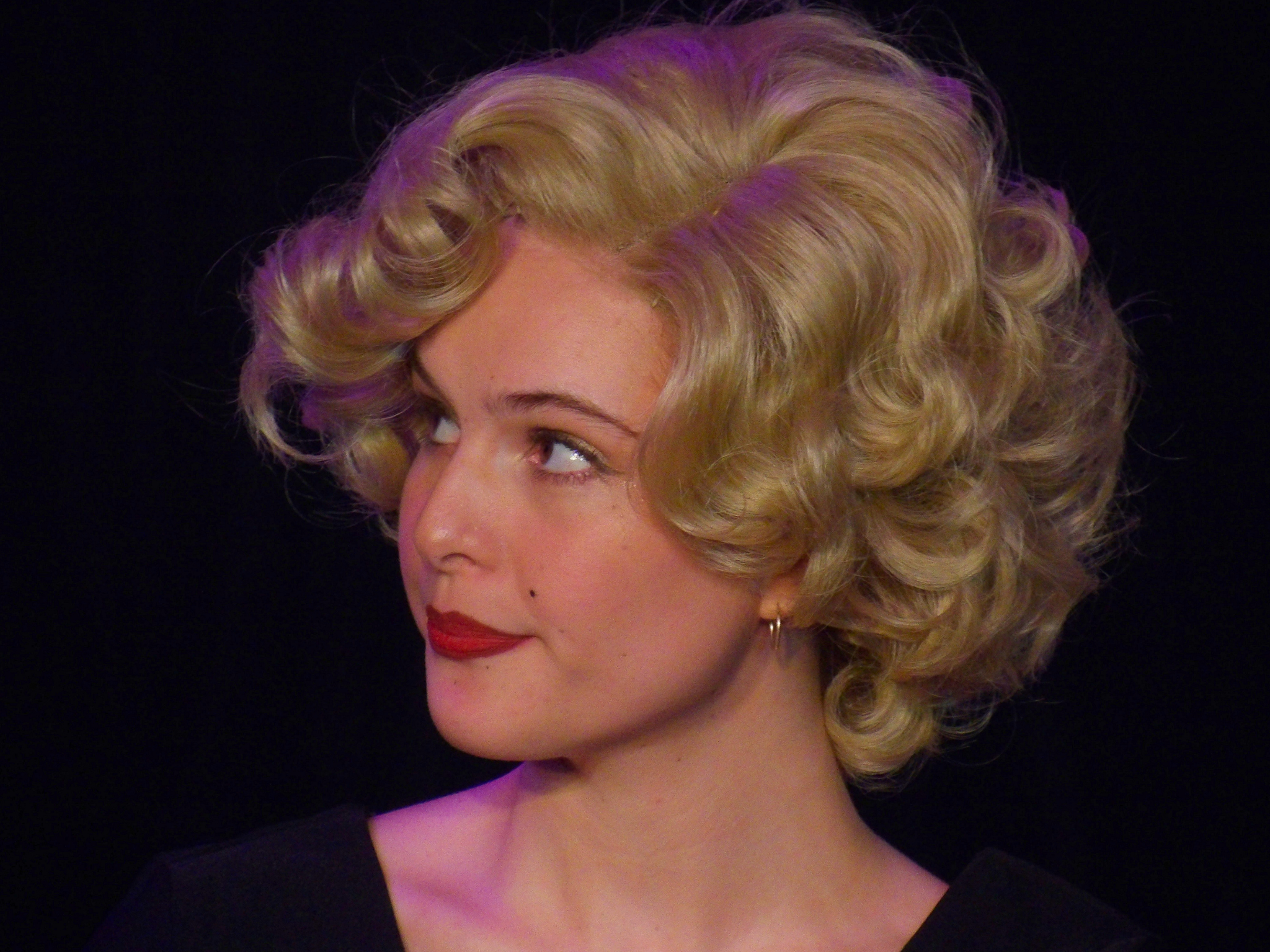
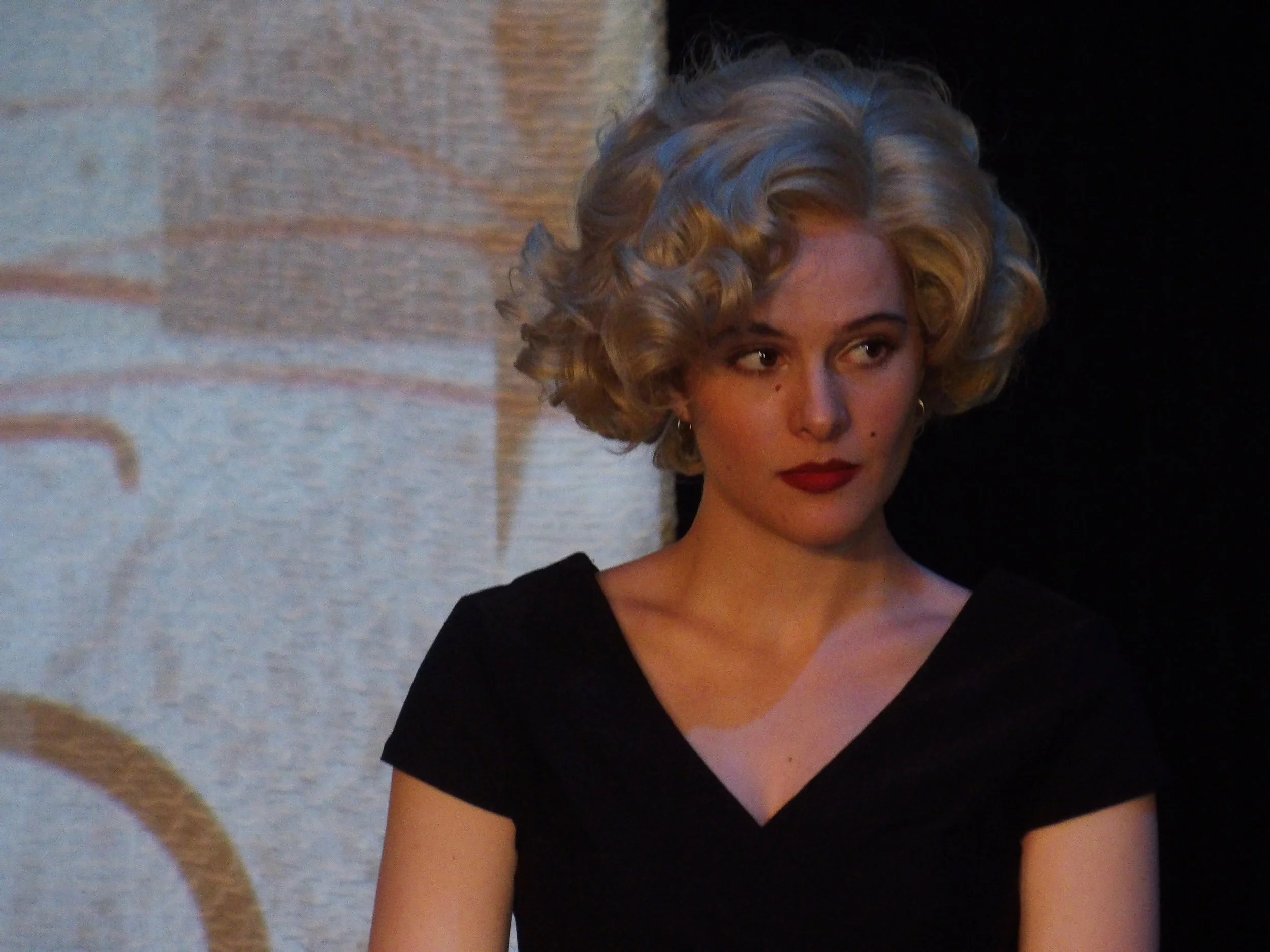
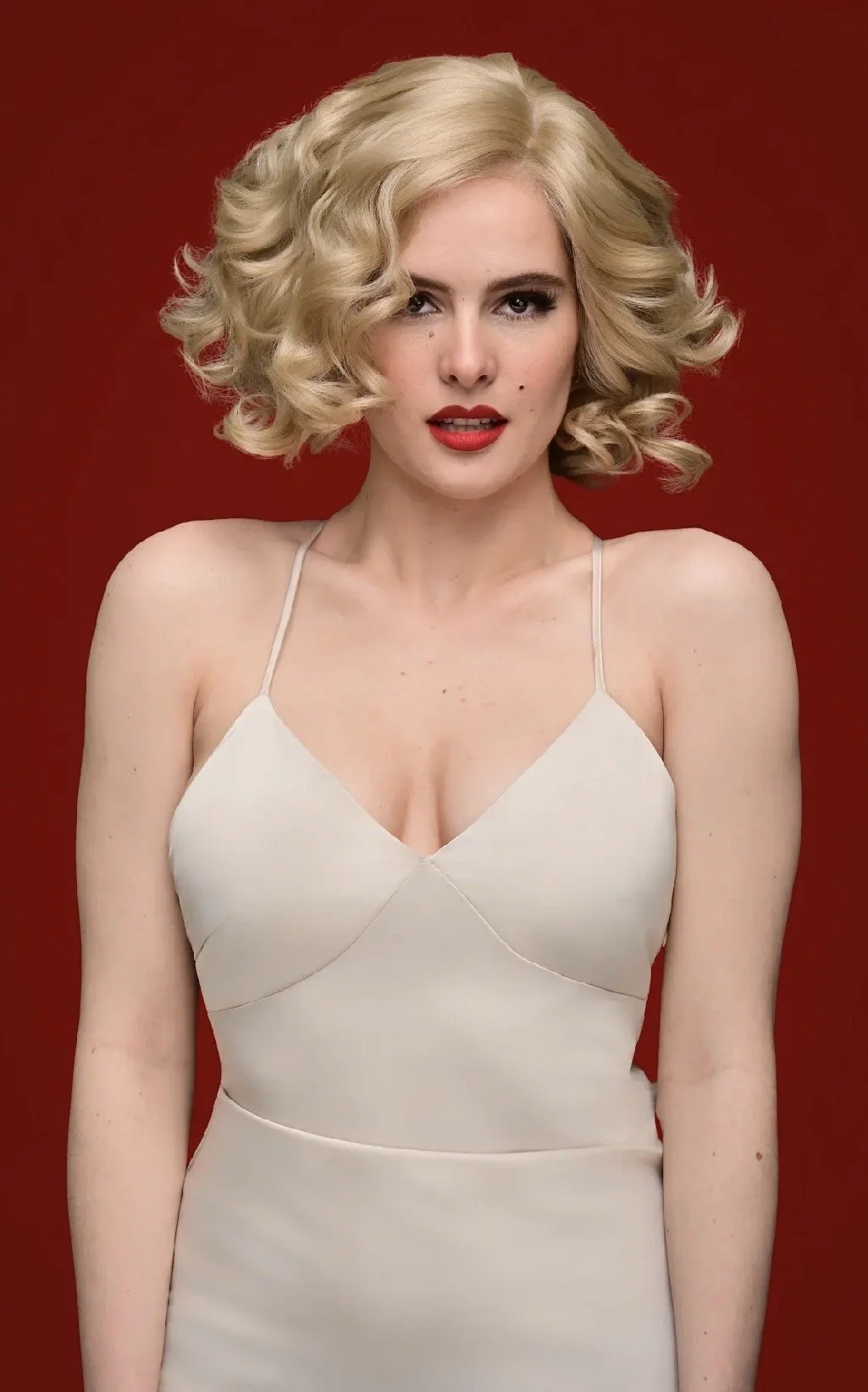
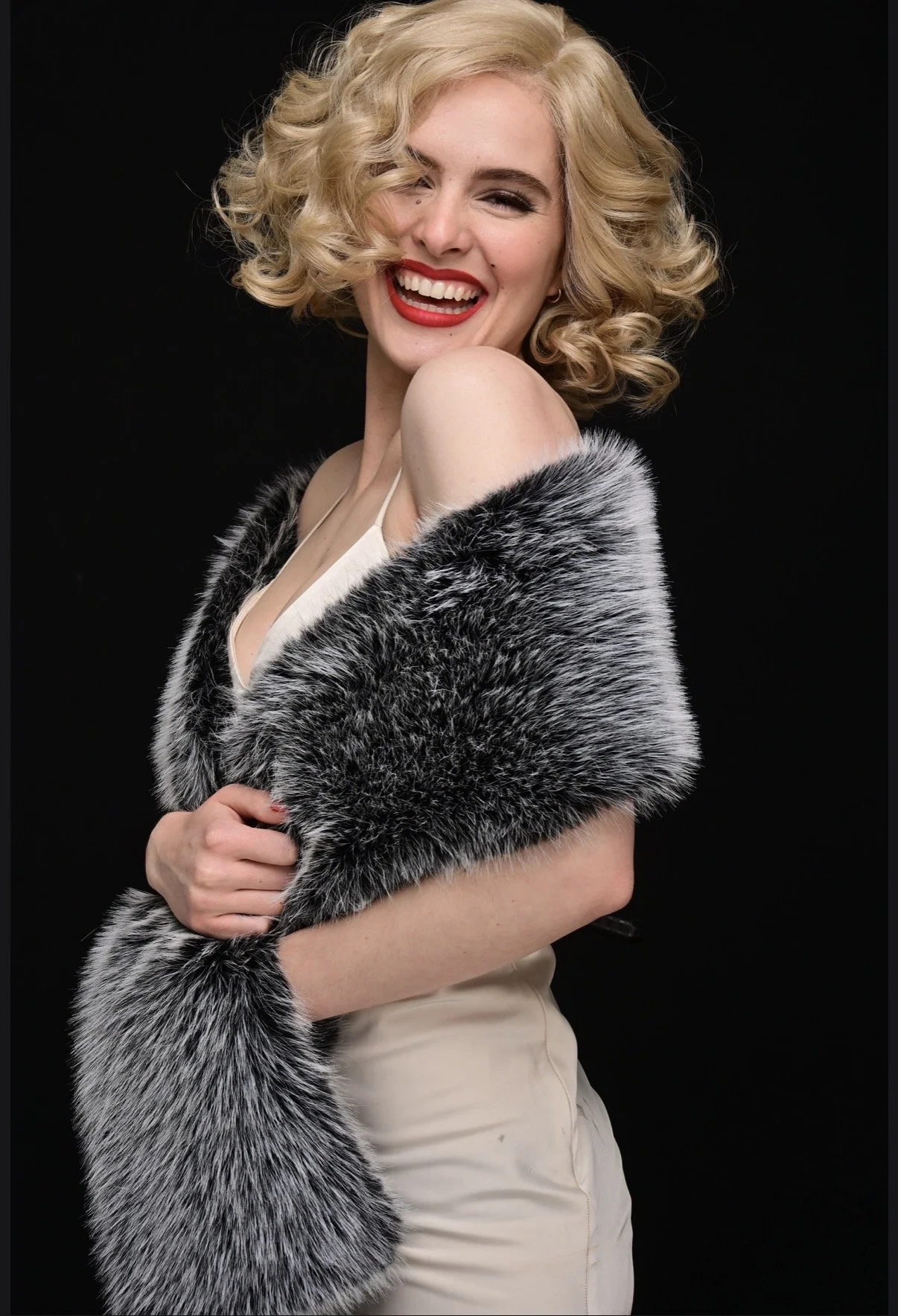
There is something deeply unsettling when you delve beyond the brand, the image, the glamour, into the very heart of the world’s most famous vixen. Her scathing vulnerability in an unjust world imprints upon your own wounds of self-doubt and fears of isolation. Marilyn Exposed gets to the dark underbelly behind the woman, the myth, and the legend, into the implication of “Who framed Marilyn Monroe?”
We are all familiar with the woeful tale of how Marilyn Monroe died from an overdose of prescription drugs that ultimately led to her suicide. The question begs to differ in our minds: was it a suicide, or something much more insidious? Marilyn Exposed unfolds in reverse, with noir inspired staging and investigative framing, where we are met head-on with the discovery of her lifeless body while a detective shrewdly tries to uncover the facts of how or why she was led here.
Actress Romy Hansen steals the show with her strongly on-point portrayal of Monroe. From Hansen’s breathy voice to her mannerisms and perceived innocence, all helmed by her striking wit, Hansen lights up the stage as Marilyn Monroe. She anchors director Charles Bernard Murray’s fluid, multi-space staging. Her take on Monroe is what carries the play throughout, keeping us invested and hungry for justice. Sgt. Jack Clemmons, played by Collin McConnell, is the unsung hero, ruthlessly trying to get to the bottom of how Monroe succumbed to her untimely death through interview after interview with potential suspects, as the production’s noir investigation structure tightens. Eventually, Arthur Miller, played by Craig M. Cartwright, leads Sgt. Clemmons through a play-by-play of what really went on in Monroe’s personal affairs while the action unfolds in real time on stage.
There is never a dull moment as Monroe is pushed and pulled like a helpless rag doll from predator to predator, lustful figures central throughout her life, all wanting to claim her power in some form of conquest. Meanwhile, we watch her helpless search for a pure form of love to uphold her innocence and protect her childlike whimsy, as her fragile mental state, struggling with bipolar disorder as implied by the production, requires much tending to and care. Joe DiMaggio, played by Daniel Robert Burns, is overbearingly controlling and, as portrayed in the production, physically and emotionally abusive toward Monroe, creating haunting illusions in our minds and quiet discomfort in our souls. You could sense the chill in the air as the audience helplessly watches a defenseless Monroe against her abuser. Through projections on stage, and with a cast member holding a fan beneath Monroe’s famous white halter dress to recreate a scene from The Seven Year Itch, DiMaggio storms on set to confront Monroe’s risqué scene and once again undermine and castigate her in front of her peers. It is a moment well written by playwright Cornell Christianson that does not feel coerced or exaggerated, but rather quite alarming in how it must have truly unfolded.
Musical numbers take place throughout as the ensemble cast artfully comes in and out of the aisles, creating a vibrancy of old Hollywood. Dance numbers such as Monroe in her early days during World War II working as a machinist are included. The cast, all donning green military uniforms, gather to mechanically pass a brown box one after another as they sing in unison, creating a musicality that shines through in Monroe’s aspirations to someday become a leading lady from humble beginnings.
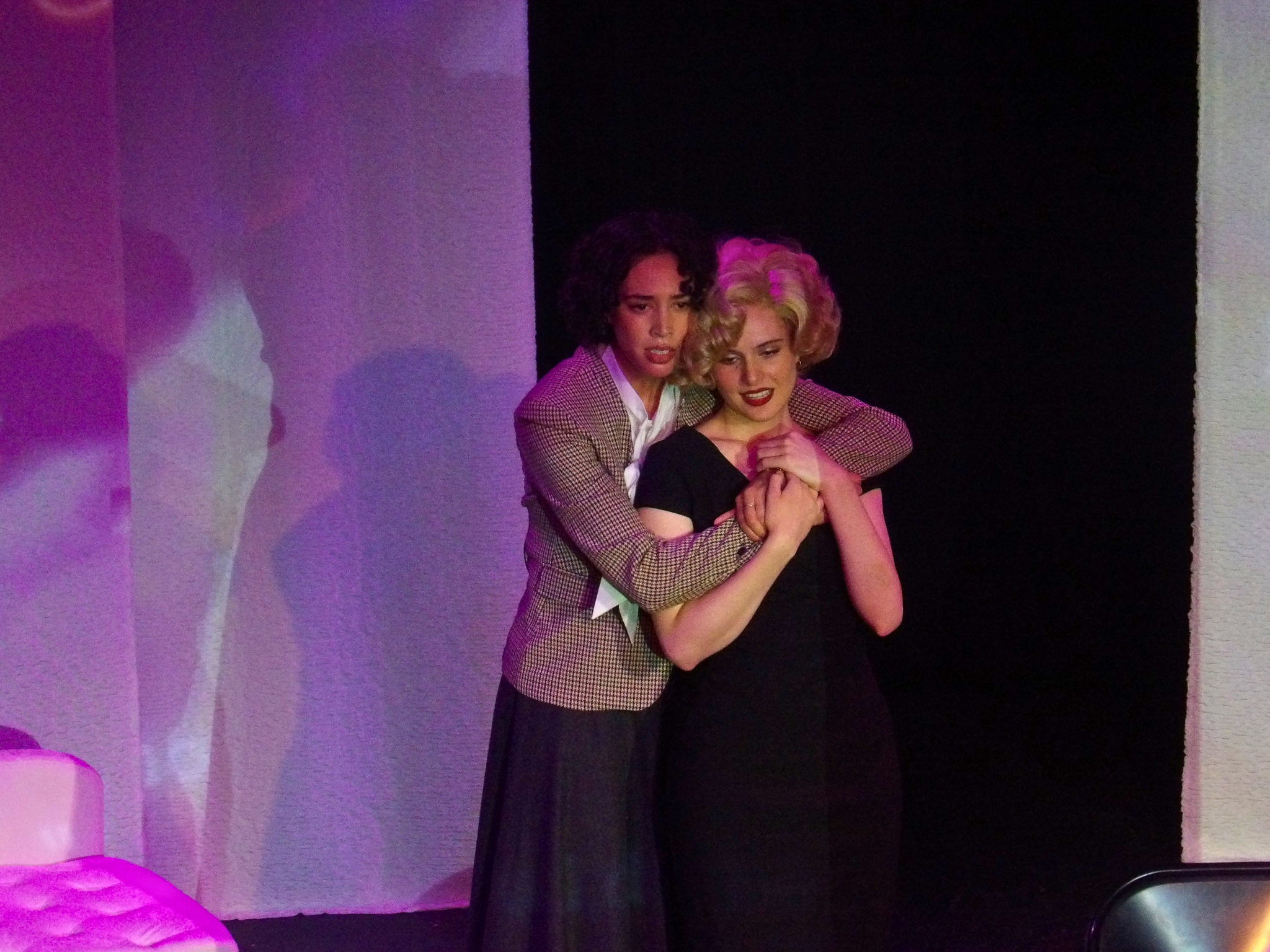
As if there was not enough drama in Marilyn Monroe’s life, the play even delves into speculation and known rumors of Monroe’s romantic relationship with her drama coach Natasha Lytess, performed by Sara Jane Beneke. Scintillating scenes unfold as the two engage in a torrid love affair, as Lytess demands excellence in theatrical training while passionately pursuing Monroe. Both actresses embrace in a kiss on stage that shows an authentic moment where Monroe was human like anyone else. Gender nor sexuality was not an affirmation of superiority; the moment existed in the present. In a contemporary context where identity is often treated as something newly complex or culturally charged, the production’s portrayal of Monroe’s relationships suggests something more enduring and less easily categorized. It resists flattening her into a singular narrative, instead presenting a figure whose emotional and romantic life complicates the labels later imposed upon her. Considering Monroe’s influence across generations, the production invites audiences to see her not as a fixed cultural image, but as a person who lived and loved beyond definition.
While Marilyn Exposed is ambitious in both scope and emotional reach, there are moments where certain production elements feel slightly uneven, gently softening its overall impact. At times, the sound quality can make dialogue and ensemble numbers less consistently clear than intended, which occasionally pulls focus from the emotional intensity unfolding on stage. Similarly, some of the lyrical writing leans toward simplicity, which can undercut the deeper dramatic weight the production is reaching for in its more heightened moments. Still, these are minor imperfections within an otherwise deeply affecting and imaginatively staged piece, one that remains anchored by its performances and its emotional ambition.
Overall, the simplicity in staging helps the ensemble quickly shift from scene to scene without distraction. This lends the production to be more performance-driven rather than relying on the razzle-dazzle of traditional Broadway spectacle. The makeup and hair design for Monroe is highly effective, with particular attention to detail, such as the use of petroleum jelly under lighting, demonstrating the production’s precision in recreating both the period and Monroe’s iconic image on stage.
Director Charles Bernard Murray symbiotically navigates the ensemble through multiple roles in a way that feels natural and clear, never confusing the audience as performers shift identities with ease through mannerism and costume. There is not a moment where an actor’s multiple roles become unclear, as each transition is carefully grounded in physicality and tone.
For audiences drawn less to Hollywood spectacle and more to the psychological unraveling behind the myth, Marilyn Exposed offers a compelling look behind the veil of iconography and mystery. In the production, Monroe reflects on her own image with the line, “a girl’s best makeup is her smile.” And perhaps Marilyn Exposed asks us to consider what it takes to maintain that smile in the face of adversity, revealing the grit, stamina, and quiet bravery behind it.
Click HERE for tickets.
Review by Bianca Lopez
Published by Theatre Beyond Broadway on June 30, 2026. All rights reserved.