Gimme a Sign!
Written and Performed by Bailey Swilley; Directed by Tim Dunn
SoHo Playhouse | 15 Vandam St. , New York, NY 10013
September 17th & 20th at 7PM
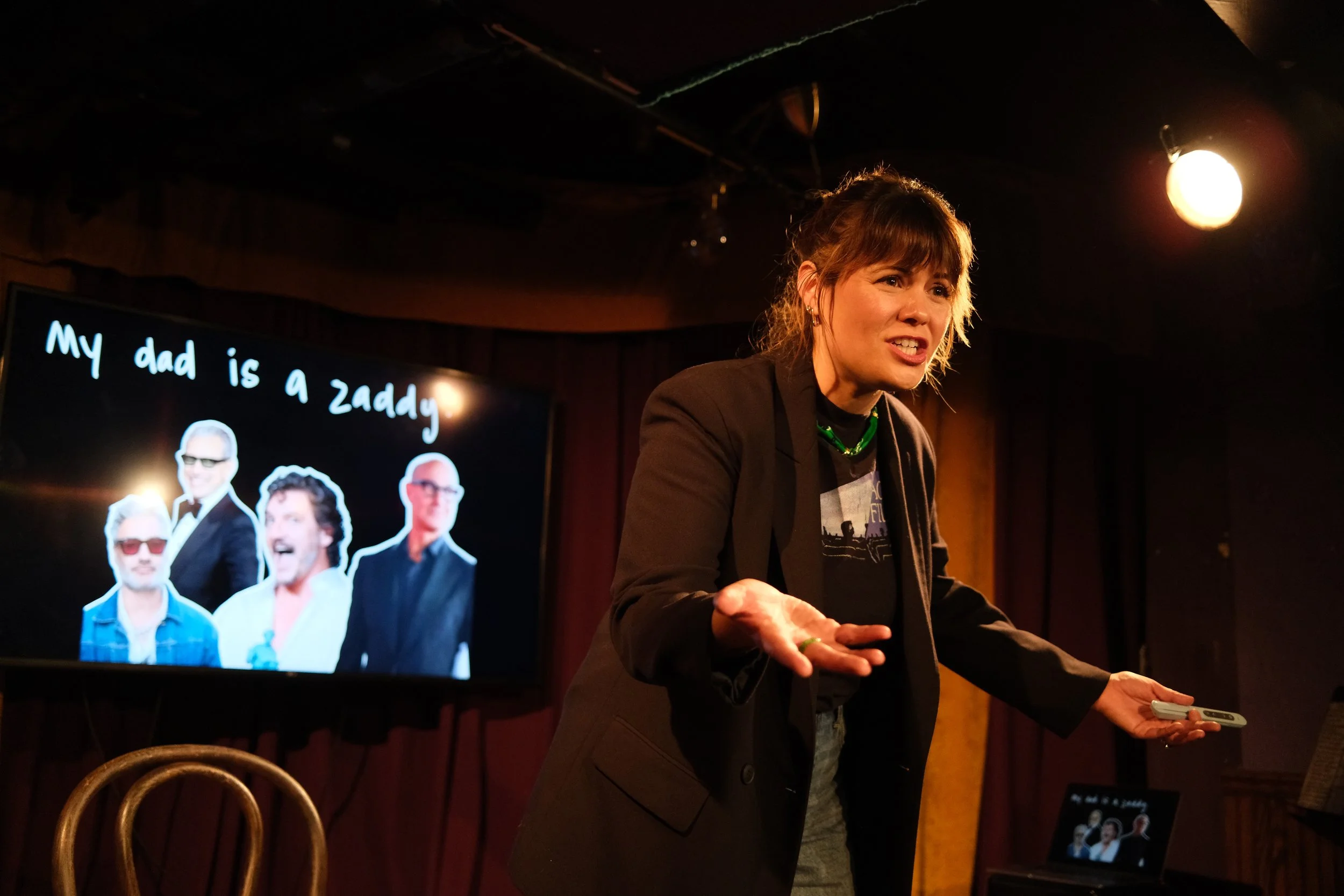
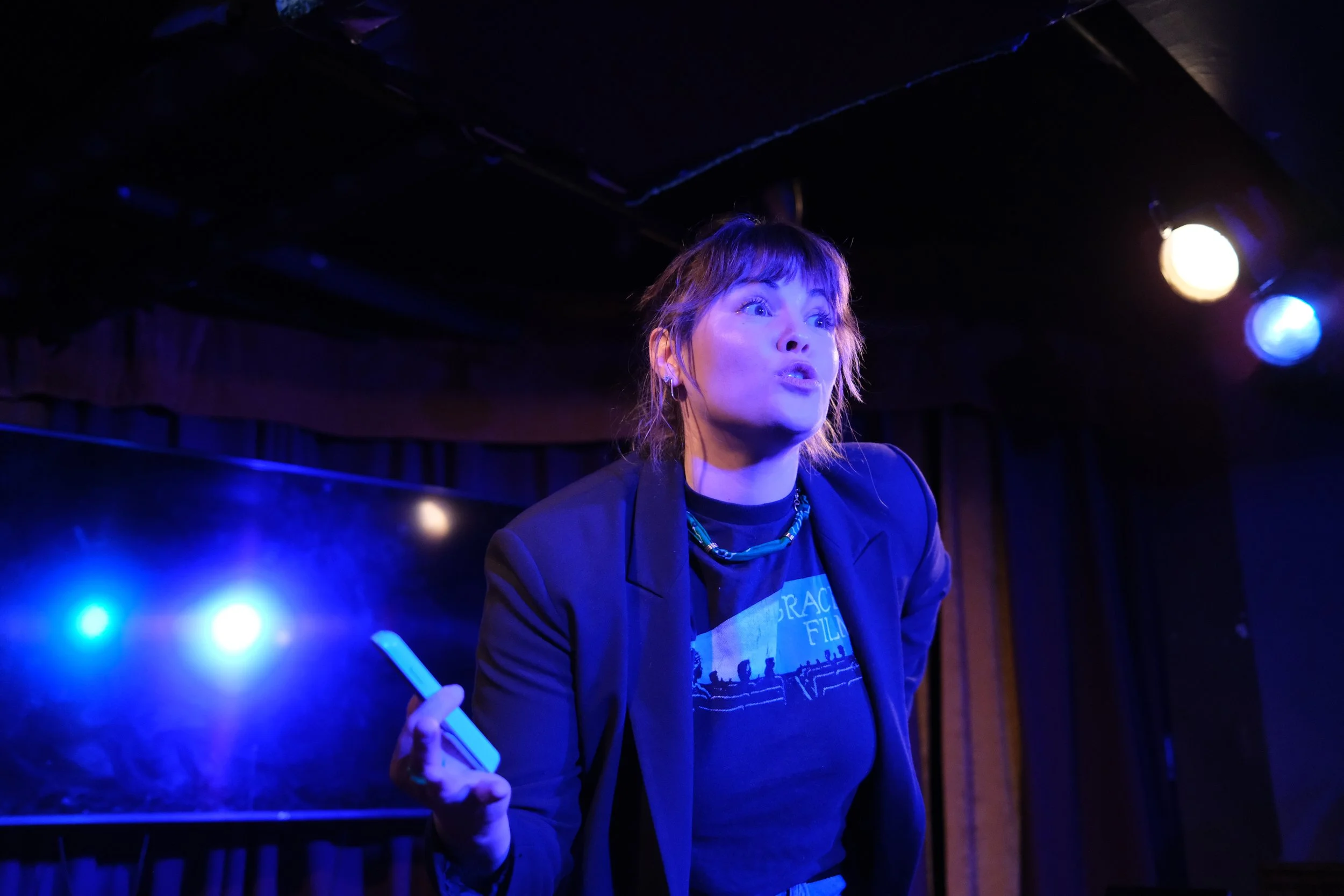
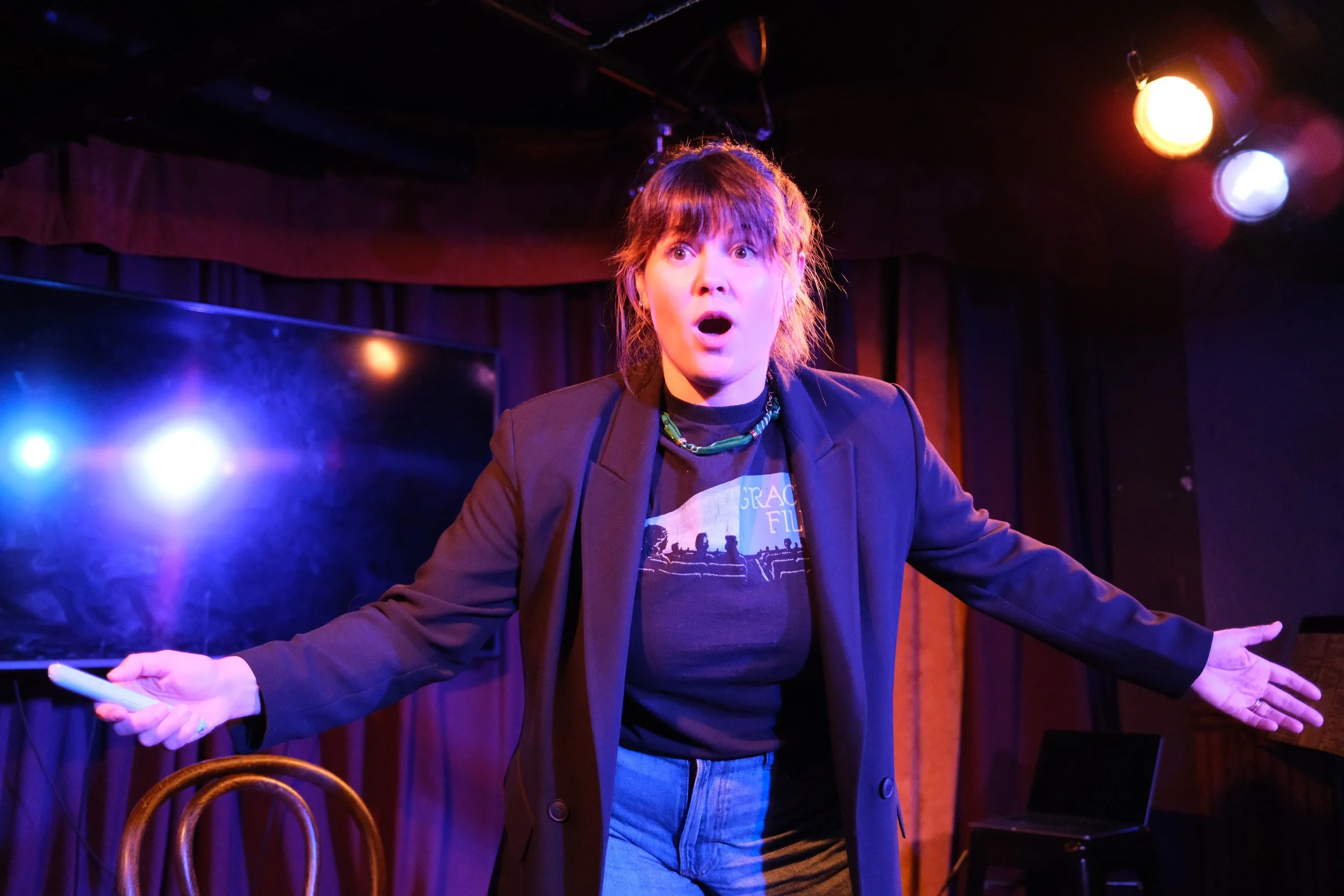
Photo Credit: Brad Hayward
Bailey Swilley is a wonderful storyteller. In Gimme a Sign!, she takes grief, family, cultural expectations, theatre, spirituality, and the search for meaning and turns them into something unexpectedly funny, tender, and deeply relatable.
I identified so strongly with Bailey’s story, particularly her experiences as a daughter of mixed Asian heritage and the expectations placed upon us by family and culture. She explores those pressures with such humor and tenderness that I found myself laughing throughout, even when she was sharing some of the most painful moments of her life.
And then there is Zaddy. Bailey’s stories about her father immediately struck a chord with me. There is something wonderfully specific about the relationship between a daughter and her father, particularly when you grew up in the ’80s and ’90s, when there were certain things you simply did not discuss with your father. Yet, there were times you had to ask your father questions you absolutely did not want to ask. Bailey finds the comedy in that awkwardness while still allowing the tenderness underneath it to remain.
Her storytelling is especially effective because there are always multiple stories happening at once. One moment we are laughing about family, funerals, and signs; the next, we are talking about theatre and the experience of being overlooked for roles. There is the familiar frustration of wondering why you cannot get cast as something as simple as “the tree on the left,” followed by the unpredictable ways life can change the trajectory of your career.
And then life happens again.
The show moves through these experiences with a beautiful sense of progression. Bailey’s father, her grandmothers, her career, relationships, cultural rituals, and grief continually circle back to one another. What might initially seem like separate stories gradually reveals itself to be connected.
I particularly connected with the stories surrounding her grandmothers and the rituals around death. There is something both hilarious and profound about the things families do simply because this is what we do. We inherit rituals, expectations, superstitions, and traditions without always understanding where they came from. Bailey gives us permission to laugh at the absurdity while also recognizing the love and cultural history underneath it.
By the third act, the story comes full circle, returning to connection, roots, family, and her grandmother. Astrology, Catholicism, cultural expectations, relationships, and the search for signs all somehow coexist.
At the start of the show, Bailey asks a deceptively simple question: Do you believe in ghosts? Do you believe in signs?
For someone who believes in God, believes in science, and spends her life looking for signs, I understood the question immediately. I wanted to scream: yes! I believe we are constantly being offered little moments of connection. After one of my best friends passed away, a particular song began appearing at unexpected moments. I experience it as him saying hello. Someone else might call it a memory. Bailey creates that same space in Gimme a Sign!, where the audience can decide what the signs mean for themselves.
That is one of the gifts of the show. Bailey never asks us to choose between skepticism and belief. She invites us into the wonderfully messy space between them, where grief, memory, coincidence, spirituality, and humor can all exist together.
The show is filled with cultural touchstones that become part of the storytelling rather than simply references. From Sex and the City to Britney Spears, from teenage awkwardness to theatre dreams, Bailey understands that sometimes a cultural reference can make an audience laugh before the joke has even fully arrived.
After two critically acclaimed runs at the Edinburgh Festival Fringe, Gimme a Sign! returns to New York City, taking some of the darkest experiences of Bailey’s life and finding the humor, tenderness, absurdity, and connection within them. And maybe that is the real sign.
Review by Malini Singh McDonald.
Published by Theatre Beyond Broadway on September 22, 2026. All rights reserved.