The Invention of Love
Written by Tom Stoppard; Directed by Zachary Elkind
Presented by The Map
Theaterlab | 357 W 36th Street, New York, NY 10018
September 17 - October 3, 2026

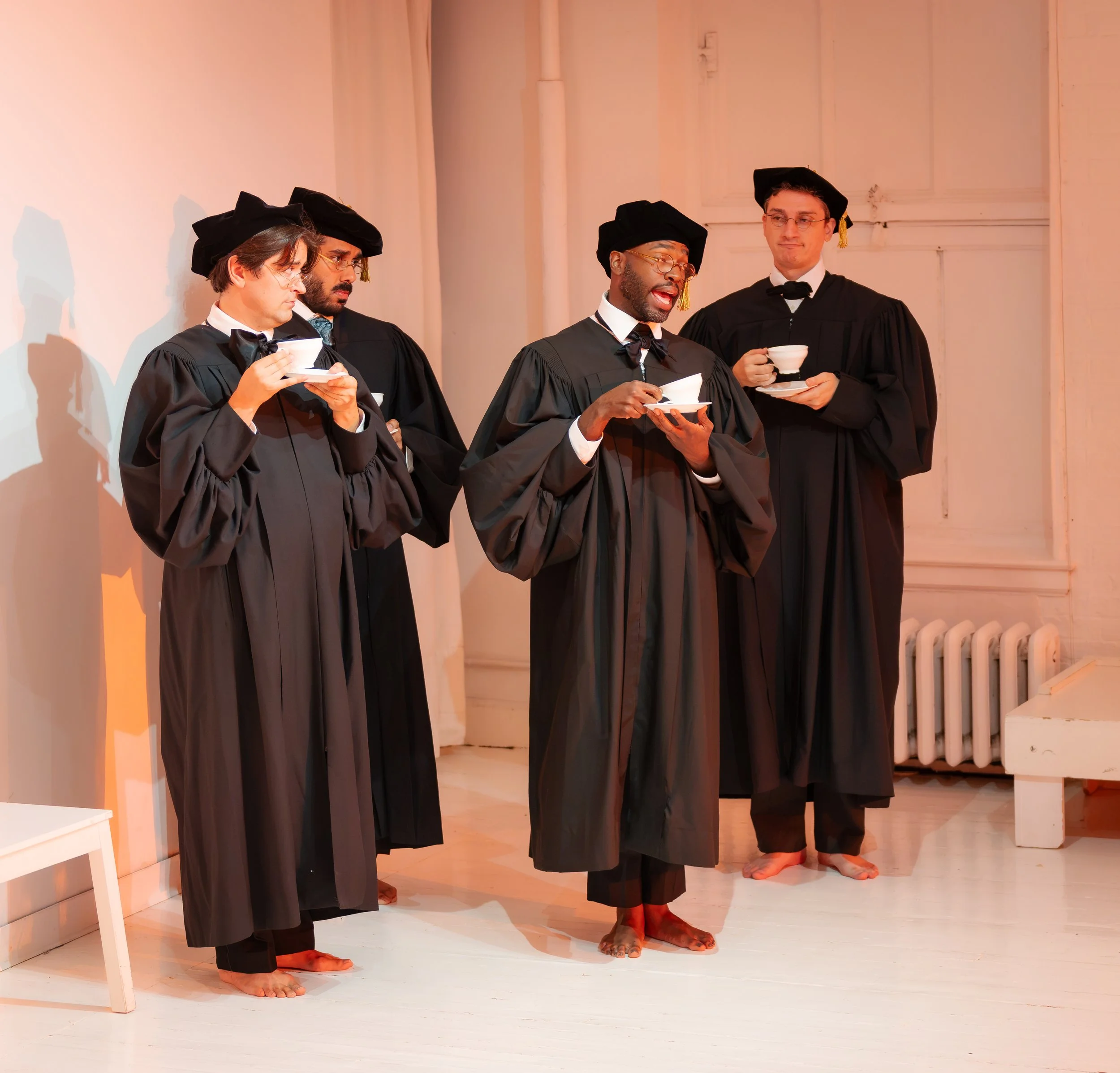
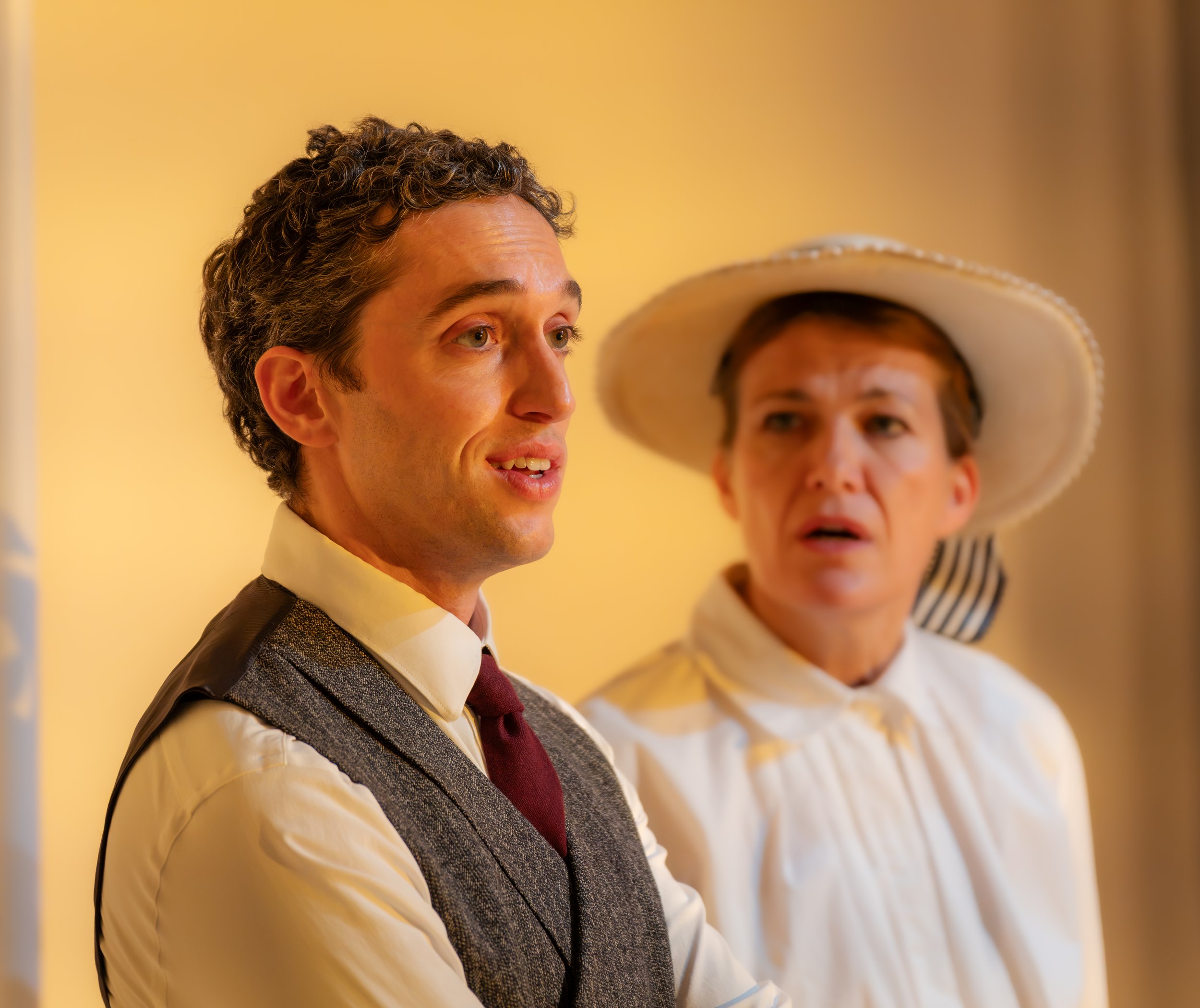
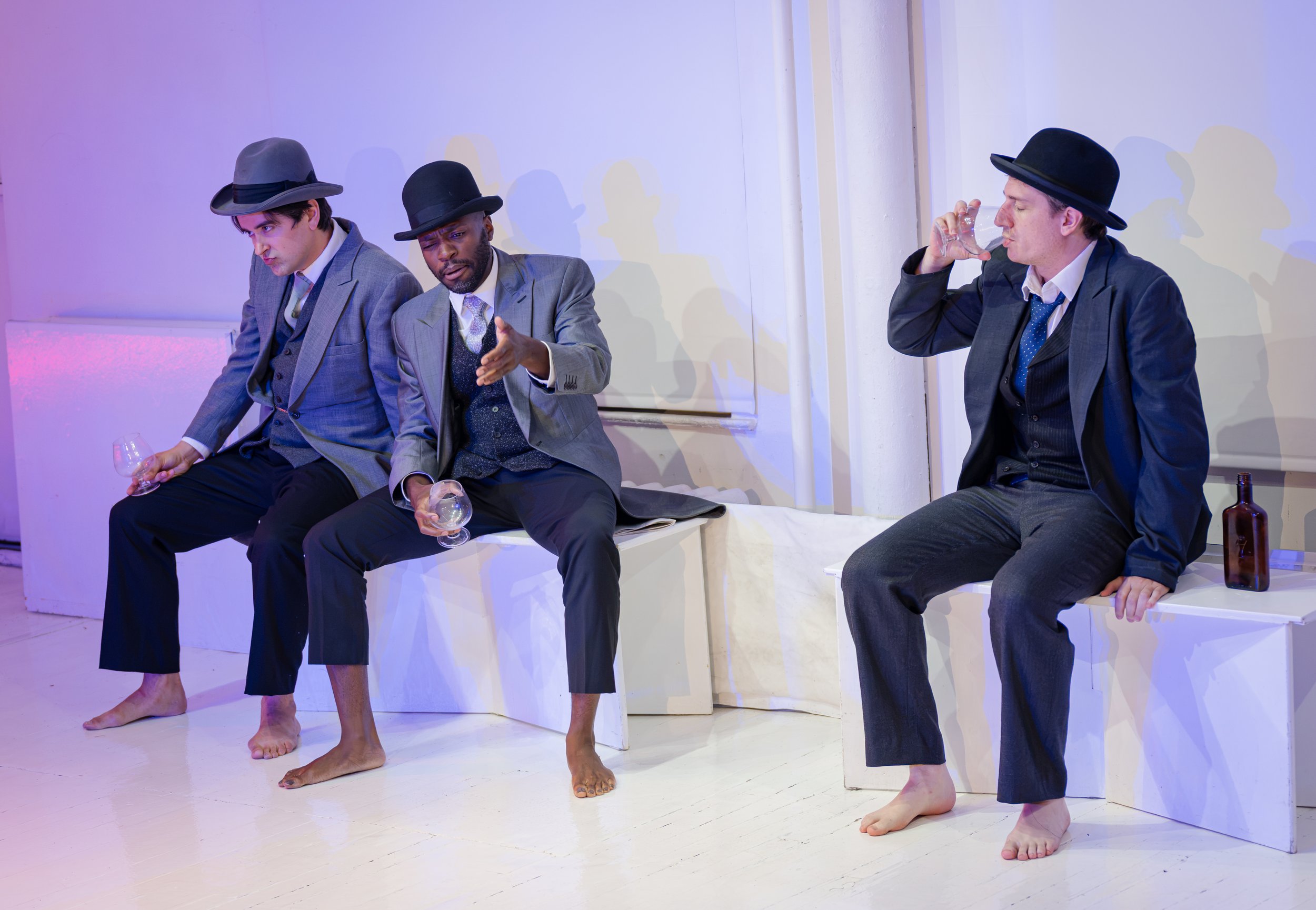
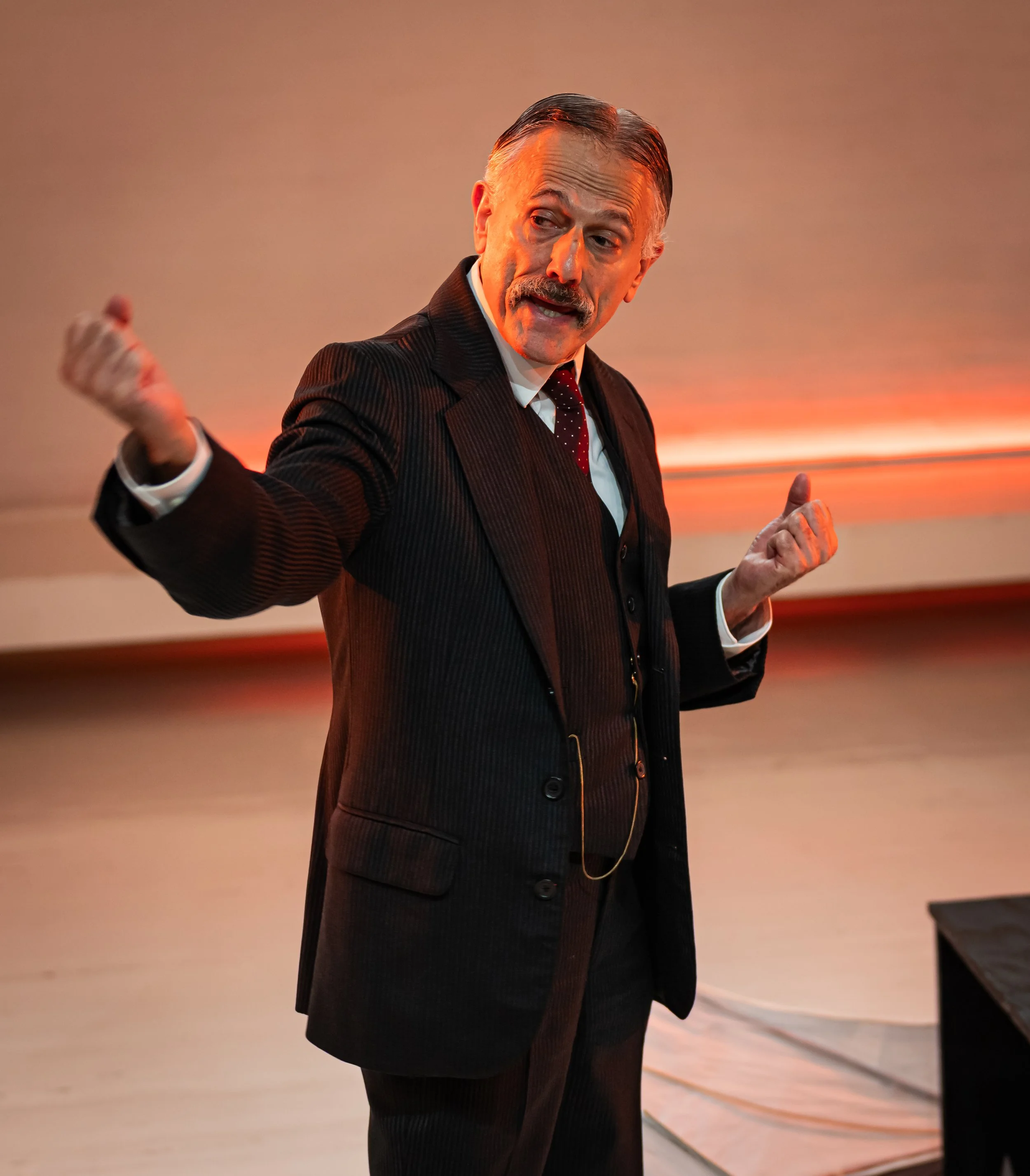

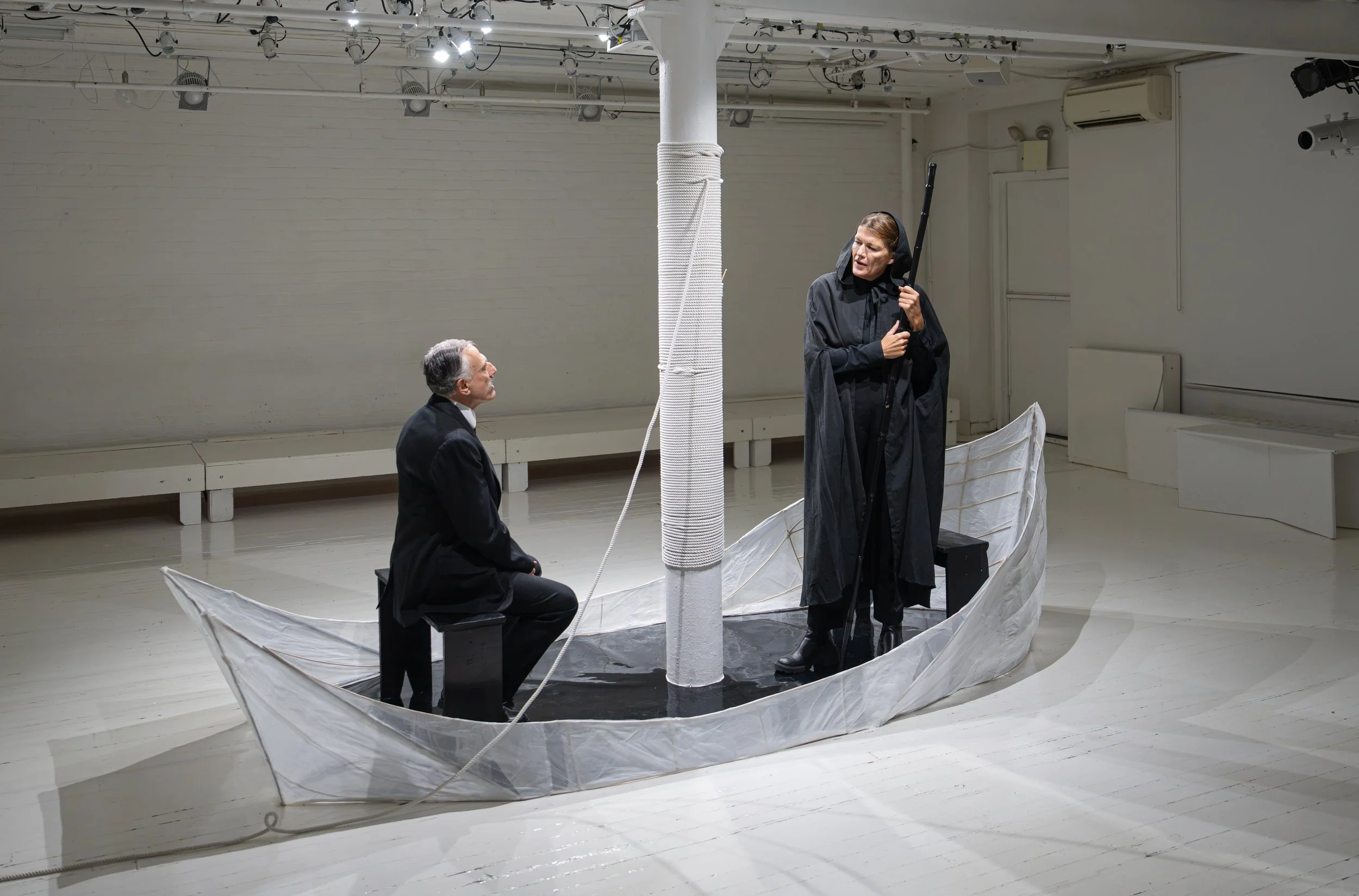
Photo Credit: Paul Lutvak
Sophocles. Shakespeare. Stoppard. Three of Western theater’s most difficult playwrights to work with and comprehend because so much of their stuff is dense and tangled, and that challenge is half of the fun with these three. In The Map’s revival of Tom Stoppard’s The Invention of Love, the first revival in New York City since its 2001 debut, these dense challenges are faced head-on, and oftentimes are bettered by the cast.
Led by David Greenspan as AEH (Alfred Edward Housman), a classicist and poet from the Victorian and Edwardian eras, the cast is full of facile young actors, bouncing between characters from AEH’s long and lonely life. From the opening line, we know AEH is dead, and this journey on the River Styx with Charon (Annabel Capper) will be an overview of his life.
Forgoing the entirety of his childhood and adolescence, we travel first with the dead and the boatwoman to meet a young Housman (Yaron Lotan) at Oxford, meeting his best chum Pollard (Daniel Liu) and the man who will become the object of his desires, Moses Jackson (José Espinosa). This trio constantly lit up the stage when they arrived, joyfully bandying about their legs and their wit, casting longing glances and smiles towards each other. Espinosa’s Jackson was a particular delight, giving us an adorable Victorian-era himbo who takes all meaning quite literally, but has that dashing smile to keep the Housman, and the audience, charmed. These three really are the driving force of this show, always watched intently by a reminiscing AEH with a fervor only an unrequited love can have.
Soon the play hints at another Oxfordian with whom Housman overlapped, an aesthete who lives lavishly and outrageously, wearing purple velvet and commenting on the poetry of Jackson’s left leg, very much in contrast to AEH’s conservatism. But we’ll get to that a bit later. A retinue of professors (played by Sam Bolen, Leland Fowler, Abrar Hoque, and Spencer Lutvak) enter and comment on various topics, from each other’s work to their students. It’s clear that all of these Oxford classicists, professors and students alike, live almost entirely in their heads, as they pontificate and babble about, almost coming close to their actual meaning, but hoping that their audience is smart enough to listen between the lines to find their actual meanings.
Watching Greenspan’s AEH, you get the feeling that on this final journey, there is nowhere for him to hide as he is confronted by an unlived life; and frankly nowhere for the audience to hide either, for the audience is placed in an alleyway setup, on either side of Charon’s boat, as though we are on the banks of the River Styx. We are a captive audience (or captive students in one of AEH’s lectures) in TheaterLab’s odd white box theater, being confronted in our own play of being watched while watching.
For much of the play, you can sense that Greenspan’s AEH would wish to become a wall dressing; and though he wishes to be heard, perhaps he does not want to be understood; he wants to be seen but not noticed. I found myself drifting during many of the AEH monologues, delivered in an almost pastoral tone, rising in the same place and falling in the next: heard but not understood; nodding along so the audience on the other side of the stage knew that I heard the professor’s lecture on Horace’s Venus.
Whereas Greenspan’s AEH is a buttoned-up learned man who lives his life only as far as his books and poems will take him, Yaron Lotan’s younger Housman is full of life and questions and yearnings. Lotan’s joyful smile is a breath of fresh air in the play. He is earnest and bright and full of life in a play that tends to hide a lot of the joys of living. Watching the two Housmans interact, you wonder how that earnest joy became such a buttoned-up, mustachioed frown. And the answer lies in Oscar Wilde (enrapturously played by Sam Bolen), the purple-velveted Oxfordian hinted at earlier. And here, at the end of the play, as Wilde and Housman talk, you understand how AEH became the sad man he was: he saw the other classics major grab a life by the horns and love how he wished to love, a love that dare not speak its name, and have that love be his downfall in society and usher him to an early death.
Stoppard’s play is lovely and hard, full of nuance and depth, and definitely a show that should be visited more often. It feels incredibly relevant today, in a country where queerness is often on trial, jokes thrown about regarding young virgins being protected by the government on a “first come first served basis”, and so many of us wonder what the price of living is if we don’t live it to its fullest. I shan’t be taking my cues from Housman in that matter.
Get your tickets HERE
Review by Trey Radu-Blackburn.
Published by Theatre Beyond Broadway on September 20, 2026. All rights reserved.