Going Bacharach: The Songs of an Icon
AMAS Musical Theatre and Jack Lewin/Lewin Productions
Created by Will Friedwald, Adrian Galante, Tedd Firth & Jack Lewin
Conceived by Jack Lewin
Arrangements & Orchestrations by Adrian Galante
Musical Supervision by Tedd Firth Music Direction by Adrian Galante
Directed by David Zippel
Marjorie S. Deane Little Theater at The Westside Y, 10 West 64th St, New York, NY 10023
January 8, 2026 - February 22, 2026
Photos by Russ Rowland
Going Bacharach: The Songs of an Icon radiates the particular confidence of a show that knows exactly what it is doing and does not feel the need to apologize for it. This is a revue that understands both craft and charm, with polish, poise, and an almost old-fashioned belief in pleasure—a belief that, in this case, is fully vindicated.
The title announces its mission plainly, and the production delivers with intelligence rather than bombast. Burt Bacharach’s melodies—those elegant, idiosyncratic constructions that smuggle rhythmic complexity into the bloodstream of popular song—are treated neither as museum pieces nor as raw material for avant-garde mischief. Instead, the evening settles into that elusive middle ground between reverence and reinvention. The familiar contours remain intact, but the textures are refreshed, the angles newly illuminated. Nostalgia is present, certainly, but it is nostalgia with its eyes open.
It stands as a tribute assembled with unmistakable care and discernment, the kind that suggests not mere admiration but long, intimate acquaintance. Every one of director David Zippel’s choices feels guided by an understanding of the composer’s magnitude—his melodic daring, his emotional exactitude, his indelible imprint on the American musical imagination. Rather than embalming a legacy in reverence, the production tends to it lovingly, presenting the work as something alive, still breathing, still capable of surprise. In doing so, it honors not only one of the greatest composers this country has ever produced, but also the enduring vitality of his music itself.
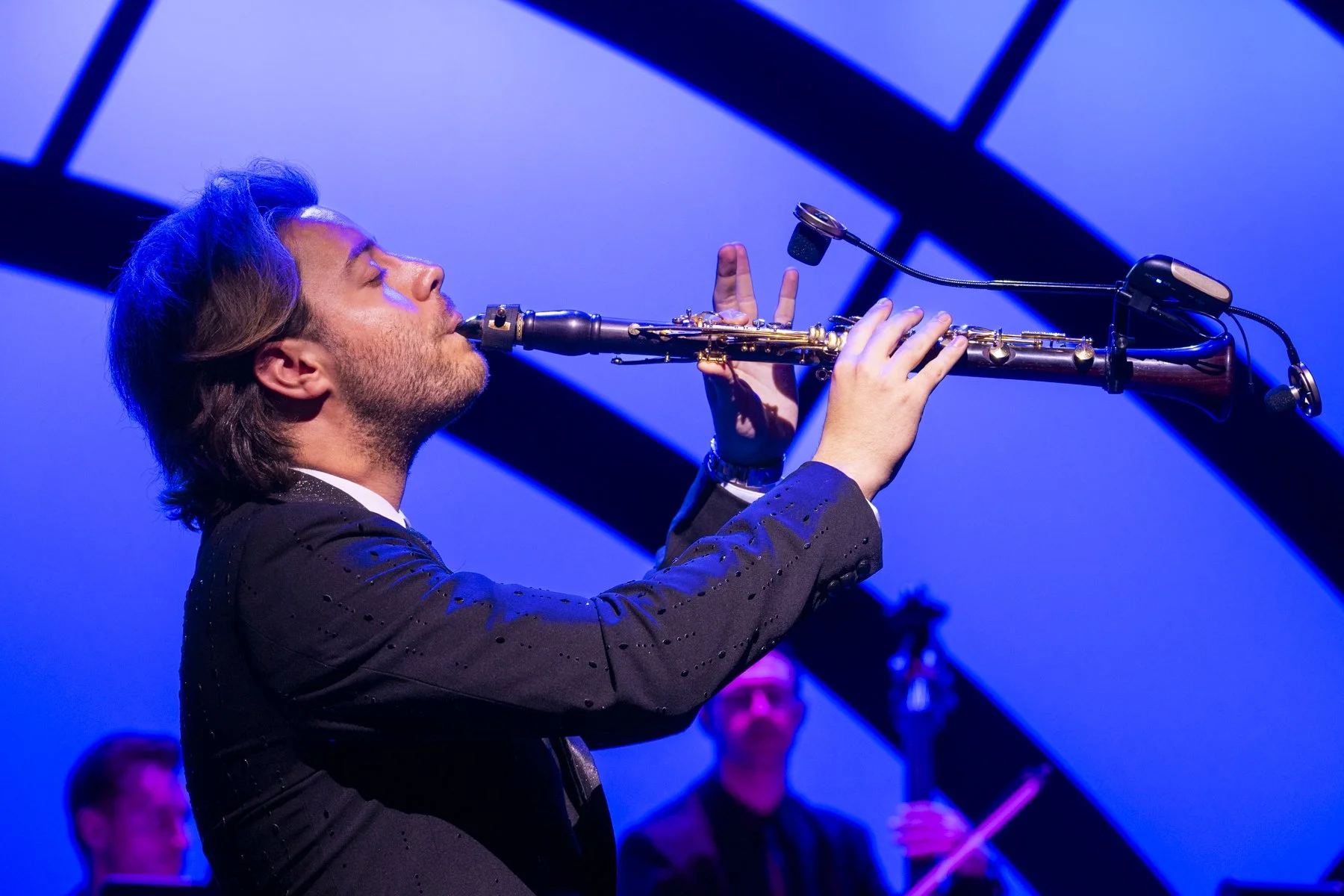
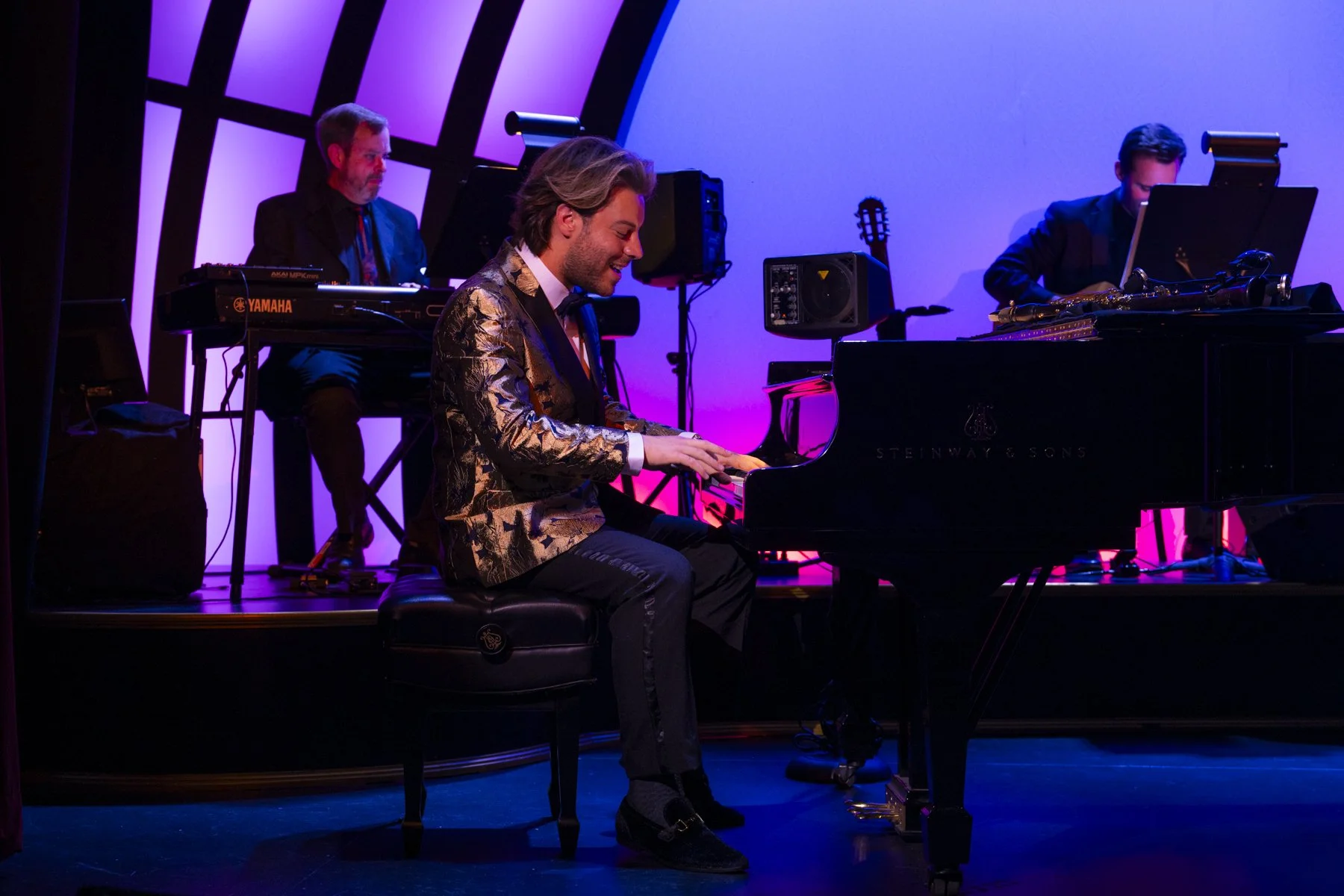
The evening begins with a bracing overture that immediately establishes the show’s ambitions. At the piano sits Adrian Galante, the musical director and co-creator, a performer of restless musical intelligence and winning theatrical presence. Galante leads the band with arrangements that are crisp, inventive, and unfailingly musical, and he narrates the proceedings with a light, genial touch. Still in his twenties, he already carries himself like a seasoned master of ceremonies—indefatigable, charming, and, when he steps away from the keyboard to take up the clarinet, capable of producing tones of striking warmth and clarity.
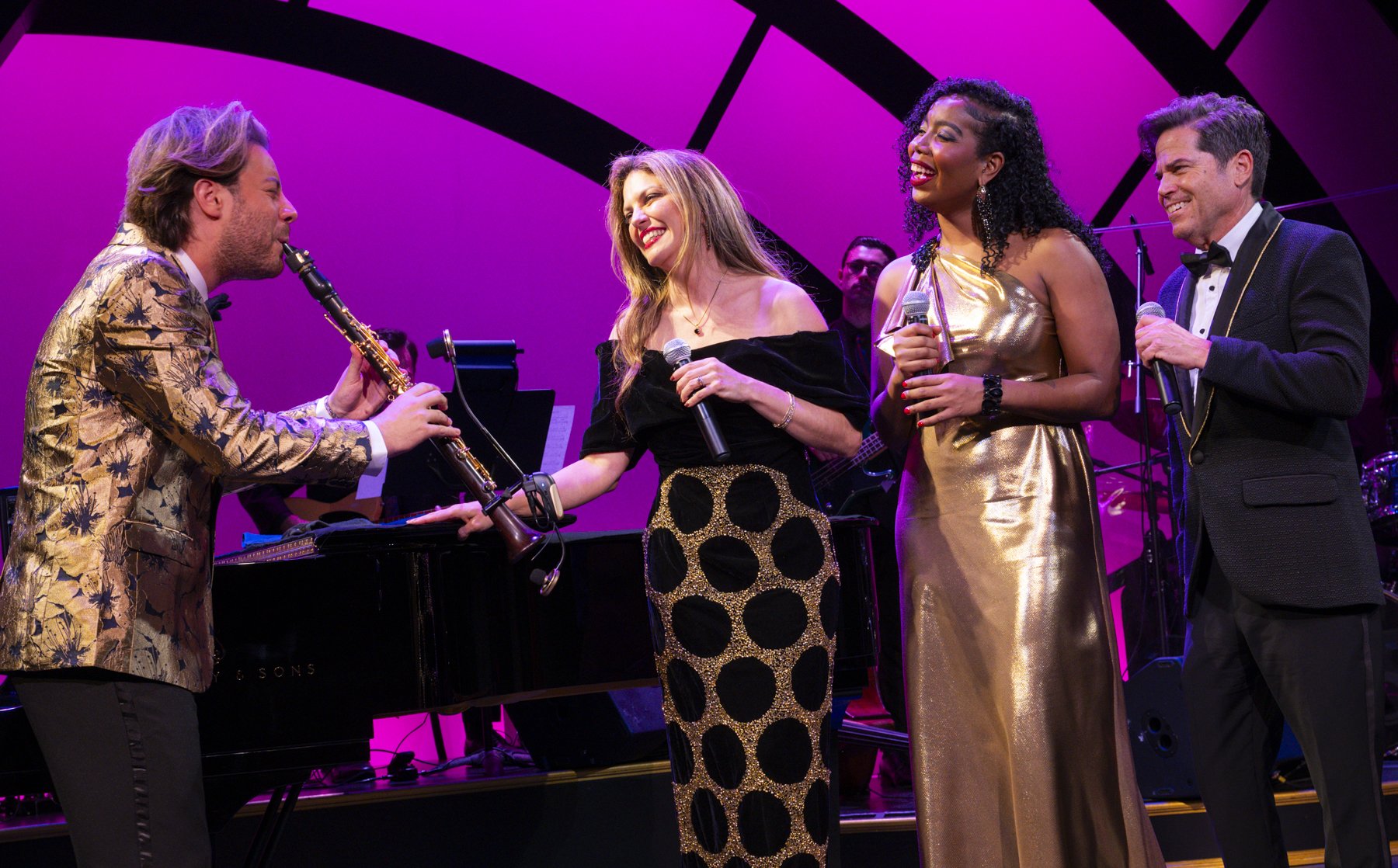
Galante emerges as a musician of uncommon fluency and imagination, a performer whose technical command never eclipses his sensitivity to ensemble. His pianistic agility—fleet, articulate, and rhythmically alert—coupled with his passionate clarinet work, lends several numbers a plush, jazz-inflected sheen, subtly expanding the sonic palette without distorting it. Yet it is when he resists the temptation to lead from the front, choosing instead to fold himself more seamlessly into the group, that his contribution proves most profound. In these moments, he becomes the unspoken fourth member of the ensemble, engaging the singers in a kind of musical conversation rather than directing traffic. The exchange feels intimate and responsive, animated by listening as much as by virtuosity. It is within this collaborative framework that Galante’s gifts resonate most fully—and where the intricate, emotionally intelligent spirit of Bacharach’s music finds its most fitting and eloquent expression.
The program leans heavily—though not exclusively—on the 1960s, the period when Bacharach’s partnership with lyricist Hal David yielded a seemingly inexhaustible supply of hits. David’s contribution is acknowledged thoughtfully throughout the performance, a welcome corrective to the tendency to treat Bacharach as a solitary genius. The lyrics, precise and emotionally legible, are given room to breathe, even as the melodies—with their shifting meters (something performer Hilary Kole draws our attention to using the song “Promises, Promises” as an example: in the first 7 “Promises, Promises” bars, Bacharach changes signature five times, including two 7/8 measures.), asymmetrical phrases, and sly harmonic turns—inevitably command attention. A few later songs, written with Carole Bayer Sager, as well as the early-in-his-career 1955 Patti Page hit “Keep Me In Mind” with lyrics by Jack Wolf, broaden the portrait without diluting its focus.
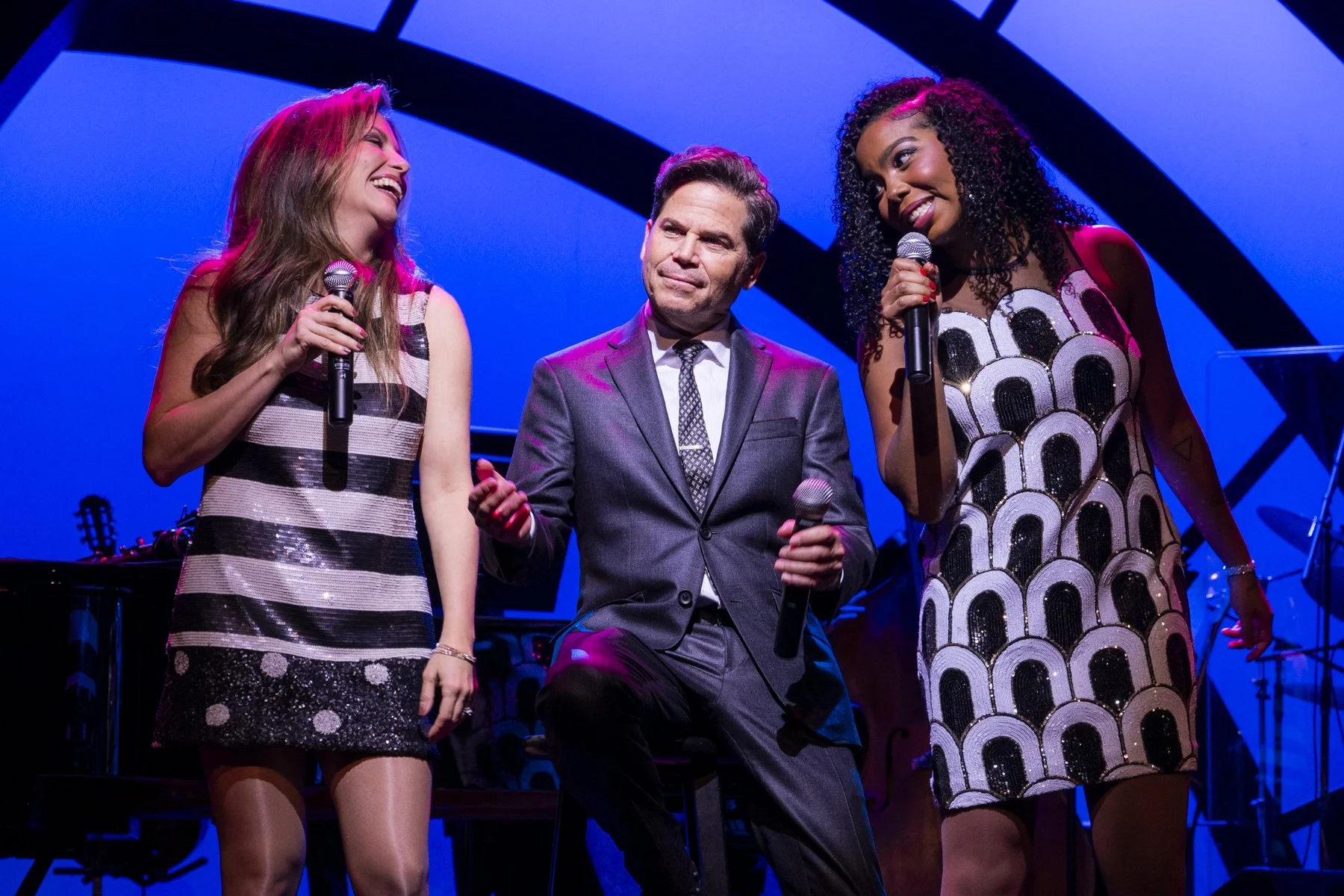
The revue was conceived by Jack Lewin, who previously assembled Our Sinatra, and the experience shows. One of that earlier show’s standout performers, Hilary Kole, returns here as part of a trio of singers who bring distinct personalities to the material while blending seamlessly when required. Kole’s voice—silky, controlled, and emotionally direct—shines in “Alfie” and “April Fools,” and forces us to wonder how incredible she would have sounded in the Promises, Promises solo “Knowing When To Leave” rather than turning it over to Galante for a clarinet arrangement at the top of the second act.
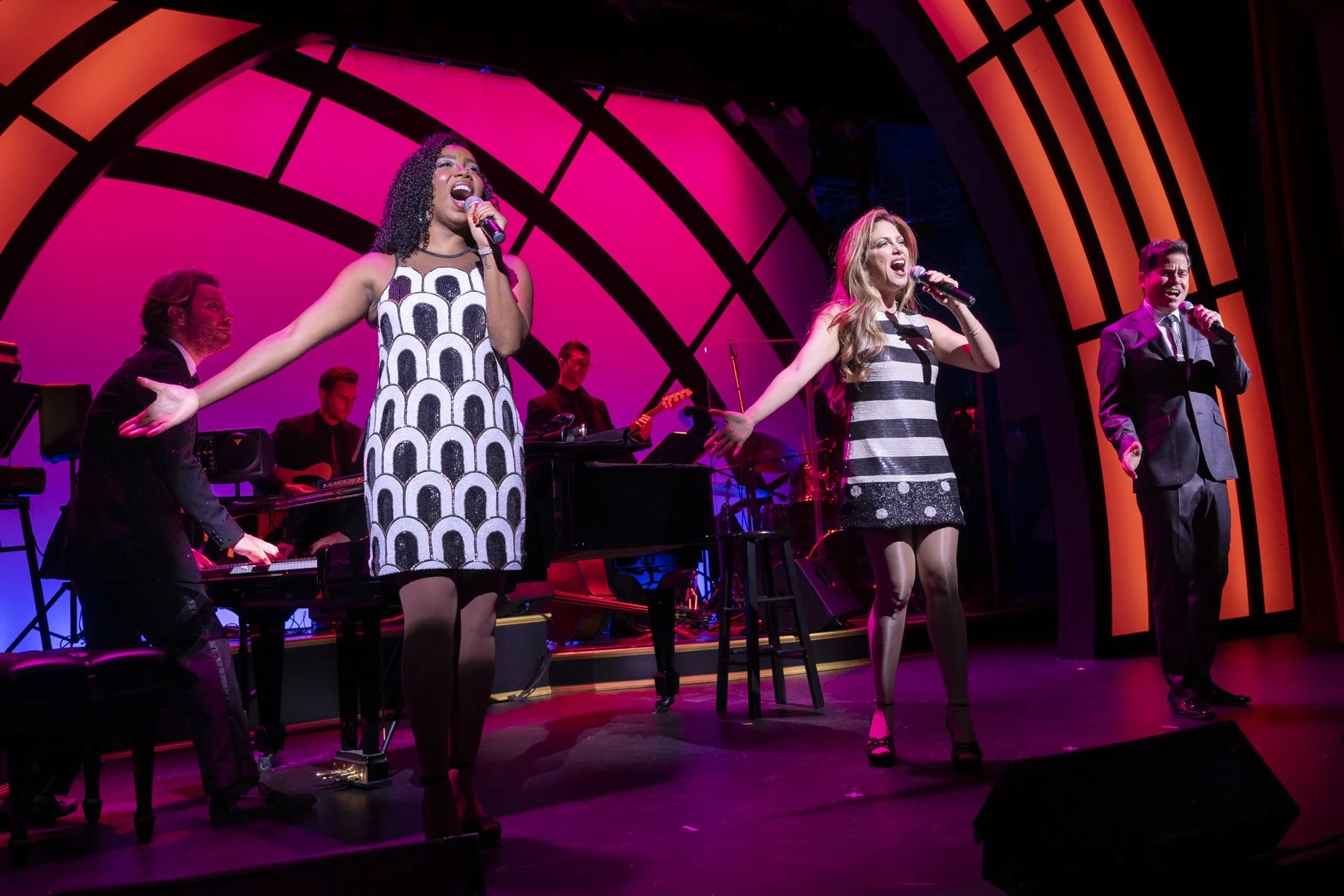
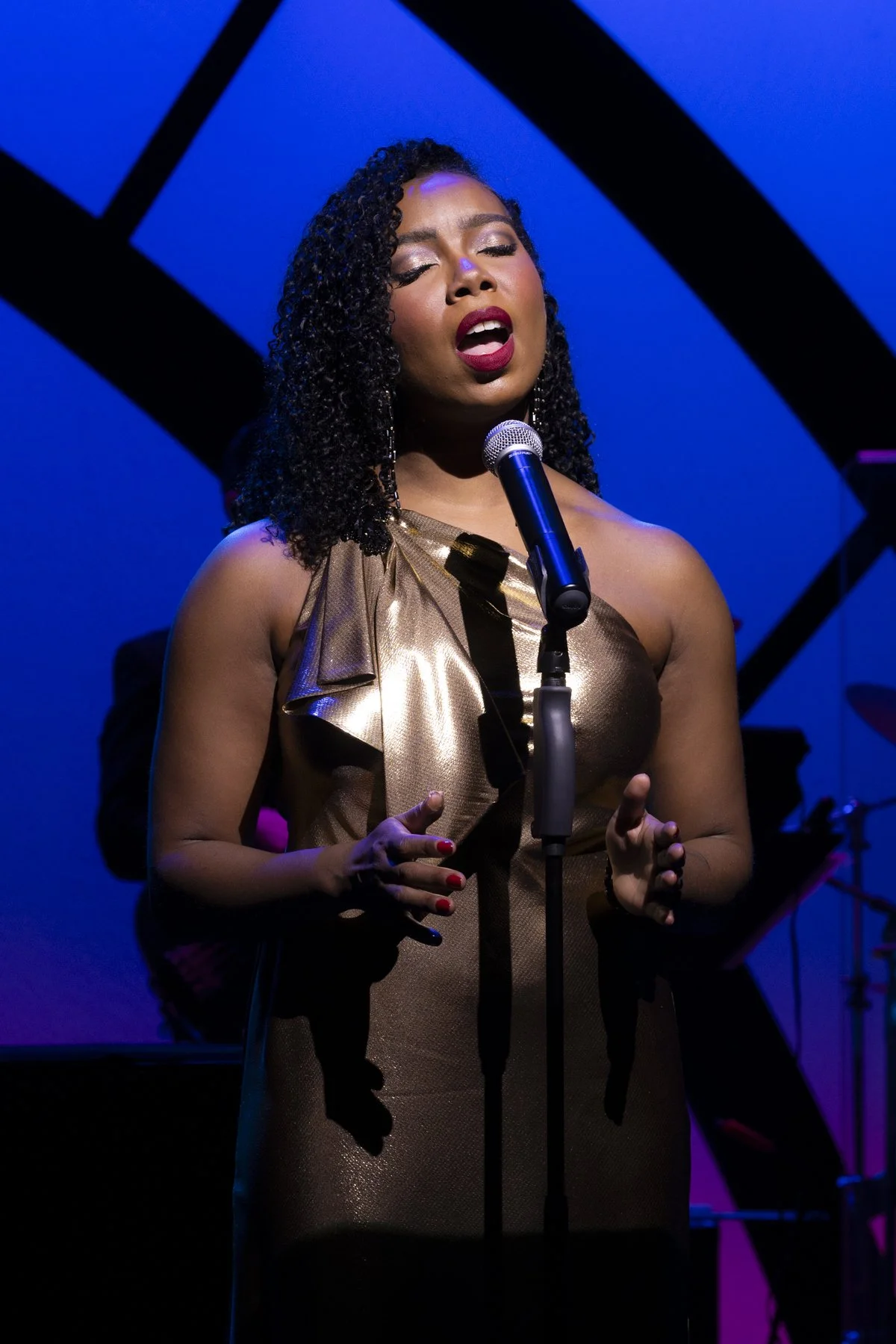
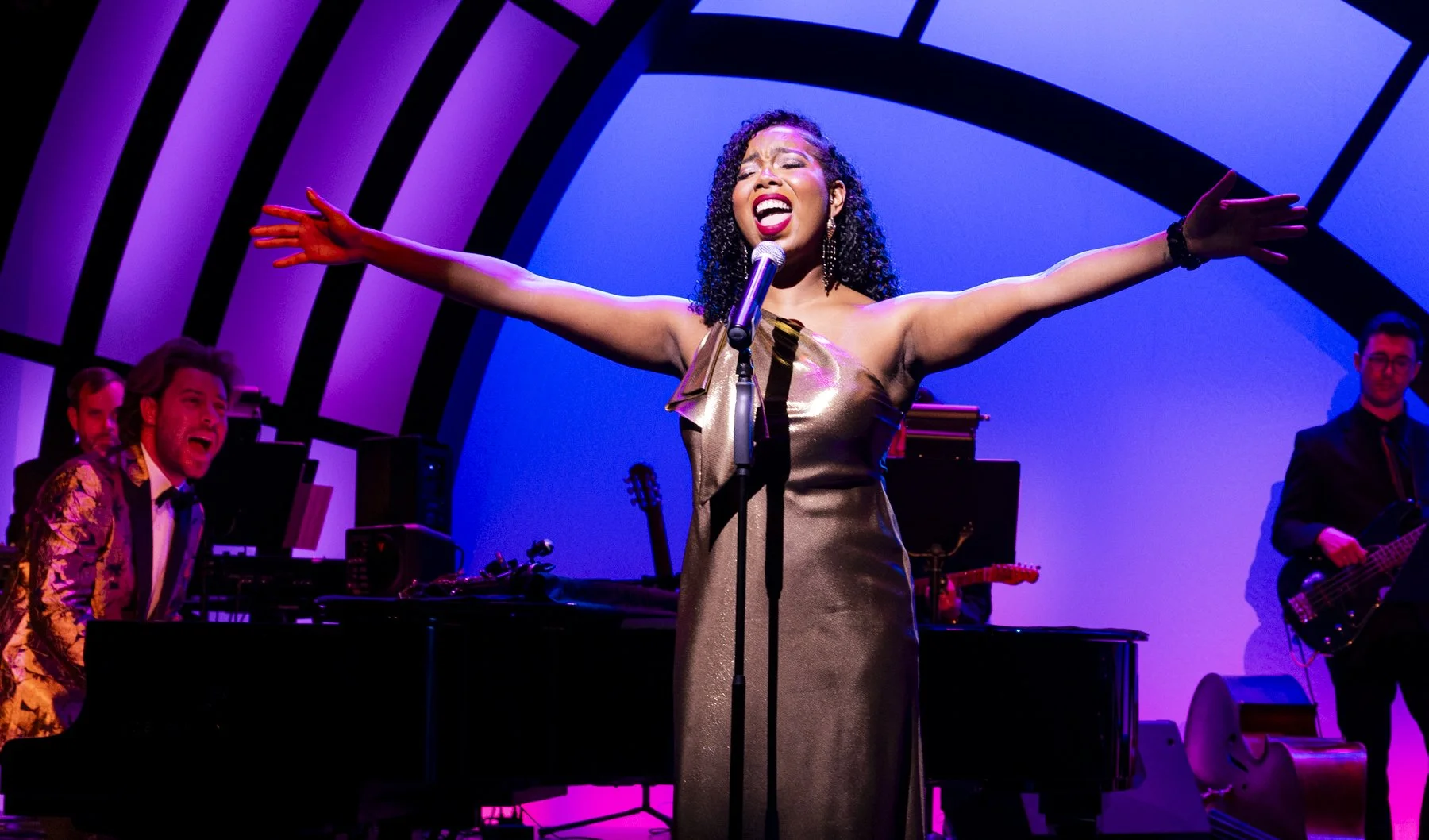
Ta-Tynisa Wilson brings a different kind of fire. Her “Don’t Make Me Over” is less a plea than a declaration, fiery and resolute, while “One Less Bell to Answer” unfolds with high-stakes emotion. John Pagano, meanwhile, supplies the invaluable authority of real-life experience. Having toured as the male vocalist with Bacharach and his orchestra for more than two decades, he sings with an ease and emotional transparency that cannot be faked. His performances of “A House Is Not a Home” and “God Give Me Strength” (the latter a collaboration between Bacharach and Elvis Costello) are both muscular and exposed, radiating experience without tipping into sentimentality.
Pagano’s take on the Tom Jones calling card “What’s New Pussycat?” is a minor coup of comic invention, transforming a song long flattened by familiarity into something gleefully strange and newly alive. By mimicking the stutter and skip of a scratched vinyl record, he conjures a vivid childhood memory—his father’s well-worn LPs—as both sonic texture and theatrical device. What might have been a throwaway novelty becomes, in his hands, an inspired piece of performance art: affectionate, self-aware, and impeccably timed.
Together, the three singers form a supple ensemble, harmonizing with ease and serving as one another’s backup when the spotlight shifts. At moments, the sound evokes the original recordings—the gentle sway, the buoyant optimism, even the familiar vocal flourishes—without sliding into parody or camp. The effect is affectionate rather than ironic, and all the more satisfying for it.
The spoken narration, distributed lightly throughout the evening, avoids the twin pitfalls of pedantry and gossip. Facts and observations are offered as seasoning, not as lectures, and the tone remains celebratory without becoming hagiographic. Those inclined toward deeper scholarship can seek it elsewhere; the show itself is content to let the music do most of the talking, er, singing.
The onstage band—Derek Duleba on guitar, Nate Francis on bass, Jakubu Griffin on drums, and Pat Firth on additional keyboards—plays with precision and restraint, serving the arrangements rather than competing with them. Solo moments are rare, but the ensemble sound is consistently rich.
Visually, the production is handsomely understated. The proscenium is framed with a vintage bandstand design by Christopher and Justin Swader in cool blues and magentas, while Frank Cazares’ costumes favor black and gold, lending the performers a classic, lightly burnished elegance. Matt Berman’s lighting design operates with an intelligence that resists the urge to announce itself. Rather than imposing a new palette upon the stage, it listens attentively to the colors already present, responding to them with a kind of visual courtesy. Hues are deepened rather than overwritten, with shadows allowed to breathe.
Seeing Going Bacharach: The Songs of an Icon is to spend an evening in the company of songs that have not merely endured but continue to reveal new facets when treated with care. The show is a resounding success—but more importantly, it understands why these songs mattered in the first place, and why they still do.
Click HERE for tickets.
Review by Tony Marinelli.
Published by Theatre Beyond Broadway on January 27th, 2026. All rights reserved.
