Gotta Dance!
Conceived by Nikki Feirt Atkins; Co-Directed by Nikki Feirt Atkins and Randy Skinner
Theatre at St. Jean’s, 150 East 76th Street, New York, NY 10021
November 25 - December 28, 2025
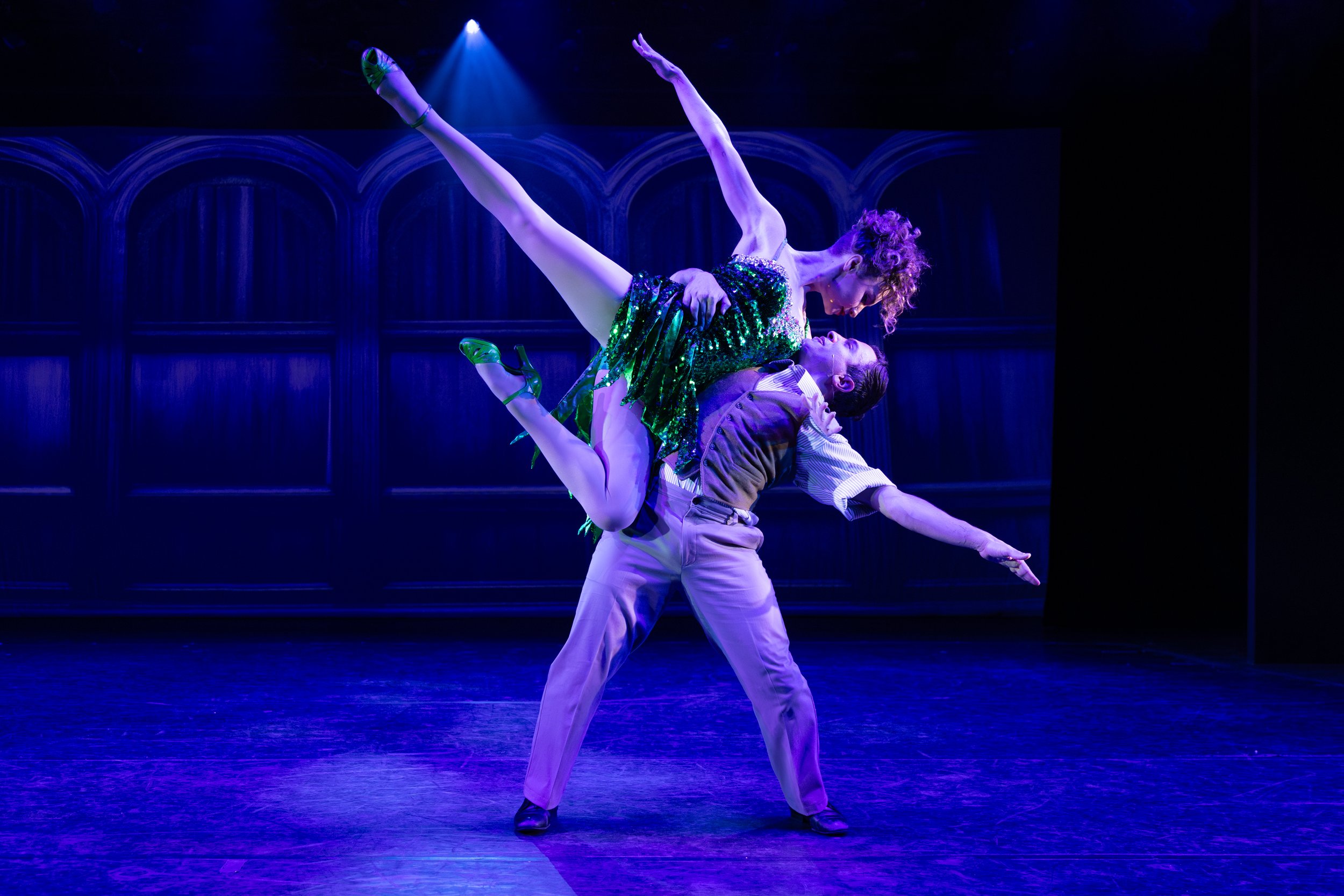
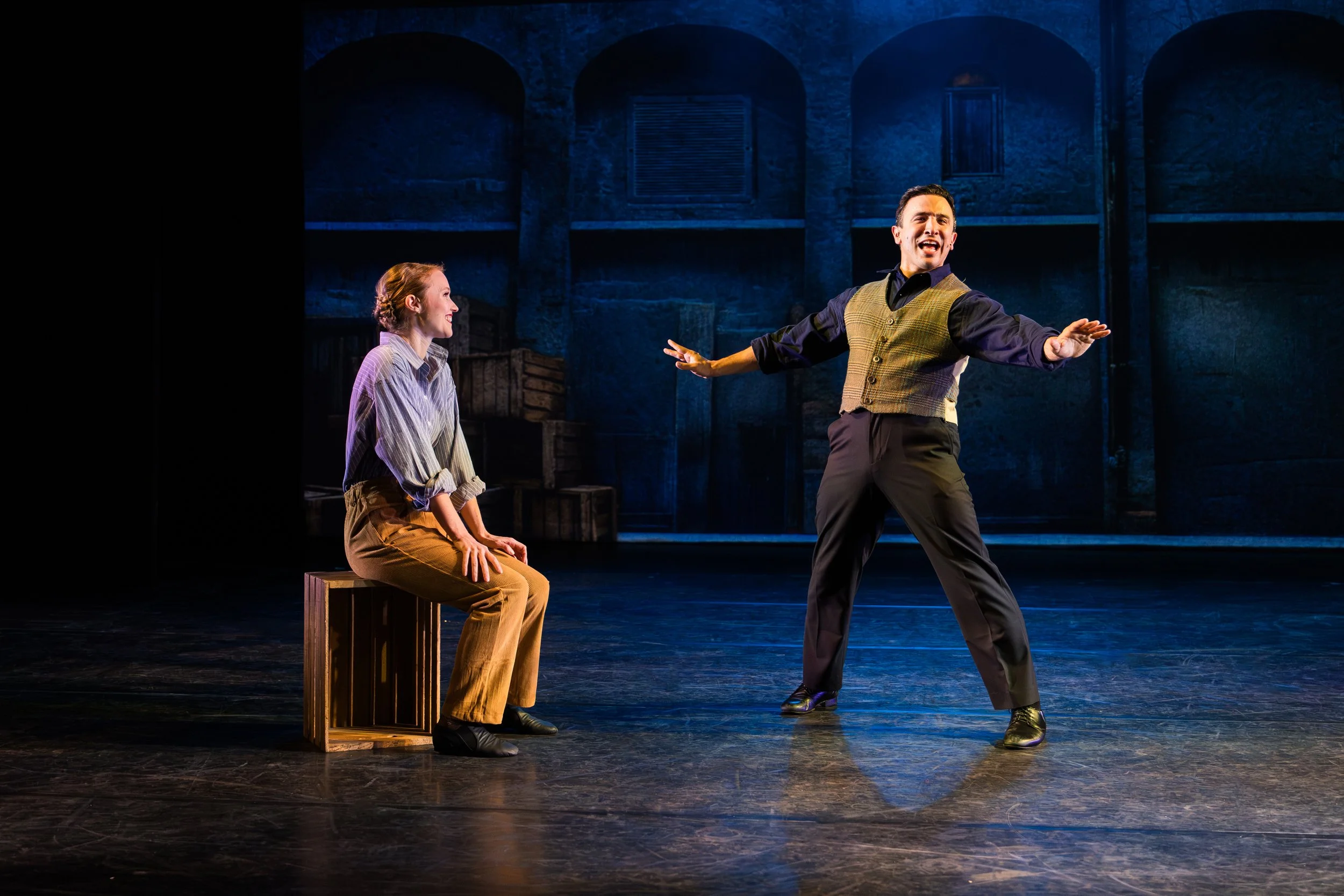
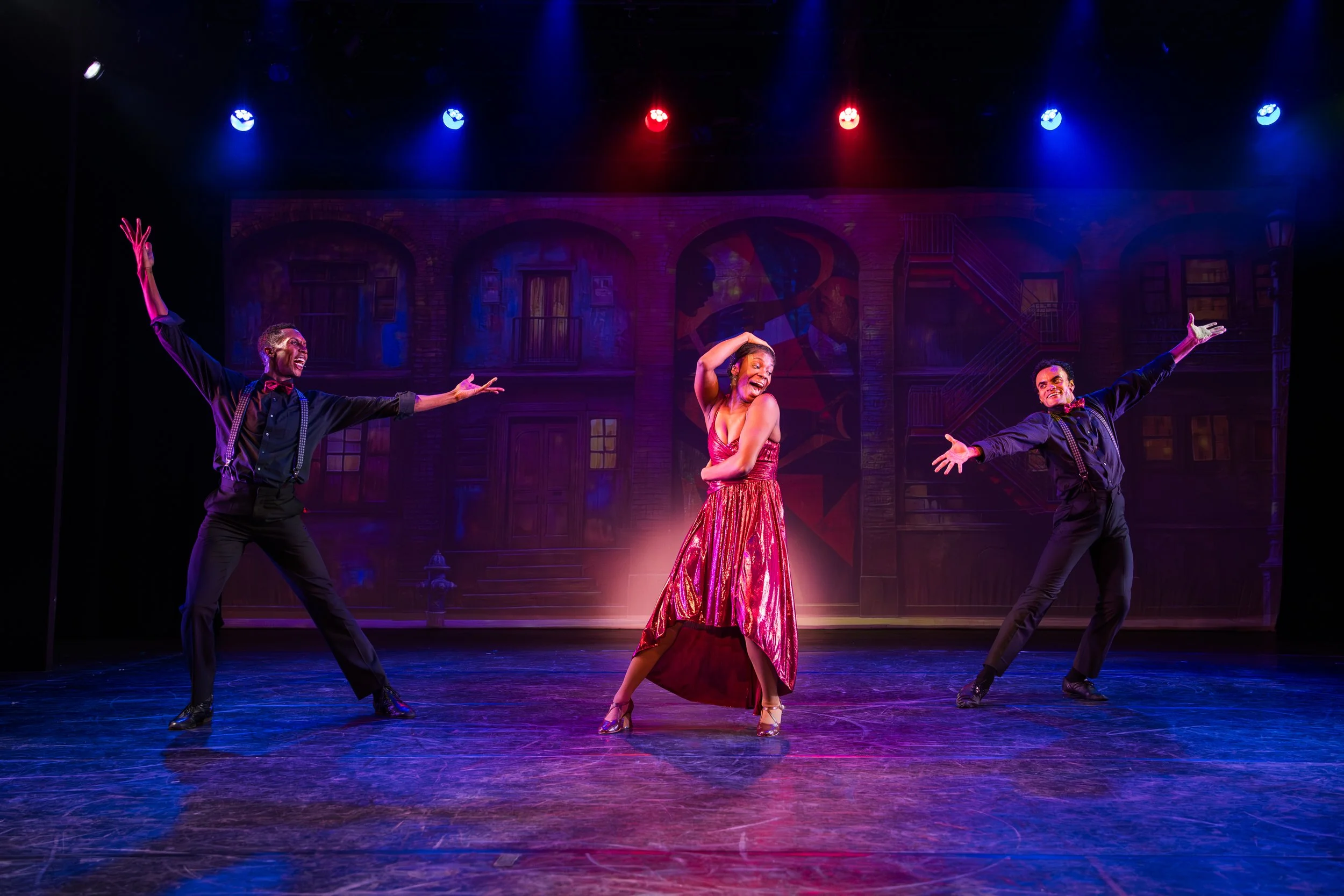
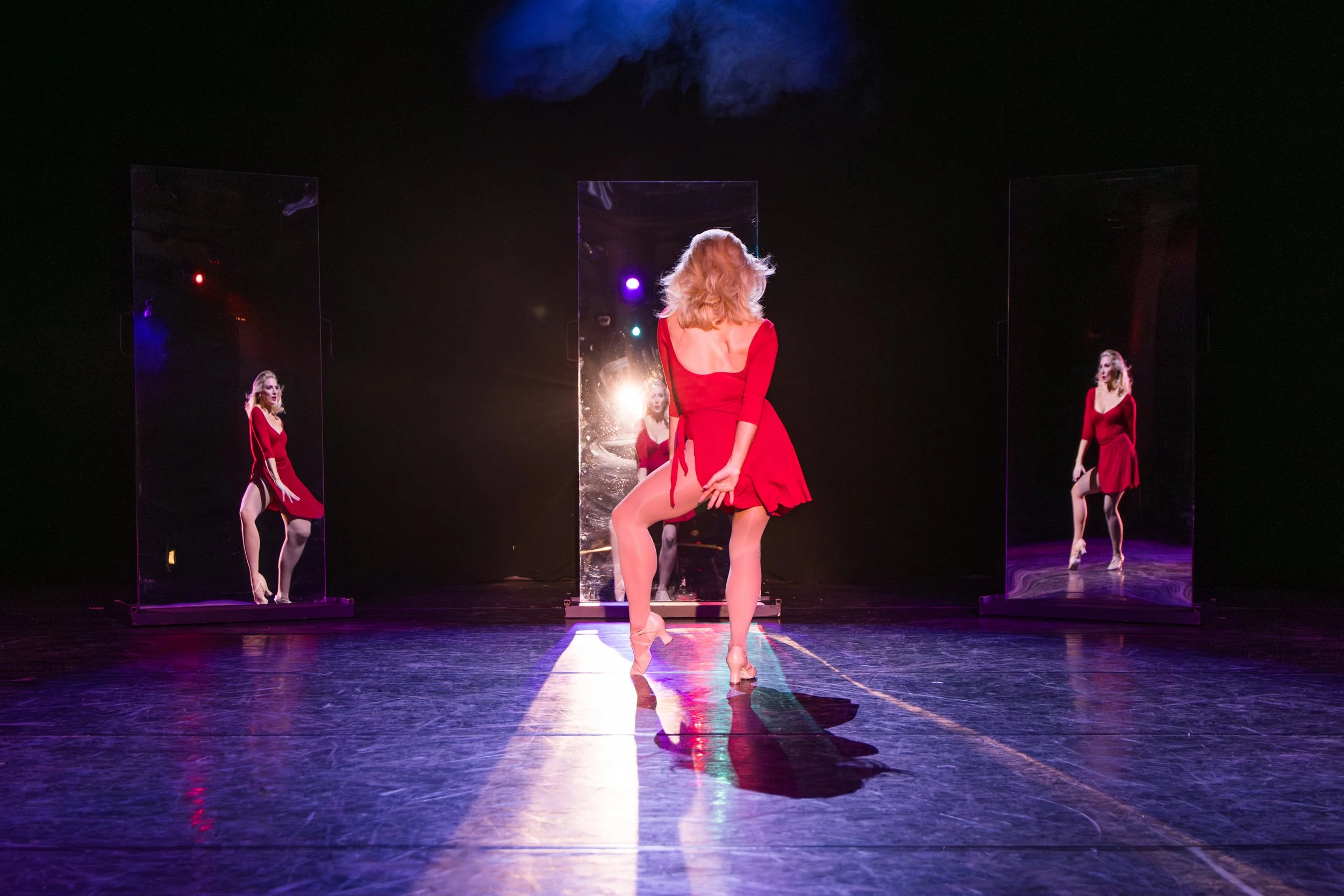
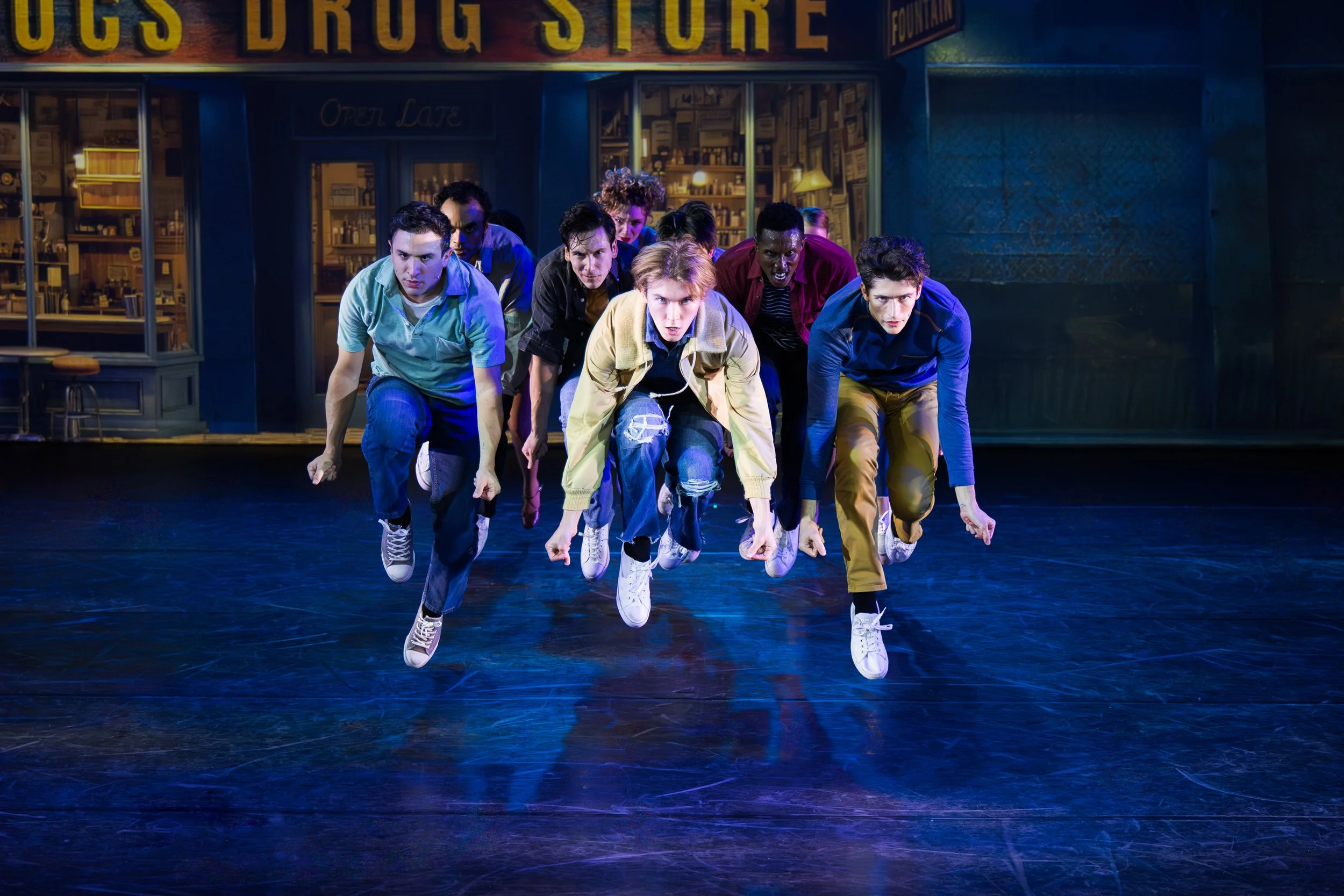
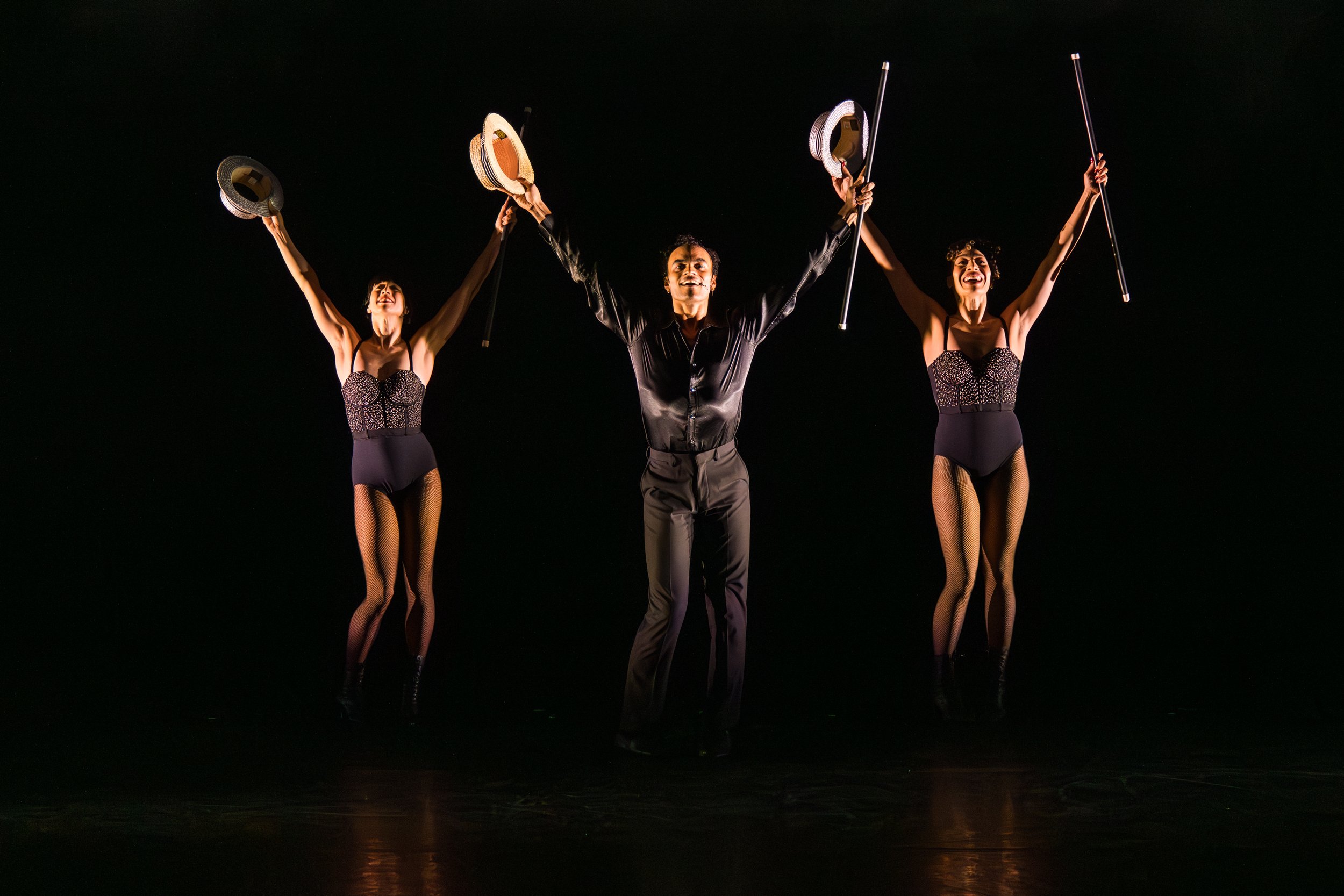
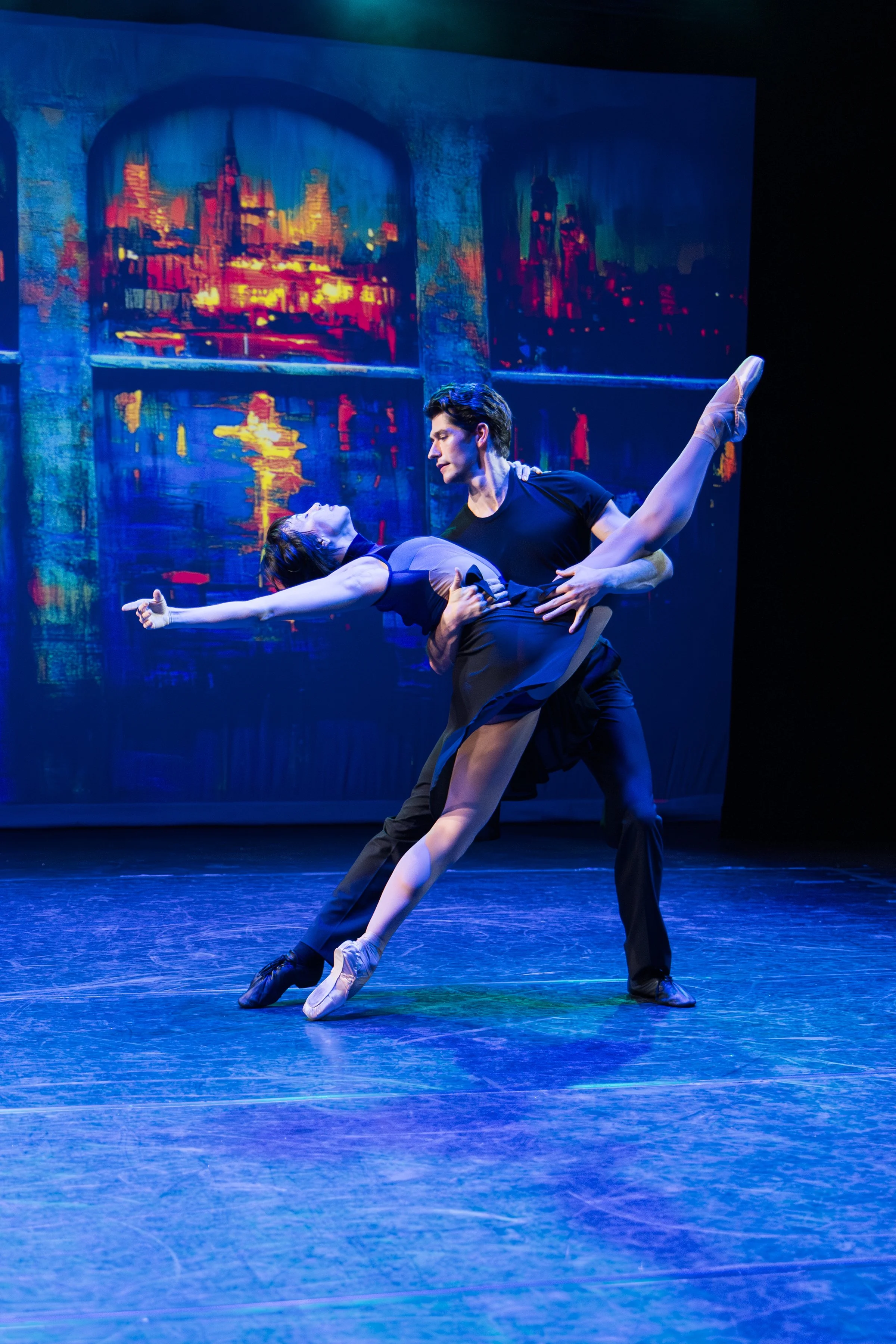

Photo Credit: Bjorn Bolinder
The American Dance Machine is one of those cultural enterprises whose value only becomes fully legible when we contemplate how easily it might not exist at all. Founded in 1978 by Lee Theodore—herself a seasoned Broadway dancer (West Side Story, Tenderloin, and many more) who went on to choreograph works such as Baker Street and Flora, the Red Menace—the organization was conceived as an act of preservation in a medium notoriously resistant to it. Dances disappear. Bodies age. Steps are forgotten. American Dance Machine set out to counter that entropy by keeping musical-theatre choreography alive in performance, while also running a school devoted to cultivating new Terpsichorean (after Terpsichore, one of the nine Muses in Greek mythology, who presided over dance and the chorus) talent. After Theodore’s death in 1986, the project drifted into dormancy, a fate befitting too many institutions dependent on a singular vision. Its revival in 2012 by Nikki Feirt Atkins, under the expanded name American Dance Machine for the 21st Century, has therefore always carried with it a sense of ethical as well as artistic mission.
Despite that revival, the company’s appearances have been frustratingly rare. Apart from a two-week engagement at the Joyce Theater in 2015, its accumulated riches have remained largely out of sight. That makes its current residency at the York Theatre Company—modest in scale but generous in spirit—all the more welcome. The retrospective offered here, Gotta Dance!, announces itself without irony or apology. This is a celebration, but also a reminder: of what Broadway choreography once was, of what it still can be, and of how much of it survives only because someone cared enough to remember the steps.
The evening’s format is unapologetically archival, and deliberately familiar. Like Jerome Robbins’ Broadway—that capacious compendium of a single master’s work that occupied the Imperial Theatre for a year and a half some thirty-five years ago—Gotta Dance! proceeds number by number, each dance extracted from its parent show and presented as a discrete object. The effect is something like leafing through a lavishly animated picture book: one style, one mood, one historical moment giving way briskly to the next. Each dance is credited not only to its original choreographer but also to a “stager,” the individual responsible for transmitting the choreography intact to the present cast. Among these custodians of memory are names that carry real authority—Donna McKechnie, Baayork Lee, Robert LaFosse—artists whose bodies once carried this material and now pass it on.
There are clear advantages to such an approach. Moment by moment, the evening is often exhilarating, and the fourteen dancers who now fill the Theatre at St. Jean’s are given abundant opportunities to demonstrate their range. Yet there are inevitable drawbacks as well. Removed from their original narrative frameworks, some dances struggle to generate the emotional charge they once possessed. Bob Fosse’s “Cell Block Tango” would be an odd curiosity without the back story we are given in Chicago: in the women’s annex of the Cook County Jail, the stage becomes a confessional chamber of gallows wit, where six inmates step forward to account for their incarceration. Each stands accused of killing a husband or lover, yet none approaches her testimony with penitence. Instead, the number is structured around the blunt, almost jaunty refrain “He had it coming,” a line repeated with mounting confidence until it hardens into a collective credo. In this world, guilt is beside the point; justification is everything. What gives the sequence its bracing theatrical snap is the way each woman’s story is reduced to a single, unforgettable verbal marker—“Pop! Six! Squish! Uh-uh! Cicero! Lipschitz!” These words punctuate the song like percussive blows, compressing motive, action, and aftermath into sharp syllables that linger in the ear. The effect is at once comic and unsettling: murder rendered as rhythm, confession transformed into choreography. By the time the number reaches its final beat, the audience has been invited—perhaps unwillingly—to tap along, complicit in the seductive logic of spectacle even as the moral ground continues to shift beneath it. “Cell Block Tango” is not performed in Gotta Dance!, so it’s a safe example to use here.
Then there is the matter of star power, that most indefinable but essential element. To inhabit choreography originally shaped by figures like Gene Kelly or Gwen Verdon requires more than technical assurance; it demands charisma, authority, and an ability to command attention even in stillness. Not everyone here possesses that alchemy in equal measure. Yet the standouts are unmistakable. Jessica Lee Goldyn emerges as a commanding presence: in Marlene Olson Hamm’s fabulous white feathered minidress, she nearly vibrates off the stage in “Teach Me How to Shimmy” from Smokey Joe’s Café. Earlier in the show, she led the entire cast in the Gwen Verdon tour de force from Sweet Charity, “I’m A Brass Band.” Later, as Cassie in “The Music and the Mirror” from A Chorus Line, she delivers not only pristine movement but shrewd acting; when Cassie insists, “I can’t act,” Goldyn’s performance gently contradicts her.
Brandon Burks likewise distinguishes himself, out-tapping an already impressive ensemble in “I Love a Piano” from White Christmas. His clarity, attack, and easy musicality suggest a performer poised on the brink of leading-man status.
One of Broadway’s most cherished chorus presences, the charismatic Jess LeProtto emerges here from the ensemble with a confidence that feels both earned and exhilarating. In two excerpts from Singin’ in the Rain, he channels the spirit of Gene Kelly not as an act of mimicry but as a lineage gracefully assumed. In the sultry, self-regarding “Broadway Melody,” LeProtto captures the number’s erotic swagger and backstage bravado, while in the irrepressibly buoyant “Moses Supposes”—performed alongside the extraordinary Brandon Burks—he releases a torrent of comic precision and athletic ease. Together, they make the number crackle with that rare combination of virtuosic tap and unforced joy. LeProtto’s gifts extend beyond homage. As Tulsa in the rapturous “All I Need Is the Girl” from Gypsy, he reveals a softer, more yearning dimension, investing the role with boyish hope and bruised ambition. Dancing opposite the endearing Deanna Doyle, he lets the choreography breathe, shaping Jerpome Robbins’ steps into a lucid emotional arc rather than a mere display of bravura. It is a performance that reminds us why LeProtto has long been a favorite from the sidelines—and why, when given the space to step forward, he commands attention with a generosity and grace that feel quintessentially Broadway.
The remaining dancers are uniformly accomplished—capable of pliés and vertiginous kicks with enviable ease—but they vary in vocal confidence and in that elusive magnetism that pulls the eye toward one body rather than another. This is not a criticism so much as an observation: star quality, like rhythm, cannot be evenly distributed.
The selection as a whole is admirably varied, drawing from both canonical and less exalted musicals. One may reasonably ask, however, about the absences. Where are Agnes de Mille, Michael Kidd, Tommy Tune? The emphasis here falls instead on Jerome Robbins, Bob Fosse, Michael Bennett, and Randy Skinner—who shares directing duties with Atkins—figures whose influence is undeniable but not exhaustive.
The evening demonstrates that choreography most often survives excerpting when it tells a complete story on its own. “Mr. Monotony” is exemplary in this regard. Cut from Easter Parade at MGM and from Miss Liberty on Broadway, the Irving Berlin song finally found a home in Jerome Robbins’ Broadway, where its wry fatalism made sense. Here, following Afra Hines’ sultry vocal introduction—a moment of poised calm—the ensuing trio unfolds as a perfectly legible romantic triangle, danced with wit and precision by Georgina Pazcoguin, Barton Cowperthwaite, and Taylor Stanley. The trio’s entire saga is contained within a few eloquent minutes.
Pure joy arrives in Lynne Taylor-Corbett’s lindy hop to “Sing, Sing, Sing” from Swing! Led by Samantha Siegel and Anthony Cannarella, the ensemble seems to take flight. Elsewhere, Christopher Wheeldon’s An American in Paris pas de deux, tenderly danced by Cowperthwaite and Pazcoguin, is very much a standalone fleeting gem, while Susan Stroman’s extended “Simply Irresistible” from Contact, narratively coherent, with one man’s voracious craving and animalistic pull is very much intact after the show’s initial appearance 25 years ago. Completing the evening within its formidable triple-threat ensemble whose collective excellence gives the production both its polish and its pulse are Paloma Garcia-Lee, Kendall LeShanti, Drew Minard, and Blake Zelesnikar. Individually, each brings a distinct physical vocabulary, vocal color, and theatrical intelligence; together, they function as a living archive of Broadway style, moving fluently from tap to jazz to balletic line without ever losing narrative clarity or musical wit. It is that rare ensemble in which no performer fades into the background, each presence sharpening and elevating the next, and their cumulative effect serves as the evening’s most persuasive argument: that musical theatre, when entrusted to artists of this caliber, remains a supremely expressive art form.
Visually, the production is wisely austere. There is essentially no set—and none is needed. Anything more would only impede the kinetic clarity of the dancing. Ken Billington’s lighting is, as ever, both immersive and intelligent, shaping space without calling attention to itself, while Brian C. Staton’s projections remain modest and unobtrusive. What dominates, rightly, is the human body in motion, carrying history forward step by remembered step.
What remains, finally, is a deeply pleasurable assemblage: not a definitive survey, (a devoted audience wouldn’t have minded another hour tacked on to the 90-minute tease), but a persuasive reminder of how much we love Broadway musicals for the way they move. Gotta Dance! offers a brisk, propulsive evening in the theater, and a generous showcase for emerging talent working in dialogue with the past. In preserving these dances, the American Dance Machine does more than honor history; it insists that choreography still matters, and that it is worth watching closely, while it lives.
Click HERE for tickets.
Review by Tony Marinelli.
Published by Theatre Beyond Broadway on December 16, 2025. All rights reserved.