
LAUDER: Scotland’s Kilted King of Broadway
Written by Jimmy Logan
Adapted by Kally Lloyd-Jones and Jamie MacDougall, Directed by Kally Lloyd-Jones
Presented by Scottish Opera and Loch Doune Productions
59E59 Theaters, Theater B, 59 East 59th Street, 59 East 59th Street, New York, NY 10022
May 14, 2026 - June 7, 2026

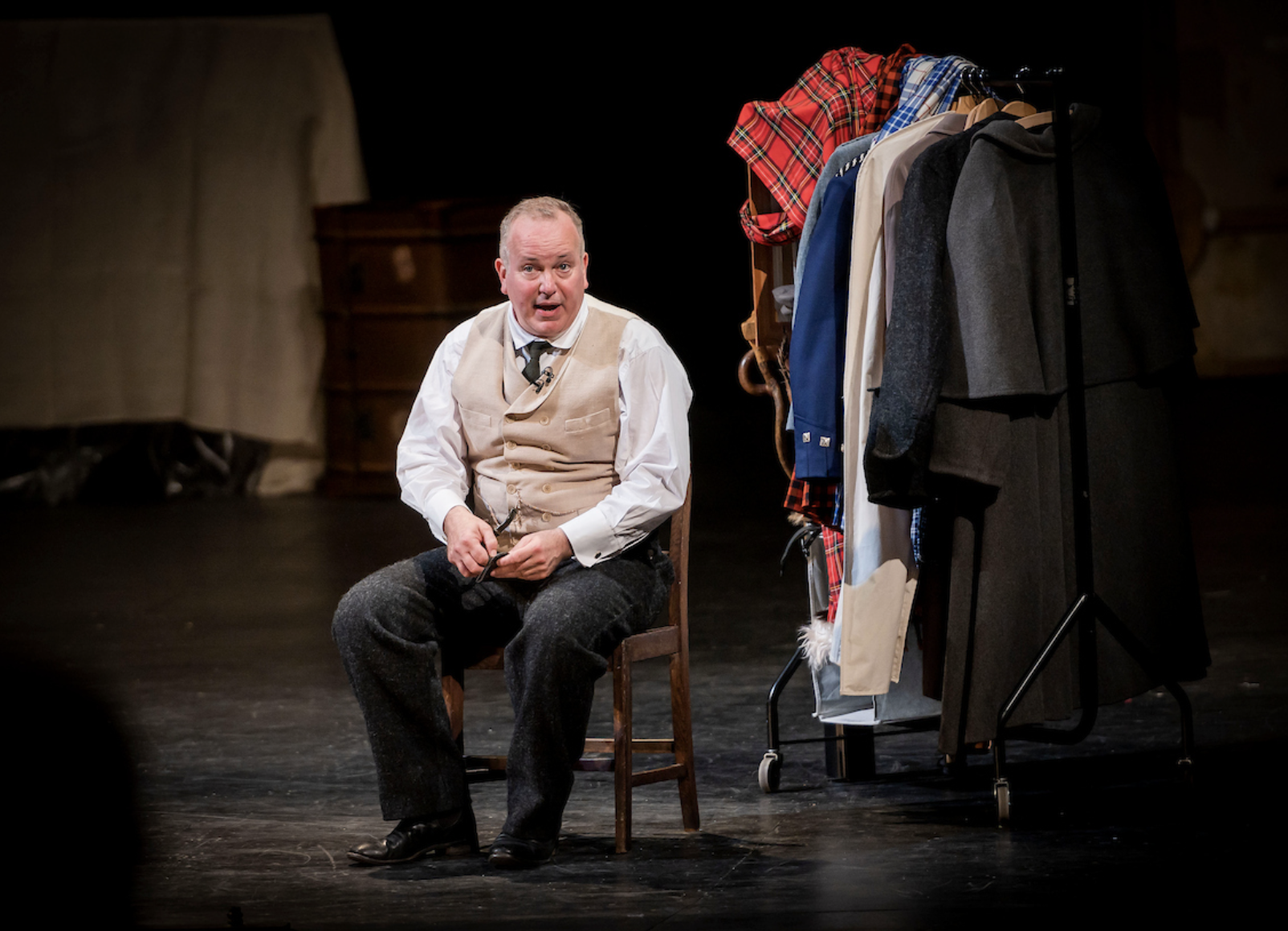

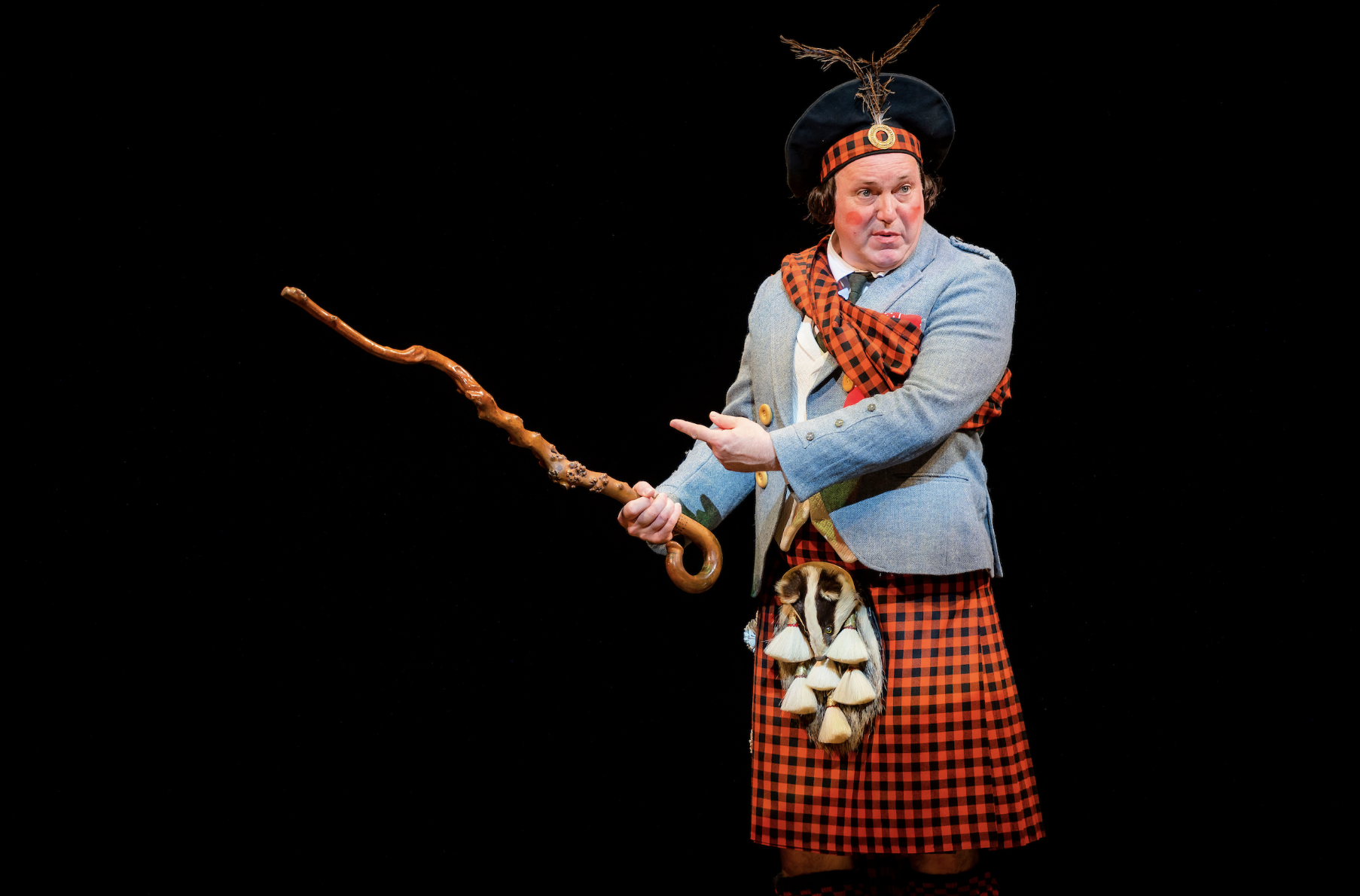
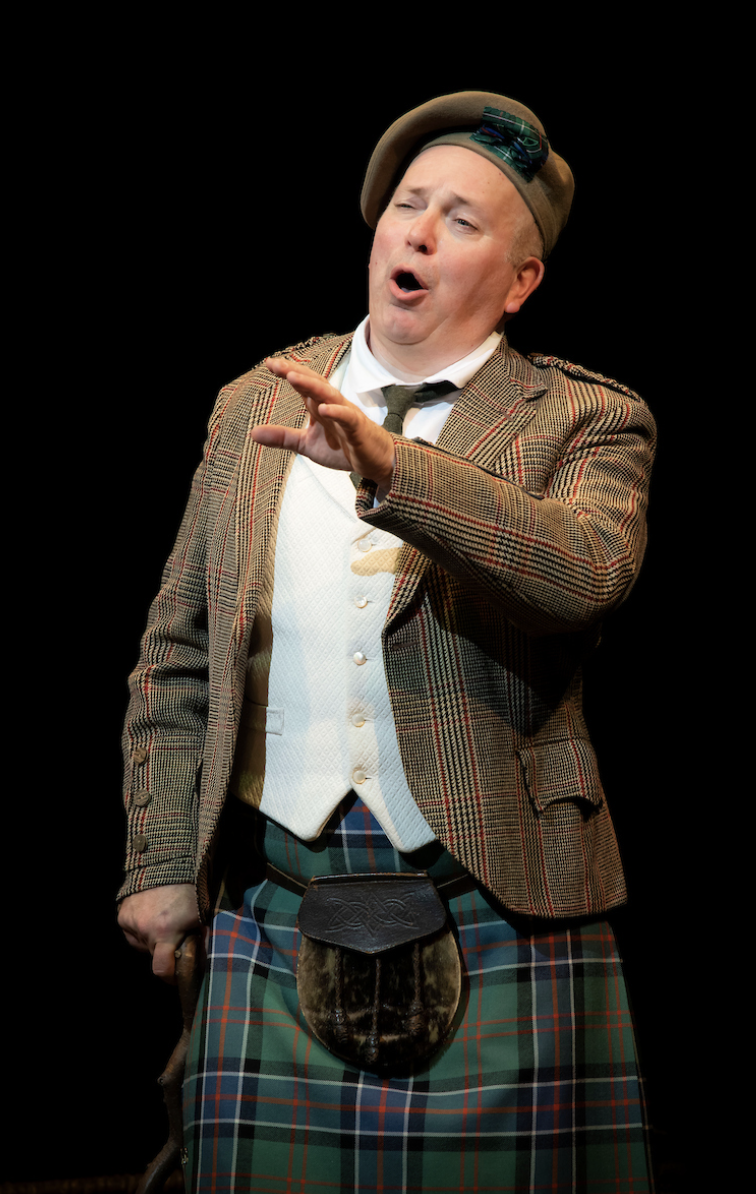
Photo credit by Alan Peebles
Scottish Opera and Loch Doune Productions’ Lauder: Scotland’s Kilted King of Broadway, now at 59E59 Theaters, performs a small miracle of theatrical archaeology. In an age obsessed with reinvention, this warm, witty, exquisitely crafted entertainment resurrects a figure who once stood among the most famous entertainers on earth and restores him not as a museum piece but as a living, breathing force of personality. The result is that rare biographical show that manages to be educational, nostalgic, moving, and irresistibly entertaining all at once.
The evening chronicles the extraordinary life of Sir Harry Lauder, the kilted music-hall titan whose rise from the coal mines of Lanarkshire to international celebrity reads like a folk tale made flesh. Adapted by Kally Lloyd-Jones and Jamie MacDougall from a script by Jimmy Logan, the production traces Lauder’s improbable ascent from poverty to knighthood with a light touch that never mistakes reverence for solemnity. Rather than offering a dry historical lecture, it presents the entertainer as he would undoubtedly have wished to be remembered: telling stories, singing songs, and holding an audience in the palm of his hand.
MacDougall’s performance is the production’s beating heart. He does not attempt a strict impersonation, nor does he need to. Within minutes he captures something more valuable than physical resemblance: Lauder’s irrepressible spirit. Possessing the instincts of a born raconteur, MacDougall slips effortlessly between self-deprecating humor, theatrical swagger, and genuine emotional vulnerability. Every anecdote lands with the confidence of a man who has spent a lifetime learning exactly how to command a room. He teases an unseen interviewer, gently spars with his accompanist, and confides in the audience as though inviting old friends into his parlor.
Most importantly, MacDougall understands that Lauder’s genius resided not merely in his songs but in his uncanny ability to make audiences feel personally addressed. Whether recounting the entertainer’s shrewd self-promotion, his carefully cultivated public persona, or his remarkable rise to become the highest-paid performer in the world, MacDougall radiates the charisma that made such achievements plausible. His performance possesses an infectious joy that spreads through the auditorium; one senses not an actor portraying delight but a performer genuinely reveling in the privilege of sharing this story.
The songs themselves emerge as far more than historical curiosities. Numbers such as “I Love a Lassie,” “Stop Your Tickling, Jock,” “A Wee Deoch-an-Doris,” and the immortal “Roamin’ in the Gloamin’” arrive naturally within the narrative, illuminating both the performer and the era that produced him. MacDougall delivers them with crystalline diction, robust musicality, and a mischievous twinkle that recalls a vanished age when personality mattered as much as vocal prowess. By the time the audience begins unconsciously anticipating each chorus, it becomes clear why generations once carried these melodies home from the theatre and into everyday life.
At the piano, music director Derek Clark proves an indispensable partner. His accompaniment possesses elegance, wit, and sensitivity, supporting the storytelling while providing several comic moments of its own. The interplay between Clark and MacDougall creates the impression of a long-established double act, one capable of generating laughter with a glance or a perfectly timed interruption. Together they transform the intimate space into something resembling a bustling music hall, where songs, stories, and audience rapport flow seamlessly together.
Lloyd-Jones’ direction displays an admirable understanding of theatrical economy. What could easily have become a static evening of reminiscence instead moves with buoyancy and rhythm. The framing device of an interview allows Lauder’s memories to unfold organically, while the production’s deft pacing ensures that biography and performance continually enrich one another. Even the darker chapters of Lauder’s life—particularly the devastating loss of his son during the First World War—are integrated with remarkable grace, lending emotional depth without disrupting the evening’s fundamentally celebratory spirit.
The design work is equally accomplished. Janis Hart provides a deceptively simple environment whose wicker trunks, costume pieces, and period details evoke an entire career spent traversing stages around the globe. Her costumes beautifully capture both the iconic kilted showman and the prosperous theatrical celebrity he became. Meanwhile, David Cunningham supplies atmospheric lighting and evocative projections that reinforce the production’s status as both memory play and music-hall revival. Historical imagery, including glimpses of Lauder’s funeral and career, deepens the sense of encountering a forgotten chapter of theatrical history.
What ultimately makes Lauder so rewarding is its refusal to treat its subject as a relic. By the evening’s end, Lauder emerges not merely as an important historical figure—the first British performer to sell a million records, a global celebrity before the modern machinery of fame, a humanitarian whose wartime fundraising earned him a knighthood—but as a vividly human presence. The production reminds us that charisma, humor, resilience, and generosity never go out of style. In MacDougall’s radiant performance, Sir Harry Lauder strides back onto the stage he once conquered, and for eighty delightful minutes the distance between past and present vanishes entirely. This enchanting production does more than celebrate a forgotten star; it demonstrates exactly why the world fell in love with him in the first place.
Click HERE for tickets.
Review by Tony Marinelli.
Published by Theatre Beyond Broadway on June 7, 2026. All rights reserved.
