
Written by Jean Genet
In a new version Written and Directed by Kip Williams
St. Ann’s Warehouse presents the Donmar Warehouse production
Joseph S. & Diane H. Steinberg Theater at St. Ann’s Warehouse, 45 Water Street, in Brooklyn
May 17, 2026 - June 14, 2026
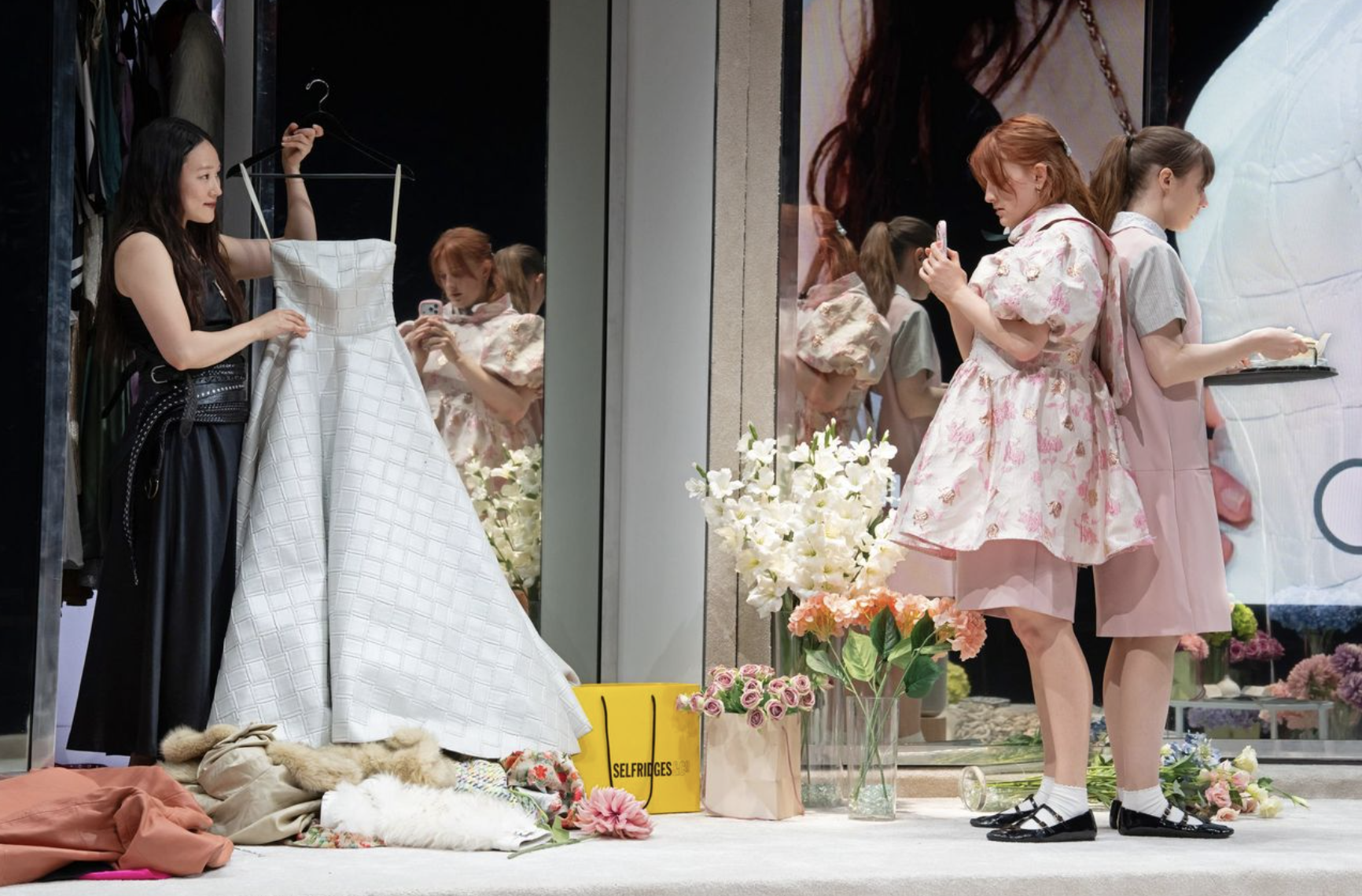
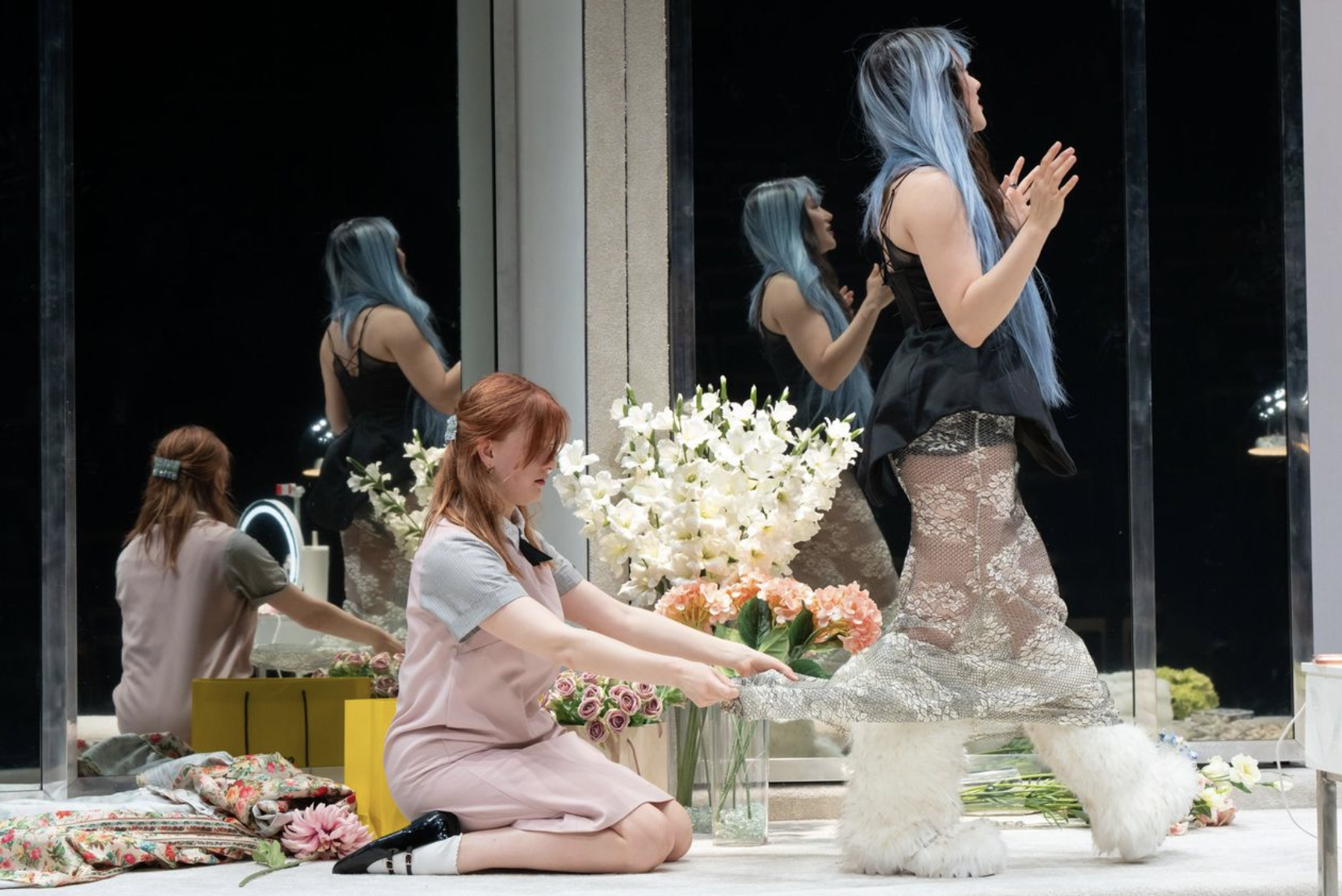
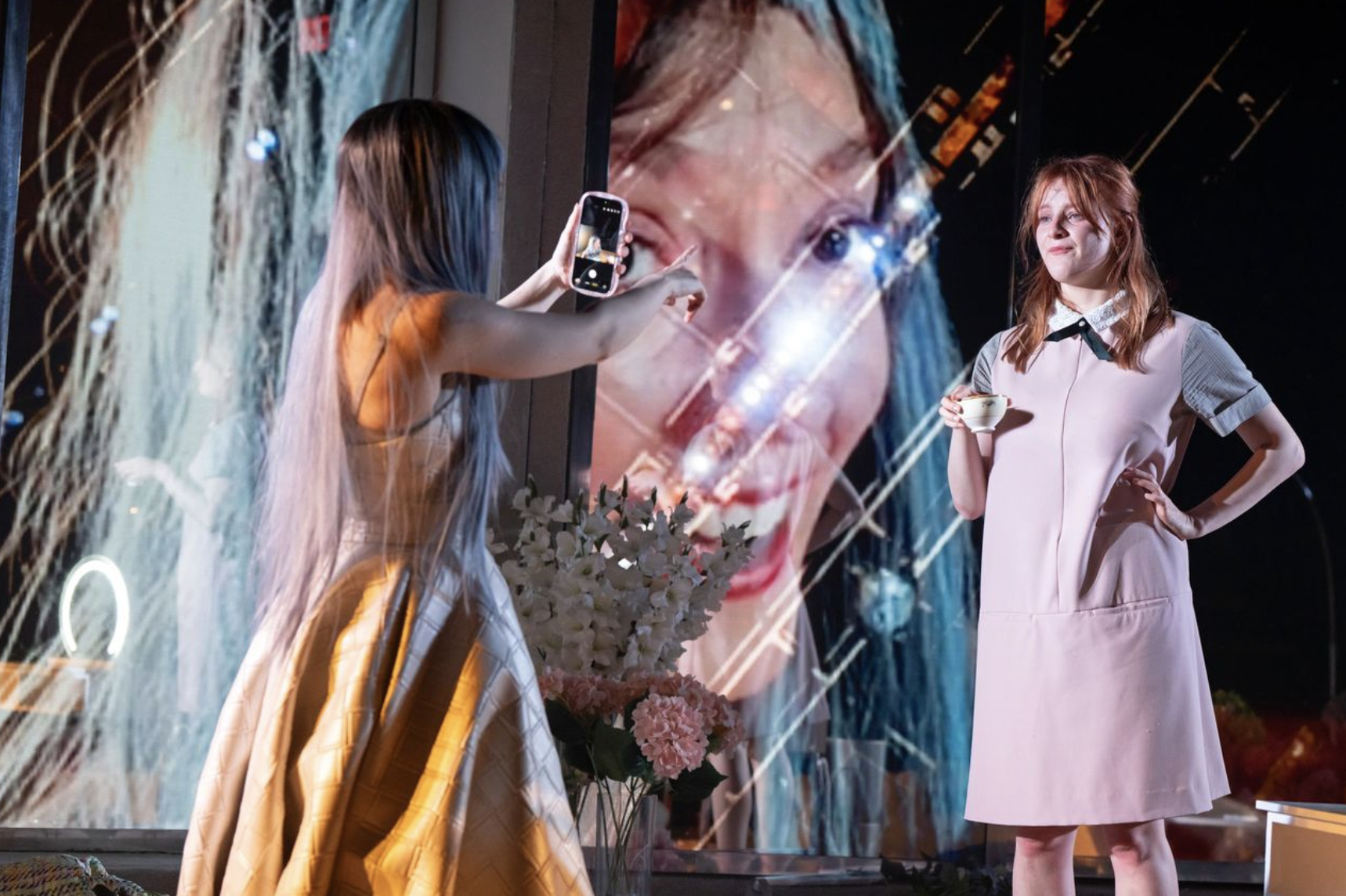
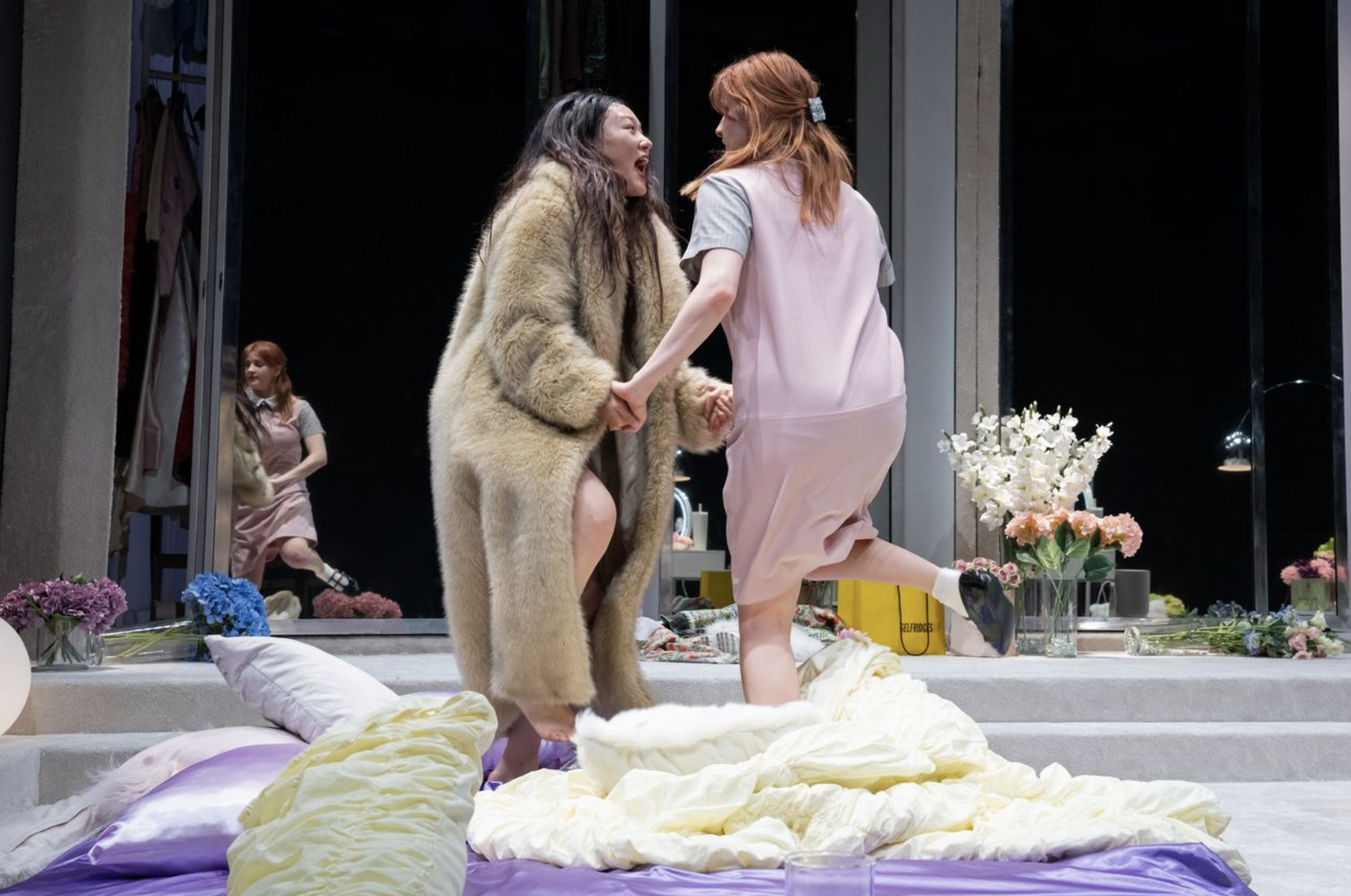
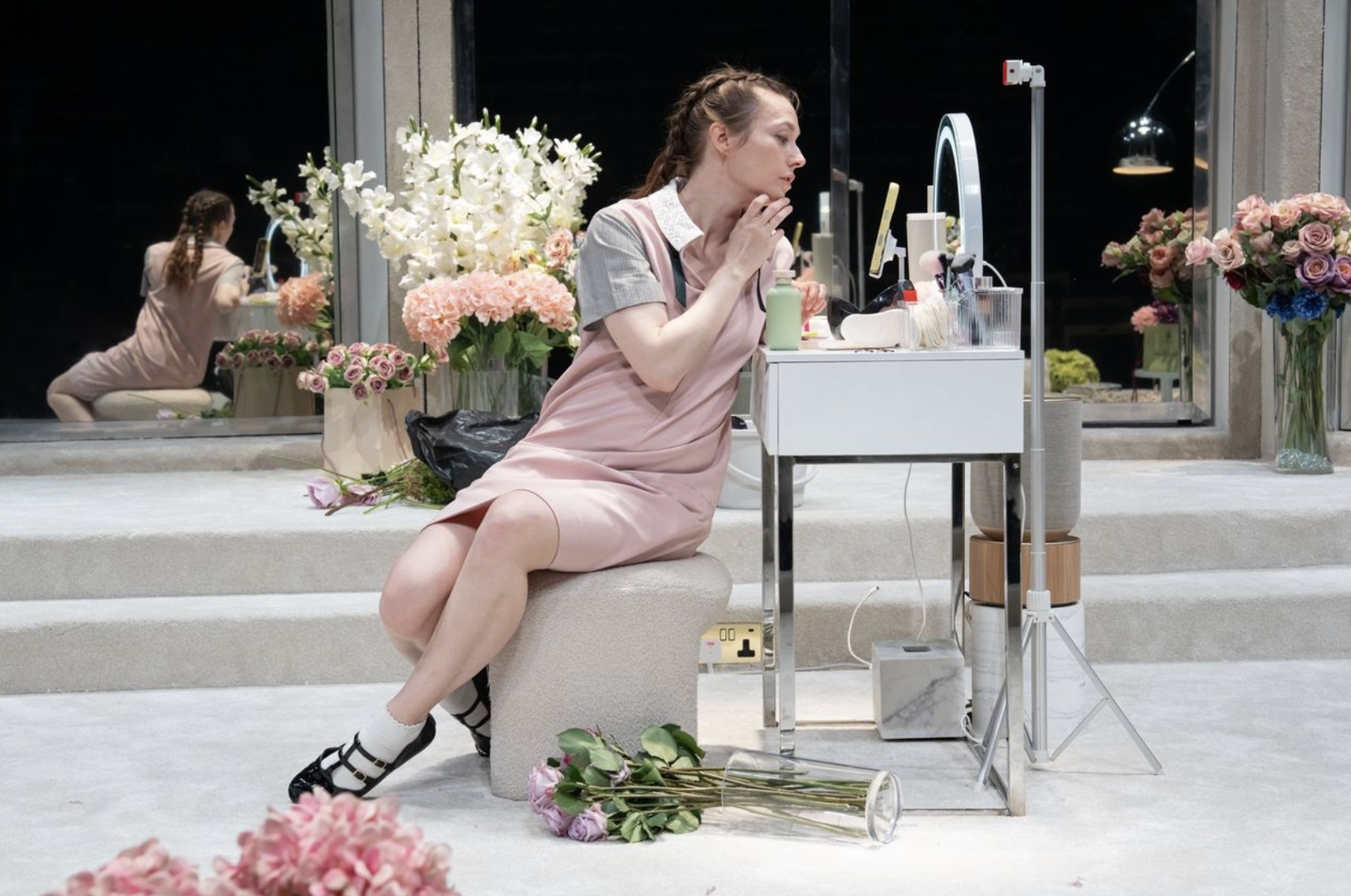
Photo credit by Julieta Cervantes
Actors play to cameras in Kip Williams’ astonishing reimagining of Jean Genet’s The Maids, but what initially appears to be a surrender to the tyranny of screens gradually reveals itself as something far more intricate: a theatrical hall of mirrors in which identity, power, desire, class resentment, and self-invention collide with the digital compulsions of the twenty-first century. Closing out the season at St. Ann’s Warehouse in a co-production with London’s Donmar Warehouse, Williams’ adaptation transforms Genet’s 1947 masterpiece into a fever dream of influencer culture without sacrificing the playwright’s enduring fascination with performance as both liberation and prison.
The brilliance of Williams’ adaptation rests partly in its recognition that Jean Genet was already writing about the instability of identity long before the arrival of smartphones and social media. Inspired by the notorious Papin sisters—Christine and Léa, two live-in servants whose shocking 1933 murder of their employer became a national obsession and a symbol of class resentment in France—The Maids emerges from a lineage of rebellion and social alienation. The story was uniquely suited to Genet, that patron saint of society’s outsiders, whose years in reformatories and prisons fostered a lifelong fascination with those pushed beyond the boundaries of respectable life. In his work, thieves, vagabonds, and criminals are transformed into unlikely martyrs, their transgressions elevated into a dark kind of poetry. What fascinated Genet was never merely violence itself but the unstable dance between domination and submission, desire and resentment, authority and revolt. Williams understands this inheritance deeply. His production preserves the playwright’s feverish fascination with power while translating its rituals into the language of contemporary image culture, revealing that the performance of identity remains as seductive—and as dangerous—as ever.
Williams’ celebrated “cine-theatre” aesthetic, which dazzled audiences in The Picture of Dorian Gray, finds an even more organic home here. Rather than employing visible camera operators, the production places the technology directly into the hands of the characters. Phones become weapons, mirrors become screens, and self-documentation becomes a form of psychological warfare. Every projection feels motivated by character rather than gimmickry. The result is not merely multimedia theatre but an exhilarating dramatization of contemporary consciousness itself—a world in which people increasingly experience life through the lens of their own performance.
The technical achievement is staggering. Zakk Hein’s video design transforms Rosanna Vize’s sumptuous bedroom set into a constantly mutating landscape of reflection and distortion. Towering projections bloom across mirrored wardrobe doors, enlarging faces into grotesque digital avatars swollen by beauty filters and warped by algorithmic fantasy. The visual language is at once seductive and horrifying, exposing the strange modern condition in which self-expression and self-erasure have become almost indistinguishable. Rarely has video technology been integrated into a theatrical production with such precision, wit, and dramaturgical intelligence.
Vize’s set itself is a marvel of storytelling. A cream-colored boudoir overflowing with flowers, couture gowns, cosmetics, wigs, and mirrors becomes a shrine to aspirational femininity. Wrapped initially in translucent gauze, the room seems suspended between dream and reality, inviting the audience into a private realm of fantasy before gradually exposing its darker undercurrents. The mirrored closets loom like portals into alternate identities, while the avalanche of luxury goods becomes a constant reminder of the gulf separating servants from mistress. The space is both paradise and prison.
Jon Clark’s lighting design proves equally expressive, glowing with the flattering radiance of a ring light one moment and hardening into something far more punitive the next, bathing the stage in the cold glare of an interrogation room. The shifts are subtle but psychologically exact, illuminating the production’s central tension between self-curation and self-exposure. In a world where every character is desperate to control her image, Clark’s lighting becomes another merciless instrument of revelation, exposing the loneliness, desperation, and hunger lurking beneath the glossy surfaces.
Marg Horwell’s costumes deepen that visual seduction. Madame’s wardrobe radiates impossible privilege, while Claire and Solange move through a world of cast-off glamour they can inhabit only temporarily. Every gown pulled from a closet, every wig donned during one of the sisters’ role-playing rituals, becomes a symbolic act of trespass. Horwell understands that fashion is central to Genet’s drama: clothing is not merely decorative but transformative, allowing characters to step into fantasies that simultaneously empower and destroy them.
At the center of the production stand three extraordinary performances. Lydia Wilson and Phia Saban are breathtaking as Claire and Solange, sustaining a level of emotional and physical intensity that feels almost superhuman. Their relationship shifts constantly between tenderness and cruelty, complicity and rivalry, love and annihilation. Each actress captures a distinct yearning while remaining fluid enough to dissolve into the other when the play demands it. Watching them navigate Williams’ dense choreography of performance, technology, and psychological warfare is thrilling. Opposite them, Yerin Ha delivers a sensational Madame, a creature of radiant narcissism and terrifying self-belief. Her performance captures the peculiar modern pathology of influencer culture: a woman simultaneously trapped by and empowered through the image she projects.
The production’s sonic landscape is equally intoxicating. Composer DJ Walde and sound designer Dan Balfour create an atmosphere of mounting dread that pulses beneath every scene. Classical music collides with electronic textures, hyperpop rhythms, and cinematic swells, producing a soundscape that mirrors the characters’ increasingly unstable inner worlds. The score transforms Genet’s psychological drama into something approaching a thriller, amplifying every humiliation, every fantasy, and every eruption of violence with relentless force.
What ultimately distinguishes Williams’ adaptation is its recognition that Genet was already writing about many of the anxieties that define contemporary life. Long before Instagram, TikTok, or Snapchat, he understood that identity is a performance, that power often derives from spectacle, and that people can become trapped by the roles they create for themselves. Williams’ innovation is not to impose modern concerns onto Genet but to reveal how prophetic the playwright already was. The sisters’ obsession with becoming Madame feels entirely of this moment, a reflection of a culture in which admiration and resentment have become inseparable and in which the desire to destroy power often masks an equally powerful desire to possess it.
The result is a production that overwhelms in the best possible sense. It is dazzling, discomfiting, hilarious, grotesque, exhilarating, and deeply intelligent. Williams assaults the senses while illuminating the mechanisms through which contemporary culture manufactures fantasy and longing. Every artistic element—video, performance, sound, design, costume, and text—works in concert to create a theatrical experience of rare ambition and accomplishment. In an age saturated with images, The Maids becomes a magnificent meditation on what remains of the soul when life itself begins to resemble content. Genet’s masterpiece emerges not as a relic of postwar theatre but as a startlingly relevant vision of a society intoxicated by appearances, and Williams has fashioned from it one of the most thrilling and unforgettable productions currently on the New York stage.
Click HERE for tickets.
Review by Tony Marinelli.
Published by Theatre Beyond Broadway on June 10, 2026. All rights reserved.
