
LIPSTICK
Based on the original story by Linda Morales Caballero
Stage adaptation written by Linda Morales Caballero & EduDíaz
Performed by Edu Díaz; Directed by Lil Malinich
Presented by Eduardo Díaz Productions in partnership with Fuerzafest
Presented by the New York City Fringe Festival
Chain Theatre Studio, 312 West 36th Street, New York, NY 10018
Sun April 5 at 3:55pm, Tue April 7 at 7:55pm, Thu April 16 at 7:55pm & Sun April 19 at 2pm
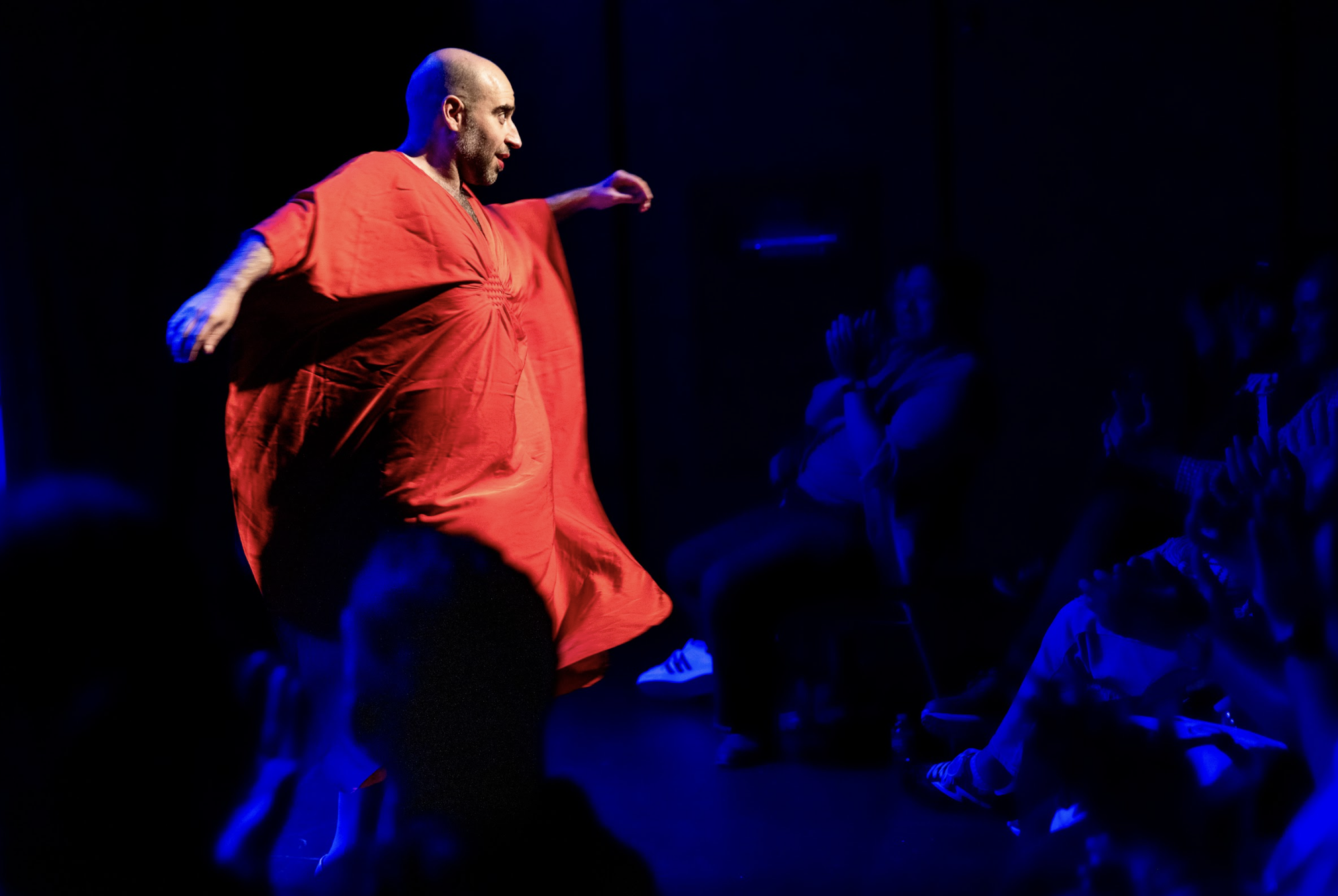
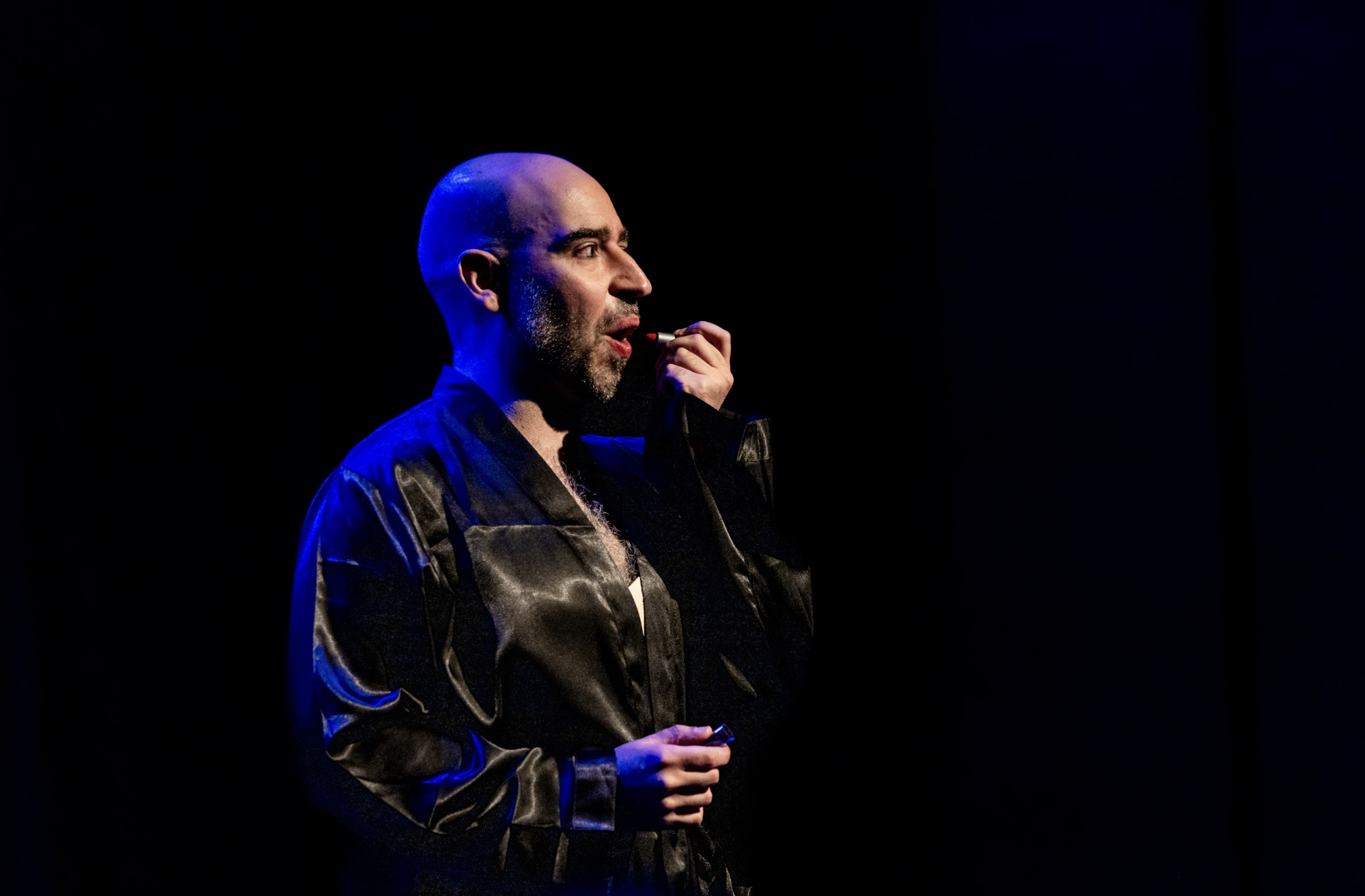
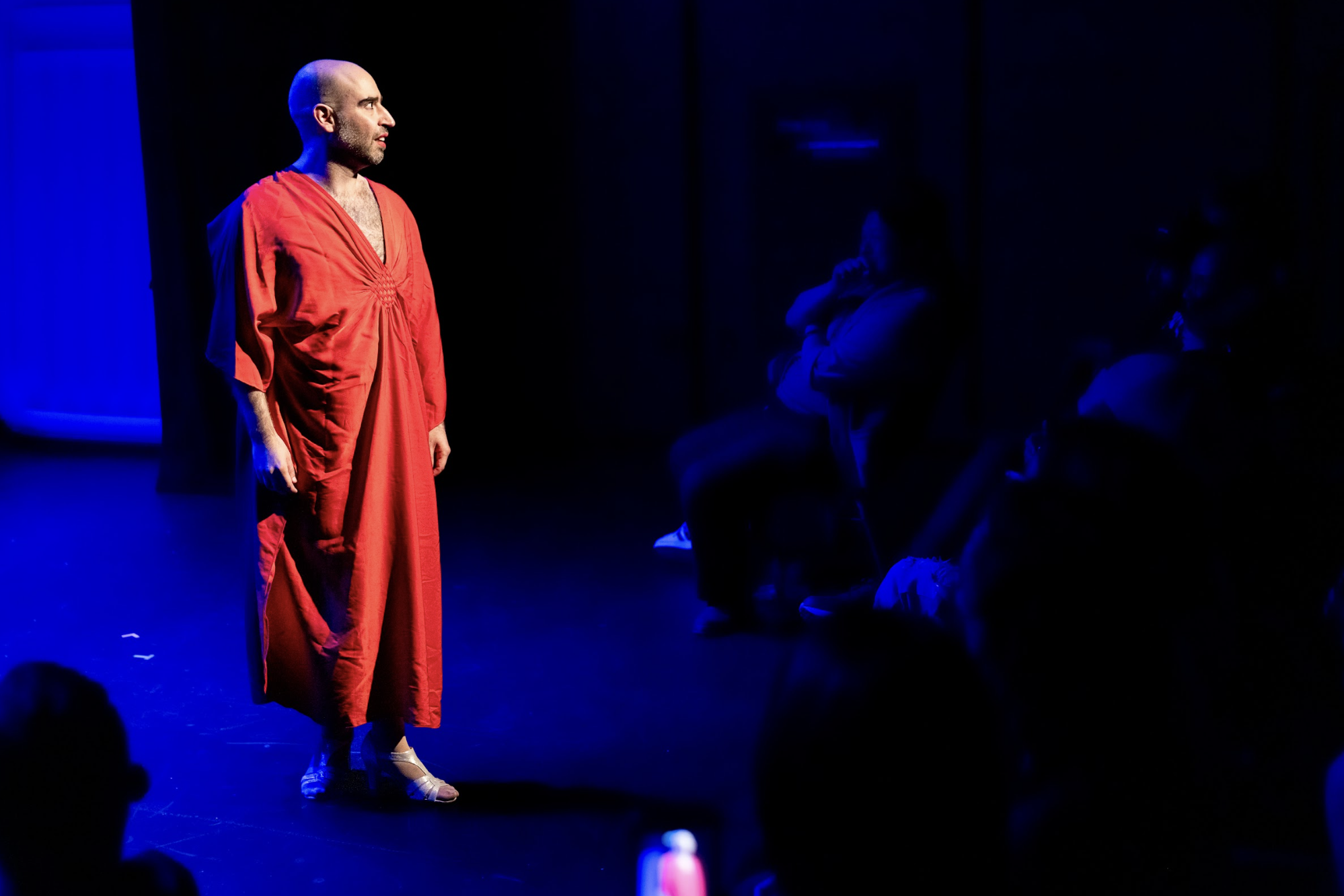
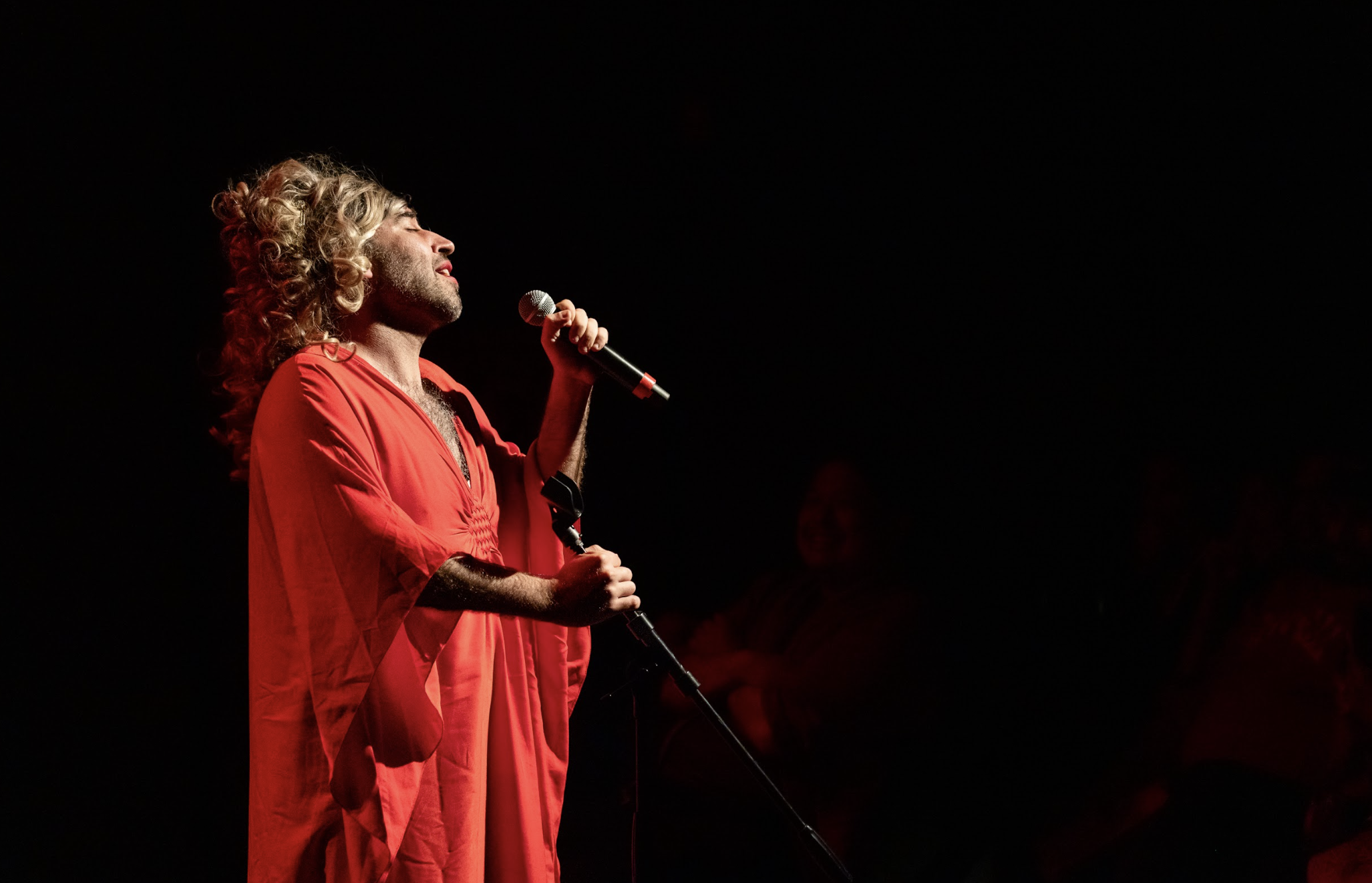
Cosmetics, through history, have often been regarded with a peculiar ambivalence, imputing to them a transformative potency that oscillates between moral suspicion and commercial allure. They have been castigated as instruments of vanity and deceit, even as they are marketed—seductively, insistently—as tools of self-invention. In Lipstick, a searching and unexpectedly tender solo work adapted from “Labial,” a short story by the Peruvian writer Linda Morales Caballero, this long-standing cultural tension is neither resolved nor dismissed but instead reanimated, refracted through the intimate lens of one family’s inheritance of silence, performance, and longing.
The production, now arriving in a newly expanded, English-language incarnation as part of the New York City Fringe Festival 2026, bears the marks of a work that has been carefully, even lovingly, developed over time. What might have remained a slender literary adaptation has here been coaxed into something more capacious: a theatrical meditation on identity that feels, at once, rigorously constructed and emotionally unguarded. Its narrator—unnamed, though vividly realized—is brought to life by the Canary Islands–born actor and co-writer Edu Díaz, whose performance anchors the evening with a kind of tensile vulnerability.
Before a single word is spoken, Lipstick announces its tonal intelligence with a gesture of elegant restraint: music. The Musical Director, Ángelho Díaz, is present onstage from the outset, his piano offering not mere accompaniment but a kind of dramaturgical scaffolding—phrases that do not simply underscore the action but anticipate, refract, and, at times, gently destabilize it. In these opening moments, the score carries a faint echo of silent-film melodrama, its cadences suggestive of an emotional world just on the verge of articulation, where gesture precedes language and feeling outruns explanation. Into this delicately charged atmosphere steps Edu Díaz, and his entrance is calibrated with exquisite care. Clad in a dressing gown, clutching a small box with an almost furtive urgency, he appears less to arrive than to materialize—as though summoned by the music itself. His initial encounter with the audience is marked by a flicker of genuine surprise, even alarm, a moment that collapses the distance between performer and spectator and establishes, with disarming immediacy, the central tension of the piece: the fraught, unsteady negotiation between visibility and concealment.
The box—its contents withheld, its significance deferred—functions as a quiet but potent emblem, a repository of meaning that hovers at the edge of revelation. When Díaz sets it down, with a care that borders on ritual, he begins to speak, and the play’s governing inquiry comes into focus. Is it safer to remain unseen, to exist in the shadowed margins where scrutiny cannot wound? Or is there a greater, if more perilous, truth in being witnessed as one is—fully, vulnerably, without the protective scrim of invisibility? Director Lil Malinich doesn’t have Díaz rush this question; he inhabits it. His performance in these early moments is marked by a finely tuned hesitancy, as though each word must negotiate its own passage into the open. The effect is one of heightened emotional awareness, a sense that we are not merely being told a story but are instead present at the very instant of its becoming. And under it all, Ángelho Díaz’s piano continues to murmur, to insist, to remind us that what we are witnessing is as much an act of composition as it is of confession.
In this work of striking emotional lucidity and theatrical restraint, identity is not so much declared as excavated—unearthed, layer by fragile layer, from the sediment of memory, performance, and the uneasy rituals of self-reckoning. Díaz, who both co-authors and embodies the piece, situates us within a consciousness in motion, one that toggles, with disarming fluidity, between past and present, between the child who once stood unseen and the adult still grappling with the psychic residue of that invisibility.
The dramaturgical architecture is deceptively spare. With little more than a pair of glasses, a wig, and a calibrated shift in body language, Díaz conjures four distinct presences: his present self, his younger self, his mother, and his therapist. These transformations, executed with an almost sleight-of-hand elegance, never call attention to themselves; rather, they clarify and deepen the emotional terrain, allowing the audience to traverse a multiplicity of perspectives without ever losing narrative footing. What might, in lesser hands, feel schematic instead becomes, here, a kind of intimate choreography of selves.
At the molten center of the work lies the figure of the mother, glimpsed again and again at her mirror, applying lipstick with a kind of ritualistic absorption, while her son hovers at the periphery, unacknowledged. It is an image that accrues power through repetition, its symbolism both precise and expansive: the act of adornment as self-fashioning, the mirror as both portal and barrier, the child’s invisibility as a quiet but enduring wound. Díaz resists the temptation to render this dynamic in melodramatic strokes; instead, he allows it to persist as a low, insistent hum beneath the piece, shaping the contours of identity in ways that feel both specific and hauntingly universal.
The titular lipstick emerges, gradually, as more than a prop or motif. It becomes a mutable emblem of transformation, a means through which Díaz interrogates the very notion of a fixed self. In some of the evening’s most affecting passages, he speaks to the possibility of existing beyond singular definition, of inhabiting identity as something fluid, contingent, and, at times, joyfully unstable. These moments, which might easily tip into didacticism, are rendered with a notable delicacy; they feel discovered rather than proclaimed, earned rather than imposed.
Threaded throughout is the language and structure of therapy—breathwork, repetition, the careful parsing of thought into manageable units. Díaz approaches this material with clear-eyed ambivalence. Control is offered as both solace and illusion: a way of holding oneself together, even as the fissures remain. The piece is wise enough to resist the promise of catharsis as cure; feelings, it suggests, are not eradicated but accommodated, given shape and, perhaps, a measure of grace.
What ultimately animates Lipstick is Díaz’s performance, which possesses a rare combination of precision and vulnerability. He is, at every turn, fully present—attuned to the smallest shifts in tone and gesture, unafraid to linger in discomfort, and deeply committed to the truth of each emotional beat. Even in those moments when the piece circles its central ideas, worrying them rather than resolving them, Díaz’s magnetism holds the stage. And when the work does arrive—suddenly, piercingly—at a point of clarity, it lands with a force that feels less like conclusion than recognition.
Threaded through the play’s shifting recollections and recursive self-interrogations are musical interludes that feel less like embellishment than like emotional release valves—snatches of song, rendered in Spanish by Edu Díaz with a disarming directness, that crystallize what the spoken text only circles. These moments arrive almost furtively at first, as though smuggled in under the cover of memory, yet they accrue a quiet authority, becoming integral to the work’s tonal architecture. The most extended—and, not incidentally, the most galvanizing—of these is a Spanish-language rendition of “I Will Survive”, here transformed into “Sobreviviré.” The choice is at once playful and pointed. Gloria Gaynor’s anthem of defiance, so indelibly associated with feminist and queer resilience, is neither parodied nor merely repurposed; it is inhabited. Díaz approaches the song not as a showpiece but as a reckoning, allowing its familiar contours to gather new weight within the context of the protagonist’s ongoing struggle to reconcile who he has been with who he might yet become.
What emerges is not a triumphant declaration so much as a hard-won articulation of endurance. The lyrics—already etched into the cultural imagination—resonate here with a particular intimacy, aligning with the play’s larger insistence on process over resolution. Certainty, the unnamed protagonist suggests in one of the evening’s more quietly provocative turns, may not be the refuge we imagine it to be; to possess all the answers might, in fact, foreclose the very openness that makes transformation possible. Anxiety, in this light, is not simply a burden but a condition of becoming.
And yet, Lipstick resists the temptation to sanctify uncertainty entirely. In a culminating gesture that is at once theatrical and deeply personal, Díaz marks a shift—a symbolic costume change that reads as both shedding and emergence. Accompanied, once more, by music that seems to breathe alongside him, he arrives at a conclusion that feels less like resolution than like permission: that the absence of certainty is no justification for remaining unseen. If identity is, as the play insists, an ongoing negotiation, then visibility—however provisional, however fraught—is not something to be deferred. It is something to be claimed, here and now, in all its luminous, precarious immediacy.
Click HERE for tickets.
Review by Tony Marinelli.
Published by Theatre Beyond Broadway on April 10, 2026. All rights reserved.
