There’s Something Seriously Wrong with Cyrus
Written and performed by Cyrus Deboo. Directed and co-created by Jessica Lynn Johnson.
Produced by Soaring Solo Studios and Fringe Management, LLC.
Presented by the New York City Fringe Festival
April 11–12, 2026 at Chain Theatre, Chain Studio, 312 West 36th Street, New York, NY 10018.



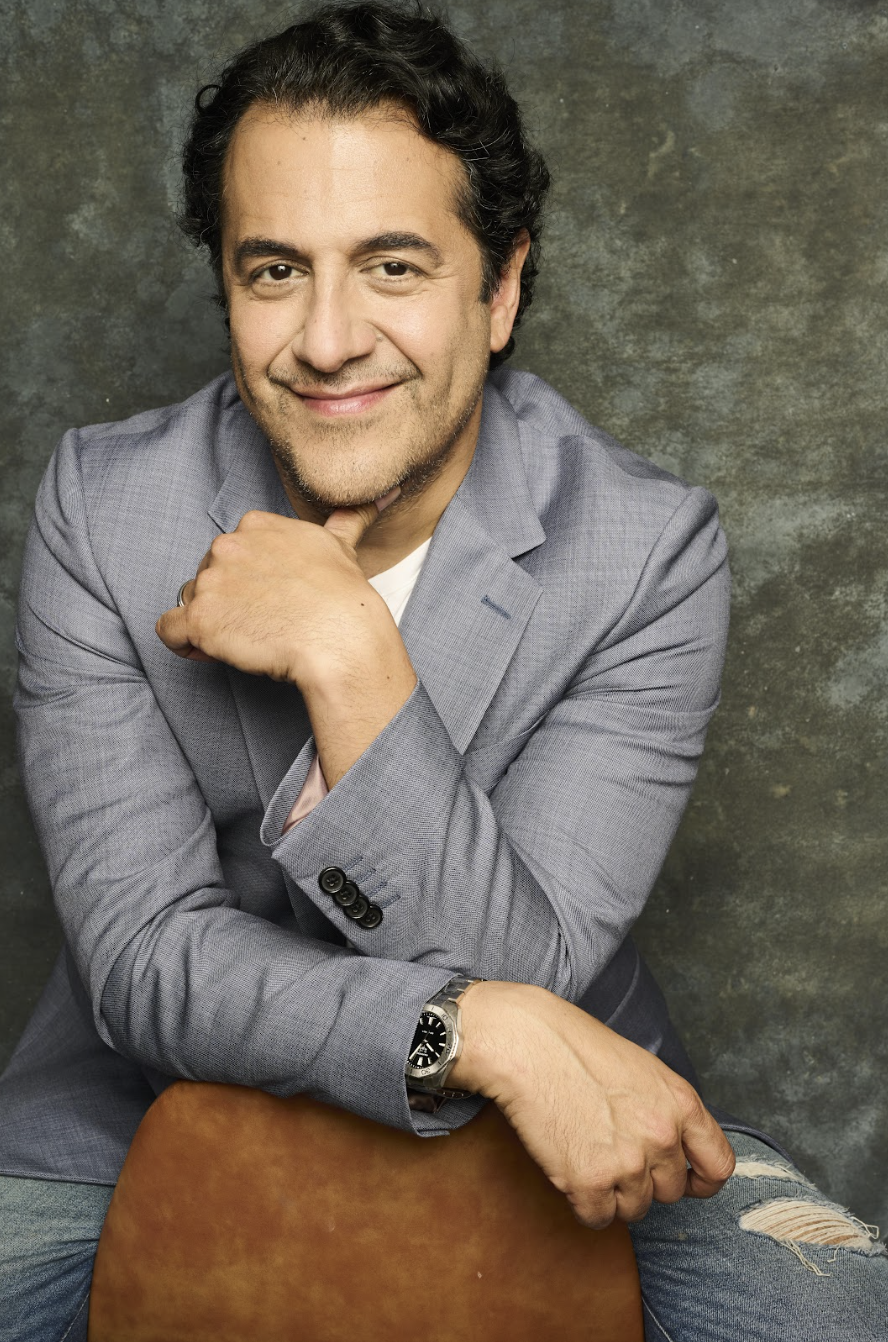
Cyrus Deboo is charming. Sweet, funny, self-deprecating, handsome, and clearly a deeply nice person. That is both the show’s greatest asset and its central problem.
There’s Something Seriously Wrong with Cyrus traces his arc from a Seattle childhood, born to Indian and Iranian immigrant parents, through the slow, costly process of recognizing and accepting his queer identity, to a present-tense life that includes a husband who, by his own account, makes him a better person. Directed and co-created by Jessica Lynn Johnson, the production deploys family photos, videos, and music from Madonna, Olivia Newton-John, and Taylor Swift. The projection work is fun and warm, providing context for each chapter of Deboo’s life. It doesn’t move the story forward. That limitation reflects something operating throughout the whole show: we are told about a mess without ever being shown the messiness.
The subtitle promises the journey from hot mess to hot bitch. What we see is a man who is, as far as we can observe, neither. Deboo is so committed to the facade of charm and niceness that he can’t let the harder material breathe. The show is a historical record of what happened rather than any real showing of his heart.
What’s conspicuously absent is naming. Deboo grew up at the intersection of racism and homophobia, both all-encompassing. Anti-Asian, anti-Indian, anti-Middle Eastern hostility on one side; anti-gay sentiment inside the very South Asian communities he might have otherwise turned to on the other. He gestures toward all of this and then retreats. He hints at involvement in LGBTQIA2S+ movements but never pursues it. He never addresses his mixed race identity directly. He tells his story in a way that doesn’t assign blame, doesn’t name systems, and doesn’t leave anyone in the room feeling uncomfortable, including himself.
That restraint has a structural consequence. The show’s most charged moment is a scene in which Deboo, drunk, unleashes his anger at his father. The rage is real. For a beat, the show opens. Because we haven’t been let inside his relationship with his father at any real depth before this point, the outburst lands as a disruption rather than a culmination. The moment that should carry the weight of everything that came before it instead arrives out of nowhere.
The show finds its footing when Deboo commits to specific people. His character work is confident and clear: each figure is well defined and fully inhabited. The boyfriend, now husband, is rendered with enough specificity that you believe in both people and their history. A longtime elder mentor is equally vivid. In both cases, Deboo is not afraid to let us see how much he loves these people. That willingness is precisely what makes the characters real. The production's best single moment comes after Cyrus’s blow-up with his father, when his loving husband holds him accountable in a way that no one else in the show is willing to: he calls Cyrus out on his crap, names it, and won't allow Deboo to walk away from himself. Here, finally, is a scene where the story is being lived rather than narrated.
Years ago, when I was developing my own solo show, the director Chay Yew gave me advice that frustrated me enormously at the time: “Now is the time to be brave and show who you really are.” What the hell did that even mean? I wanted specifics. Later, once it became clear, I understood it to mean giving yourself permission to show the ugly. To stop performing warmth and likability. To be inside the fire and let it burn you. What it means in practice is something only the artist can work out.
The show is standing at exactly that door. He knows he was at war: with family expectations, with cultures that had no room for him, with racism and homophobia that were all-encompassing. He knows what it costs to survive and thrive. He just hasn’t yet decided it’s safe to show us. Because we know from the opening moments that he makes it, the stakes are low throughout. The price he paid to get here is only hinted at.
Audiences who gave this show its awards weren’t wrong about what they felt in those rooms. Deboo is worth the ticket, and his charm does carry the show. What could be a serious, epic account of what it means to be gay, Desi, and South Asian and Middle Eastern mixed race in America both then and now, a story of real triumph over real odds, is currently a sweet trifle. The architecture is there. The performance craft is there. The willingness to be ugly in the room: not yet.
Click HERE for tickets.
Review by Ariel Estrada.
Published by Theatre Beyond Broadway on April 10, 2026. All rights reserved.
