MENTION MY BEAUTY
Presented by New York Theatre Workshop as part of In The Bricks Festival
Written & Performed by Leslie Ayvazian
Directed by David Warren
New York Theatre Workshop’s Fourth Street Theatre, 83 East 4th Street, in Manhattan
May 5, 2026 - June 14, 2026
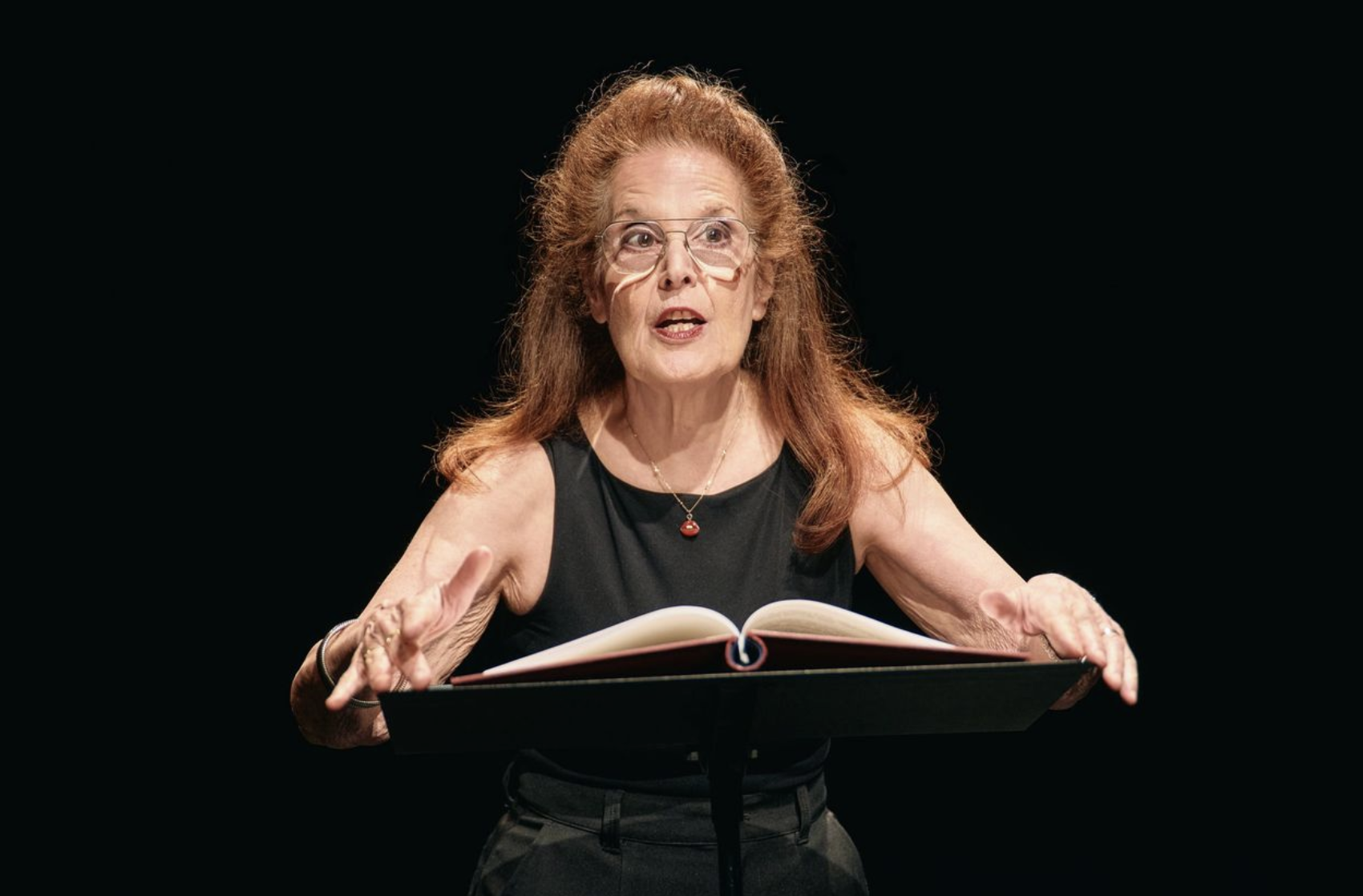
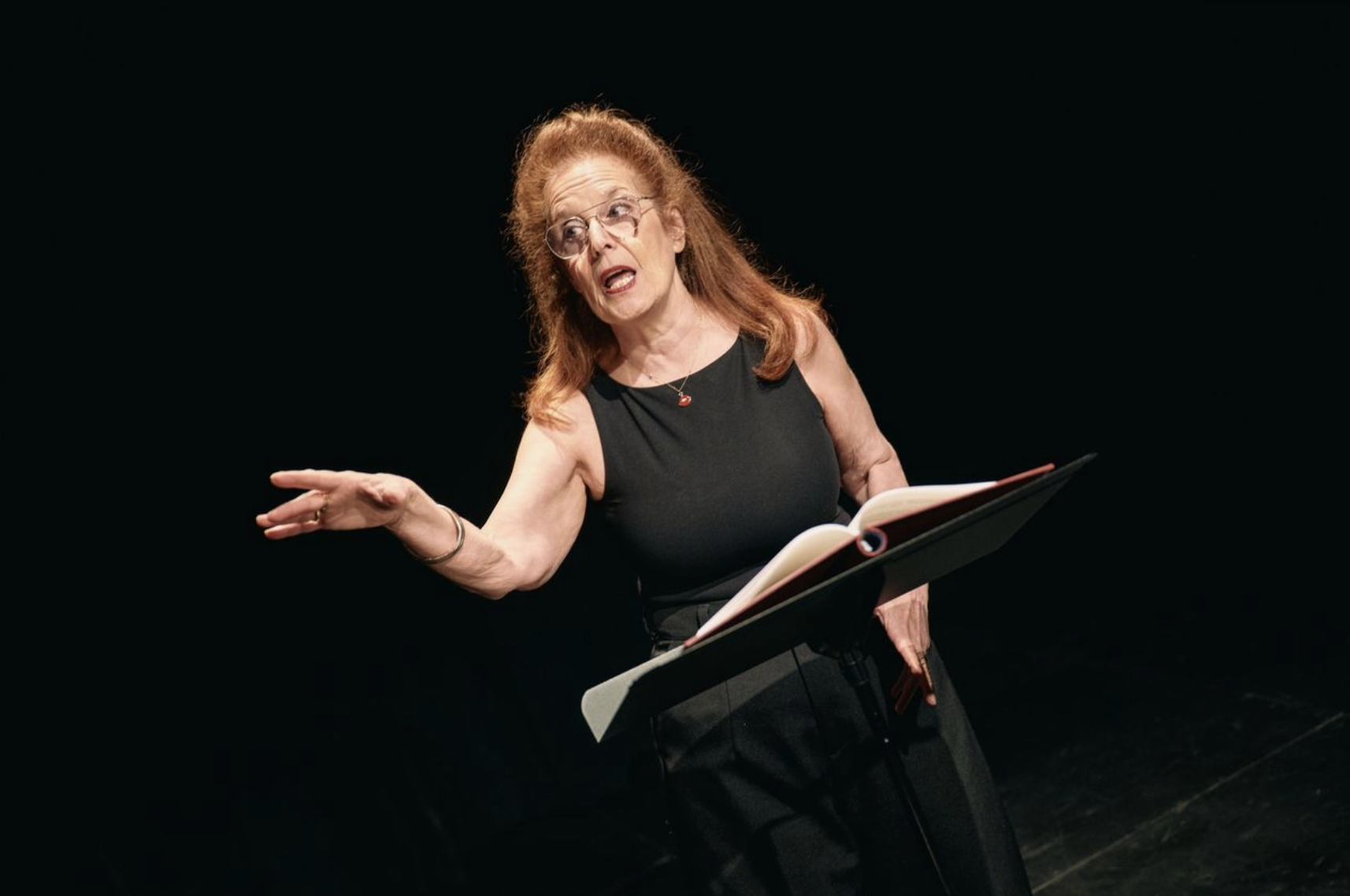
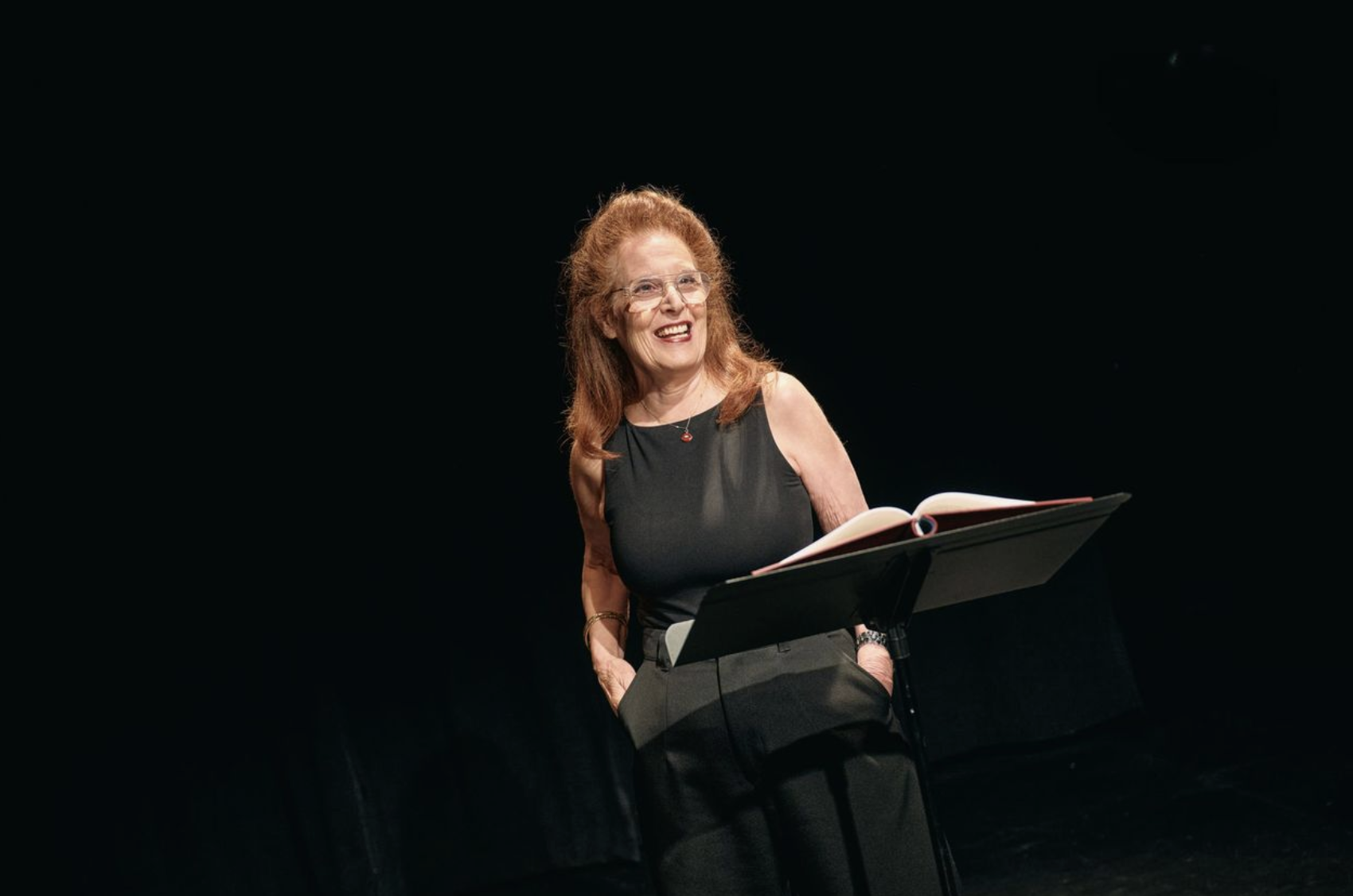
Photo credit by Valerie Terranova
Leslie Ayvazian’s Mention My Beauty, presented by New York Theatre Workshop as part of the In The Bricks Festival, is that increasingly rare theatrical event: a work of profound intimacy that somehow enlarges into a portrait of an era. Standing alone on a nearly bare stage, armed with little more than a script, a music stand, and the authority of a life fully examined, Ayvazian transforms autobiography into something richer and more resonant. What begins as a personal reminiscence becomes an excavation of inherited trauma, womanhood, artistic awakening, and the accidental turns that shape a life. It is a master class in storytelling—funny, piercing, and quietly devastating.
The play unfolds against the backdrop of the late 1960s and early 1970s, a period convulsed by antiwar protests, civil-rights struggles, and the burgeoning Women’s Liberation movement. Yet Ayvazian wisely keeps history tethered to the personal. Born into an Armenian family haunted by the unspoken wounds of genocide, she grew up carrying expectations that felt less like guidance than destiny. As the eldest of three daughters, she was designated “The Pretty One,” while her sisters were assigned their own identities—“The Smart One” and “The Athletic One.” Such labels may sound harmless, but Ayvazian reveals how deeply they can shape a life, becoming scripts we perform long before we understand their cost.
The ghosts that populate her family history are among the evening’s most fascinating characters. There is her grandmother Maria, an acclaimed concert artist, and her father, a physician struggling under the weight of addiction and unrealized artistic ambitions. The legacy of survival—of those who escaped catastrophe only to carry its silence forward—hangs over the piece like an invisible inheritance. Ayvazian explores this terrain with extraordinary delicacy, showing how trauma can echo across generations, altering not only what families remember but what they permit themselves to dream.
Beginning with her impulsive marriage to a young soldier headed for Vietnam, Ayvazian charts a life marked by unexpected detours. Jobs appear and disappear. States change. Friendships bloom. Strangers offer opportunities that redirect entire futures. She works for VISTA, installs cable, drifts toward artistic circles, and gradually discovers that the life she is building bears little resemblance to the one she had been taught to desire. What emerges is not a conventional success story but something more truthful: a chronicle of becoming, assembled from missteps, accidents, and moments of courage that often announce themselves only in retrospect. Among the happiest of those unforeseen developments is her nearly half-century marriage to Sam Anderson, a Midtown Manhattan architect, whose presence emerges as one of the enduring constants in a life otherwise shaped by serendipity and reinvention.
One of the production’s greatest pleasures is Ayvazian’s remarkable gift for detail. Clothing becomes a recurring motif, a thread stitching together decades of memory. A girdle and garter belt worn by a twelve-year-old accidental class president. The carefully maintained appearance expected of women in offices where weight was monitored and diet pills prescribed as casually as aspirin. These details do more than evoke period atmosphere; they become tangible expressions of the expectations imposed upon women’s bodies and identities. With a few deftly chosen images, Ayvazian conjures entire worlds.
The evening is also wickedly funny. Ayvazian possesses the rare ability to mine humor from painful experiences without diminishing their seriousness. Casual sexism, artistic condescension, and youthful naiveté are recalled with an honesty that never lapses into bitterness. A college director insisting that she wear a sheer blouse for the “earthiness” of Antigone becomes both absurd comedy and pointed social observation. Her recollections are refreshingly free of self-pity. Instead, they are illuminated by the perspective of someone willing to scrutinize her own mistakes as carefully as those of others.
David Warren’s direction lends the piece a supple rhythm and clarity, shaping Ayvazian’s relentlessly honest recollections into a compelling portrait of an artist who traversed some of the most transformative decades of modern American life without a roadmap, discovering purpose not through strategy but through experience itself.
What ultimately makes Mention My Beauty so affecting is Ayvazian herself. She is a storyteller of uncommon precision and warmth, capable of making every anecdote feel indispensable and every digression revelatory. By the time the performance reaches its conclusion, the audience has traveled not merely through one woman’s life but through the shifting cultural landscape of modern America. The piece invites us to consider how identities are assigned, how histories are inherited, and how liberation often begins with the simple act of speaking aloud what was once unspeakable. Touching, hilarious, wise, and deeply humane, Mention My Beauty is a triumph of autobiographical theater—a luminous reminder that the stories we tell about ourselves can become pathways to understanding one another.
Mention My Beauty continues through June 14, 2026
Click HERE for tickets.
Review by Tony Marinelli.
Published by Theatre Beyond Broadway on June 15, 2026. All rights reserved.
