Written by Eljon Wardally, directed by Jackie Alexander, with Calypso Score by Etienne Charles
WP Theater | 2162 Broadway, New York, NY 10024
May 28, 2026 - June 28, 2026
I was in a play tonight, but I did not perform. My avatar, a beautiful young actress, played me. I was not prepared to be in complete tears by the end of this gorgeous production, yet there I was, my friend quietly handing me a tissue while I tried to compose myself.
Blooming in Dry Season, a lyrical new play by Eljon Wardally, directed with grace and precision by Jackie Alexander, is a story about dreams, regrets, sacrifice, and the impossible choices that families make in the name of love. More than that, it is a story that many Caribbean children and parents have already lived.
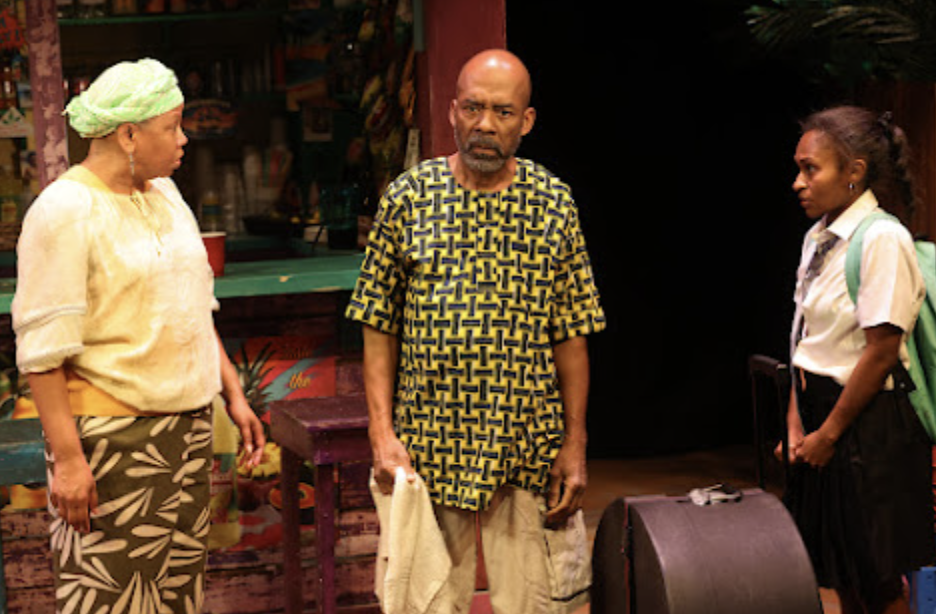
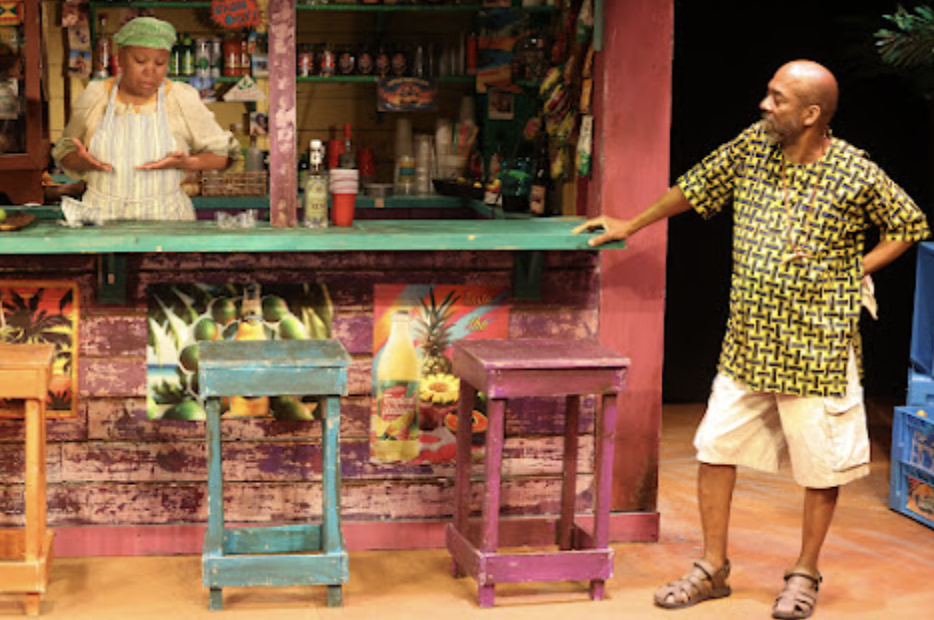
The experience begins the moment the audience enters the theatre. Isabel and Moriah Curley-Clay's scenic design transforms the stage into a vibrant rum shop, complete with the colors, textures, and atmosphere of the Caribbean. Palm trees and lush greenery frame a place that is far more than a business. A rum shop is often a family's livelihood, passed from one generation to the next, a gathering place where stories are traded as freely as drinks.
The world is deepened by both classic and original calypso music from Trinidadian musician Etienne Charles. A few songs in particular—"Tiny Whiny" by Arrow, "Congo Man" by The Mighty Sparrow, and Lord Invader’s "Rum and Coke" (the original), among other familiar island classics—immediately transported me home. They are songs that have lived in my own family gatherings, and hearing them was like being welcomed back into a memory. Before a single conflict unfolds, the production has already wrapped the audience in the comfort and familiarity of community.
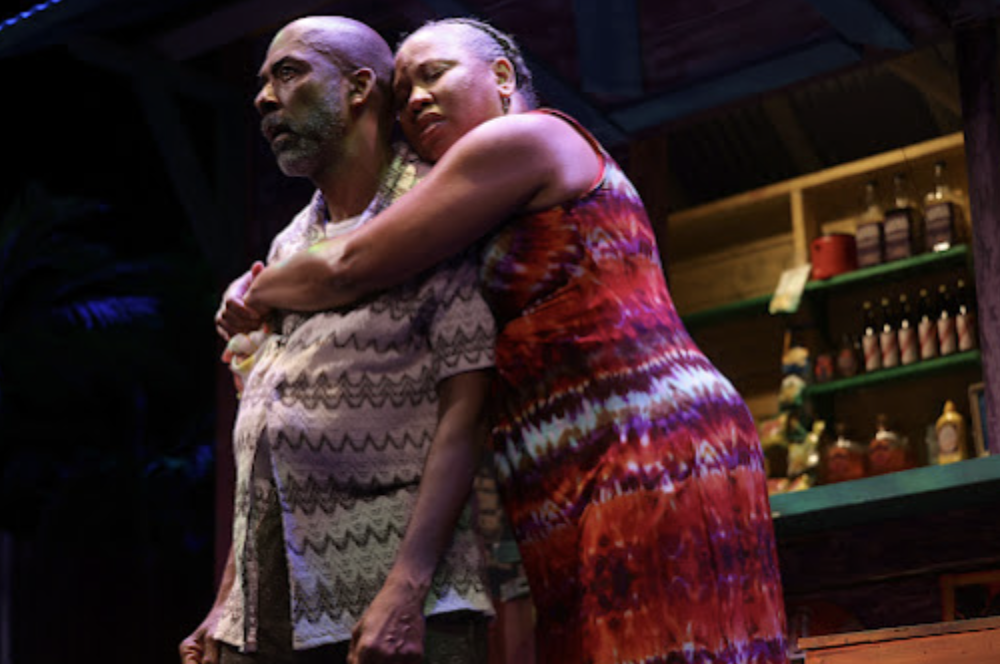
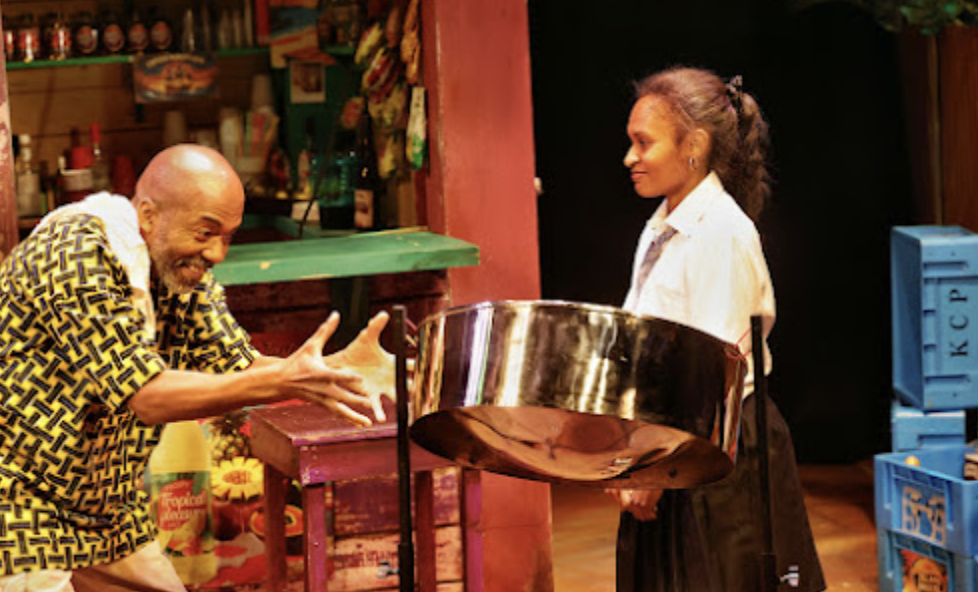
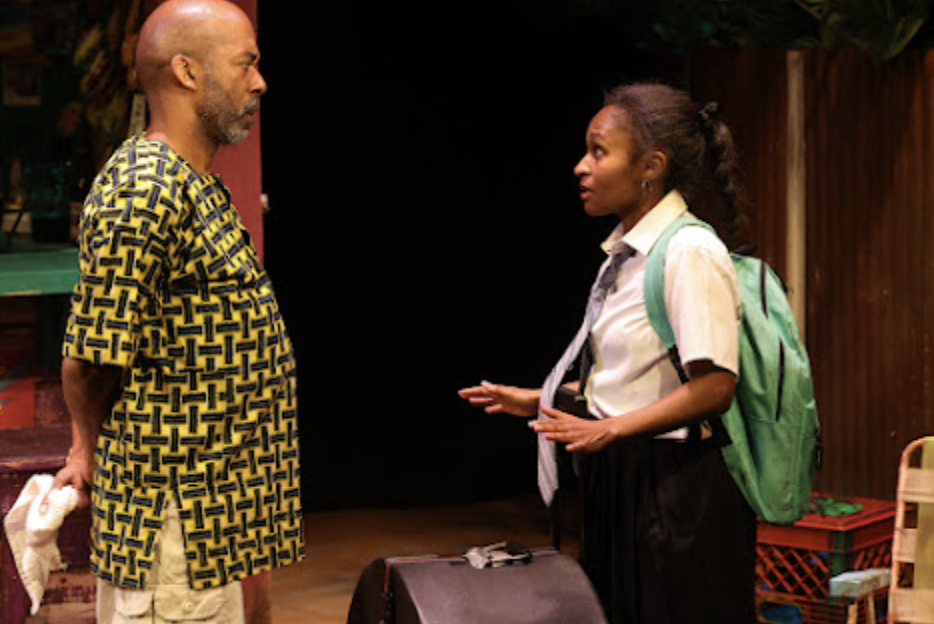
We meet Fitz, played with warmth and complexity by Brian Richardson, a man trying to keep his family's rum shop alive as business slows. Alongside him is his devoted wife, Rose, beautifully portrayed by Melanie Matthews, who has spent years helping to hold together both the business and the family itself. Their daughter Garland, played by Nikyla Boxley, is sixteen years old, exceptionally bright, and a gifted steel pan musician.
The steel pan is not simply an instrument. It is one of Trinidad and Tobago's great artistic gifts to the world, born from oil drums and representing not only music but the rich cultural history of drumming in the DNA of Africans, Caribs, and East Indians, transformed into something both haunting and joyful. It is notoriously difficult to master, making Boxley's performance even more impressive. Learning to play the instrument for the role was an extraordinary commitment, and it pays off beautifully. Every note feels authentic and deeply connected to Garland's spirit.
Garland's gift creates the central conflict of the play. There is a concert ahead, and the possibility of a future built around music. Yet many Caribbean families know the familiar refrain: education comes first. Dreams are wonderful, but stability is sacred. Mathematics, science, writing, and careers that promise security are often seen as the path out of hardship. Art is something to love, but not always something to trust.
As the story unfolds, we learn that Fitz once had dreams of his own. Once upon a time, he was the lead singer of “The Mighty Garland and The Fantasees,” about to make it big. Then it fell through, and real life presented itself. The ghosts of those decisions linger over the household, shaping the advice he gives his daughter and the fears he carries for her future.
Wardally's writing layers these conflicts with remarkable care. There are questions of family, legacy, faith, and personal calling. A woman who prays and lights candles searches for guidance from a higher power, while another life is built around music, business, and survival. No one is entirely right or entirely wrong. Everyone is trying to love the best way they know how.
When the inevitable moments of truth arrive, the emotional payoff is devastating. The resolution is heartbreaking precisely because it is so deeply human. Every parent wants the best for their child, but sometimes love asks an impossible question: Do you protect them from the world, or do you let them risk everything to become who they are meant to be?
I was also captivated by the precision of the world-building. There was never a moment when I doubted I was sitting on a beach, watching neighbors come and go, listening to conversations that could have happened yesterday. The dialogue remains true to Caribbean slang, rhythm, and vernacular. Several expressions had me laughing out loud because I had not heard them in years. You could immediately tell which audience members shared that cultural background because the reactions came with a special kind of recognition.
At the top of this review, I said that I was in the play. I meant it.
I have had these conversations. I have heard these intonations. I have worn those worried expressions. I know the tension between practical survival and impossible dreams. There is something about island people that often makes dreams feel both luxurious and urgent. The vision is not simply to get by. It is to build something extraordinary—to imagine the houses, the cars, the jewelry, the success, and the life that seems just beyond the horizon. For families working every day to make ends meet, those dreams can become almost mythical.
Blooming in Dry Season understands that longing. It understands the romance of leaving and the pain of staying. It understands that what visitors often see when they vacation in the Caribbean, the beaches, the hibiscus, the music, the warmth, is only the bloom.
This beautiful production invites us to look beneath the blossom and into the roots. There, we find generations of sacrifice, resilience, love, and hope nourishing everything above the surface.
And perhaps that is why I left the theatre in tears. I was not simply watching a family on stage.
Click HERE for tickets.
Review by Malini Singh McDonald.
Published by Theatre Beyond Broadway on June 10, 2026. All rights reserved.
