Monte Cristo
Lyrics by Peter Kellogg, Music by Stephen Weiner, Directed by Marcos Santana, Choreographed by Peter Flynn
Theatre at St. Jean’s 150 East 76th Street, New York, NY 10021
Performances running through Sunday April 5, 2026
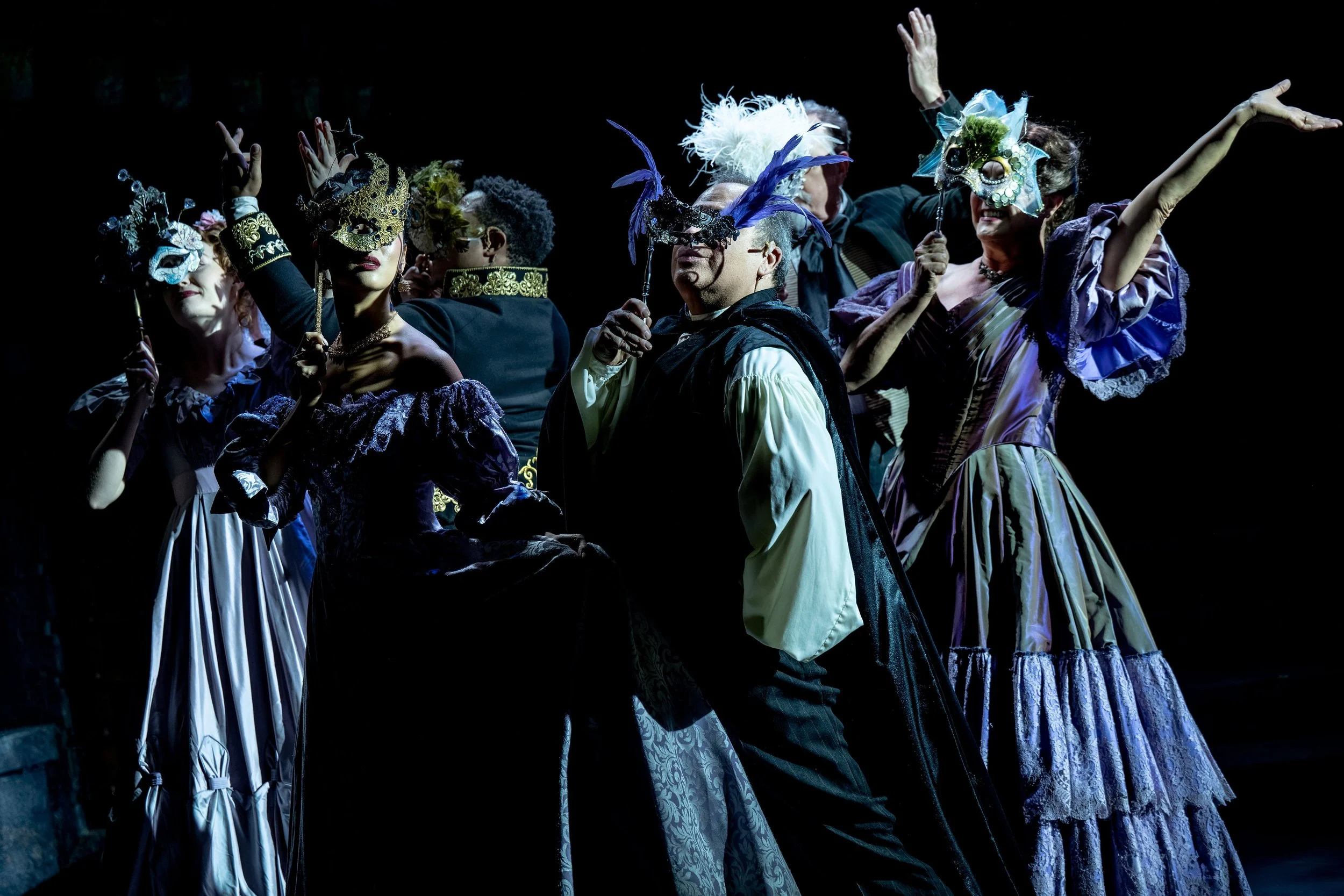
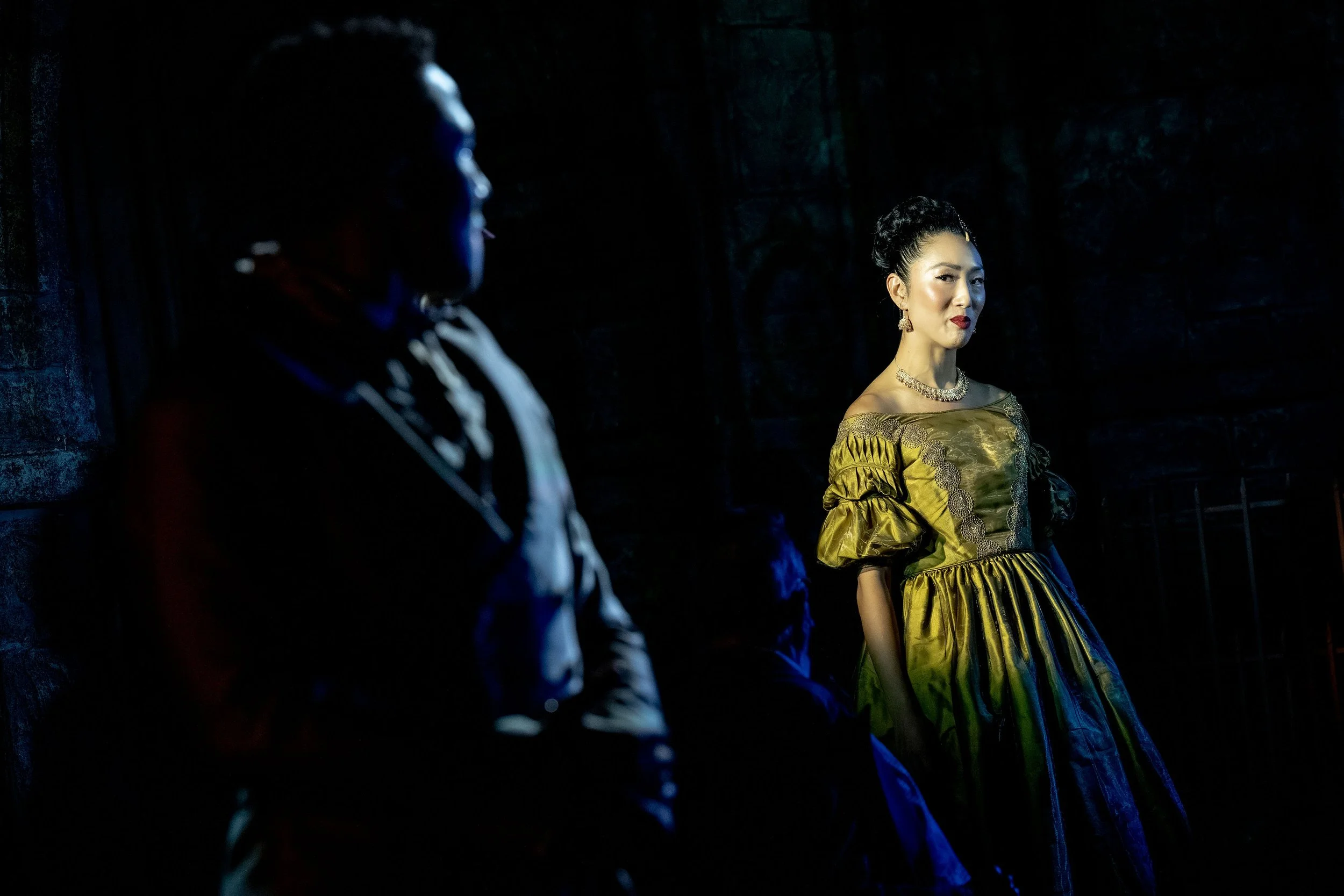
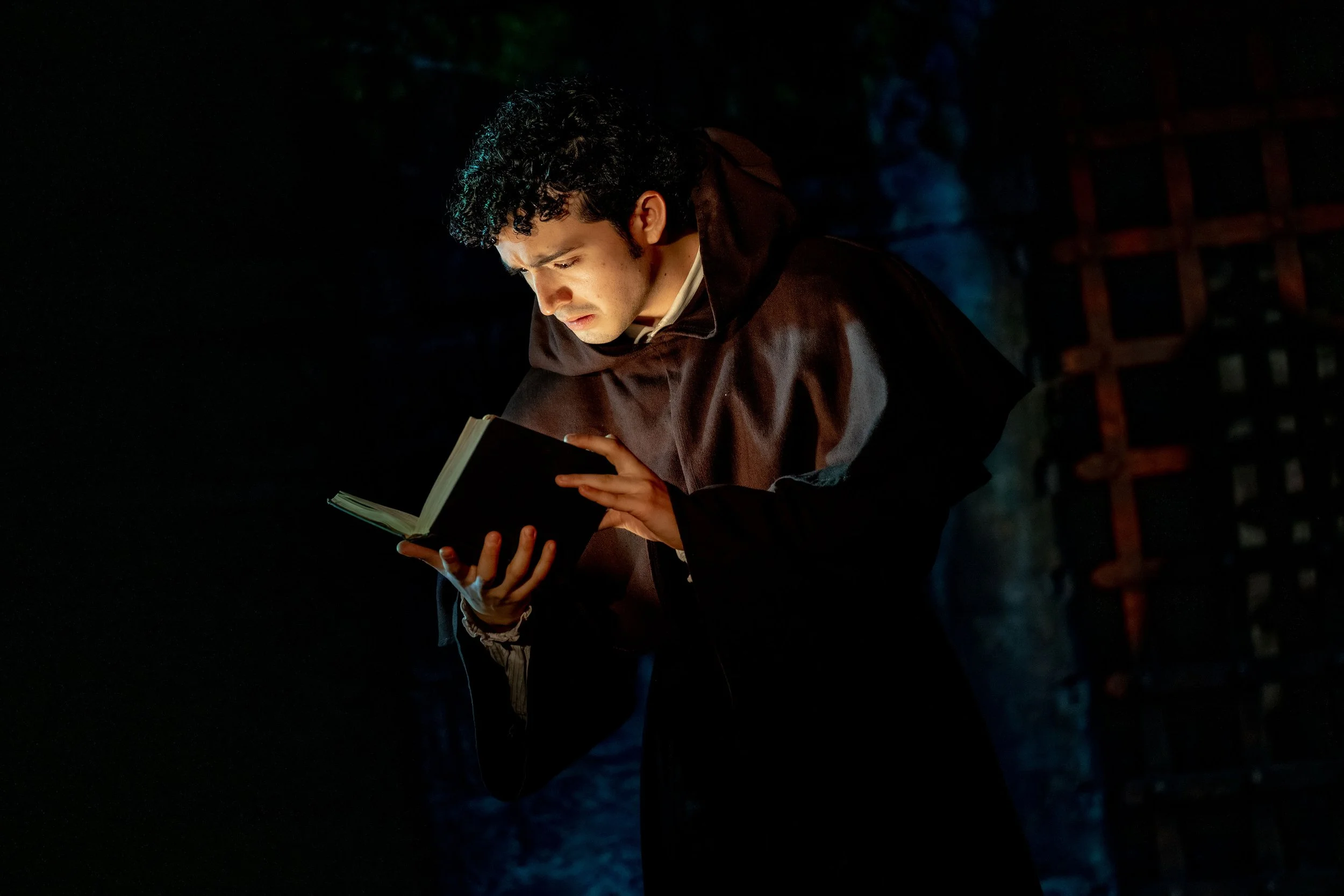
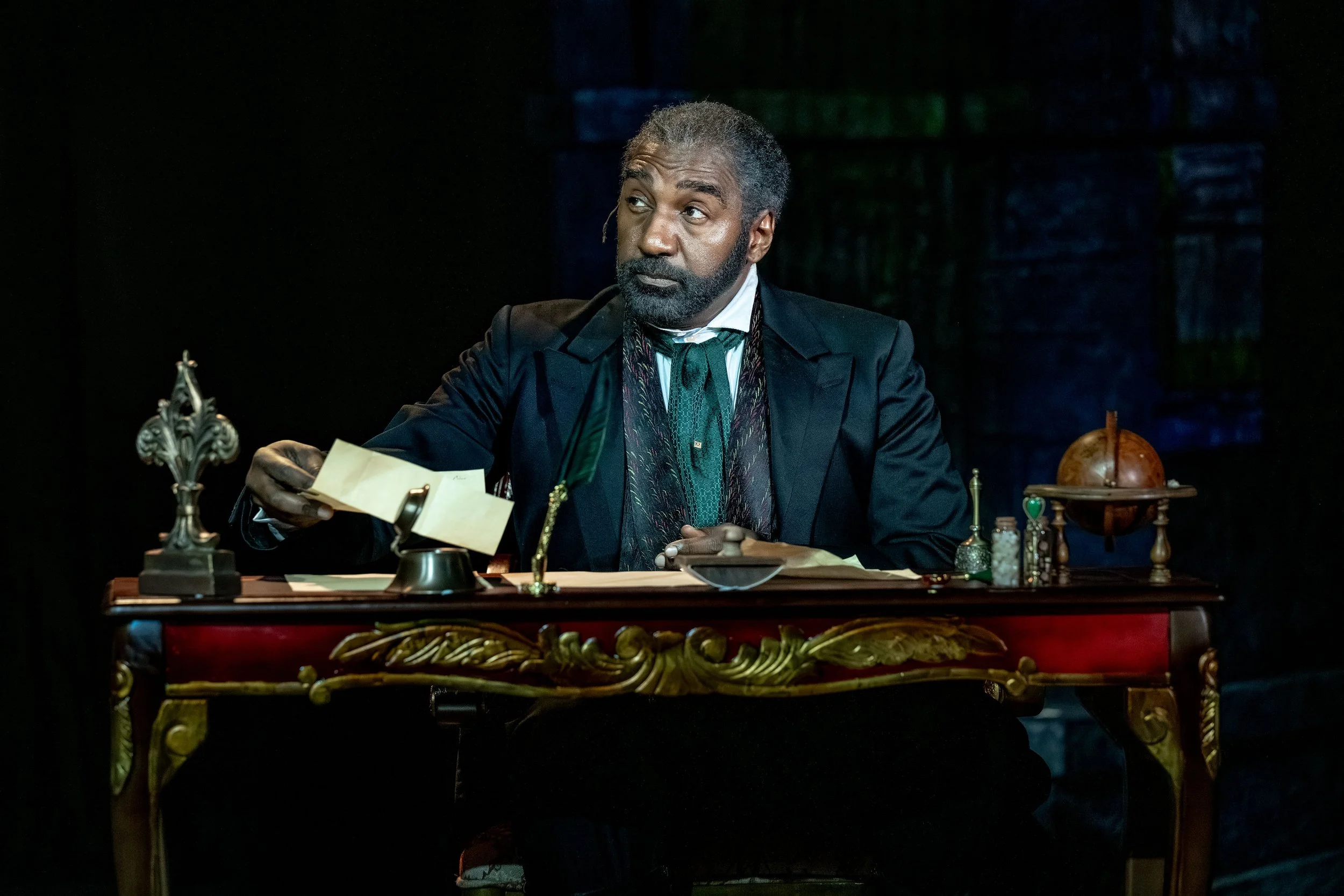
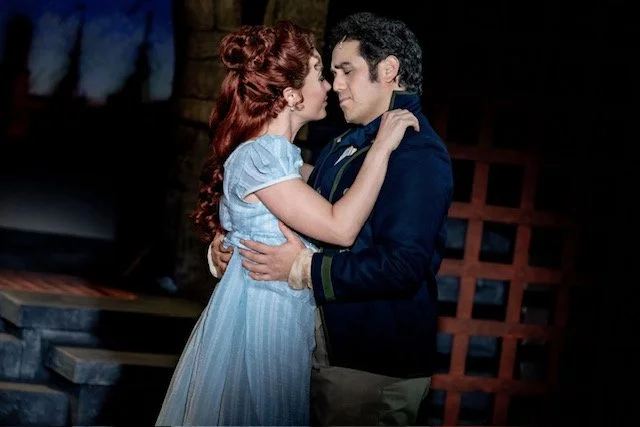
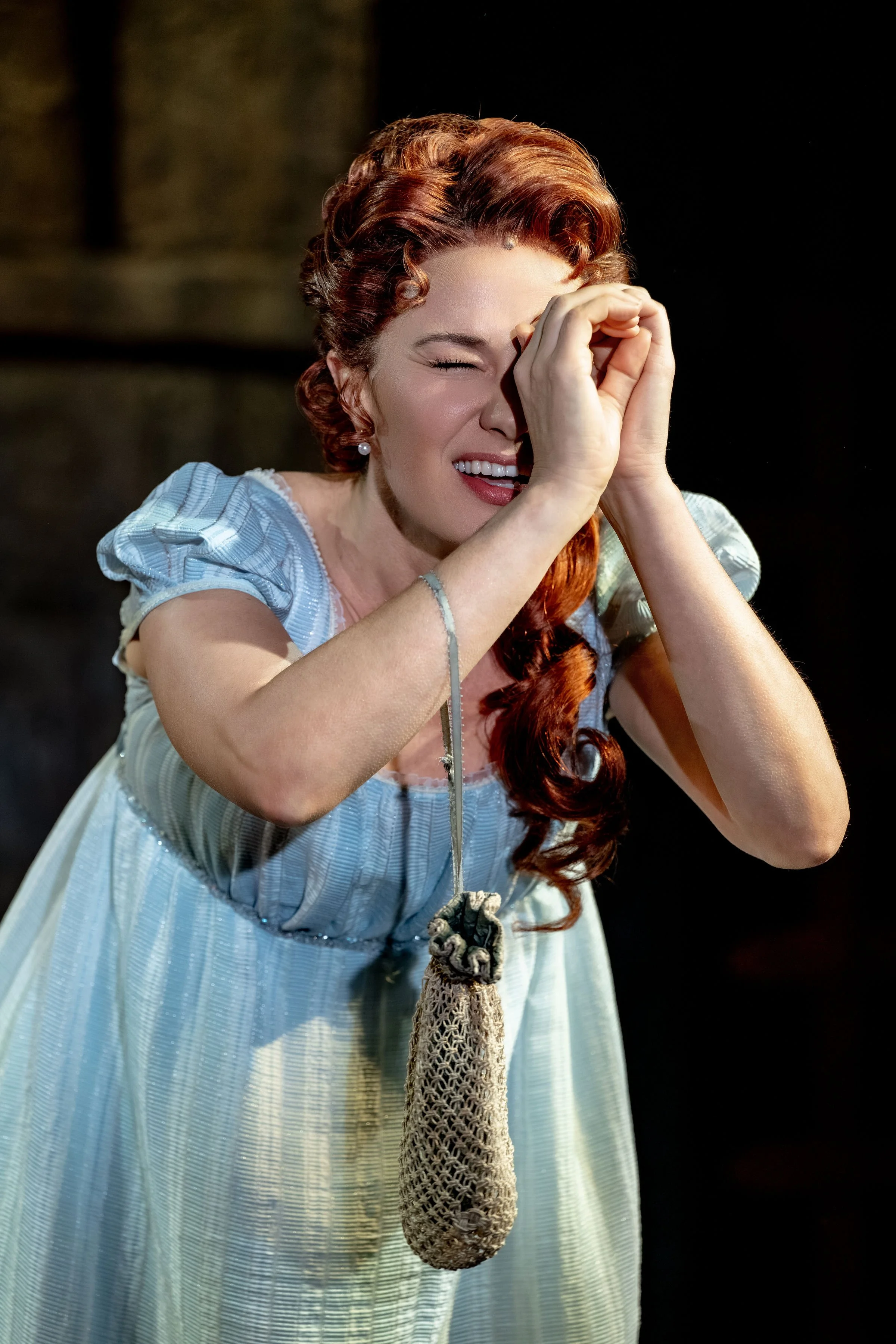
Photo credit by Shawn Salley
A shadowy, ominous stage framed by stone walls and iron gates greets you as you enter the theater, foreshadowing a dark, gritty show to follow. Whether you’ve read every page of Alexandre Dumas’ extensive novel, seen any of its many film adaptations, or simply heard the words “The Count of Monte Cristo,” your brain prepares you for dark themes of betrayal, justice, and revenge – with some love, mercy, forgiveness, and redemption sprinkled in, of course.
Writer Peter Kellogg and composer Stephen Weiner open the show with a prologue, as Edmund (Adam Jacobs), fully engrossed in the persona of The Count of Monte Cristo, sings about the justice and revenge that is to come. He calls out to Caderousse (Danny Rutigliano), informing his servant that he will be heading out. Caderousse tips his wine glass to toast his master’s good fortune, but stops himself, exclaiming that he cannot let him down...again.
The show is off and running as the ensemble sings the opening number, proclaiming what we all anticipated to be true, that these are “Dangerous Times.” However, while the lyrics expound on these dangers, the music doesn’t quite hit the sinister or menacing tone that the writers were looking for.
The story takes a hard turn as we flashback to a young Edmund and Mercedes (Sierra Boggess), innocent, in love, and full of promise. Edmund and Mercedes are shown to be incredibly happy together. Jacobs and Boggess expertly exhibit the one thing - next to dark themes - that the audience came to a Count of Monte Cristo musical to see: pristine, gorgeous, Broadway-caliber voices. The clarity expressed in their duet, “You Guide Me Home,” allows the audience to relax and melt into their incredibly talented hands – err, voice boxes.
In love with Mercedes himself, a jealous Fernand (Daniel Yearwood) conspires with Danglars (James Judy) to frame Edmund for treason. With the help of Villefort (Norm Lewis), the three men succeed and Edmund is imprisoned for eighteen years. These dubious men prosper while Edmund rots away, with only the thought of reuniting with his love, Mercedes, to keep him going.
During his imprisonment, Edmund meets Abbe Faria (also played by Danny Rutigliano), who instructs him in the ways of philosophy, science, history, and languages. Here, the audience is treated to one of the best numbers of the show as Rutigliano hysterically gives out to God in “You Sent me This.” Rutigliano is a breath of fresh air and a stellar performer as he masterfully portrays multiple characters.
If you know the show, or just paid attention during the prologue, you know that Edmund escapes and goes after those who wrongfully imprisoned him. Following Abbe Faria’s instructions, Edmund acquires a great fortune from an immense treasure found on the Island of Monte Cristo, where Edmund gets the name for his new identity.
If you predicted that the show would come full circle, beginning Act 2 where the prologue left off, you would be…wrong. As Villefort, the incredible Norm Lewis blesses us with “A Great and Noble Man.” His exquisite range is on full display; unfortunately, the song is a recap of what we just saw right before intermission. Edmund enters right after the number. This would have been an incredible opportunity to showcase a duet between Jacobs and Lewis AND use the song to create tension, conflict, and move the plot forward.
While on his revenge tour, Edmund comes across former princess, Haydee (Stephanie Jae Park). Park is the absolute standout of the show as she delivers a dark, somber, and heartbreaking account of her character’s life in “Haydee’s Story.” Park’s voice and demeanor embody the dark, gritty, and “dangerous” world that we were promised.
Karen Ziemba, who plays Carconte and Lucrezia Borgia, is a joy to watch with her wonderful voice and exceptional comedic timing. The trio of Ziemba, Rutigliano, and Jacobs in “You Have the Wrong Man” is a highlight of the show.
The ensemble works incredibly well together and their voices uplift the show.
However, the dialogue and music are full of exposition. We are told that these are “dangerous times,” but we’re rarely shown it. We don’t get enough time with Edmund and Mercedes to care that they’re ripped apart. Why aren’t we shown Mercedes’ reaction to her lover being ripped away from her on her wedding day? Why aren’t we shown what all that knowledge imparted on Edmund during his incarceration does for him as he becomes The Count of Monte Cristo?
The story is about betrayal and revenge and murder – consequences for your actions. This adaptation took all those out, and with it, any stakes. The prologue let us know that Edmund was getting out of prison. The protagonists were never really in any danger. While effective, certain deaths or arrests happened offstage. Everything was just too easy.
While I was not as up in arms about the romantic ending as others, it didn’t feel earned. Perhaps, with all the edits and changes, they left “The Count” out of the title and called it “Monte Cristo” because we were getting a very different vibe from a well-known story.
Click HERE for tickets.
Review by Nick Radu-Blackburn
Published by Theatre Beyond Broadway on March 23rd, 2026. All rights reserved.
