GOOEY’S TOXIC AQUATIC ADVENTURE
Presented by The Bushwick Starr in association with ¡Oye! Group, Directed by Sammy Zeisel
Concept, Book & Lyrics by La Daniella, Music, Arrangements & Lyrics by Ben Langhorst
The Bushwick Starr, 419 Eldert Street, Brooklyn, NY 11237
February 4, 2026 - February 28, 2026
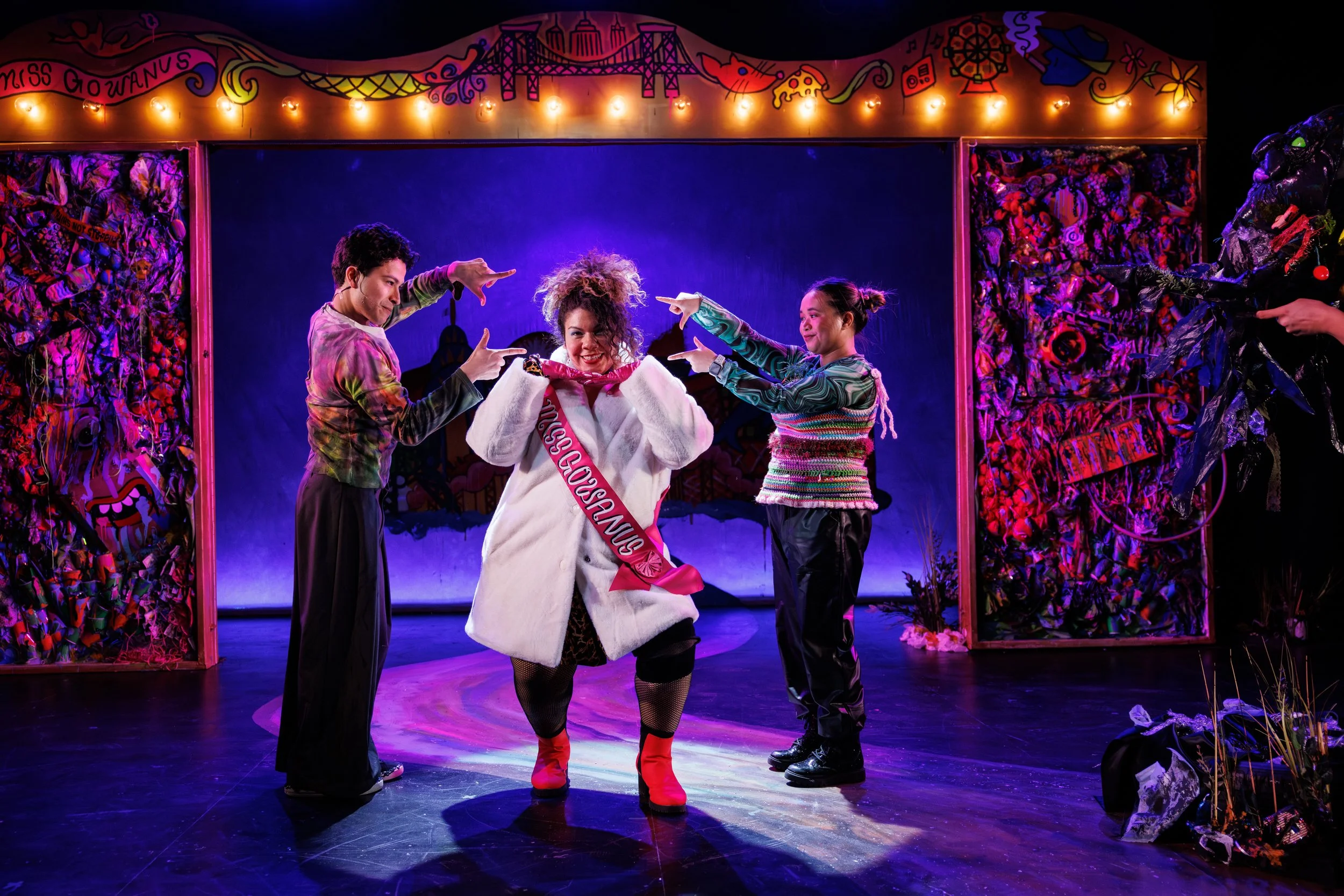

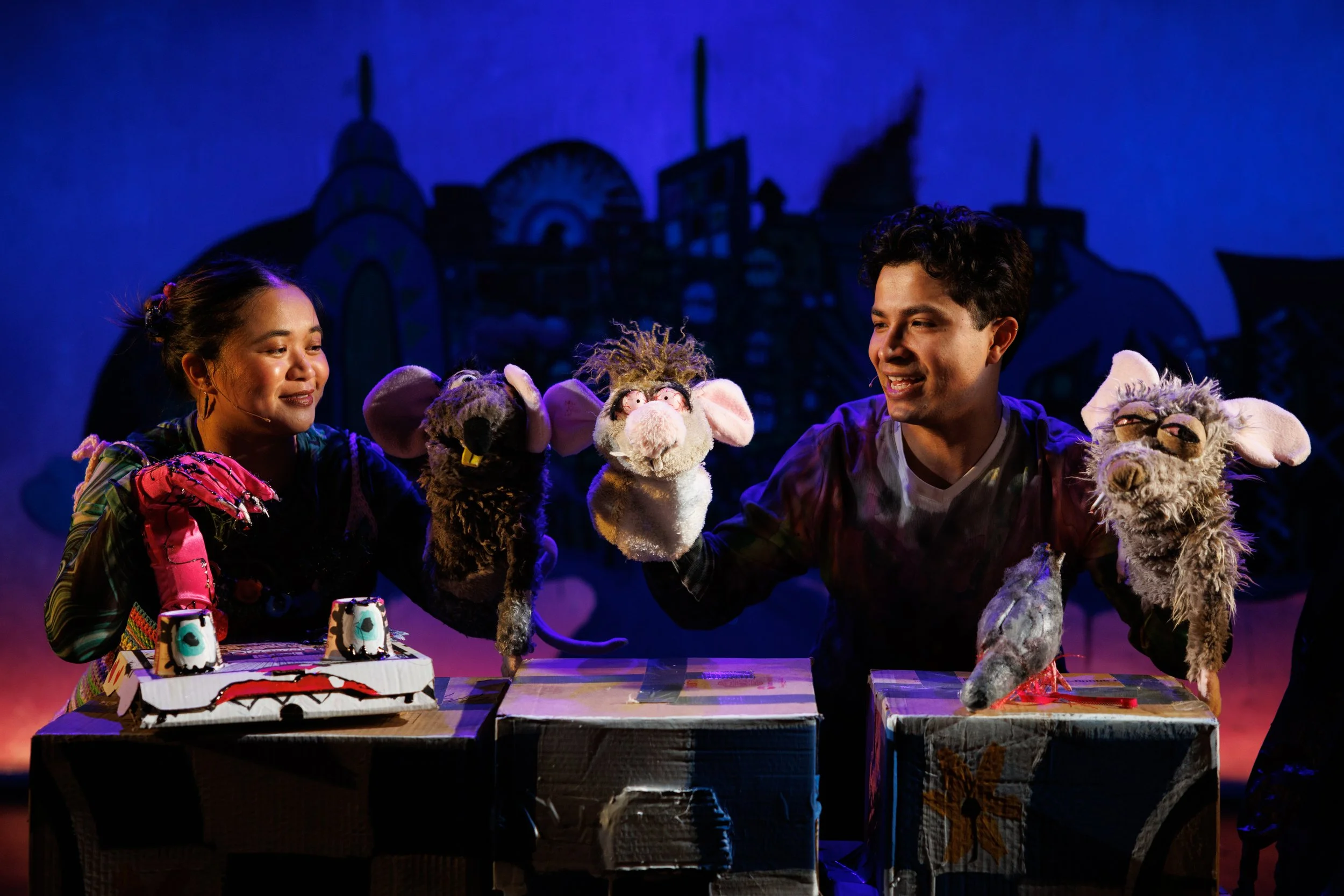
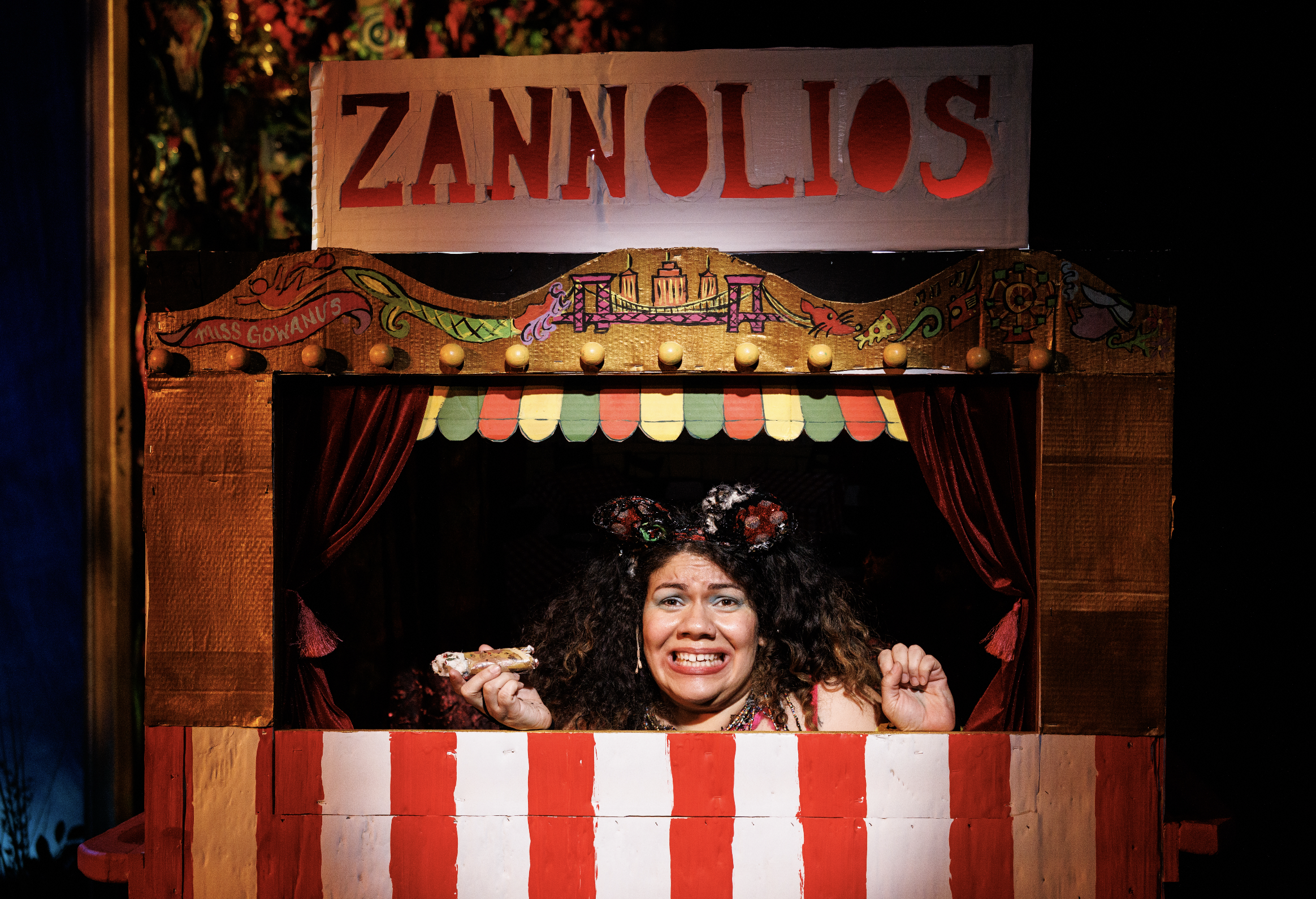
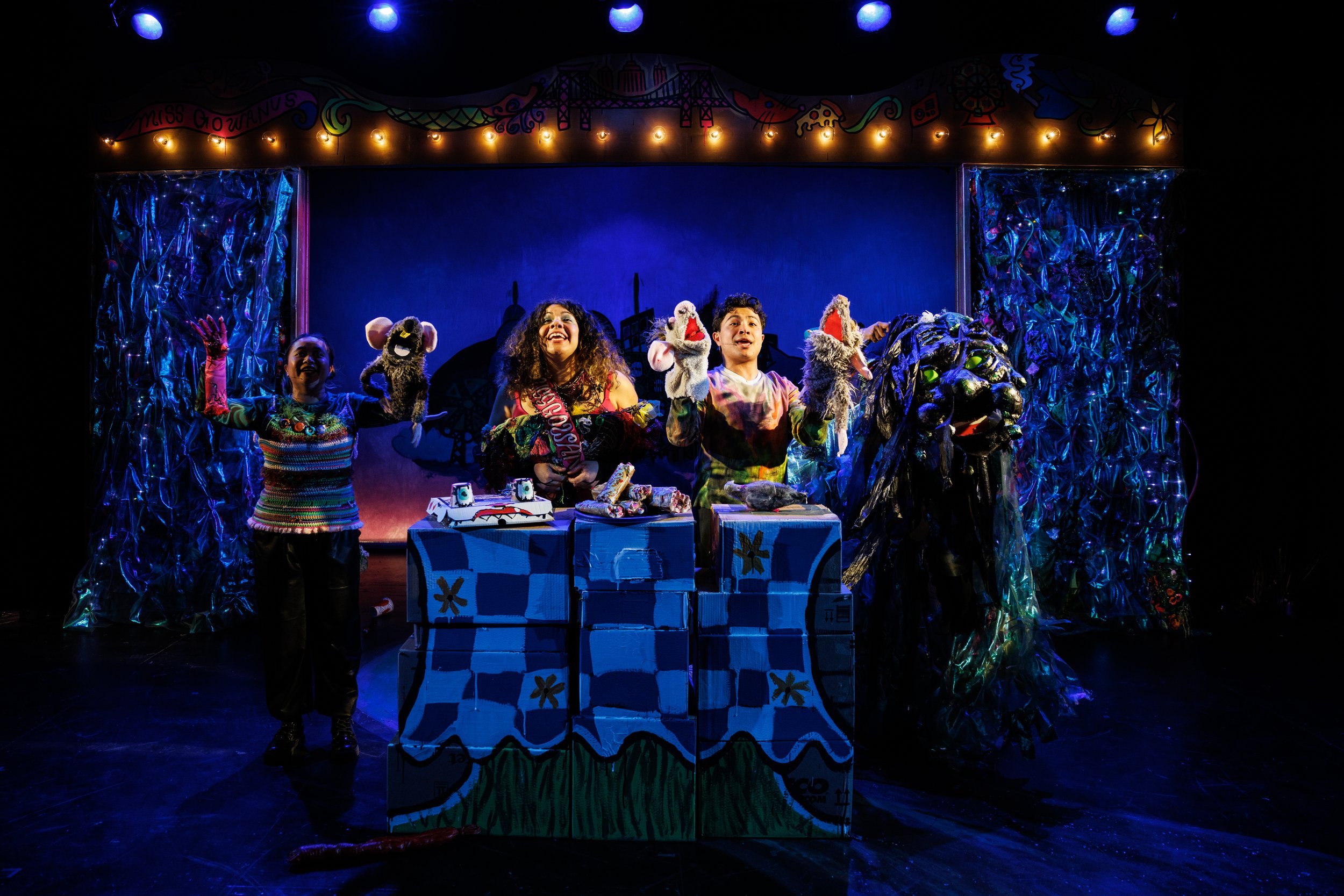
Photo credit by Maria Baranova
In a borough whose waterways have long seemed to possess a personality of their own—brackish, obstinate, faintly radioactive—it was perhaps inevitable that the Gowanus Canal would one day become the unlikely heroine of a puppet musical. The deliriously inventive Gooey’s Toxic Aquatic Adventure recently splashing about at The Bushwick Starr, embraces the canal’s mythology with such gleeful excess that the production seems less like a show than a jubilant act of urban composting. Out of refuse—dead pigeons, severed arms, sludge with glowing eyes, and a rat population of Shakespearean loquacity—it fashions a spectacle that is at once scrappy, affectionate, and improbably heartwarming.
The piece arrives trailing a cloud of influences as colorful as the detritus floating through its watery setting. Its publicity nods toward The Wizard of Oz and Pee-Wee's Playhouse, though one might just as easily detect the anarchic puppet lineage of Avenue Q, the trash-culture exuberance of Garbage Pail Kids, and the scruffy moral philosophy of Cookie Monster. The result is a kind of theatrical gumbo in which downtown puppet theatre, Saturday-morning television, B-movie horror, and golden-age musical comedy all swirl together in a delightfully toxic broth.
What makes the evening so winning is the spirit of collaborative play that animates every corner of the production. The cast—an indefatigable quartet—prove themselves quadruple threats, not merely singing, dancing, and acting but manipulating a miniature menagerie of puppets with astonishing dexterity. Behind them, the indefatigable music director Jon Schneidman performs the labor of an entire pit orchestra, conjuring a buoyant score by Ben Langhorst that toggles cheerfully between parody and pastiche.
Visually, the show revels in the pleasures of handmade abundance. Cat Raynor’s set resembles a child’s coloring book come to life: bright, scribbly, and teeming with detail, as though Brooklyn itself had been rendered in crayon. Hahnji Jang’s costumes salvaged from some imaginary shoreline suggest the wardrobe department of a particularly stylish landfill. Kyle Stamm’s lighting palette ingeniously hints at melted Crayola. Gaby Febland’s puppet designs range from charmingly bedraggled to magnificently grotesque, culminating in a monumental embodiment of toxic sludge whose neon-green eyes glow with the malevolent cheerfulness of radioactive Jell-O, personified by a thoroughly scary yet weirdly winsome Sushma Saha.
The narrative begins, with appropriate melodrama, in a bygone Brooklyn before the arrival of artisanal pickle shops and condominium towers. A pregnant Miss Gowanus beauty queen, Juanda (the magnetic La Daniella), meets a soggy fate in the canal while giving birth. Decades later, her daughter Gooey—miraculously born of sludge and survival—lives a lonely amphibious life amid the industrial marshlands of nearby Newtown Creek. Her companions consist largely of garbage: an empty pizza box and a dead pigeon, both lovingly rendered as puppets.
La Daniella plays Gooey with a sweetness that never curdles into sentimentality. Smudged, scruffy, and blissfully naïve, Gooey is an unlikely heroine, but the performer invests her with the wide-eyed determination of a storybook adventurer. When a radio advertisement beckons her toward a talent contest in the theme park G’wond’rLand—constructed atop the canal by the unscrupulous developer Fred Boss (a classically villainous León Ramos Tak)—she embarks on a quest that feels equal parts fairy tale and municipal satire.
Along the way she encounters Scabby, a puppet rat voiced by Amanda Centeno with the gravelly authority of a lifelong subway commuter. Centeno imbues the creature with the brash warmth of an old New Yorker who complains loudly but secretly adores the city he insults. Their relationship becomes the emotional ballast of the story, grounding the production’s cartoonish chaos in something resembling genuine affection.
Director Sammy Zeisel wisely leans into the show’s handmade theatricality. Accents are exaggerated, scene changes are cheerfully visible, and the ensemble frequently multiplies itself through clever staging until the stage seems crowded with life. Maya Quetzali Gonzalez’s choreography makes exuberant use of the tiny playing space, while Langhorst’s music—simple, catchy, and lyrically nimble—propels the action forward with the insistent optimism of a street-corner busker.
The plot itself—equal parts hero’s journey and environmental parable—unfolds with a knowingly shaggy rhythm. Gooey discovers the meaning of friendship, family, and home while navigating a landscape littered with corrupt developers, mutant sludge, and the occasional rogue human limb. It is a story that acknowledges urban decay without surrendering to cynicism, preferring instead the hopeful notion that even a poisoned canal might nurture unexpected life.
What lingers after the final curtain is the show’s contagious sense of creative abundance. Gooey’s Toxic Aquatic Adventure delights in the principle that theatrical pleasure often arises from joyful overproduction: more puppets, more jokes, more songs, more color. The aesthetic might be summarized as “maximalist junk drawer,” yet the clutter reveals a surprising coherence—a celebration of community ingenuity and scrappy imagination.
It may seem improbable that a musical populated by rats, radioactive sludge, a severed arm, and a dead pigeon could leave an audience feeling warmly sentimental. Yet, in the cozy confines of a Bushwick theatre, amid puppets stitched together from the debris of a city’s industrial past, something oddly moving takes shape. The show suggests that even the most contaminated corners of urban life can produce a little magic—provided someone is willing to dive into the muck and start singing.
Click HERE for tickets.
Review by Tony Marinelli
Published by Theatre Beyond Broadway on March 23rd, 2026. All rights reserved.
