Not Nobody
Presented by Twilight Theatre Co, by Brian Dykstra , Directed by Margarett Perry
59E59 Theaters, Theater B, 59 East 59th Street, in Manhattan
February 5, 2026 - March 1, 2026
Photos by Carol Rosegg
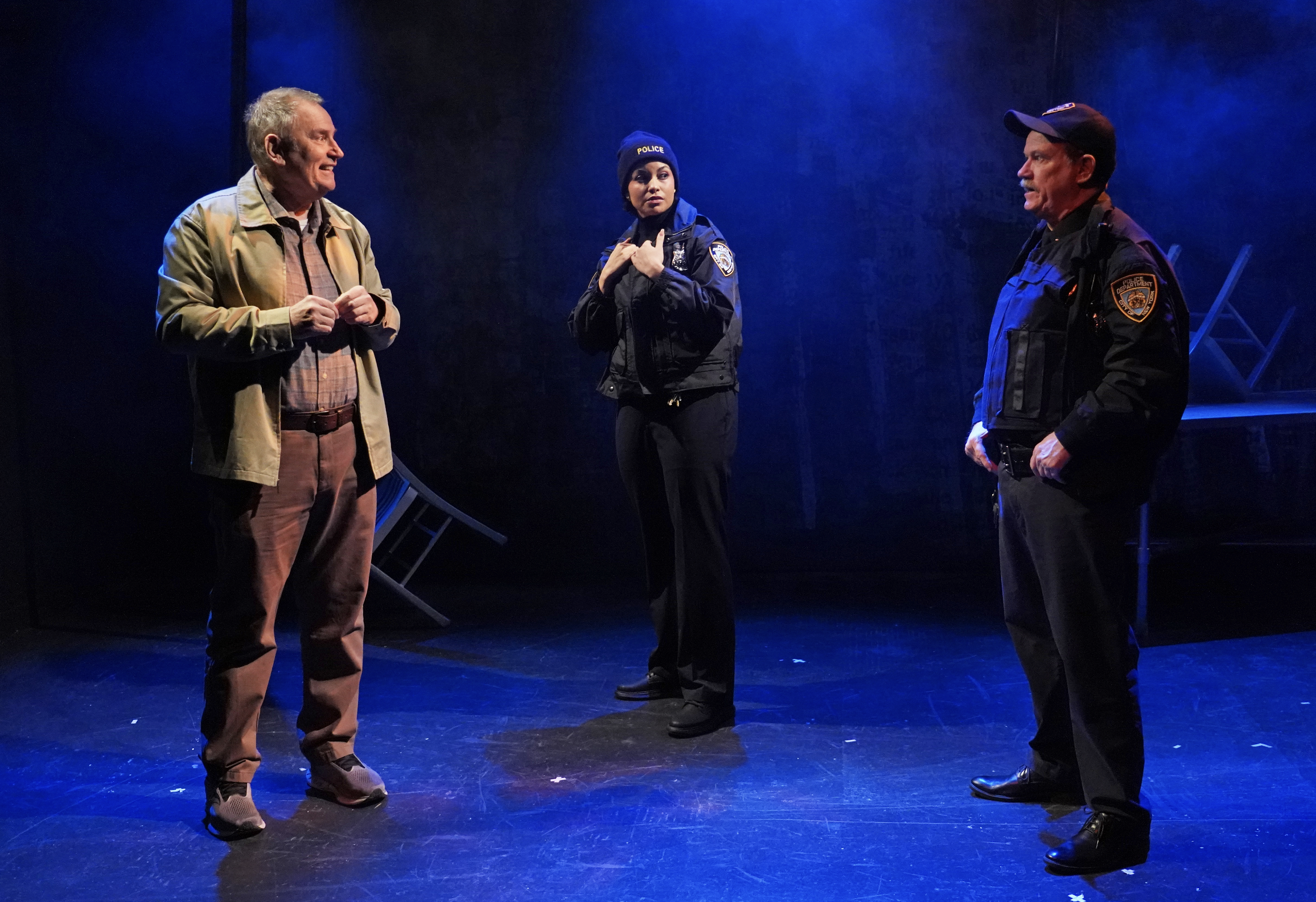
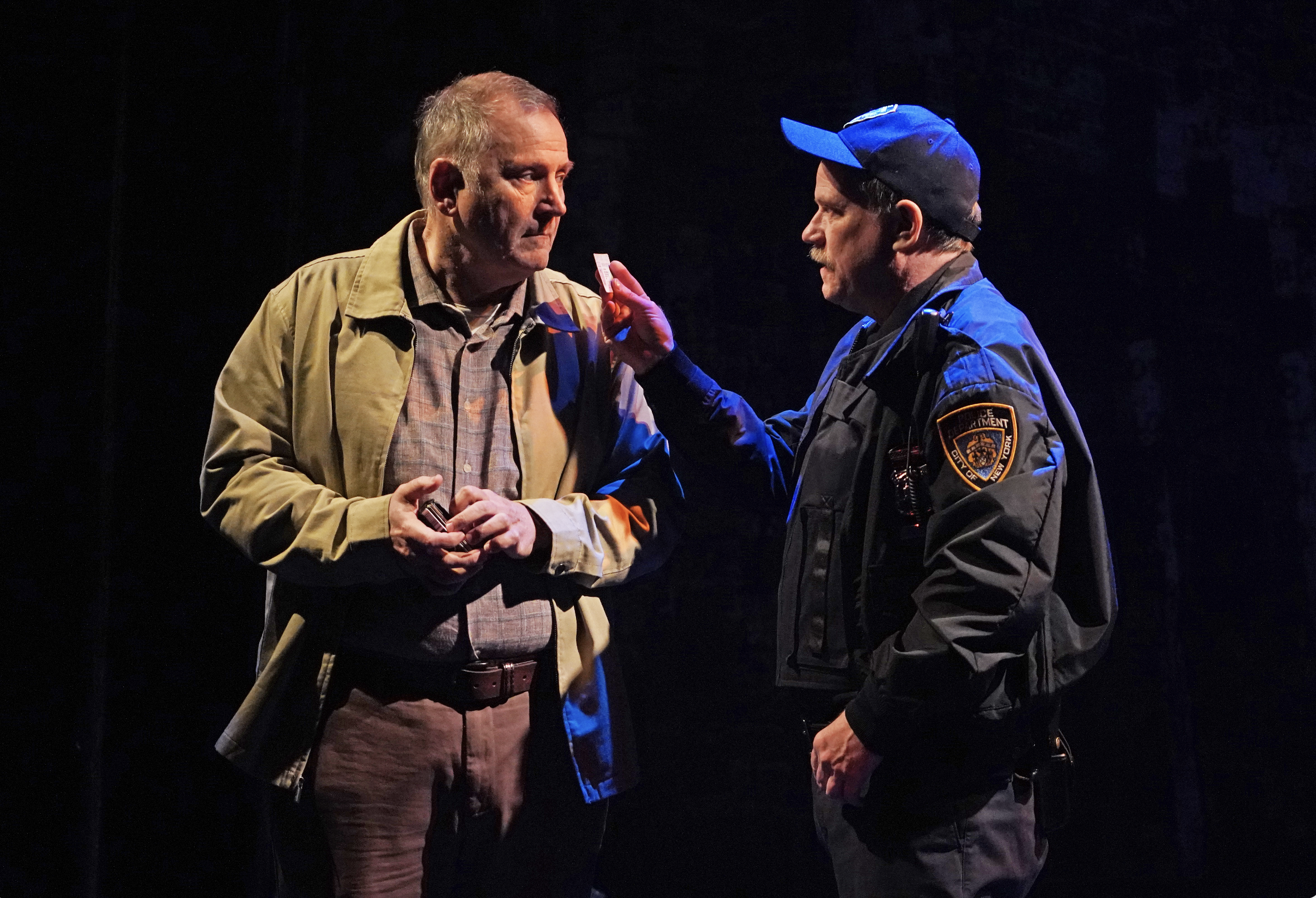
Brian Dykstra’s Not Nobody concerns an American justice system that, depending on your vantage, is either heroically embattled or dangerously unmoored. Into this breach steps McAlester Daily, a retired academic (a former ethics professor, no less) whose nocturnal wanderings through a so-called crime-ridden neighborhood place him in the path of two suspicious cops and, soon enough, a bullet.
Dykstra writes Daily as a man of crippling discursiveness — a tangle of tics, hesitations, and runaway clauses. The simplest question metastasizes into epistemological inquiry. “There are people, in my life…,” he warns, before spiraling into a self-diagnosis about his inability to stop talking. The halting interrogation that follows is almost masochistically extended; one understands the mounting exasperation of Ricketts, the lead officer, who pointedly asks if Daily is “on the spectrum.” “If it’s a spectrum, who’s not on it?” Daily replies — a clever dodge, though clearly not an answer to the question once again.
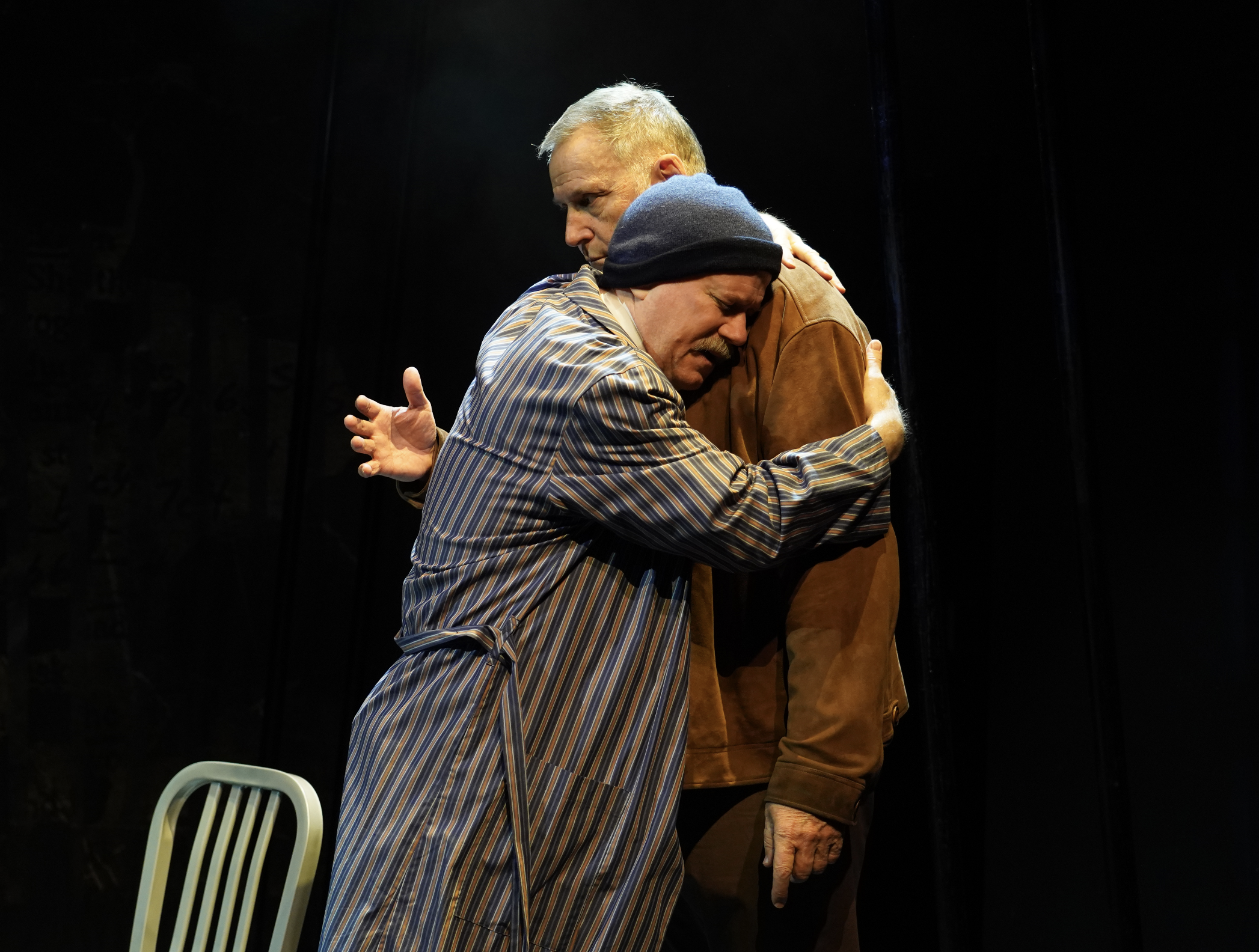
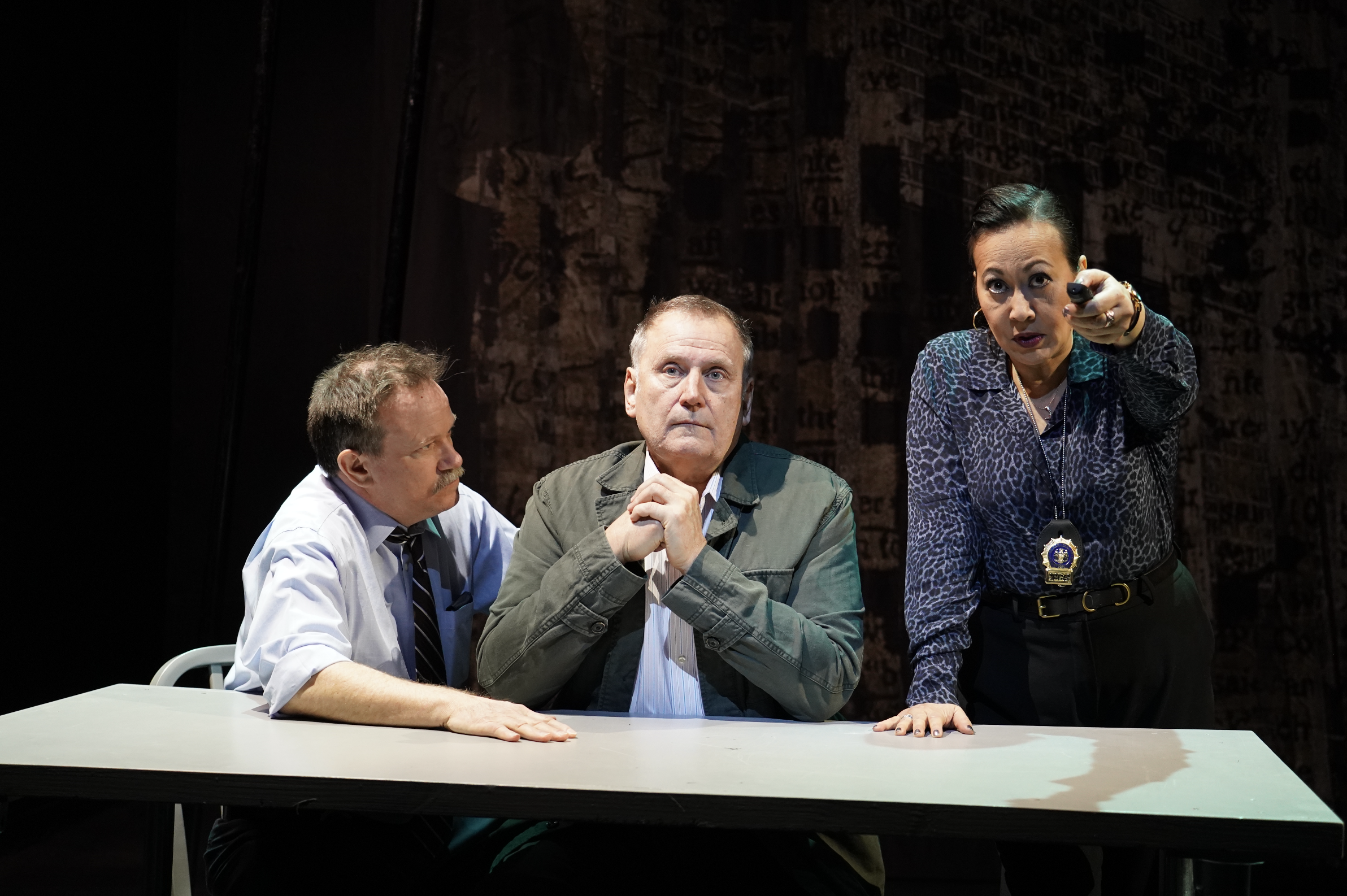
Then comes the rupture. An offstage criminal incident erupts in gunfire. In a move that feels both astonishing and dramatically convenient, Daily applies pressure to the wounded Ricketts’ injury, stanching the bleeding until an ambulance arrives. For a fleeting moment, he is hailed as a hero. But when Ricketts later dies of complications, the narrative curdles. Detectives begin circling. A lip reader, parsing surveillance footage, misinterprets Daily’s frantic protest — “Nobody! I’m not—nobody!” — as “I don’t know, Buddy,” implying familiarity with the shooter. From Samaritan to suspect in a single phoneme: the leviathan has scented blood.
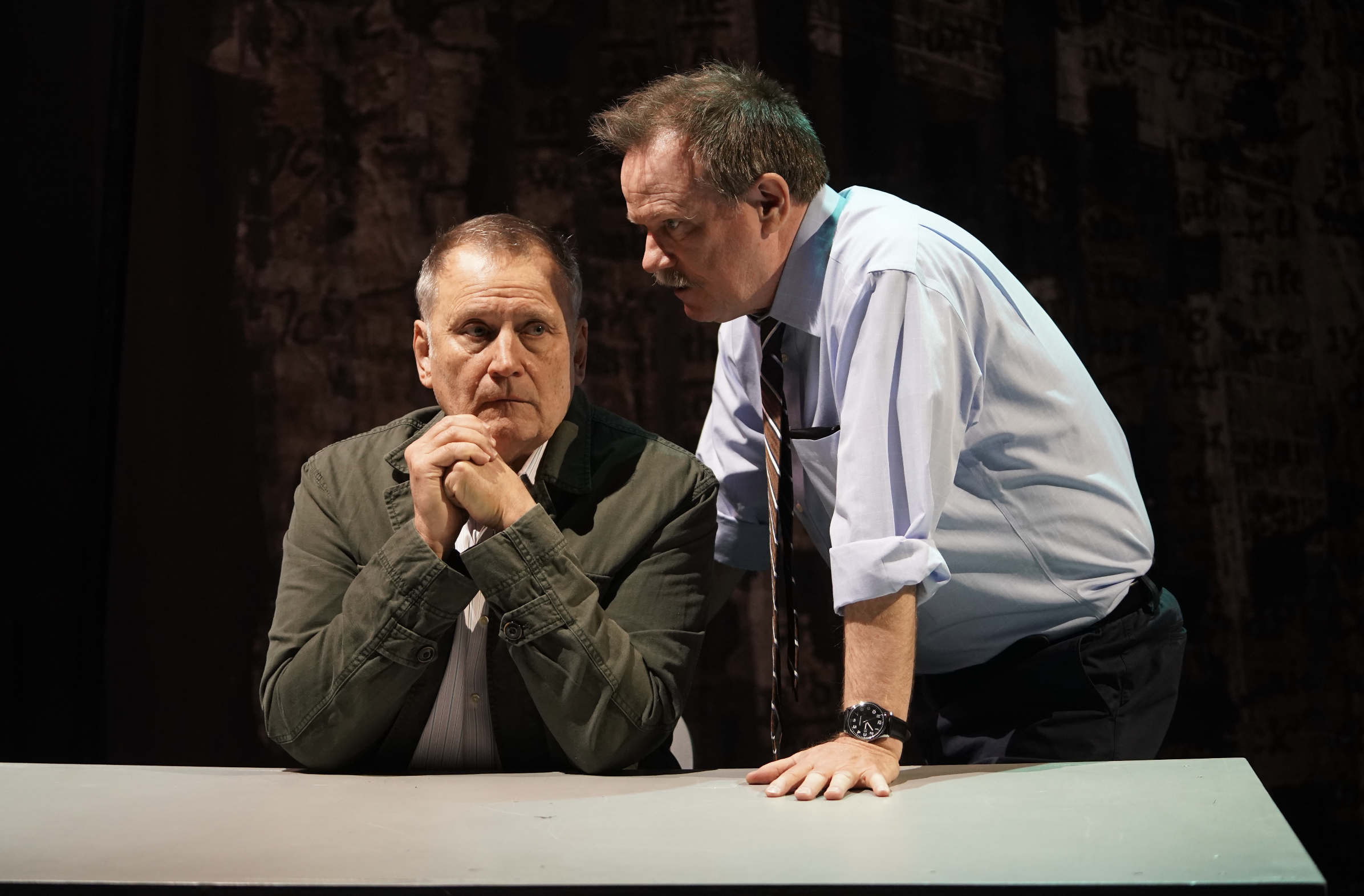
What follows is a high-decibel legal pageant in which Dykstra prosecutes the prosecutors. He is particularly incensed by the courts’ reliance on “expert” testimony of dubious scientific standing; the lip-reading fiasco becomes emblem and accelerant. The critique is urgent and not without merit. Yet the dramaturgy often feels less like a dialectic than a rally.
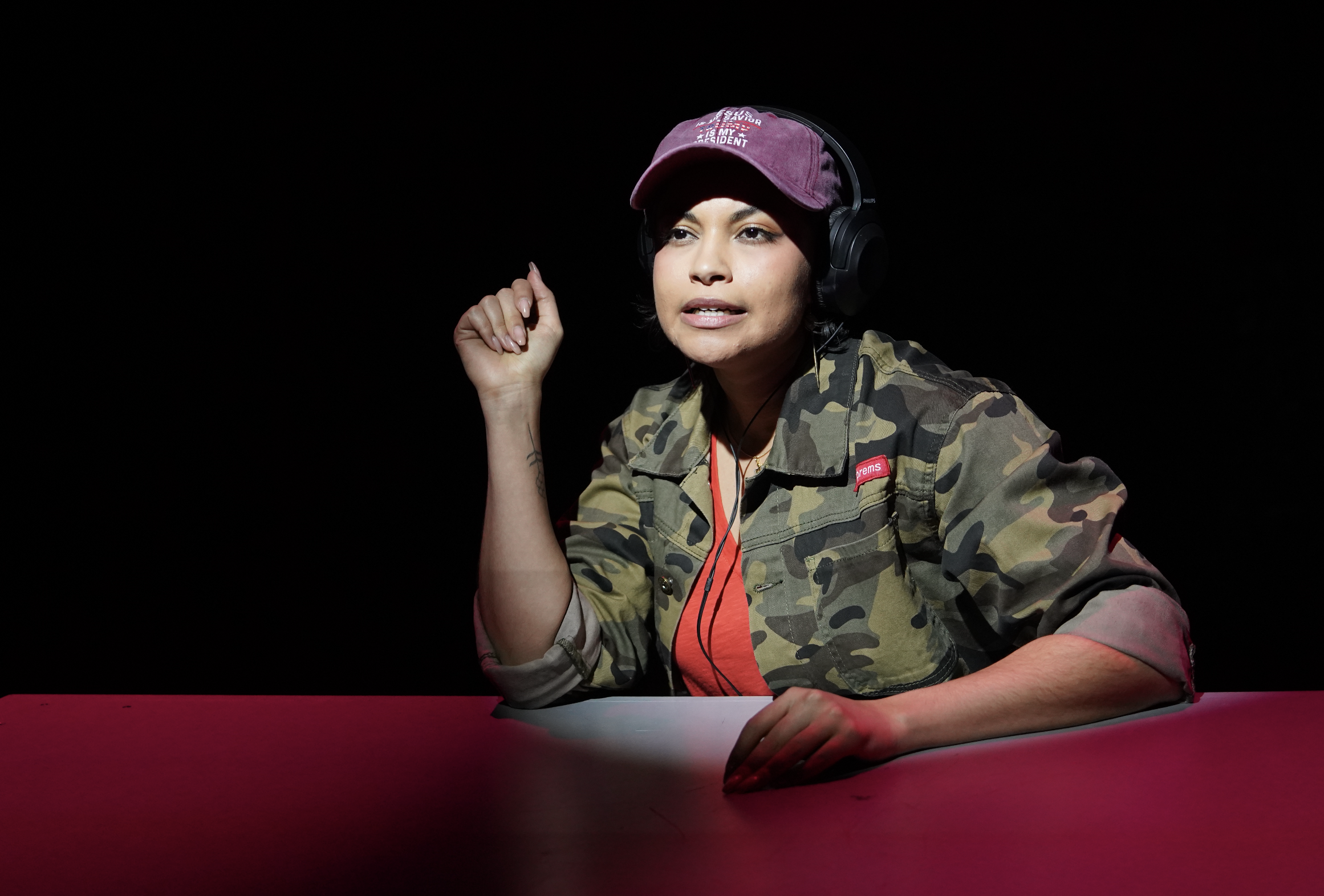
Still, if the writing occasionally overreaches, the performances land with brio. Under Margarett Perry’s dynamic direction, the cast embraces Dykstra’s heightened idiom as if their very lives depend upon it. Sheffield Chastain toggles deftly among the pugnacious Ricketts, a needling detective, and a bloodthirsty ADA, in-your-facing Daily with prosecutorial zeal. Kathiamarice Lopez shines as Officer Chavana (the good cop to Ricketts’ bad cop) and as Daily’s attorney, producing expert testimony with grand flourish and engaging in a ferocious courtroom pas de deux over the incriminating video. Kate Siahaan-Rigg relishes her turn as a sass-mouthed judge who cites Herman Melville’s Bartleby and peppers the bench with F-bombs no sitting jurist would dare utter. The line readings are mesmerizing.
Design elements bolster the spectacle. Tyler M. Perry’s set suggests the perpetual scaffolding of New York, facilitating swift pivots from interrogation room to street corner. Jen Leno’s lighting carves the space into fluorescent purgatories and red-and-blue washes of state authority. Ariana Cardoza’s soundscape supplies the crucial offstage violence, while Daniel Lawson’s sharply differentiated suits telegraph each lawyer’s billable hour rates before a word is spoken.
Dykstra himself embodies Daily with meticulous attention to every fussy idiosyncrasy. Yet the very thoroughness of the characterization proves double-edged. Is Daily an innocent swallowed by a quota-driven machine, or a grandstander exploiting tragedy to mount a jeremiad? The play withholds decisive evidence about that fatal night, even as it insists on its thematic verdict. In a climactic monologue — part confession, part aria — Daily denounces a system in which public safety has yielded to revenue generation, where agencies from local police to ICE operate as shakedown artists. No doubt the audience at every performance cheers. One could feel the catharsis before he finished the first sentence.
And yet, for all its velocity and virtuosity, one cannot escape the suspicion that something more searching has slipped through its fingers — that beneath the applause lines and prosecutorial fireworks lies a richer, riskier play still waiting to be written. Not Nobody is animated by righteous fury at pseudoscience, bureaucratic overreach, and the corrosion of civic trust — concerns that deserve robust theatrical examination. But too often the play practices a kind of dramatic confirmation bias, reassuring its viewers that their skepticism is justified rather than forcing them to wrestle with the full moral tangle: Ricketts’ death, Daily’s ambiguity, the fragility of institutions that require citizen participation to endure.
The preshow strains of “This Is Not America,” by David Bowie and Pat Metheny, drifted through the theatre like a warning flare. The lyrics thrum with disillusionment, quietly dismantling the mythos of freedom, opportunity, and boundless prosperity that America so ardently exports but so unevenly delivers. Bowie’s critique is never hectoring, it moves with poetic obliqueness, circling its themes rather than nailing them to the wall, allowing irony and yearning to coexist in the same melodic breath. The result is less a protest than a lament — one that lingers, unsettlingly, long after the final note fades. Sound designer Cardoza’s selection is more than mood music; it is thesis statement. Like Bowie’s anthem, Not Nobody suggests that something has gone awry in the republic. Whether Dykstra has illuminated the path forward, or merely amplified the grievance, remains an open question.
Click HERE for tickets.
Review by Tony Marinelli.
Published by Theatre Beyond Broadway on February 27th, 2026. All rights reserved.
