Online & Personal
Written and performed by Elizabeth George. Directed by Abbey Harris.
Presented by Elizabeth George.
Presented by the New York City Fringe Festival
April 1 at 6:30 PM, April 11 at 7:00 PM, April 15 at 8:10 PM, April 18 at 3:40 PM, 2026.
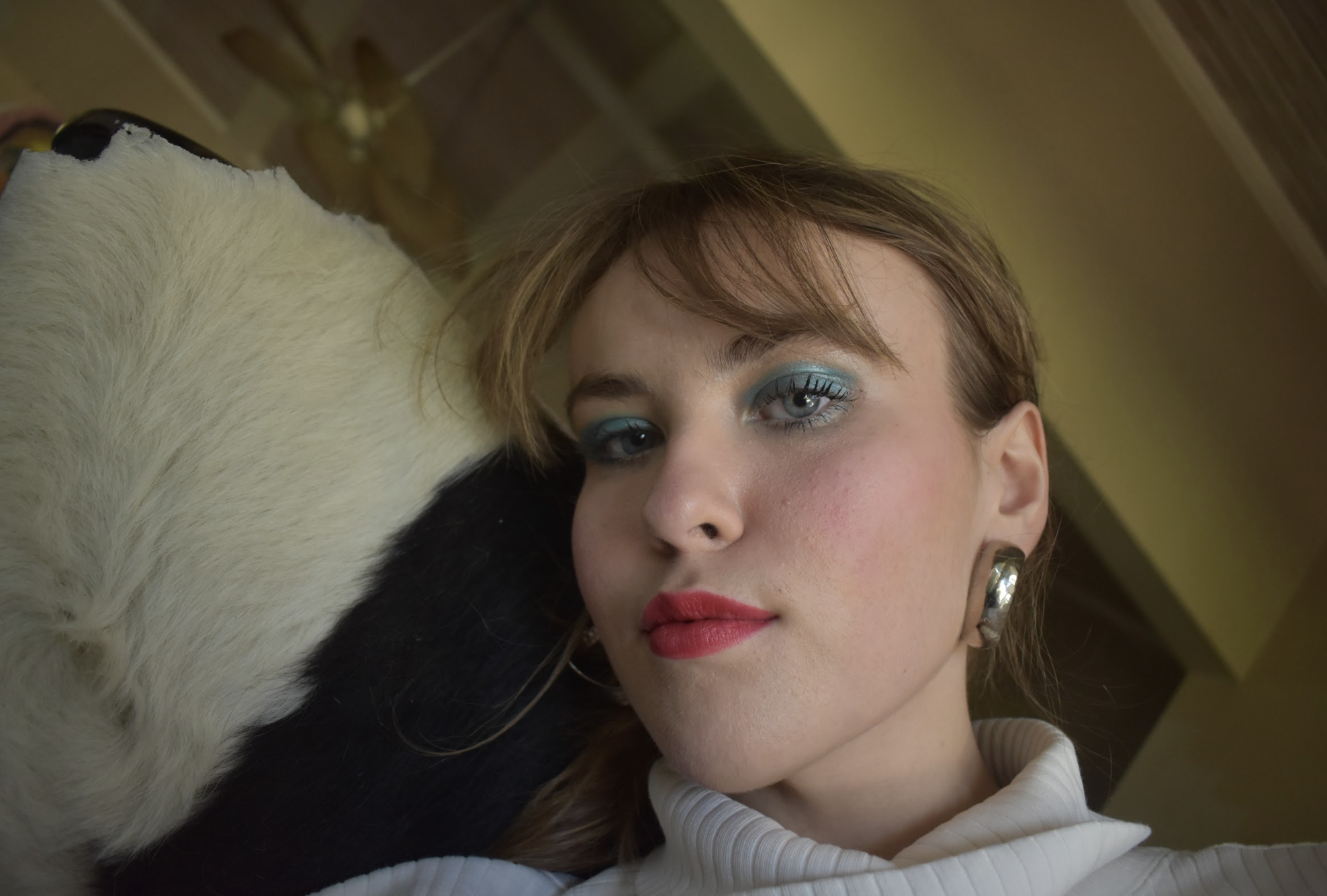
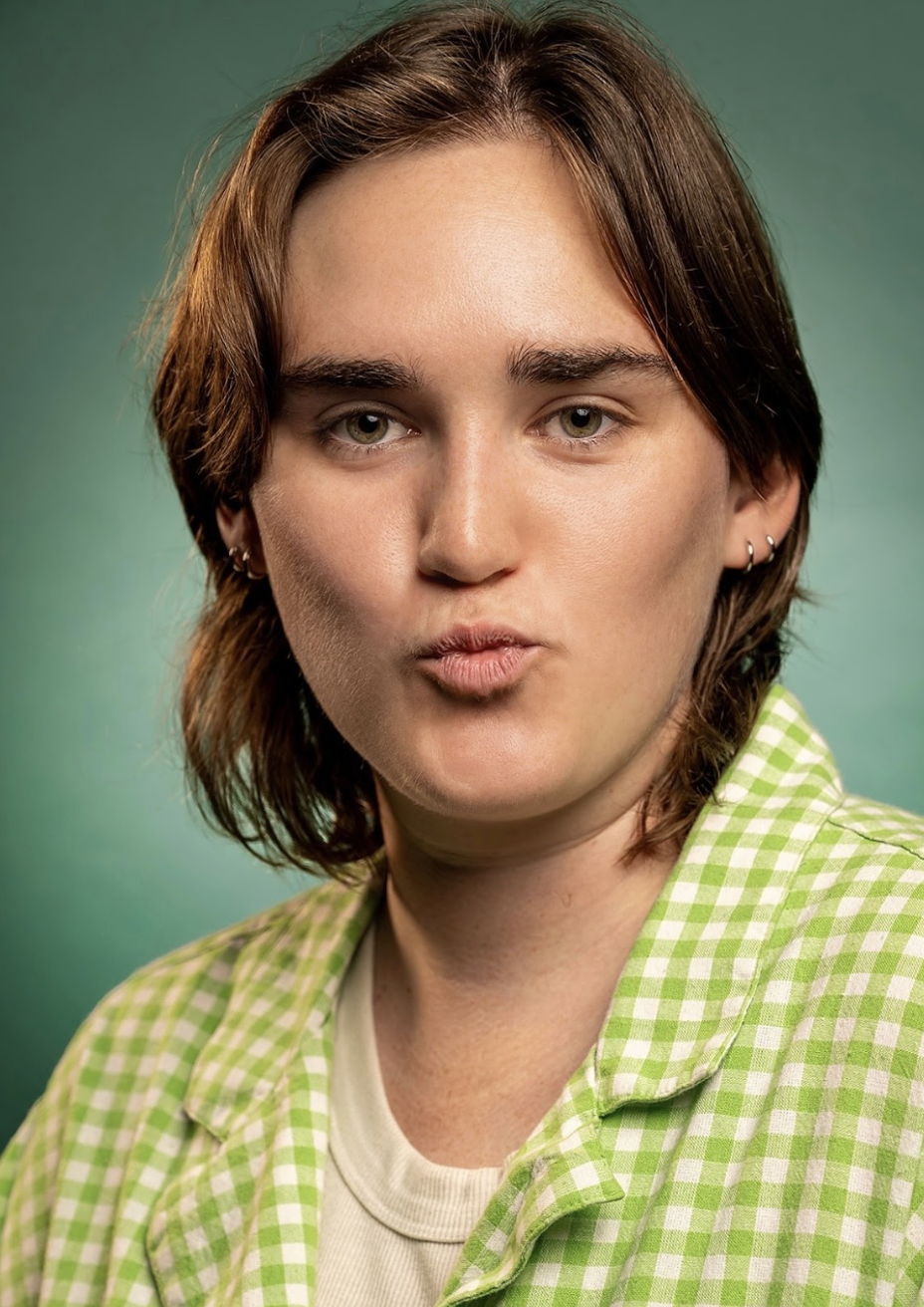
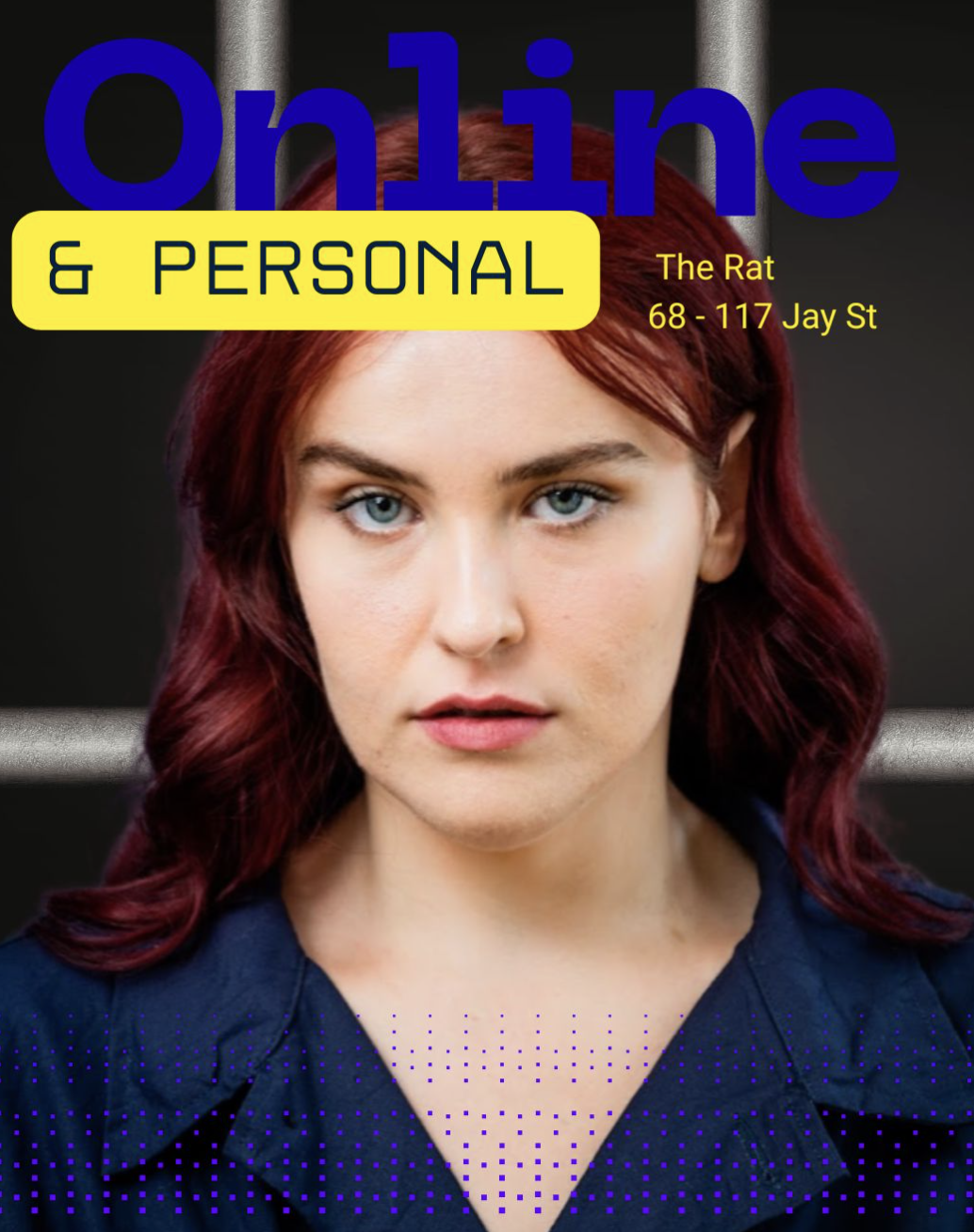
Writer and performer Elizabeth George convenes a mock trial in her childhood bedroom, a room that doesn’t look like she has left or cleaned in a very long time. The detritus of her childhood surrounds the proceedings. The witnesses are her mother, her teenage best friend, and a surprise witness too damning to spoil. The defendant, she has decided, is herself: her own judgment, her own desire, her own willingness to want, the part of her our misogynist culture insists on prosecuting whenever a woman is deceived and harmed by a man. Online & Personal is about what it costs to have wanted something.
The man she wanted was a fiction. He presented himself online as a lesbian Eastern European curling athlete, a fabrication specific and sustained enough to activate the kind of attachment that makes a person take risks. He constructed a target identity, aimed it at a bisexual woman, and used the trust she extended to someone she believed was a queer woman to get her into his car, in the middle of nowhere, her phone at ten percent battery and no way out. His first words when he saw her: “You’re even more beautiful in person.” What happened after that, George can and will not fully give to us. The assault exists in Online & Personal as an absence, the most honest form it could take, and the most devastating. What you imagine in the silence is worse than anything she could have staged.
In the show, George tells you that she’s more writer than performer. Every moment she spends onstage disagrees. She is a brilliant actor who commands the room with tremendous, quiet power and infinite depth. Her use of The Rat’s intimate space is instinctive and fully inhabited, sized exactly to a room where confession requires a confessor close enough to hear. The writing is gorgeous and the delivery is inseparable from it: the work of someone who has thought very hard about the difference between performing honesty and being it. When she finds the funny moments in her own story, and she does, carefully, on her own terms, they read as what they are: a survivor’s signal that she is still here, still capable of laughter, still in possession of herself. The comedy belongs to her. It is not the show’s register. It is her proof of life.
The mock trial is the right formal container for this material. What it externalizes is the interior process every SA survivor is forced to conduct alone: the cross-examination of her own desire, her own choices, her own capacity for trust, as if any of these were what put her in danger. The witnesses George assembles, her mother, her teenage best friend, the physical evidence of adult female desire, constitute the jury the culture has always insisted she face. She faces it in public instead, with an audience, for the price of a Fringe ticket, which is the bravest possible response to being told it was your fault, when it sure as hell wasn’t.
Thirty minutes is not enough for what this work has earned. George deserves a longer run, a larger platform, and the audience a festival slot cannot provide. She has built a show that is honest, harrowing, and beautiful, even amidst its horror. It is one of the gems of this year’s NYC Fringe Festival. Go see it.
Click HERE for tickets.
Review by Ariel Estrada.
Published by Theatre Beyond Broadway on April 15, 2026. All rights reserved.
