THE THIRD CHOICE
Written and Performed by Tahir Chatur
Presented by the New York City Fringe Festival
The Rat NYC,68-117 Jay St, Brooklyn, NY 11201
Thu April 2 at 6:30pm, Fri April 3 at 6:30pm, Mon April 13 at 8:10pm & Sat April 18 at 10:20pm
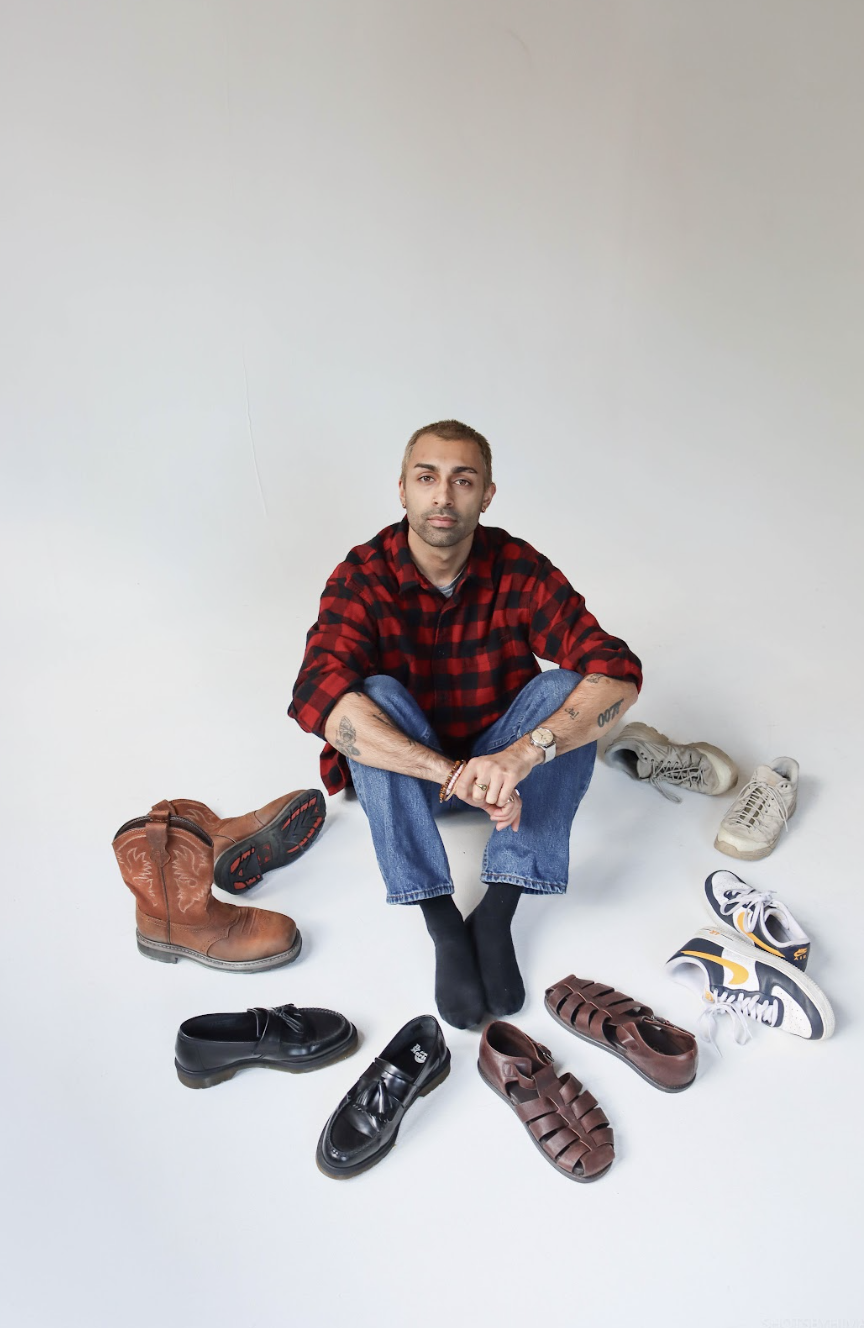
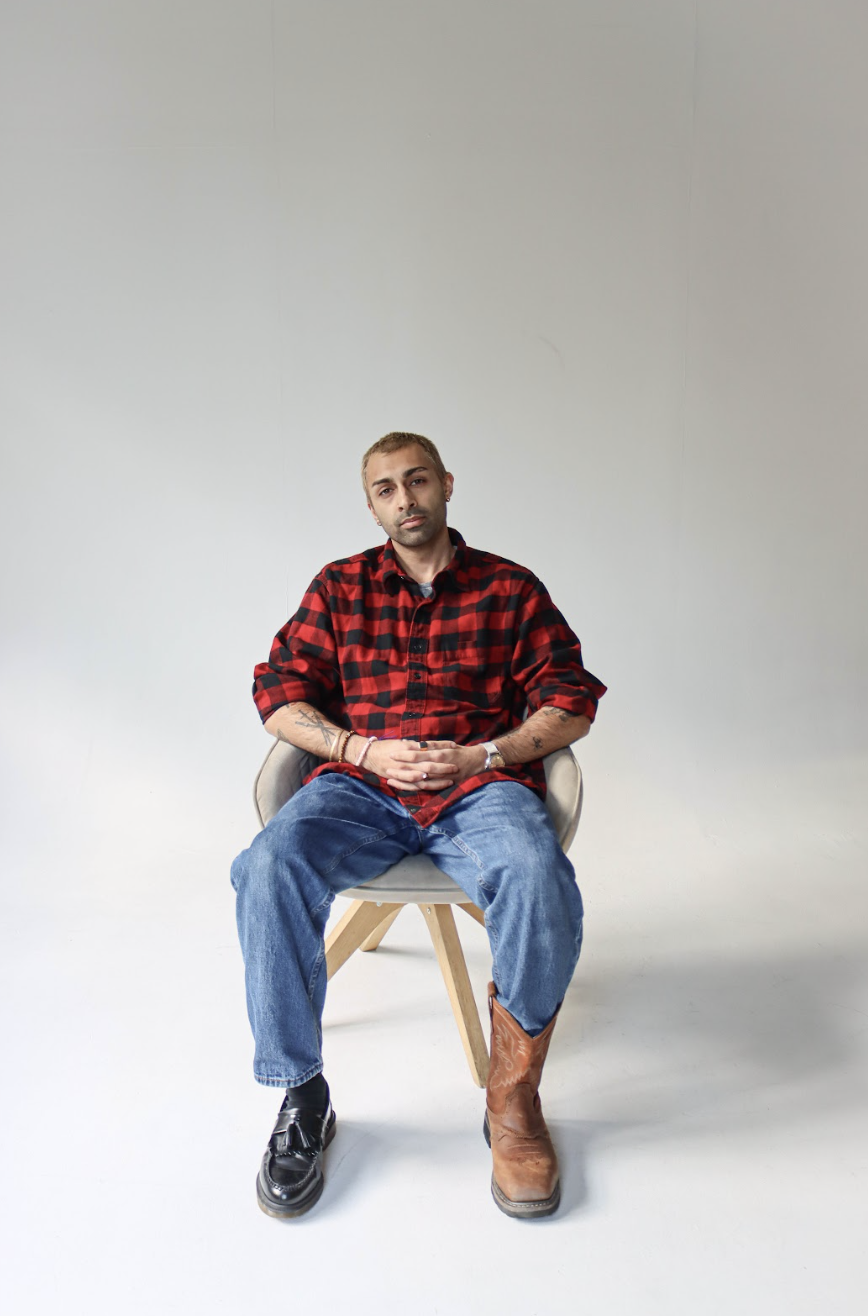
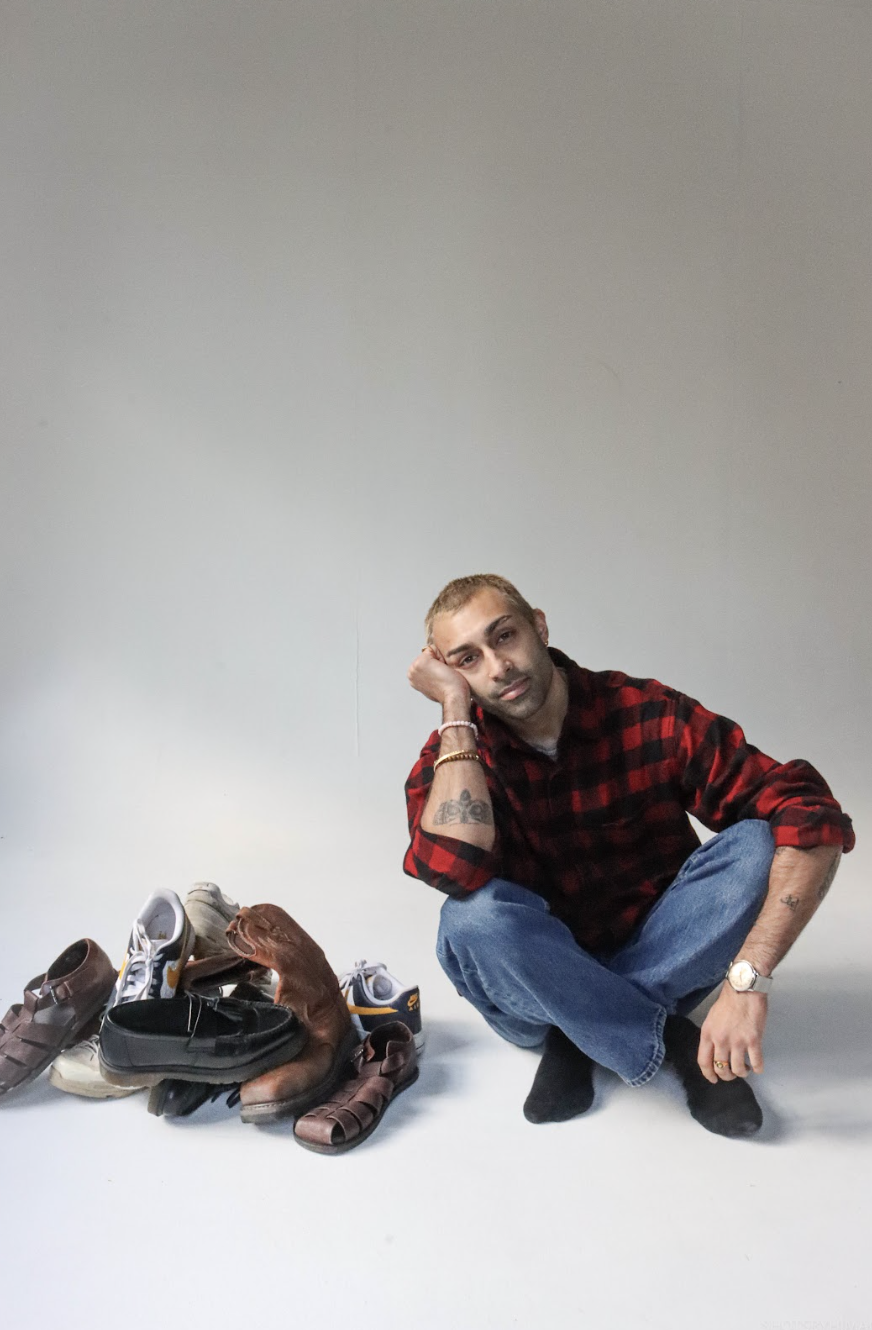
Written, directed, and performed by Tahir “Tai” Chatur, The Third Choice arrives as a work of uncommon warmth and clarity, a gently probing meditation on self-discovery that finds both poetry and punch lines in the most intimate corners of lived experience. The Third Choice—a nimble, quietly subversive solo performance—proposes precisely that, and does so with a disarming elegance. In this deftly hybridized work, Tai braids storytelling, stand-up, and the winking scaffolding of a mock group-therapy session into something that feels at once intimate and expansively humane.
With a performer’s instinct for rhythm and revelation, Tai guides us through the seemingly disparate terrains that have shaped him—cultural inheritance, classroom awkwardness, even the surreal pageantry of dating in reality television—finding, in each, both absurdity and grace. The result is a piece that glides effortlessly between laughter and recognition, its humor never undercutting its sincerity but rather illuminating it.
What emerges is less a call to indecision than an invitation to reimagine the terms entirely: identity not as a fixed destination, but as a lived, evolving negotiation. Tai’s great achievement here is to make that negotiation feel not only bearable, but exhilarating.
It is, on its surface, a solo show about identity, acceptance, and—delightfully, disarmingly—shoes (as he narrates, where his persona really needs to change based on the audience, he switches between sneakers, dress loafers and cowboy boots), yet beneath that modest framing lies a richly layered inquiry into what it means to inhabit one’s truest self.
Tai serves as both guide and subject, leading us through the varied topography of his life with a storyteller’s ease and a comic’s precision. He conjures a vivid constellation of moments, places, and people—each rendered with affectionate specificity—that have shaped his becoming. Crucially, he does not sand down the edges. The piece moves, with admirable candor, through difficulty: religion and faith, racism, the aching desire to belong, and the quiet, hard-won practice of self-acceptance. What might feel heavy in lesser hands here becomes buoyant, even generous, animated by Tai’s ability to locate humor without diminishing truth.
In one of the evening’s most indelible passages, Tai turns to his early childhood—those formative years between two and seven spent in Kenya—and, with a comedian’s timing and a memoirist’s eye for detail, renders the uneasy beginnings of not quite belonging. “Sometimes I get a look when I say I’m from Kenya,” he confides, before puncturing the moment with a perfectly calibrated aside: he doesn’t exactly resemble a champion distance runner—“I look like Aladdin.” The joke lands, but it also opens onto something more tender: the dissonance between perception and lived truth.
What follows is a sequence of recollections so vivid they feel conjured rather than recounted. Tai sketches a childhood at once unfamiliar and utterly specific, far removed from the life he might have known in Canada. Evening meals become miniature spectacles: the ritual of preparing chicken, the neighborhood children gathered on the porch as if at a sporting event, placing bets on how far the headless bird might run. “Our afterschool math was gambling… on poultry,” he quips, animating the scene with a physicality that borders on the balletic.
Yet even here, amid the laughter, something more resonant takes hold. These memories—comic, slightly macabre, and suffused with the textures of place—become a way of understanding the early fractures of identity, the first intimations of difference. Tai’s great gift is his ability to hold humor and poignancy in the same breath, allowing the audience to delight in the absurdity while quietly absorbing its deeper implications. The result is storytelling that feels at once expansive and intimate, transforming personal history into a shared, luminous experience.
One of the production’s most resonant gestures is its weaving together of Tai’s Muslim faith with the multiplicity of roles he inhabits in the world. In a particularly elegant metaphor, the custom of removing one’s shoes before entering a mosque becomes a lens through which to consider the many masks we wear—those adopted in deference to expectation, those fashioned in pursuit of belonging. Tai handles this interplay with a light touch, allowing the symbolism to accrue meaning rather than insisting upon it.
In another exquisitely rendered vignette, Tai recalls the week his parents volunteered him—unilaterally, it would seem—to deliver a reading at Friday services in the mosque. He was seven: an age at which most children are still learning how to sit still, let alone command a room. Yet here he was, stepping into what he wryly frames as his first acting role—cast, improbably, as a seventy-five-year-old religious authority, a vessel for the divine word. The comic premise is irresistible, and Tai mines it with precision. This is no ordinary childhood anecdote; it is, in his telling, a moment of almost operatic self-importance, a “Marty Supreme” debut in which the stakes feel both absurdly inflated and entirely real. The image of a child attempting to channel sacred text with the gravitas of an elder becomes a quietly brilliant metaphor for performance itself—the ways in which we are asked, from an early age, to inhabit roles far larger than we understand.Tai captures that sensation with a lightness of touch that never tips into sentimentality, allowing the audience to recognize, in this improbable debut, the earliest flicker of the performer he would become.
Tai’s return to Canada yields one of the evening’s most deftly observed—and quietly devastating—episodes. On his first day of third grade, he introduces himself with the unguarded pride of a child assembling his identity in real time: “I’m from East Africa. I like to sing Bollywood songs, and I used to have a pet monkey.” It is a declaration at once exuberant and disarmingly sincere, offered without any sense of the meanings it might accrue in the ears of others.
What follows, in Tai’s telling, unfolds with an almost theatrical inevitability. That very week, the class turns to a unit on global health, and a well-meaning teacher attempts to distill the enormity of the AIDS crisis into terms digestible for children—locating its origins, broadly and reductively, in Africa, and invoking, with unfortunate simplicity, its transmission from monkeys to humans. In an instant, the room shifts. Twenty-three classmates turn, as if on cue, toward Tai.
He renders the moment with remarkable restraint, allowing its weight to emerge not through embellishment but through precision. The humor—subtle, incredulous—never eclipses the deeper current: the sudden, disorienting experience of being made into a symbol, of having one’s story collapsed into stereotype. It is a fleeting classroom incident, perhaps, but in Tai’s hands it becomes something far more resonant: an early encounter with the gaze of others, and the complicated, often painful work of disentangling oneself from it.
More whimsy is in store when he attends Christian camp. In an effort to experience the joy of pepperoni when the pizza arrives, he offers to pray over the pizza rendering the meal Halal. “So in front of a cafeteria of Christian children. was me, this brown boy, praying to a box of pizza, I remember. I prayed in Arabic. I said bismillah hi Rehmani Raheem. I sat with my pizza slice thinking I’m not getting into anyone’s heaven after this.“
Tai shares a performance that feels both deeply personal and quietly communal, inviting the audience not merely to observe but to recognize themselves within its reflections. The Third Choice does not so much argue for a single way of being as it opens a space in which the self, in all its contradictions, might be fully—and joyfully—inhabited.
Tai leaves us with a poignant footnote. “I hit backspace on my keyboard. And I’m not Tai Chatur. Pause. I’m Tahir Nazir Chatur. Long pause. It's nice to meet you.” Actually, the pleasure is all ours.
Click HERE for tickets.
Review by Tony Marinelli.
Published by Theatre Beyond Broadway on April 15, 2026. All rights reserved.
