Protest Song
Written by Tim Price, Directed by Sarah Bedi
La MaMa’s Downstairs Theatre | 66 E 4th St, New York, NY 10003
December 4–21, 2025
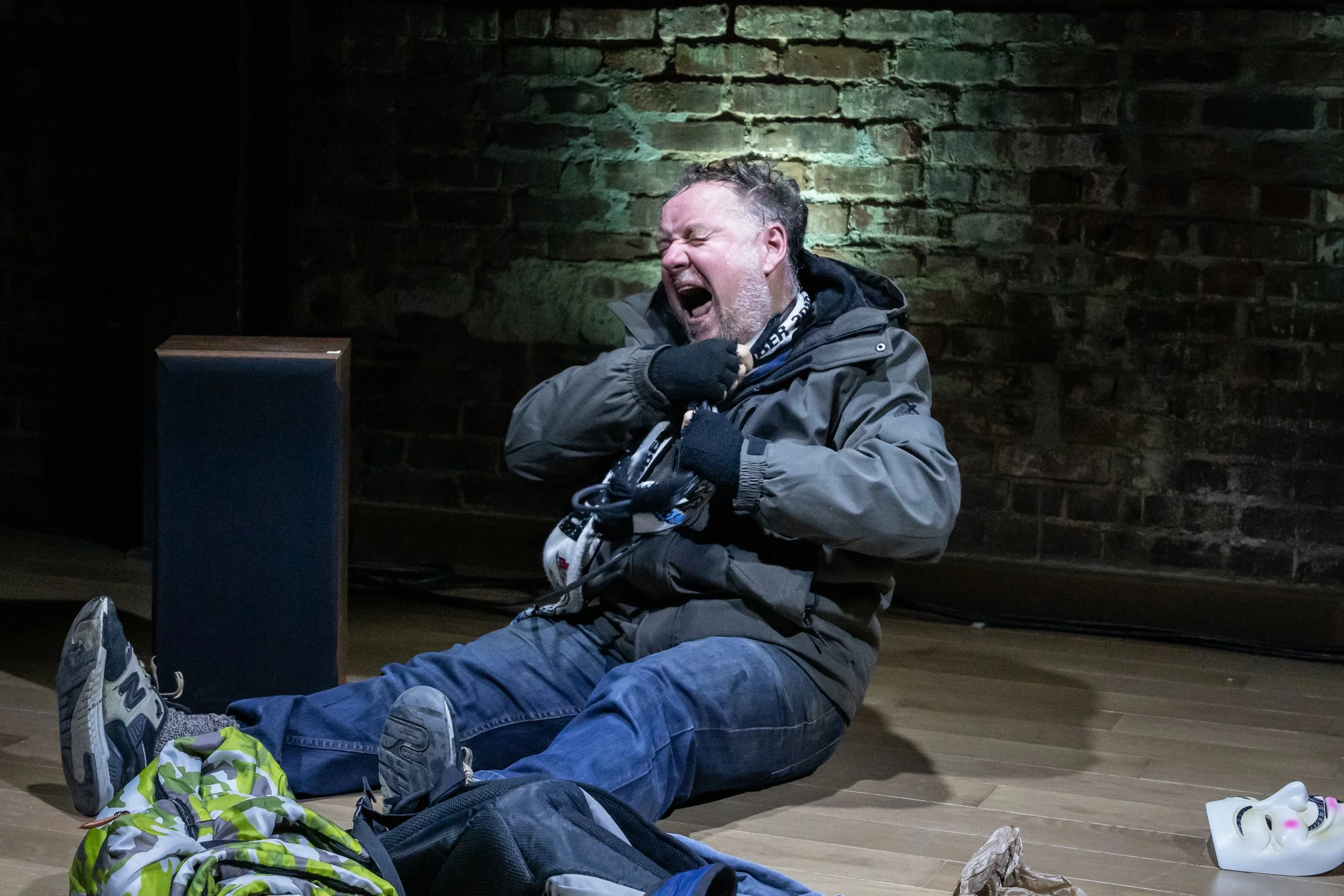
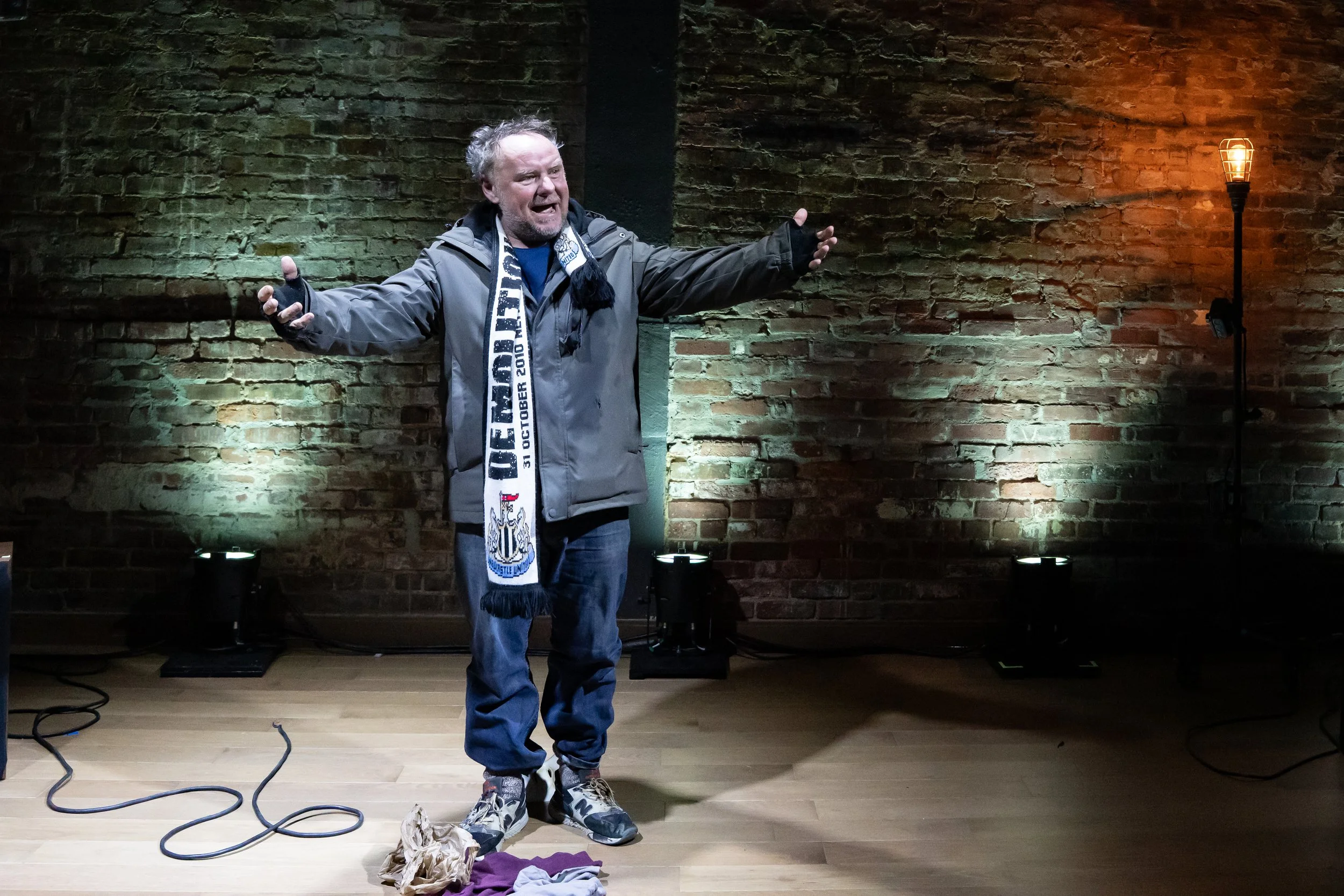
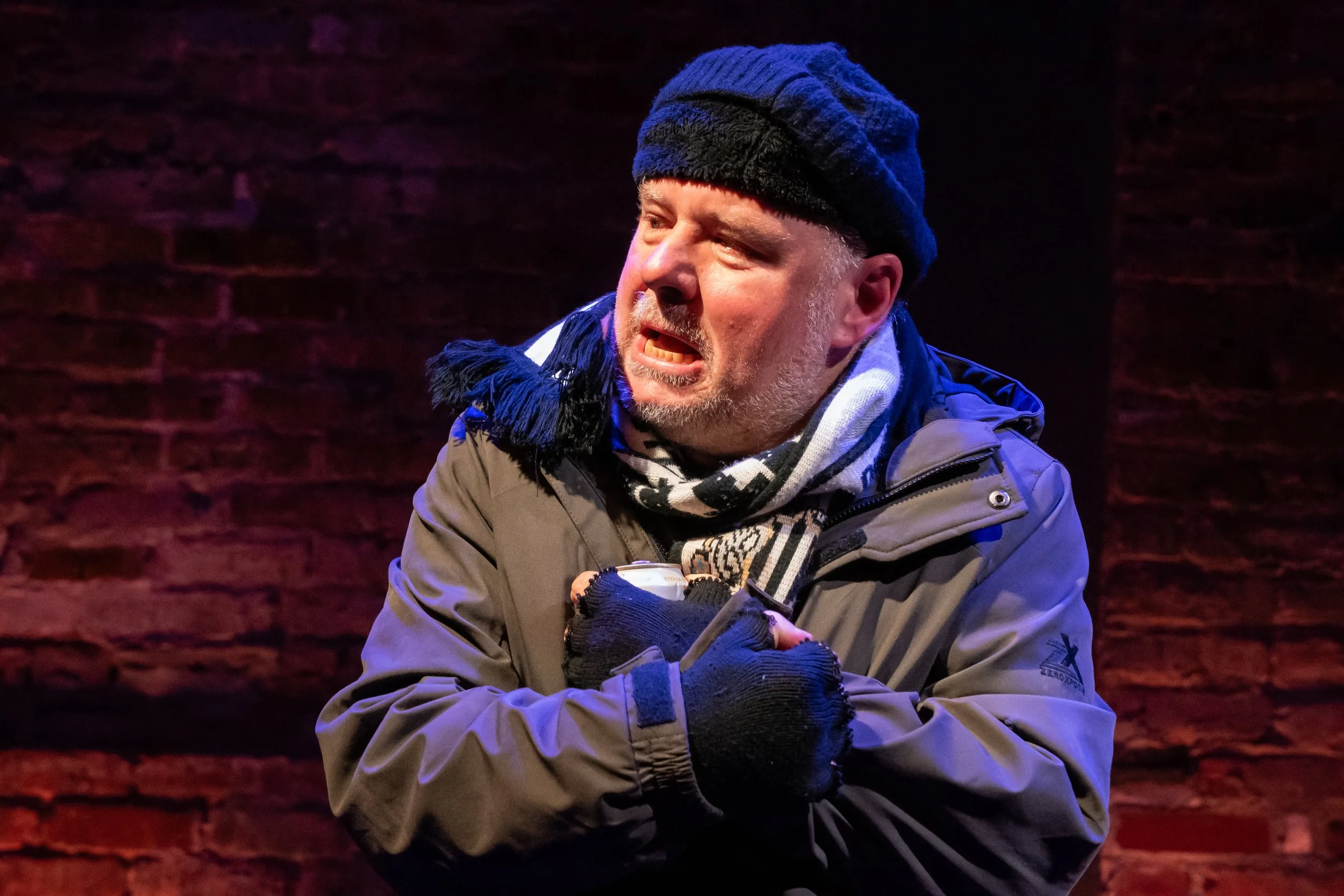
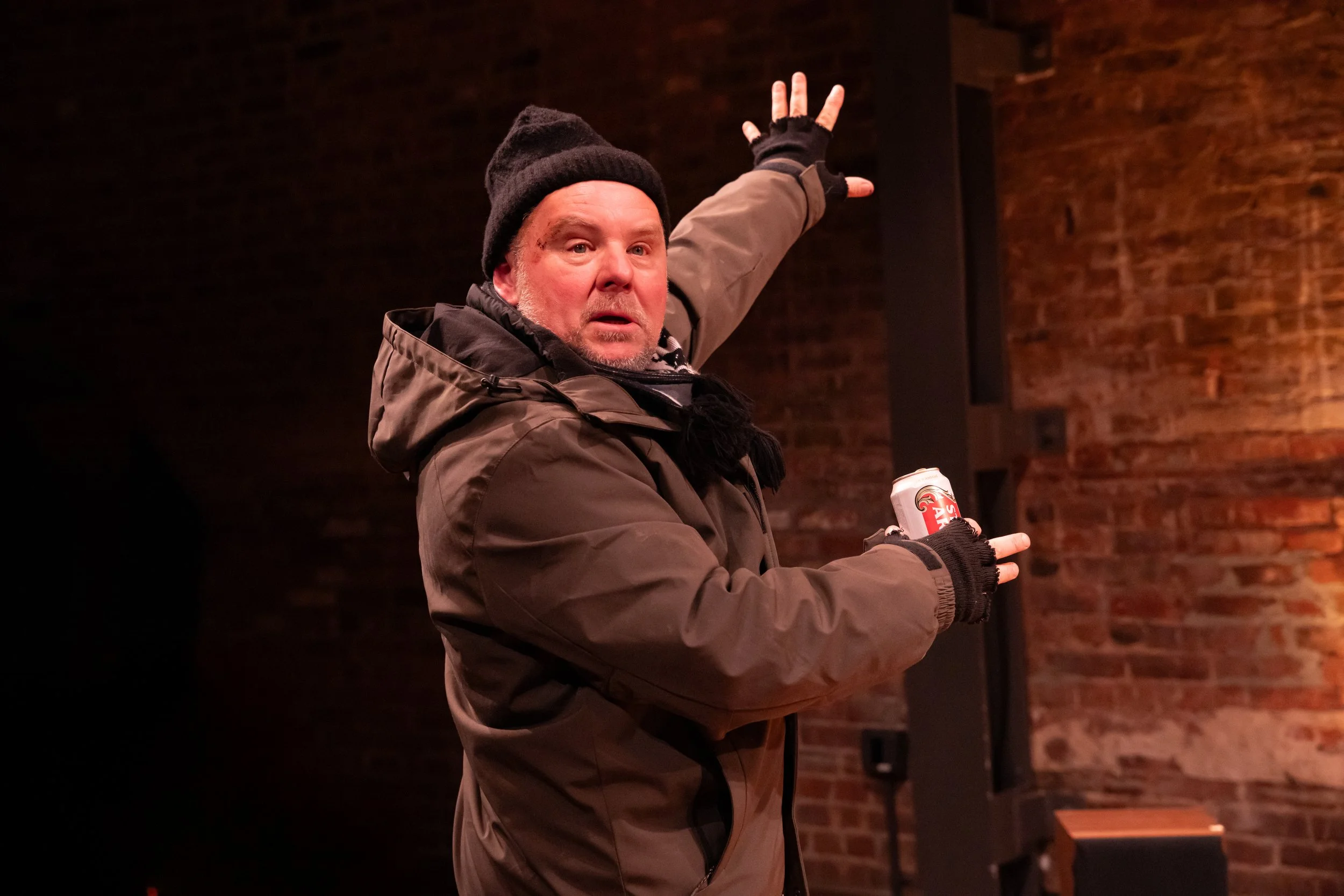
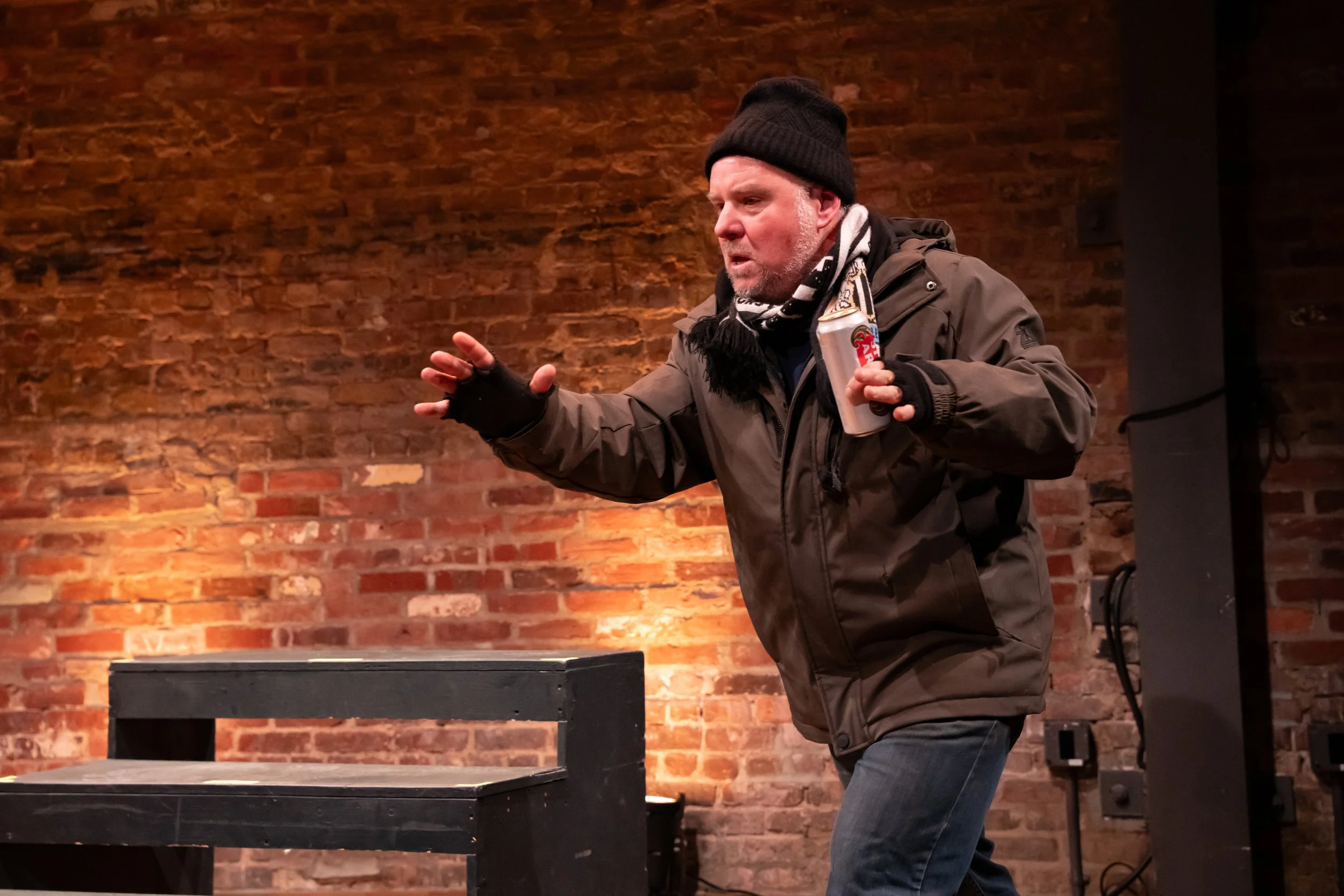
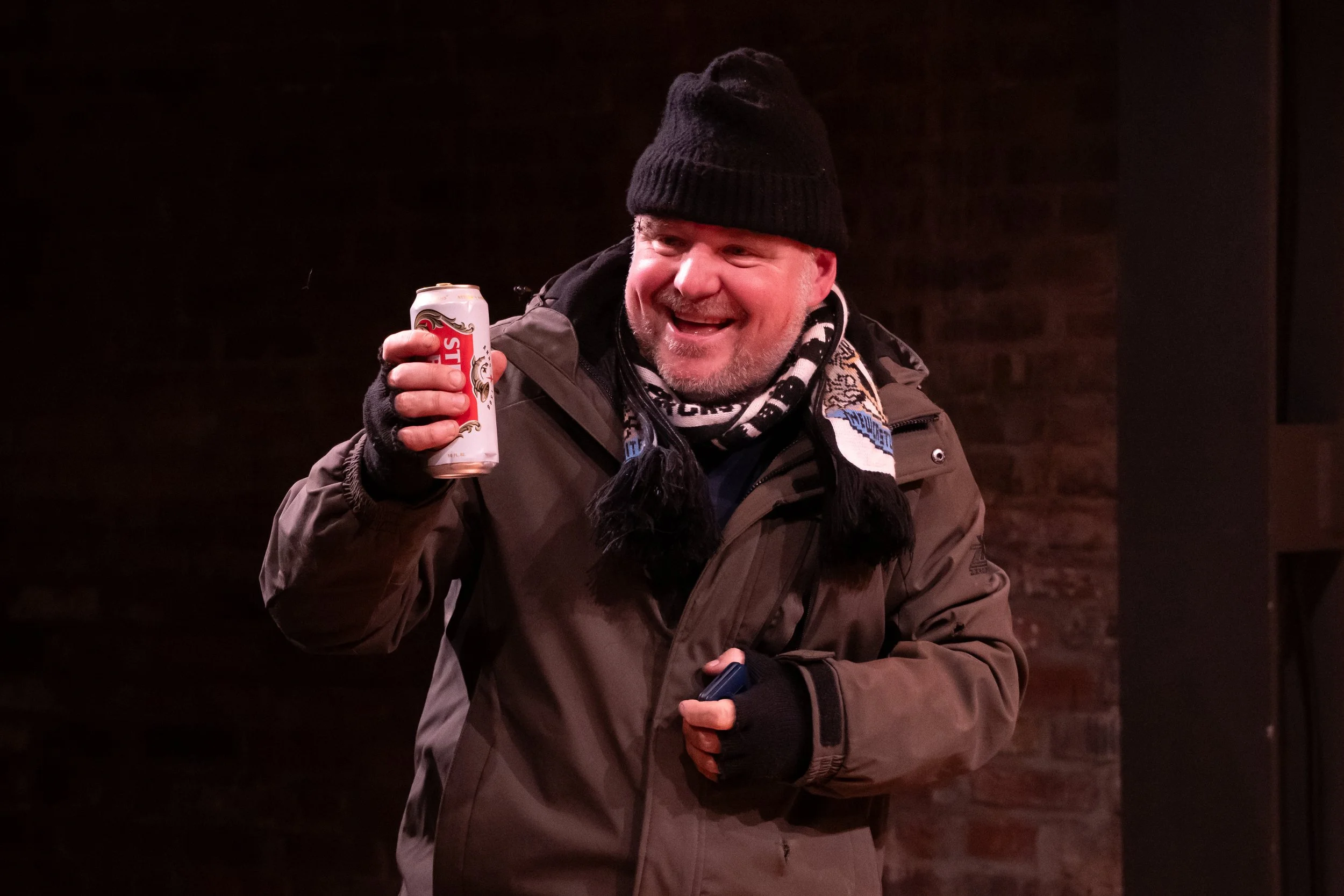
Photo Credit by Steven Pisano
Tim Price’s Protest Song, currently unfolding at La MaMa’s Experimental Theatre Club, is one of those spare, bracing theatrical encounters that seems at first modest in scale—a single actor, a single life—but gradually reveals itself as an ethical provocation of uncommon force. Performed with raw clarity by David Nellist, the play traces the trajectory of Danny, a homeless man whose existence is irrevocably altered, and then quietly shattered, by the arrival of the Occupy London movement at the church steps he already calls home. What Price offers is not a polemic about protest culture so much as an anatomy of hope—how it is awakened, instrumentalized, and finally withdrawn.
When the protesters first descend, Danny experiences them as an invasion. The steps are crowded, the routines disrupted, the fragile equilibrium of street survival unsettled. Yet almost immediately, necessity erodes resentment. Free food, access to water, a chance to wash—these basic dignities recalibrate Danny’s days. No longer forced to panhandle in order to eat, he drifts toward the kitchen, where chopping vegetables becomes both labor and lifeline. What begins as a practical accommodation evolves into something far more consequential: the discovery of usefulness. Danny is needed. He shows up every morning. He learns to cook. He contributes. Gradually, he acquires not only skills but language—political vocabulary absorbed through proximity, participation, and conversation. Identity follows function. He is no longer merely Danny; he becomes “Danny from the Kitchen.”
Nellist charts this transformation with a restraint that deepens its impact. Danny’s pride is never overstated; it surfaces in fleeting moments of pleasure, in the dignity of routine, in the quiet elation of being heard during consensus meetings. One of the play’s most incisive scenes arrives when a reporter interviews members of the encampment and turns to Danny, asking why he is there. “I’m chopping the carrots,” Danny replies—a statement at once literal and devastatingly sufficient. The reporter presses for ideological justification, but the truth is more elemental. Danny is there because work heals him. Because routine steadies him. Because being valued restores something that homelessness has systematically stripped away.
The tragedy of Protest Song lies not in Danny’s inability to sustain this role, but in the movement’s inability—or unwillingness—to sustain Danny. The rupture comes quietly. Danny overhears Occupy leaders debating whether he might speak to other homeless individuals who are deemed disruptive or insufficiently productive. He complies, betraying his own community in order to preserve his standing within the encampment. Guilt follows, then a small theft, then a brief, illicit attempt to reclaim solidarity through celebration. When Occupy quite literally extinguishes the fire Danny has lit, the symbolic force is unmistakable. The movement that proclaimed itself for everyone reveals its boundaries: not every man, only every man who performs worthiness to specification.
Director Sarah Bedi shapes this volatility into something fluid and coherent. It takes a director of rare sensitivity to orchestrate a piece with such extreme emotional registers—humor colliding with despair, intimacy giving way to fury—without losing momentum or clarity. Under Bedi’s guidance, the production moves with a sleek inevitability, each shift feeling both surprising and inevitable. Mitchell Fenton’s lighting design and Hidenori Nakajo’s sound design put us squarely in the encampment every moment.
Price is unflinching in his commitment to writing a genuinely flawed character. Danny makes statements that are politically incorrect, abrasive, even disturbing, and yet they feel neither gratuitous nor apologetic. They are essential to the portrait. This is not a sanitized figure designed to solicit easy empathy, but a full, contradictory human being whose rough edges insist on being seen. The result is a depth of characterization that feels earned rather than engineered, allowing the audience to travel with Danny rather than simply observe him.
At the center of it all is David Nellist’s astonishing portrayal of Danny—a performance so alive, so electrically charged, that it seems to reconfigure the air in the room. The actor is so completely in command of presence, rhythm, and emotional truth. From improvised exchanges with the audience, to sudden descents into rage or eruptions of joy, Nellist never drops the thread. The technical skill required to hold an audience single-handedly for this length of time is immense; Nellist carries it with what looks like ease but is clearly the result of profound discipline and intuition.
By the play’s conclusion, Danny is back on the streets, cursing Occupy not because it failed him materially, but because it showed him what his life could be. Hope, once introduced, becomes its own cruelty. To know oneself as capable, productive, and connected—and then to be denied the conditions that allow such a self to exist—is more painful than ignorance ever was. Price’s insight here is devastatingly precise. The play exposes how easily social movements can replicate the exclusions they claim to oppose, offering simulations of belonging without structures of permanence or care.
The Club at La MaMa proves an ideal vessel for the piece. Its spareness amplifies the play’s emotional architecture, throwing into relief the austere, cardboard-like set. Bare, provisional, and bleak, the design functions as a constant visual reminder of Danny’s fundamental instability—of the home he lacks and longs for. There is nowhere to hide, for the actor or audience, and the space honors that exposure.
What gives Protest Song its particular resonance is the way it implicates not only activists or institutions, but audiences themselves. Danny begins by panhandling among us; later, he passes around a phone from his case manager, inviting names that might help him secure housing. He stops the action to ask whether we would touch a homeless person. The answer, when posed in New York, is unanimous: we would not. These moments are not theatrical gimmicks but moral mirrors, forcing an encounter with the limits of our empathy. We may applaud from our seats, but we remain cautious in our lives. We avert our eyes on the walk home.
Price’s play insists that this caution is itself a choice. Danny’s story demonstrates that the barrier between homelessness and participation is often absurdly thin—access to hygiene, clothing, communication, and opportunity. Employment is withheld not because of incapacity, but because of logistical impossibility. What Protest Song makes achingly clear is that there is always a fully human person present, waiting not for charity but for inclusion. The kitchen becomes a metaphor for this truth: chopping carrots is not menial labor here, but an act of restoration, a means of feeding both self and others.
In its final reckoning, Protest Song asks a question as old as civic life and as urgent as any headline: why are we so reluctant to help the homeless beyond gestures of proximity and performance? Even those who danced with Danny, laughed with him, taught him, and imagined a better world alongside him did not follow through when the encampment dissolved. The play does not offer easy solutions, but it does offer clarity. A person in need can also be a person who is needed—and recognizing that fact can change everything.
What lingers after Protest Song is not despair but responsibility. The play introduces the possibility that worth might be visible if we choose to look, that solidarity might extend beyond the duration of a protest, that care might include continuity. From something as simple as chopping carrots, whole lives can begin to reassemble—if we are willing to remain present when the work is done, and to help people find somewhere to go once they have finished helping us.
There are many reasons to love Protest Song, but chief among them is its refusal to dilute its politics or its humanity. This is political theatre at its most potent: illuminating brutal realities while infusing them with soul, humor, and aching beauty. It leaves you charged with feeling—not abstract compassion, but a restless, galvanizing urgency that makes you want to alter the world outside the theatre doors. This is the kind of theatre to value most: work that unsettles, humanizes, and insists that art is not merely a mirror to society, but a call to action.
Review by Tony Marinelli.
Published by Theatre Beyond Broadway on December 22, 2025. All rights reserved.