The Wizard of Oz
Written by Robert K. Benson; Directed by Madeline Wall
Parkside Lounge | 317 E Houston St, New York, NY 10002
November 22 - December 20, 2025


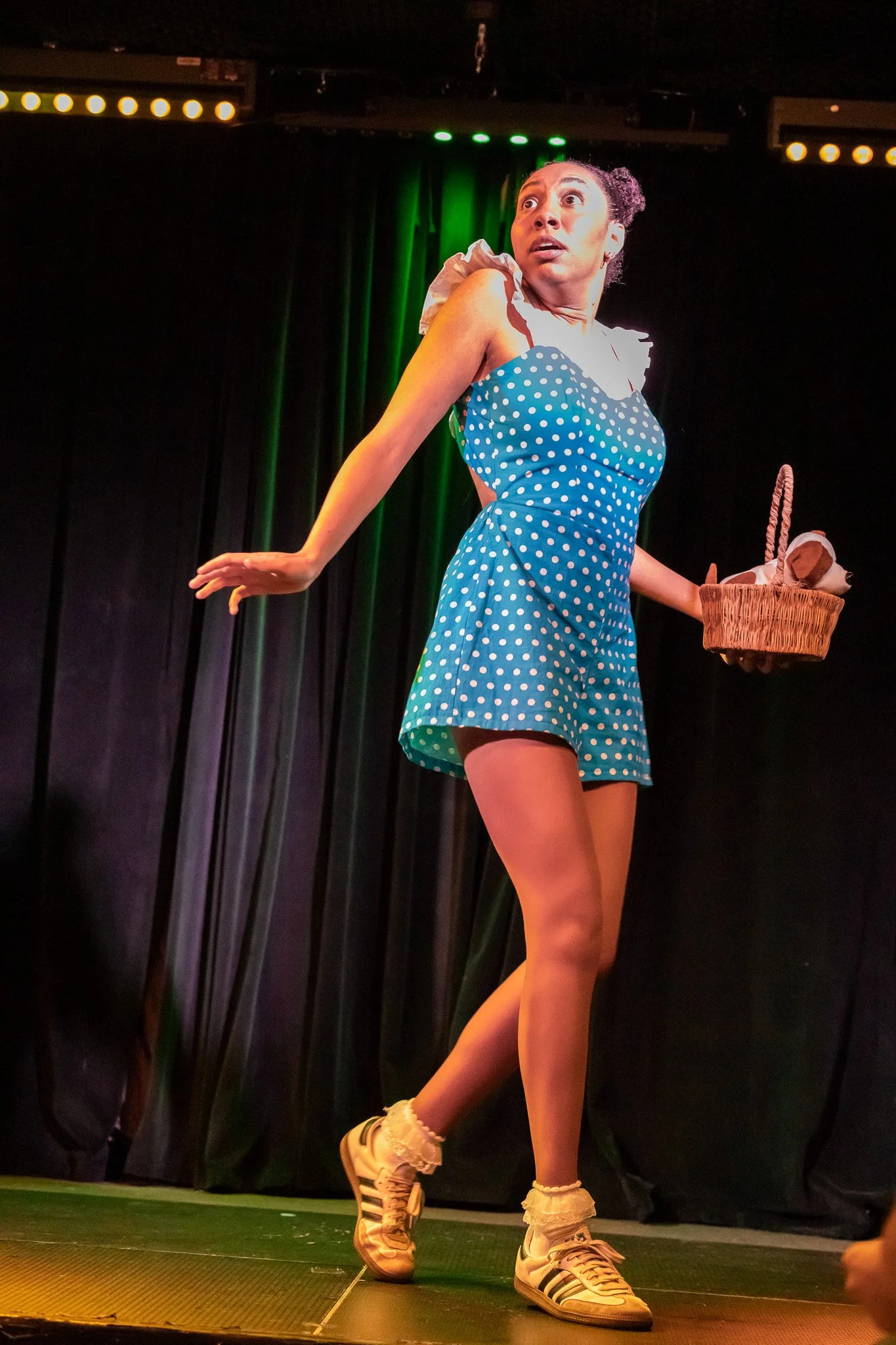
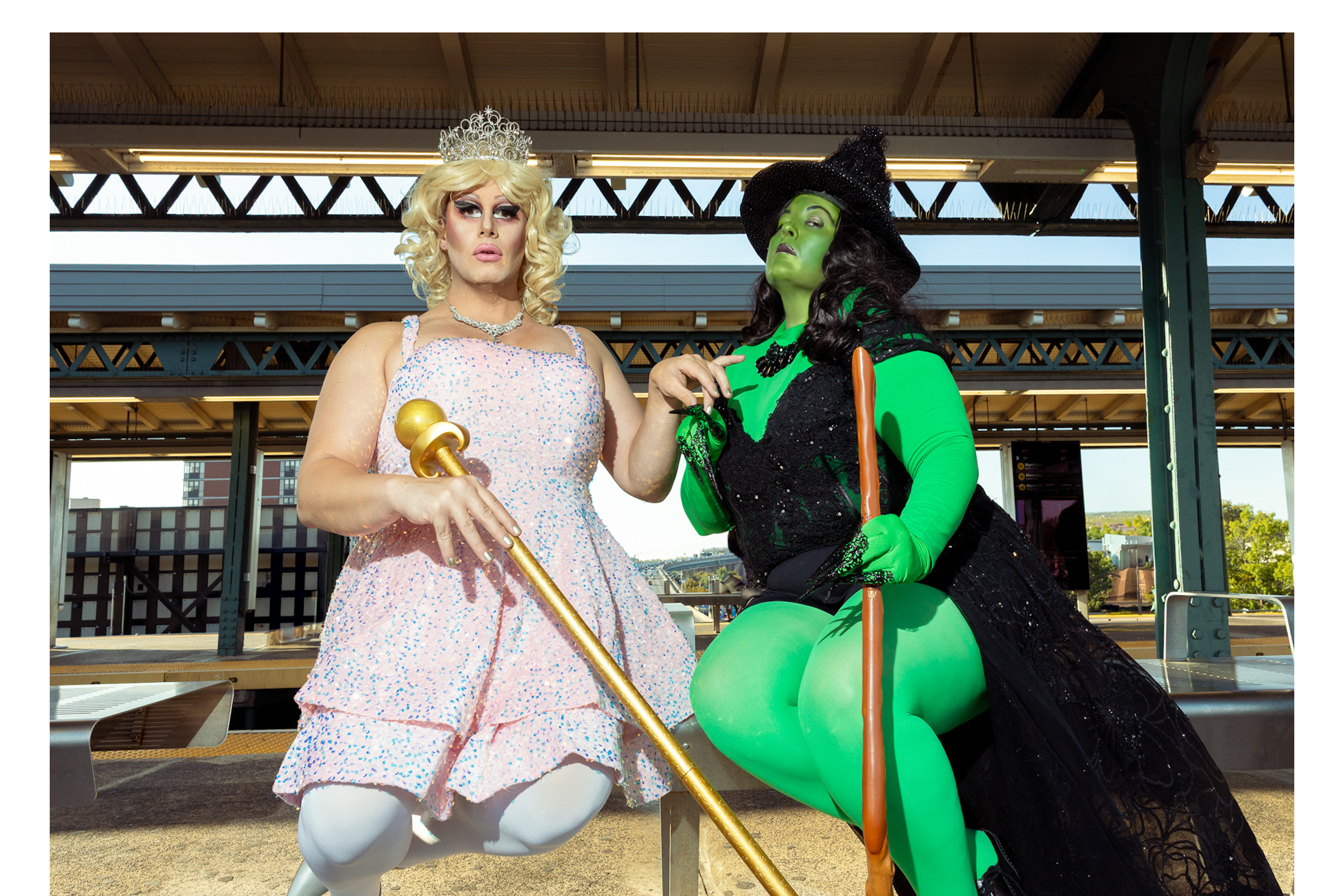
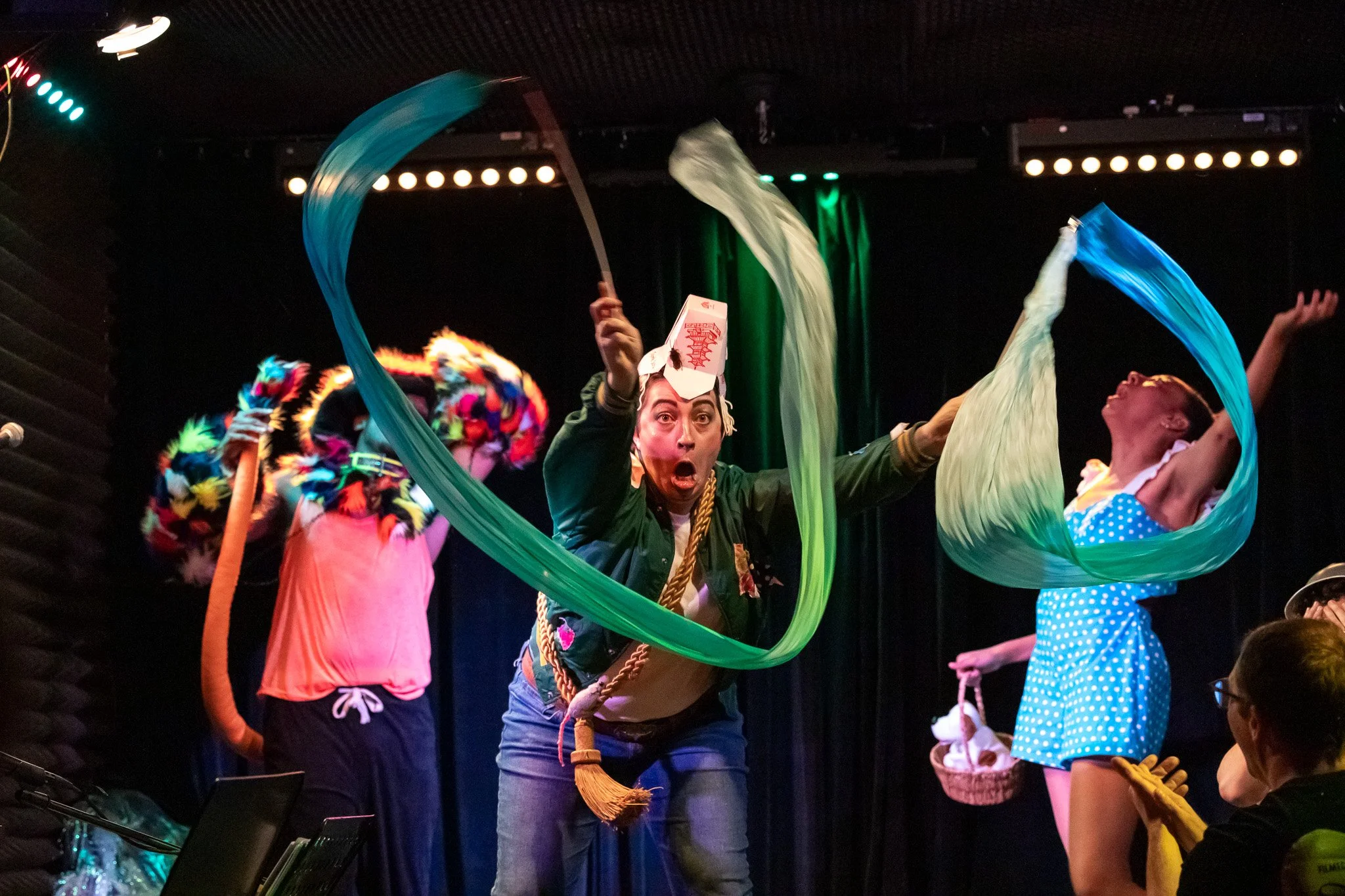

Photo Credit by Michael Russell
Robert K. Benson’s The Wizard of Oz panto announces its intentions immediately and without mercy. Likewise, the music and lyrics of Lily Ali-Oshatz and Gabriel Spector are as clever as they are subversive. The evening begins not with a narrative overture but with a command performance in social engineering, delivered by Matt Mastromatteo’s Lady Chicken Cutlets, a Glinda figure refracted through drag maximalism and benevolent menace. Draped in leopard print and wielding a microphone like a disciplinary tool, Mastromatteo makes it plain that refunds are off the table and passivity is a sin. Long before Kansas is airborne, the audience has been conscripted into the show’s governing logic: this is pantomime, and participation is not merely encouraged but enforced.
Directed by Madeline Wall, the production is bracingly intelligent without ever mistaking cleverness for restraint. Wall embraces the show’s inherent absurdity, allowing it—indeed, encouraging it—to tip gleefully into the patently ridiculous, while maintaining a clear dramaturgical spine. Her direction is daring and unapologetically bold, balancing razor-sharp satire with moments of unguarded silliness, all rooted in a palpable affection for the Oz canon. The result is a staging that feels both irreverent and reverent: fearless in its comic excess, yet deeply attuned to the enduring mythos and emotional pull of The Wizard of Oz.
For readers unfamiliar with the panto tradition—largely an import from British holiday theater—this genre operates on a kind of ritualized call-and-response. Heroes are cheered, villains are booed, secrets are loudly revealed, and disbelief is suspended not through illusion but through volume. Mastromatteo’s Lady Chicken Cutlets functions as both ringmaster and ideological enforcer, schooling the audience in these customs with exaggerated patience and thinly veiled threat. By the time the story proper begins, the house has been transformed from a collection of spectators into a noisy, complicit chorus, emotionally invested and pleasantly unhinged.
The plot, such as it is, unfolds with cheerful disregard for coherence. Dorothy becomes Dotty (Regan Sims), a newly evicted New Yorker whose financial precarity and emotional unraveling feel uncomfortably contemporary. Swept into an Oz refracted through the lens of New York City—where witches run coffee shops, pigeons supplant crows, and the Yellow Brick Road resembles a perpetually delayed subway line—Dotty embarks on the familiar quest. Along the way she assembles a trio of seekers: Lily Ali-Oshatz’s gleefully dim Hunky/Scarecrow, Diego Velásquez’s deadpan Chickory/Tin Man with a blue-collar ache, and Jonathan Nathaniel Dingle-El’s Zack/Lion, whose vulnerability is worn as openly as his bravado. Narrative glue is supplied less by logic than by glitter, innuendo, and an unspoken agreement that vibes will suffice.
What distinguishes this production from mere parody is its relentless and knowing engagement with Wicked. The references are not coy but brazen: musical phrases flirt dangerously close to recognition, character dynamics echo with intention, and the moral mythology that Wicked so carefully constructed is cheerfully taken apart. The show interrogates the politics of good and evil, the erotic subtext between witches, and the self-serving nature of revisionist history, all while insisting on its right to be very, very silly. Oz obsessives will savor the precision of the jokes; everyone else will still feel their impact, as Oz has been rechristened “Jizz”.
Rachel McPhee’s Wicked Witch of the Upper West Side—née Petunia Mulch—is a villain of magnificent excess, inviting boos with a relish that borders on flirtation. Sims’ Dotty, by contrast, grounds the chaos with a performance that is scrappy, sincere, and oddly moving, anchoring the production’s madness in something like emotional truth. Alan Sus/The Wizard, embodied by Blake Williams as a tech-bro demagogue with messianic pretensions, feels torn from the digital ether: all confidence, no accountability. Sound like anyone we know??? Around them, the ensemble—David Hernandez III and Stephanie Antoinette Marrow in particular—keeps the world humming, while Jim Kennedy’s cameo as the Mayor of Munchkinland lands like a knowing wink to theatrical tradition.
Kendall Perry’s onstage piano accompaniment deserves special mention, functioning not merely as musical support but as a comedic conspirator. He punctuates jokes, undercuts sentimentality, and occasionally escalates gags to the point of joyful collapse. The instrument becomes another character in the room, responsive to the audience’s energy and unafraid to push a moment from amusing into absurd. Think of him as that character Frank L. Baum was too embarrassed to talk about.
The costume design by Maryellen De Vivo is a feat of sustained invention, extending the production’s camp intelligence into the visual realm with wit, precision, and an admirable refusal to play it safe. Each character appears not merely dressed but conceptually costumed, as if De Vivo has reverse-engineered personality, satire, and theatrical lineage into fabric, silhouette, and texture. Nothing reads as incidental or purely decorative; the clothes do narrative work, delivering jokes, social commentary, and character psychology before a word is spoken. In a production that thrives on speed, audience interaction, and visual punchlines, De Vivo’s work provides both coherence and surprise. The designs reward close attention while still reading clearly from across the room, a balance that is harder to achieve than it looks. Like the production itself, the costumes are unapologetically too much—and that is precisely their brilliance.
Subtlety is not on the menu. Refinement has been gleefully thrown out the window. The production thrives on excess—of jokes, glitter, profanity, and participation—and yet the effect is curiously generous rather than exhausting. There is an intelligence to the chaos, a sense that the overload is calibrated to produce communion rather than fatigue. One laughs not alone but as part of a temporary, raucous collective.
In a season dominated by tasteful revivals and nostalgia softened to a polite sheen, The Wizard of Oz panto opts for something messier and more alive. It is feral theater: profane, politically pointed, and unapologetically camp. Yelling at a villain alongside a room full of strangers while a piano hammers out a suspiciously familiar melody may not be magic in the traditional sense—but it feels, at the moment, like something we urgently need.
Click HERE for tickets.
Review by Tony Marinelli.
Published by Theatre Beyond Broadway on December 22, 2025. All rights reserved.