Trouble Struggle Bubble & Squeak
Presented by Victoria Melody and Mark Thomas
Written by Victoria Melody, Directed by Mark Thomas
59E59 Theaters, Theater C, 59 East 59th Street, in Manhattan
April 15, 2026 - May 3, 2026
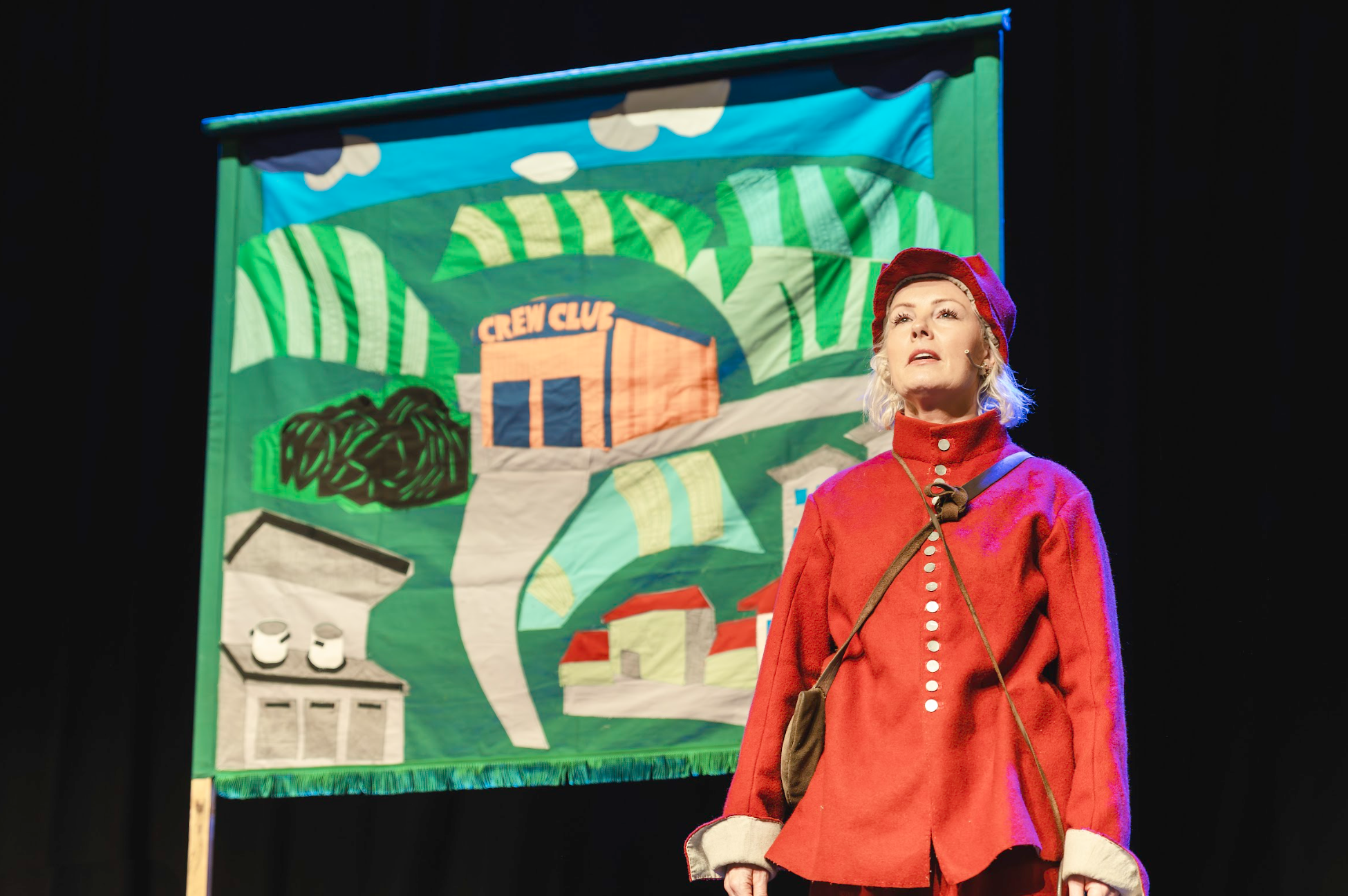
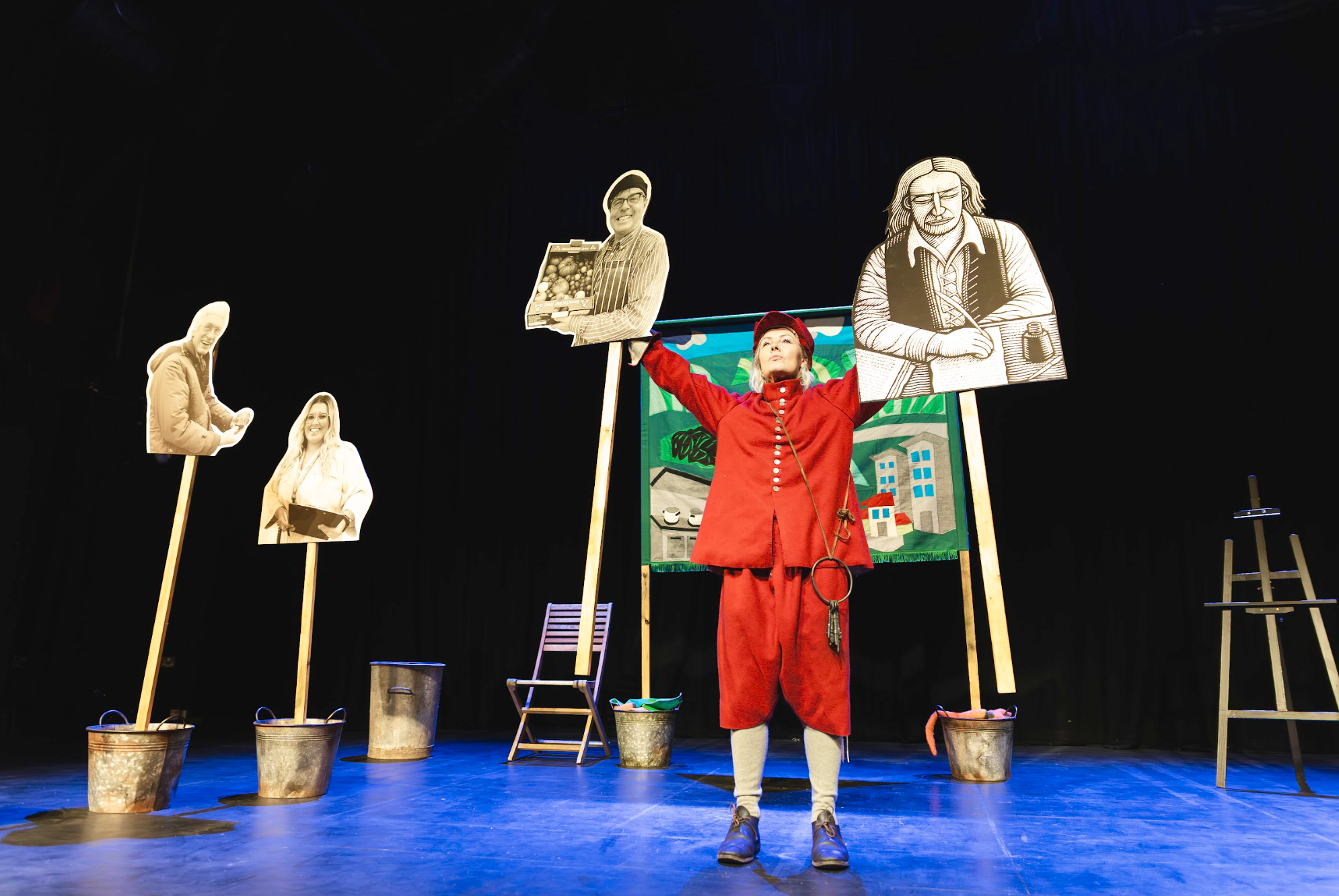
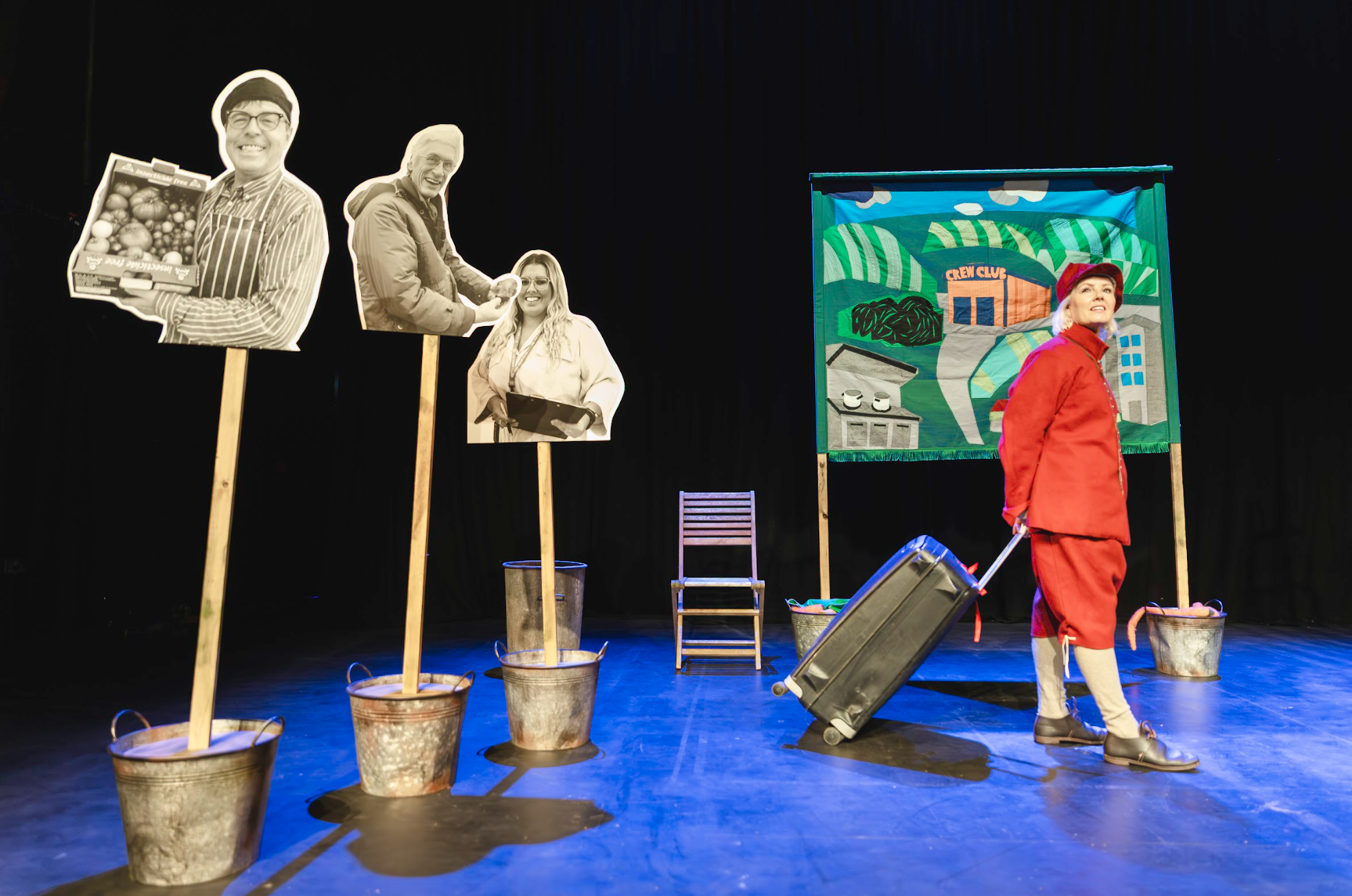
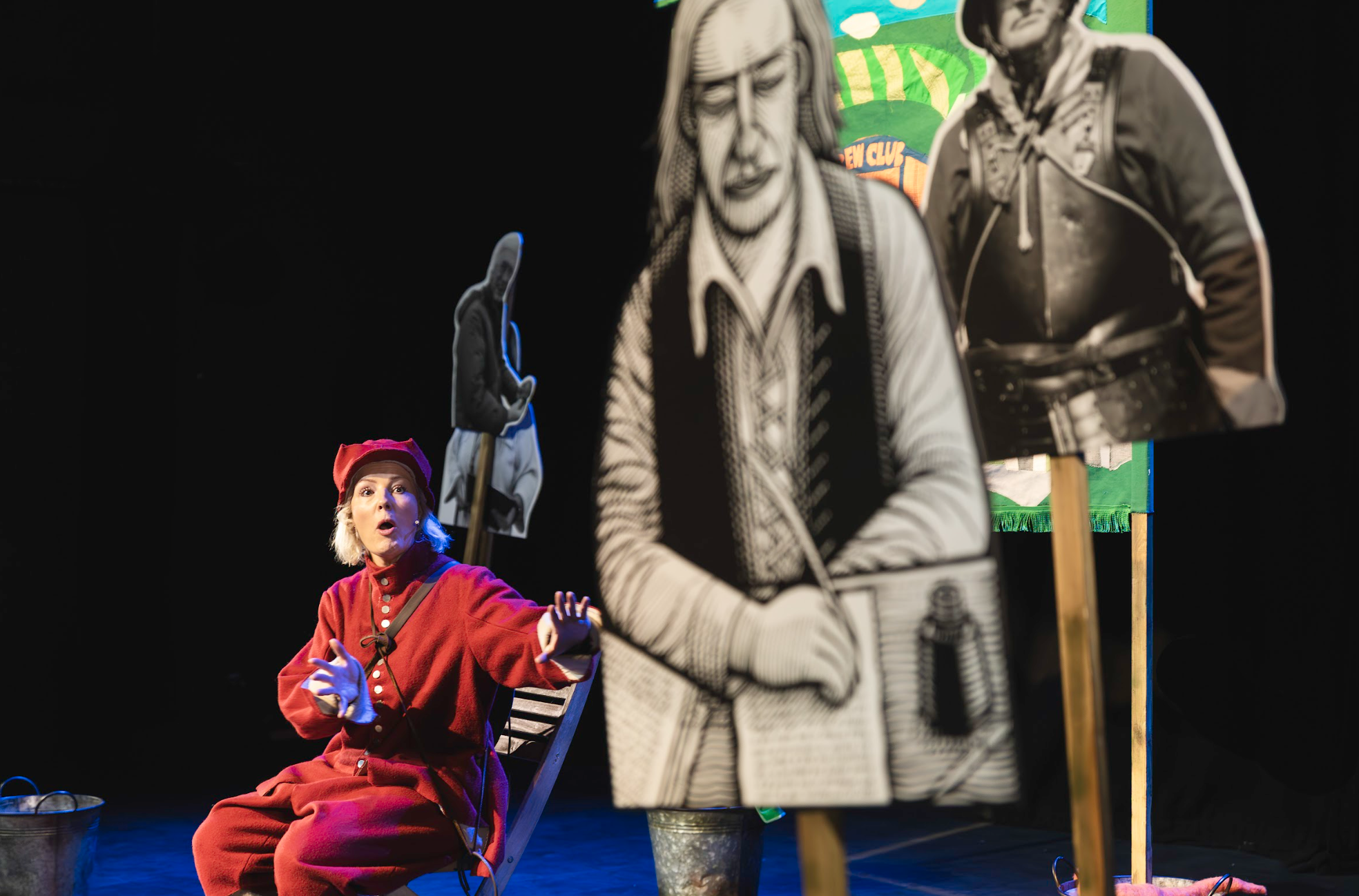
Photo credit by Jonathan Jones
In an era when so much theatre announces its intentions with a heavy hand, Trouble, Struggle, Bubble & Squeak arrives with the disarming lightness of a joke and the staying power of a deeply felt conviction. Conceived and performed by Victoria Melody, and directed with a canny, unobtrusive intelligence by Mark Thomas, the piece resists easy categorization. It is, at once, stand-up set, social document, historical excavation, and communal act of remembrance—yet it never feels overburdened by its ambitions. Instead, it moves with a buoyant assurance, as if discovering itself in the very moment of performance.
Melody is too canny a storyteller to waste a line like “I joined a Civil War re-enactment society because we all deal with divorce differently,” and in performance it lands with the effortless precision of a seasoned comic who understands that self-exposure, lightly handled, can open an audience faster than any thesis statement. It is a joke, certainly—dry, self-effacing, a little absurd—but it also serves as a quiet overture to the method of the piece itself: immersion as a coping mechanism, inquiry as a form of repair. One laughs, and in laughing, accepts the terms of the journey.
Melody has long cultivated a reputation for immersive inquiry, embedding herself within subcultures not as a tourist but as a participant-observer of unusual sincerity. Here, her subject is the legacy of the seventeenth-century Diggers—agrarian radicals who, amid the upheaval of the English Civil War, reclaimed common land to grow food collectively. What might, in lesser hands, calcify into a didactic history lesson becomes, through Melody’s method, something far more alive: a living continuum between past and present, between Gerrard Winstanley’s utopian vision and the contemporary struggles of residents in Whitehawk, a council estate in Brighton.
The dramaturgy is deceptively simple. Anecdotes unfold one after another, each anchored by a vividly sketched individual—introduced, charmingly, via cardboard effigies that double as both visual shorthand and affectionate tribute. Melody’s gift for multi-roling is not merely technical, though it is certainly that; it is ethical. Each voice she adopts is rendered with precision and care, never slipping into caricature, always guided by an evident respect for the people whose stories she borrows. Her embodiment of figures like the imposing “Hammer” is as physically astute as it is comically exact, eliciting laughter that feels rooted in recognition rather than ridicule.
What distinguishes the piece most profoundly is its tonal dexterity. Melody navigates seamlessly between the absurd and the affecting, between tales of personal mishap and accounts of genuine communal achievement. One moment, she is recounting the logistical chaos of distributing surplus cheese across the neighborhood; the next, she is illuminating grassroots efforts that provided hundreds of meals during lockdown. What Melody accomplishes, with a sleight of hand that never calls attention to itself, is to braid her personal misadventure into this larger historical fabric. Her accidental enlistment among the “wrong” side becomes less a blunder than a point of entry—a way of dramatizing the porousness between past and present, intention and outcome. In her telling, the Civil War is not a distant tableau but a living argument, one that can still be misheard, misread, and, occasionally, productively misunderstood. The humor never undercuts the sincerity, nor does the sincerity dampen the humor. Instead, they exist in a mutually sustaining equilibrium, each sharpening the impact of the other.
What Trouble, Struggle, Bubble & Squeak understands, with uncommon clarity, is that the life of a community is often revealed in precisely such moments, where the absurd, the bureaucratic, and the miraculous collide. Melody’s account of her volunteer work in Whitehawk is threaded with these episodes of affectionate chaos, small-scale heroism, and comic misadventure. She does not present herself as a savior descending upon a “deprived” estate, but rather as a participant—occasionally bewildered, frequently outmatched, always game—within a network of people whose ingenuity far exceeds any outsider’s expectations. The tone here is crucial: her humor, rooted in what she wryly terms “excruciating yet relatable human error,” keeps the narrative buoyant, even as it gestures toward structural inequities that are anything but amusing.
The discovery of the so-called Whitehawk Soldier Beetle—an entirely new species, no less—becomes, in her telling, a kind of accidental deus ex machina. That a patch of land might be spared from development not through policy, protest, or planning, but because of the sudden appearance of an obscure insect, is the sort of twist one might hesitate to invent. Yet Melody relishes the contingency of it, the way in which this minute creature disrupts the machinery of development and, however briefly, tips the balance in favor of preservation. What might have been played as a simple punchline instead accrues a quiet resonance. The beetle, improbably heroic, joins the lineage of the Diggers themselves: a reminder that resistance takes many forms, not all of them grand or intentional. In Melody’s hands, the episode becomes a parable of sorts—about the fragility of land, the arbitrariness of power, and the unexpected allies that can emerge in the struggle over who gets to claim space and for what purpose.
Crucially, the story also reinforces the production’s central insight: that community is not an abstract ideal but a lived practice, composed of volunteer hours, shared labor, inside jokes, and the occasional stroke of ecological luck. Melody’s presence within these efforts—digging, organizing, observing—grounds the narrative in experience rather than abstraction. She is not merely recounting events; she has, quite literally, gotten her hands dirty. In performance, one can imagine this episode landing with particular delight. It has all the elements Melody deploys so deftly elsewhere: a buildup of narrative expectation, a sudden and comic reversal, and an aftertaste of something more reflective. The audience laughs, certainly—but the laughter carries with it an awareness of how precarious such victories are, how dependent on forces beyond anyone’s control.
Set alongside the larger arc of the piece—the historical echoes of the Diggers, the reenactments, the communal meals, the jangling of keys—the beetle story feels less like an outlier than a perfect miniature. It encapsulates the show’s tonal range and its thematic preoccupations, binding together past and present, human intention and natural intervention, struggle and serendipity.
Thomas’ direction is marked by a refreshing restraint. He understands that the material’s vitality lies in Melody’s presence and in the authenticity of the voices she channels. The production’s design elements—Katherina Radeva’s warm, tactile set, adorned with crocheted vegetables crafted by Whitehawk residents, and a backdrop that gradually resolves into a recognizable geography—extend this ethos of community onto the stage itself. The effect is cumulative: by the evening’s end, the theatre feels less like a site of representation than one of shared habitation.
Simon James’ sound and Sean’s lighting deepen this sense of immersion. Audio recorded by local children threads through the performance, lending it an aural texture that is both intimate and expansive. Meanwhile, the lighting design modulates with quiet precision, isolating Melody in moments of introspection before opening outward into a more communal glow. Particularly striking is the production’s willingness to embrace stillness; a sudden dimming, a held silence, can carry as much weight as the most exuberant sequence.
The historical dimension of the piece is woven with admirable subtlety. Melody, clad at intervals in an authentic Civil War musketeer’s costume, invokes the past not as a distant spectacle but as an active interlocutor. The climactic reenactment—a gleefully chaotic community festival in which contemporary residents stage the Diggers’ struggle against landowners—collapses centuries into a single, unruly moment of collective play. Burgers mingle with period stew; improvisation collides with intention. It is history not as reenactment, but as reanimation.
Audience participation, too, is handled with a light but confident touch. The recurring invitation to jingle keys—tentative at first, then increasingly enthusiastic—becomes a modest yet potent ritual, binding spectators into the fabric of the performance. In these moments, Melody reveals another facet of her craft: an ability to read a room, to coax it gently beyond passivity, and to transform it into a temporary community.
Beneath its exuberance, however, the piece never loses sight of the material conditions that animate it. Melody draws clear, if unforced, parallels between the economic precarity of the 1640s and the pressures facing contemporary communities. Rising living costs, stagnant wages, bureaucratic indifference—these are not abstract concerns but lived realities for the people whose stories she tells. Yet the production resists despair. Its emphasis falls, instead, on acts of resistance, however small: clearing brambles without permission, planting vegetables on contested ground, feeding neighbors in times of need.
By the time Melody arrives at her closing moments—invoking Winstanley’s words while standing, simply, at center stage—the gesture feels less like a conclusion than an invitation. The house lights rise, implicating the audience in what has just transpired. One leaves not with the satisfaction of a neatly resolved story, but with the uneasy, exhilarating sense that the work is ongoing, that the “digging” has only just begun.
Trouble, Struggle, Bubble & Squeak is a rare theatrical achievement: a comedy that carries genuine moral weight, a piece of documentary storytelling that pulses with theatrical life. It affirms, without sentimentality, the enduring power of community—its capacity to nourish, to resist, and to imagine otherwise. In Melody’s hands, the stage becomes not merely a platform for performance, but a commons in its own right.
Click HERE for tickets.
Review by Tony Marinelli.
Published by Theatre Beyond Broadway on May 9, 2026. All rights reserved.
