
HOW MY GRANDPARENTS FELL IN LOVE
Presented by New Jersey Repertory Company, Book by Cary Gitter, Music by Neil Berg
Lyrics by Neil Berg and Cary Gitter, Directed by SuzAnne Barabas
59E59 Theaters, Theater B, 59 East 59th Street, in Manhattan
March 17, 2026 - April 18, 2026
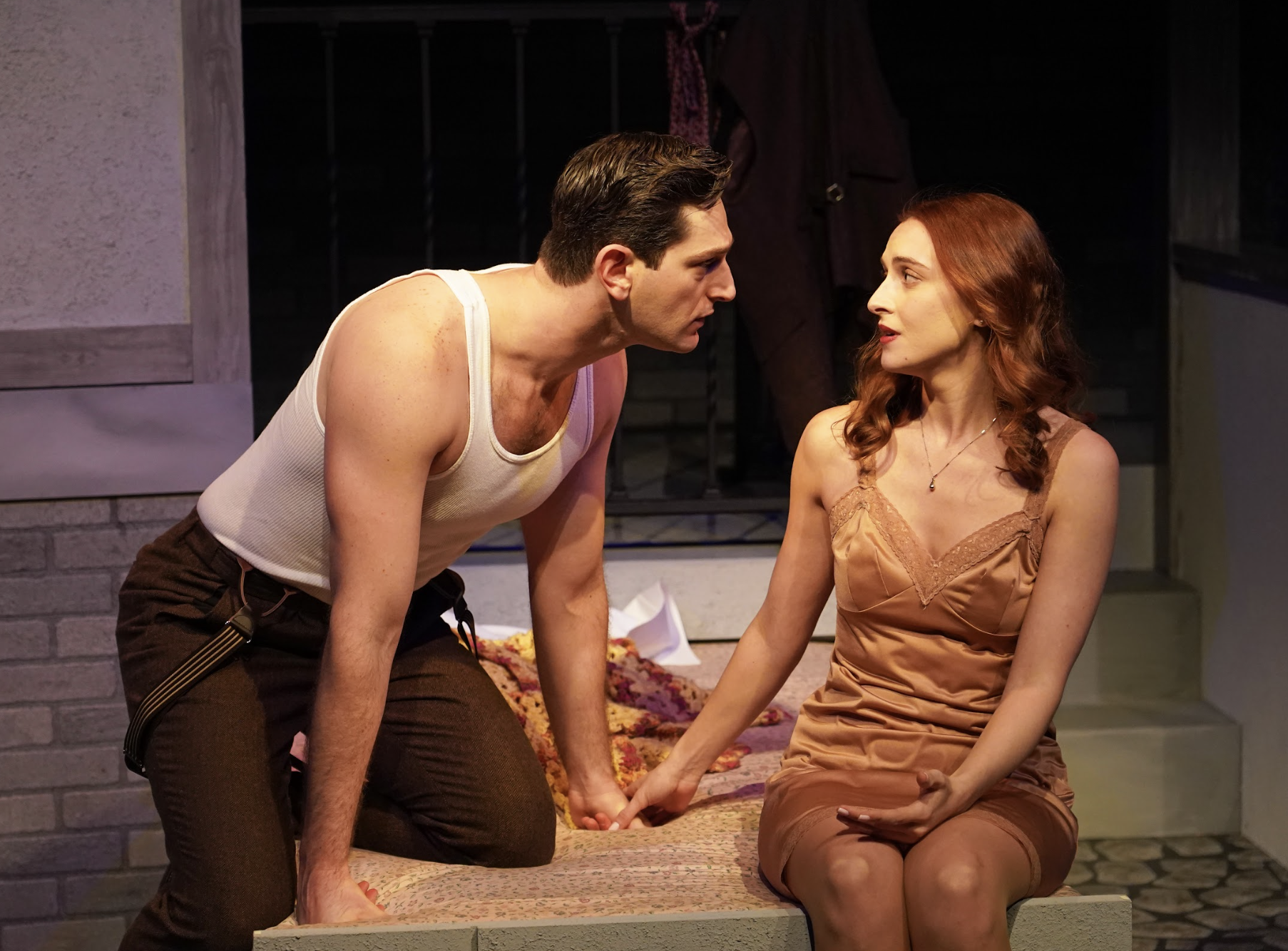
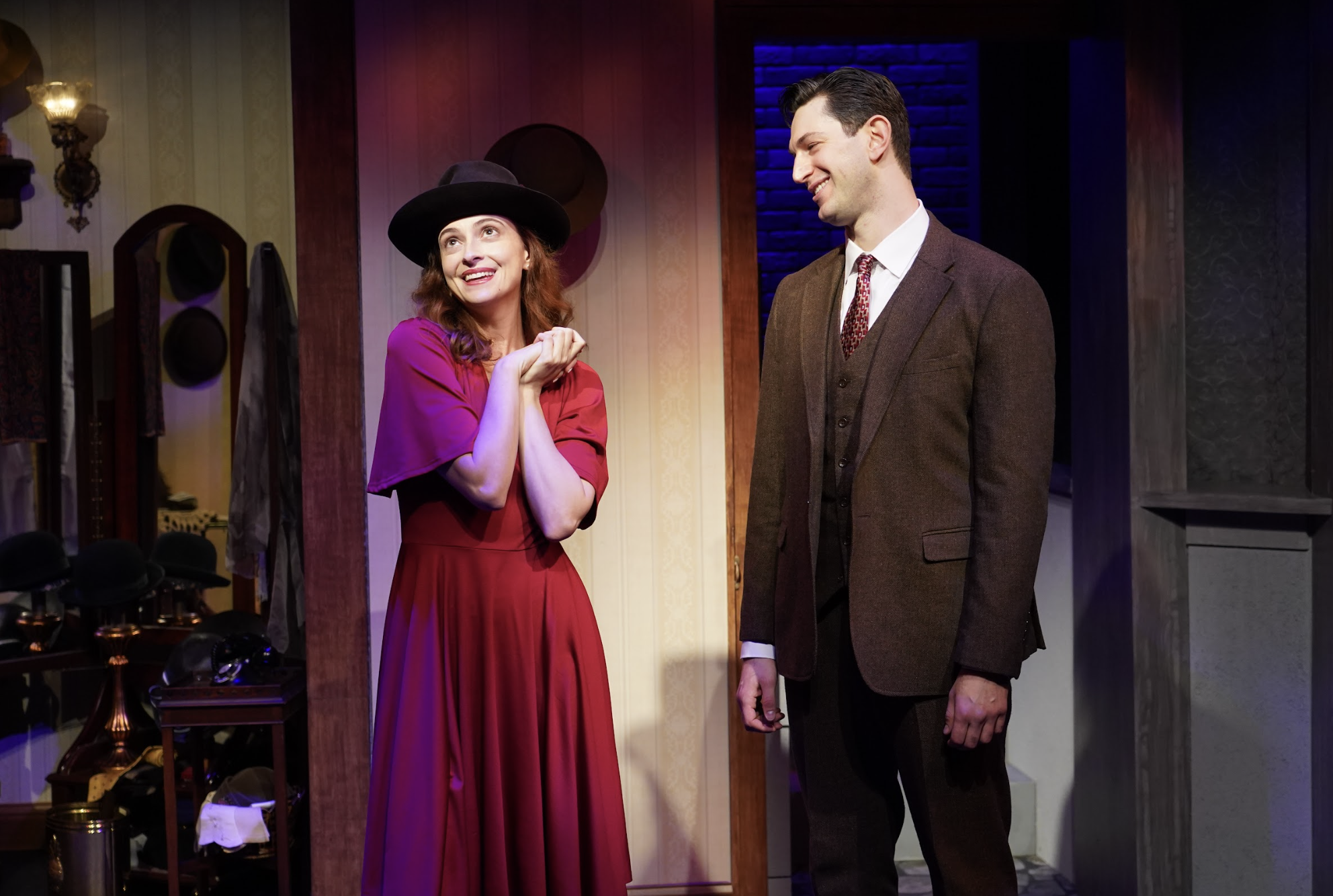
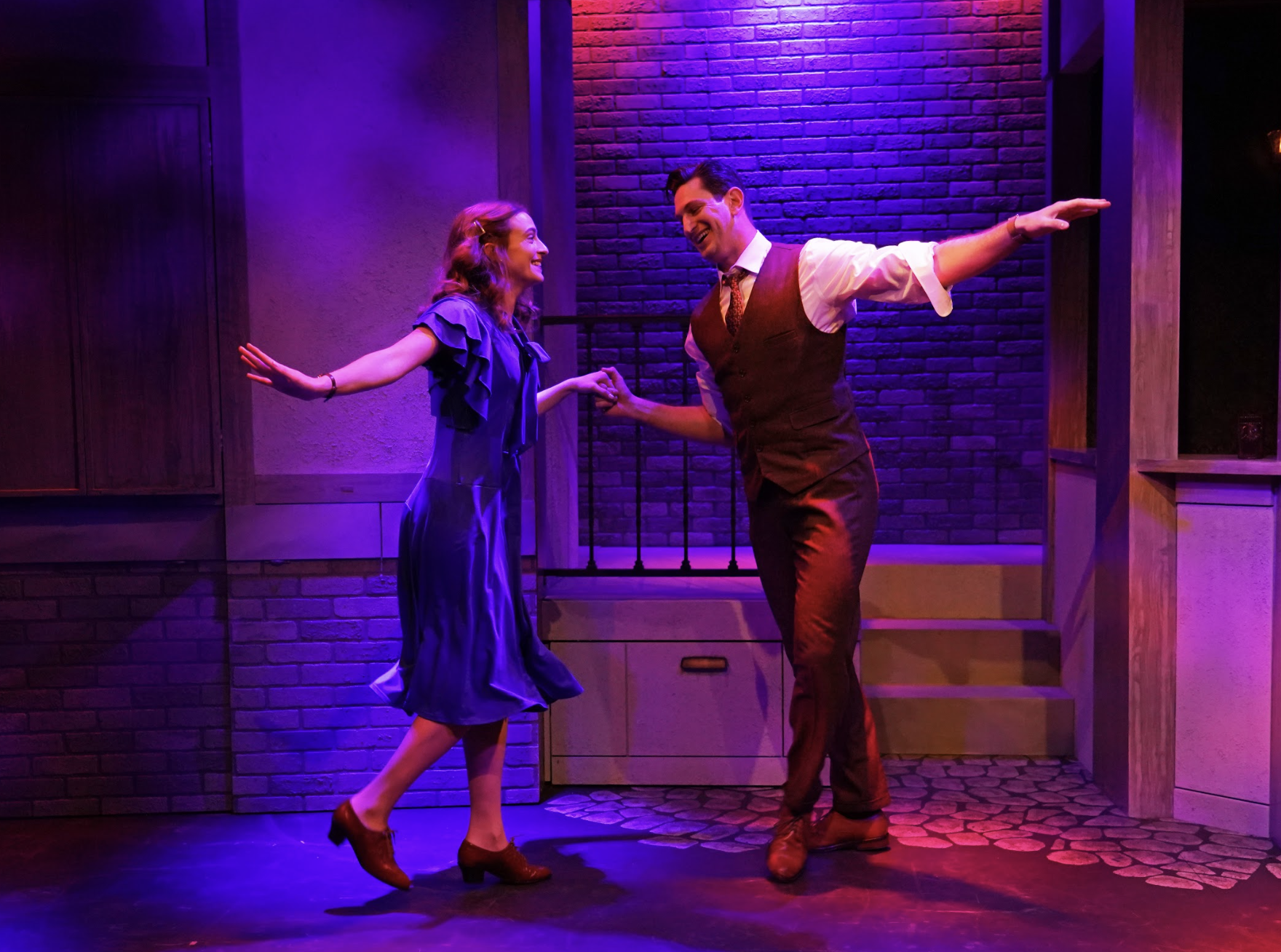
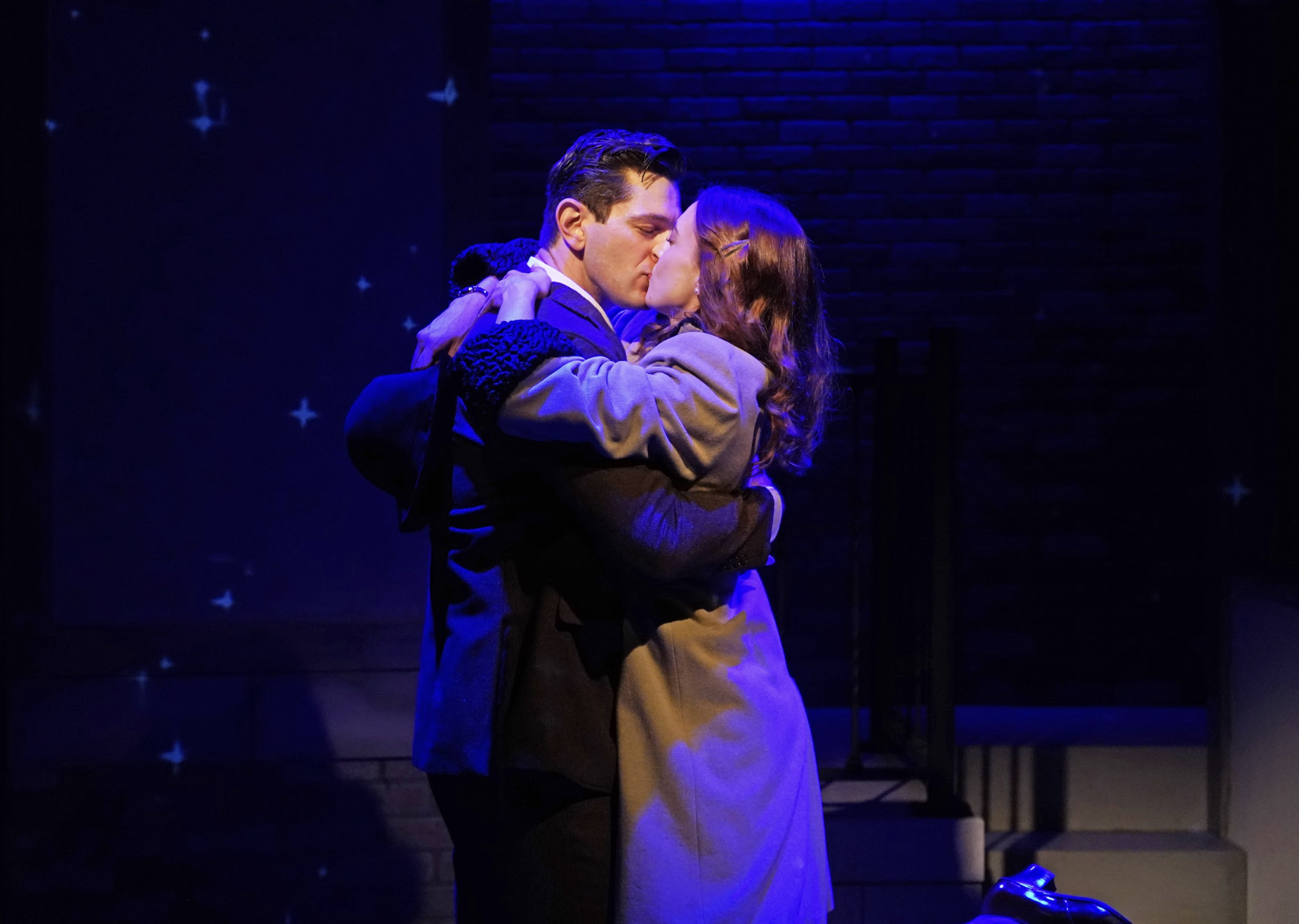
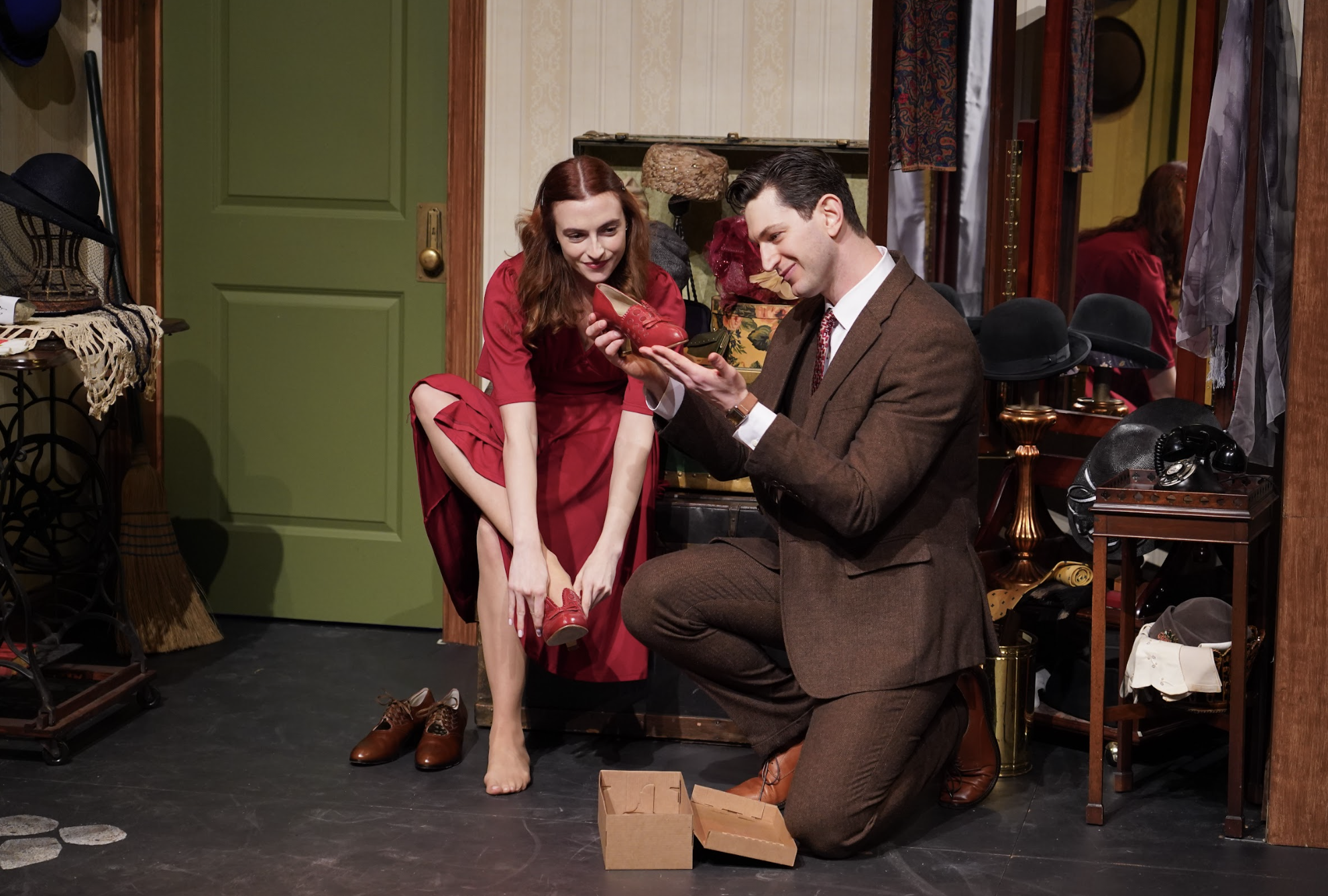
Photo credit by Carol Rosegg
At 59E59 Theaters, that quietly industrious incubator of chamber-scale storytelling, a new musical arrives that feels less like a premiere than an heirloom brought gently into the light. How My Grandparents Fell in Love, a musical, the latest offering from New Jersey Repertory Company, unfolds with a disarming modesty, a two-character valentine that understands the quiet heroism of falling in love when the world is beginning, almost imperceptibly, to tilt. Cary Gitter and Neil Berg—whose previous collaborations proved their facility with romantic miniatures—offer here a chronicle of courtship in 1933 Rovna, Poland (now Ukraine), where the pragmatic and the poetic, the political and the personal, intermingle with an almost Chekhovian delicacy.
The musical begins with a gesture of framing that is at once earnest and faintly academic: Eva, addressing a roomful of college students, steps forward as both narrator and inheritor, preparing to unfold a story that is, for her, as intimate as it is instructive. What follows is the tale of her grandparents, filtered through memory and devotion. At its center is Charlie, her grandfather—a Polish-born Jew who, after a decade of self-reinvention in Hoboken, New Jersey, returns to his provincial hometown with a purpose at once simple and profound: to find a wife, and, in doing so, to stitch together the divided halves of his identity.
Harris Milgrim’s Charlie—born Tsale, refashioned by America into something more phonetic and perhaps more hopeful—returns to his roots with a singular, almost quaint objective: to find a wife. His first, carefully brokered introduction having collapsed into farce, he drifts the streets in mild disarray until, through the window of a modest hat shop, he spies Chava—bent over the counter, lost in a book, as if the world were an interruption. Might she serve as a makeshift Plan B? The notion scarcely recommends itself. That he should fix upon Chava, who initially regards him with a kind of amused disdain, provides the musical with its central friction, and its greatest pleasure.
Becca Suskauer’s Chava is a nascent philosopher, her ambitions fixed firmly on university, and the institution of marriage—particularly to a stranger with matrimonial intent—is nowhere on her crowded horizon. Chava is no ingénue in the passive sense; she is brisk, intellectually hungry, her ambitions aimed toward Warsaw University, her mind alive to ideas if not yet to danger.
Milgrim, improbably tall and endearingly unvarnished, possesses a voice that blooms upward with surprising ease, his aw-shucks demeanor recalling a young Jimmy Stewart by way of the shtetl. Suskauer, for her part, commands the score with a trained, sometimes piercing clarity, her upper register slicing through Berg’s orchestrations with a fervor that suits Chava’s restless intelligence. Together, they create a pairing that is less about immediate chemistry than about its gradual, almost reluctant ignition.
Gitter and Berg’s score is unabashedly traditional, its pleasures lying not in innovation but in its fidelity to form. The songs arrive precisely where one hopes they will, like well-timed confidences. There is a lightly comic insistence when Charlie coaxes Chava to “trade that Mahler for a little Fats Waller,” a moment that blooms into a lindy hop—Jordan Ryder’s choreography, while unshowy, executed with a crisp assurance that belies its simplicity. Elsewhere, numbers like “Oh, Hoboken,” a wistful love letter to Charlie’s adopted American home, and “Suddenly,” Chava’s dawning recognition of her own transformation, provide the emotional architecture upon which the evening rests.
The lyrics are buoyed by an earnestness that proves difficult to resist. This is a musical unembarrassed by sincerity, its emotions delineated almost entirely through song, in the manner of a well-behaved relic from an earlier Broadway. Berg’s melodies may not soar quite as high as Charlie’s aspirations, but they insinuate themselves gently, leaving behind a residue of warmth.
What ultimately rescues How My Grandparents Fell in Love from the easy slide into sentimentality is the unmistakable pressure of history bearing down upon it. The romance unfolds in 1933, in the immediate aftermath of the Reichstag fire, that catalytic blaze which Adolf Hitler deftly exploited to persuade Paul von Hindenburg to enact the Reichstag Fire Decree. With the suspension of civil liberties came the legal scaffolding upon which Nazi rule would be erected—an architecture of repression that, even at this early stage, sent tremors far beyond Germany’s borders. In Poland, those tremors manifested in a coarsening of public life, as fascist sympathies found new license and antisemitism grew less coded, more brazen. It is against this gathering storm that the musical’s tender courtship plays out, lending the lovers’ hesitant connection a quiet urgency. Their songs, their flirtations, their small negotiations of feeling—all are shadowed by a world in which time is suddenly, terrifyingly finite.
The production itself is modest to a fault. Jessica Parks’ set, with its quietly industrious moving wall and discreetly deployed roll-out bed, serves its purpose without flourish. Patricia Doherty’s period-appropriate but unostentatious costumes are perfect. Jill Nagle’s lighting, particularly in a dance hall sequence washed in purples and nostalgic projection, conjures a world just distant enough to feel dreamlike. Nick Simone’s clean sound design embraces a kind of deliberate simplicity, as though determined not to outshine the fragile intimacy at its core. If there is a touch of exuberance to be found, it arrives before the curtain: Simone’s preshow playlist, a gently intoxicating drift of “Mood Indigo,” “Stardust,” “Just a Gigolo,” and “Minnie the Moocher,” which conjures, with effortless swing, the wistful glamour of a world just beyond the footlights. Aaron Benham’s music direction anchors the piece, though the electric piano—its sound somewhat disconcertingly synthetic—occasionally pulls us out of the period reverie.
SuzAnne Barabas directs with a steady, unobtrusive hand, wisely centering the evolving dynamic between her two leads. The framing device involving a granddaughter might threaten, at times, to over-explain what the musical already conveys with sufficient clarity, but it is a minor distraction in an otherwise elegantly spun narrative.
What lingers, finally, is not the sense of having witnessed something monumental, but something intimate and lovingly preserved. The stakes, though historically immense, are filtered through the small, radiant miracle of two people discovering one another. As an evening in the theater—gentle, sincere, and suffused with a quietly persuasive charm—it offers a reminder that even the most unassuming love stories can echo far beyond their modest beginnings.
Click HERE for tickets.
Review by Tony Marinelli.
Published by Theatre Beyond Broadway on May 9, 2026. All rights reserved.
